 Hacker Cinema
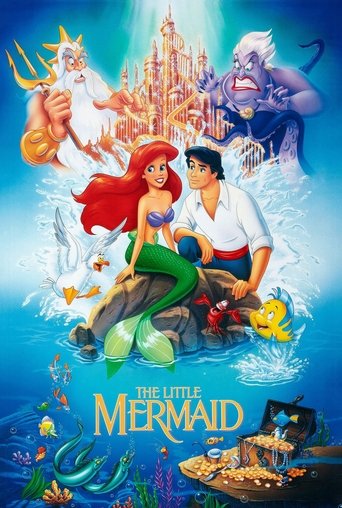
The Little Mermaid
1989 · Film · 83 min
Directed by Ron Clements, John Musker
This colorful adventure tells the story of an impetuous mermaid princess named Ariel who falls in love with the very human Prince Eric and puts everything on the line for the chance to be with him. Memorable songs and characters -- including the villainous sea witch Ursula.
4 positive9 negative35 neutralfrom 48 commenters
Where to watch
No streaming data for this title.
51 comments on Hacker News
They mentioned The Little Mermaid. Divine was slated to voice Ursula ... I wonder how that would have changed the legacy. Ursula was designed after Divine but that was fairly insider knowledge.
Having the John Waters drag queen actually voice her, it might have made a lot of people not consider it a family film in 1989.
Disney has a long history of gay-coded characters that the mainstream doesn't really pick up on and just reads as wacky or eccentric, such as here, in 1941: https://youtu.be/H2iT9kfsMKU?si=-5Z6_qgaUyucDJXg&t=82
This is a good point.
Modern movies try to appeal to everyone. Can't be too edgy or too opinionated, don't want to sick rabid hordes of haters on themselves.
And there's a huge segment of the Western population teetering on the edge of death or living in misery in various ways who are a literal matchbox waiting for a spark, no megaconglomerate film company wants to be responsible for setting them off, to the point where it's safer to sell mediocre and milquetoast movies rather than push an opinionated one and risk blowback.
Look at the Beetlejuice Beetlejuice or the Craft 2. Both movies built on a previous proven winner, both original movies had something to say.
Beetlejuice was not only a quirky romp through the afterlife but also a story about aboriginalism vs colonialism and whether it is right for the aboriginals to do horrible things to protect what is theirs, and also a story about how embracing change can help cross generational divides and how accepting people who are different from you can enrich your life.
It was very opinionated and had a lot of great subcontext. Same with the Craft.
The Craft was, on its cover, a story about what teenage girls would do if they got magical powers, which then turned into a series of biopics of the deep emotional damages caused by indifferent and hateful people. The movie dealt with racism, sexual assault, murder, mental illness, self esteem, and self acceptance all in the context of a teenybop horror movie.
Then you look at their sequels.
Beetlejuice Beetlejuice introduced 3 antagonists, Beetlejuice's wife, the boy, and Lydia's boyfriend.
It started three potential plotlines, the soul sucker, the life swapper, and the gold digger, and brought Beetlejuice in to deal with all three of them.
And then, 80% of the way through the movie, it threw all three of the antagonists and plot lines away and then rehashed the climax of the original movie with a slightly different set of clothes on.
What deeper meaning did Beetlejuice Beetlejuice have? None. No one had any value or made any sense. No one in the entire plot was irreplaceable. No one learned any lessons or grew in any measurable way. Nothing actually happened. They all woke up like they had a bad dream after Lydia's father's funeral, the mother died, the gold digger died, and then the story was over. If the movie had not happened nothing would be different for the characters except that maybe the gold digger would have dug more gold or something.
Then, the Craft 2. It's not a horror movie. It's a teenybop movie where girls get magic and do things with it. They have a trans person in it but she doesn't use her magic to address her transness in any way. There's only a tiny drop of racism, and no one has any real deep issues to resolve.
So, instead, they get David Duchovny in to play as some guy who embodies toxic masculinity, but who is also ineffective and purposeless all the way to the very end of the movie, when all of a sudden he goes murder rapey and then gets easily beaten by the power of feminism and witchcraft.
No one learned anything except GIRL POWER. Nothing really changed for anyone. There were no edges in the movie to explore. It was pointless.
Either sequel could have been much more poignant by touching on real issues that people experience. The Craft 2 could have touched on social media and the need to look like you have a perfect life. They could have touched on what a trans woman would do if she could remold her body with magic permanently or semi permanently like the girl did in the first movie. They could have made Nancy a bigger part of the movie and have her deal with David Duchovny instead of it being a girl power movie, and then Nancy could have taught the girls the things she knows being a former vessel of Manon with 25 years to learn and grow from the experience. It could have gone into a demonstration and discussion on how young women have so much to learn from women even 20 years their senior, and how working together and tearing down walls both of age differences but also gender differences can make the world a better place.
Beetlejuice Beetlejuice could have made a really fun story out of any of the three protagonists and plot lines if it had picked and chose one of them to run with and made the others the sub plots. The gold digger plotline could have been about accepting what is different about you and not allowing others to convince you to mask your weirdness. The life swapper plot could have been about learning how to accept that you're a normal person who grew up in a weird household, and how that doesn't make you weird and that it is possible to make both sides work together as long as each side values the other. The soul sucker plotline could have been played for laughs as at the end we could have seen Beetlejuice about to win Lydia only to be thwarted by his actual wife and dragged off into the underworld by the leg by her (and end up happy in the end, maybe seeing him slowly reinflate after she sucked the soul out of him, he he sex joke). All of those options were thrown out of the window and instead we get a meandering pointless movie that would have been fine if it had never existed.
Good movies have an opinion and something to say. Napoleon Dynamite is a perfect example of this. It's a bad movie in every measurable way. It's boring. It's slowly paced. It has no plot. It's like a 2 hour slice of life Jello movie. But then, the point of the movie gets driven in, that everyone has value.
It's a simple message told in a long and occasionally humorous manner, but because they didn't try to piledrive the message into you when it hits it hits hard.
Bad movies ramble even more than I do and never make a point for fear of popping a bubble. And media franchises know this and choose to make them anyway rather than be at risk of any blowback. After all, most movies released by a large franchise are profitable by default. The number of AAA movies that did not make their cost of production back in the last 10 years is vanishingly small, to the point where movies that only make 150% of their production costs are considered box office bombs and franchise killers. (Like the Golden Compass, that made $370+ million and won academy awards on a $180m production cost and was considered enough of a failure to end the entire series)
They know how to make good movies. They know how to tell satisfying stories that keep people wanting more. They know how to make a lot of money doing it.
So why do they keep not doing it?
I believe it's 2 things.
1: Fear of offending people and having massive blowback because of it.
The outrages over stupid things like the Little Mermaid being black is a good example of this. Who cares what color her skin is? She's a fish. If the story is good and told well then what does it matter?
But I get it, you can't convince someone who wants to be upset and outraged as a distraction for their own personal problems to focus on their personal problems instead of screaming about DEI or whatever 4 letter flavor of the day they have to rage about. This much is understandable. But still, that's no excuse for making a bad movie, they could have far more easily found the rage points and dealt with them and left the rest of a good movie alone.
But that brings me to my second point.
2: It's on purpose.
I've been thinking about this for a while, but I'm starting to believe that megaconglomerate media companies are intentionally making unsatisfying movies that are highly titillating for the same reason that Doritos flavors their chips in just such a way that you never get satisfied of eating them, that final burst of zest and flavor that would put you over the edge always just out of reach.
It's like the torture of Tantalus, satisfaction always being just outside of arms reach, but knowing that it's close, and occasionally actually satisfying the itch (like any good skinner box) keeps us diving in, spending money, buying merch, showing our love and support for the franchises that once scratched the itch for us in hopes that it will scratch it again next time.
They're doing it on purpose because they know that if you didn't get what you wanted out of this movie, you'll go watch another, or a TV show, or read a book, or play a game, something, because you came to get satisfaction. And if they blue ball you just right, you'll keep spending money until you can't afford to spend any more in hopes that you'll finally get what you're looking for.
I think it's on purpose and I think it will keep getting worse until it cannot get any worse, and then it will be replaced with something else that will be massively satisfying for a while at least.
Jungle Book - Walt Disney was involved with this, they started animating in 1965.
Rest of the films you mentioned - The Disney Renaissance the parent parent’s comment mentioned - starting with The Little Mermaid in 1989, and it seems generally accepted this lasted for 10 years?
https://en.m.wikipedia.org/wiki/The_Jungle_Book_(1967_film)#Rewriting
https://en.m.wikipedia.org/wiki/Disney_Renaissance
Walt Disney died in 1966. There were less but still many notable traditionally animated films (or films which blended some modern technology with hand drawn cels) since then.
The Jungle Book - 1967
Little Mermaid - 1989
Beauty and the Beast - 1991
Aladdin - 1992
Lion King - 1994
It's likely more a question of what you grew up with. When I was a kid I remember heavily disliking many of the earliest Disney animated movies like Pinocchio/Dumbo/Bambi but I absolutely adored the animated Robin Hood, Sword in the Stone, etc.
That's skipping 30 years of Disney history. The company certainly went into a creative slump after Walt died, but they got back into form with what is generally called the Disney renaissance[1] in the late 80s starting The Little Mermaid.
The Lion King is pretty much a flawless film. And that came out 28 years after Walt Disney died.
[1] https://en.wikipedia.org/wiki/Disney_Renaissance
I hate when people use the word "sanitize" in this context. For one, it's a weasel word and needlessly moralistic. But, even more than that, when people write essays complaining about sanitizing classic stories, most of what they succeed in communicating to me is that they don't actually understand how literature works.
Adjusting older stories to reflect contemporary cultural values has been happening for as long as there have been stories. The reason for that is simple: one of stories' major functions is to express things about ourselves - lessons, observations, etc. When an element gets dropped from a story, it's because that element is no longer culturally relevant, plain and simple. Stories, too, need to choose between evolution and extinction.
Take an oft-bemoaned example: Disney's version of the Little Mermaid. It's a very good adaptation. Adaptation. It differs from Hans Christian Anderson's in part because the lessons we think are important to teach our kids are different. But also, the medium itself affects things: children's movies don't have to be as graphic to achieve the same excitement level and emotional impact as written stories with few or zero pictures. A movie that didn't change anything from the original version of the story wouldn't have had nearly the same cultural impact, because it wouldn't have been nearly as good.
> chiefly, the subtext seems to be "it's totally ok to change everything about yourself to win the affection of a boy you literally just met"
I really object to this relatively modern interpretation of the Disney movie. For all the perfectly valid flaws in Disney movies, this one is far off the mark that I don't understand how it's become so popular, or why even Disney themselves leaned into it.
Ariel in the Disney movie is obsessed with "land culture" long before she ever meets Eric or "falls in love". She has a massive collection of trinkets and artifacts, of which she only has as surface level understanding at best, and a flawed mistranslated one at worst. She's missing family functions for her obsession. She is basically a "weeb" for human culture. Yes, she gets herself love struck when she goes to the surface, but she already wanted to be up there. Her "I want" song comes before she's ever laid eyes on Eric. She's got plans to move, and she's already chafing under her father. Falling "in love" with Eric might be the instigating incident, but she already wants to make a change and get up there. Also bear in mind that she doesn't know anything about Eric at all, she's not "changing herself to win the affections of a boy she just met", they haven't met at all. She's obsessed and made up a fantasy in her head. Again to continue with the weeb analogy, this is like a hypothetical weeb going to an "Atarashii Gakko" concert and deciding they're in love with one of the singers and they're moving to Japan to be with them. It has nothing to do with "love" or "affection" and it's all about the obsession.
Ursula leverages this and the recent fights Ariel has had with Triton to trick her into signing the contract, but again this is about fueling an unrequited (and unknown) obsession, not about trying to do something that she has any reason to believe Eric would be asking of her. And then the ENTIRE rest of the movie drives home the point that she doesn't need to change anything about herself. Remember, Eric is obsessed, with a girl with a pretty voice. He doesn't think Ariel is the girl he's interested in at all. But he falls "in love" with her, the person she is, no changes required. Her lack of voice isn't whats appealing to him. Her legs aren't what's appealing to him. It's her personality, her whole self and she's limited to only being able to express herself as herself via her personality because her captivating voice (and the thing Eric supposedly was in love with) she'd given up. In the end the message isn't "change yourself to win affection" it's quite literally "you are good enough as you are for the right person, even when/if your 'love at first sight' attributes (like your singing voice) are lost"
If one's kids come away from Little Mermaid believing it's ok to change themselves for someone else's affections, one needs to make sure those kids are getting more critical media analysis practice, and maybe also a few sit down talks on their feelings of inadequacy.
There was this weird "meme" going around a few months ago about Dreamworks vs Disney that lined up extraordinarily hard with the release of "Ruby Gillman, Teenage Kraken" movie. (Release to theaters, I should say)
I can't say that I'm a distinguished memer, but I've consumed my fair number of memes. But a lot of this "meme" was about hating on Disney + talking about how Dreamworks movies were better.
--------
On the one hand: "memes" that sprung up organically about say, Shrek, have this raunchy quality to them that likely is toxic to advertising partners. (Gay sex, sex jokes, implied rape, etc. etc.). Meme culture is famously toxic, especially as it comes out of 4chan. So in a sense, the "raunchiness" is the proof that its likely not corporate.
But this "Teenage Kraken" meme was ... "tame" so to speak? A lot of "The Little Mermaid" hate, but nothing that matched my familiar memeing patterns. Sure, people hate on "The Little Mermaid" and had a ton of memes making fun of that movie, but... to see some memes pivot into what turned into a "Teenage Kraken" advertisement was so weird and offputting to me.
So I've always wondered if "Teenage Kraken vs Ariel" memes were Dreamworks guerilla marketing. Just me personally. Especially because "Teenage Kraken" wasn't a very popular movie, so its such a strange subject to "meme". Memes usually work the opposite way: the movie comes out and then months or years later, the memes take hold.
The timing was all wrong. The meme wasn't as raunchy or mean as normal memes. It lined up with (attempted) corporate profits to advertise a movie that was soon to be released in theaters. It was a relatively unpopular movie in the great scheme of things. Etc. etc. etc.
Yes, extremely impressive. "Mary Poppins" rightfully received an Oscar for best visual effects.
I am continuously amazed at the level of innovation done at the Disney studios back when Walt Disney was still alive. Rewatching Snow White with my daughter a few months ago, I was flabbergasted by the animation quality, even when compared to animation movies made decades later. Just look at these water scenes:
https://youtu.be/54QeNL5ih6A?si=dOdrRrISu8f4I96G&t=95
https://youtu.be/khmrr7-W6BA?si=whn5mvuL9x95JP1l&t=70
This was in 1937! Compare these scenes to this Paramount animation clip (also featuring Snow White), which was finished just 4 years earlier: https://www.youtube.com/watch?v=cKOSJ5AAwfc
The multiplane camera [0] is also ingenious and is imho the single biggest reason why Disney could produce animation movies that looked "cinematic". I read somewhere that they re-used it for "The Little Mermaid" in the 80ies, and nobody really remembered how it worked anymore.
Disney also developed Xerox animation [1], which is cheaper than traditional animation, but which gave 101 Dalmatians a very nice "sketchy", artsy look .
[0] https://en.wikipedia.org/wiki/Multiplane_camera
[1] https://www.smithsonianmag.com/innovation/how-one-hundred-and-one-dalmatians-saved-disney-180977869/
Peter Pan is a 70-year old movie. Little Mermaid is 25 years old.
There have also been many, many original movies released in that time: https://en.m.wikipedia.org/wiki/List_of_Walt_Disney_Pictures_films
The vast majority of recent Disney content is original.
Tangled (Repunzel), Moana (uses and remixes actual Polynesian myths), Frozen (based on the snow queen), Peter Pan, Little Mermaid - a stack of recent Disney movies have been based on existing IP. You just don't notice because they culturally steamroll the originals.
The most recent movie Wish - is just callbacks to other Disney movies, so does it count as original IP?
And this excludes their reboots - but also excludes Pixar which has done some original albeit lacklustre stuff recently.
> try getting a coherent one out of The Little Mermaid.
It is possible to do just this, and to make a terrific and nurturing film out of it. See Ponyo.
From 2011... The 2011 Guide to Making People Feel Old - Using Movie Release Dates - https://xkcd.com/891/
Age 26 - Did you realize that Toy Story Came Out Over Fifteen Years ago?
Age 27 - Did you realize that Lion King Came Out Over Fifteen Years ago?
...
Age 33, 34, 35 - Did you realize that The Little Mermaid Came Out Closer to the moon landing than the present day?
...I'm really having trouble understanding this comment. Maybe my sarcasm detector is broken?
Watching anything unsupervised is of course age-dependent, so I'm not sure I understand the mechanism at work in that part of the comment.
But on the deeper matter of Disney vs. anime:
Obviously anime is a huge basket, so it depends on what studio and creator(s) we're talking about.
There's plenty of amazing, reinforcing, validating, positive anime to be found. The Miyazaki films are, without exception, lovely and perfectly messaged for kids of all ages, including this 41-year-old. There are many other non-Miyazaki works from Studio Ghibli that are similarly friendly.
Disney, on the other hand, absolutely sexualizes and gaslights vulnerable populations. I loved Beauty and the Beast growing up, but in retrospect I realize that it taught a generation of little girls to endure abuse in the hopes of some magical transformation. Aladin is horrifyingly racist and two-dimensional. Pocahontes? Holy fuck.
Compare the Disney and Ghibli renditions of The Little Mermaid and tell me which one is made with greater concern over kids' worldview and mental health, let alone faithful passage of the ecological message of novel.
The Disney formula is very often predicated on a woman whose value is in her sexuality and virginity, with men who are divided into distinctly "good" and "evil" camps who fight over her. It's absolutely the kind of sexualization that is toxic for kids.
Which is precisely why it's impossible to point at exactly what the problem is.
Yes, all films have messaging, so why did messaging change? Was it not pro-women enough? The Little Mermaid came out in 89 with great success. Not diverse enough? If there is one thing that Disney deserves flak for is for plundering tales from all around the world. Pocahontas and Mulan were also massively successful, long ago.
The most recent "incidents" I recall are the new Little Mermaid being black, the seven little dwarves being of various ethnicities (With a Hispanic Snow White) and the whole deal regarding Star Wars. It gives the feeling that the messaging was deemed not enough. It's not enough to have films like Mulan or El Dorado, or Lilo & Stitch or Aladin, with a plethora of cultures and races, that which is white and male has to changed on top of that. I can't even imagine the reactions if Disney dared turn Mulan black, but The Little Mermaid is Danish, and since that country is predominantly white, it's fair game since that's what US left-wing politics dictate. Not to even mention what China's reaction would have been.
I think it's important to emphasize, we already had diversity, the current state of things is a different matter that, if I might add, looks ridiculous as hell from Europe.
I’m trying to get my young daughter into the movies and have seen quite a few this year.
We see movies a couple weeks after their release and go mid-week (a 7pm-ish show after I’m done with work). Often the theater is empty. When there have been people nobody used a cell phone or did behavior that was distracting. (BTW bringing a 4yr old to the movies usually means we are the annoying group, like when my daughter singing the songs in the Little Mermaid.)
So my guess is that this behavior is likely limited to opening weekends at popular movies where telling someone you were there by posting a photo on social media is part of the experience for them.
> I think you’re still assuming that practicals could do it all and somehow CG is solely at fault for things you don’t like.
I'm really not. Of course sequences like dinosaurs running, or films like Avatar and LOTR couldn't be done without CGI. There's a reason these films weren't possible before CGI; the technology simply didn't exist to bring the author's vision to life.
> In fact, when Jurassic Park came out: the CG elements were the hero’s in the news.
Of course. Animatronics were nothing new, while CG of that level and scale was practically unheard of. I would still argue that those films elevated practical effects to another level, which should be equally lauded as the CG work.
> It’s ridiculous to say animation isn’t a form of film making.
That's not what I'm saying. I don't look down on it, and enjoy many animated feature films. What it is, though, is different to traditional film making, which puts it in a different category of entertainment. The production doesn't involve a physical set, live actors, cameras, makeup artists, and dozens of humans dedicated to capturing live performances. Instead it involves voice actors who mostly work in isolation, an animation director who mostly works with artists, and large teams of designers, animators, editors and technicians who bring the characters to life.
> It’s possibly the most pure form of film making. You craft every single detail, and make every single choice along the way.
Are you implying that traditional filmmakers don't? How is that constructive?
> Are you seriously going to say that Toy Story isn’t film making? Or The Lion King? The little Mermaid?
Like I said, not in the traditional sense.
My point is that once CGI becomes indistinguishable from reality, and most/all scenes are entirely created by computers, is it a live action movie, or an animation at that point? The line is already blurry today with movies like Avatar, but I still enjoy watching movies that make practical effects a priority, over those that liberally use it in every scene.
Bruh is this satire?
Why should someone only learn about their parents' careers and no one else's?
> I loved the original little mermaid! I remember going to see it decades ago
How many decades? Are you a vampire?
> Instead of changing the original story and characters, why not do something original instead?
https://en.m.wikip edia.org/wiki/The_Little_Mermaid_(1989_film)
"The 28th Disney animated feature film, it is loosely based on the 1837 Danish fairy tale of the same name"
> I find it hard to reconcile that with free speech
I don't know what to say - if you're expecting "free speech" somewhere that has a big TOS you agreed to which doesn't say "hey this is the free speech zone, go nuts!" then you are in for a shock.
The Little Mermaid is an film for kids. Kids aren't "woke" - the only people who care about the skin colour of a fictional character in an animated film are adults. If someone's upset because they see a black person, they might want to take a deep breath and think really hard about what's really bothering them.
But they aren't making a new version of "Hans Christian Andersen's The Little Mermaid" - they are doing a live-action remake of "Disney's The Little Mermaid". Thats the difference, is people are expecting to see a live action movie of the one they grew up with.
> It is amazing that in this entire black little mermaid “controversy” there is absolutely no possibility in people’s minds for the existence of people who may not have anything against blacks yet feel a black Ariel isn’t the best way to remake a classic film of an iconic character with well known traits.
You mean that famous animated movie which is itself based on a very famous fairy tale but with lots of details changed?
A classic film? The little mermaid is not a classic film. It's a kids story.
Anyone debating the skin colour of a character in a kids film has mental problems
I agree with you, that there's a 80/20 objective here for an MVP stylesheet.
However, I think wether `<aside>` is semantic HTML or not is specific to the content inside it.
https://developer.mozilla.org/en-US/docs/Web/HTML/Element/aside
> The <aside> HTML element represents a portion of a document whose content is only indirectly related to the document's main content.
There's nothing in the spec saying how that tangentially-related content must be displayed. It simply says it's frequently a sidebar or call-out box.
So, if a user writes semantically correct HTML and writes tangentially related content using an `<aside>` tag, MVP.css then chooses to render that visually as a "card".
So, I think in this respect, it's up to the user to use the tag semantically correct or not. Or am I missing something?
I think it's also semantic HTML to have more than one `<aside>`, unless I missed that rule somewhere as well.
For example, in the "Little Mermaid" example (https://developer.mozilla.org/en-US/docs/Web/HTML/Element/aside) the fact "The movie earned $87 million during its initial release." is written inside an `<aside>`. But wouldn't it also be valid to include a 2nd fact as a 2nd `<aside>` and then have those visually represented as cards or call outs?
>>because no one has to buy all those services and in fact few do
I don't know if it's strictly the case. I think it depends on how we slice and dice.
I cannot pay for Marvel movies without paying for Alladin and Little Mermaid (Disney+)
I cannot just pay for Star Trek Strange New Worlds without paying for... I don't even know what, honestly, CBS All Access / Paramount + / whatever it's called these days holds no other interest to me.
I get Prime, but increasing amount of movies I want are behind complex channel bundles. wtf is STARZ?
If you are a family with parents, children, and perhaps even a grandparent, you will have an increasingly comparable number of subscriptions, monthly outlay, and hassle ("I want to watch X; is it on any services I subscribe or do I have to commit my life to yet another" is a privileged but unnecessary problem I do not desire to have and it's solely on industry's shoulders)
Netflix had promise. Netflix was the Spotify of visual content. My one place with simple good interface that I can find all the content available, or at least good 80-90% of the middle of bell curve. The one monopoly I wholeheartedly desired to remain a monopoly.
Here's a statement of personal perspective: "For me and anybody I know (friends & family), we are 100% moving toward Cable days in any and every way that matters to us". While we may be able to find a lens through which that is not technically the case, I personally find that immaterial. The immense prolifieration and fractalization of streaming providers benefits them, and is absolutely 100% against my convenience, budget, preference and best interest.
I kind of disagree. I found the elder sister being physically strong and an impressive leader and yet still a woman and also have vulnerability to be pretty new. Her arc didn’t involve her marrying a man or finding absolution in becoming less independent as is common when a strong independent woman has a character arc. The lack of any big bad and instead implications of danger because of complex family expectations and dynamics are also new. When I was young there was always some big evil person (scar in lion king, Ursula in little mermaid). Even more recent but older movies like Tangled had bad/evil people with no nuance. Now a days childrens movies are much more nuanced in good and evil and I really liked the diversity of characters in Encanto and the diversity of how these characters get validation.
Your examples of public domain movies take a rather flexible view of the source material.
Frozen is a long way from The Snow Queen. A queen had powers over ice there where trolls and someone was saved by a kiss, but in the Snow Queen it was a guy saved by the kiss and the trolls where evil etc. I wouldn’t be surprised if someone at Disney read it, but I wouldn’t count on it.
Peter Pan, Little Mermaid, etc adaptations at least share some basic elements of the story though their at most fanfics and really that’s all I am advocating.
Nobody is going to pay for the rights to the Hitman video game franchise and create The Professional. Because if you mutate the story that much you’re legally in the clear.
Licensing isn't the thing that prevents big budget productions from happening. If they wanted to make a bunch of big budget Marvel movies in 1992, nothing was stopping them. They'd have just paid for the rights back then, the same as they do now.
What copyright expiration would get you that you don't have now is tons and tons and tons of fan fiction and small budget productions. A few of which would have been good and most of which would have been both terrible and ignored. Like every school play being Shakespeare, but now it's Spider Man.
And heretical crossovers. Deadpool vs. the Joker and things like that.
But Tangled, Frozen, Little Mermaid, Alice in Wonderland, Beauty and the Beast, all the Peter Pan movies, they're based on public domain stories and they're still making major films out of them on a regular basis. The Snow Queen is one public domain fairy tale, Frozen is three movies.
It would be interesting to do a study on popular myths/fairy tales that have and have not been adapted by huge media companies.
For example, if I search "Beowulf" in Amazon, the first link is for 2007 movie, the second for the book, and the third for a TV show. If I search for "The Little Mermaid", the whole page is dominated by the Disney franchise or some off-brand adaptations. Hans Christian Andersen's book is nowhere to be seen.
> The first animated films to do this were the animated LOTR film and Fire and Ice shortly thereafter, both by the same director.
Although rotoscoping is a venerable technique, the results we're looking at with this service don't bear much stylistic resemblance to early works like Fire and Ice or Snow White and the Seven Dwarfs (or more recent rotoscoped works like The Little Mermaid either). If they did, I'd have given them a pass on the 'anime' claim, even though calling the Disney house style — or Bakshi's — 'anime' is still a stretch.
> In classic Disney animated features of old, plot was advanced through dialogue, and songs were incidental. For instance, in Snow White and the Seven Dwarves, the song “Whistle While you Work” does nothing to move the plot forward. Ashman and Menken approached the film’s book as they would a Broadway musical, using songs to impart critical plot points and character development.
A podcast I like [1] covered The Little Mermaid recently and pointed out the songs help maintain the “realism.” If Ursula told Ariel in dialogue she had to lose her voice to become human, that would raise a lot of questions. But when she does it singing “Poor Unfortunate Souls,” you’re like, well, yes, of course.
As someone who doesn’t know much about musicals, I thought this was a neat magic trick.
[1]: https://soundcloud.com/griffin-and-david-present/the-little-mermaid-with-esther-zuckerman
What seems more likely, that the identity-focused themes in The Little Mermaid are somehow genuinely subversive and were slipped past the suits at Disney, or that Disney has learned how to incorporate certain themes to apply a patina of subversiveness to its otherwise straightforwardly propagandistic movies?
> While teaching young Ariel how to “get your man,” Ursula applies makeup, exaggerates her hips and shoulders, and accessorizes (her eel companions, Flotsam and Jetsam, are gender neutral)—all standard tropes of drag. “And don’t underestimate the importance of body language!,” sings Ursula with delicious sarcasm. The overall lesson: Being a woman in a man’s world is all about putting on a show. You are in control; you control the show. Sells added, “Ariel learns gender, not as a natural category, but as a performed construct.” It’s a powerful message for young girls, one deeply threatening to the King Tritons (and Ronald Reagans) of the world.
Ah yes, teaching young girls to wear makeup and accessorize, truly a crushing blow to the patriarchy.
> If $190 feels outrageous for a film about a kangaroo accidentally coming into money, consider the price of a limited-edition copy of the 1989 Disney film “The Little Mermaid,” which is listed on Etsy for $45,000. The cover art for this hard-to-find copy is said to contain a male anatomical part drawn into a sea castle.
Not really a direct response to the article, but just because someone threw it up with a 45k price tag on Etsy isn't really a good sign these are actually "worth" that much. Anyone can set an arbitrary value for these, and jumping from $200 (which is pretty "absurd", but well within reason for collectors) to almost $50k without any other stepping stones seems like unnecessary hyperbole.
https://thomaspark.co/projects/no-scary-parts/
A Chrome extension that skips creepy scenes on Disney+. Supports the movies you'd expect like Lion King, The Little Mermaid, and Fantasia. Bambi next?
Jeff Katzenberg, the co-founder, has been 'making content and selling to kids' for 40 years to the tune of literally Billions. Star Trek films, The Little Mermaid, The Lion King, Shrek, How to Train your Dragon etc. etc. - just huge, monster titles.
Whitman was the 'Business Person'.
That said, the content format is really quite different, and it's hard to predict how '5 minute bits' would work, and they spent possibly way too much money on it, it would have been better to 'start small', to find the format that works, and then spend a fortune - which is probably something that Meg should have understood given her background in the Valley.
Interesting point about reviewers skewing positive for popularity. My big issue with most recommendation engines is that they're biased towards false positives rather than false negatives. The other way would lead to fewer, more focused recommendations.
In particular, I'd like to see an engine take a reviewer's dislikes into account more. If someone likes (switching to film for an accessible example) Cinderella, The Little Mermaid and Mulan, their opinion on Brave isn't going to carry much information as they're pretty indiscriminate about Disney films. But if they love Mulan, dislike Little Mermaid and hate Cinderella, their opinion on Brave is more likely to line up with my own.
I think mythology is an important metaphorical tool, but I'm inclined to agree with you. Disney movies are engineered to sell, usually by indulging kids' fantasies. One of the big numbers in The Little Mermaid is literally, "I have so many toys, and now I'm in love." It's kid-crack. Kids like candy.
I like Mulan though, and The Lion King. I think those are some very cool movies with very good life lessons.
If you view most golden age and resurgence Disney it's glaringly clear. By and large the women are shoehorned into submissive, weak characters at the mercy of a white knight.
The thing is, this really wasn't just a Disney thing, it was largely a Hollywood thing in general. Strong(er), three-dimensional women in film narrative didn't hit major motion pictures with significance until the late 60s and into the early 80s.
The late 1980s was an unfortunate time for Disneys resurgence, because somehow there was also a revival of strong man/weak, beautiful woman tropes in Hollywood. So when movies like The Little Mermaid, The Princess and the Frog, Tarzan, Aladdin, Beauty and the Beast came out they very much followed this template.
The plots of these and previous movies hammer home that the young women are meant as prizes for men who come and save them. It's in the stories themselves.
> The fact that every single minority MUST be represented in every single movie—despite the fact that this makes the story less believable or even weaker is what's annoying. Not to mention changing established characters (like Ghostbusters, Terminator, Little Mermaid) to make them black women.
In what way is that particular story less believable because it shows minorities? Is it showing minorities in a context (geographical and time) where you have 100% information that it's very different from the reality of that context? Is this particular movie supposed to show a factually based representation of that context?
If an owner of some IP decides to change the racial, ethnic, etc profile of some character as they were represented previously in said franchise it doesn't take away from the franchise (imagine that they didn't release anything new), you can still watch the older movies that you enjoy. Similarly to how if a new video game is released in a series which is very different (or simply bad, quality wise) from the previous games in the series, it doesn't take away from you the previous titles, you can still enjoy the previous games all you want.
> Back when I grew up, we had Will Smith who was basically every kid's idiol in Europe, and he was black. We had Ripley from Alien who was a believable female role. We had Priscilla with trans protagonists. No one complained, all those characters worked. Now, every movie seems to be just an excuse to virtue signal. It's all politics. I want to watch a movie, not be indoctrinated by a corporation about whatever politics they're into.
I find that as a very naive and simplistic view of said movies. There was politics back then too in said movies, you just didn't notice it or cared about it, you took those things for granted. This is the essential problem with this type of complains, you assume that what was before/you grew up with was the "gold standard" and so making drastic changes to that is somehow bad (and I'm not talking just about minority representation in media, I see this in almost every context with people over a certain age). You should probably see how people complained the first time a black person was on TV, the complains are very similar.
I'm not saying that now there isn't a more active effort around introducing more minority representation into media, it obviously is so, I'm only arguing against that being a bad thing on its own and/or saying that didn't happen before. If this is more important to the studios than making good quality movies then obviously the quality will suffer, but that's not special in any way to the minority representation push.
> You're saying it's annoying to see that when you want to relax and watch a movie. You cannot relax watching a movie where there's a mixed-race gay couple? Why?
Looks like you're the one saying that, uh?
Look.
In the movie I mentioned, there are a handful of people that find themselves in the house.
- single mother who drinks while pregnant - gay, mixed-race couple #1 - black guy who ends up with single mother (mixed-race couple #2) - evil Trump supporter - bunch of bad white guys #1 (those two that make a mess) - bunch of bad white guys #2 (everyone else who tries to kill everyone)
The fact that every single minority MUST be represented in every single movie—despite the fact that this makes the story less believable or even weaker is what's annoying. Not to mention changing established characters (like Ghostbusters, Terminator, Little Mermaid) to make them black women.
Back when I grew up, we had Will Smith who was basically every kid's idiol in Europe, and he was black. We had Ripley from Alien who was a believable female role. We had Priscilla with trans protagonists. No one complained, all those characters worked. Now, every movie seems to be just an excuse to virtue signal. It's all politics. I want to watch a movie, not be indoctrinated by a corporation about whatever politics they're into.
The best Disney movies are in my opinion sublime artistic creations surpassing most "art movies" in quality and depth of the craft and art of visual storytelling. Just look at Bambi, Pinocchio or Fantasia. They also happen to be some of the most popular movies of all time. So I reject the premise that entertainment is in opposition to artistic or that popular means "lowest common denominator". And what is wrong with car chases and explosions? Some of the best films of all times have featured car chases and explosions. Just take the car bomb and explosion at the beginning of Touch of Evil - this is recognized as one of best scenes ever.
The problem with the Little Mermaid is that she is suffering all the way through and kills herself in the end, and then the story ends with the moral that every kid who misbehaves will prolong the suffering of this mermaids soul. I don't think even Lars von Trier could make that into a successful movie.
> So the only alternative to paying for something you don't own is to steal it and pretend that you're somehow justified because you don't agree with the way the law is written?
Well laws are meant to be interpreted rather than followed verbatim. But that genuinely wasn't the point of my post and I'm certainly not advocating piracy. That doesn't mean I have to agree with how the movie industry is run either.
My point was that Disney should be upping their game to make their content more accessible rather than making it harder and using their monopoly via intellectual property laws to force their market position. That just seems really disingenuous with the point of intellectual property - like how Apple and Samsung went to war.
Copyright law wasn't intended to last the period of time it does. In fact copyright law was first conceived to allow publishers to make money from publishing but then the information was always intended to go into the public domain. Granted we are talking about 300ish years of history (IIRC) and times change but given the profits Disney are raking in you can hardly argue that they haven't recouped their production costs. However I'm not trying to argue against capitalism here either. My real issue with Disney is that they have been one of the biggest campaigners of extending copyright law, and also one of the biggest abusers of the public domain with a multitude of stories adapted and then trademarked (Jungle Book, Little Mermaid, Cinderella, etc). They make billions from "stealing" public domain stories and yet people like yourself complain if someone suggests pirating Disney's work as an alternative (I'm not by the way, but you assumed I had) and that seems somewhat unfair in the general sense when Disney have intentionally priced themselves out of reach for many parents. As an aside: I think the fact that Disney often targets younger audiences really helps them here as well because it makes it harder for parents to boycott their services.
This is why I say I'd rather see them working with existing providers instead of running their services in their own silo forcing people to pay for yet another subscription service just to access Disney content. You're right they have no legal nor economic obligation to do so; but I think respecting your customers wishes should count for something given that in any other industry customers could vote with their feet and easily switch services.
Offline playback would be the killer feature for parents for long road trips and flights. Won't need to buy Bluray + digital copy of Disney movies if you can even find them for older releases like "Little Mermaid".
Finished reading Hans Christian Andersen's The Little Mermaid to my daughter just last night. That ending was brutal. Not at all what my daughter or I were expecting having seen the Disney film.
Even if you're a staunch ally of safe, conservative family entertainment for its own sake, Disney was pretty damn crappy for a while. Look at their animated stuff in particular for plenty of mediocre storylines and bland animation (e.g. The Aristocats, The Fox and the Hound, Robin Hood). Children deserved better!
Eventually some meaningful competition from the likes of Don Bluth started to push them in the right direction (Secret of NIMH, Land before Time, All Dogs Go to Heaven, etc.) and not too long afterward they were doing things like Little Mermaid, Beauty and the Beast, Aladdin. Quite an improvement, though I dare say the storylines have never quite caught up. (Of course, all of Bluth's stuff would later be undermined as it was sequel-ized to Hell and back, like The Land Before Time XXIV: Teach Your Kids Roman Numerals Edition...)
Right now, though, after seeing Pixar's homages to Ghibli, I'm anticipating the impact of recent works like Puella Magi Madoka Magica, which really pushed some boundaries in Japan. (If you're not familiar with it, I'll just say... imagine if Pan's Labyrinth had been actively marketed to little children as a happy family film and an homage to Alice in Wonderland... and then translate that willful deception and the profound darkness onto Sailor Moon.) If it does make a splash in the youth entertainment industry at large, that will be quite interesting indeed.
HB does have a very iconic style, but that style was deliberately chosen to make it easier to get away with low-quality animation techniques [1][2]. The HB shop needed to run on a shoe-string budget, and they had to cut corners wherever they could.
Now, it works because of the HB cartoons' light-hearted style and premises, but would seem tacky and ridiculous for a film or episode attempting something grander (i.e. a feature film like The Little Mermaid or Toy Story).
[1] For example, many HB characters don't have necks, or have extremely thick necklaces or collars where a neck would normally be. This allows you to swap out head and face animations with much greater freedom, and makes it harder to detect camera errors when the head and the body don't quite line up correctly. Is that bad? Not necessarily, but if you rely on too many of these tricks you end up painting yourself into a corner.
[2] Also, some HB characters don't even walk correctly. Their torsos and upper bodies stay perfectly motionless while their legs flail about beneath them. It looks cute and storybook-like in certain applications, but completely ridiculous in most others.
Actually that's the strange thing. She's learned not only the specific funny quotes but she uses them in situationally-correct instances. When crashing two cars together, "Buckle your sphincters!". When I pull her out of the tub and she can't see because her massive amount if hair is in the way, "My lawyer will hear about this!" When she wants to make us laugh she puts both her claws up in the air and goes for a Zoidberg scuttle.
I've had to defend the fact that I let a three year old watch Futurama many a time. Mostly to people who would rather I show things like Dora (I don't like my kid yelling at the TV) or movies like The Little Mermaid (truly horrific from viewpoint of relationship modeling). Admittedly sometimes my kid walks around quoting Bender "Ass Ass Ass Ass Ass!" and it might one day get sent to the Principle's office but she also admires female star ship captains, recognizes hard work (fry and the holophoner), and naturally distrusts cephalapod doctors. There are a lot more issues I hope she can start to pick up like the value of friendship, that math is awesome and to never be without your doomsday device "for duck huntin'!"
Sorry for the tangent.
It's just more of an adult / documentary thing IMHO. They spent way too much trying to make some principled point rather than entertain. Same with 'Up'. I think perhaps they were catering to people who nominate Oscars or something.
My kids were bored. Gimmie Princess and the frog, Hercules, Aladdin, Little Mermaid etc etc any day.
Wow, I completely misjudged your taste in movies.
I took
>I personally found the warmed over "Stupid White Man penetrates exotic closed society and rises to be leader of it, seducing the native woman" plot tiresome, repetitive and tedious.
to mean, in the general sense "I personally found the warmed over archetype and cliche driven plot to be tiresome, repetitive and tedious."
But now I see by your infantile "I'm right, you're wrong, end of discussion fingers in ears Nya nya nya nya I can't hear you" childishness (to wit)
>Since this discussion looks increasingly pointless, I will end this thread here. Thank You for your time.
That I should have just linked you to Amazon's Disney Princess store instead of Netflix; and related "Snow White and the 7 Dwarfs" and "Little Mermaid" to you instead of "8 1/2" and "Even Cowgirls Get the Blues" as that would have been much more at your level.
There's a bit of the whole Dreamworks vs Pixar thing.
Ok here we go...
Pixar consistently produces a form of the art that is simply higher than Dreamworks can even approach.
The thing about that is, that the two studios produce films for completely different markets. Dreamworks focusses directly on producing films for children (with a few outliers) and Pixar focusses on producing films for everyone (with a few outliers)
Pixar's process is more story focussed than other studios, A typical Pixar film usually has a 4 year production cycle in which the first two of those are spent primarily on writing and rewriting the story to get the "feel" right. Even then, they have no problem with changing the story at the 11th hour.
Case in point - WALL-E's ending was originally very different with WALL-E originally saving EVE from the trash compactors (essentially larger versions of WALL-E for irony). After the film was complete and was screened in Portland, Andrew Stanton changed the ending to what it is today. The story flows better.
Compare that to something Dreamworks. Dreamworks focusses on making films which are more technically proficient and aimed at children (Kung Fu Panda was astounding from a technical standpoint and dominated the "Annies" last year, which is the animation industries version of the Emmys).
Dreamworks are more focussed on the business side, rather than the entertainment side of the process.
That's also why Dreamworks films are typically heavily backed by merchandising and advertising blitzes, because of this focus.
So it's difficult to compare the two, it would be like saying a Michael Bay film is comparable to a Tarantino film. The fact is, they have different markets and so approach the filmmaking process in different ways.
Nobody in their right mind would try and compare the two film styles.
Lastly, before you try and judge Dreamworks' animation pedigree, Jeffrey Katzenberg co-founded the studio and he was responsible for the classic Disney franchsies between 88 and 94 like The Lion King, The Little Mermaid, Aladdin and Beauty and the Beast (which I might add is the ONLY animation film EVER to be nominated for best film at the Oscars).
It still amazes me that analysts fail to see Pixar films for what they really are: Aimed at everyone, not just children. This is why the franchise aspect of the films is a little harder.
Here is the basic recipe for a Pixar film. The main character has to "grow" throughout the film while facing what are essentially adult problems - using animation as the vehicle for story telling.
Compare that to Dreamworks - who's style is heavily influenced by Jeffrey Katzenberg who is responsible for Disney's great run of films in the late 80's and early 90's (Who Framed Roger Rabbit, The Little Mermaid, The Lion King, Beauty and the Beast & Aladdin) before leaving in 94 and founding Dreamworks with Spielberg.
Dreamworks animations are aimed directly at children because of this influence, the stories are often not as complex and the jokes are simpler. They're geared for pumping out 2 films a year instead of just the 1 and are heavily backed up by merchandising. Their marketing teams absolutely blitz the public and this is probably why Shrek 2 is still the highest grossing animated film of all time, even though several films from both studios are better.
Now if the NY Times really wants to make an article about Pixar's future success, they should perhaps write about how the next few films after UP won't be directed by Pixar's main stable of directors (Stanton, Lasseter, Bird and Docter) instead seeing a generational change with new directors handling old franchises.
As Brad Bird of Pixar said during their documentary The Pixar Story
"This is an anomaly, this place is really freakishly alone in this hit after hit aspect"
It's not really a case of if they will make a film that fails, it's when - I personally hope that it never happens, but I'm not that naive.
> especially the terrible reign of Michael Eisner from 84 to 05 which nearly killed Disney's animation.
Say what you want about the end of Eisner time, but Disney was circling the drain in 84.
Animation was still on a 3 year schedule when Eisner arrived and the quality was going down. Under Eisner, both production and quality went up.
Eisner didn't have time to affect Great Mouse Detective and Oliver and Company is no great shakes, but Little Mermaid through Mulan is pretty good. Yes, things went downhill from there (I liked Lilo and Stitch).
Eisner also did the initial Pixar deal.
The following comes from http://en.wikipedia.org/wiki/List_of_Disney_theatrical_animated_features
19 The Jungle Book October 18, 1967 20 The Aristocats December 24, 1970 21 Robin Hood November 8, 1973 22 The Many Adventures of Winnie the Pooh 3, 4 March 11, 1977 23 The Rescuers June 22, 1977 24 The Fox and the Hound July 10, 1981 25 The Black Cauldron 7 July 24, 1985 26 The Great Mouse Detective July 2, 1986 27 Oliver & Company November 13, 1988 (premiere) November 18, 1988 28 The Little Mermaid November 15, 1989 (premiere) November 17, 1989 29 The Rescuers Down Under November 16, 1990 30 Beauty and the Beast 1, 8 November 13, 1991 (limited) November 22, 1991 31 Aladdin November 11, 1992 (limited) November 25, 1992 32 The Lion King 7 June 15, 1994 (limited) June 24, 1994 33 Pocahontas June 16, 1995 (premiere) June 23, 1995 34 The Hunchback of Notre Dame June 19, 1996 (premiere) June 21, 1996 35 Hercules June 14, 1997 (premiere) June 27, 1997 36 Mulan June 5, 1998 (premiere) June 19, 1998 37 Tarzan June 18, 1999 38 Fantasia 2000 3, 4, 8 December 17, 1999 (premiere) January 1, 2000 (IMAX) June 16, 2000 (regular) 39 Dinosaur[1]3, 8 May 13, 2000 (premiere) May 19, 2000 40 The Emperor's New Groove December 10, 2000 (premiere) December 15, 2000 41 Atlantis: The Lost Empire June 3, 2001 (premiere) June 8, 2001 (limited) June 15, 2001 42 Lilo & Stitch June 16, 2002 (premiere) June 21, 2002 43 Treasure Planet 8 November 17, 2002 (premiere) November 27, 2002 44 Brother Bear October 20, 2003 (premiere) October 24, 2003 (limited) November 1, 2003 45 Home on the Range March 21, 2004 (premiere) April 2, 2004 46 Chicken Little 8, 9,10 October 30, 2005 (premiere) November 4, 2005 47 Meet the Robinsons 9, 10 March 30, 2007
1 DuckTales the Movie: Treasure of the Lost Lamp August 3, 1990 2 A Goofy Movie April 7, 1995 3 Doug's 1st Movie March 19, 1999 (premiere) March 26, 1999 4 The Tigger Movie 1 February 11, 2000 5 Recess: School's Out February 10, 2001 (premiere) February 16, 2001 6 Return to Never Land February 10, 2002 (premiere) February 15, 2002 7 The Jungle Book 2 February 9, 2003 (premiere) February 14, 2003 8 Piglet's Big Movie 1 March 16, 2003 (premiere) March 21, 2003 9 Teacher's Pet January 16, 2004 10 Pooh's Heffalump Movie February 11, 2005 11 Bambi II 2 January 26, 2006 (Argentina) February 7, 2006 (U.S. video premiere) April 24, 2006 (United Kingdom) May 26, 2006 (Australia)
Nightmare Before Christmas 1, 2, 3, 4 October 9, 1993 (premiere) October 13, 1993 (limited) October 29, 1993 2 James and the Giant Peach 2, 3, 5 April 12, 1996 1 Toy Story 1, 2 November 22, 1995 2 A Bug's Life November 25, 1998 3 Toy Story 2 1, 2 November 24, 1999 4 Monsters, Inc. November 2, 2001 5 Finding Nemo May 30, 2003 6 The Incredibles November 5, 2004 7 Cars June 9, 2006 8 Ratatouille June 29, 2007 9 WALL-E 4 June 27, 2008