 Hacker Cinema
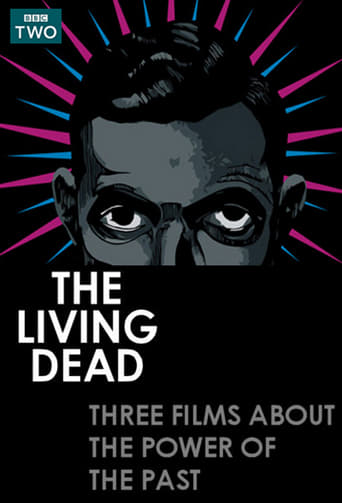
The Living Dead
1995 · TV series · documentary · 60 min episodes · 1 season
Created by Adam Curtis
This series investigated the way that history and memory have been used by politicians and others.
3 positivefrom 3 commenters
Where to watch
No streaming data for this title.



4 comments on Hacker News
The non-appearance of "monstrous psychopaths" is only part of it. I don't know much about Eichmann but there's a rather good treatment of the Nuremberg trials in the Adam Curtis documentary The Living Dead [0], in which Hermann Göring is shown as setting a tone that later resurfaces with Eichmann and in the Truth and Reconciliation hearings of post-apartheid South Africa and many other trials of atrocities and war crimes - namely an intransigent adherence to the defence that "everything was done legally".
I don't think any culture has fully digested the implications or had the courage to approach the questions Nuremberg and subsequent trials posed 80 years ago; where does the law run out? When does it become not just okay but morally necessary to defect/rebel/rise-up against your own side, and its so-called "laws" when it's become degenerate and run by criminals ?
In this way I don't think the difficult issue is that evil is banal (as in C. R. Browning's "Ordinary Men" [2]) but that it's "everyday, procedural and institutionally backed". It's defended by social organisations held dear, right up until a point of collapse and pivot of history when those institutions themselves become seen as evil.
Eichmann and Göring went beyond "Kadavergehorsam" [1] and were indignant that anyone dare judge them. Göring tried to school the judges in moral philosophy.
I don't think anyone is comfortable revisiting this topic, especially as it's still relevant and playing out today in at least two theatres of war.
[0] https://en.wikipedia.org/wiki/The_Living_Dead_(TV_series)
[1] https://en.wikipedia.org/wiki/Corpse-like_obedience
[2] https://en.wikipedia.org/wiki/Christopher_R._Browning
I highly recommend the Adam Curtis documentary (with its own biases and short comings) “The Living Dead”. In particular this episode. Trials like these probably don't work in the way you might think they work. The goal is to establish the 1 version of history that is recorded. https://www.bbc.co.uk/programmes/p08b5xvv
I have now finished The Living Dead and am halfway through Pandora's Box. Some observations with your permission.
Adam Curtis most definitely does not make music videos around conspiracy theories. He makes intellectually challenging documentaries based on absolutely stunning archive footage and refreshingly radical observations.
He seems to apply a kind of a dialectic method. For instance in the Living Dead he combines three quite remote subjects. The first episode is how the WW2 was painted as the battle between good and evil, while some think that in a war bad things happen at both sides. The second one is about cold war brainwashing techniques both in the U.S. and in Russia. The final one is all about how Margaret Thatcher bought Winston Churchill's dream of a Greater Britain. Looks like the last one is the point he really wanted to make and the two first are just preliminaries, although extremely insightful.
He is also obsessed about the relativity of truth and the feasibility of rational planning and free will. Which are not subjects readily emptied methinks.
And I don't find his voice annoying at all. So all in all, my first impression is extremely good and I have already recommended him to a couple of friends.
Sorry to hear that. This subject was new to me but by now I have watched the OP's series and the first episode of the living dead (thanks HN for another stimulating experience). I find them extremely interesting, more like essays than lectures. You know, in an essay there are a bit more artistic liberties.