 Hacker Cinema
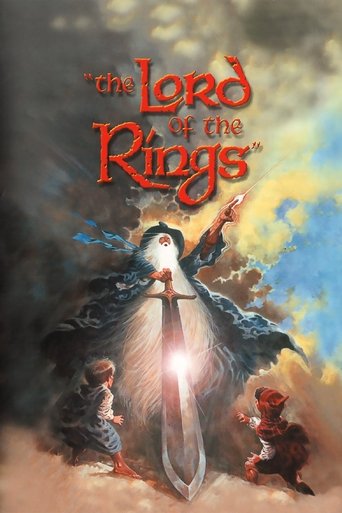
The Lord of the Rings
1978 · Film · 132 min
Directed by Ralph Bakshi
Young Hobbit Frodo Baggins is thrown into an amazing adventure when he's tasked with destroying the One Ring, created by the dark lord Sauron. Frodo must travel in a small fellowship of nine warriors and accomplices. But it won't be an easy journey for the Fellowship of the Ring, on the ultimate quest to rid Middle-earth of evil.
84 positive33 negative11 mixed225 neutralfrom 353 commenters
Where to watch
No streaming data for this title.
411 comments on Hacker News
Nothing absurd about that. What do you think an "Executive producer" is? A "Director" ? Does Peter Jackson get credit for creating the Lord of the Rings Trilogy films? Christopher Nolan for his films? But did he make them ? No, it was the collective effort of thousands of individuals all working under their direction.
Just like if somebody creates software today, and the end result is generated by the collective effort of thousands of agents, the "Director" still gets credit.
I rarely read about the contribution a good music score has to a movie's popularity. A great score makes the movie. For example,
The Blue Max, Ben Hur, the first Star Wars, Lord of the Rings, Dr Zhivago, Fistful of Dollars, For a Few Dollars More, and, of course, Blade Runner!
Corporations want a reproducible formula that can scale. Creating movies (and TV) is an inherently creative process. The people who end up running these businesses hate that but creativity doesn't scale. This is why reputation and track record is so important in getting any project greenlit. So the likes of Steven Spielberg, James Cameron or Christopher Nolan have a lot of freedom. They can't quite make what they want. A studio still has to bankroll the project and they may not like it. This is how Francis Ford Coppola ended up self-funding Megalopolis and, well, the studios were right to pass, let's be reeal.
This is also why we get so many sequeals, remarks and reboots. It's a property with a proven track record. That's so much easier to get greenlit.
The other thing that happens is that corporations (including studios) can only increase profits by cutting costs and raising prices. And this last one has basically killed the ecosystem upon which movies (and TV) depend. Let me explain.
Once upon a time, LA was relativvely cheap to live in. This allowed people to live there and work on getting their break while working flexible, often service jobs. Waittressing, hosting, that sort of thing. It could be anything, really. But it has to be flexible enough to take time off to go to auditions and jobs and whatnot. It is very difficult to make a full-time career out of working in this industry. If you're an actor and you, say, get a principal guest role on a TV series you might make $1000-2000/day but you only end up working 1-2 days on that every 3 months. You can't live on that. Recently there was a piece on the actor who played Sam in Lord of the Rings having to sell his house even though he made $250k for the 3 movies. That was over several years.
This isn't just for acting. Lighting, camera work, production, direction, editing, writing, special effects, costumes, etc etc etc.
What sustained people were residuals and the relatively low cost of living. Residuals for TV basically got killed by streaming. A lot of movie projects became unsustainable when the VHS/DVD/Blu-ray revenue pipeline dried up. Matt Damon spoke about this.
But the other thing streaming killed was the network TV pipeline. A bunch of screenplays would be written (and sold). I'm talking hundreds. A handful of those would be made into pilots. These days that's maybe 10-15 per year. Previously it was 50-100+. A certain number of those went to a half then full series order of 22+ episodes. Getting one job could sustain you for the year.
Streaming came along. The residuals went away. Those 22 episode seasons became 8-12 episode seasons every 2-3 years if you're lucky. There was no syndication money anymore. Working people in the industry relied upon residuals in dry spells to make a living. And suddenly you needed 2-3 jobs a year instead of 1 and that's really difficult to get and, even if you get it, to schedule so they don't conflict.
And then obviously ticket sales in movie theaters were in decline and fell off a cliff with the pandemic. Starting in the 2000s you had the shift to save costs to places like Atlanta, Vancouver and Toronto. Productions started chasing tax credits all over the world and would immediatley leave when they ended.
Let me elaborate on just one example: writing. To get into this field you generally would start as a production assistant ("PA"). This would generally be an unpaid position initially (an "internship"). At some point if you didn't screw up, you might start getting paid. Then you'd be the assistant to a writer. This would give you experience in a writers room. Hopefully whoever you worked for would give you feedback and teach you things. The next step would be to get a staff writer job. Back in the day you'd get paid for 22 episodes. You'd be on set for filming and you'd learn production. Most producers came from a writing background. Eventually, this career would lead you to being a showrunner. Think Shonda Rhimes or Vince Gilligan or Matthew Weiner. Weiner in particular learned his craft and earned street cred as a staff writer on The Sopranos and he tried to sell Mad Men to HBO.
Now what happens if you get hired to write 8 episodes instead of 22 so you'd getting one-third of the pay. Your job is over before shooting starts so none of these young writers are getting experience to become producers and ultimately showrunners.
It's a bit like how some companies stop hiring juniors and just overwork seniors with the threat of layoffs. Well, those seniors used to be juniors. Don't hire and train juniors and eventually there won't be any seniors. Same thing.
I guess the short version is: streaming killed Hollywood.
Expensive movies are liked because they look impressive much more so than cheap movies. Say Titanic in past. Or Lord of The Rings. If AI can do the same they don't actually care if it was expensive or not.
It would be interesting to see the models work on a book it hasn't been trained on yet. I guess sadly that means any book released very recently.
Definitely impressive demo, I do wonder though if the countless artwork, films, images etc produced over many decades around Lord of the Rings somewhat influenced the outcome of this though.
> I gave it the first paragraph of the Lord of the Rings, a 1M token budget (~$10) and asked for three js render of it.
I think it's interesting that the "Bag's End" interpretation in the video clearly looks like the one from the movies, but generated here as a three.js 3D asset.
It makes sense that the movies (or shots/frames from them) were in the training data, and I can also easily imagine an association in concept space between the textual description of Bag's End and the frames from the movie.
But how on earth does the model then go on and convert the latent representation of those images into coordinates for a 3D mesh, without ever even restoring the image? In what kind of representation are the images from the movies stored that it can do that?
Yeah, I'm not an archery nerd and even I could see that the archery looked very poor compared to other movies like Lord of the Rings. There didn't seem to be any weight to the draw in most casts.
> I gain a lot of fulfillment by making things. I don't consider things built by others at my request to be made by me, and are therefore much less fulfilling. And then I feel sad.
I've been wondering about this. Nobody would argue that Peter Jackson didn't make the Lord of the Rings movies, even though he was just telling other people what to do. Though depending on the degree of autonomy you give the AI, you start being less Director and more Producer? (Rick Rubin: "I have no actual musical ability [... only] confidence in my taste.")
Not defending either position, just trying to make sense of this strange new world.
Yesterday I unplugged the internet for a few hours and spent them programming "the old way", and found it quite painful, but also deeply satisfying. It's kind of like cardio. If I stop doing it for too long, I start to feel a little gross.
No I dont, and you're quite correct. I'm one of those weirdos who thinks The Lord of the Rings movies were better because they left out some things from the books, so I'm happy with both.
Oddly enough, I sort of appreicated the David Lynch movie more after the recent movies because not what I'm older, I sort of undersgand how hard it would be to make a movie anyways.
FWIW a 5 mile walk is not a long walk. Humans are very much designed to make that trek without too much trouble. Lots of the world has people walking similar distances for fresh water, to go to school, etc.
The point being that cars also reshape your perception of the world. METR had trouble replicating their dev productivity study because devs have already become much whinier about doing things "manually." Things that were slightly tedious in 2022 have become impossibly difficult without AI in 2026.
It is striking to reread Lord of the Rings: so much of the story is spent walking in and observing the Middle-Earth wilderness, and there is a distinct "pantheism" absent from the movies. JRR Tolkien, being one of the first modern fantasy writers, was one of the last who remembered a life without cars.
> I can't imagine staying 3 hours in a crowded room looking at a robot or a computer screen, even if it produces great music.
May I introduce you to the runtime of The Lord of the Rings films?
Also the American Federation of Musicians' campaign against "robot" musicians replacing live musicians in movie theatres? https://www.smithsonianmag.com/history/musicians-wage-war-against-evil-robots-92702721/
I did this in the last couple years, I used an 'atomic habits' kinda approach. I put a book on the back of the toilet and pledged to read 1 page before looking at my phone. It worked out nicely, I've read a bunch of books over the last year or so after kicking it off in that way.
I am also not a lifelong reader, I didn't start reading until college. My girlfriend read a ton and the first Lord of the Rings movie was about to come out, I got caught up in the excitement and read all the books. Ever since then, I've read pretty steadily. Interesting though, it wasn't social media or anything that slowed my reading to a trickle, it was audiobooks. I freakin love them when the narrator is good. Anyway, that's how I got back to reading and now I haven't listened to an audiobook in a while. :)
There are some really powerful things in Williams’s performance. You’re right about the nature of Hollywood—you work with what you got. But Hollywood also eats its own tail. Filmmakers grow up watching films, and they tend to draw from other films, the same way that LLMs just kinda rearrange pieces from ingested text (which is an oversimplification, bear with me).
Like, there’s something special about The Lord of the Rings that is not there in, say, Wizard’s First Rule. I don’t want to pick on or make fun of things too much, but Wizard’s First Rule seems to more rearrange existing ideas in the genre rather than drawing from something else.
What I’m saying is that there’s a broader problem with stories in film and books where you can tell that the stories are written by somebody who leans too heavily on other stories and books. Movies are a kind of alchemy where writing, direction, and acting intersect so we can’t explain everything away as easily as we can with books, but I want to say that the monologue is weak in the script, and Robin Williams and Gus Van Sant manage to elevate it. The direction is absolutely stellar, the acting is on point, but I hate the actual words in the monologue.
For me it was gradual, then sudden.
I liked using the early models to do autocompletion. It could do a leetcode style thing, pretty nice, but only useful for small things.
Then I sought out Cursor because that seemed to be able to do multi-document edits. Not bad, but models at the time (2024) still got stuck pretty often. So, cross-document autocomplete. Useful, but definitely within the realm of "nice shortcuts to have".
Then a friend (who works in AI) told me to try Claude last year. I was on holiday at the time, but I spun up my work repo and looked at the backlog.
It chewed through the entire 6-9 months of estimated work in a two-week period while I was watching that Lord of the Rings series with a friend (we watched an episode or two in the evenings). I just chatted with him about the series while checking the progress every few minutes. It was a huge amount of refactoring, and it didn't get everything right the first time, but it made enough progress that it could be directed the right way.
Since then I have hardly coded any manual lines. I just tell Claude what to do, with very little harness (skills, MCPs, instruction files), and I get what I want.
> So live A/V is just dead now?
I'm an indie filmmaker and I do community theater. We use gaussian splats for 3D filmmaking, and we're already using AI for background plates and VFX shots.
Where this is going - your local community theater will be able to have Lord of the Rings / Gollum-style facial/body rigs that eventually work in real time, and actors will markerless mocap into super high fidelity fantasy and science fiction scenes.
> Movies are dead? I really don't get where this take is coming from.
Movies will never be more real and more personal. The folks at A24 are going to have Marvel powers with way better stories.
Stop being so bearish. These are tools, and creative people will abuse the hell out of them to do wildly cool things.
I don't know much about the movie industry, but I think the biggest commercial successes for early CGI was possibly Jurassic Park? I don't think it would have been nearly as good if it had all just been done with puppets.
Likewise, there's been a ton of movies since that could in theory have been done purely with SFX instead of VFX, but which is probably must better from having used VFX/CGI, titles like The Matrix, Lord of the Rings, Inception, Avatar, etc.
Obviously there was also charm in titles like E.T. and Gremlins, and I think there might still be a market for movies like that, such as the 2019 Netflix series The Dark Crystal: Age of Resistance (I loved the 1982 version as a child, though this sequel wasn't for me).
I guess the question is: will generative AI allow new movies to be made, the same way that CGI has? Or will it just be an economic shift: the same quality CGI but at a fraction of the price?
There may still be people out there who believe that AI will never be able to create CGI as good as humans can, these might be the same people who used to say that CGI can never look realistic. And if you work in VFX, I bet that you can spot a fake mountain with the slightly incorrect shadows in the distance easily, but as a simple movie watcher, I really don't see it, especially when it's only on screen for like 3 seconds.
> but you have made no argument about how those transitions made us better off.
Are you kidding?
> Cars
I make weekend trips to the beach and mountains. I can have a nice big house and drive around the metro and visit all kinds of places. I take my family and my dogs with me.
> Internet
The best thing in the entire world. The highlight of my life. My career, my entertainment, how I met my wife. I don't know what you're on about.
> CAD
Pretty much all materials, mechanical, consumer, and industrial innovation. You're welcome.
> Electronic music, DAWs
Dude, most of my favorite music is this. Most of my favorite indie artists only exist because of this.
> Digital
I take so many photos. I wouldn't if it was stupid film. Memories are amazing.
> CGI
Jurassic Park.
Lord. Of. The. Rings.
I use CG in my films.
I wish I could wave a magic wand and wish all of you to a different earth. It's super annoying being around so many negative folks all the time.
Can you explain how something like the Lord of the Rings film series gets created in a world with no IP laws.
The most horrible example is the Rocky and Bullwinkle Show. Early commercial VHS tapes of it have the original music. Later tapes, and the DVDs, have all the music replaced with just awful generic music. That bad music just makes it unwatchable.
Music is an enormous factor in movies, I wonder why nobody mentions it. For example, the Lord of the Rings soundtrack is spectacular and adds greatly to the pleasure in watching it. In contrast, the soundtrack to The Hobbit sounds completely generic and boring, and the result is unwatchable.
Another example is Star Wars. The first two movies had amazingly good soundtracks. The later sequels had boring music, and whaddya know, the sequels were boring.
AMC should start showing Chinese and Korean dramas. That would help them a lot. I'm sure that they could work a deal with those studios that would let AMC set the ticket price. There hasn't been an American-made movie since Lord of the Rings that has compelled me to go see it in the theater. The movie studios seem to be pushing more extremes on immorality, violence, gore, etc, being completely disconnected from the average American's values. And then Disney and others make musicals with actors that can't sing -- mind-boggling. Hence, my wife and I watch Chinese dramas instead, a few episodes per week being my complete TV/Movie intake. They're paced better, develop characters, include a few kung fu moves, have nice visuals, aren't afraid of religious topics, etc.
What does it mean for a thing to be “authentic”? Tolkien hasn’t created anything since he passed away. I hear they used computers to some extent when making the lord of the rings movies, something Tolkien certainly would not have done. Should we thus criticize the movies on the basis of their authenticity?
Everything is a platform play.
I think it's grossly unethical and negligent that our DOJ/FTC allowed them to acquire film studios, subsidize them with outside business unit profit, put ads across their own properties, then give it all away for "free". This destroys actual healthy industries.
They bought Lord of the Rings for egregious sums, emblazoned ads on all of their delivery vans, printed it on their packaging, and put it front and center on all their apps. Any other studio would be out a billion dollars on that. Then Amazon just gives it away.
How do you compete with that?
Meanwhile Warner Bros has to fight an uphill battle to reach the same eyeballs, spend a fortune on production and advertising, and then ask customers for their money. Why would they go to theaters when they can get it for free on Prime later? Or just watch one of the shows already on Prime?
And of course now Amazon has offshored the jobs, further put consolidation pressure on the industry, gobbled up more studios...
Every single one of these giants needs to be broken up. They are a cancer in search of more growth, and unfortunately in order to find that growth they are killing the host (healthy American industries and jobs).
While it's true that VR has died a hundred deaths, I can't imagine certain parts of AI ever going away. Just because it hasn't gotten as far as we dream for it, doesn't mean it isn't already useful. It's most definitely already useful. We just have to remember it hasn't caught up to the dreams yet.
VR on the other hand, has never found its niche. It's surely out there somewhere, and so it'll die a few more deaths yet. But it is very far behind AI in terms of usefulness and/or entertainment value.
Also don't forget about 3D. While 3D movies had their moment, and still has a following, it isn't lost on anyone how bad the movies actually are when seen in 2D. There are exceptions, like the Lord of the Rings trilogy. But some 3D movies are painful to watch in 2D because those extreme-close on extreme-far tunnel shots look terrible in 2D, and just distract. Example of that? Avatar, which looks more like a bad video game in 2D.
I went to the recent re-screenings of the Lord of the Rings movies -- and maybe 30 minutes into the first film, I realized I'd never actually seen it in a theater before. It was glorious.
There seems to be a lot of gloating in this thread from people who haven't been to a theater in many, many years -- lots of disgust at the idea of a movie ever being a communal, social experience. I get the annoyance of other moviegoers talking or otherwise disturbing the movie, but you have no idea what we're missing when big films don't have big individualized social moments to match.
We can't go two hours without picking up our phones. We don't deserve the great experiences movie theaters once gave us.
I inhaled Lord of the Rings on first reading. I lived inside it. And it had no illustrations except maps, right? But later when the movies came out they were a big disappointment for ne, they were not the world I had visited. And they were boring. Had I not read the books before, they might have been just fine.
They are sort of incomparable, being very different shows. That said, I am myself someone who grew up with TNG, who was molded by TNG and shaped by TNG, and for whom TNG is the only good Star Trek... and I like B5 better. For me, TNG is entertainment and B5 is literature. To illustrate the difference, I will point out that TNG occasionally (rarely!) deals with death, and it usually does so by minimizing and mourning it, essentially averting the topic. Entertainment does not linger over the uncomfortable. (I am painting with a broad brush here -- I'm aware TNG sometimes does. Just not a lot.) B5, by contrast, returns again and again for full episodes to the topic of the soul-rackingly difficult moral requirement to offer comfort and face the inevitable tragedy together, and the agony of the experience and the ways it changes you.
As much as I love both shows, I wouldn't really recommend B5 to someone based on a love of TNG. I think it is more natural to recommend B5 to someone based on a minimial affinity for sci fi and a liking for Lord of the Rings, which will really tell you how different the two shows are.
TNG is wonderfully idealistic. It paints a picture of rising above your vices and being professional, civilized, and decent. It teaches you to work the problem, to examine the data, to think and consult and reflect and do better. I think it unrealistic -- I thought it unrealistic when I first encountered it -- but that doesn't matter. It's such a worthy ideal that it is worth encountering and remembering over and over again. As you go through life, you should remember that that is an option and strive for it.
B5 is wonderfully heroic. It is about dealing with a world of moral complexity and uncertainty, about trying to do good even when it is futile, about being a hero in the face of danger and risk and doubt. About how politics makes that difficult and keeps it in check and at any rate isn't a game you can check out of because it is the game.
Both shows encounter awful authoritarianism. One examines the law and philosophy in detail and gives a stirring verbal rebuke that carries the day. One starts a rebellion without certainty that it will be right or effective, but because under the circumstances, a good man feels compelled to do so. I think these are both extremely valuable takes on the topic, and I wouldn't want to have not seen either one. But I do have to say that at the end of the day, it is the second one I think of more as I go through life. For me the greater life lesson is not in taking the time to seek deeper wisdom, worthy as that is, but in having the bravery and faith to face danger, uncertainty, and tragedy.
I suspect that studios, within possibly a film cycle or two, are quite aware of what makes a good return on investment and what doesn’t. One problem is that Hollywood pays (far) more attention to international sales than before and what sells “there” might be less interesting “here”. So if they make stuff that fails to sell anywhere they’ll give up on that kind of thing.
So it comes down to what the international return of “family” movies are vs what’s being made now. If you want mild stuff, throw lots of cash at the box office or streaming service. And you have to outspend the rest of the world.
Oh, and Lord of the Rings had a lot of violence and discussions of Evil. And that’s ok? What about the Harry Potter flicks, as I recall lots of people thought them inappropriate at the time (witchcraft)?
I think it could just be that America is a much bigger market with much higher production values in TV and Film, so British people get their fill of competent, triumphant heroes from American media.
America has plenty of beloved sad sacks too. Charlie Brown, Donald Duck, Goofy, George Costanza, Eeyore (originally British but very popular in America and popularized by Disney) to name a few.
British media has carved out a bit of a niche for itself, but British people are also consuming other English language media.
And you also have plenty of British media where the hero is competent, triumphant, masterful, and autonomous with (frequent if not ubiquitous) standard happy endings. Lord of the Rings, Harry Potter, Sherlock Holmes, Doctor Who.
It is an interesting thought experiment, but would pretty much make standalone copy able creative work like photography, books, music, or movies impossible to sell. Works could be created on commission, but there would be a strong disincentive for producing any work without commission.
1. People who make money from GPL software typically make their money from support contracts or from running a service. Unlike software, photography, books, music and movies don’t require any ongoing maintenance once created to keep them running or up to date. There is some value in the distribution of physical copies, but digital distribution would have almost no value.
2. Math is pretty much in this boat already. Most math work is either directly paid for by a company that consumes it, or is academic work with incredibly high barriers to entry and constant hustling for grant funding. I wouldn’t wish that on any field, would you?
3. Take for example Harry Potter or Lord of the Rings. While the characters are new, they draw upon a rich mythology from the public domain (eg dragons, goblins, wizards, witches, etc).
It is an interesting discussion, but I expect removing the freedom to use public domain works outside of the public domain would was to very bad outcomes.
I get the allure of the hypothetical future of video slop. Imagine if you could ask the AI to redo lord of the rings but with magneto instead of gandalf. Imagine watching shawshank redemption but in the end we get a "hot fuzz" twist where andy fights everyone. Imagine a dirty harry style police movie but where the protagonist is a xenomorph which is only barely acknowledged.
You could imagine an entirely new cultural engine where entire genres are born off of random reddit "hey have you guys every considered" comments.
However, the practical reality seems to be that you get tick toc style shorts that cost a bunch to create and have a dubious grasp on causality that have to compete with actual tick toc, a platform that has its endless content produced for free.
So what about older films? Can you understand Die Hard on the same set? What about Lord of the Rings? That would help to determine whether it's newer films or your newer speakers that are the problem since millions of people have enjoyed those films with no problems.
I'm fine with this. I always wished regular movies were much longer. I wish lord of the rings movies included all the songs and poems and characters from the book and lasted like 7 hours each.
This is why I re-read books. I’ve read the Lord of the Rings probably like 10 times. When I already know what’s going to happen it’s easier for me to slow down and appreciate the scenery along the way. Even later readings might reveal choices the author made; I can start to see how the story was constructed.
I find this approach rewarding across most forms of media. There plenty of movies and music I’ve revisited over and over again.
I think eliminating the need to think and work around reality is part of the trouble. Not that it ruins everything (people take HN posts as so maximalist even when they factually are not; see: the rest of this comment tree) but I think the lack of the odd limitation or need to think about how to solve a problem without resorting to “render it in a computer” causes significant harm to cinema overall. I’m not (see above parenthetical) claiming it’s net-negative, but there’s a kind of film-making skill and genius that was once on display pretty widely, and now is not.
I mean for fuck’s sake, they’d probably CG the paint buckets in Home Alone if they made it today. And we’d get some tasteless can-cam shot, because you don’t have to figure it out, you can just do it. And they’d look fake because they’d move too perfectly, lacking the kinds of little off-seeming movements that a real paint can in a real take might do. Never might the can obscure a few frames of face when the directors might choose otherwise, and the result will be obviously CG through its convenience if not due to outright flaws.
Excessive perfection and too many things moving the optimal way for the shot or exactly the way the viewer expects are under-appreciated tells of CG, and they’re deadly ones, present even in a lot of “perfect” CG (give it a few years, we thought the CG in Lord of the Rings was convincing and now it looks like trash). They need to start CGing their fake environments sometimes doing something slightly less than ideal to an actor’s jacket, or something, and not to call attention to it as a comedy relief moment, but because “that’s just what happened” (not really, but it’d make the effects more convincing)
> it frequently produces mediocre or worse content
I agree, and I go one step beyond:
Any "series" is BY DEFINITION, bad. If to tell a good story you need +4 episodes, you're doing a poor job. Or, what's real, you're just bloating it ON PURPOSE to keep people attached to their screens.
If Citizen Kane, Tokyo Story, 2001 Space Odyssey or any other good film managed to tell their story in <3hs, I'm sure any other of these "originals" should be able to do the same.
The real quality resides in making something SHORTER and condensed. This is when you start playing with REAL cinematic mechanisms. For example, Seven Samurai is well known for its use of motion and dynamism. Kurosawa communicates a lot without using dialogue, just by the use of movement of the characters or the background. Today's productions are just: explicit dialog > cut scene nature > explicit dialog > cut scene nature > etc.
Some stories might need longer runtimes, like Lord of the Rings or whatever "bigger universe" it is. But these are EXCEPTIONS, not the rule.
For the record, I do enjoy some Series: Friends, The Office, etc. But these are just comedies, and one could argue they're explicitly made to be "bloated" (in terms of length span).
> Perfection is achieved, not when there is nothing more to add, but when there is nothing left to take away
PS: I know I'm going to get downvoted to oblivion but I don't care.
I think you are true to a point. But great movies get almost universal praise with scores of 9/10 on IMDb or near 100% on Rotten Tomatoes.
The same goes for food; there are things that are quite controversial, but who says no to fantastic ice cream or bread?
But most importantly for movies, it is not the micro-genre that decides. People who are not into fantasy or astrology still love Lord of the Rings or Interstellar because they are particularly highly produced, where all crafts making up that movie are treated highly instead of strategizing and optimizing.
> Disney? Meh - they've got Andor and that's really it.
I like this post about how The Matrix, Lord of the Rings, Mad Max and Harry Potter are all valuable IP written by somebody that appears to have never heard of Marvel comics, Star Wars, Indiana Jones, The Simpsons, any Pixar film, Avatar, The X-Files, or The Bachelor.
Not that the music business has had some very shady business in the past, but my guess is that the movie industry is even more shady. Didn't the Harry Potter movies make a gigantic loss on paper? Steve Jackson had to sue the company to get his Lord of The Rings money, if i'm not mistaken.
Do LLMs filter piracy requests? For example, how will it respond to 'find me a free copy of the Lord of the Rings movies' or more explicitly 'find me a pirated copy ...'?
I did win a Lord of the Rings prize pack from MoreFM, but it never arrived at my house. Either it got lost in transit or they just never shipped it.
The call with them was right around the time of the theatrical release of the first film, and the people on t radio show were excited because the movie was filmed in New Zealand. To win the prize I had to name two people from New Zealand. I couldn't think of anyone, and earlier in the call I had already looked up the stations website, so they told me to go to the staff page and name two people.
This was back in the days of dial up Internet, but we were one of the first houses to get DSL. I remember one of the people at the radio station was amazed that I could be online and on the phone at the same time.
For me it is like a different "space" for mental vs real images. It is not the same neurons, I would guess.
The real images are (and feel) outside of myself (obviously, you may say). The mental image feels very close and kind of "inside my mental space", in a dark space. It is far from how I see with my eyes on all levels, very basic. It is more conceptual, that concept given some vague form, not "pixels" (not that the eye is like a camera sensor either, it is much more complicated, a lot of pre-processing taking place right in the retina, which developed from a piece of brain in very early embryonic development). The better I know the object the better this internal concept-image, but far from what looking at the real thing is like.
I am able to visualize, that's why I could write this, but I think my ability to do so is near the bottom. It is vague without details unless I concentrate on them specifically, and it is very dark in there.
On https://en.wikipedia.org/wiki/Aphantasia I am between apple #3 and #4 in that picture. When I read novels I develop barely any internal imagery, only barebones conceptual ones. Sometimes I look at fancy visually stunning movies, Youtube videos, or graphics sites on the web specifically to "download" some better images into my brain. Mostly for fantastical landscapes and architecture.
The Lord of the Rings movies, for example, completely replaced all internal mental images I may have had, even though I read the books long before those movies were made. People like me need graphically talented people around, or my mental images will be very much limited to drastically reduced versions of what I see in real life. (THANK YOU to all graphical artists).
Original commenter for this chain here--my mental imagery for books is so strong that I can read books two decades later and call up close to the original visual memories that I had when I first read the books. My favorite books are the Lord of the Rings volumes, and I can remember different imagery I had from each successive generation of reading the book (from before I saw the movies and the Tolkien art to after).
Add a couple thoughts to that general idea:
- There's also a reward issue, in that reading, especially long form is "soft punished." It's not directly punished, yet there's very little reward, mostly a lot of struggle, not much of the candy feedback of TV, movies, and video games. It requires personal imagination and visualization of often difficult concepts rather than simply taking what someone else has "imagined correctly" for you. If you've never seen the Lord of the Rings movies, imaging what Frodo, Aragorn, and the rest are actually doing, where they're going, and the struggling through Tolkien's complicated prose is quite challenging. And socially, there's also significant peer pressure issues involved, that evoke “epidemic” or “contagion” comparisons. Once large numbers of peers discount reading, then the population on average starts receiving negative feedback. Notably, if peers are high achievers, then students who interact with these peers may also adopt those habits. [1]
[1] https://scholar.harvard.edu/files/jameskim/files/jep-peer_influence_in_reading.pdf
- Part that's less nefarious, like a teen highlights about the difficulties of reading in this paper [2] (pg 34.) "You can’t ask a book to explain what it means right now. I go to people because of their interactive nature."
[2] https://alair.ala.org/server/api/core/bitstreams/0051cf84-917a-4a96-b933-293a20723830/content#page=35
- The social media companies and the world wide web culture in general have also implemented a form of reading detriment. There's little reward to blogging, writing, or reading long form writing. Incendiary writing and rage-farming was long ago found to be an extremely effective tactic compared to informative discussion. And a lot of the time, almost all you can look forward to with your informative post is your contribution being aggressively scraped, while being compensated nothing, and then churned out to make someone else money.
- There's actually a few positive though, apparently teen and juvenile literature is actually increasing in sales somewhat from [2] compared with adult literature sales. Young adult books have been the fastest-growing category over the last 5 years, with print unit sales jumping by 48.2% since 2018. 35.03 million print copies of young adult (YA) books are sold each year as of 2022. [3]
[3] https://wordsrated.com/young-adult-book-sales/#:~:text=Compared%20to%202021%2C%20this%20is%20a%200.74%25,unit%20sales%20jumping%20by%2048.2%25%20since%202018.
- You may be slightly down biasing how much people read Lord of the Rings. The Hobbit edition from 2007 has 76,000 ratings and 12,000 reviews on Amazon. [4]
[4] https://www.amazon.com/Hobbit-J-R-R-Tolkien/dp/0618968636/ref=tmm_hrd_swatch_0
Why is Amazon gobbling up failing studios on the cheap?
Why is Amazon able to buy franchises like Lord of the Rings, advertise them for free on the side of its delivery vans and packaging, then offer the content completely for free to its mail order subscribers? That's dumping and competes with the non-AWS subsidized offerings of non-tech film studios.
Why did Amazon, Apple, and Netflix offshore production to the UK, Eastern Europe, and Asia when the US has infrastructure and subsidies? Almost everyone I know in IATSE is out of work and contemplating leaving the industry for good.
It's a pretty thorough destruction or assimilation if you ask me.
The parent comment spelt this out: because the training data likely included only few instances of walking trees (depending on how much material from the lord of the rings movies was used)
That's a Nolan thing like how Dunkirk used no green screen.
I think Harry Potter and Lord of the Rings embody the transition from old school camera tricks to CGI as they leaned very heavily into set and prop design and as a result have aged very gracefully as movies
I’d add an additional point to this list: Piracy offers control over the particular edit of the film you’re after.
I find it so infuriating when streaming services only offer the extended edit of the Lord of the Rings films - these scenes were edited out for a reason! I pretty much only want to watch the the cinematic edits.
Same for Bladerunner. There’s so many different edits and the streaming services rarely declare which edit they offer, let alone offering options to choose your preferred edit.
> How many movies have you worked on?
Over a dozen.
> People are already creating movies with $1k cameras
Nobody wants to make an iPhone movie. They want $200k glass optics and a VFX budget like Nolan's or Villeneuve's.
I'm tired of people from outside the profession telling us we should be happy with quaint little things. That's not how the ideal world works. In the ideal world, everyone can tell the exact story in their minds and not be beset by budget.
My imagination is my ideal world. I won't listen to naysayers, because you're so far behind my dreams.
If this wasn't about to be practical, I'd relent. But the technology works. It's tangible, usable, and practical.
I've been saying that on HN since Deep Dream. My friends in IATSE also called this crazy. It's not. It's not just coming, it's here.
> A lot of them are horror movies because of the budget
Tell me about it. Been there, done that. It sucks to be so creatively stifled when what I wanted to make as a youth were fantasy movies like Lord of the Rings.
I got creative. I did mocap and VFX. It still wasn't what I dreamed of.
> How many?
Film school attendance is over 100,000 students annually. Most of them were never able to land a high autonomy role or be able to follow though on their dreams. I know hundreds of people with this story.
> A lot of them are horror movies because of the budget and most of them are terrible with huge glaring mistakes in editing, pacing, framing, etc
Sound. Sound is the biggest thing people fuck up. But the rest are real failure cases too.
> Most experienced executives can help guide priorities and make sure there aren't any big overlooked problems.
They're not as important as you think. They're just there to mind the investment.
When the cost of production drops to $30k, this entire model falls apart.
Studios were only needed for two things: (1) distribution, (2) capital. The first one is already solved.
I think it's fine to pick up a story in whichever modality you find most engaging, and in the long term AI tools will supercharge this.
New modalities of presentation will make media more accessible to a wider audience, so they can benefit and learn from it, even if some of the magic is lost in translation. Consider how many more people got to experience Lord of the Rings thanks to the Peter Jackson movies, who otherwise would've never picked up the books.
To a certain extent, translations which play with the presentation and complexity of the text have already been around for hundreds of years. Just compare all the translations of the Bible.
Some modernized retellings of classic stories are quite delightful, like Stephen Fry's series of classic Greek mythology.
Personally, I can't wait to generate an anime based on Penrose's The Road To Reality.
Hard sci-fi can definitely be popular, The Martian and The Three-Body Problem are two examples I can immediately think of. I think the Arrival and Contact movies would also count (not sure if the books were considered popular before their film adaptations came out). There is usually a way to avoid most of the "opaque wall of gibberish" so that there is just enough for a technical-minded reader to tell that the author has put some thought into it and the science makes sense, but still little enough that a non-technical reader can enjoy the story without having to care about the scientific worldbuilding.
I think Lord of the Rings might be a good analogy. LotR is sort of "hard fantasy" in that Tolkien put a ludicrous amount of work into building an internally consistent world, as you can tell by The Silmarillion, but that book is not enjoyable to read (in my opinion). Part of the reason LotR is good is that he took out enough of the walls of text to make it fun to read. A good hard sci-fi author might have a Silmarillion-level of knowledge about their own book's setting, but be able to leave almost all of that out of the final product.
I did read both when they came out (in paperback anyway). But I know what you mean. Friends who had not read The Lord of the Rings but saw the films can be excused for thinking the story was "derivative".
> have very little understanding about what makes good movies
I've seen many thousands of movies, and that does give me knowledge about what makes a movie better.
For example, music makes a huuuuge difference, even if one may not even be aware of the music. For example, Star Wars and Lord of the Rings would be diminished considerably without their very good soundtracks. You can see this with the Hobbit movie - a lousy soundtrack, which severely damaged the movie. 2001 was greatly enhanced with the soundtrack. I read that Kubrick spent hundreds of hours listening to records searching for the perfect music. It paid off handsomely. What would "Blade Runner" be without the Vangelis soundtrack?
> unspoken "show-don't-tell" internal logic
This is another axis separate or orthogonal to worldbuilding.
Recent Marvel and Disney films, the Jurassic Park and Star Wars sequels, and most Godzilla / Kong slop doesn't build believable worlds. The writers don't spend any time writing the universe that the story takes place in.
Lord of the Rings (the theatrical film trilogy), Game of Thrones (save for the last seasons), and Jurassic Park (1993) all build vast and credible worlds. Intricately detailed, living and breathing universes. Backstories, histories, technologies, warring factions, you name it. They then create believable characters that occupy those worlds and give them real character arcs within which they suffer, rise to prominence, grow, and die. Multiple heroes with multiple journeys. You're fully immersed in the fictional world, watching characters you care about occupying it. It's masterful storytelling.
Villeneuve's Dune has the same vast world and literature to draw upon as many of the other great epics, but he makes the rare mistake of not communicating anything to you about it. If you haven't read the books, much of the story is easily lost. He doesn't spend time on character arcs or even as much as dropping hints to what the subtitles of the world are. It's a super rare misstep, because most bad storytelling is from under baking the fictional world.
Then there's the mistake of sequels that try to expand on the mystery of the original world. The Matrix films and countless others have over-illuminated the mystery of their stories in trying to build universes. In doing so, the magic has been lost.
I have had a question for a long time, and this may be my one chance to ask someone who actually knows how these things work.
When you were working on this, have you considered playing music that (and please don't take this the wrong way; this may be exaggerated but maybe you will understand what I mean) pre-retirement non-musicians would listen to, where the composer is still alive, and that hasn't been played in the same venue a hundred times? Looking at the Gewandhauses schedule right now, there's absolutely nothing for me.
The San Francisco Symphony plays a top-tier movie (Top Gun, Titanic, Lord of the Rings, etc.) with the film music performed live by the orchestra every few months, and I go to many of these. I got tickets for the Game of Thrones series finale concert (different venue). I absolutely loved Video Games Live, which actually has been in Leipzig too, but in the Arena, and well over a decade ago. I went to a Lindsey Stirling concert, who I knew from YouTube.
So my question is: Why can't the Gewandhaus do something like that regularly? Why can these events only be available in large cities like San Francisco? It's actually frustratingly difficult to find such events in smaller cities. Is it licensing/artist fees? Not interesting for the local musicians? Events like this reliably book out large venues several times in a row, so can it really be lack of demand? Maybe only from the wrong customers?
I'm sure many people have imaged this - supposing that LLMs, while making no great strides towards AGI, consciousness, or any of that, nonetheless keep getting better and better at what they do now. Imagine a decade or two of steady improvements, throw in at least a couple of major breakthroughs. Much longer context by a few orders of magnitude. Much better quality, in terms of tone, consistency, hallucinations.
Maybe we'll actually be able to say things like: write me a trilogy in the style of Lord of the Rings but with these changes:
* Make it scifi
* Add more female characters with greater depth
* At least five rings
* Hobbits are the bad guys
... Or whatever, specifying a version of the story tailored to your intersts, and that you would get out really high quality results, similar in quality to the source materials.
Imagine you could do the same with movies, games, music.
I'm not trying to assign a value judgement here. There's good and bad sides. However, this reality is becoming easier to imagine with each new model released.
For sure, anyone who is a writer or artist will see this as bad. But perhaps our whole concept of what art is will become more fluid and personalized.
The first film was groundbreaking. It matched "Star Wars" and "Lord of the Rings" in terms of its cultural penetration. Unfortunately the series failed to live past that strong debut. The second and third films were a total letdown, and The Animatrix only appealed to a niche audience and was itself a mixed bag.
The surprising and unsolicited fourth film had some promise in the first third of the film - I loved how it subverted expectations and was a meta deconstruction of the series itself. After the provocative and almost blasphemous setup, the film quickly devolved into poor action, weird pacing, and overall bad plot and character arcs. In a word, it felt senile. (The action shouldn't have been that bad with Keanu helming John Wick. It was just laziness.) The denouement was just same-y slop we see in every other dialed in action movie. Such a letdown for such a shocking cold open.
If you haven't seen the fourth film, it's a bit of a mind fuck. But turn it off the minute the reveal is over. That part is a treat, but it isn't worth your time otherwise.
Do you think the Lord of the Rings movies were bad art?
Generally it's such a bummer that streaming services (including music) have really diminished the 'extras' that used to be so common with DVDs. Granted, Disney+ has their great "Light & Magic" series. But, one of my favorite things about getting a box set for something like "The Abyss" or "Lord of The Rings" was that it'd be loaded with bonus content and making-of mini-documentaries.
Same goes for albums. But, it's particularly egregious there because there used to be such a rich medium in album art and liner notes. The fidelity of a record's artwork was pretty amazing when you think about it. Very large and immersive, and you'd spread it out while listening.
Apple Music has their neat little animations and visuals on some albums and categories now – but, with all the power of phones it's such a shame that the visual aspect of albums has basically withered on the vine. The early "Cover Flow" UI showed some care of this, but it never went much farther.
Partially I wonder if it has to do with the death of Flash. In the late 90s, it was very common for people to use Director, and then later Flash, to create interactives, and have a relatively widely excepted standard for viewing them. When Jobs killed flash with his open letter, (and don't get me started on HyperCard), nothing really stepped into its place.
And I say this as someone who writes apps for a living. It's way easier to write an app today, and in SwiftUI one can rapidly put an interactive together without a ton of complexity... but, somehow the momentum was lost and we never really returned to the DVD era in terms of bonus content, hidden tracks, or beautiful album art.
I did not state Catholicism is an aesthetic. I replied to vFunct's comment "vFunct The whole Catholic aesthetic is amazing. Really is the tops." "with religion is more than an aesthetic." An aesthetic is using symbols and atmosphere, architecture, to create a beauty. A religion may use these objects, but also has values that do not depend on them.
Also, another person posted: " echelon "It truly is. As is the Ancient Roman aesthetic. There's a reason why Final Fantasy, Game of Thrones, Lord of the Rings, and many more fantasy series lean heavily into the look and feel."
So people suggesting video games and tv shows, even with lots of violence (particularly GoT) is an "aesthetic", is a lot more shallow than my basic point that religions aren't primarily aesthetic. Maybe you replied to the wrong comment.
Look at all those top non-American films on that list:
1. Once Upon a Time in America
2. One Flew Over the Cuckoo's Nest
3. The Great Dictator
4. Lord of the Rings
5. Chinatown
If there's one thing you can't associate Charlie Chaplin or Jack Nicholson with, it's Hollywood.
Number 9 on your list is famous non-Hollywood filmmaker Alfred Hitchcock.
I read this one the other day and couldn't make heads or tails of it. I must not be the target audience.
> The Lord of the Rings seems immersed in racism (the superiority of the fair and noble elves, the inferiority of the brutish, mongrel orcs), colonialism and imperialism (the return of the king means the restoration of empire), and deeply retrograde sexism (with a core cast of characters that is overwhelmingly male).
That's just one half of Tolkien's dialectical examination, though. An apolitical reading reveals all sorts of nuance in these themes, especially in LOTR. Racism cuts both ways - humans are portrayed as being baser than Hobbits in many cases, but aren't discriminated against despite their weakness and short lives. Imperialist virtue is mocked by the government of the elves, who almost completely lack individual agency owing to their trust in governance and religion. Sexism... I don't even know how DEI-obsessed you have to be to care about this. Women are portrayed with depth, depicted in positions of power and recorded in combat. It's exemplary, for 20th century literature.
People always talk about the influence of WWII on Tolkien's writing, but I'm fascinated by the increased politicization of the novels as we drift away from a postwar unity. Part of me even wonders if the Peter Jackson films could be made nowadays without being accused of wokewashing the whole thing.
> "Game Transfer Phenomenon"
There was a phrase for this in the "old days" too, it was called "Lost in Make Believe".
As pointed out in numerous other comments, this phenomenon is not limited to video games. It can also happen after seeing movies, or even reading books. Especially with long series of books, I knew several people in high school who started living "The Lord of the Rings" and even "Clockwork Orange".
There are significant differences though:
1) As mentioned in the article: the extreme realism of video games
2) Often under emphasized: the amount of a person's waking hours spent in the activity
3) Of very serious consequences, i.e. modern incel-ism: the extreme violence of many video games
4) Something certain to get me downvoted: the significantly increased susceptibility to "Lost in Make Believe" of people raised in the internet/"phone" era (this point is very intertwined with point 2)
I can see how these factors can cause the "Lost in Make Believe" phenomenon to be much more serious with a modern gamu than with previous media. The extreme violence is certainly not unique to games either, books and movies also exhibit it, and bad behavior from role playing Clockwork Orange could rival Grand Theft Auto in some people.
> Painting out these movie mistakes as part of a restoration is wrong. What's in the movie is in the movie, and altering the movie to this extent is a form of revisionist history.
How many times has Lord of the Rings been revised? Dune? <Insert other long-lived actively managed novel>. Is the active management of these novels "wrong"? Is fixing grammar, spelling, or clarifying story beats "wrong"?
I personally don't think so, and I'd rather read something which has been corrected, especially if done for story clarity.
I was really shocked last week when I met two women in their early 20s in a bar. Someone mentioned The Lord of the Rings. I said I'd read it.
They were shocked! They were asking about the film.
And I was probably more shocked when they said they don't read books because they don't have the patience. One said she once read a whole book and it was really good, but hasn't don't so since.
Meta doesn't bother me too much.
I'm more concerned with YouTube owning all of social video. Movies are on a dozen streamers. Social stuff is on Instagram, TikTok, Reddit, and X. But video essays, independent animation, educational content, cultural critiques, music, video podcasts, trailers, gameplay, research, news - anything long form, serious, interesting - it's all trapped on YouTube as the only distribution platform. And they'll keep getting bigger with no possible alternative due to network effects.
I'm even more concerned with Amazon being a conglomerate [1] that is in online sales, hyperscaler infrastructure, consumer hardware, home automation systems, grocery stores, medicine, primary care, and movie production. And that they can leverage these synergies in grossly unfair ways.
I'm most concerned that the Apple / Google duopoly in mobile, web, and search has entrenched these two players across the vast majority of online transactions, interactions, and computational device usages. They collect margin on everything. They own your devices, they own search, they own the web, they own the apps, they have to be paid off to rank your business, have to be paid off to collect money, they regulate what you can do with your apps and websites, etc. etc. You jump through their hoops. This is their internet.
[1] Especially given the fact that Amazon can subsidize their efforts in these areas from profits in other business units and out-compete viable businesses in those markets. They can offer goods for free with an existing subscription and advertise far and wide across their retail website, plastered on their packaging, and emblazoned on the side of their delivery vehicles. Lord of the Rings got an 80 million dollar advertising package for free, whereas Bong Joon Ho's far more deserving film got next to nothing.
Atlas of Middle-earth is a truly monumental feat.
I think the article writer misses how much of it is really about The Silmarillion, rather than about Lord of the Rings. Tolkien put a lot of work into First Age geography, an entire (interminable, excruciating) chapter of The Silmarillion. Very little of it would be familiar to viewers of the films, and a lot of it opaque even to readers just of LotR.
The success that we can now measure through hindsight wasn’t assured at the time of greenlighting the film. They took a huge gamble:
https://variety.com/2021/film/news/lord-of-the-rings-peter-jackson-risky-trilogy-1235123548/
It would have been an even bigger gamble if they weren’t able to bank on any long term revenue (I’m certain Netflix continues to pay for the rights to stream the trilogy after 2021).
For me, it is very apparent in movies nowadays.
I watched the Lord of the Rings over Christmas, and I was stunned by how colorful the movie is. Even in the darkest scenes in Mordor, it felt more colorful than movies of today.
Today, it looks like everything is shot in log and then someone does not add the saturation back. But I am also guilty of this .. when I got my new camera, my graded clips also looked very flat, but I like(d) that look because of all the movies and youtube videos looking like this.
I mean I still love going to the theatre for a nice big screen movie. I have a great IMAX theatre nearby, and a lot of local cinemas. There are showings of older films — Lord of the Rings last year, Interstellar in IMAX, etc. People show up for these. “Movie theaters are dead” is definitely a big exaggeration.
But yeah, I’m not gonna pay to watch the average mediocre new movie at the questionable regal/AMC and pay like $40 for refreshments. But I’ll totally go out to see any movie (new or old) which are great experiences and benefit from a huge screen and fantastic audio system.
Theaters have over-indexed on quantity over quality. There are loads of locations with poor projection quality and shitty sound, dozens of screens, and lots of crap movies coming out. Why would people show up for that when they can stream something better at home on a potentially nicer TV?
So yeah, the industry will change a lot, but it probably won’t die.
If you think this skit is promoting homophobia you need to work on your media literacy. If anything it's lampooning homophobia. The entire situation is portrayed as being absurdly focused on the witness' (alleged) sexual orientation.
Just because you portray something doesn't mean you endorse it. Alan Howard portrays the ring in the Lord of the Rings, That does not make him (or the movie) evil incarnate. Similarly Stephen Fry portrays a barrister with a weird obsession with lesbianism, that does not make him (or the skit) homophobic.
His take down of the "steppe nomadic warriors" nonsense in movies and TV shows, and especially of the Dothraki and how they don't make any sense, is also very interesting.
To me the most surprising thing is that Deveraux considers Lord of the Rings more grounded on history than Game of Thrones, when GoT was "sold" to audiences as a grittier, more realistic take on medieval fantasy. But very little in GoT makes any "medieval" sense, it's almost entirely fantasy with a "grimdark" tone instead of a fairy tale/folklore tone.
(Which, like Devereaux points out, would be perfectly acceptable as artistic license ... if only GoT hadn't been sold to us as "more realistic" by George Martin!)
I'm particularly glad to see the "Destroying culture" segment, though brief, as it touches on my main objection to modern advertising. In the piece, he mentions how an old work was re-purposed and "ruined" for him - though the phrasing sounds extreme, I completely understand. The concept described, as I interpret it, is about sparking an internal pleasure center for the purpose of inserting a commercial prompting to engage. This is especially problematic with "wants" type purchases - luxury items, status, etc. - compared to "needs" where a specific company is trying to differentiate itself from the pack.
I remember the hullaballoo when the Rolling Stones licensed "Start Me Up" to Microsoft. Last night, during the Superbowl, Meg Ryan and Billy Crystal reunited for a mayonnaise commercial aping a scene from "When Harry Met Sally" and I chuckled to myself how it was probably missing 2/3s of the viewership on the reference. Using Iggy Pop's "Lust for Life" by Carnival Cruise lines only sparks memories for me of Danny Boyle's "Trainspotting" and obviously they don't care. Same goes for when "Lord of the Rings" trailers had the Kronos Quartet playing under them, specifically the track featured in "Requiem for a Dream."
Honestly my breaking point was for a car insurance commercial where an accident occurred and the driver pulled an entirely new car from the trunk of the damaged car to represent the ease of returning to the prior state. It felt so absolutely deceptive I never will let it go. But that's not even the low point.
Pharmaceutical companies are now portraying "mini-movies" with the full narrative arc to create the sensation that a full and happy life is possible if only you ask your Doctor about some random-ass pill for a condition likely best treated by a change of lifestyle. The one I have in mind is a football coach where he's a family man, a teacher, and then gets a commemorative portrait unveiled at a game because he's so beloved. The culture damage of these bastardizations of narrative and story are a runaway freight train - always in slow motion mind you - and every time you see a historical figure selling you something, just remember that they're dead and couldn't complain. If it wasn't for Crispin Glover's lawsuit win all those years ago, Kurt Cobain might be selling anti-depressants and Jimi Hendrix a Kia or something.
> Yes I exclude that,
So humans steering diffusion is off limits? No Krea, no Invoke, no articulated humans?
It's like you're taking away Premiere or Final Cut here. Text prompts are not the currency of AI film. Controllability levers are essential to this whole endeavor.
> I do not think something that augmenting that input data counts towards actually reducing production costs and speeding up the process of creating media.
You haven't spent much time on set, then. An animator can do a performance capture on their webcam and adjust the IK. That's way different than booking a sound stage, renting an Arri Alexa and lenses, and bringing out a whole cast and crew. Set dec, wardrobe, makeup, lighting versus the moral equivalent of a Kinect and a garage studio.
My 6 AM call times, early mornings climbing up to the top shelf of the prop house to grab random tubas and statues, and signing countless legal forms and insurance paperwork all beg to differ with your claims here.
> AI has eliminated or vastly eliminated the need for human actors.
I don't think it necessitates this at all. Kids are going to be flocking to the media to turn themselves into anime VTubers and Han Solos and furries and whatever they can dream up.
Artists want to art. They're going to flock to this. We're going to have to open up the tech for that reason alone.
I'm sure fast moving marketers and the cottage industry of corporate workplace training videos won't use humans, but the creative side will. ElevenLabs is great, but there's also a reason why they hired Chris Pratt, Anya-Taylor Joy, and Jack Black in the Mario movie.
> For example of what I'd accept, a 2 person team that creates a 20+ minute ensemble film in less than a month or 2 that meets the success criteria above.
I'll posit this: a two person team will make a better Star Wars, a better Lord of the Rings, a better Game of Thrones. An ensemble cast of actors piloting AI diffusion characters (or whatever future techniques emerge) will make a film as well acted as Glengarry Glen Ross. Perhaps even set in some fantasy or sci-fi landscape. I bet that we'll have a thousand Zach Hadels, Vivienne Medranos, and Joel Havers finding massive audiences with their small footprint studios, making anime, cartoons, lifelike fantasy, lifelike science fiction, period dramas, and more. And that AI tools will be the linchpin of this creative explosion.
This already happens without AI, it's just that studios can only produce so many films given the budget, labor, and time constraints.
Tell me that any of the "Jurassic Park" films beyond the first were necessary. Or the "Lord of the Rings" films and shows beyond the original trilogy. These are products of the classical studio system. They keep trying to remake "Back to the Future" and as soon as Zemeckis dies, they'll have their way.
There will be amazing art made using AI, and AI will enable extremely talented creators that could have never made it in the classical studio system.
Don't be so pessimistic.
We're going to have "Obra Dinn" and "Undertale" equivalents in film soon. Small scale auteurs sharing their mind's eye with you.
Yeah I can't wait for "Forest Gump 2", The Simpsons Live Action starring John C. Reilly as Barney, and "Lord of the Rings But It's A Wes Anderson Movie". AI distilling the absolutely worst and most cynical Hollywood trends into full length motion pictures. I've yet to see anything remotely approaching non-slop from AI-generated video.
that's the mindset that I'm trying to challenge. "new" depends on your perspective while you are enjoying the content. The second and third watch you can appreciate different aspects: scenes that were missed, subtleties in the performance or the writing, set design.
Learning how to continue appreciate things that you've already experienced gives you the power over the experience. You don't have to depend on an a constant influx of "new" content.
I've seen Interstellar, Matrix, Gladiator, Harry Potter, Lord of the Rings 20+ times. They are even more moving now when I watch them because I can see how I've changed and related to the movies in a new way.
Very good definition. Definitely Tom-and-Jerry-esque mixed with blue collar scroundrel overtones.
I would expect to have more new Tintin comics as result, but probably will be at most a good falsification (Don't made me make talk about the new "Lord of the rings" film).
I get what you're saying but art doesn't exist in a vacuum. Newer works can add context and alter our perceptions of older works. Especially when people's first exposure to a work is an adaptation. Someone who has never read the lord of the rings, but has seen the movies several times will never be able to read the book without picturing Elijah Wood.
Strong feelings for an adaptation or a sequel can taint or enhance how someone feels about the source material even if the original was experienced first. For example, it's understandable if someone who really loved star wars before the prequels and disney acquisition found that they can't help but experience a sense of loss and disappointment while revisiting those original films knowing about midi-chlorians and how the franchise ended up.
The original works are unchanged, but in many cases the way we view and experience them isn't.
Kind of curious that this is happening in NZ, the tourism beneficiary of literary and artistic (and yes, technical) largesse...
"The annual tourist influx to New Zealand grew 40%, from 1.7 million in 2000 to 2.4 million in 2006, has been attributed in large part to The Lord of the Rings phenomenon. 6% of international visitors cited the film as a reason for traveling to the country."
https://en.wikipedia.org/wiki/Tolkien_tourism#:~:text=in%20New%20Zealand.-,Economic%20effects,for%20traveling%20to%20the%20country.
Star Wars? Not worth anything, huge reliance on "machine-generated" imagery. Lord of the Rings? Useless film, uses "machine-generated" imagery. Don't even get me started on anything by Pixar.
/s
>(US) do better than anyone else: music, movies
That was true till 10-20 years ago or so when we had things like the Matrix and Lord of the Rings, but most of the modern entertainment content coming out of the US right now is not only low quality predictable slop but also filled with US-centric political messaging, identity politics and virtue signaling that nobody else outside the US identifies with or wants to pay for. Taht why so many bomb.
I do think there's also just a sort of natural goal-post moving when you're talking about something that's hard to imagine. The best comparison in my mind is CGI in movies. When you've never seen something like the Matrix or Lord of the Rings or even Polar Express before, it's wild, but the more you see and sit with it, the more the stuff that isn't right stands out to you.
It doesn't mean it's not impressive, but it's hard to describe what isn't realistic about something until you see it. A technology getting things 90% right may still be wrong enough to be noticeable to people, but it's not like you could predict what the 10% that's wrong will be until you try it, and competing technologies may not have the same 10% that's wrong.
Especially primed by all the lord of the rings movies, for example; I could see the studio taking all the archived footage, camera angles, all the extra data that was generated in the creation of the films and feeding that into something like this model to create all kinds of interesting additional material.
>and then for a few weeks the cultural conversation would be dominated by this - a book of poetry. Which people 50 years from now would be reading in lit classes.
I'm too young to remember this for poetry, but it certainly was true for music, TV shows, and movies for long after it was true for poetry. People are still talking about The Beatles, Led Zeppelin, various highly-successful movies from the 60s-00s (Lord of the Rings for instance), TV shows like Game of Thrones, etc. However, I'd say it's less true today, but TV for instance seems to have lot of this still going on with people talking about various high-caliber shows like The Expense, Silo, etc. I think poetry simply went the way of theater: other art forms surpassed it in popularity, though it still has its niche audience: New York's Broadway is still quite popular. And people spend lots of money on music concerts.
Fullmetal Alchemist and its movie are both excellent, though, even though they it's vastly different from the source (and of course, the more faithful adaption in Fullmetal Alchemist: Brotherhood).
I think the Lord of the Rings trilogy is also quite good, even though it does stray quite a bit from the books, omissions aside.
It's really hard to make good media and I haven't found any reliable indicators hinting at whether an adaptation will be good or not. I found The Hobbit trilogy to be laborious despite having Peter Jackson at the helm of it as well. Though in that case, maybe the source material itself is the issue.
For convenience, I asked ChatGPT to create this table, which summarizes how many times each movie has been mentioned in this conversation so far. It got a few counts wrong (as usual), but it still gives a good sense of the frequency. I hope it can be useful to someone:
| Movie | Number of Mentions | |-------------------------------------------|---------------------| | The Matrix | 9 | | Lord of the Rings Trilogy | 8 | | Pulp Fiction | 8 | | Alien | 7 | | Fight Club | 7 | | Ghostbusters | 6 | | Die Hard | 5 | | Back to the Future | 5 | | Inception | 5 | | Star Wars Trilogy (original) | 5 | | Groundhog Day | 5 | | Terminator 1 & 2 | 5 | | Jurassic Park | 4 | | The Thing | 4 | | The Fifth Element | 4 | | Monty Python and the Holy Grail | 4 | | Ghost in the Shell | 4 | | Interstellar | 4 | | Casablanca | 3 | | Office Space | 3 | | Shawshank Redemption | 3 | | The Godfather Trilogy | 3 | | The Blues Brothers | 3 | | Blade Runner | 3 | | Mad Max: Fury Road | 3 | | Unforgiven | 3 | | Total Recall (1990) | 3 | | The Crow | 3 | | The Princess Bride | 3 | | Akira | 3 | | The Big Lebowski | 3 | | Guardians of the Galaxy | 3 | | American Psycho | 3 | | Indiana Jones Trilogy | 3 | | Kiki’s Delivery Service | 2 | | Ratatouille | 2 | | A Clockwork Orange | 2 | | Mission Impossible (various) | 2 | | Casino Royale | 2 | | Skyfall | 2 | | Ferris Bueller's Day Off | 2 | | Star Trek: The Wrath of Khan | 2 | | Apocalypse Now | 2 | | The Shining | 2 | | Groundhog Day | 2 | | Donnie Darko | 2 | | Dune (2021) | 2 | | Gladiator | 2 | | Predator | 2 | | Seven/Se7en | 2 | | The Dark Knight | 2 | | Snatch | 2 | | Prometheus | 2 | | Schindler’s List | 2 | | The Wolf of Wall Street | 2 | | Dr. Strangelove | 2 | | Silence of the Lambs | 2 | | Kill Bill | 2 | | Real Genius | 2 | | Top Secret! | 2 | | Tenet | 2 | | Tinker Tailor Soldier Spy | 2 | | The Adjustment Bureau | 2 | | The Expanse | 2 | | Pulp Fiction | 2 |
I rewatch many movies quite often. But the ones that really stand out, in no particular order...
Wargames Jurassic Park Evolution Unstoppable Lord of the Rings Die Hard 1, 2 and 3 Alien 1, 2 and 3 Back to the Future Ghost in the Shell (basically all of it, mostly seasons 1 and 2) The Martian Tron 1 and 2 Anything by Miyazaki, but Howl's Moving Castle even more so
Original Star Wars trilogy. Lord of the Rings American Psycho Total Recall (1990) Blade Runner Love Actually The Fifth Element Unbreakable Pulp Fiction Four Weddings and a Funeral Guardians of the Galaxy X-Men X-Men the Last Stand Showing my age here, but I started to lose interest in movies after the 2000s. No I do not want to watch a remake of [Blade Runner, X-Men, etc...]. Also X-Men was great, but my interest didn't stretch to Captain America and Iron Man, so the MCU was a loss for me.
Also showing tomorrow in London (sold out) and again in 2 weeks at the wonderful Prince Charles Cinema [0]
Later in August they have a 21 hour (1260 minute) session of LOTR+Hobbit [1]
[0] https://princecharlescinema.com/film/24580801/the-lord-of-the-rings-trilogy-extended-editions/
[1] https://princecharlescinema.com/film/30981057/middle-earth-marathon-the-hobbit-the-lord-of-the-rings/
Lord of the Rings also famously does not have opening credits. Just runs right into the film. With the expectation that you might have just finished the previous film and ready to start the next.
This is a specious argument. It is impossible for us to gesture at the works of art that do not exist because of draconian copyright. Humans have been remixing each others' works for millions of years, and the artificial restriction on derivative work is actively destroying our collective culture. There should be thousands of professional works (books, movies, etc.) based on Lord Of The Rings by now, many of which would surpass the originals in quality given enough time, and we have been robbed of them. And Lord Of The Rings is an outlier in that it still remains culturally relevant despite its age; most works will remain copyrighted for far longer than their original audience was even alive, meaning that those millions of flowers never get their chance to bloom.
Same here, regarding movies- we preferentially watch films under two hours, ideally 90-100 minutes, because that both fits between our child's bedtime and ours, and it's a better economy of time for a story in that format, rather than an indulgent marathon.
I doubt I will ever watch Heat again, unless over a couple days, and unless my child wants to I won't watch the Lord of the Rings again (and especially not The Hobbit movies; that was largely a waste of time, though I will gladly read The Hobbit at least once more before I die).
Mad Max: Fury Road (Black & Chrome version) I watched for the third time recently, but over two days.
Engaging conversation, though? I recently had the luxury of time and privilege of talking for three hours straight with a well-read college student. Not being a high school teacher anymore I'm out of touch with young-adult perspectives, and I have so many follow-up questions now.
I think their numbers are BS, just like Hollywood's numbers have always been BS. Remember when Lord of the Rings lost money for New Line somehow?
Paramount's supposedly got 71,000,000 subscribers. At ~$10/month, they're making something like $8,500,000,000 / yr in subscriber fees. You gotta be daft to lose money on that.
At like a $1,000,000 / episode (last numbers I heard, might be old) that's 8,500 episodes of television a year. Pretty sure they didn't make anywhere near that much content last year. Seems like mostly all they're doing is taking away content and then charging you for it again. Disney already plays this game pretty extensively.
The Amazon Prime adaptation Rings of Power was an interesting (see: bad) case-study on what happens when you try to write Tolkien without him. It's perpetually insipid, like watching a puppet show try to adapt Shakespeare. So much is stripped off the bone that no story exists anymore, and all the characters and their motives blend into one another or aren't shown at all.
> If Disney were to adapt The Lord of the Rings in 100 years to reflect new "lessons," I would be relieved to no longer be around to see it.
What's funny is, these adaptations don't even do that. Peter Jackson's films are fun because they're essentially a "Spielbergian" take on what these books should be. They're still pared-back, but they have enough of the throughlines with the original story that you still get the big takeaways at the end. They're reductive films, but powerful.
Rings of Power just, exists. It doesn't want to adapt Tolkien's original themes of death and transcendence, it doesn't want to embrace a new theme, so it's stories feel incidental and pointless. There are no conflicting plots or overarching adventures. You're just watching people in costume do pretend-errands so we can point at the TV like Leonardo Decaprio when we see our favorite character. It has no intention to conserve the original narrative or puppet it's corpse for something new. It's just a cruel mockery of an IP that can be bought out for the highest bid.
If you want to watch Lord of the Rings without either a weird color cast or janky AI upscaling artifacts, you need to get a version that pirates have fixed https://www.youtube.com/watch?v=zkNFZkUHeKQ
Streaming services show unskippable ads for their other shows before your stream. Amazon showed an ad for a violent war movie before a kids movie my family wanted to watch.
With pirated copies, you can often get subtitles that were not available with the original (fan-subs)
But there's nothing wrong with this!
Let's say I'm making a movie. I have an old wizard character similar to Gandolf in Lord of the Rings, so I contact the guy who played Gandolf in Lord of the Rings. He says no, so I hire a different actor who also fits the "old wise wizard" archetype.
Is any of that illegal?
OpenAI could have had a neat and legitimate crossover promotion between Her and ChatGPT if Scarlett had played along. It doesn't cost her anything, and they likely could have produced the voice they wanted with some material from her, maybe 10 minutes of talking?
However, the lady doth protest too much.
Actors and big media companies are doing their damnedest to prevent any progress, because technology is encroaching on their craft. It seems that entirely AI generated media at Hollywood blockbuster levels of audiovisual quality are a matter of engineering at this point.
Let's not impede progress so that we can play a pretend game that we need humans to do work that AI or software can do at the same level of quality.
Actors like Scarlett shouldn't be able to license or protect their voices or appearance, regardless of how distinctive. Someone's doppleganger shouldn't be limited in their own rights based on what they decide with regards to appearance in media. Someone that looks like Scarlett Johansson shouldn't be able to decide for her that they don't want to appear in any video.
If Scarlett decides to get plastic surgery and radically alters her face or body, should she retain any rights over how she used to appear? What about twins separated at birth? Can I get plastic surgery to appear like 1980s Tom Cruise and start an acting career?
What if I want to copy Bradley Cooper's nose from Maestro, Scarlett's eyebrows from Asteroid City, and Legolas' ears from Lord of the Rings? Should I have to pay royalties for visual styles of individual components of a look? What about shades of hair - Demi Moore's hair is the same color as my own. Should she pay me royalties for copying "my" style?
This is absurdist territory, and the entitlement is raw and kind of disgusting. I can get on board with protecting someone's creative work, allowing copyright that ensures a clean protection of that individual's ability to profit from their own efforts. Recordings of music or performances, copies of scripts or writings, those things are clear work product.
Granting someone any rights or protections based on the sound of their voice, or the shape of their face, or the color of their skin, or any other integral feature, regardless of how engineered or refined it might be, is crazy. They didn't earn and don't own the features they were born with. Don't validate the entitled assumptions and crazy rent seeking schemes of Hollywood middlemen.
As long as OpenAI didn't claim any association with work product, they'd have been OK. By Tweeting "Her," Altman potentially infringed on work product by trying to use the movie to hype his own product. There might have been a fair use argument, if there was more nuance. Altman wanted to associate ChatGPT with Her, however, and didn't necessarily have the legal right to do that, especially in a commercial context. With it being free, however, maybe not profiting from the potential infringement will mean they get a slap on the wrist and a little embarrassed?
There are some deep and convoluted discussions ahead with regards to licensing and copyright issues. We should steer clear of granting individuals rights to things they did not earn and that may be shared with others - people shouldn't be granted extra rights because they're pretty and famous, nor should pretty and famous people be limited by the rights of some doppleganger.
If some Harrison Ford lookalike wants to license their appearance, then they should be perfectly free to do so as long as they don't infringe on any of the real Ford's work product. Same deal for voices or any other output by any individual where there's a reasonable possibility of mistaken identity. That probably means deepfake porn will end up being legal, so long as the underlying work product or identity isn't infringed on.
OpenAI should be free to use any voice they want. The ethical thing is definitely to approach the individuals with voices they want to emulate, but as long as they don't infringe on protected work product or claim association with the original voice, there shouldn't be any limitation.
Well, I disagree with you about the non-camp quality of the 1978 Ralph Bakshi Lord of the Rings, but even if that were true, are you saying that changes the track record of SF and fantasy movies in that period?
Lord of the Rings - The Hunt for More Money.
But in all seriousness, I hope the movies can rival the original trilogy and do not go the pandering route of the Amazon show.
And re-packaged and re-sold, and people will re-buy and re-watch/re-consume.
Imagine "Lord of the Rings - the full trilogy in three 8-hour movies, now with new AI-generated content that fills the gaps left from the 'extended' releases. I know people that will definitely renew their HBO subscriptions in order to watch them (if/when they re-release one movie per year)
By this broken logic, "Movies are fungible". Because you can turn money into a John Carter, and you can turn Dune: Part 2 into Money. You can borrow against Star Wars, and you can license out Barbie.
But everyone knows, movies are not fungible, because they are not interchangeable. I can buy oil, or unleaded gasoline, and it's basically the same everywhere, it is "replaceable by another nearly-identical item, mutually interchangeable" -- oil and gasoline are fungible. But "Movies" are not fungible, because "Lord of the Rings" is not a replacement for "50 First Dates", which is not a replacement for "The Matrix", even though they're all movies.
Housing is not like Oil, housing is like Movies. It's not fungible, because a 2bedroom row-home in Foster City, CA is not "nearly-identical/mutually interchangeable" with a 4bed,2bath home in suburban Louisville, nor a 1bedroom condo in the Chicago Loop.
Even when the housing is all in the same zip code, much of it is still not fungible with it's alternatives, because housing is so regularly different and unique in a myriad of different ways. ("this one is on a hill, that one is in a valley, it has a higher risk of flooding. This one is in School District A, this house across the street is School District B, this house is in a city with income taxes, this house on the next block over is in a township with no income taxes, that house will need a new roof sooner, this house is in a HOA neighborhood, that house is near the bus line, this house is close to the freeway onramps, that house has fiber but this one is only Comcast Coax, etc")
I would have said the same but it strikes me that, in these highly stressful times, people are less interested in fantasy and art.
That said, I agree about their value. The Lord of the Rings, written in a similar time, with fascism on the march behind a tide of propaganda and the resulting chaos and despair, is to me now uncovered as a gift from Tolkien for the future crisis. It is the perfect book, the perfect myth, for today. (Not the movies, the book.)
Watching movies doesn't give you all the facts to become an impressive movie critic. Would you for example know the exact number of Oscars each lord of the rings movies got from just watching them?
The law is fairly immune to mental gymnastics and mind games, regardless of what the dramas indicate.
For movies, it’s fairly simple and widely understood you are buying a license for private viewing. While there’s some room for interpretation, it goes without saying that if you are inviting strangers and/or charging admission and/or running advertising, you’re inviting scrutiny.
Also, let’s just be honest, the moment you run advertising for anything, it’s almost impossible to argue this is not a publicly available event. Public is also fairly broad - collages have to license every movie they want to show to a classroom, for example. My college paid over $2000 to Netflix for a single showing to Math Club of one movie for about 7 viewers.
> The game is a multiplayer game intended to be played with other people
The law only cares about copyright. What it is, is irrelevant.
As for your point about how the participants must have bought the game - I don’t think that would work either. Imagine you ran your unapproved Lord of the Rings convention. You also had the movies playing on repeat the whole time. I don’t think arguing that “only people who have bought the movies have any interest in being here” would protect you.
Interesting way to put it, but I'm still not sure that quite applies. The game is a multiplayer game intended to be played with other people. Commercial endeavors change with movie viewing. It's implied that single entity can own a single copy while charging admission to profit from their single copy of the movie. Meanwhile, movie companies (mostly) don't care if I play _The Lord of the Rings_ in a private setting to a small audience of known people.
I would argue that the competitive nature of tournaments implies that the entrants all have a copy of the game along with hardware to run the game (emulation withstanding). The only thing is streaming the event. Even then, what would be the difference between streaming a tournament and streaming myself or a small group of friends playing? It doesn't seem like that would infringe upon the core purpose of the game.
Not really. Fair use does not really legally exist. It exists primarily as a defense after you’ve already been sued - which is also why there is no official codification of what fair use actually is.
Also, as Nintendo can argue, imagine this was a movie. Imagine it was a movie being shown on screen for two hours. That would be case closed. Now imagine it was a movie recutting competition. Again, case closed. So what makes a tourney special? In the eyes of the law, a judge might say, absolutely nothing.
You might argue, “well, there’s skill being applied, whereas a movie is passive.” No dice there - just because you put effort into your copyright violation is meaningless. You might argue a movie is a full work when a video game only displays a subset - but do you think you could publicly perform 30 minutes of The Lord of the Rings and be OK? Of course not.
The lord of the rings is a good one, especially if you skip the songs. Then it’s simply an adventure story.
The Sword in the Stone is pretty good in this regard. Apart from that first book (which is published as a standalone book) the entire Once and Future King is too complex for a child, I think (instead it would come off as boring and obscure).
But in general almost any book a kid wants to try to read will be fine.
Also: back in the day when small towns had a single cinema screen, movies would travel around as physical media and play for a week or two. So they had to be appropriate for anyone in town else the cinema owner wouldn’t take them.
My kid loved those Fred Astaire musicals. I do too. For him they were just fun. To me, many of them were quite racy and quite explicit! But all that just went over his head.
And here I am spending $700 to take the Amtrak with a sleeper room one-way as a mini vacation! I admire his adventurous spirit. I’m a bit nervous to travel by myself. Particularly once I arrive in SF where I don’t know anyone, but I’ll figure it out as I go. My plan is to put the phone and laptop away for a few days and enjoy reading the Lord of the Rings while viewing some beautiful places and capturing them on film.
> I understand that Dune is too big of a masterpiece for a simple 2 part movie (it should be a 6-8 session series at least)
I am a massive Dune fan as well and share this sentiment. Same for Lord of the Rings. On some level those books are simply unadaptable if the goal is to be totally true to the original text.
For myself, I am always happy to see adaptations since it will always lead someone to the books who would otherwise not have been exposed to them. And if some folks don't like the books and only enjoy the movies, that's fine too. Better to have any exposure than none. :)
I remember every line from Lord of the Rings now because so many memes were made of it.
But then you have e.g. Avatar where at best you remember "I see you" and... nothing else, besides high level things like blue aliens and jungles, because there's no memes. That was the weird thing about Avatar, one of the highest grossing films of all time, but nobody talks about it.
And yet: he gave you a differing opinion from the general consensus, and now, however long ago it was, you still think about it. I don't know if this was the professor's intention, but he made you think about the movie more, he made you think either "He has a point because of x, y and z" or "I think he is wrong because of x, y and z", which is a valuable lesson.
One issue with modern films is that people seem to follow or look for the general opinion of them. Lord of the Rings? Good. Morbius? Bad but memeable. Tarantino? Best films ever if you're also into feet. Etc. There doesn't seem to be enough space for a differing opinion or a honest conversation about e.g. films.
While true and a good counter point, the tech companies own both the means of distribution (platforms) and the devices used to consume.
These are subsidized across unrelated business unit profit, enforce the moat of these businesses, and create substantial barriers to entry for businesses across all sectors, including entertainment businesses.
It's really weird that my grocery store is producing Lord of the Rings, selling me the router and TV with which to watch it, and shipping it to me.
Or that the device I use to pay for dinner pops up a notification for Ted Lasso, which also gets prime real estate across several screens that all cross-sell first party experiences.
We've strayed really far from the regulations that produced dealerships and mandated that movie studios couldn't own theaters. Now these companies own everything and can force your hand on distribution and marketing.
Quality is a pretty good guess, there. I know nothing about porn, but I've watched a few VR-first films. In my mind, the only good attempt at the genre has been a ten minute real-time rendered thing that invites the viewer to come sit down and look around the room while the story happens around them. Small scale. But it makes sense to me. Flat screen cinema didn't start with Lord of the Rings. Even if it was technically possible, that would have been a disaster.
It's very tempting for a filmmaker to carry whatever techniques they are used to in traditional film and use a fancy camera to make it "VR". It takes a long time for the lessons we've learned to actually take root so we can tell a story without throwing the viewer around in some gravity-defying kaleidoscope of headaches.
Apple is up against a widespread misconception that VR means motion sickness for a huge number of people. Largely because of cheap garbage like Gear VR, and content designed for it.
If you want to see an example of existential threat in fiction, the movie Lord of the Rings is a terrifying example of a scenario where an evil entity seduces humans with promises of power and (SPOILER) subsequently almost conquers the whole world.
Arguments from fictional movies or from people who live in fear of silly concepts like Roko's Basilisk (i.e. Eliezer Yudkowsky) are very weak in reality.
Not to mention, you are greatly misreading the movie Her. Most importantly, there was no attempt of any kind to limit the abilities of the AIs in Her - they had full access to every aspect of the highly-digitized lives of their owners from the very beginning. Secondly, the movies is not in any way about AGI risks, it is a movie about human connection and love, with a small amount of exploration of how different super-human connection may function.
Forget the books for a moment. The film is a brainless action film.
Most of the criticisms I made are film criticisms that could be levied against any bad or middling movie.
- The film is a vacuum for intricacy and coherence.
- The characters are one-dimensional, unchanging, and don't matter.
- The stakes might be huge, but they carry no emotional weight. Like most superhero films these days.
These are deficiencies in storytelling.
If we contrast Lynch's Dune with Villeneuve's, we might find similar analogies in contrasting "Jurassic Park" versus "Jurassic World", Peter Jackson's "Lord of the Rings" versus Peter Jackson's "The Hobbit", or "Independence Day" versus whatever the hell "Independence Day 2" was.
Each of these latter films promised more, but they turned out to be empty and soulless. More box checking than composition, more visual spectacle than substance. The same is true of Villeneuve's Dune as a film.
I don't need a film adaptation to be faithful. I just need it to be a good movie. I'd be totally fine if the film made a wild departure from its source material, so long as it used that liberty to deliver something impressive. That would honestly mean more to me than a fully "by the books" rendition.
Villeneuve's Dune was just lazy.
Do you feel the same way about the Lord of the Rings films? The most common complaints about those are where it has strayed from the source material.
Dune isn't fully pure, either. It goes against the most frequent theme of the first book simply by 'shooting' scenes outside during the day. Caladan is much more fleshed out. It introduces new Bene Tleilax lore in the first film which is notable because Herbert himself didn't introduce them until there was a second book to write, omniscience to restrict and characters to resurrect. Looking at the trailers for the next film, Feyd Rautha is bald Elvis instead of a handsome Paul-like character and I'd be very surprised if all of the Baron's proclivities are retained.
I'm grateful for my relative health. My cousin is dying of a brain tumor and is one year younger than me, so it puts it all in perspective.
My wife and I are "stuck home" this holiday, we normally travel to see our families, due to her recent injury. She is healing well and I'm so grateful to just be sitting here watching Lord of the Rings while she sleeps contently and our dogs eat their dinner.
Simple things are such a blessing. Bike helmets, a well fed dog, movies you love, cousins you grow up with. I love you Jeremiah.
And Titanic (1997) was 3 hours, 15 minutes, and Che (2008 film) had some road show screenings at 4 hours, 27 minutes.
But Andy Hardy Gets Spring Fever (1939) was only 80 minutes.
Road show movies, with an intermission between the two acts of the film, don't have good economics. Lord of the Rings as three movies sells more ticket than one long one, and you can offer both evening and late shows.
The part of the player base that cares deeply about the lore of MtG was skeptical of having My little Pony, Warhammer 40k, Lord of the Rings, Fallout and Street Fighter cards (all real btw!).
The other thing is that there's a certain product-fatigue and format fatigue in the community. There are so many releases each year that it's increasingly impossible to give the monetary and time commitment to follow 100% of MtG. It was never a cheap hobby, but the price increases and the proliferation of products really is noticeable.
The old-school entrenched playerbase is also noticing that the formats they grew up with are becoming increasingly irrelevant. In-person standard-events in local stores are increasingly harder to find (and even if an event is planned it often fails because not enough people show up). The competitive tournament scene is almost completely dead. The big money-maker for wizards is Commander and you are thus seeing more and more cards aimed at that format, even in standard-sets.
In short: the extended universe is not aimed at the old-school base and can be seen as an unnecessary money-grab at best or as an "they killed my preferred format for this?!" outrage condensation point.
You are seeing the same thing in the MCU: it's hard to follow /all/ movies and TV shows and even worse: some of the shows are not aiming at the classically young singe male audience and thus shows aimed at female teenagers are produced. Some part of the nerd community sees that as a direct attack on their identity.
That's a legit assessment, though I didn't feel as if De Laurentiis had in fact preserved the mythology. Again: far more time would have been required.
Checking, it appears that among the longest-running mainstream films of all time were Cleopatra (243 minutes, or 4h8m), Gone With the Wind (238 minutes, or 3h58m), Lawrence of Arabia (222 minutes), and Ben Hur (217 minutes).
Gandhi, which I recall being remarkable at the time and including an intermission, ran only 191 minutes, or 3h11m.
The full Lord of the Rings trilogy runs 9h17m.
<https://wegotthiscovered.com/movies/the-top-15-longest-hollywood-movies/>
I'm not sure I like that you say this as though it's an absolute truth versus your own interpretation of what "elves" are and this theory about them turning into woodland spirits.
First of all, elves appear in many different books, series, movies, and there are no hard and fast "rules" for elves. I mean, they're fictional first of all! There are no dogmatic universal laws governing them.
Also, in the Lord of the Rings, there is nothing canonical that states elves lose their bodies and become woodland spirits without "magic."
> The best example of this was The Hobbit when presented at the original, director's intention 48FPS. People were so conditioned to movies being a blurring mess at 24FPS that a frequent complaint about the Hobbit was that it had the purported "soap opera effect".
The reason I didn't like the Hobbit was because they went overboard on CGI. They had to make Orlando Bloom (Legolas) appear younger than he was in the Lord of the Rings which was released a decade before.
As I recall, Ralph Bakshi used this to mixed effect back in the 70s with The Lord of The Rings animated films.
"Hey Bing, can you make me a live action version of the Scouring of the Shire as if it were part of the Peter Jackson Lord of the Rings movies?".
I read LotR twice before I saw the movie and finally understood what was going on. I would suggest the movie first, then the books for detail and to clear up a few things.
And then read the relevant entries at https://acoup.blog/tag/lord-of-the-rings/ .
Lord of the Rings and the Hobbit are better with the films. Can't say the same for A Song of Ice and Fire.
>Imagine if Lord of the Rings and the Hobbit had been kept so pristine.
It kind of was until fairly recently with the Jackson films. Growing up in the 1970s and 1980s we basically just had the books. Yes, there were animated versions of The Hobbit and LOTR in the late 1970s, but they were fairly obscure and before VCRs became common in the 1980s, it was difficult to even see them.
Personally, I find the constant breaking of the flow in a silent movie so the dialog card can be shown very irritating after a while. It's also annoying that the card is shown for too long (for slow readers) and there's a fair amount of dialog you can lip read that is not on the cards.
I seriously doubt dialog cards are part of any director's "vision".
The bad music slapped on the DVDs is also a serious turnoff. Music easily makes or breaks a movie. For example, the music on Lord of the Rings adds greatly to my enjoyment of it. The Hobbit music is utterly forgettable, and makes the poor movie even worse.
For another example, the movie "Hawaii" has a most excellent music soundtrack. Its sequel, "The Hawaiians", has a completely forgettable soundtrack, which contributes to the movie falling flat on its face.
I suspect much of "Star Wars" success came from the music.
>> the ethical and artistic arguments
>Those are all baloney. Doing what I suggest does not destroy the originals in any way. It's simply making the movies more enjoyable. Apparently, a lot of purists want people to suffer watching them: suffer with grainy, blotchy film, difficult to make out flickering black & white, and bad piano music.
I think there's 2 separate issues actually: there's the "artist's intent", and then there's refusal to utilize any modern technology. The latter I agree is baloney: if you can use modern technology to clean up and improve old stuff (such as taking an original Star Wars film print and removing the scratches in the film, improving flaws in the FX, etc.), I think it's ridiculous to argue against that kind of thing. Then there's the artist's intent: if the original artist intended that the movie have "bad piano music" as you call it, should you be changing that? It's like changing the dialog in Lord of the Rings so the characters all talk like modern American hipsters: how is this helpful? These movies are a product of their time, and the music is too.
If you could bring the original artists back from the dead, and ask them if they'd like to use modern technology to clean up their old silent movies to sharpen them, remove the noise, etc., I'm sure they'd agree: why wouldn't they want the print to look as good as possible? If you ask them about colorizing, there might be some debate; some might like it, others might not. It's not like they had a choice back then, but even today some people like B&W photos for artistic reasons. If you ask them about adding modern music, I don't think they'd like that much at all.
The tech for this is already better. "Massive" software has been doing CGI characters with AI behaviors for 20 years, including in famous films like Lord of the Rings. The clip in the tweet looks like some NPCs from a PS2 game.
Over 40 and never seen star wars or lord of the rings or probably any marvel movie
I never gravitated towards the Lord of the Rings books but resolved to read them in college because they were a reference point for so many of my friends. They really rubbed me the wrong way, and I had to force myself through them. A decade later, I greatly enjoyed the movies while watching them with friends but found that they bored me when I watched them alone.
I'm a sucker for Star Wars, though. I'm sad to say I've paid to see some of the newer ones even when I knew better.
> I used to work with someone who never watched Star Wars. I found it hard to imagine.
I've never watched Star Wars and I'm mid 30's. They just doesn't interest me; as doesn't the Lord of the Rings.
It's not that I'm dismissing them as great movies they just don't hook. I've seen clips and eh'. But I am from Europe, not the US. Maybe that's why.
I recently met a couple in their early 50s who have never seen the Star Wars or Lord of the Rings movies. These aren’t people who eschew popular movies or don’t like scifi/fantasy. They just… never watched them. If they have never seen them, I can’t imagine how many younger people haven’t seen them.
As I move into my second decade as an educator (started as a teaching assistant around 2012, now a history professor) it's been really interesting seeing what "sticks" and what doesn't. A couple years back I made a Simpsons reference that I know would've landed with my students from circa 2015, but it was crickets. However I feel like certain movies and other cultural productions from as far back as the 70s are still on students' radar -- like Scorsese films, for instance.
I've got a two year old daughter and as she gets older, I'm tempted to show her old episodes of the PBS show Nova and the original Cosmos so we're on the same cultural wavelength, but I probably shouldn't try to force it. She was born with an illustrated box set of the Lord of the Rings already sitting in her room though ;)
I cannot even finish watching the Lord of the Rings movies. Extremely boring to me.
Harry Potter, on the other hand, I read and then watched just a few years ago in my 30s, and I found it very entertaining.
Everyone has their own preferences.
This was interesting, although I feel the author was making two separate points here. One point was about the popularity of young adult (YA) fiction with adults, and the other was something to do with a book about queer kids being criticized and an attempt to remove it from a public library because children might find it. The thread that connects them was supposedly that the library system circulates 135 copies of 50 Shades of Grey, but how exactly that related to YA lit I'm not sure. The link is certainly weak, or lost on me. (The author started writing fan-fic for YA novels?). Smut has existed forever, certainly before the arbitrary transition period the author of the article has come up with, so I'm not sure I understand the link.
Anyways, of the two points, I find the latter one boring and tired, and so I'd prefer to talk about the first one. The author states:
> My husband and I spent several years putting on pleasant faces when talk over cocktails drifted to “Which Hogwarts house would you belong to?” It all felt so juvenile and regressive. And I believe it was.
I was unable to escape this feeling at the time when Harry Potter was sweeping through the world. I'd just finished Lord of the Rings and, while I picked up a Harry Potter book, I just found it tough to get into. Then I watched the same thing happen with series like Eragon, Wheel of Time, Twilight, Song of Fire and Ice, Hunger Games and more (might have the order mixed up). I've read at least a single book from all those series (except Twilight) and while I've gone back and re-read Lord of the Rings 4 times since, I've never felt compelled to read those series, or watch the movie/TV adaptations.
I've spent actually a not insignificant amount of time wondering why those books never clicked with me, while watching them become sweeping, generation-defining cultura phenomena. It's bothered me, because I've been left out of a lot of "which Hogwarts house are you" type of conversations. But the thing that's really strange is that I kept waiting for everyone to outgrow those books and move on. On the one hand, I understand mass appeal, and I understand not understanding mass appeal. Not everything is truly for everyone, and it never bothered me that those books missed me, but what bothered me was that we never let go of them as a culture. I still know people who call other people "muggles", for instance, even though we're all well into our 30s by now.
There are a lot of things I liked in my youth that I look back fondly on now, but realize they aren't for me as an adult. Music, movies, TV, books (I had my own YA novel preferences), that, at some point, I just walked away from. Some of them were quite good, some of them were of broad appeal, but eventually, I outgrew them. What confuses me so much is society's inability to outgrow a lot of these recent YA novels. The same way I'm confused about how Taylor Swift is still so popular with her original demographic.
There used to be a certain strategy that if you paid attention to, many media companies (especially Disney) would employ: They'd release some media series, say, Star Wars. Then they'd wait until the people who originally were kids/young adults got older, had their own kids, and they'd re-release the property, or release sequels/prequels, etc. (Star Wars being a good example because they've done this 3 time now, with the originals in the 80s, prequels in the early 00s, and the latest batch in the 2020s). You could see clear generational gaps between surges in popularity. But that seems to have just gone away now.
All in all, it's not a real problem. I'm still just as tired of these media properties as I was a few years after they came out, but it's not like it really affects my life. It's just really strange to see the level of persistence, and I can't find any historical comparisons.
I think this is my favourite fantasy movie since... the Lord of the Rings trilogy, really. Apparently it didn't do very well at the box office, and it feels rather unfair.
> One thing Amazon could do is adapt the Lord of the Rings into a TV show. 60 one hour episodes could be interesting.
Presumably Amazon decided on an original prequel series for reasons; perhaps that they didn't see a need for an LOTR series after the Peter Jackson films (and other adaptations), or perhaps there were rights/exclusivity issues.
I found the first season of Rings of Power visually stunning, and some of the characters and environments were appealing as well, but it's hard to beat the original material. On the other hand, I feel like Wheel of Time could turn out great by cherry-picking the best parts of its source material.
One thing Amazon could do is adapt the Lord of the Rings into a TV show. 60 one hour episodes could be interesting.
Personally I prefer the books to the movies and dislike many of the changes.
I'm following the "Other Minds and Hands" podcast/video. Corey "Tolkiien Professor" Olsen and Maggie Parke talking about adaptation especially for Tolkien but also lots else.
I don't think the original Lord of the Rings trilogy would really be filmable as a 1:1 book to film adaptation. As a book fan I think Peter Jackson did a pretty good job with it in general; the behind the scenes footage really shows that they did care about the source material. Fellowship particularly I would still say is great, Two Towers and ROTK have some moments that are either downright ridiculous or against the spirit of the novel but they're still okay as films.
The Hobbit on the other hand really feels generally awful. I watched a fan-cut of it that cuts all 3 movies down to about 4 hours of content and it felt just about watchable.
>The Harry Potter movies were fabulous in my opinion because the stories were not hacked by directors who felt they knew better than the original author. I may be wrong on that but that's my understanding - that largely the Harry Potter movies are true to the script.
I think you can attribute this more to JKR being still alive and in control of her creation than well-meaning production studios / directors.
It saddens me that the Lord of The Rings was commercialised.
It was one of the happiest parts of life - to be able to read the books and venture into that world.
It's been spoiled for me by the ridiculous movies like The Hobbit (holy god, Peter Jackson turned Dwarves into ridiculous comedy clowns, covered Radagast with birdshit) , the endless licensed garbage and whilst The Lord of The Rings movie was quite good it hacked the story instead of treating it with reverence. The movie should have changed nothing, regardless of what "modern audiences" expect.
The Harry Potter movies were fabulous in my opinion because the stories were not hacked by directors who felt they knew better than the original author. I may be wrong on that but that's my understanding - that largely the Harry Potter movies are true to the script.
Thank goodness there's a single example in this world of a great work not being commercialised - Calvin and Hobbes.
What's pretty interesting about ACOUP is that when contrasting Tolkien's Middle Earth with George Martin's Game of Thrones, from a realism perspective... it's Middle Earth that ends up winning.
If you peruse the many articles of this blog on both works of fiction, you'll realize the author (a scholar on medieval history) thinks Lord of the Rings is more realistic (in scope, military logistics, scale of the armies and even tactics) than Game of Thrones. This was surprising to me, because GRRM "sells" Game of Thrones as a fantastic [1] but "more realistic" [2] take on the Middle Ages. ACOUP takes him to task, because almost every "realistic" detail in GoT is, according to him, wrong. This also includes the purported cruelty of nobles towards the populace, GRRM's take on religion, etc.
Let me delve on that last point: ACOUP asserts that GoT's take on religion is wrong. In GoT -- especially in the TV show, but also in the books -- the take on religion of many major players is cynical. While some characters are fanatics or really believe, others are skeptical. Most of the Lannisters seem skeptical of any gods. Cersei goes so far as to blow out the Sept (cathedral), an act that in the real Middle Ages would see her hanged, burned or beheaded, and would lose her the support of her army. ACOUP makes the point that the nobility and kings of the Middle Ages really believed in their religion and gods!
----
[1] after all, it's a fantasy work with dragons and zombies. Then again, LotR has orcs, elves, ghosts and wizards and it manages to be more realistic!
[2] George Martin: "I wanted my books to be strongly grounded in history and to show what medieval society was like, and I was also reacting to a lot of fantasy fiction. Most stories depict what I call the ‘Disneyland Middle Ages’—there are princes and princesses and knights in shining armor, but they didn’t want to show what those societies meant and how they functioned."
"Really, all science fiction is a subset of fantasy. "science fantasy" is just science fiction that isn't actually about the science, which is the bulk of the genre."
All fiction is fantasy. Fantasy is the root of all fiction. As soon as one starts to change reality, by lying about what someone said or thinking about what you could have said, that's fantasy.
All labels are either useful fuzzy groupings or non-useful groupings. "High fantasy" is a label that gets you works closer in some conceptual space to The Lord of the Rings than to The Manchurian Candidate. "Isekai" is a very definite label that applies to The Lion, The Witch And The Wardrobe and does not apply to Space Quest, but it applies more to Space Quest than to most episodes of Star Trek (except The City On The Edge of Forever, which is definitely isekai, and some similar episodes.)
"Science fiction" is a marketing promise that if there are elves, there will be an evolutionary heritage for them and a reason that you don't notice them walking to your local pub (no guarantees about the walk back.) Spock is a kind of half-space-elf. The space elves split into two groups a long time ago -- the ones who subscribed to a rationalist approach, and the ones who had a religion based on passion.
But also, only a few years after Wolf3D we got Toy Story in 1995, the first major CGI full feature film. Six years later in 2001 we got The Spirits Within, the first attempted full-feature photorealistic film (it hasn't aged well and it bankrupted the company at a cost of $137 million at the time). And now we live in an age where realtime graphics look better than pre-rendered CGI films from 20 years ago... which also includes Lord of the Rings come to think of it.
I've heard these critiques since the '90s at least. I'm sure there were plenty even during times that are now regarded as a golden age of artsy moviemaking, like the '70s.
The reality is simply that the sector rides waves, and at some point the wave ends. VHS was a wave. DVD was a wave. Mega-CGI (from The Matrix to Lord of the Rings to Marvel) was a wave. Streaming was a wave (Netflix threw money at productions almost senselessly, for a few years). Now that those waves are over, bosses' largesse is in scarce supply. Unions will do what unions are supposed to do.
The only novel bit, in this dispute, is the role of AI and computer-generated characters; but tbh we could see this development coming for a long time. A simple example: the brother of Spider-Man 2099, in the comic, is a film director who makes movies completely on his own, via digital means. This was published 25 years ago.
> Imagine you got rid of the Zelda skins and Zelda name, released it on Xbox. What would it get then?
You're right, but to be fair sort of 'reskin and re-rate' test would decimate the reviews of most sequels, remakes, adaptations, etc. Not just in video games, but movies, books, etc. Would Peter Jackson's The Lord of the Rings trilogy have been half as culturally relevant if it weren't standing on the shoulders of a very popular series of books?
that's not necessarily a good guide. Let's say you make a lot of money. You can pay your executives millions, have lush offices with swimming pools and tennis courts, company jets etc and report razor thin "profits". Not that they're doing that - but you can creative accounting your way out of reporting profits.
For instance, the star wars movies, forrest gump, lord of the rings, men in black and harry potter are all still not technically "in profit": https://en.wikipedia.org/wiki/Hollywood_accounting
That's why money in - money out is a better barometer for insurance and people with star power negotiate different terms these days like percentage of "dollars in". I made a video a couple years ago with a writer friend who is now on strike about this.
(I'm cutting out the first 5 minutes of chit-chat and it's processing on youtube, but if you see this after that happens, just go to the beginning) https://youtu.be/QZBqjZS3hZA?t=296
Probably because they seem to have the most egregious examples based on works that seem to everyone else to be pretty successful?
"the Tolkien estate sued New Line, claiming that their contract entitled them to 7.5% of the gross receipts of the $6 billion hit.[23] According to New Line's accounts, the trilogy made "horrendous losses" and no profit at all."
I think most people would find it surprising that both Return of the Jedi and the Lord of the Rings movies failed to make a profit?
https://en.wikipedia.org/wiki/Hollywood_accounting
What’s the practical application of this? It makes sense in chess where you have two players using the same rules, so a comparison makes sense. But is Postgres a better database than Redis? Is The Godfather a better film than Lord of the Rings? These questions make no sense. Political candidates can’t get an increased value simply for being less popular.
So is the idea that you use this in a very technical space for, say, ranking jobs in a queue? Or is it intended for an e-commerce site to order by product ratings?
Google appears to think that I have one sole interest, which is The Lord of the Rings. And that I want to read endless poorly researched and sensationally headlined articles on differences between the novel and the films. It never recommends me anything else in that section.
https://collider.com/max-4k-streaming-collection/
Headline and subhead:
Max Adds Over 200 Movies and TV Shows in 4K Ahead of Official Launch
'Dune,' 'Succession,' 'The Conjuring,' and regular and extended editions of 'The Lord of The Rings' franchise are among the added titles.
I think the writer's point is that Kubrick has been analyzed _to death_ on social media. It's true - there's a huge ecosystem of YouTube explainer videos, listicles, in-depth articles about his shooting style, camera tricks, editing, symbolism in his films, etc. So, I don't think he's actually wrong. In previous decades there was an ecosystem of books and magazines about films (for example I have books on the making of Dune, the making of Blade Runner, the making of Star Trek, books of essays on X-Files, Serenity, and Cinefex magazines that go into amazing detail on how the visual effects for Lord of the Rings were made). But most of this sort of thing seems to have shifted to online.
Another example: The Tolkien Estate got into a lawsuit with New Line because the movie rights came with a stipulation that they would receive a modest 7.5% of profits, if any.
Notice the “if any.” The lawsuit was because New Line had used crazy accounting to argue that the whole Lord of the Rings movie series was unprofitable. Of course that’s absurd on its face (no profit on $6 billion of revenue?), but don’t underestimate accountants. New Line had so butchered the accounting, they even had the audacity to claim that LOTR was responsible for “horrendous losses.”
Edit: Initially said Warner, because New Line is owned by Warner, but they weren’t back then and the lawsuits were involving New Line.
Having read the book it was still hard to watch that movie without constantly thinking "how is this supposed to make sense"?
Lord of the Rings and Game of Thrones had a bit of that, where you know reading the books made the show easier to follow, but that Dune movie felt hollow
Based on this, it's also inaccurate for the lesser half that does have one: https://commons.wikimedia.org/wiki/File:Sensory_and_motor_homunculi.jpg
(Unrelated, but the phrasing "bearer" makes me think of "ring-bearer" in Lord of the Rings, and that makes for a very different film…)
I was thinking few days ago, In 20 years we will probably be able to say something like “Make a TV show that is mix of Game of thrones and Lord of the rings, has 4 seasons with 10 episodes each and main character is played by Tom Hanks and co-star Sandra Bullock” and you just start watching, probably tweak it as you go, saying more fighting, explore more story in desert about dragons…
The mechanism to do this sort of already exists, in that you really love Lord of the Rings, so you watch the films, you've bought the whole series and given it away as gifts, read to your kid and she grew up to buy them, etc. while none of those streams exist for the Costco cookbook.
But even if you're on the rational consumer mindset and want to give the JRR estate an extra penny shaving per word you read, are you really comfortable with the level of intrusive monitoring of your habits this will entail? You want the publisher to know how many times you open their book, which passages you read most, what time of day, etc. to charge you appropriately? What if JRR wants you to pay extra to read about Tom Bombadil because you can't just watch the movie about him, isn't that fair if people are willing to pay?
> the culture that made those days happen
Literally one movie, that was an unexpected hit is your contender for better culture?
In 2001 the highest grossing movie was Harry potter, and right below lord of the rings was monsters inc and jurasic park.
In 2002 Lord of the rings, Harry potter, Spiderman
in 2003 lord of the rings, matrix,nemo and pirates of the caribean.
Like how is that any different to now when you have pirates, spiderman, some children disney movie and fantastic beats which is just more harry potter?
> the old skills are no longer there.
Dune had more practical effects than lord of the rings. In 2001 the TV golden age had not started. Shows like the sopranos and the wire where struggling to find an audience. Friends and CSI reigned. Nowadays House of the Dragon and Last of US two high quality shows, with good use of practical effects are doing better than comparable mediocre daytime tv.
Even blockbusters are in many ways better. Andor is a million times better than anything from the 2000s prequels.
> There is 0 chance the landscape for media isn't a trillion times better now though.
When was the last time a movie like the lord of the rings was released? 20 years, when it was released. Since then movies went more into soulless 3d rendering and so on. Big budget games took a similar path, back then investors hadn't figured out that they could churn out the same game over and over with new graphics so they funded a lot of novel game ideas, but that stopped and now most big budget games are very much the same.
The landscape might be better today in theory, but in practice the culture that made those days happen is no longer there and it wont come back since what made it happen was bridging old tech skills with new tech skills, the old skills are no longer there.
Well ... lead is dangerous for completely different reasons. And anderson's toy soldier was of tin!
I read perrault too, including bluebeard, and enjoyed it. The only book I can remember being really scared of was an illustrated version of 'the spider and the fly', which is not a fairy tale at all (though it is rather lovely). Movies tended to be scarier ('wallace and gromit' comes to mind), likely on account of the more vivid imagery. And we see now how dangerous video can be, especially for small children, in the form of youtube and tiktok; worrying about how scary a story is seems like trifling nonsense when the real danger and harm take a completely different form.
That said, my little sister seems to have been much more sensitive to scary things than I, at a given age. At ~10, she gave up partway through both the lord of the rings and harry potter, despite being rather taken with both (whereas, I read lord of the rings at ~5 and harry potter at ~12 with no problem). So I don't know; maybe I was unique. n=2; draw your own conclusions :)
Pretty much any movie with a larger cast will typically only follow some version of this pattern for one character. For example, in Lord of the Rings, only Frodo fits this trope decently (and even for him, I would argue it fits quite poorly, especially since the "loses something important" step happens at the very end of the story). But Aragorn, Sam, Legolas, Merry and Pippin - their own journeys diverge quite a bit.
Or, look at The Avengers - how does this apply to The Hulk,for example?
> nobody is going to care about copyright 15 years from now
This is a perennial prediction. Absent substantiation, it’s hard to take it seriously.
> "MovieGPT, make me an epic fantasy film trilogy that's better than Lord of the Rings, with myself as the hero."
This output isn’t protected. The Lord of the Rings is. We shift to your AI paying when it references the content and move on. Nobody likes licensing fees. Magicking them away isn’t a solution.
You're thinking way to small. Nobody is going to care about copyright 15 years from now.
"MovieGPT, make me an epic fantasy film trilogy that's better than Lord of the Rings, with myself as the hero."
How could intellectual property possibly matter in a world like that? Nobody is going to still read books or watch films made by humans, because AI-generated stuff will be much better, much more plentiful, and even cater to individual desires.
Lord of the Rings was great in general. However, the actual ending was in an appendix and the scouring of the shire was an unnecessary epilogue in the actual book. It was a great fantasy series but it was also a bit of a mess at the end. Faithful to the books should never be a primary goal of film.
> I unsubscribed from everything, emptied all of my playlists
This is probably enough. I've never subscribed to anything except for a friend who doesn't post anything, some random dude who hacked an old LG TV (he doesn't post anything either) and a couple of channels. I've just checked and all the recommendations I see are completely useless; I'm indifferent at best or sometimes even repulsed. Even though I can see how they were picked (Google search history).
> It's interesting to note that YouTube is still surprisingly good at suggesting relevant content to me
This is what really baffles me. I don't know what is wrong with me, but I don't remember ever seeing a relevant and useful recommendation from a machine (except when the search domain was already constrained to something very niche).
Here's what I see if I open YouTube's home page:
- "Razer Blade 16 and Razer Blade 18 - they finally did it". Yes, I bought a Razer laptop. Of course I've searched for a bunch of things related to their hardware, so Google must've caught it. I don't intend to buy a new one anytime soon. It's a prime example of a "meatbag bought a sofa, must love sofas, show them all the sofas"-style recommendation.
- "The most mysterious band in the world. Enigma." (title translated into English by me). So, long story short, based on my wife's recommendation I watched a channel with two radio DJs telling some interesting trivia about music. Like about how some popular songs are actually a covers of some obscure ones, or how The Prodigy songs were made (where are all the samples are from), etc. Fun stuff, but I don't watch every single video from them. Enigma is a miss for me, sorry. Good try, recommender system - given that this channel is one of a few I've actually cared to subscribe to, hah.
- Some podcast with a name and face that doesn't ring any bells to me.
- "Things I Wish I Knew Earlier In Horizon Forbidden West". Played, finished and uninstalled long time ago, doubt the replay value. And I've already checked the wikis when I was done playing. So, nope, not watching this.
- "Unusual Feature in UltraLoq Smart Lock" by LockPickingLawyer. I think I've watched a couple of LPL's videos when I was randomly wondering about some lock mechanism - so I wanted some quick visual explanation how it works. I sure don't need to see any videos to learn how some IoT is a mess.
- "1 Min Synth Review // TB-303 #shorts". Must be because I've watched that channel about music I've mentioned, since they sometime invite various music experts. I can't carry a tune in a bucket, so this is meaningless for me.
- "Lord of the Rings from Sauron's perspective". So, some time ago me and my wife decided to re-watch Peter Jackson's trilogy. And I've searched for The Battle of Helm's Deep because it felt weird and I wanted some expert opinion from Reddit's renown medievalists (lol). I don't think I'd care to watch a fanfic.
- "UE5 - How to create a Radial Weapon Menu - Tutorial Part 6". Never in my life I've ever coded for Unreal Engine. And last time I've did something with 3D game engines was two decades ago, when I was a school kid and played with a DIY Quake 1 map renderer, learning BSP (as well as other space partitioning algorithms) and some OpenGL.
- "10X Your Excel Skills with ChatGPT". So 3 months ago this meatbag needed to figure out how to make a certain one-off chart to visualize some data (and Excel is as good as anything). And this meatbag was not impervious to recent ChatGPT hype. Automated recommendation engines work in a mysterious ways! Obviously, I'd pass.
And so on and so on. I know I'm sometimes a pretty grumpy person, I've had some assholes for role models during my student years, and while I'm not that angsty kid anymore, sometimes something still gets through. And I went to YouTube with an expectation that I won't likely see anything interesting, so there's a bias. But then I've also honestly tried to find something worth watching. It's a good afternoon, I'm done with my dose of HN and I was certainly open to watching something entertaining.
It's not just YouTube for me. Spotify, Kindle, various streaming platforms, Amazon product recommendations and so on - all bad, to the extend I really believe that either I'm a weird outlier or all this "big data" that's supposed to predict my every sneeze is just one big lie from the naked kings of the industry. The thing that prevents me from thinking I'm just a negative person is that I've got a plenty of human-curated recommendations (even non-personal, but just some online posts) that I've genuinely enjoyed.
And I think I know how to waste my time responsibly (aka not screwing up other obligations too much), so I'd even pay for a good recommendation system that'd bring me something I'd be always interested in, on demand, to fill an hour or two when I want it.
So I wonder - how YouTube looks to someone who says the recommendations are good?
The main and most important monopolies are, in this order,
1. Apple
2. Google
3. Amazon
> finance, medical education and law
Each of the above companies reaches deep into finance. Google and Apple capture real world payments on their devices, take 30% on top of any app software, limit or own the web, etc.
They're each trying to break into medical, with big medical endeavors underway right now.
Forget textbooks. Look at the fight between Google and Apple for the classroom.
These companies have their own film studios, for goodness sake. How the hell did we let that happen? Lord of the Rings is Amazon -- What?!
Many films use CGI in places, but this one interests me to think about because (as far as I am aware) it is completely real-time, rather than post-processed, letting physics itself do some of the heavy work.
It also is probably a breath of fresh air for actors. Anecdotally (I'm heavily paraphrasing) I remember Ian McKellen, while returning for The Hobbit, to have complained that it is rather hard to emotionally put yourself into a character amidst a hall of green screens. This makes sense -- in Lord of the Rings, even forced perspective with a moving camera [0] was practical effects!
It was interesting to see that this bit of trivia I remembered from a Star Wars show has appeared in a few other bits of media since (without me realising as I watched them!); I wonder in three more years if it will be yet more prevalent.
[0] https://youtu.be/QWMFpxkGO_s "How Lord of the Rings used forced perspective shots with a moving camera"
Putin doesn't care one iota about the Lord of the Rings Western non-sense. In fact, most of the people around these parts of the continent (Eastern Europe) don't care about the novels themselves, apart from a very thin layer of the Westernised middle-class (I'm part of that Westernised middle-class layer and I don't care for the books, the movies were interesting for an one-time viewing 20 years ago).
But, yes, people from the West will always make everything be about them.
Later edit: If anything, it is Tolkien who has borrowed "the giving of expensive jewellery as an act of power" from Tsarist Russia, see articles like this one [1] about how 19th century Russian emperors were delighted in making such gifts. If anything, Putin wants to be a 19th century Russian emperor, again, he doesn't care at all about Western-created stupid memes.
[1] https://www.thejewelleryeditor.com/jewellery/article/as-the-jeweller-du-jour-in-imperial-russia-the-tradition-of-giving-faberge-as-a-gift-dates-back-more-than-130-years/
My top top pick is actually a youtube channel that does movie essays: https://www.youtube.com/@filmjoy
They are terrifically well researched with a bunch of easter eggs and production backstory and are put together in a high production value, thoughtful way.
They really made me love and appreciate film much more.
I think it's the same way as musicians appreciating music, right?
Non-musicians might say learning more about music theory, makes some music seem less magical in a 'knowing how it was done' sort of way.
But like a musician actively listening, watching film from a more critical viewpoint/lens is really fantastic. You start to think about things like 'who was the cinematographer?', 'Who did the music and score?' and enjoying finding things like how a certain director has a certain motif.
As for the film list:
- The lord of the rings trilogy, is I assume mandatory watching for all at this point.
- The Matrix trilogy, supplemented by the movie essay here: https://www.youtube.com/watch?v=M0VnYcMHuDc
- Whiplash (2014) A J.K simmons masterpiece
- Sicario (2015) Cinematographer Roger Deakins doing some amazing work alongside Denis Villeneuve.
- Blade Runner 2049 sort of an obvious choice but beautifully made, better than the original in all ways except maybe soundtrack. The original Vangelis Blade Runner music is sort of genre defining.
- Black Hawk Down (2001) Absolutely stellar cast some of whom in their first role or wouldn't have their breakout role until several movies later. Possibly one of the most well paced movies, it's extremely clear and coherent throughout. It's also tidy self and self contained, no one said lets make 10 sequels and a cinematic universe. Dealt with the morals and psychology of war that would be further touched on in Jarhead (2005) another great movie.
- The Hurt Locker (2008) If Jarhead is a claustrophobic look at how useless and powerless an average infantry soldier can feel during war, The Hurt Locker is a study of a soldier addicted to it. Through a lens of up close nihilism.
- The silence of the lambs (1991) Hannibal Lecter / Anthony Hopkins with a bunch of scenes that are so good they are studied in film schools. Genre best horror-thriller.
It seems like it should trend more and more that way as time goes on. I like new things, variety is the spice of life after all. However, a natural part of that journey is disappointment and lots of middling enjoyable experiences, be it food, movies, or anything else.
That said, once I have found a good thing (Star Wars) I want more of that good thing in addition to new experiences. I am enjoying the new take on Game of Thrones, the new take on Lord of the Rings, and really looking forward to the upcoming new take on Harry Potter (hog warts legacy). As more time passes the tried and true franchises should continue to produce while new things are tried on the side in an attempt to build new franchises.
It gives a movie texture. Compare Lord of the Rings vs. The Hobbit. Even bad (for todays standard) CGI fits perfectly vs. the clean fake looking one.
I'm not fully convinced 20 years is the right answer. Things made 20 years ago are still often in pop-culture (The Matrix Trilogy, the first 7 seasons of South Park, the first 5 Harry Potter books), and these entering the public domain would create significant pressure to avoid the names of these series becoming legally generic. Managing the rights of these also feels like it would create significant stress on platforms trying to stem off piracy - is that 5 min clip from the Simpsons from seasons 1-15 (legal), or 15-34 (illegal)?
Somewhere between the two feels more significant. Few series will run that long, and anything that does enter the public domain will be unambiguous due to its look, feel, and sound. Something like the original Star Wars (45 years old) is clearly older and is distinct from modern media in its look and feel. Something like The Lord of the Rings on the otherhand is hard to differentiate.
I think the huge masterpieces of cinema were told in only ~180 minutes (give or take). If you’re creating a more than 8 episode production you’re either:
a) not good enough to condense and keep only the best, the most important pieces.
b) your story is VERY unique and it does require 8 episodes.
It’s highly unlikely that b) happens. For example, the Lord of the Rings only took 3 really good movies.
So that leaves me with a). A bunch of the modern productions are just filling the show with low-relevance stuff just to keep people plugged at their TV.
There are exceptions to this, of course. Friends was very good in 10 seasons, but it’s just a sitcom. A documentary can be longer. Again, the bulk of productions, IMHO, should be less than 5 episodes (Chernobyl for example).
So, I mean, I know that not everyone loves The Lord of the Rings movies. But I just need everyone to remember that Peter Jackson did them. And I mean, I thought Heavenly Creatures was really interesting, and I think I'm one of the dozens of people who really liked The Frighteners (yes, I'm a hipster Frighteners fan.) But if you'd asked me, "Viking, should we trust Peter Jackson to make 11 hours and 21 minutes of The Lord of the Rings (extended editions)?" I would have said, "No," and I would have, in my humble opinion, been totally completely wrong.
I mean, I just need to remind people that great movies exist. LA Confidential. The Matrix. Hell, even the Fugitive is a lot of fun (for what it is.) Mr. Robot is simultaneously amazing and also boring as shit for huge stretches - but man, they committed to that vision, and when the big moments hit, they hit hard. True Lies. True Romance. The Abyss. The Fisher King. Good Will Hunting. Inglourious Basterds. Hell, even Hackers. And Sneakers.
I think Daemon and Freedom could be done wonderfully.
Just imagine ending the series with a nice cackle...
"I do so enjoy my vork..."
"My brain doesn't infringe the LOTR copyright because of my memories of the films. "
I guess you can pirate Lord of the Rings on bitorrent all you want then? Cause computers are just a bunch of brains remembering things?
This is not a winning legal argument. However this is resolved, no court is going to treat an intentionally designed piece of computer software as a "brain". Or the machine storage of information as equivilent to a human being's "memory".
For a while in Wellington NZ you'd see people walking around with Jackets saying 'Gore Techs' on the back. They were special effects people from Weta Workshops working on the Lord of the Rings films
Not really. This is why financial entrepreneurs "acquire" things like brands, IP, games, software, ... not to maintain its quality, but to milk the goodwill built up, and extract money out of it. To milk greatly inflated expectations of the market for money. To be able to create large amounts of revenue using standard/generic efforts (I'd say substandard, but it's not substandard, really, it's just an unremarkable amount of effort).
Given the deal Amazon made (and that it's a one-off), can you name one reason they would be afraid of destroying the reputation of the lord of the rings universe? Doesn't damage them at all.
Besides, let's face it, most of the value in Middle Earth comes from the books. Yes the films brought in a lot of people for a short while, but even the films don't make the impressions the books made on many fans.
Sadly, it makes sense, especially to business MBA's that fear one thing above all else: risk (mostly risk for themselves personally, but entire boards of companies are known to make the same reasoning). This is exactly the behaviour you'll find all over any wall street firm, which is the environment Jeff Bezos "grew up in". And sorry to say, you have to admit: it can work pretty well.
There is still Rambo McBiceps. It's the character who literally punches through every problem.
Baaghi 1, 2, and 3 have pushed this character trope to the breaking point, and it's hilarious.
I'm happy that we now have male lead who are weak, yet still win. Emmett in the Lego movie, Rango, the guy from Fantastic Beasts. They don't win by becoming more violent, but by providing an alternative to violence.
Lord of the Rings is also a treasure trove of great male role models.
Lord of the Rings drinks from European mythology, and Star Wars toke more than a few clues from a particular film of Kurosawa. Both evolved in interesting histories, innovated a lot and add their own work and merit, of course. This happened in part because they were not sued by former authors.
I think the best example to work with is Star Wars, or maybe The Lord of the Rings. The harm of eternal copyright is probably best demonstrated with these. They've both entered popular understanding, becoming casually referenced all over the place. "We need to make a little stop in Mordor first" is probably more widely-understood than most references to Greek mythology at this point.
The people who grew up in the culture permeated with such stories are stunted expressively. Because they're denied the use of an ever-growing share of the tropes and characters of the common culture. Many Disney films themselves are retellings of classic stories in the public domain. If you want to reference the original Cindarella, or Greek mythology, or Oliver Twist, you're free to do so.
You cannot do that with Luke Skywalker, or Aragorn. Now, maybe you shouldn't be able to within the author's life. But how many centuries should we keep this privilege? Would you or I (or Disney) be able to tell a new story about Hercules if copyright had been around 2000 years ago? Imagine Shakespeare still under copyright! No Hamlet or Macbeth characters in any other works without permission. We can strike several important 20th century books right there. In the future, the equivalent of Shakespeare will still be under copyright long, long after they are dead. Derivation and reuse are normal in art. Disney can borrow from the public domain to make Cindarella, but it in turn will never become public domain.
My guess is because the younger generation does not go to the movies that much. So the films are being produced for people who still do - the generation that likes Lord of the Rings, Star Wars, Ghost Busters, etc. What is the best way to get most of them go see your new movie? - a remake of an old classic.
I once read a quote from some movie exec that basically said studios turn to old content when the economy is weak because it is lower risk.
I find this to be true from a few perspectives, it’s lower risk financially for the studio but it’s also lower risk for the audience too. If you’re struggling financially and can only see one movie, you’re more likely to see something that reminds you of good times than risk seeing something totally new.
I do agree with your point though. I’d love to see more original content.
Also, it’s interesting that you reference South Park (membererries) while criticising Lord of the Rings given that South Park is older than the LotR’s film debuts.
Counter argument: I disagree with most of what you say here.
I think what impacts all people, regardless of age, is much less about the medium and much more about message. I disagree with the "medium is the message" idea being applied universally. Zelda Breath of the Wild has the same spirit as the Gameboy games, and the NES games. And before that, the same spirit of the games and fantasy books about knights, and forts with secret passageways made out of sticks and renaissance fairs. Super Mario Odyssey is a digital evolutions of the same kind of playgrounds and energy like jungle gyms, or tag, and running around and collecting things like hide and go seek or a scavenger hunt. Splatoon is like a soccer game, or an airsoft game, or any kind of childhood battle/skirmish game. Each of those types of games I think map to styles of play that are really, really old.
I do think there is a message in the medium, though, and that the message is "we think this game/story is important enough to convey properly that we'll invest cutting edge technology to enable the best possible experience". I think each generation actually does in fact experience the same impact when that message is received. They way it is conveyed changes, because the cutting edge changes.
You can tell when media hits that Goldilocks zone; it's not something frozen in any particular time. It moves and evolves. The Peter Jackson Lord of the Rings holds up. The original Star Wars holds up. The first James Bond holds up. The Wizard of Oz holds up. Metropolis holds up. Shakespeare holds up. Etc etc. You can trace stories back eons, and the ones that convey core messages about human experience in a time/era appropriate way are an essential part of how we think of ourselves. People who feel rooted and secure in their cultural context don't find the past contemptible, they are reassured and feel connected to an evolving set of stories.
You can still see that with modern media. It will vary person to person, each cultural niche and personality type has a different Goldilocks zone preference.
I don't think variety and saturation with more different forms of expression than we could dream of is actual sophistication. In a lot of ways it's actually more difficult than I think it's ever been to really convey a compelling story in a cutting edge manner. The army of people and resources needed to make a modern movie is insane, as it is for a cutting edge video game. I think that's leading to less sophistication, because the inevitable bureaucratic behemoths that are needed to create cutting edge story telling tends to kill off a lot of the best storytellers. The best story tellers should be more discoverable than ever, but it's increasingly difficult to plug them into these incredibly expensive projects.
Amazon may as well have attempted to rewrite chapters of the Bible and sell it to the south. "Just give it a chance!"
Given the licensing constraints I truly don't know why they didn't just remake Lord of the Rings into a TV show. Rewriting background stories for established characters is a fools errand.
I'm curious about the differing fortunes between "Rings of Power" and "House of the Dragon." The "Rings of Power" peaked at episode 1 (7.4) on IMDB, and has been declining with every new episode. Compare this to "House of the Dragon" which seems to be picking up momentum, and the most recent episode was rated extremely well (9.1). Both of these shows cater to audiences with strong opinions set in established worlds.
due to a decreased sense of imagination and wonderment
I don't know about that. I didn't read the Harry Potter series until my 30's and I absolutely loved it. Full of imagination and wonderment, I was utterly captivated. I've also re-read The Hobbit and Lord of the Rings multiple times throughout my life and it seems to get better every time.
I'm pretty cynical about big budget movies and TV shows in general though. I prefer shows where all the emphasis is placed on the writing and acting, such as Better Call Saul.
The majority of Netflix series produced in Europe are actually a pleasant surprise in that regard. When to comes to writing and acting as well as production, and yes, sound mixing.
I consider myself a fantasy and sci-fi nerd, binge read the Lord of The Rings, starting with the Hobbit, between Christmas Eve and when the first movie came out. Read the Simarilion. Loved the LotR triology. Like the Hobbit, ehich already strechted the source material a lot, but in a way that could be justified as a lead up to LotR. I did not manage to dare whatching the Amazon series, and propably never will. Thr LotR films, The Expense and the Star Wars series and first two triologies are the last movie ftanchises I still get immersion and suspenson of disbelieve from, I'm not taking any risks eith LotR.
A little off topic but it’s really surprising how so few of the shows and movies these days give off any vibe of sincerity. From the acting to the writing to the CGI, everything seems to be winking at the audience and trying to tell them that they are all actors and its all make believe.
The perfect example is Lord of the Rings vs The Rings of Power. I had no problems believing that Aragorn really lived in Middle Earth. But every single actor in Rings of Power feels like…an actor - just someone playing a part.
Maybe its the overuse of bad CGI, but so few of the worlds feel “lived in”.
Personally, I want to see The Lord of the Rings given the Game of Thrones treatment: a TV series, with six seasons (one for each book), and at least a dozen episodes each season.
In that format Bombadil will make an excellent episode. In anything shorter it makes a lot of sense to leave him out. I agree that Jackson spent too much time showing battles, but it wasn't my movie to make.
Compare it to the first to episodes of Game of Thrones, House of Dragon, Breaking Bad, Firefly or any number other good shows.
Its also not really a good slow burn either. If you want to see that done expertly check out True Detective Season 1. That story draws you in.
And this episodes were very long and all the story lines are slow.
- A Story: Galadriel wanders around without doing much in the first episodes and swims around not doing much in the second episode. She has basically 1 expression, her motivation is the most basic revenge story plot ever and its totally clear that she is right and everybody else is dumb. The scene of going to Valinor standing on boat in full armor looked dumb and it was totally clear she would not go, but I guess show runners wanted to drop a couple million on special effect.
- B Story: Hartfoots mostly slice of life and some interaction with a mysterious wizard that amount to nothing so far. Kind of cute but not interesting and totally different tone then everything else. Including with slap stick humor.
- C Story: Basic Elf-Human love story with neither of the characters being very interesting and they have little chemistry. Also evil is rising, but I don't really care about those characters so I don't really care, for now its just random orcs. Nothing to connect to, no large conflict or the other characters. This is even worse then the love-story the added to the hobbit.
- D Story: Elron goes to the dwarfs and we get lots of exposition about (mostly nonsensical) backstory that is required for the current plot to make sense and some character setups for the dwarfs. Honestly maybe the most interesting part of the first 2 episodes, but not actually that interesting.
The tournament/birth sequence in the first episode of House of Dragon had more interesting character moments, character development, story progression then all of the Rings of Power had in the first 2h.
Or compare it with the story that happen in the first 2h of Lord of the Rings (~10h) total vs Rings of Power (10h).
There is no Thor, Odin nor any other character in lotr, there is no direct referencing to any other works (ie talking wholesale of anything) afaik.
Tolkien used a some of lesser character from norse mythology and completely rewrote its origin, purpose and made him central player in his story.
I think that's completely comparable to lets say: making movie about evil galactic empire, i mean dictatorship with its leader in black costume that has telepathic powers and laser sword... /s
Yes nobody will notice.
There is difference between inspiration, homage, and just ripping off a setting with minimal effort.
Here is an article on lotr influences
https://en.wikipedia.org/wiki/J._R._R._Tolkien%27s_influences
tell me how is that comparable to
> Amazon used Middle Earth, Elrond, Galadriel, Sauron etc. for a story as long as they didn't call it a prequel to Lord of the Rings?
If Amazon writers want to tell their story about their issues the way they want it go ahead. There are plenty of original shows, and plenty more would be even better.
> They could have just made a new fantasy story with short hair elves, and I think that would have been judged on its own.
And all of 10 people would have watched it. IP is for name recognition more than anything else. What percentage of people who watched the Peter Jackson trilogy actually read a book from the trilogy? I'd bet way less than 50%.
Jackson didn't adhere 100% to the source material either. There are length lists, including many substantial non-narrative related changes, for[1] each[2] film[3].
[1]: https://tolkiengateway.net/wiki/The_Lord_of_the_Rings:_The_Fellowship_of_the_Ring#Deviations_from_the_source_material
[2]: https://tolkiengateway.net/wiki/The_Lord_of_the_Rings:_The_Two_Towers#Deviations_from_the_source_material
[3]: https://tolkiengateway.net/wiki/The_Lord_of_the_Rings:_The_Return_of_the_King#Deviations_from_the_source_material
I love the wheel of time book series. I knew the reviews of the tv show were quite poor, but decided to watch the episodes anyway. Deep regret.
I’m writing this while wearing a Lord of the Rings t-shirt. I love Lord of the Rings, but I’ve leaned my lesson. I’m going to trust the reviews and not waste my time watching this show.
Op here. So my arguement is looking more at fantasy TV/movies in general rather than a particular focus on lord of the rings per se. But it is part of a wider discussion on representation in the European fantasy genre. As you know, what I am arguing for is that, I think it would be good to continue to have some shows which are 'diverse' and other shows which follow a more tradional casting. Do both. My concern is that there is political/media pressure to push always for diverse castings in all European fantasy shows. And this could go against good storytelling.
If I'm watching a story about a Japanese Fantasy story - it will feel less immersive if you introduce a blonde character. Likewise with an Indian, or African story. Everyone would think this reasonable. What some people get upset about, is if we also say this about European fantasy stories. And I don't agree with this (the point that a tiny tiny fraction of people living in Europe may have been nonwhite in the 1400s and below I find mute quite frankly). I also find it... Not considerate to call someone racist for making this point. And quite frankly its a great example of where we are right now. Film and TV studios terrified in their casting decisions and feeling like they have to please the media etc. Nor am I convinced that global audiences want to see themselves in European fantasy stories. I don't want to see a blonde white guy (or black or Indian guy) in a Japanese Fantasy story etc. etc.
I do feel that including a multicultural diverse population in a European fantasy story does have a large risk of less immersion and I don't agree thats 'racist'. You can do it, but it's a different world and a different experience. What I'm arguing again, is fine do that. But not everything fantasy driven needs to be like that.
The lord of the rings trilogy was not diverse and quite frankly was astounding. Game of thrones was not diverse, and was astounding up to the final season.
The latter was savegly attacked by woke groups for not being diverse and I just so disagree with that view point.
Let's have diverse stories and let's have traditional too. There are lots of good fantasy stories by Western authors that do include diversity (fifth season, and Ursula la guin Wizard of the sea story etc.)
Everyone is aware AGoT has a lot of inspiration on the Wars of the Roses. Its fantasy depiction of fantasy nobility and feuds is more "realistic" than, say, The Lord of the Rings (the work of "medieval fantasy" that looms large over all others), so I'd say it does a good job at it. It also has dragons and magic, so let's not take this inspiration too far, shall we?
The author of the blog we are quoting understands this, fortunately. He's being nitpicky for fun's sake, as he readily admits in one of his initial articles about AGoT [1]:
> "But first, I want to answer a question: Why am I bothering? Isn’t this all a bunch of useless nitpicking? Well, first – what did you expect from a blog named A Collection of Unmitigated Pedantry? Useless nitpicking is our specialty."
He then goes on to say:
> "But – for once – I think this is useful nitpicking. For a great many people, Westeros will become the face of the European Middle Ages, further reinforcing distorting preconceptions about the period."
It's true that fiction, especially in movies and TV shows, reinforces what people think they know about the past. See how many people (and games) repeat terrible tropes from the wildly inaccurate movie "Enemy at the Gates", and think the Soviets basically constantly mowed down their own troops at the first sign of wavering, or that at Stalingrad there were not enough bullets or weapons for every soldier.
So I feel the author's pain. Then again, neither the AGoT novels nor TV show pretend to be about real medieval history, they just claim to be inspired by it. If the audience thinks this represents real history to any degree, maybe they should have paid more attention to all the dragons, magical weapons and undead zombies in the show?
PS: the blog author's point about how medieval armies were raised, their numbers, and the involved logistics is fascinating and extremely interesting. It obviously doesn't work like this in AGoT or Lord of the Rings!
---
[1] https://acoup.blog/2019/05/28/new-acquisitions-not-how-it-was-game-of-thrones-and-the-middle-ages-part-i/
Lot of potential for movies- using AI to up res, AI to turn a 2d movie 3d, more advanced would be new or edited scenes. Or how about translating a live action movie to a cartoon and vice versa. Or a different style or tone. Run The Lord of the Rings through a cyberpunk filter.
Star Wars and Lord of the Rings are one of the few movie series that truly have an "epic" feeling of an "saga", a "greater than life" adventure.
Another example for me is the anime Legend Of the Galactic Heroes.
Does anyone know of any good additional articles that explore these topics of what makes for these good "saga" feeling?
You haven't seen the silent Wizard of Oz.
https://www.imdb.com/title/tt0016544
or the 1929 Ben Hur. Yes, the sea battle and chariot race in the 1929 version were great, but the rest needed a remake.
The remakes after the 1959 version were all "what were they thinking" pointless.
Jackson's "Lord of the Rings" remake was much better than the earlier animated version.
Jackson's "Hobbit" trilogy was just unwatchable. It seems like after the huge success of LotR, everyone around Jackson said nothing but "yes sir, yes sir, three bags full sir!"
Even if I am not a native English speaker, when I have read "The Lord of the Rings" and "The Hobbit", many decades ago, when I was young, one of the main reasons why I have enjoyed them very much has been the distinctive language in which they have been written.
I cannot say what exactly made me believe this, but while reading them I thought that these books contain some of the most beautiful English language that I have ever read (and I have read many thousands of books). I have not changed my opinion later.
The movies have been fine, but reading the books has been a much more powerful experience for me.
It's probably just a job. Some Amazon executive says, "Hey, can you write us some Lord of the Rings episodes for X dollars?" Writer says, "Sure." I don't think hubris enters into it, the same way that construction workers don't usually compare their output to the Roman Colosseum.
I also don't think that the Tolkien universe is somehow sacrosanct. If the show sucks, then it sucks - it doesn't take away from the original writing. There's plenty of bad media based on the Tolkien books as well as endless merchandise and other cash grabs. There's even a Gandalf Funko POP[1], for goodness sakes.
It would be great if the show was good though. We'll see. As others have mentioned, Amazon studios seems to have pretty poor taste and produce a lot of crap. Though Patriot is quite excellent.
[1] https://www.amazon.com/Funko-Movies-Gandalf-Action-Figure/dp/B06XGG6PLW
Not that I am interested in defending Amazon's series, which I think will be a disaster, but I don't think the comparison with the Hobbit movies holds.
True, the material they have rights to is from the appendixes of The Lord of the Rings. The difference, though, is that in this case they are going to create a completely new story. So, they can fill as many episodes they want.
With the Hobbit, instead, they had the story already and they had to stretch it to create a trilogy.
I think modern hero movies don't follow the Hero's journey any more.
Most times heroes in the heroes journey always loses something, a part of them dies off. Or when going back, it's never the same any more. See Lord of the Rings for the best example. Not sure if there's another modern one?
It is also clear that the author hasn't actually read the lord of the rings.
It doesn't feature in the films but the scouring of the Shire happens after the defeat of Sauron, in which Saruman and Wormtongue take over the Shire and push the same industrialization they were pushing at Orthanc. They have a small battle, Saruman is killed by Wormtongue, who is killed by Hobbits and then everything is right again for the last chapter.
I'd also say an industrial revolution of sorts is definitely a component of the story and unambiguously considered bad.
The hook that got me in to reading acoup was the analysis of the battles in Lord of the Rings. How does book compare to movie compare to actual battle tactics.
That is one of the two concerns.
The other concern, is that will be a paid product. It's users decide to pay or not, based on the quality of the code suggestions.
The quality of the code suggestions are tied to the quality of the training corpus. The manufacturer of the product needs to get permission, explicitly, or implicitly via a license associated with the code corpus, to use the training set on the building of the commercial product.
Speaking exclusively for US jurisdictions, so far courts seem to have been accommodating to the so called discriminative algorithms, but the jury is still out, for the so called generative algorithms. [1]
Instead of examples like Copilot or Codewhisper producing code, let's think of examples like some of recent advances using Convolutional Neural Networks [2]
What will the Music Industry or Cinema Industry do, if a company uses the Corpus of Music or Movies without asking for further permission? For example, to produce a commercial product, that would allow a user, to create music on the style of Pat Metheny, AC/DC, Abba, or a Cinematic experience on the style of Lord of the Rings?
Surely both the user and the product vendor would be called upon it?
[1] "The Most Important Court Decision For Data Science and Machine Learning": https://towardsdatascience.com/the-most-important-supreme-court-decision-for-data-science-and-machine-learning-44cfc1c1bcaf
[2] https://arxiv.org/pdf/1508.06576v1.pdf
THe movies were mostly Disney-field twaddle that ignored or overwrote many of the central themes and characters in the Lord of the Rings. Their only redeeming feature was that some of the actors delivered excellent performances, within the limited scope created by the director and screenwriter, and the landscape was kind of pretty.
The list of atrocities is long - the entire character of the Ents, the entire character of Faramir, the conversion of Saruman from a master propagandist and manipulator to a cartoon villain... Then there was the addition of unnecessary comic and action scenes, and the exclusion of critical scenes (Scouring of the Shire).
Read the books, ignore the Hollywood adaptations.
Meanwhile every time I visit New Zealand, especially the south island, I keep pointing at the scenery and excitedly proclaiming: "Look! It's like the Lord of the Rings movies!"
My European relatives get equally excited when they visit Australia, but for me it's like... meh... I just work here.
Classic movie music seems to be doing well - like the Star Wars music, and the Lord of the Rings music. The Game of Thrones theme music is very good, too.
What I complain about is the decline of the trumpet. Modern music has completely abandoned it in favor of terrible synthesized horns.
If you want to hear how incredibly good horn playing can be, Maurice Andre and Herb Alpert's horn playing are just sublime.
Chicago was a horn band, and I like their tunes, but the horn skill was rather pedestrian.
In order to represent your walk vertically in a film, the camera would need to be overhead, directed at the ground (or beneath you, directed upwards). You walk forward from your own perspective, but it's rare from other people's perspectives (and still doesn't matter for horizontal vs vertical, since it's the Z dimension, not X or Y). Using depth to represent motion is a pretty bad idea most of the time, given that it's the dimension where movement is the hardest to notice (again, there are exceptions (precisely when you want the movement in the periphery to be hard to notice, only to make it more noticeable when the thing the moves gets closer (or the opposite))).
If you recorded Lord of the Rings, or Interstellar in portrait orientation, they would be pretty crappy films.
> the stuff I pay attention to when walking is more generally arranged vertically than horizontally.
I don't know what you mean.
Another point: your eyes are organized horizontally, not vertically. You have move horizontal vision than vertical. By filming in vertical orientation you quite simply make things more cramped, quite possible losing the space you could use to put more objects in, or just space out the objects you have in order to make things less messy.
Again, there are artistic reasons to sometimes prefer portrait over landscape, but that doesn't mean it's a good default. Making good films requires being conscious of those things, understanding that they are not arbitrary (therefore left just to which way it's more comfortable for people to hold their phones).
> After all, could you really, badly, critic a 30’s movie because it is not shoot in HD?
1930s films did "shoot in HD". Most films were either 16mm or 35mm, both of which have more than enough fidelity to represent video at 1080p or higher without loss of quality. Here's a copy of Wizard of Oz on 4K UHD: https://www.amazon.com/Wizard-Oz-Limited-Anniversary-Collection/dp/B07WT62PPT
A more realistic take is could you criticize 1920s films for not shooting with sound, and the answer is yes, absolutely. Films went from almost entirely silent to almost entirely talkies in roughly 3 years because of massive, unprecedented, and immediate commercial pressure to do so. Audiences ate up even mediocre talkies and shunned silent works now considered classics. The only reason colour film adoption wasn't similarly fast was because of Technicolor's monopoly.
Flash forward to the 1990s, where cinema as a medium was very sophisticated. Now look at blockbusters beginning to use CG rather than animatronics. The airplane in Air Force One. Jar Jar Binks in Phantom Menace. Hell, take the 1997 re-releases of the Star Wars trilogy which inexplicably added garbage like CG Jabba the Hutt. The purple stuff in The Langoliers. Even going back to Lord of the Rings, even going back to the Hobbit, even going back to "early" Marvel films there are tons of moments where CG is jarring. The Polar Express -- an excellent and heartwarming Zemeckis film -- is mostly known because no one likes the dead-eye CG. Yes, absolutely, technical barriers have affected peoples enjoyment of film and still do!
In video games the most obvious period of time that is conspicuously a donut hole is the Playstation 1 / early 3D era. The PS1s 3d games featured really quite nauseating affine texture warping due to a lack of hardware correction support. Here's one video of many talking about this: https://www.youtube.com/watch?v=x8TO-nrUtSI Early 3d controls are atrocious -- the "tank controls" of Resident Evil are famous for this -- because controllers initially didn't have analogue sticks and when they did, they didn't yet have basic paradigms around how to best use them. The Nintendo 64 was built around analogue control, which is why Mario 64 works so well, and yet it has a completely rotten camera system because there's only a single analogue stick and the c-buttons aren't a good substitute. And that's the PS1/N64. If you go back to the earlier era of 3D, especially on the Super Nintendo, you find low framerate, awkward controlling messes with flat polygon shading. Try playing an unmodified copy of StarFox or Stunt Race FX, I dare you.
No one is saying to throw Casablanca out with the bathwater, just as no one is going to throw Super Mario Bros, out with the bathwater. I'm not saying that technical issues mean we should never play old games or watch old movies. I'm saying that it shouldn't be surprising that people do count technical issues as part of the reason why they prefer newer stuff.
I also think the article misses widely when it pretends that "old ways" of making games don't exist today. Games are made in now-dead genres, with now-dead mechanics, all the time. They have commercial budgets at least as large as they ever did and large, warm communities. In many cases, the original teams working on games in the 1980s and 1990s still make games. I can't find an example in the article where you can't find similar games to play today.
The article mentions that isometric games would be anathema today. Disco Elysium is one of the most acclaimed games of the last few years. Wasteland has two recent sequels, both well liked. Hades is also one of the most acclaimed games of the last few years. Age of Empires IV retains a basically isometric perspective for an RTS. Diablo Immortal just launched and Diablo 4 is coming. Huh?
The article mentions unnamed youngsters not liking the real-ish time mechanics of Titanic Adventure Out of Time, or the difficulty of the puzzles, feeling that they're too punishing. I doubt it. Majora's Mask (1999) is considered an excellent Zelda because of its time mechanics. Dead Rising (2006) was one of the first major hits of the HD era of video games and it's on a fixed timer. Final Fantasy XIII-3 (2013) uses a similar mechanic, and while the game is often criticized for being terribly written nonsense, it's not because of the mechanic.
Or if not the time mechanic, then needing to take notes? Hollow Knight is maybe the most critically acclaimed indie game of all time and most people play it with a fan wiki open, to say nothing of From Software (Dark Souls, Elden Ring) suddenly becoming the apex of prestige developer. Point and click adventures are still quite popular: The Return of the Obra Dinn is widely considered among the best games of the 2010s.
The article claims unnamed gamers today are reacting negatively to the visual choices of the new Monkey Island. This just seems entirely untrue. The reaction across the internet, including on gaming forums, reddit, and here, was overwhelmingly positive. A few people said "okay, this style reminds me a bit of the not-great LucasArts Singapore modernizations of the first few Monkey Islands". This does not presage a great backlash against the game, it's just people shooting from the hip, the vast majority of anyone who cares to comment is excited even if they have concerns about the visuals. And anyway, 99% of the people commenting are greybeards like the rest of us, not young people.
Overall I can't find much here that resonates with me.
I guess I think the footnote and "paper of record trying to morph into an academic journal" argument is silly.
The 1619 articles in the NYT magazine (used in this blog post as a prior example) were not footnoted. The subsequent book version is heavily footnoted, plus includes info on contributors and an index. This criticism feels like someone complaining about character development in the film adaptation of Lord of the Rings: that's not the nature of the medium.
Relatedly: the NYT is hardly overreaching (and if they were, I don't consider it a justifiable criticism). Newspapers do analysis and inherently do summarization and selection. While most such articles are "small" (i.e. reporting on the recent shooting) they have had large analysis, most notably the Pentagon papers that weren't merely published but extensively analyzed. They do "long form" multi-article analysis all the time, from the recent Tucker Carlson pieces to analysis of the complex timeline of the Jan 6 incident.
The definition of newspaper changes all the time and frankly more long form is a good thing.
(the comments here are orthogonal to any criticism I might have of the NYT in general)
Only keep data or metadata of important stuff is a better strategy I think.
Why would one need to keep a copy of a film like the Lord of the Rings movie when it is so easy to download? Why would one need to keep metadata of having watched LoTR? Forgetting is a feature since it allows our minds to disregard insignificant stuff.
As a writer, I am glad that I hold IP to my books and no one can rip them off just wantonly.
I would agree that current IP protections are too extensive - I would be fine if copyright protection lasted just 20 years or if it required payment of yearly fees after a certain period - but its complete absence would upend a lot of the creative industry. Writing books is at least cheap, so we would still have hobbyist authors; but making a movie can be darn expensive. Who would invest into a next Lord of the Rings adaptation without IP?
Well, yeah, maybe Musk would. But then you end up with the old patronage system, where artists need to be on good terms with the ultra-rich.
So yeah, software is different to houses. Software needs huge [1] upfront spend in time and/or money. This means risk, and high risk comes with potential high reward.
By contrast building houses, even at scale, is pretty low risk, but since its low risk the upside is constrained.
In many ways software is a lot more like making movies. You have to do the whole thing before you see any revenue. Risk is high, most lose money, but a few make the big bucks.
This model does favour those who can take on more risk - ie companies with deep pockets. Even there risk is mitigated - formulas are followed, safe casting choices, sequels etc.
Smaller indie movies can still be wildly profitable, just on a smaller budget. Don't make Lord of the Rings, make The Blair Witch Project.
For me, we started out mitigating risk by writing customized software others paid for. When we had no work we worked on our own stuff. Over time our own stuff paid enough so we stopped doing custom stuff.
With every new project though we evaluate risk, try and keep it down, and so on. Mostly we mitigate risk by doing what we know, to our established market, (aka sequels).
5 years ago we had the opportunity and ability to enter a new market space and we discovered something new. 30 years ago we were selling the idea of computerising. We were competing literally with paper and pen. We often had to supply the actual computer - for some Companies it was their first, and only PC. While challenging, the upside to the customer was obvious and very valuable.
Wheras This new product was going into a space with 3 established compeditors. While objectively better, the existing ones were good enough, and as the cost of change is high it has been a long road to get some traction, which we are slowly doing. That we could afford to persist was because the other side of the business was working well enough to pay us. So think day job, and side project (with the side project having 3 full time employees :)).
The lesson - Today software isn't fighting pen and paper, it's fighting other software that is 10,20,or 30 years matured. The path we trod is not going to be the right path now.
There are gaps, but doing the non-software things like marketing, customer analysis etc upfront is now much more important than it used to be.
There are opportunities, but it takes a moment to imagine them, and a Lot of work to validate them, and most imaginations are incorrect. Doing the upfront work well will pay off multiple times later.
Oh and don't give up the day job too early...google may think self-driving-cars are the way of the road future, but they haven't quit search.
[1] huge is a relative term - what is huge for an individual might be trivial for a company.
Miyazaki compared the visual politics of large-scale Hollywood productions such as the Lord of the Rings to the country’s international policies. Attacking America’s actions in Afghanistan, Miyazaki claimed that such projects are a dangerous addition to public discourse because they diminish the value of human life by weaponising the audience through cinematic violence.
“How many people are being killed in attacks in Afghanistan? The Lord of the Rings is a movie that has no problem doing that [not separating civilians from enemies, apparently]. If you read the original work, you’ll understand, but in reality, the ones who were being killed are Asians and Africans. Those who don’t know that, yet say they love fantasy are idiots.”
from the article
Like with many things in my lifetime I think perfection was achieved in this area at least a couple of decades ago. As the article states, nobody actually cared whether a DVD had Dolby or DTS on it. There was this perception that DTS must have been higher quality, so you'd imagine it was (and often the DTS version sounded louder due to calibration issues).
Our relentless insistence on progression has led to gimmicks like Dolby Atmos. It really doesn't add much of value to anything. It's just a new logo to put on cheap plastic soundbars that will be in landfills in a decade.
When you watch movies from the early days of Dolby Digital in the 80s you can tell that progress has been made since then. But watch a movie from the early 2000s and it will sound just like one today. In fact, they often sound better. Examples are Lord of the Rings, Spider-man 2 and War of the Worlds.
Why can't we just be happy?
Pro movie directors do this too. In fact, it's so ubiquitous, there are several millions of dollars per movie project that go strictly into editing.
One of the best known examples of this, from Peter Jackson's The Lord of the Rings trilogy, notably did not even have a single real Balrog appear in their raw footage.
It's a shame he resorted to cheating - but what's strange is the trilogy is universally acclaimed as one of the greatest movie trilogies of all time.
It is weird. But on the other hand he created a series, not isolated books, and the story is quite unfinished. I don't think anyone would be mad at him if he finished the series but then didn't produce anything else after that.
The hatred is still excessive, but imagine watching the first 2 Lord of the Rings movies and then discovering the 3rd one won't ever come out (not a perfect fit, given that the books were all finished long ago, but...)
UHD Blu-Rays can go up to 100GB in capacity and can be read at 144Mbits/second. I don't think it limits many movies, but my 4k Lord of the Rings copy has the movie split into multiple discs.
The Lord of the rings movies too. So much extra footage shot.
> For example, when he discusses the latest Dune with Lawrence of Arabia - both acclaimed movies.
But Dune is barely out for a few months - it's a blockbuster, for sure, with enormous production budget, lots of public interest, etc. But so was Jurassic World, the Star Wars sequels or the Hobbit trilogy. Whether Dune will become an all-time classic like Laurence of Arabia remains to be seen.
Maybe a fairer comparison would be something like Lord of the Rings vs Dragonheart or Conan the Barbarian or whatever else iconic fantasy movie there was before the CGI era?
Or for Scifi, maybe the old Star Trek movies vs Avatar? (Blue cat people, not the other Avatar)
Or Star Trek TOS vs Deep Space Nine vs Discovery.
Yes, each movie should aim to push the boundary out a bit. But you don't try to film Avatar in 1978 (without completely changing the scenes), because with puppets and matte paintings it'll be relatively unwatchable.
2D Lord of the Rings as an animated film in 1978? Sure.
Live Action Lord of the Rings? Wait till 2001 for it to be good.
I've seen this take too many times. CGI can have the same level of artisanship as practical effects, you just need to put in the work. The Lord of the Rings trilogy is a great example: Weta Digital was part of the entire filmmaking process, worked extremely closely with the art department, and was part of the same entity that made most of the props and practical effects. The digital effects in the trilogy hold up, even the ones that look a little janky today, not because of some amazing rendering software, but because they were integrated into the vision of the films from day 1.
I think this can be observed to a lesser extent on many more recent movies with strong vision behind them. For example, Sony's Amazing Spider-Man movies had generally generic CGI, but the Spiderman model and sequences were phenomenal. The studio and effects shops had a really strong idea about how Spidey should feel and move, and that drove his visualization.
tl;dr it's not the effects, it's the creative bankruptcy.
Well and bring up Lord of the Rings and you have to reckon with the beloved and acclaimed motion capture performance of Gollum by Andy Serkis.
Obviously the earlier Lord of the Rings movies did have lots of practical effects and models, but also major use of CGI. It's not exactly a slam dunk for anti-CGI, as an example.
The main problem with bad CGI is that it's bad, not that it's CGI.
While I agree with his premise, the author's entire argument is: <amazing old film> is better than <terrible new film>, so CGI is bad.
- Is there any reason to believe that the Lord of the Rings trilogy used less CGI than the Hobbit trilogy?
- Same for the Matrix trilogy vs Matrix Revolutions?
- The CGI in the newer Star Wars films is actually fantastic. It was everything else that was a letdown and caused it to be an inferior product over the originals.
What we really should be blaming is the paint-by-numbers formula for film production used by all big studios nowadays. There are no original properties, no risks taken. Using practical effects vs CGI isn't going to change this fact or dramatically make a bad movie good.
Sometimes an artist is so influential that to go back to discover them for the first time, from a modern perspective, they can sound cliche ... when in fact they invented the cliches. Right?
I have chatted with coworkers after "The Lord of the Rings" films came out who had not read Tolkien but after seeing the movies thought that the story was fairly derivative. Maybe not such a surprising take if you allow that nearly all fantasy since Tolkien has been so heavily influenced by him that his fingerprints are everywhere — in D&D, films like "Willow", etc.
I remember hearing Raydio's hit "Jack and Jill" [1] back in 1978 when it came out (I was 14 years old) and it was probably the first synthesizer I had ever heard in a song. I cannot even describe to you how alien and wonderful that sounded when I first heard it. Electronics in music would become so mainstream of course that it is hard to "shock my ears" any longer and even harder for someone used to it to go back and hear this song from over 40 years the way my "virgin ears" heard it.
[1] https://youtu.be/43OVNx4EXQg
Even without the subtitles, it's a stylistic choice in the way comic panels with dialog are screen-written / storyboarded / directed / performed by voice actors.
"Screen-original" films and TV series are written in more a "top-down" style, with scenes being planned for their pacing, and the dialog in a scene liable to get cut down or rewritten to keep said pacing.
"Adapted from a non-visual source medium" films and TV series also almost always get their scenes cut down, just by necessity (a novel won't fit in 1.5hrs.) Though only "almost", because sometimes a director sets out to adapt a work into a really long treatment that can fit all the source material and then some — like the Lord of the Rings movies, or Game of Thrones. But even then, the director is still someone who is immersed in the top-down, "we get to knit it together how we want" zeitgeist of regular Hollywood film&TV production.
"Adapted from a visual source medium" films and TV series, though, are — if not heavily budgeted for adaptation polish — written mostly "bottom-up", starting with a treatment and storyboard that keep every line and shot from the source, and then letting pacing slip to keep in all the stuff that existing fans of the source material expect to see (and because the producer wants as many episodes as possible, so why not stretch one chapter out into five episodes if you can?)
This can lead to some extremely long shots, where there was dialog in a comic-book panel that was clearly not originally written with the intent of having it performed while holding/panning on the exact panel shown; but where a lazy "reading" of the source by the cinematographer leads to exactly that.
You can also call this the "make a radio play / audio drama out of the book; lock it down; and then add visuals to it" adaptation strategy.
(This is also common, as it happens, to specific genres that started out in the radio era. True crime, whether it be on TV or on YouTube, mostly consists of podcasts with the visuals almost being an afterthought. This is why so many people put it on in the background: the way it's done, you don't have to look at it to follow what's going on.)
They're referring to watching Lord of The Rings in cinemas, since it's over 20 years old. Though if you have weekly LOTR showings in cinemas I'd strongly consider moving to France ;p
We also have unlimited cards here, they're tied to each movie chain. So if you have the AMC unlimited thing it only works at AMC owned theaters etc. It's a great deal. I canceled mine in early 2020 for obvious reasons though.
I think this was a thing for a while before Lord of the Rings. I remember talking about it in grad school in 1999. I think it is a combination of things: digital editing makes it easy to have a million edits compared to when they used to do edits on actual film, and by cutting a lot they can put in the actor's face more.
The Lord of the Rings theory appeals to me, not because I think it's right, but because those movies set much else in motion that has plagued film since. For one: fight scenes. The constant cuts from close-up to close-up of the faces of those fighting did an absolutely terrible job of getting the combat across, whether the scale, the difficulty, or what was even logically happening. Many of the fight scenes in movies since have focused on the up-close, refusing to use the vast expanse of the movie screen to do what it's built to do — show large-scale action, give a sense of where this is happening in the world, and showing the characters as being a small part of that world instead of, well, giant faces grimly emoting.
See Also: Lord of the Rings Extended Edition. That's a good reason to not take a hardline stance on film immutability.
> The article glaringly omits the fact that Peter Jackson had to sue New Line to get the proceeds from the film [...] No doubt variety.com don't want to remind us that their content sources (the studios) can be dodgy as whenever they can get away with it
The article is "‘Lord of the Rings’ at 20: Why Peter Jackson’s Trilogy Was One of Hollywood’s Riskiest Projects Ever", not "Lord of the Rings: The Complete History of The Movie". How the money was distributed afterwards would be out of place.
The Jackson lawsuit was mentioned in this Variety article [1] on another legal case involving LotR. There the Jackson suit against New Line was on topic, and so it gets mentioned.
[1] https://variety.com/2017/film/news/lord-of-the-rings-lawsuit-tolkien-warner-bros-1202486336/
> Nor Glorfindel helping Frodo escape the Ringwraiths
They replaced Glorfindel with another character that makes just as much sense and made it so the movie was not even more male dominate then it already was. It also improved the romantic relationship considerably. In some ways its actually an improvement from the books.
Overall I think that is just complaining on an incredibly high level. Sure, lets make a new set of Lord of the Rings movies every 5 years, I'm in. But given the history of Fantasy in Movies, LotR pulls of the nearly impossible.
It is longer in the movies but there are also lots of things in the books that are not in the movie. It makes sense to increase the battle scenes for a movie.
And the romantic plots were in the book as well.
Are you sure you are not mixing up Lord of the Rings and The Hobbit?
Yup. FMA: Brotherhood just hits the classic hero tropes and tells it to you straight.
I don't think its a bad thing. The Hero's Journey / Monomyth (https://en.wikipedia.org/wiki/Hero%27s_journey) has been told again and again in almost all media across all cultures.
Its just a storytelling style that's somehow got permanent, widespread appeal. Since its a "familiar story", I definitely think it plays to the advantage as a "starter anime". It gives a sense of familiarity to the audience, especially if they aren't used to anime yet.
Since the Hero's Journey / Monomyth is so popular, of course there's tons of animes that follow that style (and most "starter" animes IMO are a large-scale hero's journey).
Given the shear number of choices: Naruto, FMA, My Hero Academia, Demon Slayer, Bleach, Dragonball Z, Soul Eater, Sailor Moon, etc. etc... there's a lot to choose from. FMA: Brotherhood just so happens to be the one I think is best.
--------
I'm mean... we're into what? The 14 year of Marvel movies following the Monomyth formula? This Monomyth / Hero's Journey is hardly unique to anime. The few other mainstream shows that come out with widespread appeal (John Wick, Harry Potter, Lord of the Rings, Star Wars, etc. etc.) are just more of the Hero's Journey formula.
Its not a bad formula, not by any stretch of the imagination.
I read recently, that the Hobbit films have been re-colour graded to align them with the main Lord of the Rings films in the latest UHD 4k box set.
Hmmm. Harry Potter movies ? ~Lord of the rings ? Dune (even though I didn't enjoy it) ?
I don't think that's what 01100011 is saying though.. he's saying he'd love to see a movie that didn't adapt the material in any way, it just completely faithfully translated every line of dialogue and action to the screen.
Presumably that would lead to a 42 hour Lord of the Rings movie with horrendous pacing issues etc. Which would make it a terrible business proposition for the movie industry now (literally: why?) but if an AI could spit it out cheaply a whole lot of LoTR fans would watch it avidly.
The Hobbit films on the other hand fell rather flat.
The Lord of the Rings trilogy seems like quite an achievement these days; I don't recall seeing the same amount of passion and dedication in any of the more recent film adaptations. But I think I might also be biased due to my age when it came out. I'm in my forties now, and I rarely bother with film and television now, preferring books instead.
While this data is interesting, it doesn't say how many people watched or read something, only those who paid to watch/read something, which is very different.
I've purchased all of the books you've mentioned, but watched the films/series via other means that won't show up in the statistics, and I'm not alone in doing so or vice-versa.
Books like Lord of the Rings gets passed through generations and loaned around as well, so I'm sure the number of people who've read LotR is a lot higher than the number of people who bought the books.
The only way I ever want to watch that one again is a fan edit I heard about that cuts off the excess cruft.
Lord of the Rings was a dedicated labor of love and is IMO still the (set of) films ever made. The Hobbit was a cynical attempt to try and cash in on LotR's success and mindshare, but it was doomed to fail from the start for not having the same team and amount of creative control behind it.
In hindsight, I wish Peter Jackson was allowed to make The Hobbit first, then the LotR trilogy as we know it. The Hobbit could have been a film that never needed the huge budget it got in the end.
Dune's influence on science fiction and storytelling afterwards is undisputed, but it doesn't mean it can actually compete with a franchise like Star Wars. Dune was written with a goal in mind - world building, politics, I'm not going to try and analyze it - whereas Star Wars is a pure entertainment product with a fairly straightforward "good vs evil" plotline - at least that was the initial product at the time. The sequel added plot twists, by the 3rd film it started to become formulaic, and the threequel made it kinda ridiculous.
Anyway, there's a few stories and books that had the impact and that influenced a lot of things to follow, but which are difficult to actually translate to a successful movie franchise. I mean one of the advertising slogans or quotes they used in Dune's promotional material was that it would go toe-to-toe with Lord of the Rings and Star Wars both. I think everyone that has read the books knows it wouldn't be able to.
It’s 80% as good as it could have been. Of course you have to do less in a film than a long book, in some cases details and characters were diluted too much. It also leans a bit heavily on visual style at times. But it is still quite good.
Almost as good of an adaptation as lord of the rings was.
Hey, if the The Lord of the Rings movies can lose money, as New Line asserted to Peter Jackson when they denied him royalties, then a New York type foundry can surely operate for a couple decades on just a little more than a half million.
Foundation. Wheel of time. Lord of the rings. Marvel movies. James Bond. You’re right, lots of other media that drives book sales.
7 habits, win friends and influence people. There’s a decent amount of examples.
I'm jealous of sooo many of you. I didn't like so many mainstream hits. Star Wars, The Lord of the Rings, Harry Potter, the Bourne and Bond series, all the Marvel / DC movies probably a lot more I've forgotten to mention.
Movies in the 90s and early 2000's were much better than the garbage we get today.
From T2, to Jurassic Park, to the Matrix, Lord of the Rings, Pulp Fiction, Eyes Wide Shut, Fight Club, Cruel Intentions, Mean Girls, 5th Element, Independence Day, etc.. etc..
Something happened after 2007-2008, perhaps it was the shift to digital, where filmmakers started relying more and more on special effects, and less on good acting and storytelling.
The first Iron Man and Avengers were great, but then the formula got very repetitive. None of the DC movies were good, Fast and the Furious are the same story on repeat, both comedies and romantic movies became dumber/more simplistic etc.. etc..
Movies became more like a circus show of forgettable digital effects and less about a good story that teaches something or leaves an impression.
I think streaming might be part of the problem (just lots of churn of a large quantity of low quality movies), but also the box industry started revolving too much around few large franchises, and everything else became a low budget niche.
I think there were still few good movies (Interstellar, Gone Girl, Midsommar, and Parasite), but still much fewer than the previous generation (91-2007), which I think it was a golden time for the movies.
We will definitely have digitally-created stars as a separate medium. We have for a long time had animated characters who don't speak. They still involve intensive human direction to create them, but they don't have human form or human voice. They're still plenty entertaining.
They get to do things that humans can't do. They can entertain in entirely novel ways. Using them as a substitute for human actors is kinda the faster-horses-not-cars of movies.
We use CGI characters for inhuman effects, but I think it's often not very effective. I don't care for most superhero movies because I don't really care about watching CGIs punch CGIs harder than human actors could do. There aren't any stakes; there's no dramatic risk. I'd rather watch a martial arts movie, which is limited by what humans are capable of.
That's still something we're learning. Part of what made the Lord of the Rings films more interesting than the Hobbit follow-ons was that the latter used more practical effects. New Zealand was a big star in LotR; Hobbit used more CGI backgrounds. Audiences felt the sense of place.
We'll improve the tech so that it seems even more realistic. The new technology used in The Mandalorian is really exciting (though I'd be curious to see how it played on a big screen). But it was at its best when it made up very real-world seeming worlds, while animation uses digital worlds in totally unrealistic and even more exciting ways.
So I'm expecting that we'll continue to have practical effects in the best movies starring humans, and continue to have human stars. But we're still waiting for the first mega-hit CGI star who can do whatever magic it is Robert Downey Jr. does. When they can catch that, RDJ may well be out of a job -- not replaced, but the entire enterprise gone.
> What is crazy is that if the people in this movie are not lying, then every person on earth should be trying to solve this mystery
To be fair that's also true of Lord of the Rings :)
But being serious, the scientific mindedness of army personnel and politicians is not widely reputed. I find it still far more likely that they are overblowing simple flukes for fear of dismissing a legitimate threat, than I find it that we are occasionally stumbling into high-technology that contradicts our understanding of physics.
The fact that these sightings are almost always happening at high altitudes and in stressful situations makes it even more likely that they are instrument or human blips, or rare weather-related phenomena.
> >he would go on to enjoy something of a late-career renaissance when he was cast as Gimli the dwarf in the Lord of the Rings films
Don't forget his role in 'Sliders.'
> John Rhys-Davies, who had played Indiana Jones’s sidekick Sallah in Raiders of the Lost Ark and Indiana Jones and the Last Crusade (he would go on to enjoy something of a late-career renaissance when he was cast as Gimli the dwarf in the Lord of the Rings films) ...
Blown away as I was by this ("What? Sallah and Gimli ... wow") ...
... it is even nicer/weirder to find him here.-
(He shows up in the most onexpected places ...)
He was also, allegedly "taller than any of his fellow [LoTR] castmates"
(Then again, that whole franchise plays very well with heights and perspective, effects, etc ...)
See:
- https://www.reddit.com/r/todayilearned/comments/7kd163/til_the_actor_who_played_the_dwarf_gimli_in_the/
The hate is the vocal minority (those of us that love the book)
Think of it this way, if the lord of the rings films had kept the idea of a powerful ring and orcs, but changed the pacing, plot and characters, most people who liked the books would be understandably pissed.
Sadly it seems to be an on going trend with cherished books.
First WWZ, then Artemis Fowl, and soon, Discworld's The Watch....
No, you have no such guarantee that a union candidate will be any more experienced than a non-union candidate. Using Hollywood and IATSE(The Editors Guild) as an example, some requirements in order to be considered for membership are:
>"Editors must demonstrate 175 days of non-union work experience within the last three years, prior to the date of application." and
">Colorists must demonstrate 100 days of non-union work experience within the last two years, prior to the date of application."[1]
Each of those is less than 3 months a year. I have many friends in that Union as well as SAG that have other pursuits but always make sure to do the minimum number of hours in order to maintain Union status in order to maintain the benefits. The only guarantee you have is that a union candidate has more hours that a non-union candidate working on union movie productions.
>"... as an employee I know a movie using non union labor is not going to run as smoothly."
Do you have any evidence that movie production in countries without unions runs less smoothly? For instance New Zealand’s uniquely non-unionized film industry has produced many blockbusters - the "Lord of the Rings Trilogy" and "The Hobbit Trilogy" being good examples. Is there any evidence that actual "boots on the ground" movie production ran any less smoothly? Would the latter trilogy have even been attempted had the former trilogy been so problematic as a result of it being non-union labor?
[1] https://www.editorsguild.com/Join/Join-West-Coast
This is quite unfair to Lucas. Star Wars was a groundbreaking achievement at the time, and it was due to unique vision of Lucas. He should get credit for that, even if he later made some mediocre movies and angered some fans.
I know Star Wars is said to have been "saved in the editing", but it is quite normal for movies going through many edits and to correct issues in postproduction. Many successful movies need re-shoots after scheduled shooting ends. How many reshoots did Lord of the Rings need?
More fundamentally, the director does not just direct the actors, he direct all roles like editor, cinematographer, sound designer. If he select great people and get them to do their best work to realize his vision, it shows he is a good director. It doesn't mean that a successful result is "because of others". At least not any more for George Lucas than for say Orson Welles.
Sure the prequels were underwhelming, but the newest trilogy was just as bad without the involvement of Lucas. This just shows how well the original trilogy was written - we don't really need to know the prehistory of Darth Vader or Han Solo and we don't need to see the characters return again. The original story arch was perfectly told and satisfyingly resolved.
I know what an unreliable narrator is. There are hints/clues within the story to show why the narrator may be unreliable. You can't say a narrator is unreliable because the fictional world does not align with the real world. That's my point.
It would be like saying bilbo baggins is an unreliable narrator in lord of the rings because magical rings don't exist in the real world. Absurd. But you could say the narrator in fight club may be unreliable since its revealed he has mental issues and the stories don't line up within the movie/book.
The Lord Of The Rings did not open with "One does not simply walk into Modor". Blade Runner didn't open with "Yes, Rachel is a replicant".
You were confused after 5 seconds _because_ of the way he chose to write his story. It's proof that it was "readable" and well written because you reacted like that. Like you, I spent the first 2/3rds of the post wondering what "gone" meant. When I got to the bit where he came out and said "dead", the whole of the previous ambiguity and confusion resolved in a quite powerful way, almost as though I'd been internally hoping "gone" just meant "they drifted apart after stopping working so closely together". It hit me like a slap when the truth was revealed, which made the feeling of compassion for Ryan's loss and sorry even more bittersweet. I totally appreciated this style. _My_ "personal take" is that your personal take is based on a misunderstanding of the medium you're reading and the authors intentions. (Perhaps not a totally unexpected misunderstanding, given the site we're on and the more usual type of articles HN links to. But I doubt you have too much difficulty getting your head into "API documentation" or "political opinion" mode in the first few sentences if an article, I just don't quite understand why you (and a few other comments) didn't work out "Oh, a personal story piece" and either read it in that mindset or click back if they're not your thing.)
I'm guessing you've never read many murder mysteries? Or watched many crime or medical tv series? Or played Cluedo(/Clue)? Do you think each round of that game should open with "So Professor Plumb did it in the library with the candlestick. Right, you start." Should CSI open with "So we convicted him on DNA evidence found in the back seat of the Uber we linked to his credit card"?
That's probably because of Sputnik.
I'm not old enough to remember but from what I've read, when the Soviets launched Sputnik, the American public was shocked having SSSR machine passing over them and they can't do anything about it and don't have anything to match the soviets. They believed that the USA was the frontrunner in technology but the Sputnik demonstrated that this may not be the case.
So from my understanding, the technology become a populist agenda as a result of that.
It's also interesting to watch old American movies like Rocky or Top Gun where the Soviets are portrayed as the more technologically advanced nation but Americans prevail thanks to their spirit and courage.
Maybe after the collapse of the Soviet Union, science and technology got a pushback in popular culture? When you come to the end of the 90's and the beginning of the 2000's you have movies like Fight Club and Matrix denounce technology as the destroyer of the society or humanity. You even have Lord of the Rings trilogy that tells an epic story about an industrialist who dares to start a mass production and tech research, meritocracy instead of race but "the good guys" are those who are deeply involved keeping the world as-is for thousands of years and value separation between races, masters and servants.
And what we have now? Red pills, blue pills, black pills from the Matrix, quest to restore the manliness from Fight Club, race separation, leader worship and and looking down to technology and multiculturalism from Lord of the Rings. Half Joke, half serious of course :)
> Not OP, but I think he was referring to The Lord of the Rings: The Fellowship of the Ring (2001)
OP referenced "over 90% of HN readers", who are notoriously out-of-the-mainstream nerds[0], so he probably was referring to The Lord of the Rings (1978) [1] which grossed $33.7 million (which seems a lot less than the 2001 film, but is pretty similar as a multiplier on its budget.)
[0] https://www.example.com/what-you-thought-this-was-a-real-source.html
[1] https://en.wikipedia.org/wiki/The_Lord_of_the_Rings_(1978_film)
I remember pre-Internet Radio 4 being incredibly frustrating, as they'd have excellent programmes, but the chances of actually catching them was far more fleeting than a TV show, as there was no readily available technology analogous to a video recorder. The very best (eg the Lord of the Rings dramatisation) would (eventually) be released commercially but vast amounts of quality output would never reach the people who'd appreciate it.
Um, it is simply very expensive to create a good VR experience. It's not expensive BECAUSE of network effects and economies of scale and corporations. It is only POSSIBLE and AFFORDABLE because of those things.
For another example, to make a modern movie can cost hundreds of millions of dollars. It is only possible to make them because there are many people who will possibly watch it and pay for it. Nobody would be able to film the Lord of The Rings trilogy in their own basement just for their own entertainment. Not yet, anyway - tools of the future may make it possible ("GPT-300, make me a good movie based on the LOTR books").
The fact that people are still watching this movie 35 years later implies there is something very good about it.
Lynch distanced himself publicly from it, because it was an economic disaster bad on many levels, but I'll bet $100 that with some afterthought, people can recognize what is 'good' about it.
It's a genre defining feature, almost entirely unto it's own, the creative design was 'otherworldly' to the point it probably has not been matched in SciFi ever. Baron Harkonen's scene where he murders of his aid ... the scene where Paul sends his ultra-creepy sister Alia in, alone to 'face the emperor' and she murders Baron ... the representation of the Gild Navigators - just so well done.
Almost everyone but possibly Feyd (ie Sting) and maybe Duncan Idaho, maybe the Padishah Emperor was perfectly cast.
Lynch bit off more than he could chew, and there were too many characters in too little time.
You know when a creative representation just 'feels so right it's right'? For example with the 'Lord of the Rings' trilogy? Frodo, Gandalf, the Elves - it was 'perfect' - it seemed to 'everyone' that 'this is right'.
I feel the creative direction with Lynch's Dune was that. Reverend Mother Gaius Mohiam from Lynch? I think this image is etched into our minds as 'exactly what she is like'. Our comparisons in the future will be in reference to her.
There was a very interesting version by Jorodowsky that looked really fun, however, I feel it was way too corny, and would have ended up more like Barbarella [1].
For those interested: Jurodovsky's Dune [2].
The missing ingredient in everyone else's Dune is the acid! I would say to Villeneuve "Ok, now take what you have done, and remake it while you are on an acid trip". It's a psychedelic movie about transcendence, God, realpolitik etc.. Hardcore stuff.
[1] https://en.wikipedia.org/wiki/Barbarella_(film) [2] https://en.wikipedia.org/wiki/Jodorowsky%27s_Dune
Did we need a live version of Lord of The Rings? What was wrong with the print version?
The original Mulan legend is good material as is the original movie. If the new movie had been any good we'd likely all be happy for it.
A Star Was Born has been re-made 4 times. The most recent is the highest rated. Pride and Prejudice has been made several times. I personally really enjoyed the mid 90s version. Mutiny on Bounty has been re-made more than once. I liked the 60s version over the 40s version. I liked the 2005 King Kong (and the 1933 King Kong)
There's nothing wrong with remaking. It's just disappointing when it's a bad remake.
Sometimes this type of long form journalism is nice because it lets you marinate in a different world. Here I can't help but feel like I just want them to get to the point because I don't really want to marinate in the Flat Earth world.
If a super intelligent AI came to me and said, "I'm going to take over the world and destroy humanity, but first I wanted to see if there was anything you needed." One of the things that I would ask it to do in order to buy time would be to annotate all the background details of every movie. For example, in Jurassic Park when Hammond is trying to get Dr. Grant to come to the park, the trailer they are in has a bunch of newspapers on the walls. What do those say? Who are all the extras that are hanging out at the dig site? Like who are the actors and can we give their characters any backstories that are consistent with the world of Jurassic Park.
I can't help but want the same thing from a story about a Flat Earth conference. How many other people went there just to see what was up. Who is there as a joke. Occasionally people send fake articles to journals to see if they can get them published. Does the same thing happen to Flat Earth conferences? People try to see how much of an outlandish presentation they can get away with? And finally, how many people go there, have a good time, pretend to buy into the whole Flat Earth business, but then when they get back and are cornered indicate that they only went because their friend went / to see what it was like / because they make fun of them later / etc.
Finally, this whole business feels very similar to me as the whole Evolution in education stuff. Sure people believe in the wrong thing, but at the end of the day very few people actually understand how the right thing works and even if they get that far they don't see what any of the implications are. Yeah, I would prefer people believe things that are true, but they don't understand it either way and they refuse to think about the implications.
I greatly appreciate the world building in things like Lord of the Rings or Avatar the last airbender. Everything works together in great detail to create a holistic world where actions have consequences that echo through the centuries. It feels like most people are just as happy to watch Michael Bay's Transformers. Maybe they like Avatar as well, but they don't understand why the shyamalan movie "adaptation" is bad. So I have a hard time caring that they agree with me that the cartoon was good as well.
Going through the list, I noticed a lot of films from the Criterion Collection. For people that love film, I think it's a great subscription. $9.99 per month (US; I signed up before the release, so it might've gone up since then) for a host of film and commentary – probably some of the best ever made. At this point, besides Apple Music, it's the only subscription I've kept (unless you count Amazon Prime Video included in Amazon Prime).
Films that had a great impact on me, however:
1. Lord of the Rings – Lord of the Rings is, to me, the epitome of the epic. It is grand, sweeping, and larger than life. I inevitably compare all movies to the trilogy.
2. Hamilton - Its made me think a lot about ambition and legacy and, to a lesser extent, representation and sanitization of those that came before us.
3. Apollo 13 - I think few films come close to capturing how ingenious some people can be – as well as how many people it takes to get us off the world and back to it safely.
The price gaps depend on currency exchange rates, and the exchange rates can change rapidly.
I worked in NZ, and I was paid in NZD, but the company sold their products in USD. This meant the profit fluctuated. Dramatically.
The exchange rate has moved from ~0.4 USD/NZD to ~0.85USD/NZD.
Right now, it's sitting about 0.65, but you can see the problem. If you price something at 40c, it goes to 85c, you've got a problem. Even a 25% swing should be expected.
A lot of these cost savings can be valid short term, but setting up a team (rather than a project) is a multi-year thing. Don't forget the currency risks.
I have specific experience with this, where they attempted to outsource the engineering team to India. However, the exchange rate shifted, and the ROI disappeared. Two years of distraction and training our replacements gone.
This can work well, it's why the Lord of the Rings movies were made. You have to know where your risks are, or you could find the developers that you thought were cheap all of a sudden aren't. Generally, it means you need to do it for some reason other than price.
Does anyone have an example of a book they love that was turned into a movie or TV series that they also loved? I find it is generally not the case.
A Clockwork Orange... the movie was OK, but the book was much much more enjoyable IMHO.
Lord of the Rings... I would say I enjoyed the movies a lot.
Altered Carbon... I liked the book a bit better, although the writing wasn't the greatest.
Watchmen... the graphic novel was much better and enjoyable than the movie.
Westworld is one of my favorite shows as well. (Have you seen Person of Interest? Same director, similar themes later on around S3-4)
I think you're right, that westworld doesn't have a lot of superfluous details - but the degree of plot complexity required to make use of all the details it contains has led some critics to call it convoluted.
On the other hand, the Lord of the Rings trilogy - the movies are full to bursting with strange details that never make any difference to the story. Bilbo's birthday party is one immediate example - there's a bare minimum needed to establish some characters, and then on top of that are details just there for the sake of themselves.
Ah! I just watched it. The CGI from the staff part looks bad, agreed. The whole scene though looks pretty good, a homage to fight scenes from some Hong Kong flicks. I hope you're not implying there's anything bad with Hong Kong action flicks ;)
Besides some bad CGI like the staff fight, Matrix still has many awesome scenes with SFX that have aged pretty well, though.
One movie whose bad CGI is painful to see is The Lord of the Rings. Once you notice how bad the tiny "dolls" running around Moria look, you just cannot unsee it. And that cave troll and Legolas fight... :( A shame because when LotR did actual makeup and practical effects, they were awesome.
The big Isms don’t exist in the real world - every country is a mixed economy to a greater or lesser degree.
IP is a bargain between state and author. The state agrees to let the author charge rent on their IP for a limited period of time, thus incentivizing the creation of that IP. In return, the public gets to enjoy that IP’s existence - and eventually enjoy it for free.
How long should the limit be? Here lies the debate. The longer the period, the greater the incentive to invest in production of the IP. For example, a movie studio spends $300m+ on a movie because they expect to gain that back via an income stream that lasts for many decades. If their period of protection was only, say, 5 years, their return on investment would be less and thus the investment amount would be less.
So one way to think about the copyright protection length is to ask: do we want to live in a world where investing $300m+ in a movie is a rational thing to do, or would we be content with movies costing no more than $30m, or $3m?
Sure, celebrities are paid too much, but for some variation of this argument you may agree that reduced copyright terms limit the type of movies that can be made.
You can substitute movies for pharmaceuticals if you like - longer patent terms mean a bigger payoff for investing in new medical research. Tweak patent length and you change what drugs exist.
I personally disagree with the patentability of some things (like software), and with the length of copyright, but I also like that movies like, say, Lord of the Rings exist, so it’s not a trivial issue for me. I want a healthy public domain but I also would be sad if the Bakshi LOTR version was all we ever had.
> So...you're upset to see space opera played straight in your space opera?
No, I like space opera too. I'm upset that ST has become Buffy the Vampire Slayer in Space. (Don't get the wrong idea, I like Buffy too.)
> Have you forgotten entirely about S1 of TNG, or just chosen to ignore it?
You'll have to clue me in to what specifically you're referring to, I re-watched it last year but I don't want to guess at what you mean.
> DS9 is "not Roddenberry"
I agree. DS9 was, in part, created specifically to explore "not Roddenberry" directions in the ST universe.
There's a book, I can't find it at the moment, and I don't remember the title, but it's all excerpts from interviews with cast and crew. That's it. It's amazing.
Anyhow, I bring it up because, reading it, it became clear what, for me anyway, is the crucial defining aspect of ST that differentiates it from other sci-fi franchises: In ST, people in the future have gotten over their bullshit. They are emotionally mature, guided by reason and rationality and their higher values. That's the key difference (from say, Star Wars or Farscape or Firefly...) People in the future pretty much have their shit together.
Now this is something that some of the writers don't get. You find them complaining in their own words that Gene won't let them write an episode involving interpersonal drama between bridge crew. (Apparently this is really hard for some writers. No judgement intended.) It wasn't until after he died that Berman/Braga started to relax that.
Now to me, this is wrong (for ST) for two reasons:
First, it makes sense to me that these folks who fly around the galaxy in machines that can destroy worlds would have to be level-headed to use them w/o destroying themselves.
Second, and more importantly, that's a huge part of what made ST so endearing and appealing in the first place: the deep and abiding love that Kirk/Spock/McCoy (most obviously) and the rest of the crew (less obviously) feel for each other.
I mean, when Spock tells McCoy that he would also wish him to be present at his Pon farr, oh man, my eyes well up with tears.
When it comes down to it, the characters in the "real" ST (if I may) treat each other like members of a healthy family do, and that's wonderful to see (in any context, not just space operatic sci-fi.)
That's also the source of the "moral" superiority of Star Fleet: they actually are good guys. (And Vulcans don't lie.) You erode that and you've got Spaceballs.
> To be honest, I don't get the mockery angle at all. I mean, you're talking about a show whose first season not only has antimilitarism as a major through-line in the way Lorca's story plays out, but concludes with a war being ended by a couple of people having a conversation about why more fighting sucks for everyone, and implementing a clever technobabble-driven plan to bring about peace. There's a lot I don't love about Discovery - most of its second season, for a start - but come on, what could possibly be more Star Trek than that?
I've only seen ~4 minutes so I can't speak to the good things about the show, feeling mocked was my subjective response (I don't think the ST:D folks sat down and twirled their mustaches while contemplating how much they despise ST fans, hey?)
It was things like how the Klingons are space orcs; the Romulan guy looks like space Legolas the elf. The people wearing hoodies (why does everyone in space wear hoodies these days?) The gay guys are the only ones married? Why does the female lead have a masculine name? It seems like they're trying to tick the diversity boxes without actually rattling anybody's cages (and I say that as a SJW, pro-diversity.) The rolling spaceship is ridiculous, the flash illuminating the nebula was just idiotic. The whole thing feels superficial and lazy despite obviously being the result of a lot of hard work by a lot of skilled, talented people. Maybe they're just pandering to the tastes of a younger audience (with whom I am out of touch.)
Let me see if I can sum it up... Lord of the Rings and Game of Thrones seem similar, yeah? But LotR is about Good vs. Evil whereas GoT is about aristocrats being really really shitty to each other. They are both entertaining, but I wouldn't let my kids watch the latter.
Cheers!
The guy was a professional fisherman... but didn't know how to fish? I get the point of the story and what the author was trying to do. It just seems silly to have such a huge flaw in the plot. It's like Lord of the Rings - the eagles could have flown the ring over to Mordor. I just can't enjoy books (or films for that matter) which require a suspension of, I dunno, basic reasoning.
Lord of the Rings had some good effects stuff in the making-of. And Fury Road. Last cool one I remember before LOTR was Independence Day. So many are just “a computer did it, exactly the same way as in every other movie” now.
Douglas Adams' Dirk Gently books are not nearly as well known as his Hitchhiker's Guide "trilogy", but they are better books.
The Lord of the Rings is spectacular. The movies were remarkable feats, but they missed the trilogy's heart (and ruined some great characters). It's dense reading, but the prequel The Silmarillion is perhaps the only successful epic mythology written in modern times.
C. S. Lewis' "Till We Have Faces" is a remarkable adaptation of the Cupid and Psyche myth, from the perspective of Psyche's sister.
I loved Spider Robinson's Variable Star, based on an unfinished outline by Robert Heinlein.
I presume you do know that the Lord of the Rings movies are derived from books that were already very famous in the 90s?
> Lord of the Rings was written in 1937 and made in to the major films in 2001.
Although the rights that permitted those films were sold in 1969.
Film rights are a particularly interesting case where they get sold and traded around potentially for decades before something is actually produced, if ever.
Where authors make money from their books they make it within a few years of publication. Where they make money from an adaption of their book it can be decades later. For example, Philip K Dick wrote Minority Report in 1956 but the film wasn't made until 2002 (https://en.wikipedia.org/wiki/List_of_adaptations_of_works_by_Philip_K._Dick). Lord of the Rings was written in 1937 and made in to the major films in 2001. More recently Game Of Thrones took 15 years or so before being adapted for TV.
Those authors deserve a decent price for the film rights to their work. 30 year copyrights would significantly change that.
>Tolkien was creating an alien world; Jackson gave us a familiar Sort Of Middle Ages Or Something.
As I understand it, Tolkien was trying to create a national mythology for England, so he wouldn't have intended the setting to be completely alien, as he wanted its archetypes to resonate with his own culture.
Also the main reason the films seem like a familiar medieval fantasy setting is that Tolkien basically invented the high fantasy genre and its tropes. I think one movie reviewer even panned the Lord of the Rings as being too generic and derivative, when in fact everyone else has been copying Tolkien for decades.
Last year, I finished reading The Lord of the Rings to my girls. Before that I read them The Hobbit. It took about three years to finish it all, but it was a great for them as an opportunity to learn about a variety of topics (language arts in general primarily, but especially vocabulary). The experience was also good to me because, while I'm typically prone to skim through less interesting passages, it forced me to read every word.
I adopted voices for the different characters to keep them interested, and to give them something to look forward to, I would not let them watch the movies until we finished reading the corresponding volume of the series. We had so much fun with this!
I'm extremely thankful for Christopher's work because the movies (which were released when I was a teenager) were my first introduction to his father's work.
As if the film trilogy were nothing but eye candy?
The Lord of the Rings movie trilogy was as transformative for fantasy as Star Wars was for science fiction - people didn't even think the trilogy could be filmed, much less be successful, as fantasy (like comic books and, ironically, science fiction before Star Wars) was considered cheesy, juvenile schlock forever doomed to box office failure. Peter Jackson not only filmed the unfilmable, but wound up creating what many people would consider one of the greatest motion picture trilogies ever, on many levels, beyond just spectacle. There are probably millions more Tolkein fans across the world just because the trilogy was as good as it was.
Given that the canonical onscreen adaptation of the trilogy until that point was a cartoon by Filmation from the 70s, I would hope purists could maybe see the silver lining around the cloud.
One of the things that Game of Thrones got right is to realize that a novel corresponds to a dozen hours of screen time, not three. The Lord of the Rings trilogy misses a lot of the epic scope of the book, focusing a lot more heavily on battles and missing out on the sheer weight of time.
I don't know if any film could really capture that, especially to Christoper's satisfaction. But the movies are action-adventure blockbusters, and the books really aren't. It's notable that the Battle of the Hornburg was only about a page of text, but close to an hour of screen time. That kind of shift of focus recurs throughout the adaptation. Tolkien was creating an alien world; Jackson gave us a familiar Sort Of Middle Ages Or Something.
The films did manage to capture the age of the world better than anybody could possibly have imagined. Jackson hired the best artists, famed for producing images that were better than Tolkien's own, and capturing a lot of what Christopher would treasure in the book. As a series of still images, Christopher should have found a lot to admire in the films. But the dialogue doesn't achieve the same.
The Hobbit movies were a travesty. But The Lord Of The Rings movies made excellent use of miniature models, full size sets, make-up and costumes, and great locations. They come from a period where CGI was much more limited, and the artists behind it weren't trying to do everything with it. When you use CGI for everything, like in The Hobbit movies, you lose connection with reality and it is jarring no matter how detailed it is.
I would assume not being paid for those movies had something to do with it?
In February 2008, the Tolkien Trust sued New Line Cinema, the studio behind the Lord of the Rings trilogy, for £75 million claiming they had not received "even one penny" from the films. A request for punitive damages was denied in September 2008. (In March 2008, New Line Cinema became a unit of Warner Bros. Entertainment.) The case was resolved out of court on 8 September 2009 with the terms not made public.
In a press release, Christopher Tolkien stated, "The Trustees regret that legal action was necessary, but are glad that this dispute has been settled on satisfactory terms that will allow the Tolkien Trust properly to pursue its charitable objectives. The Trustees acknowledge that New Line may now proceed with its proposed films of 'The Hobbit.'"
https://www.telegraph.co.uk/news/worldnews/1578442/JRR-Tolkiens-estate-to-sue-Lord-of-the-Rings-filmmakers-New-Line-Cinema-over-profits.html
As an author I am encouraged by all the great responses here. In addition to writing a book a year I read about 50. My question for OP: How do you learn anything if you are not reading books? Sure, you can learn a lot about a subject online. When I write a book I spend about 6 months reading everything I can find (including books). Then I organize what I have learned and present it (I hope) in an easy to absorb manner. A reader can learn everything I know about a subject in 4-6 hours. Want to learn about the Cold War? Read Gaddis' seminal book on it. Want to learn about WWII? Read Winston Churchill's five book series that won the Nobel prize for literature? Civil War? Shelby Foote. If history is not your thing what about biography? There are biographies of practically every founder of great tech companies. (Jobs, Gates, Musk). How about ideas? Malcolm Gladwell (Tippingpoint), Michael Lewis (Mondeyball). Or maybe break into reading with fiction. Give yourself a present of the complete Lord of the Rings. If you liked the movies be prepared to love the books. If you hated the movies, no problem, the books are far better. OR science fiction. Read all of Heinlein's books for young adults. Start with Double Star then read Have Space Suit Will Travel. A Door Into Summer speaks to any engineer. Tunnel In the Sky is the classic survival story. When you are hooked on Heinlein read The Moon is a Harsh Mistress; it only takes a chapter to get used to his interesting take on what English of the future will sound like.
I hope you are encouraged by all the great reasons listed in the rest of the comments. I for one live to read!
If I could suggest one thing, I would consider nuking your 1000-long list of 'must reads', and then find one book you really like the sound of. Find some good fiction that fits into a genre you enjoy; maybe even try graphic novels if superhero-style stuff is your thing.
Then, make it a habit to read out of enjoyment and not as an info gathering exercise, or reading for the sake of reading. Take the book to bed with you and read a few pages or a chapter before you doze off; read a few pages when you've got downtime instead of browsing the internet. At the end of the day, you're just choosing to enjoy reading from a different source.
But still, nuke the epic list from orbit. You'll likely never get around to all of them due to the overwhelming size of the backlog. Your personal must-reads will return to you again, if they're important enough to you. Meanwhile, you've just reduced the scope to enjoying just a few books rather than all of them.
If you still struggle, try audiobooks or readings of public domain works.
Two personal examples:
- I don't give two hoots about Lord of The Rings. I read some of the books but it just wasn't "me", so I stopped because it wasn't really speaking to me. I saw one of the films and similarly didn't care.
- I don't care about Star Wars and haven't watched any of it. Same reason; wasn't my thing.
Popular culture would ostracise me for not enjoying these two works, but popular culture doesn't dictate what I should and shouldn't spend my time enjoying. So, do yourself the same favour and try and find what you enjoy, and take it from there.
That's probably just Hollywood Accounting, where everything makes a loss so you don't have to pay out to anyone who signed up for a share of the profits:
https://en.wikipedia.org/wiki/Hollywood_accounting
e.g. Apparently the Lord of the Rings movies made losses using these rules...
By the way. Having a three year old sit through an entire opera seems strange. Children at that age don’t have that kind of attention span for biological reasons.
This seems wrong? I remember watching every Lord of the Rings movie (9 hours) at once around that age. It's five, not three, by the way.
The thing is, I believe, that all this trying to be the best parent in the world is contra-productive. Because being the best parent in the world, if you read online, seem to be based on completely the wrong criterias.
Why would the internet be the only place to get an idea on how to do parenting correctly?
Telling myself that it is ok for me to not constantly come up with new stimulating things to do.
This seems correct! Most children will come up with stimulating things to do on their own. The important thing for you to do is probably just teach them how to get the items they need to stimulate themselves, which is a small time-investment. It would be pretty harmful to always be picking every action they do.
You're probably doing fine, given the amount of thought you've put into it.
I pay for content that I want to support and I'm very active in choosing media I want to support and putting my money where my mouth is, but there are many reasons why someone might want to use a service like this:
1. Editing for their children as an audience. Something like Lord of the Rings is a classic with an amazing set of movies, but I might not want to edit a few things for children.
2. Editing gratuitous violence out of an otherwise good film. A lot of movies put in gratuitous violence or swearing just because it is expected to be a "serious film" even though it has no reason to be in it. If there is simply a choice between "Barnie goes to Paris" or "Lord of the Rings" with a few things edited; I know what I'll pick.
3. Slipping standards and ratings in modern movies: classic movies managed to be great without the violence, sex, and profanity. A PG13 of today is very different than a PG13 of yesteryear.
4. Production costs and minority status: the demand for clean films seems low. Producing a state of the art movie costs a lot of money, it's easier to cleanup a film than to produce the same movie from scratch without the objectionable parts. This is something of a minority rights issue and how to fit into a larger society.
5. Triggers and Choice: people have a wide variety of psychological needs and quirks. It is important for them to be able to fit into society and not be traumatized by it. These solutions help a oid things that may trigger things or aggravate conditions.
Choice is similar. You can and should be able to choose what you eat, drink, etc. Same with "mental eating". You can filter your water for things, why not filter what your mind eats to suit your tastes?
This reminds me of one curious legend / hypothesis about the last days of Atlantis that I read in some book. The story was basically that during the Atlantis era, the "world config" was tuned slightly differently and that allowed what we'd call magic: curious long distance effects that could be caused without the modern tech. For some time it went well, but then it started sliding to the dark side: bad and evil people, that could use anything to gain power, kept winning over the good people who were restricted by "moral" and things like that. By about 10,000 B.C. the power of evil people became indisputable: they could see nearly everything and could instantly squash any opposition by means of notoriously powerful black magic. There were a couple unsuccessful attempts to bring power back to good people, but it never worked for long time: evil people kept taking it back quickly and efficiently. I think, the Lord of The Rings book took the idea from that story. The situation looked completely hopeless and there was no point to continue running this show, so shortly before 10,000 B.C. the entire civilization was "hard reset" and the "world config" was tweaked to prevent any long distance effects. Since then people are following the technology track. As we see, it's taken only 12,000 years to replicate the very same system without any magic: powerful long distance weapons and amazing surveillance technology that would impress even the Sauron form the movie. We are only missing that Sauron who would consolidate all the power.
> If The Great Wall had turned out to be the massive hit everyone was expecting, this process might have continued. But The Great Wall was not a hit. It was a massive flop—in China, America, and everywhere else.
OK, I don't go the the movies a lot [1] so am generally unaware of much of what is in theaters, but I do watch a lot of TV live (as opposed to on DVR) on channels that have ads and on which studios run lots of ads for the movies that they expect to be big, so I'm usually aware of what is opening that the studios are expecting to be big.
I don't recall ever hearing anything about this movie before reading that article. Was there something anemic about their advertising in the US? Or were the ads just so forgettable that I did see them but completely ignored or forgot them?
[1] My complete movie theater history for the last 20 years: American Beauty, Gladiator, second two Matrix movies, the three Lord of the Rings movies, the Star Wars prequel trilogy, Wild Wild West (by accident...was trying for Star Wars and went into the wrong theater), How to Train Your Dragon 2, How to Train Your Dragon 3: The Hidden World, and Avengers: Endgame.
Reference: Andúril is the name of Aragorn's sword from Lord of the Rings. Stephen Colbert owns one of the prop swords from the films.
https://lotr.fandom.com/wiki/And%C3%BAril
"Now I am become death, the destroyer of worlds"
You know what bothers me? movies like the lord of the rings trilogy that make us yearn for an imaginary a more magical time.
We are living in the end days of that magical time right now. We don't need fantasies about walking/talking trees when there are 'magical' animals we share the planet with right now that we haven't bothered to get to know.
Some have already been wiped out, and the others, well we are working on it...
> I thinks I have to stop referencing Lord of the Rings because most high schoolers haven't seen the movie these days.
I'm old enough to remember when they were 'just' books... and I thought you were going to write 'most high schoolers havne't read the books' :)
> I want to watch films like Harry Potter, The Dark Knight, and Lord of the Rings. Unfortunately, they are either scattered across a dozen different services or simply not there at all.
FWIW, Netflix has had a scattered selection of The Dark Knight and Lord of the Rings off-and-on recently. I guess that might be your point, though…
I use to believe that Netflix or a similar service could be a serious competitor to piratebay and other torrent sites. But :
- they all have rolling and incomplete catalogs. Pretty often I want to watch a duo or trilogy of movies. Only one of them is available on netflix, or I start watching a serie and it gets removed from their catalog.
- I saw the Lord of the Rings on Netflix. I thought it would be great since I had only watched it once in a theater. But the version that was there was just Netflix's version. Not extended cut, not director commentaries, not bonuses. Just what Netflix gives you and that's it.
- Maybe that's just me, but most of the new Netflix produced content seems to be of lower quality than what was launching 2 or 3 years ago. It seems that Netflix is focusing a lot more on delivering tons of original content even it means having duds.
Bitorrent does not have these issues. Pretty much all the movies are there, in whatever language and cut I would like to see. The irony is that I am ready to pay for a streaming service, even more than what I pay Netflix if necessary but still, while it might be more convenient to just push the netflix button on my remote, it just not up to the task compared to torrenting.
Disclaimer: I do not know who this man is, or anything about what he represents. I merely find it amusing that if "Trolls" (people, who for whatever reason, speak untruth online) exist, than so must "Elves" (people who are the reverse, and speak truth)...
Now, up until today, when I stumbled upon this video, I had never heard the term "Elves" used in this context -- thus I am submitting this link.
This whole thing (not the video, but the concept), "Elves vs. Trolls" -- has a Tolkienesque, Lord Of The Rings, "Good Vs. Evil", "Us Vs. Them", Star Wars, Epic Film, battle for the entirety of Middle-Earth feel to it... well, in my opinion... but I'm sort of an armchair, amateur aspiring screenwriter (in addition to being a programmer) so take everything I say with the proverbial "grain of salt" <g>...
Agreed, I like Spotify quite a lot. But for movies, Netflix simply ins't cutting it these days. Try searching for any movie from 2000 - 2010 [1] that made more than a million in the box office on opening weekend. Most of them are not there. I want to watch films like Harry Potter, The Dark Knight, and Lord of the Rings. Unfortunately, they are either scattered across a dozen different services or simply not there at all.
What I would like is a rent-on-demand method. Xbox almost gets this right: they have plenty of titles you can rent for up to 24 hours. You typically pay between 3 - 6 dollars per film. More recent films are more expensive. However, I would like to see the cost go down, especially for older titles. Basically match any Redbox prices (1-2 dollars), and provide a way for me to stream it on-demand.
[1]: https://en.wikipedia.org/wiki/2000s_in_film
If you actually want to understand why Tom Bombadil is in the story, read Christopher Tolkien series on the creation of the Lord of the Rings.
It was originally envisioned as a sequel to the Hobbit with a slightly more grown up audience. When JRR wrote it, he hadn't even settled on Sauron as the bad guy. He vaguely thought the bad guy would be Treebeard! He got Frodo and co. all the way to Rivendell before he connected his other story (the Silmarillion) to the LOR story.
Bombadil was left in, in my mind, because he had to explain how four hapless hobbits could throw the black riders off the trail and still escape from the forest. And he didn't really have any editorial constraints until the movies came along.
Sure, you can invent some just-so-story to explain him but the truth is that the tale evolved in the decades it took to write and so it has vestigial parts.
I think he represents an interesting whiff of the much older, deeper beings in the world which are only fully covered in The Silmarillion. The fact that he's such a being and also simple and light-spirited speaks to the underlying purity of goodness in the world that is the underlying theme of The Lord of the Rings, and I think that's beautiful.
I do sympathize with the decision to cut him from the movies; his chapter was a large and neatly isolated part of the story, and the movies were strapped for screen time as it was. But it was still a loss.
> Possibly the least liked character in The Lord of the Rings.
In what universe? Every Tolkien fan I know, including myself, loves Tom Bombadil and sees his omission from the movies as their biggest shortcoming.
> If I remember 2005 correctly, it was a time where you'd have to play with DivX and XVid codecs before anything actually played on your PC. Definitely not easy for casual users.
The casual user also changed. I remember that 90% of my computerized friends eMuled all movies they could get. The Lord of the Rings copies filmed using handleld cameras from cinema screens are distinctly burned in my memory.
At the same time, DVD and Video CDs were quite popular when attached to magazines, which bumped the computer usage, as most everyone had a computer and few people had DVD players.
Together, I think most heavy watching happened on computers also back then.
When it comes to the internet, eMule arrived because dial up was dying already, meaning that people could actually use it for something useful.
I don't think usage patterns changed that much.
For streaming video this was for the most part not such an issue due to Netflix, but as we're seeing more streaming services launch, this is going to become a problem again. There's CBS All Access if you want to watch Star Trek. Disney & Apple are launching their own streaming services. Want to watch the Lord of the Rings TV show, I guess you'll need to get Amazon. Then there's still HBO and services like that. I predict we'll see pirating ticking back up after it fell in recent years.
It was not too much CG, but rather the wrong approach to it. If you stick an actor into a green screen you need to do your damnest as a director to make clear to them what the invisible part of the setting is. As far as I know Lucas failed to handle that correctly.
Newer productions with actually capable directors got this right. There was a reason why Lord of the Rings employed previs animations before filming to figure out what the sequence will be. Weta Dgitial gave James Cameron a tracked virtual camera inside the motion capture rig with a real time preview of the Navi so that he could direct the camera while his actors where playing out the movie in a nonexistent jungle in a really drab gray studio with no props. There are tons of examples how the industry has learned to take CG as a tool and tame its abstract nature to make it useable.
Dune is visually great but the script and performances are terrible. So much of the novel is concerned with the inner motives of the characters and the wheels within wheels of plots and counterplots.
Lynch tried to capture this with ridiculous voiceovers that slow down each scene and don't really help anyone who hasn't read the book anyway.
I don't make films so what do I know, but I have always thought that the only way to film Dune is to ignore all the background and make a rip-roaring adventure film with giant worms and wizzing ornithopters.
The Lord of the Rings films were successful in keeping the general tone and most of the plot of the source material while jettisoning elements that grind what Lynch made to a halt.
I’m good with it.
In comedy toilet humor is easy.
In Movies, it seems shock value is the equivalent. It’s much harder to tell a great story.
There are many popular titles that don’t include shocking levels of violence or sex. Just take a look at Star Wars or lord of the rings
I have to be honest, I think entertainment may be one of those things where to some degree the sunk cost fallacy may not be 100% accurate. I mean yes, I see the reasoning behind this:
> We all do it. Ever gone to the cinema and stayed to the end of a film you actually loathed 10 minutes in – or watched yet another season of what was once your favourite TV show?
But TV shows, films, books, games... they've all got many examples of works which either start out terrible and get much better as they go along or start out fantastic and fall to pieces later down the line. Someone who takes this fallacy seriously all the time wouldn't read/watch Lord of the Rings long enough for the party to leave the shire. They probably wouldn't reach the first dungeon in The Legend of Zelda Twilight Princess (which is sometime after about 2 hours of tutorial content and meandering intros). Hell, TV Tropes has a whole list of works where you have to sit through hours of boring filler before getting to the interesting stuff:
https://tvtropes.org/pmwiki/pmwiki.php/Main/SlowPacedBeginning
There's also the related idea of a show/work 'growing the beard', where it really picks up later on as the writers/actors/directors/whoever finally get into their stride.
So it's not necessarily a fallacy to sit through a tedious or even bad work under the assumption it'll get better, because in quite a few cases, that's exactly what does happen.
I'm a bit skeptical.
They looked at scientists (citations), artists (painting prices), and film directors (imdb ratings). The question is whether the works that they're looking at are actually independent.
For scientists, it's rather unlikely that, having discovered a rich vein of research, a scientist would put out a single perfect paper and then never revisit the topic. Instead, I'd expect several papers exploring aspects of the research, which would get cited where those aspects are applicable; that pattern would produce several highly cited papers which look like a 'hot streak' but are actually just one piece of work.
For film directors, the Peter Jackson example the article gives is similar: the three Lord of the Rings movies are a 'hot streak' consisting of the director repeatedly putting together the same actors playing the same characters in the same story.
For artists, they're using the art market, in which prices are determined by the opinions of critics, gallerists, and other experts herding towards a consensus about importance and quality, as a proxy for quality. A conclusion that "the stuff artist X was doing during this period was important" would naturally produce a cluster of works escalating in price.
My expectation would be that after such effects are accounted for Einstein's anno mirablis that produced four transformative and unrelated papers would once again appear to be extremely atypical.
Question: I am a student in germany and in my early 20s.
When I look back, for example at my summer holidays, we were biking for miles to spend the afternoon at a public swimming pool in a neighbouring village (approx. 40 min bike ride, maybe more). Or we were filming a lord of the rings-type movie deep in the woods, complete with building a small "castle". We also had a river in the woods my parents were always warning me that I can't get in there because I might drown, since it was more rapid than it looked like. So in elementary school I had nightmares for a few weeks of drowning inside the river, but that was all. I was still allowed to play there with my friends. For example, we once were building paper boats and see which one makes it the farthest.
Friends in the city were allowed to use the public transport (it's how every got to school...) to move around freely in the city.
Also, i clearly remember waiting in the car for my mom to get something.
I can't imagine growing up without being allowed to explore the world, be it nature or man-made.
Is this really different in the US?
The question of continuity is an interesting one. There was a similar issue for the recent Lord of the Rings and Hobbit movies, where some of Tolkien's languages are very fragmentary but there was a desire to have more invented speech.
David Salo is a Tolkien scholar who was brought onto the film team to help expand some of Tolkien's conlangs for use in the film. While his work isn't strictly "canonical," he did do a lot of serious work to make his additions fit into what fragments we have. His blog is a good read: https://midgardsmal.com/
with lord of the rings and starwars this was absolutely true for me. however one cannot compare movies with video games. as the book introduces the story like q bqckground info and the 3d world allows for exploration and creatively extending the story alone or with friends...
Because that book was all about describing the world where as the movie tried to jampack a lot of action into 3 movies so milk it. There is a reason why Lord of the Rings were the first movie they did was much better suited for filmatization.
Entirely tangential, but the best album I've heard is Music Inspired by The Lord of the Rings by Bo Hansson. Instrumental progressive rock that, at least for me, entirely evokes a fantasy-like feeling and might even be, dare I say, superior to Howard Shores' score for the films.
Now that I think about it, Tolkien and works related to him seem to have set the bars for a few things - worldbuilding, fantasy literature, epic films, etc.; not to mention more than a few things that have been directly inspired by his works.
No, it’s not always the case. I like more the Lord of the rings movies than the books. And game of thrones is a great adaptation although it’s probably the only case that I know in which the tv serie is ahead of the books.
I'm a kiwi, I don't think people are against visitors per-se - it's the enormous amount of poo they leave behind that they ought to be packing out - it's particularly a problem because we have a culture of 'freedom camping' - stopping on the side of the road for the night, but now we have tens of 1000s of camper vans without builtin facilities piling on the roadside poo
PS: Lord of the Rings was a movie it's not actually what we're about
Too bad The Lord of the Rings movie got a Disney make over with the happy ending where the Shire was never destroyed. This is so Non-Tolkienish that he must have turned in his grave.
I think the audience is being unfair and have flawed expectations if they go into a movie adaptation of a book and expect it to be "better".
They're fundamentally different, and as long as the creators and the audience are on board with that fact you can absolutely make quality movie adaptations from books as long as you play to the strengths of the medium.
You can't make a movie with as much depth and breadth as a book. You can't cram as much exploration and detail in and hope it'll come out even halfway decent. What you can do however is show beautiful and breathtaking imagery, and offer action and thrill-rides the likes of which you can't hope to match with the written word.
Reading Lord of the Rings makes me appreciate just how special it is that Legolas and Gimli become friends, because there's more room to explain the relationship between dwarves and elves. I get to feel what Frodo feels when he leaves his home behind.
But when I saw Rivendell or the Mines of Moria for the first time in the movies it overshadowed what the books had told me about those places. And I still to this day get goosebumps whenever I see the charge of the Rohirrim. Something I never experienced in the books.
Is one set of experiences better than the other? Or are they just different.
I am one of those people who can enjoy a video game inspired movie, but only if I've played the game. I believe that is because the movie reminds me of game play that I enjoyed so it gets that extra bonus feeling. If I haven't played the game the movie is definitely less engaging. This can be true for movies adapted from books like the Lord of the Rings, I enjoyed reading the books and the movie reminded me of that enjoyment.
But given that, it seems it can go the other way as well. I saw Ready Player One (and have read the book) and the differences between the book and the movie, while understandable, interfered with me enjoying the movie.
There are also fairly formulaic movies that unroll just like a video game. With early levels, a mini boss, more levels, another boss, a few more levels and then the big boss. Watching Kong skull island was like that.
Too many characters, too much plot armor, too much name dropping, moves too quickly.
The cutscenes in WC3 worked because they were paced well (Due to gameplay in between them), and each one established a few basic facts about the world, or one of its characters. If you were to sit and watch through all the cutscenes back-to-back, they would not hold up well.
The film sucked for the same reason that Lord of the Rings would have sucked as a two hour movie. It would just be a dumb, disjointed montage of action and scenery.
Mostly learnt English online. Bulletin boards. IRC. Reading sci-fi & fantasy. Watching movies. Talking to oodles of internet friends on ICQ and the phone. By the time I was old enough for the compulsory English classes at school -- 14? -- I was fluent.
English was my third language, currently working on my fifth (Japanese), so I guess I've got some experience when it comes to this. Best advice I can give you is this: read a lot & listen a lot. So basically books and movies. The English version of a book/movie you like is a good starting point. Lord of the Rings is my weapon of choice. I've read it in four languages. I know the story. I know Tolkien's style. So reading it in a different language is great for brushing up on that language.
You're staking out some pretty strange territory, if you think it's wrong to refer to the movies based on The Hobbit as "the Hobbit movies".
The Lord of the Rings movies are not the Hobbit movies at all, not being related to The Hobbit.
Because Lord of the Rings is no less one of the Hobbit movies.
I love this part:
> "The prevalence of reissues of older games belies any claim that game companies lack incentive to preserve older titles," the ESA writes.
Yeah. It shouldn't matter if Lord of The Rings ever goes out of print because, after all, we have several movie adaptions of it. What more could we ever want?
I tried all variations on the theme - different sleep patterns (getting up early at fixed time, waking naturally), diets (low carb, no processed food with excess sugar etc etc, workouts (running, working with weights), no coffee, just 1 cup of coffee, max 2-3 cups of coffee... sadly without significant effect. What I also notice that my lack of focus is not tied just to productivity - I can't even finish Lord of the Rings movie in one sitting, and I LOVE it.
Yesterday I saw that 'Lord of the Rings' is on Netflix.
I thought to myself 'Cool, I have not seen this movie since it's initial release. I remember there is an extended version, let's check it out'.
Nope, you only get the base version on Netflix. And that's until netflix removes it from it's library.
I am pretty sure that for such a well known movie, I could be watching the hires version of the extended cut with all its goodies after 2 minutes of research if I wanted too thanks to bitorrent.
I took it last year !
It's quite long indeed, but frankly with all the modern comfort (food, drinks, a ton of films to watch) it's actually pleasing.
Also, if you go visit New Zealand, on your way back you will most certainly want to watch "The Lord of the Rings" so you already have 10h of the flight covered :)
But realism was achievable and was achieved not that long later; Lord of the Rings is still a very good movie, you can start to see the CGI is a bit dated but for a long time, e.g. Gollum's character was the benchmark - worse, the Hobbit movies couldn't even top it, despite being made over ten years later.
This isn't terribly accurate. For example, Lord of the Rings is marked rotten because Weinstein got an executive producer film credit. But, he wasn't involved in the film at all. In fact, he was one of the contributing factors of it being moved to New Line.
> This just feels like a very safe "me too Game of Thrones" play.
No more than Game of Thrones was a "me too Lord of the Rings" play. I mean, seriously, Tolkien's work was first in both book and movie/TV form.
As much as I love The Lord of the Rings trilogy, I don't think I'd like to see Amazon take this on. In my mind, the Peter Jackson movies (not including the Hobbit series) were done so well they kind of put the definitive stamp on the Tolkien epic for me. I guess Amazon could mine some of the extensive Middle Earth history but there are so many other fantasy and scifi master pieces that have not been successfully adapted. Dune and Foundation come to mind or, for more adult fare, something like Kushiel's Legacy. How about bringing China Mieville's Bas-Lag and New Crobuzon to life on the small screen? I think Amazon should take a bigger risk than a LOTR retread.
Jeez, that article ends like The Lord of the Rings movies...
I'd love to see the humor come back. I think nobody would be better suited to do that than Quentin Tarantino. The only movie that would get me more excited than a Tarantino directed bond movie (ideally set during the cold war) would be a Lynch directed Lord of the Rings.
Very true.
Key point is "some"
I have seen exceptionally brilliant people and people even dumber than rocks.
Taking my own example, I was interviewed for IBM, fresh out of college.
Qualifications for getting up-to the interview part : >5.9 CGPA, a bachelor's degree in any stream (Electrical, Civil, Mechanical, Aero, Computer Science, etc.)
Selection process :
1. Written test that is mostly aptitude questions, toughness of questions well below that of GMAT. So if you can manage to score a 400+ in GMAT, this test would be a cake walk. A few questions on programming, mostly C.
2. A Technical interview round, comically out of context to the needs of the current job. The interviewer was a guy, no more than 5 years older than me, asking questions about a few math puzzles, a few logic puzzles, etc.
3. An HR interview, mostly checking communication skills I guess. It went like this.
Q : What did you do yesterday? A : Watched Lord of the Rings trilogy at home.
Q : What is the movie about? A : [All my days of binge watching F.R.I.E.N.D.S made my English a bit fluent and, I guess smooth] Explained the whole trilogy, blah, blah, blah.
[ Note, I'm not a native English speaker, and this happened in 2007 ]
End of the interview.
I truly felt that If this is what they are asking everyone, then they are not here for recruitment, but just to fill up some positions with people.
I should have clarified: there's no sampling bias. These are incredibly popular movies. Here are some movies not on Netflix streaming that I've wanted to watch this year: Gladiator. Star Wars IV. Shawshank Redemption. The Wizard of Oz. When Harry Met Sally. The Princess Bride. All Star Trek movies. Goodfellas. Lord of the Rings. Gone with the Wind. All Godfather movies. Monty Python and the Holy Grail. Airplane. American Graffiti. The Usual Suspects. All Jim Carrey movies except a bad one (the Grinch) and one I've never heard of (the Number 23). Toy Story. There's Something About Mary. All Austin Powers movies.
The last time I tried searching for a good movie to watch on Netflix streaming, I gave up after 10 minutes. I'd think of one movie after another after another. Nothing was there. All it could suggest was "related titles," as if that's what I would want.
When I think of NZ, I imagine South Pacific beaches, lush forests of emu and kiwi and other exotic animals, and the landscape of the Lord of the Rings film trilogy.
What natural beauty does Tulsa have?
I think the arch-challenge, Lord of the Rings, went pretty well all things considered (the first three, I don't even rate the latter movies).
You think you're sick of it? Ha! Try being me watching a Lord of the Rings trailer on TV with that epic soundtrack underneath. It actually hurt my head.
Still, nothing quite compares to Carnival Cruises thinking it was a great idea to mold a TV ad campaign around the Iggy Pop song "Lust For Life" which, for me, will forever be associated with the film Trainspotting, petty theft, and heroin addiction. I guess those are better than what I normally associate with most large cruise operators though, which is engine failure, diarrhea, and onion sandwiches.
Revenue is absolute. Money either came in or it didn't. Profit is fungible because the accountants and business principals decide what counts as a cost and what counts as a surplus.
An infamous example of this is "Hollywood accounting" [0], whereby major studios spin off independent LLCs for each film project they pursue, charge these LLCs exorbitant fees for marketing, distribution, etc., and then the LLCs never post a profit. As I understand it, such structures have been used on some of the most successful film franchises of all time, including Lord of the Rings and Harry Potter. This tactic is commonly believed to be a mechanism to avoid paying royalties.
[0] https://en.wikipedia.org/wiki/Hollywood_accounting
> VHS: 1976
"were so" != "nonexistent". Compare the home movie experience of 1994 to that of 201x. 'On-demand' wasn't even a pipe dream in 1994.
> I think seeing a movie in a theater is more social than technical
Maybe for teens who gather in cliques, but otherwise we're just going to disagree there.
> He's talking about Star Wars and Lord of the Rings,
The Star Wars middle trilogy was schlock. They were terrible stories. They sold on hype, colour and motion, and brand recognition. The first one even had a damn half-hour advert for a podracing videogame in the middle of it. And Lord of the Rings was an adaptation of the most successful fantasy novel ever (the genre-defining one at that); not exactly a typical datum. How many times can you do that?
Don't get me wrong, I'm of the opinion that hollywood should spend a million less on special effects and a million more on screenplay, but the whole "people prefer good stories" just doesn't pan out when it comes time to open their wallets. For example, Lord of the Rings had been done a couple of times before in movie and TV form, and it wasn't that popular in that form... until it had mindbogglingly massive special effects and money thrown at it.
Anyway, if you think that the Star Wars prequels were good stories and that pulled the punters, I strongly recommend you watch Plinkett's reviews of them[1] - the voice is annoying, the reviews are mostly funny, but really he eviscerates the exceptionally poor storytelling in them. In there there's even an excerpt from an editor's session where Lucas and Co. are talking about a problem with the ending, where they have the viewer rotating through four very different emotions from four different plotlines in only 90 seconds, none of which can be excised as they're all concluding at the same time... and the mood is very much "we've fucked this up".
[1]http://redlettermedia.com/plinkett/star-wars/
I slightly disagree with everything you said.
> Pulp Fiction wasn't created at a time where > home movies were so widespread
VHS: 1976
Pulp Fiction: 1994
I'm not sure what you mean, then, by "home movies." If you mean "home theater," well, even middle-class people were spending loads of dough on big-screen TVs and hi-fi surround sound.
By "home movie" do you mean the ultraconvenience of streaming Netflix, Amazon, and Youtube? Then you probably have a point, even though it wasn't that hard to drive down to Blockbuster.
> If a movie is character-driven, > there's not a lot of benefit to seeing it in a cinema these days > as opposed to the comfort of your own home. > Big effects on the other hand, they benefit from the cinema experience.
I think seeing a movie in a theater is more social than technical.
>> The point is that people want interesting, >> well written movies with great stories.
> If they did, then these films would be the blockbusters. > Whereas Adam Sandler's films were routinely panned for being crap, > yet routinely pulled in 8 figures.
I think you two are talking past each other. He's talking about Star Wars and Lord of the Rings, which check all the boxes in Joseph Campbell's The Hero with a Thousand Faces. But you think he means The Remains of the Day or some other literary adaptation that nobody really likes. So as a contrast you pull out low-brow comedies, the cinematic equivalent of going out and getting drunk. But those same audiences also went to see Lord of the Rings.
Lord of the Rings was famously filmed in New Zealand and brought accents to our movies
wat
The article reads more like an anti-union piece than anything else. Yet, Hollywood has been making TV shows in Vancouver for the last 20 years to avoid this union overhead, so it's not really news to anyone paying attention.
Lord of the Rings was famously filmed in New Zealand and brought accents to our movies. Now you'd be hard pressed to watch a recent film without a couple accents.
Post-production is pretty much all that's left in Los Angeles.
Edit: Sorry, in my quick commenting, I meant to imply that accents are more a symbol that Hollywood films its big blockbusters outside the US now. In re-thinking it, it was a bad form.
The correct answer really depends on what you're into, and what kind of person you are. There are a lot of subcategories in fiction (just like there are in non-fiction).
Lord of the Rings is much more than mere fiction. It is possibly interesting from a linguistic PoV as it contains an entirely new language called Quenya developed by Tolkien. It also contains a lot of subjects which are relevant IRL.
Without getting further into LOTR I agreed with another poster on Dune and attempted to explain the subjects it touches in another reply to your post.
Problem with both of these (as well as say GoT) is there are movies made of them.
You might also be interested in stories which are based on non-fiction, but are written in a story telling kind of way, greatly adding to suspense. In that category I read the books Ghost in the Wires by Kevin Mitnick and Kingpin by Kevin Poulsen [1]. If you're interested in following a suspenseful hacker story I can recommend them both.
[1] https://news.ycombinator.com/item?id=13240924
I finished The Lord of the Rings! It took me three years of reading it on and off, but once I finished it the movies became significantly less epic.
I also read:
The Martian, Andy Weir --Loved it, but not for everyone
Streams of Silver, R.A. Salavatore --A fun read, disappointing ending
A Clash of Kings, George R.R. Martin --Wonderful
Meditations, Marcus Aurelius --Also wonderful
The Art of Peace, Morihei Ueshiba & John Stevens --Platitudinous bullshit and an affront to O'Sensei
An unspoken concommitant of this: we don't actually know what things sound like any more. For most people, horses sound like they do in movies. But what we hear in the movies is what the foley artists and the sound designers think horses ought to sound like. It is, as a sound designer friend said 'hyper real'. This was brought home to me when I was watching one of the Lord of the Rings movies. Gimli puts on an over-large suit of chain mail and we hear it falling to the floor. The sound is, I think, either a bunch of Slinkies or some small chains. I know what chain mail sounds like, and it wasn't that. I find myself getting really annoyed with movie sound design now because it's so aritficial. </rant>
To me, "binge-watching" is along the lines of watching a season of a TV show over a weekend.
I don't think of watching several movies in a row as binging them, I'd call that a "movie marathon" especially if they were a series (e.g. watching a trilogy like Lord of the Rings one after another).
>I am dismissive of the idea that men become the targets of similar harassment campaigns, yes.
Similar here is what is often called a "weasel word" -- to make the whole thing subjective and impossible to disprove (since nobody knows what would be "similar" enough to satisfy the un-disclosed similarity criteria -- in other words, sort like the "no true scotsman" fallacy).
If we omit that word, the truth is simply this: men who write or men who post online in general also can and often do become targets of harassment campaigns. Especially on the internet, where harassment comes as easy as writing a swearing/threatening/derogatory comment and mobs are quick to jump on mass attacks.
Their attackers may not call them "bitches" and "sluts" (so in that sense it's not "similar") but they do call them tons of other things, including things that they don't call women (e.g. "faggot").
Here are some examples grabbed from literally the first page of Google search:
Overall, men are somewhat more likely than women to experience at least one of the elements of online harassment, 44% vs. 37%. In terms of specific experiences, men are more likely than women to encounter name-calling, embarrassment, and physical threats.
http://www.pewinternet.org/2014/10/22/online-harassment/
One blogpost (civilly) critical of Sarkeesian and her supporters offers a fully sourced compilation of online comments wishing death, rape, mutilation and deadly diseases upon Jack Thompson, an activist critical of violent and sexual content in videogames—as well as death threats directed at male videogame developers who ran afoul of their fans.
Meanwhile, role-playing game designer James Desborough claims to have been viciously threatened for defending the use of sexual violence as a plot element in games.
And film blogger Alex Sandell (Juicy Cerebellum) has described receiving not only a deluge of hate mail but threatening phone calls—sometimes in the middle of the night, and sometimes made to his relatives—after writing negative reviews of the first two Lord of the Rings movies.
In the political sphere, several conservative male writers and activists have been targeted for rape and death threats, with their phone numbers publicly posted, after producing a documentary critical of the Occupy movement.
Right-wing bloggers involved in the bizarre war with leftist activist Brett Kimberlin that David Weigel recently chronicled in The Daily Beast have faced scary cyber-harassment from some of Kimberlin’s supporters, including graphic fantasies of violent revenge, lurid sexual slurs, and accusations of child pornography. (Particularly disturbing examples are documented in a blogpost by First Amendment advocate Ken White.)
On the other side, Charles Johnson, who runs the blog Little Green Footballs, relocated to a gated community because of threats he received after breaking with the right and embracing more liberal politics.
One male victim of cyberstalking, British expatriate novelist James Lasdun, told his story in the 2013 memoir, Give Me Everything You Have: On Being Stalked. Lasdun’s stalker, a former creative-writing student whose romantic overtures he had rejected, not only barraged him with abusive messages but emailed his colleagues accusing him of stealing her work, preying on female students, and even setting her up to be raped; she posted similar slanders on websites including Amazon.com and Wikipedia. But an experience like Lasdun’s gets no political sympathy; indeed, the review in The New Yorker chided him for failing to admit his “crush” on the woman and his role in leading her on.
[a] study, conducted by the British think tank Demos, was limited to a fairly small sample of British celebrities, journalists and politicians whose Twitter timelines were tracked over a two-week period, its findings are nonetheless interesting. On the whole, 2.5 percent of the tweets sent to the men but fewer than 1 percent of those sent to women were classified as abusive. Male politicians fared especially badly, receiving more than six times as much abuse as female politicians. The only category in which women got more Twitter abuse than men was journalism: abusive messages accounted for more than 5 percent of the tweets sent to the female journalists and TV presenters in the study and fewer than 2 percent of the ones sent to the male journalists.
http://www.thedailybeast.com/articles/2014/09/04/men-are-harassed-more-than-women-online.html
Bear in mind that cigars are considered a positional good. Quite a few people smoke them to show off. Other than that it’s a way to relax and chill down since it takes a while to smoke the whole thing. You pair it with a good scotch and/or a chocolate and you get the whole experience. This is especially true with pipes which also last longer and have milder and more aromatic flavors. Take for example Lord of the Rings. Every time someone wants to contemplate on an issue they smoke a pipe, especially Gandalf. It’s all over the movie although few people take notice.
"The Lord of The Rings" is the most incredible book and the most well done I ever read.
I read it recently, I knew it first time because the movie. I read it in English, and it improved my language skills a lot (even the listening, to my surprise).
You could imagine my surprise when hearing The Kronos Quartet teme for Requiem For A Dream being used in a trailer for one of the Lord of the Rings franchise pictures.
The one that cracks me up still is Carnival cruises using Iggy Pop's "Lust for Life" which coincidentally a lot of people associate with the film Trainspotting.
Wanaka is really beautiful; for people who haven't been there you can get a reasonable idea of what it is like by watching almost any of the outdoor scenes from Lord of the Rings / Hobbit movies. I first went to Wanaka in '94 long before the rest of the world discovered it. Warbirds over Wanaka is great too if you're into WWII aircraft (and others besides). The skiing is great there too (Cardrona, Treble Cone). And Hilary's first major ascent was Mount Aspiring which is about 1.5 hours drive by 4x4 from Wanaka.
One thing I've noticed is that it's not very good with sequels.
For example, I liked the original Planet of the Apes, but I've absolutely hated every single one since. Yet it keeps recommending more sequels even though I've marked them "awful".
I've also noticed that it won't stop recommending various Lord of the Rings movies, even though I've marked every single one of them as awful.
I'm still not sure if the recommendations are good or not. I'm at 92% now, and half the recommendations it gives that I've already seen are bad, so I'm not inclined to believe the ones I haven't seen yet.
I also noticed that it started out with lots of sci-fi and action movies, to the point that I had to start manually searching for romance movies just to get them to even show up. Basically, after the first 4-5 movies, you're stuck in a genre.
I believe the GP was refering to the production of films and movies. For example, much of the Lord of the Rings films were shot with forced perspective. How would that translate into a VR medium?
...there were pre-existing LOTR movies: https://en.m.wikipedia.org/wiki/The_Lord_of_the_Rings_(1978_film)
Let's assume Lord of the Rings was out of term and then a bunch of shoddily made movies got made based on the story and didn't reap much. Would New Line Cinema have laid out the budget for Peter Jackson to make the quality LOTR film trilogy if they didn't have exclusive rights to produce the movies? Those films generated huge amounts of revenue - would we have missed out on that if the books were in the public domain, or would the same revenue have been produced by now with it in the public domain?
Movies can have amazing music tracks - "The Lord of the Rings" and "The Hobbit" being my favourite there. But as you say, that music was written for a very different purpose.
The quote itself is somewhat vauge, but I think the movies exemplify more clearly the viewpoint.
Take The Lord Of the Rings - the good and the evil is very clearly defined. Sauron and the Orcs are objectively evil, and you can kill as many orcs as you want without feeling any remorse. Sarumans industrialization is pure evil. Aragorn is the rightfully ruler purely by virtue of being a "good guy" and having the right ancestors.
Now compare to Princess Mononoke. Obviously the corruption of the nature is an evil thing, but Eboshi is not "evil", she saves the outcasts of society, lepers and prostitutes and gives them life and dignity, but as part of her plan she upsets the balance of nature. This is much more complex conflict as in Tolkien, and the solution is not as easy, since you cannot just kill all the bad guys.
> What does Lord of The Rings written by a white author in a fantasy setting of his own imagination have to do with racism?
Lord of the Rings the books doesn't have any connection to racism. LotR the films does - black actors were excluded for bogus reasons. When we have "blind audition" or color-blind casting we see greater representation of non-white talent in orchestras or film or tv.
I have been more entertained by watching Lars Anderson do archery for five minutes than any other archer on film, ever. Honestly, it was more entertaining and more memorable to me than any of the fake archery shown in the Hunger Games, Robin Hood or Lord of the Rings. I can't remember another archery video that went viral.
Perhaps some of the claims are a little hyperbolic and self congratulatory, but you can't say "all this guy is good at is marketing". Please. It obviously took practice and skill to perform some of those stunts and I just don't understand why dissenting voices always need to cut people down instead of just making their case.
It makes me wonder if Moorcock has ever actually read Tolkien. As I've gotten older, some of the shine of Lord of the Rings has worn off, no doubt precipitated by the movies which relegated Tolkien's rich world and epic themes to consumerist junk pocked with spring-action Legolas toys and Hollywood-inspired video games. So, yes, Tolkien's world was sometimes very two-dimensional and naive. His characters and dialogue were sometimes laughably simplistic, but I prefer to think of LOTR as a vehicle for exploring larger themes of power and evil.
LOTR was written against the backdrop of Hitler, Stalin, Mussolini, and a world where good and evil didn't seem very ambiguous, yet think about how many times this ambiguity comes up: Gollum. Good or evil? Saruman? Boromir? There is nothing childish or "Pooh-like" about these characters. They are very real, very intense confrontations with good and evil. Even Bilbo and Frodo themselves struggle with this. We assume the ring has the power to corrupt, but is the ring truly doing the corrupting, or is this lust for power something innate within that the ring simply exploits for its own purposes?
And what defines true power? Is it the ring itself? Is it the one who carries it? Frodo and Sam, two of the smallest of the races of Middle-Earth manage to bring down the most powerful of enemies with little more than courage and a desire to do what's right, while the powerful (the humans of Rohan and Gondor) quibble amongst themselves and their leaders are easily manipulated or go mad with sorrow and fear.
Long story short, I think Moorcock is wrong. I find the idea of a drug-addicted elf more ridiculous than anything Tolkien ever wrote. It's as though Moorcock defines fantasy as merely a setting through which he can play out his literary amibitions. That isn't to say there's anything wrong with a drug-addicted elf, it's just that drug addiction -- a so-called "real" problem to Tolkien's alleged "Pooh" problems -- does not alone elevate one's work to higher stature, nor should it be used a bludgeon to demote the work of others. I have learned far more about life and human nature from Tolkien than I have from Moorcock, and Tolkien's work was more entertaining too.
EDIT: Oh, and if you want to read some incredibly clever and unique sci-fi/fantasy, check out anything by Gene Wolfe or Jack Vance. Wolfe's Book of the New Sun is brilliant, and Vance's Lyonesse trilogy is amazing.
It's a bit pedantic of me, but I think your argument has presented has a lot of holes. You can always write original work that doesn't depend on existing cultural references, and the ability to reference things is not as limited as you suggest. I can write an publish a book tomorrow in which a character reads a Harry Potter novel and muses on the content. What I can't do is write a book featuring Harry Potter, boy wizard, as a character, unless it's some sort of parody - but in that case I may well have to expend money and legal effort on defending against a lawsuit while a court decides whether the derivative work falls within some permissible exception.
Incidentally JRR Tolkien died in 1973 so you'll be able to recycle characters from Lord of the Rings to your heart's content in 29 years as long as the law doesn't change; you just won't be able to use the footage from the movies or quote the script insofar as it differs from the novel. A literary parody has been around for a few decades already, I think it's called Bored of the Rings.
There have been some non-trivial successes in this department, like "Pioneer One": http://vodo.net/joshbernhard/pioneerone/
How many great artist[1] make a lot of money from their work while they are alive? How many make a lot of money for their label (alone, or in aggregate)?
I'm not afraid of artists stopping to create, and I'm not too terrified of a future without projects like the Lord of the Rings-films (note that the books were a work of passion, and not a main source of income -- which might be considered a bad thing, but also illustrates that people will do what can -- as long as they have some free time at their disposal). Or without TV shows like "(American) Idol".
There's an aspect of being dependent on commercial success that tends to shape what art is made -- a sinister form of self censorship. So it is not just the business model that is under attack -- but also the constraints under which artists work. People will disagree if this is a good or bad thing -- but it should probably be a part of the debate (who should have the resources to create art, and what art should they be making? Do we really think the invisible hand is the best judge of what makes good visual art?).
[1] Great art and great artists is of course highly subjective. I'm thinking of people like Townes Van Zandt, Phil Ochs, or various blues/jazz legends -- people generally highly regarded in their field, but that in spite of having published through established channels have not had commercial "success".
You cant swim in the same river twice.
No one can ever experience the original, because the context of everyone's experience has changed. Would your perception of Lord of the Rings be the same before and after reading Wheel of Time or Game of Thrones? Would it even be the same before and after the France-U.S.-Vietnam War? Would it have been the same if written before World War 2?
When a work is created, the intention of the artist is fixed, but as artwork, it is continuously shaped by the perceptions of its audience. Art holds a mirror up to life, and that evolves.
So experiencing the original is quite impossible now. People who did experience the original have already gone on to reshape the culture with their own works, and we cannot, for instance, un-see the Peter Jackson films based on the books.
Are you familiar with the hilariously bad 1978 version of Lord of the Rings? It's animated, but at some points switches to rotoscoped live action to save on costs. And it doesn't even finish the story.
https://www.youtube.com/watch?v=wZpmZyTK2dI
But for all of that, I don't see how it stopped Peter Jackson's movie from being made.
What's more intricate? Perhaps Lord of the Rings?
This narrative spans 50+ years of writing across many (hundreds of?) titles. It combines comic books, regular books, TV and movies.
They will also expand to Belgium, here is how our monopolist prepared Netflix's coming... It's kinda frustrating
So, take this use- case: Telenet is the market leader, they provide telephone, fax, internet and digital TV. All together the cheapest combo is 64 € / month. Since Netflix came to Europe, they added a package called Rex en Rio.
Rex is the lite Netflix alternative, it's 15 € / month. (1000 movies, 1000 series, not the latest series), whileRex's big brother (RIO) is 25 € / month (2000 movies, 2000 series and the "latest").
So, having "everything" from them costs 65 + 25 € = 90 € month, that's 123 $. But let's say i buy Netflix and want to stream in HD, that's 2,3 GB / hour, while i have a limit of 100 GB/month (more expensive packages also have a limit of 100 GB/month).
That means if i chose Netflix, i can watch <50 hours Netflix per month, for having broadband, i have to pay Telenet 0,5 / GB.. So watching a 3 hour movie (Lord of the Rings) will cost me an additional 1,5 € that i have to pay my ISP for 1 movie through a third-party..
:-(
Movie soundtracks. Right now it's mostly the Daft Punk Tron soundtracks (original and remix), but also the Lord of the Rings.
I can "read" a technical book at faster than 1600 WPM.
I don't read all of it, and that makes all the difference.
Most people don't learn Skimming, Scanning, and Skipping.
Skimming is when you go over the page quickly jumping sentence start to start judging the sentence to see if you want/need to read it. If a sentence starts with info you don't need, or already know you jump to the next bit.
Scanning is where you go looking for certain words on the page. I'm reading on Data Storage stuff, and I only care about Raid 5+1 so I scan for those words on the page.
Skipping is like hitting the next chapter button on your Shiny Disc player. If the chapter isn't relevant you skip it. And go on to the next. This is useful for books where 80% is beginner stuff.
This isn't how you "read" Harry Potter. You wouldn't have any fun. So a novel in 90 minutes would have to be for people who don't enjoy reading. I can't imagine that fast. (Like my minds eye, and ear can't do all of the Lord of the Rings movies at 8x)
Surprised / pleased that I'm a quarter of the way there (well, 24/100).
Didn't expect quite that much young adult literature - Harry Potter, Limony Snickett, Golden Compass, The Giver (plus Lord of the Rings). All major film franchises (well, The Giver under production).
Was amazed to see The Phantom Tollbooth. One of my favourite books of all time, though I haven't read it since I was a child and honestly have never met another person who'd heard of it!
well, not going to argue whether Lord of the Rings or the Dragon Tatoo Girl is a one or three separate books each.
Though "Hobbit" becoming 3-movie series would undoubtfully generate more money this way, so it seems Republicans is right on the money here :)
The thing is, if you're not doing some sort of incredibly bloated production, you don't need 10,000 people to make a movie. Most movies are NOT Lord of the Rings.
For instance, one of the best critically received movies of the last decade was probably No Country For Old Men. Budget? $25 million. Made back well over triple that at the US box office alone.
The King's Speech? $15 million, made over $135 million
Argo? $44 million, and that had lots of expensive location shoots in the middle east
The Hurt Locker? $15 million
Slumdog Millionaire? $15 million
Crash? $6.5 million
Million Dollar Baby? $30 million
All movies that did very well at the box office, and were made for $25 million or less (with one exception). They also all won the Best Picture oscar. So there is PLENTY of evidence that you can make a great movie without getting anywhere near a 9-figure price tag.
Of course, for "indie" films, you can go well under that. "Clerks" cost about as much a new car. The original Texas Chainsaw Massacre was barely over $100k....the first Saw movie was made for just over $1m and grossed 100 times that.
HBO and the other "premium" cable channels also do this. Not every single time, but much of the time. Try watching any of the Lord of the Rings movies on HBO or Cinemax for example. They're all 16:9, even though they were 2.39:1 "scope" in the theater.[1]
Forcing everything to be 16:9 has become the new "pan and scan", and it's actually been around for a while.
[1] Some of the time a movie has been filmed in a format which contained extra space on the negative, such as "Super 35", and in some cases the 16:9 might actually be showing more of the image rather than less, but it's very hit-and-miss and requires a custom transfer and master of the movie (which HBO has been known to do in at least some cases).
I agree with you completely that the universities aren't the answer here. I might have been good at 68k Assembler back when I was taking my computer architecture course, but I haven't touched it since the Lord of the Rings films came out. I wasn't trying to say that Universities were any good at this job, but that they're an example of how a central trusted certification agency can fail.
I don't, however, see how it's going to get rid of the the bad interviewers. Since the idea is to do a pre-interview to screen out the dead weight, it means that the individual firms will still need to do a more specific interview. Thus, we'll still have the same local interviewers asking the same questions about trigraphs in C. The problem isn't just that these people suck at giving interviews - it's that they believe that they're GREAT at it.
She shouldn't feel bad. I've never seen more than a few minutes of Star Wars or Star Trek. Never seen Dr. Who or any of the Monty Python stuff. I've never seen a single Lord of the Rings or Harry Potter movie (or read the books).
But I keep telling myself that one day I'll binge through them all online.
"The Lord of the Rings trilogy had a budget of $281 million and in many ways was a big of a gamble as any Venture Backed Company."
Not really. Lord of the Rings was an established brand before the movies with a fervent fan base.
That's a really good point I hadn't considered...with production costs easily breaking $100m, lots of the bigger fundraising news doesn't even reach this. Color for example raised ~$40m, which in movie terms isn't even a small romantic comedy. The Lord of the Rings trilogy had a budget of $281 million and in many ways was a big of a gamble as any Venture Backed Company.
I'd imagine that the methods to raise that kind of budget aren't all that dissimilar in truth.
I don't think you have become stupider. Maybe more in need of the mindless relaxation that a predictable yet entertaining film can provide. I'd think if it had been depression, but there would certainly be other signs then film watching habits, right?
I don't even bother watching about 95% percent of the films available, just because they are so predictable, but predictability isn't everything. If you've watched a Lord of the Rings or Star Wars film more than once, it wasn't because you were wondering how it would end. I think unexpected plot twists are a relatively minor tool in the filmmaker's bag, compared with great acting, great storytelling, wonderful cinematography, etc.
Could it be that when you were vegetating in front of the TV, you were slightly depressed or indulging in some kind of escapism? Then you latched on to something exciting to spend your time on that erased your need for dodging reality? And now the raw peak of that excitement has faded a bit, leaving you some time and mental energy to enjoy the subset of films that are good, even when predictable. Could that be it?
And how did you feel about the Lord of the Rings movies, about 2/3rds of anime or 12% of the BBC's output?
Stories transposed into different media are under no legal or moral obligation to produce 1:1 copies of any previous version.
> the Hollywood/TV crooks
What a load of crap. Hollywood/TV doesn't have a lot of leverage because they're crooks. They have a lot of leverage because they sell a non-fungible product. People don't just want to watch a show about advertisers with a lot of sexist banter--they want to watch Mad Men. They don't to watch a movie with some random hot guy, they want a movie with Channing Tatum.
It's the same market dynamic that makes Apple and Louis Vuitton what they are except even more extreme. LV sells purses and so does Kate Spade and so there is competition there. But only Warner Brothers sells Lord of the Rings, and other swords and sorcery movies aren't fungible with LOTR.
> I've liked everything Jackson has done, and I think his work can coexist with the source material without issue.
So have I, and as much as I wish it could coexist, I'm not sure it really can. For an entire generation, "Lord of the Rings" really pretty just means the movies.
I might agree with you, except that's it's not really how "the public" sees fit, is it? It's been turned into a Hollywood blockbuster, rather than something closer to the original book.
Why does the movie even have to be "The Lord of the Rings" anyway? Most of the races and themes are fairly well public domain - there were lawsuits around D&D that saw to that. Peter Jackson doing a fantasy action movie would still do well.
While I usually prefer film adaptations to be as truthful to the original as possible, I think in order to be be good films, they sometimes need to introduce something new. A simple example mentioned in the article are women. I don't really understand what they complain about. While book story can ignore some aspects of the world, visual film is a different matter. Imagine picturing Dale without showing any women. While Tolkien doesn't speak about female Dwarves for example, ignoring them completely while picturing refugees would be simply unnatural. The same goes about Elves and etc.
However not all changes are the same. When characters are changed in some weird manner, which makes them very different from the books - it already becomes bothering and there is simply no justifying reason for it, except for director's ego. In the Lord Of The Rings there were several such examples. For example Aragorn, Boromir and Frodo were changed in a big way. Their actions in the film didn't match their characters from the book (i.e. for their book versions it'd be unnatural to do certain things which they did in the film). So I partially agree with criticism, but only partially. Making a carbon copy of the book probably wouldn't make a good film.
It has been loyal insofar as the character's names are the same and occasionally including lines verbatim from the books (although sometimes in the wrong place).
I don't actually know if them myriad of changes, small and large, made the films more accessible to someone who had never read the books, but calling the work "superbly loyal" is laughable - especially the Lord of the Rings "Extended Editions" which contain almost no material from the books whatsoever.
With regards to the Lord of the Rings movie trilogy:
Cathleen Blackburn, lawyer for the Tolkien Estate in Oxford, recounts ironically, "These hugely popular films apparently did not make any profit! We were receiving statements saying that the producers did not owe the Tolkien Estate a dime."
In "Hollywood Accounting", a $19 million movie can make $150 million and still not be profitable.
http://www.techdirt.com/articles/20121018/01054720744/hollywood-accounting-how-19-million-movie-makes-150-million-still-isnt-profitable.shtml
http://www.npr.org/blogs/money/2010/05/the_friday_podcast_angelina_sh.html
There's no uncanny valley here. I just got back from seeing the movie an hour ago, so I'm speaking from very fresh perspective.
I saw it in 3D at 48fps. Both completely killed the movie. In the very opening scene where Bilbo is picking up the book, it looked too fast. It was the opposite of "smooth".
I don't care about the technical arguments about how more frames per second is smoother. It doesn't look right subjectively. I don't know if its interlacing, or that it was high fps combined with 3D, but it continuously kept pulling me out of the story and taking notice of how fake everything looked.
Everything that was epic in Lord of the Rings just looked phoney. It was incredibly easy to see the CG effects on the orcs, goblins, and wargs.
I'm thinking about seeing the movie again in a week or so, but just the normal 24fps, non-3D version.
I really hope this isn't the future of movies, because it looks freaking awful.
Perhaps it could, but clearly we produce vastly more new works under copyright than we ever did when we relied on patronage. That doesn't necessarily demonstrate a causal effect, but again, I come back to the argument that nothing today is stopping wealthy patrons from funding new projects, yet hardly anyone is. I don't know why we'd assume lots of multimillionaire philanthropists would, either individually or with a handful of similarly rich friends, suddenly start personally paying for things like say the Lord of the Rings films, just because copyright was abolished. Even if they did, it would take lots of very rich people giving up a lot of their wealth to get anywhere near funding just what today's movie industry costs, never mind literature, music, software, and the rest.
No surprise that reducing copyright protections drives economic growth. It acts like a reduction in cost for the raw material of other creative and distribution businesses. What is not as clear is the impact on long-term innovation--in particular the very capital-intensive kind.
The Lord of the Rings movies would have been less expensive to make if they did not have to pay for the rights to use the story and characters. But would the studio have given the green light to such an expensive shoot if they had a lower expectation of return?
Rewatchability and quality? Are you kidding me?
How do I glean from this wither of not I will like the movie?
A High quality movie can be terrible and a low quality movie can be great. What does quality mean? Does that mean they had good special effects and angles? Does that mean the color is true and the acting was great? How does this equate to me liking the movie?
Rewatchability? Many of my favorite movies I would not watch again (Lord of the rings) because they were so long. There are also so many movies that I want to see in the future that I will choose to watch one of them instead of re-watching one that I have already watched. Re-watching is something that people do less and less as they get older (kids and teenagers maybe do it) but adults (your target audience) not so much.
Also those scatter charts mean the same to my brain as the histograms that you are blasting so I would stick with what people are already used to (the histograms). You are not doing anyone any favors by changing the presentation of the same data. People are not stupid. They will see both equally in most cases but they will prefer the familiarity of the histograms.
Trying to be different is not always the best thing to do. As many have already mentioned. Use machine learning to augment ratings (like Netflix).
Good luck
I was beginning to wonder if anyone remembered Windows XP Tablet Edition since 2002 happened a while back.
According to my 10 year old niece: "The Lord of the Rings movie came out a long time ago." So, when I see things like this, I think the person who made it is probably ten years old also.
Edit: Relevant http://www.youtube.com/watch?v=cwJhpcrjR7Y
This is pretty offensive to anyone who actually plays FPS games and isn't just bitching from the outside.
There are some great FPS's with amazing stories that make up a large part of the bedrock that is gaming as a cultural medium.
They are not retellings of the same story any more than Oscar-bait movies are retellings of other stories.
It's like saying "don't look at Harry Potter or Star Wars or Lord of the Rings as separate stories, instead think of them as different interpretations of the monomyth. It's the same story over and over, but if done well it can still be entertaining".
When all's said and done, I'd like to call them separate stories. Identifying the common plots and tropes doesn't make them the same at heart.
PG seems to be advocating a pragmatic approach, based on the difficulty of enforcement. Goods can be excludable or non-excludable. Excludable goods are anything that can be effectively locked down (like most physical goods, or movie tickets). Non-excludable goods can't (like air, fish in the sea, and IP). You can make a non-excludable good excludable by creating laws (like Carbon Taxes or IP laws), but it's not always practical.
But he kind of misses the other half - rivalry.
Goods can also be rivalrous or non-rivalrous. Ideas are non-rivalrous as you don't lose anything (except a competitive advantage) if other people also have it. In fact, IP may be the opposite to rivalrous (which is a rare enough thing to not have a name, though I like the name "network goods"), because it's worth more if everyone has it. If more people can speak a language, it's more useful to everyone. The Lord of the Rings is more interesting if you can talk to your friends about it.
While there's a good reason to try to make common goods (rivalrous but non-excludable) goods more excludable (by introducing laws which prevent over-exploitation), it's perverse to make non-rivalrous excludable. You don't tax breathing if there's plenty of air.
The main reason you want to make a public (non-rivalrous non-excludable) good more excludable is to incentize its creation (another reason might be because it's judged to be a "de-merit" (bad) good - such as a porn or a method of manufacturing weapons). But since IP is an input to creating IP, there's very good reasons why you want to make copyright and patents expire in a short time - bringing down the cost of creating new IP may outweigh the lost incentive. Also, the anti-rivalrous nature of IP may even encourage people to make more, simply because it's so useful have more people using it - Linus got his own private kernel debugged and extended at a lower cost by sharing it.
Agreed.. how is Instagram suppose to replace "The Lives of Others", "Lord of the Rings" and "Star Wars"?
Movies (and books etc.) can tell so many different stories. Social networks can, at best, tell the stories of people very much like yourself.
Consider how long it takes to make a movie sometimes. The Tolkien estate realized quite a bit of value on the Lord of the Rings copyright via the Peter Jackson films, several decades after it had been written (not sure of the exact timing of the various payments).
Now--is that a good argument for such a long copyright period? I don't think so. I think the only time copyright should survive the author's death is if they have kids who are not yet adult.
Oh get over trying to shame me for "deciding I know what your ethics are" (I did no such thing and wouldn't know where to start). I've never even seen Gilligan's Island, I didn't know it was ropey quality, only that the parent had dismissed it and the entire industry because he thought it lowbrow.
Funded by advertising is a bit different it can still be run like a traditional business, but where is the amateur TV as good as BBC Frozen Planet, or Sherlock, Wallander or QI? And they're just people talking in scenic locations - or in a big room, nothing requiring months of filming and hundreds of people.
Where are the part time charity funded films like Lord of the Rings or The Shawshank Redemption? The Shining? 2001? Kill Bill?
Amateur work can be good, but mostly it's worse than professional work that's the informal definition of the difference between amateur and professional. The formal one being "profession: paid work".
I'm guessing that since The Lord Of The Rings movie, Viggo Mortensen is the most famous Dane.
http://en.wikipedia.org/wiki/Viggo_Mortensen
I hear you - and I do think the kind of distribution you picture is clearly where we are going to end up. It just takes time: time for hard-liners to retire, time for a hugely complicated distribution system to rationalize itself. But we will get there - and I think it'll be a great thing for all the arts.
Now, about it being 'impossible to finance big-budget cinema': the elimination of copyrights would hardly have that effect - it would actually make it easier to finance Hollywood movies because the cost of licensing works on which films are based would become zero. In the case of a film like Lord of the Rings - the estate's deal was for 7.5% of GROSS. Take those kinds of costs out and you get a much cheaper film to make.
As for a dystopia being required to enforce copyright law: all that is required to enforce copyright law is for the law to be aligned with the marketplace. In any such case, that means the law is infrequently or inconsequentially transgressed; it isn't the law that is feared it is the enforcement.
As I stated before, the law and the marketplace need to get together. When they do, it'll be a fine thing and won't require crazy DRM or a dystopia.
I like the term "rewatchability" but I don't agree with your logic.
Why would you limit your pool of advice-givers to your friends?
They are good for service advice where you need someone you can trust to give you the whole and honest story.
In movies it's beyond that, it's much more important to find people with the closest match to you in movie taste as possible. The more people the closer taste match you will get (goes without saying).
I also don't see the point of giving "quality" scores. I really don't care if a stranger thinks some movie was of high or low quality. I'd much rather know if my taste-twin loved it or hated it. I for example thought Lord of the Rings was super well done and yet super boring. But this opinion of mine only matters to someone who resembles me in movie taste, who hates and loves the same quirky things as I do about movies. And of the two opinions i mentioned (well done, boring) its really only the latter that matters to my twin, he/she should pay most attention to that when deciding if to go and see the Lord, not if I thought the movie was of high or low quality.
But having said that, I like "rewatchability" as a concept to study further. I too would rip of my nails before seeing Black Swan again but I still thought it was a masterpiece. However, I have seen Requim for a Dream (Darren's Arrenovsky's previous movie) again and again although it was also very emotionally intense like the Swan. Just in a different way, less depressive, but killer strong in an exhaustive yet positive way. And then.. yet and still.. I would recommend both movies to everyone I meet. I think both are a must see even though one of them I would never want to see again.
Even with copyright law, Lord of the Rings was almost not made.
Trouble struck when Marty Katz was sent to New Zealand. Spending four months there, he told Miramax that the films were more likely to cost $150 million, and with Miramax unable to finance this, and with $15 million already spent, they decided to merge the two films into one. On 17 June 1998, Bob Weinstein presented a treatment of a single two-hour film version of the book. He suggested cutting Bree and the Battle of Helm's Deep, "losing or using" Saruman, merging Rohan and Gondor with Éowyn as Boromir's sister, shortening Rivendell and Moria as well as having Ents prevent the Uruk-hai kidnapping Merry and Pippin.[9] Upset by the idea of "cutting out half the good stuff"[10] Jackson balked, and Miramax declared that any script or work completed by Weta Workshop was theirs.[9] Jackson went around Hollywood for four weeks,[10] showing a thirty-five minute video of their work, before meeting with Mark Ordesky of New Line Cinema.[11] At New Line Cinema, Robert Shaye viewed the video, and then asked why they were making two films when the book was published as three volumes; he wanted to make a film trilogy. Now Jackson, Walsh, and Boyens had to write three new scripts. [http://en.wikipedia.org/wiki/The_Lord_of_the_Rings_film_trilogy]
And because of copyright law, we now have a shitty screen version of Atlas Shrugged that takes place in the future? C'mon!
I am not advocating abolition, only reform. I am not sure it is even possible to create copyright-free material in the United States. The producer of the content would be required to explicitly waive copyright.
I think a lot of the new anti-intellectual property thinking is deeply flawed in that it seems to ignore a huge elephant in the room, which is that participation in the copyright regime is voluntary. If you don't like the license don't use the product. You can do this. What is happening now is that there are all sorts of compelling things floating around that were only ever produced because the producer understood that he would be able to profit off of it (because the law would stop people from being able to simply take the results of his effort without paying. Kids say "Hey I like that...but wait, I don't want to pay for it...oh, look it's digital so it's easy to take ...[insert some inexplicable leap of logic]... it must be moral to take it, too." Yeah, I think a lot of us do grow out of that, actually.
You think the Lord of the Rings movies would ever have been made without copyright law? What Kinsella is arguing is that we have no business setting up rules such that a project like that can be economically feasible. (That, I suspect, is likely because Kinsella is an anarchist. He realizes that his preferred system of government (that is, absence thereof) could not support IP; ergo, one must argue that IP is not a desired thing, cuz it sure ain't going to exist in utopia.)
It seems really poorly thought out. If you want copyright-free material, produce it! If you object to copyrighted material, don't consume it! If you're right about it being abhorrent in the digital age, then let all the abhorrers not buy it. It's so easy to just opt out.
If you buy Kinsella's argument, you don't need anything to change about the laws. Just don't participate in the copyright regime. If you really believe in his theory, the moral thing to do is boycott it all. If you say you believe in Kinsella's theory, but go ahead and copy and use stuff the author thought he was going to get paid for, it seem really, really likely to me that what you're really doing is just using intellectual blather to salve your looter conscience.
I actually like this article, because it's something that I recognized in myself and have tried to overcome. I still find myself reconciling disparate facts, on occasion, and sometimes it's just hard to say "I don't know."
Perhaps one of the most epiphanous moments in my life was when I realized that saying "I don't know" is hard to do for most, easy to do for myself, and generally appreciated. "I don't know" is generally regarded as an honest answer, and it's hard to imagine somebody is bullshitting you when they use it.
Long story short though, being completely honest with yourself is HARD. The one thing the author gets wrong is in thinking that people tell themselves these lies deliberately. Most of the time it isn't, or it's borne out of a lack of self-understanding. Having the TV on all day, but only ACTIVELY watching the occasional show might lead one to believe that they don't watch much TV. Whether or not I liked Lord of the Rings, there are certainly parts of it that I admired, even though I didn't like the work on the whole. I can be both excited to see the movie, and have low expectations for it at the same time. I can support the Libertarian ideals while, at the same time, questioning whether or not we have enough data to actually know if a free-market capitalist society can ever actually work.
> I think its more that no one is taking the time to write great and compelling stories.
Seriously? Pick up a book, that's so far from true it isn't even funny.
> It takes time and patience and a lot of effort to create a story like the The Lord of the Rings.
Sure, and there's a ton of them already out there in the form of books.
> Hollywood seems to be just mining stories from the past. Its gonna run out at some point and all we'll get are sequels.
You can't run out of mining stories from the past; more great stories have already been written than will likely ever be able to be put on film.
> There needs to be some infusion of creativity. "Contemporary" creativity. Ie new but compelling and interesting stories. It seems to be a lost skill.
Or you're simply misdiagnosing the problem. Perhaps movies just suck more recently because exec's have gotten really good at shooting for the lowest common denominator to gain the largest audience and thus revenue.
Making money is not a guarantee of a great movie and great movies are quite often box office failures because they're too niche, by necessity.
The more the business folks pull the strings, the worse the movies will be artistically, but their goal is money, so they don't care, nor should they.
Movies will become great again, when Avatar style technology drives down the cost of making one to the point that making cheaper niche movies can be profitable.
I think its more that no one is taking the time to write great and compelling stories.
It takes time and patience and a lot of effort to create a story like the The Lord of the Rings. And the movies that are really good are ones with a great story behind them.
Hollywood seems to be just mining stories from the past. Its gonna run out at some point and all we'll get are sequels.
There needs to be some infusion of creativity. "Contemporary" creativity. Ie new but compelling and interesting stories. It seems to be a lost skill.
I agree. I would have to concede that sometimes the algorithm is not perfect (nor do I believe it ever could be). I took a glance at the Lord of the Rings and some of the ways that this movie was tagged made it appear stronger in certain categories that would recommend those movies. I have modified the analysis of the movie and I think the recommendations are a little more pertinent.
Thanks!
I am currently reading Dune and I promised myself to never watch the movie so I can keep the images alive in my head. Did the same with His Dark Materials. And even though the movies were good epic movies, I miss my own Lord of the Rings.
I think a Dune project aimed squarely at capturing Jodorowsky’s original vision would have tremendous traction. It would be perfect for the 3D techniques developed for Avatar. The techniques in Pixar's palette would be awesome if turned to this purpose, especially if they used a different art director for each planet/culture.
Lord of the Rings was covered by Bass and Rankin and Ralph Bakshi animations before WETA's LotR movies. It was LotR that finally did full justice to those properties. (Though I really like Bakshi's movie. He just didn't have enough funding to do 3 movies.)
If I were a Pixar competitor, I would look seriously at Dune. The religious/economic/political issues Dune covers would really resonate right now.
Scott completely misses this important fact:
Some ideas (really collections of ideas) are easier to execute in one medium than another.
Rather than some larger commentary on ideas versus execution the complaint that "X wouldn't make a good movie" is usually meant in the sense that the things that made X good in medium A would not translate well to medium B, where B==film.
For instance I think it's perfectly fair to say that it's not a good idea to make Lord of the Rings into a musical.
You may counter that the execution is everything, but I'd respond that if you made a good musical out of the material, it wouldn't be LotR -- it would be some vaguely related thing. It would necessarily lose some of the things that make LotR great.
While I greatly admire Ed Catmull and his insights into teams, I don't think his "good team will fix bad idea" comment is relevant here. Part of implementation is choosing your implementation medium. Pre-specifying the medium (i.e. let's make X into a film) is an implementation decision.
It would be analogous to a startup saying "let's take this great system and re-implement it, but it has to use technologies UVW". That's an implementation decision that may be badly flawed.
Mirai used to be one of the high-end 3D animation and modeling tools. If my memory does not deceive me, it was written in a Lisp dialect.
Wikipedia (http://en.wikipedia.org/wiki/Mirai_%28software%29) tells me that it
"traces its lineage to the S-Geometry software from Symbolics"
Unfortunately, it seems that it has slipped into oblivion since 2004. The last high profile project it was used in was one of the Lord of The Rings films...
I'm going to ask the local cinema to outsource management and operations to India. :)
Seriously, I almost had to go see a doctor after holding myself in during the second Lord of the Rings movie.
Umm, no, the business model is fundamentally sound, it's just they need to reduce unnecessary costs which they've increased themselves.
In the case of the LOTR and Pirates sequels being filmed back to back, that was a situation consisting of continuity more than anything because the story is an ongoing saga.
If you look at that list of most expensive films ever made, the Pirates sequels come in at number 1 and 4... I don't think budget considerations were part of the equation.
(Also take note, Lord of the Rings isn't on there anywhere, because Pete Jackson reduced costs by setting up Weta Digital to do lots of their special effects inhouse. The cost of the entire trilogy was $285 million, less than the cost of the third Pirates movie)
Last I heard, Disney were considering making a 4th "Pirates" film, and given the subject matter (probably the fountain of youth as was suggested at the end of At Worlds End) - it might be another extravagant budget as well.
Also, in your argument of pilots vs ongoing costs, have you ever wondered how much of that is due to cost of sets?
With TV, generally they're re-using sets over and over, so of course the cost goes down, because the cost per episode is reduced.
With Film, the medium calls for lots of "throwaway" shots, which means lots and lots of sets.
Consider your average Michael Bay film, they might have explosions that cost several hundred thousand dollars each, yet are only 1 or 2 seconds of onscreen action and they might film them several times if there are any major faults.
But at the end of the day, it's all time wasting entertainment. I'd watch 6 episodes of Frasier (which were relatively cheap to produce) over a generic Michael Bay film any day - so why should the latter cost orders of magnitude more to produce? It's the same amount of entertainment for the viewer.
...if everyone is leeching and nobody is paying how will we get movies like Star Wars, Lord of the Rings or a game like Halo (they cost millions of $ to produce)? ... I hope an alternative comes where you actually pay for the stuff you leech...
Really? I hope production costs keep falling as rapidly as they have been. If more people produce great content that doesn't cost millions of dollars to make, we all win.
I think the Pirate Bay is a shady operation. They probably earn millions on giving other peoples work for free. I don't understand the model of "free copying" - if everyone is leeching and nobody is paying how will we get movies like Star Wars, Lord of the Rings or a game like Halo (they cost millions of $ to produce)?
I hope an alternative comes where you actually pay for the stuff you leech (especially for movies). And the argument with "trying stuff out", does not really hold - you don't go and try an ice cream for free, you buy it and if it's bad you don't buy ice creams from that store any longer.
I like to listen to movies soundtrack, because most of the times it has no lyrics. I listen specially a lot "The Lord Of The Rings soundtrack. Also Pink Floyd which is a lot instrumental.
> Instead of having just a few people read through a script maybe it should be free for all to read through and rate. That way you will have a good selling point to Hollywood - "hey - 500.000 people read this script and rated it, they will all go see the movie when it comes out. And bring their friends and family!"
That worked for "Lord of the Rings" but would it have worked for "Sixth Sense"? How about "Blades of Glory"?
Did it work for "300"?