This type of argument always distracts from the fact that figuring out where we draw the line between theft and reimagining.
The Magnificent Seven for instance was a reworking of Seven Samurai, but stands on its own as an original creation. Going into a cinema and filming a picture to later put on a torrent site is not artistic reworking.
The hard discussion is about what is acceptable, we all know prior art exists.
I believe it. As a film fan, this is why I really dislike Netflix—they seem a repeat offender at ripping off other artists. A few of their shows like Stranger Things (Alien, Poltergeist, Akira, Goonies) and especially Godless (Rio Bravo; Magnificent Seven; Good, Bad, and the Ugly) go beyond homage and into outright copying and stealing ideas. I understand tropes and references, but I think Netflix has shown a pattern of basically just making imitation products of other successful products. I can watch nearly anything on HBO, but can hardly find anything half worth watching on Netflix and it’s nearly all derivative of something else more interesting.
"What books would be entering the public domain if we had the pre-1978 copyright laws?"
Harper Lee, To Kill a Mockingbird
John Updike, Rabbit, Run
Joy Adamson, Born Free: A Lioness of Two Worlds
William L. Shirer, The Rise and Fall of the Third Reich: A History of Nazi Germany
Friedrich A. Hayek, The Constitution of Liberty
Daniel Bell, The End of Ideology: On the Exhaustion of Political Ideas in the Fifties
Arthur M. Schlesinger, Jr., The Politics of Upheaval: The Age of Roosevelt
Dr. Seuss, Green Eggs and Ham and One Fish Two Fish Red Fish Blue Fish
Scott O’Dell, Island of the Blue Dolphins
John Barth, The Sot-Weed Factor
Jean-Paul Sartre, Critique de la raison dialectique
"Consider the films and television shows from 1960 that would have become available this year."
The Time Machine
Psycho
Spartacus
Exodus
The Apartment
Inherit the Wind
The Magnificent Seven
Ocean’s 11
The Alamo
The Andy Griffith Show (first episodes)
The Flintstones (first episodes)
Also listed: songs from 1960 (e.g. Elvis's "It's Now or Never"), and copyrighted scientific research from 1960 still behind paywalls (e.g. 1960 papers on the structure of hemoglobin and myoglobin).
The Magnificent Seven might be a bad example there; it had a 2016 remake, which I'll bet led to some sales of the original film (and probably also the original original film, Seven Samurai).
> It's a matter of if you think about it for a bit it makes no sense, it's logically impossible.
Let's take a look at a dictionary definition of culture: "the way of life, especially the general customs and beliefs, of a particular group of people at a particular time" (http://dictionary.cambridge.org/dictionary/british/culture)
Now, note the "particular group of people" part. A person can be a member of more than one group. Some groups are sub-groups of others; some overlap with others.
For example, I am an American, and as such I have been brought up in American culture, with many of the traditions and ideals that that entails; Thanksgiving, the 4th of July, a strong belief in civil liberties, and a love of strawberry rhubarb pie.
American culture is also a subset of Western European culture, with influences from Catholic and Protestant branches of Christianity, so while I am not myself Christian, I celebrate Christmas and Easter and have many Christian influences on my values and life.
However, I am also a member of other cultures. My most recent ancestors to travel to the US were Scottish; and so Scottish culture is also part of my culture, but not most other people in the US. I wear kilts to weddings, and have an uncle and cousin who play bagpipes at weddings and funerals. That's a part of my culture, but that is not a part of overall American culture.
I'm also a software engineer and computer geek, and involved in free software, advocacy for civil liberties online, advocate for strong encryption and privacy, and the like. This is a particular subculture that tends to promote strong protections for individual privacy and liberty, while openness and transparency on behalf of institutions such as corporations and governments. This is not part of mainstream American culture, but it is part of my culture; and this particular subculture spans multiple countries as well, so in many of these ways, I have more cultural values in common with a Brazilian or German who is also involved in these communities than I do with the average American.
There are many other subcultures I could describe myself as a member of. And the same goes for anyone you ask. "Culture" is not one big, monolithic thing with clear boundaries. Because it is a set of customs and beliefs shared with a group, that set can be larger or smaller, and stronger or weaker, depending on how big of a group you choose.
> And if "multiculturalism" whatever that is, is so great, you'd think someone would have come up with support for that notion by now beyond "Ethnic food!"
Food is a pretty fundamental part of any culture. As something that is necessary for sustaining life, it's something that everyone does. In almost every culture I've seen, meals are a large part of fostering community, of strengthening social bonds. You have meals with family, with friends, with coworkers. "Breaking bread" is a term rich with culture connotations of mutual trust, peace, welcoming, because sharing food with someone is so important; and the same holds in many other cultures, one of the most generous and welcoming things you can do is invite someone to your table and share your food with them.
So don't be so quick to dismiss "ethnic food" as an important part of multiculturalism. Food is in many ways the heart of of a culture, and exploring the food culture of another people can be a strong way to share something with them.
However, multiculturalism can extend far beyond that as well.
The musical heritage of America is quite strongly multicultural. Ragtime, blues, jazz, R&B, and hip-hop all have their roots in black culture in the US, but have had enormous influences in white culture as well. Of course a large amount of American musical traditions comes from Western European classical and pop traditions as well, and then there are a variety of folk traditions, such as Celtic, that have been integrated into the mainstream through bluegrass and country music.
But there's a lot more than just that. A large number of cultures have made substantial impact on film in America. Many of our "Western" genre is actually a product of Italy; but that in turn influence Akira Kurosawa in Japan, with Samurai westerns such as Yojimbo. His work has also influenced Western work, where The Magnificent Seven is a western remake of Kurosawa's Seven Samurai, and his The Hidden Fortress is one of the major influences on Star Wars.
Let's see, getting back to day to day life, Jewish culture has also had a fairly large impact; from Yiddish, we get words like "schmuck", "chutzpa" and "klutz". We also get bagels (oops, back to food again),
On the musical front again, some of the best American music like Gershwin's Rhapsody in Blue had roots in Western classical tradition, jazz, and klezmer, traditional Ashkenazi folk music.
I could go on, but man, detailing all of the positive effects of multiculturalism on American society could fill up hundreds of volumes of books, not just a single comment on HN.
> A murder seems to be ipso facto a hate crime.
That is not what is meant by the term "hate crime." Simply redefining a term that has a particular meaning to mean something else does not really add to the discussion.
I'll quote from Wikipedia:
> In both crime and law, hate crime (also known as bias-motivated crime) is a usually violent, prejudice motivated crime that occurs when a perpetrator targets a victim because of his or her perceived membership in a certain social group. Examples of such groups include but are not limited to: ethnicity, gender identity, disability, language, nationality, physical appearance, religion, or sexual orientation.
A "hate crime" is not simply any violent crime. It is a crime in which the attacker was motivated by their perception of the victim's membership of some other group.
There are several things that can motivate a criminal to commit a crime. Poverty, greed, hatred of a particular group, hatred of a particular person, sheer anti-social tendencies, and I'm sure many other motivating factors. Only one of these falls under the term "hate crime" as it is commonly defined; those crimes in which hatred of a particular group of people is a primary motivator.
If you look at the statistics I cited in a previous comment, while it is true that black on white murder happens more often than white on black, white on white murder far surpasses either (and likewise, black on black). No amount of arguing about the black on white vs. white on black levels of crime will make these intraracial crimes go away, and the levels of intraracial crime is a very strong signal that racial animus is not actually the motivation for the majority of crime that occurs.
The reason it is important to look at the motivation behind a crime, and not just the statistics about whether a crime happened, is that the motivations can help tell you the best way to reduce that type of crime in the future.
Hate crimes, in the sense of any crime committed on behalf of membership in some group, can be particularly dangerous because they can lead to either prolonged violence between those two groups, or ethnic cleansing or genocide. These types of crimes, when allowed to escalate, have escalated into some of the greatest atrocities of a last couple of centuries. Breaking the chain of hate-motivated violence by discouraging the use of rhetoric of hate, by changing laws that institutionalize disparities between these groups, and by applying harsher penalties to those crimes committed for these reasons, are some ways to deal with these types of crimes.
Crimes committed due to a hatred of a particular person, however, are fairly different. They are usually based on some aspect of those people's relationship; perhaps an abusive domestic relationship, a cheating spouse, or the like. Here, there isn't some group-based animus, but a dysfunctional personal relationship. Here, the better way to deal with the problems are to provide better outlets for change than violence; provide shelters for people to escape from abusive relationships, allow divorce, as it it preferable to violence or murder.
Crimes that are committed due to poverty, to people having as sense of hopelessness and no further opportunity but to turn to crime, are another kind of problem. Here providing better social services, better education, better access to affordable housing, and the like can all help take that pressure off that can push people over the edge.
In all of these cases, the actual perpetrators of actual crimes do need to be punished; there needs to be deterrence as well. However, on a societal level, there can be many things done to reduce the temptation and pressure to engage in criminal behavior. And even on the individual level, knowing someone's motivation for a crime can be important in rehabilitating them and reintroducing them back to society.
The story behind the remakes is pretty interesting all by themselves:
John Sturges' The Magnificent Seven (1960) was based on The Seven Samurai (1954)
When first released in America, the title for Kurosawa's film was "The Magnificent Seven", it created a stir and the rights for "The Seven Samurai" were bought for US$250 from the Toho Corporation, Toho entered into the contract under the pretense of being the sole copyright owner. Over the following 30 years, several lawsuits followed since Kurosawa hadn't received royalties and hadn't given consent to remakes, the end result of which was that Kurosawa and other principals were paid back royalties, but were countersued and Toho Corp ended up having to pay $50000 to MGM (who also gained the rights to any future remake of The Seven Samurai set as a Western). I guess in the real world, the Bandits end up winning after all.
Sergio Leone's A Fistful of Dollars (1964) was based on Yojimbo (1961).
Leone didn't acquire the rights to Yojimbo, he just went ahead and made the film, which was surprisingly successful. Kurosawa reportedly said, "I’ve seen your movie. It’s a very good movie. Unfortunately, it’s my movie." Leone is supposed to have settled out of court for 15% of worldwide residuals plus $100,000.
"The film begins with two bedraggled peasants, Tahei and Matashichi (Minoru Chiaki and Kamatari Fujiwara). Through conversation, they reveal that they had intended to fight alongside the Yamana clan, but turned up too late, were taken for soldiers of the defeated Akizuki clan, and forced to bury the dead. After quarreling and splitting up, the two are both captured again and forced to dig for gold in the Akizuki castle with other prisoners.
After an uprising, Tahei and Matashichi escape. Near a river they find gold marked with the crescent of the Akizuki clan. They thereafter travel with the General of the defeated Akizuki clan, Makabe Rokurōta (Toshiro Mifune), while escorting Princess Yuki Akizuki (Misa Uehara) and what remains of her family's gold to a secret territory. In order to keep her identity secret, Yuki poses as a mute.
During the mission, the peasants impede it and sometimes try to seize the gold. They are later joined by a farmer’s daughter (Toshiko Higuchi), whom they acquire from a slave-trader. Eventually, they are captured and held by Rokurōta's rival, who later unexpectedly sides with the Princess and Rokurōta.
The peasants stumble upon the gold, but are later captured, whereupon Rokurōta explains Yuki's true identity, and states that all of the gold has been used to restore her family's domain. The peasants are then dispatched, taking a single ryō. In the final scene, Tahei gives this to Matashichi to protect; but Matashichi allows Tahei to keep it."
Ok. Inspired, sure, you can see some parallels. Based off, no :) (at least not as The Magnificent Seven and For a Fistful of Dollars are based off Seven Samurais and Yojimbo).
All soldiers go into "hostile territory -- often at night. Not all are heroes, unless we stretch the definition much.
And I seriously doubt the "unproven equipment" (or the "little fuel reserves"). It was a mission with a bunch of (armed, I give you that) guys in a hideaway against an elite team from a superpower.
>I'd like to see your definition of A-level hero.
Well, the people who got off the boats in Normandy are A-level heroes.
Or people like the Red Baron.
Or those that went on their own volition to fight for the liberty of another people in a foreign country, like 1936 Spain, with sparse guns and makeshift camps against a properly armed fascist regime with foreign state support.
If I'm allowed a movie metaphor, a hero is more "Wild Bunch" or "The Magnificent Seven" than some kind of elite calvary, charging in armed to the teath and killing everything in sight.
This article is rather spectacularly missing the point. It suggests that it's the movie equivalent of prosecuting filmmakers for using the standard idea of an establishing shot, as seen in The Magnificient Seven. That's quite obviously not the same thing - no-one prevents filmmakers using an idea. But sampling is the equivalent of a filmmaker using the ACTUAL FOOTAGE from The Magnificent Seven and putting it in their own movie and selling it as if it were their own. That is quite obviously not going to fly.
The article suggests that Jay Z raps over a break from a Madonna song and is then surprised when the bill comes? The reality is that if Madonna released a track with chunks of a Jay Z record in the background, he'd be the first at the door wanting to be paid in full.
The fact that record companies want to be paid when their products are sampled is not remotely new, it has been understood and established since the 1980s. For anyone, even in the dim and distant dark ages of 2006, to be surprised by that state of affairs is baffling.
3:10 To Yuma, the original with Glen Ford and the remake with Russel Crowe are both excellent. Original story written by Elmore Leonard.
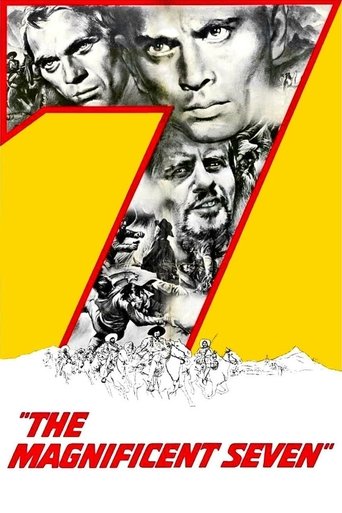
The Magnificent Seven. Watch it with The Seven Samurai.
Once Upon A Time in the West.
True Grit, original and remake.
Blazing Saddles.
The Naked Prey. Movie takes place in Africa, but it's based on a true story of the American West. https://en.wikipedia.org/wiki/John_Colter#Colter.27s_Run https://en.wikipedia.org/wiki/The_Naked_Prey
 Hacker Cinema
12 comments on Hacker News
Like that The Magnificent Seven (1960) reboot of Akira Kurosawa's Seven Samurai (1954) ?
I think that's been going on for a while now:
https://reelrundown.com/film-industry/The-First-10-Musical-Short-Films-in-Recorded-History
This type of argument always distracts from the fact that figuring out where we draw the line between theft and reimagining.
The Magnificent Seven for instance was a reworking of Seven Samurai, but stands on its own as an original creation. Going into a cinema and filming a picture to later put on a torrent site is not artistic reworking.
The hard discussion is about what is acceptable, we all know prior art exists.
"The Magnificent Seven" (the version with Yul Brynner) if you can't find the original Kurosawa movie "Seven Samurai".
I believe it. As a film fan, this is why I really dislike Netflix—they seem a repeat offender at ripping off other artists. A few of their shows like Stranger Things (Alien, Poltergeist, Akira, Goonies) and especially Godless (Rio Bravo; Magnificent Seven; Good, Bad, and the Ugly) go beyond homage and into outright copying and stealing ideas. I understand tropes and references, but I think Netflix has shown a pattern of basically just making imitation products of other successful products. I can watch nearly anything on HBO, but can hardly find anything half worth watching on Netflix and it’s nearly all derivative of something else more interesting.
Website overloaded... here's a cache.
http://webcache.googleusercontent.com/search?q=cache%3Ahttps%3A%2F%2Fweb.law.duke.edu%2Fcspd%2Fpublicdomainday%2F2017%2Fpre-1976
"What books would be entering the public domain if we had the pre-1978 copyright laws?"
Harper Lee, To Kill a Mockingbird John Updike, Rabbit, Run Joy Adamson, Born Free: A Lioness of Two Worlds William L. Shirer, The Rise and Fall of the Third Reich: A History of Nazi Germany Friedrich A. Hayek, The Constitution of Liberty Daniel Bell, The End of Ideology: On the Exhaustion of Political Ideas in the Fifties Arthur M. Schlesinger, Jr., The Politics of Upheaval: The Age of Roosevelt Dr. Seuss, Green Eggs and Ham and One Fish Two Fish Red Fish Blue Fish Scott O’Dell, Island of the Blue Dolphins John Barth, The Sot-Weed Factor Jean-Paul Sartre, Critique de la raison dialectique
"Consider the films and television shows from 1960 that would have become available this year."
The Time Machine Psycho Spartacus Exodus The Apartment Inherit the Wind The Magnificent Seven Ocean’s 11 The Alamo The Andy Griffith Show (first episodes) The Flintstones (first episodes)
Also listed: songs from 1960 (e.g. Elvis's "It's Now or Never"), and copyrighted scientific research from 1960 still behind paywalls (e.g. 1960 papers on the structure of hemoglobin and myoglobin).
The Magnificent Seven might be a bad example there; it had a 2016 remake, which I'll bet led to some sales of the original film (and probably also the original original film, Seven Samurai).
> It's a matter of if you think about it for a bit it makes no sense, it's logically impossible.
Let's take a look at a dictionary definition of culture: "the way of life, especially the general customs and beliefs, of a particular group of people at a particular time" (http://dictionary.cambridge.org/dictionary/british/culture)
Now, note the "particular group of people" part. A person can be a member of more than one group. Some groups are sub-groups of others; some overlap with others.
For example, I am an American, and as such I have been brought up in American culture, with many of the traditions and ideals that that entails; Thanksgiving, the 4th of July, a strong belief in civil liberties, and a love of strawberry rhubarb pie.
American culture is also a subset of Western European culture, with influences from Catholic and Protestant branches of Christianity, so while I am not myself Christian, I celebrate Christmas and Easter and have many Christian influences on my values and life.
However, I am also a member of other cultures. My most recent ancestors to travel to the US were Scottish; and so Scottish culture is also part of my culture, but not most other people in the US. I wear kilts to weddings, and have an uncle and cousin who play bagpipes at weddings and funerals. That's a part of my culture, but that is not a part of overall American culture.
I'm also a software engineer and computer geek, and involved in free software, advocacy for civil liberties online, advocate for strong encryption and privacy, and the like. This is a particular subculture that tends to promote strong protections for individual privacy and liberty, while openness and transparency on behalf of institutions such as corporations and governments. This is not part of mainstream American culture, but it is part of my culture; and this particular subculture spans multiple countries as well, so in many of these ways, I have more cultural values in common with a Brazilian or German who is also involved in these communities than I do with the average American.
There are many other subcultures I could describe myself as a member of. And the same goes for anyone you ask. "Culture" is not one big, monolithic thing with clear boundaries. Because it is a set of customs and beliefs shared with a group, that set can be larger or smaller, and stronger or weaker, depending on how big of a group you choose.
> And if "multiculturalism" whatever that is, is so great, you'd think someone would have come up with support for that notion by now beyond "Ethnic food!"
Food is a pretty fundamental part of any culture. As something that is necessary for sustaining life, it's something that everyone does. In almost every culture I've seen, meals are a large part of fostering community, of strengthening social bonds. You have meals with family, with friends, with coworkers. "Breaking bread" is a term rich with culture connotations of mutual trust, peace, welcoming, because sharing food with someone is so important; and the same holds in many other cultures, one of the most generous and welcoming things you can do is invite someone to your table and share your food with them.
So don't be so quick to dismiss "ethnic food" as an important part of multiculturalism. Food is in many ways the heart of of a culture, and exploring the food culture of another people can be a strong way to share something with them.
However, multiculturalism can extend far beyond that as well.
The musical heritage of America is quite strongly multicultural. Ragtime, blues, jazz, R&B, and hip-hop all have their roots in black culture in the US, but have had enormous influences in white culture as well. Of course a large amount of American musical traditions comes from Western European classical and pop traditions as well, and then there are a variety of folk traditions, such as Celtic, that have been integrated into the mainstream through bluegrass and country music.
But there's a lot more than just that. A large number of cultures have made substantial impact on film in America. Many of our "Western" genre is actually a product of Italy; but that in turn influence Akira Kurosawa in Japan, with Samurai westerns such as Yojimbo. His work has also influenced Western work, where The Magnificent Seven is a western remake of Kurosawa's Seven Samurai, and his The Hidden Fortress is one of the major influences on Star Wars.
Let's see, getting back to day to day life, Jewish culture has also had a fairly large impact; from Yiddish, we get words like "schmuck", "chutzpa" and "klutz". We also get bagels (oops, back to food again),
On the musical front again, some of the best American music like Gershwin's Rhapsody in Blue had roots in Western classical tradition, jazz, and klezmer, traditional Ashkenazi folk music.
I could go on, but man, detailing all of the positive effects of multiculturalism on American society could fill up hundreds of volumes of books, not just a single comment on HN.
> A murder seems to be ipso facto a hate crime.
That is not what is meant by the term "hate crime." Simply redefining a term that has a particular meaning to mean something else does not really add to the discussion.
I'll quote from Wikipedia:
> In both crime and law, hate crime (also known as bias-motivated crime) is a usually violent, prejudice motivated crime that occurs when a perpetrator targets a victim because of his or her perceived membership in a certain social group. Examples of such groups include but are not limited to: ethnicity, gender identity, disability, language, nationality, physical appearance, religion, or sexual orientation.
A "hate crime" is not simply any violent crime. It is a crime in which the attacker was motivated by their perception of the victim's membership of some other group.
There are several things that can motivate a criminal to commit a crime. Poverty, greed, hatred of a particular group, hatred of a particular person, sheer anti-social tendencies, and I'm sure many other motivating factors. Only one of these falls under the term "hate crime" as it is commonly defined; those crimes in which hatred of a particular group of people is a primary motivator.
If you look at the statistics I cited in a previous comment, while it is true that black on white murder happens more often than white on black, white on white murder far surpasses either (and likewise, black on black). No amount of arguing about the black on white vs. white on black levels of crime will make these intraracial crimes go away, and the levels of intraracial crime is a very strong signal that racial animus is not actually the motivation for the majority of crime that occurs.
The reason it is important to look at the motivation behind a crime, and not just the statistics about whether a crime happened, is that the motivations can help tell you the best way to reduce that type of crime in the future.
Hate crimes, in the sense of any crime committed on behalf of membership in some group, can be particularly dangerous because they can lead to either prolonged violence between those two groups, or ethnic cleansing or genocide. These types of crimes, when allowed to escalate, have escalated into some of the greatest atrocities of a last couple of centuries. Breaking the chain of hate-motivated violence by discouraging the use of rhetoric of hate, by changing laws that institutionalize disparities between these groups, and by applying harsher penalties to those crimes committed for these reasons, are some ways to deal with these types of crimes.
Crimes committed due to a hatred of a particular person, however, are fairly different. They are usually based on some aspect of those people's relationship; perhaps an abusive domestic relationship, a cheating spouse, or the like. Here, there isn't some group-based animus, but a dysfunctional personal relationship. Here, the better way to deal with the problems are to provide better outlets for change than violence; provide shelters for people to escape from abusive relationships, allow divorce, as it it preferable to violence or murder.
Crimes that are committed due to poverty, to people having as sense of hopelessness and no further opportunity but to turn to crime, are another kind of problem. Here providing better social services, better education, better access to affordable housing, and the like can all help take that pressure off that can push people over the edge.
In all of these cases, the actual perpetrators of actual crimes do need to be punished; there needs to be deterrence as well. However, on a societal level, there can be many things done to reduce the temptation and pressure to engage in criminal behavior. And even on the individual level, knowing someone's motivation for a crime can be important in rehabilitating them and reintroducing them back to society.
The story behind the remakes is pretty interesting all by themselves:
John Sturges' The Magnificent Seven (1960) was based on The Seven Samurai (1954)
When first released in America, the title for Kurosawa's film was "The Magnificent Seven", it created a stir and the rights for "The Seven Samurai" were bought for US$250 from the Toho Corporation, Toho entered into the contract under the pretense of being the sole copyright owner. Over the following 30 years, several lawsuits followed since Kurosawa hadn't received royalties and hadn't given consent to remakes, the end result of which was that Kurosawa and other principals were paid back royalties, but were countersued and Toho Corp ended up having to pay $50000 to MGM (who also gained the rights to any future remake of The Seven Samurai set as a Western). I guess in the real world, the Bandits end up winning after all.
Sergio Leone's A Fistful of Dollars (1964) was based on Yojimbo (1961).
Leone didn't acquire the rights to Yojimbo, he just went ahead and made the film, which was surprisingly successful. Kurosawa reportedly said, "I’ve seen your movie. It’s a very good movie. Unfortunately, it’s my movie." Leone is supposed to have settled out of court for 15% of worldwide residuals plus $100,000.
"The film begins with two bedraggled peasants, Tahei and Matashichi (Minoru Chiaki and Kamatari Fujiwara). Through conversation, they reveal that they had intended to fight alongside the Yamana clan, but turned up too late, were taken for soldiers of the defeated Akizuki clan, and forced to bury the dead. After quarreling and splitting up, the two are both captured again and forced to dig for gold in the Akizuki castle with other prisoners.
After an uprising, Tahei and Matashichi escape. Near a river they find gold marked with the crescent of the Akizuki clan. They thereafter travel with the General of the defeated Akizuki clan, Makabe Rokurōta (Toshiro Mifune), while escorting Princess Yuki Akizuki (Misa Uehara) and what remains of her family's gold to a secret territory. In order to keep her identity secret, Yuki poses as a mute.
During the mission, the peasants impede it and sometimes try to seize the gold. They are later joined by a farmer’s daughter (Toshiko Higuchi), whom they acquire from a slave-trader. Eventually, they are captured and held by Rokurōta's rival, who later unexpectedly sides with the Princess and Rokurōta.
The peasants stumble upon the gold, but are later captured, whereupon Rokurōta explains Yuki's true identity, and states that all of the gold has been used to restore her family's domain. The peasants are then dispatched, taking a single ryō. In the final scene, Tahei gives this to Matashichi to protect; but Matashichi allows Tahei to keep it."
Ok. Inspired, sure, you can see some parallels. Based off, no :) (at least not as The Magnificent Seven and For a Fistful of Dollars are based off Seven Samurais and Yojimbo).
All soldiers go into "hostile territory -- often at night. Not all are heroes, unless we stretch the definition much.
And I seriously doubt the "unproven equipment" (or the "little fuel reserves"). It was a mission with a bunch of (armed, I give you that) guys in a hideaway against an elite team from a superpower.
>I'd like to see your definition of A-level hero.
Well, the people who got off the boats in Normandy are A-level heroes.
Or people like the Red Baron.
Or those that went on their own volition to fight for the liberty of another people in a foreign country, like 1936 Spain, with sparse guns and makeshift camps against a properly armed fascist regime with foreign state support.
If I'm allowed a movie metaphor, a hero is more "Wild Bunch" or "The Magnificent Seven" than some kind of elite calvary, charging in armed to the teath and killing everything in sight.
This article is rather spectacularly missing the point. It suggests that it's the movie equivalent of prosecuting filmmakers for using the standard idea of an establishing shot, as seen in The Magnificient Seven. That's quite obviously not the same thing - no-one prevents filmmakers using an idea. But sampling is the equivalent of a filmmaker using the ACTUAL FOOTAGE from The Magnificent Seven and putting it in their own movie and selling it as if it were their own. That is quite obviously not going to fly.
The article suggests that Jay Z raps over a break from a Madonna song and is then surprised when the bill comes? The reality is that if Madonna released a track with chunks of a Jay Z record in the background, he'd be the first at the door wanting to be paid in full.
The fact that record companies want to be paid when their products are sampled is not remotely new, it has been understood and established since the 1980s. For anyone, even in the dim and distant dark ages of 2006, to be surprised by that state of affairs is baffling.
The Wild Bunch.
Nevada Smith.
3:10 To Yuma, the original with Glen Ford and the remake with Russel Crowe are both excellent. Original story written by Elmore Leonard.
The Magnificent Seven. Watch it with The Seven Samurai.
Once Upon A Time in the West.
True Grit, original and remake.
Blazing Saddles.
The Naked Prey. Movie takes place in Africa, but it's based on a true story of the American West. https://en.wikipedia.org/wiki/John_Colter#Colter.27s_Run https://en.wikipedia.org/wiki/The_Naked_Prey
https://duckduckgo.com/?q=best+western+movies&t=canonical