 Hacker Cinema
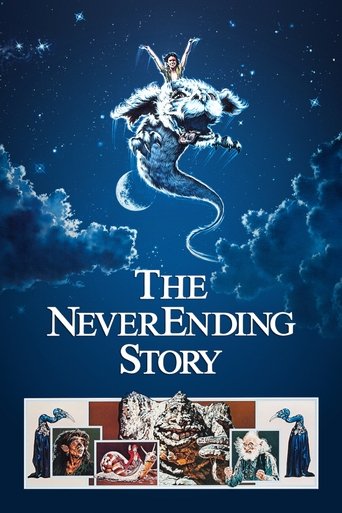
The NeverEnding Story
Die unendliche Geschichte
1984 · Film · 101 min
Directed by Wolfgang Petersen
While hiding from bullies in his school's attic, a young boy discovers the extraordinary land of Fantasia, through a magical book called The Neverending Story. The book tells the tale of Atreyu, a young warrior who, with the help of a luck dragon named Falkor, must save Fantasia from the destruction of The Nothing.
4 positive5 negative14 neutralfrom 23 commenters
Where to watch
No streaming data for this title.
26 comments on Hacker News
Xanadu is not even really a terrible movie. Terrible movies are worth seeing, at least once, because of how awful they are. I've seen at least three disco movies on roller skates, (roller skates) released at that time. The Apple is certainly terrible; I think it was made to cash in on West Germany film subsidies (the same subsidies that paid for The Neverending Story), even the songs are charmingly terrible. Xanadu has a great soundtrack, but the movie is just boring. Skatetown, U.S.A. is probably terrible, but I'd need to watch it again and I don't want to. :P I haven't seen Roller Boogie.
That said, I would absolutely buy (and wear) a Xanadu jacket if I saw one for a reasonable price.
Sounds like the most blatant case of false advertising since the movie The Neverending Story
If they plan to shut it down for Foundry customers, there's probably a "yield issue" that is being hidden from the public. Last time there was a "yield issue" it turned out to also be a reliability issue. 18A introduces complex new features like backside power delivery which is a major structural change to the die that has never been done before. There is a very real possibility that thermal cycling continues to be a concern as it was in 10nm/7nm which lead to the neverending story of 14nm+++++. We just won't know until some enterprising YouTuber ends up publishing a detailed analysis of public reports of CPU failures in a year or two. Reliability issues can end up taking years to fully root cause and mitigate.
Personally I'd rather watch the 1980s Neverending Story movie rather than see Intel continue to push out even more half baked products into the market again on yet another broken process node. I really hope I'm wrong.
- The Sting - The quintessential con movie.
- Amadeus - "Too many notes, Mozart!" A heavily romanticized retelling of the somewhat apocryphal rivalry between Antonio Salieri and Wolfgang Amadeus Mozart.
- Disney's Robin Hood - Get the dope on your horoscope~
- The NeverEnding Story - Because who didn't want to soar through the air on a luck dragon?
- Iron Monkey (少年黃飛鴻之鐵馬騮) - A retelling of the Chinese folk hero Wong Fei-hung, with classic wire-fu and excellent fight choreography.
My kid's into the old movies I show him but I only pick classics like Princess Bride and Neverending Story that are pretty much timeless, and also terrible B-movies where the oldness makes it even better.
This is the most blatant case of false advertising since my lawsuit against the film The Neverending Story.
This is the most blatant case of false advertising since my suit against the movie The Neverending Story.
It's almost completely gone in the US on Netflix also. I've had better luck watching older movies on Youtube 'Free with Ads' service, especially 80s and 90s movies, than I've had on Netflix. And there's no ads if you get Youtube's premium service (I currently don't, but don't mind the ads).
Currently on there is Wrongfully Accused (funny Leslie Nielsen movie), Glengarry Glen Ross, Robocop (1987), Ghost in the Shell, The Mask, License to Drive, The Neverending Story, Tombstone, Leon The Professonal, The Amityville Horror, Over the Top (some Stallone movie), Miracle on 34th Street, Con Air, Edward Scissorhands, Gone Fishin', Look Who's Talking, While You Were Sleeping, The Craft, Red Dawn, So I Married an Axe Murderer, Secret of Nimh, Killer Klowns from Outer Space, Revenge of the Pink Panther, Mad Max, Das Boot, Little Shop of Horrors, Hackers, .... okay, I'm just going to stop now, but t keeps going, I'm only a third of the way though the list.
> Sound engineers need to stop needlessly flexing all that dynamic range that modern tools give them, and just produce a watchable movie.
And not just sound engineers! So many TV shows these days are filmed in nearly pitch black. If there are any lights on in the room (or it's still bright on a northern summer night and the living room doesn't have blackout curtains), I can't see the action. At first I thought I was just being cranky and old, but then we watched The Neverending Story with my kid and lo and behold, they film in "dark scenes" with torches etc so you can still see the actors well enough to read their lips! I'm sure it would be fine if I was watching it in a proper theater, but it's a frikkin TV show and who even goes to the cinema anymore?
The Neverending Story (Die unendliche Geschichte) by Michel Ende was published in 1979, and mostly takes place in the country of Fantastica. J.R.R. Tolkien’s The Lord of the Rings (which mentions and describes Saruman and Orthanc) was published in 1954, 25 years earlier.
Fantasia was a Disney animated movie from 1940, but did not, as I recall, feature a wizard’s tower.
I agree Gmork is definitely not the major villain of The Neverending Story. He's "servant of the power behind the nothing", but The Nothing isn't a weapon, it's more like the realization of a metaphor inside Fantasia. There are people in our world, who (for example) push for engagement at all costs, and don't care about what the results are—and that poisoning of peoples' hearts is what in Fantasia becomes the nothing. The dialog between Atreyu and Gmork is longer in the the book, and one thing it mentions that I don't believe the movie does, is that when the creatures of Fantasia fall into the nothing, in the real world they become lies.
> 'When your turn comes to jump into the Nothing, you too will be a nameless servant of power, with no will of your own. Who knows what use they will make of you? Maybe you'll persuade people to buy things they don't need, or hate things they know nothing about, or hold beliefs that make them easy to handle, or doubt the truths that might save them.
It's really an excellent passage.
Anyway: the movie covers only about the first third of the book, and the book is quite wonderful, and I highly recommend it. I love the movie, too—I'm glad we have both.
I often have a pessimistic outlook of the future myself and I'm trying to change that.
>Some of my coworkers over the years have been very consistent at believing that the world is on the brink of The End Times ... at all times.
I've had similar thoughts too. They began in my teens. It's been decades now and it's exhausting.
>What about living here during the Cuban Missile Crisis?
I recently watched Ken Burns "The Dust Bowl" documentary[1]. If one thinks living now is bad, imagine living during that period and in that place (watch it to better understand)! Seeing pictures of the dust storms coming reminds me the The Nothing from "The Neverending Story" [2]. The Nothing rolls along annihilating everything it covers. It's terrifying to think about.
Here's an interesting excerpt from the movie: https://poorvillains.wordpress.com/2013/09/15/the-nothing-and-its-servant-gmork-in-the-never-ending-story-1984/
[1] https://kenburns.com/films/dust-bowl/
[2] https://en.wikipedia.org/wiki/The_NeverEnding_Story_(film)
"Mr. Simpson, this is the most blatant case of fraudulent advertising since my suit against the movie, The Neverending Story!" - https://simpsons.fandom.com/wiki/Lionel_Hutz
It is a pity that later, cheaper editions of The Neverending Story were printed in black ink only. I read the original (well, original English translation) and it really added to the story.
Incidentally, for anyone out there that hasn't read The Neverending Story, I recommend it. The book is very different to the film and starts messing with the reader about halfway in.
This whole topic and discussion makes me think about "The Nothing" that rips apart the world in the movie The Neverending Story. I had nightmares from the movie and The Nothing for weeks after watching the movie when I was around ten years old. 1984 might really be approaching, not the book, but The Neverending Story which was released then.
Roughly, geek culture has always been toxic masculinity by the back door.
You can get perhaps the clearest insight into this by looking at geeky films from the 80s before they started to bury the unpalatable stuff. "The girl" is the reward. The geeky hero (a boy/teen/manboy) gets to win by virtue of geeky skills. Often, humiliating one dimensional "jock" bullies through gained abilities is a payoff too (cf: the Neverending Story, scaring the bullies into a dumpster with a dragon).
Geek culture more broadly, including the adult programmer-gamer culture, has long believed of itself "we see ability, not appearance" but (1) this has always been untrue in reality, it was racist and sexist and still is, and (2) the things the culture has valued as "winning" have never been different in fundamentals from the mainstream of toxic masculinity - money, women, possessions and power all seen as more or less fungible commodities.
What you're seeing now is the reaction of angry white men who are profoundly frustrated at receiving "less than their due". They blame women, they blame minorities, because they should be winning - are they not the very pattern of a hero, a young white man with geeky interests? And yet inexplicably they are not. (It's very explicable, geeky skills aren't special.)
Anger turns to attempts to put things "right" with terroristic murder.
The Martian Chronicles is more like a concept album, but with short stories instead of songs, than a novel. There are some connections here and there but the vibe is always more important than the details or any broader narrative, as far as linking the stories together.
Fair warning: To the Lighthouse is a (gently!) stream-of-consciousness work of Modernist fiction, and the entire middle act is mostly a description of a vacation home aging for a time, largely absent any people. It's also one of my favorite books, but it's, ah, subtle, I guess. Think a series of impressionist paintings of everyday life, nature, and empty rooms, but in book form.
I hadn't thought about it a lot but on reflection that "satisfying melancholy" effect is one of my most treasured feelings I can get from fiction. There's something childlike about it that really appeals to me—and now that I think about it, a lot of the big children's classic films, especially of 80s, went for this in a big way. Almost everything by Don Bluth. The Neverending Story. That kind of thing. Might be why I make that association.
Just scanned my shelves looking for more. The short stories of Dinesen, a bit? The Call of the Wild, but I think that might just be a "me" thing. It's a lot more common in poetry, where you can read through an anthology for any famous poet and probably encounter it many times, than in fiction. Possibly it's more common in bodies of literature outside of English—I'm thinking especially of Russian and French—where I'm even less well-read than I am in English. I just don't know.
I remember watching Alien 3 at the cinema with French subtitles:
Audio: She's down in there with the beast!
Subtitles: She's down in there with the priest!
(Weirdly, beast and priest sound much the same in French, too.)
Or when watching Neverending Story the turtle says "one thousand miles". The subtitles convert this to kilometres with 6 decimal places showing.
There was extreme media censorship (GUKPPiW 1946-1990), but directed almost exclusively towards dissident political statements and praise of western prosperity. You were still allowed to show foreign wealth as long as you showed for example how easily Polish creativity fleeced westerners out of it. Labelling everything as a comedy also helped, still for example 'Alternatywy 4'(same director as the clips below) spend 3 years being edited/censored. Those were prime time TV shows broadcast couple of years before fall of the Iron Curtain, maybe even slightly contributing to the growing unrest and eventual Polish exit from the Eastern Bloc.
https://www.youtube.com/watch?v=j5MXX_n0pfQ
https://www.youtube.com/watch?v=ThD7AmKQkjg
https://youtu.be/_nmGi757fyo?t=5m1s
TV was not allowed to show anything celebrating western lifestyle. We didnt get Miami Vice, Wonder Years, MacGyver, A Team or Dynasty until ~5 years after kicking Russians out of our country. Instead foreign tv shows we had were 'Escrava Isaura' and some old chestnuts from the fifties like Zorro. Cinema was a lot better, scifi movies had little trouble with censorship, we got 'New Hope' in 1979, 'Empire Strikes Back' in 1982, 'Terminator' in 1985. Toho Kaiju movies came out same year as in the west. Of course you could get censored for something entirely not in the movie. 1984 'NeverEnding Story' was delayed into 1987 because of directors earlier work 'Das Boot'.
Got to say, I haven't seen it, mostly because I know I would hate it. But one of my friends told me that they are destroying a death star. Again. For the 3rd time. Seriously? How many times are they gonna try?
"One can envision Hollywood eventually turning out only two products: "Star Wars" movies and James Bond movies, each periodically "rebooted" for a new generation of customers."
Absolutely love the conclusion. This is exactly what is happening right now. It's like every single new movie is a reboot. Mad Max, Ghostbusters, Robocop, Point Break, The neverending story...
I think the book "The Neverending Story" is named that because it's originally German, where "neverending" is "unendliche". The English-language movies are actually "The NeverEnding Story", which is an odd choice. "never-ending" would be more standard English.
Thanks. police are (ok they are more than one). 50-year-old (why not 50-years-old ?).
It seems that nouns are created with "-" (merriam-webster agree with you).
a long-term solution is like a never-ending story.
Now, my question why neverending story (film) and not never-ending?
What the... I find this highly amusing, as copyright holders have previously argued that high quality copies are also damaging.
It's a moral rights [1] issue. While moral rights are essentially unheard of in the US (outside of the Visual Artists Rights Act), they play an important role in continental Europe with its much different theory of copyright.
You may recall, for example, that Michael Ende sued to have the movie version of the Neverending Story pulled (while he lost, the judgement saw its share of criticism) and that the French courts sided with the estate of John Huston in not allowing the colorized version of Asphalt Jungle to be shown in France. Both were about the right of the author to the integrity of their work.
[1] http://en.wikipedia.org/wiki/Moral_rights
You know, your comment made me think a lot. You're both right and wrong at the same time, but I couldn't find a good way to express why and how.
In the end, I believe Michael Ende described it the best in "The Neverending Story" (the book, not the movies). The essence of what I would recommend to anyone is expressed by the words on the back of AURYN: "Do what thou wilt". As Bastian is told, it's not about doing anything you want, it's about finding out what it is that you truly wish for, "and nothing is more difficult".
Maybe OP will spend years working on this project and end up realizing that it was "a waste of time" and that what he really wants is something else. But even then, it might end up being more valuable to him than doing things you recommended. Who knows?
Best overall: Zen and the Art of Motorcycle Maintenance, and its less well-known sequel, Lila
Best fantasy in terms of most imaginative and full of wonder: The Neverending Story by Michael Ende. (I know, everyone saw the crappy movie; it simply does not do the book justice.)
Best Scifi: The Hyperion Cantos by Dan Simmons
Treasure Island, Robert Louis Stevenson.
Alice in Wonderland iff still young enough not to think girls are gross. Otherwise you must sneak up on him with the poetry, then introduce the book. (I've had success with reciting 'Jabberwocky' and 'The Walrus and the Carpenter.')
Learn 'If,' by Kipling, by heart. Then teach it slowly and patiently.
As an aside, quite a lot of Kipling is truly excellently boy friendly.
The Proverbs of Solomon, et al. Found in any Bible or Talmud. Bears repeated reading, as most eastern 'wisdom' literature does (The Book of Five Rings, The Art of War, etc.).
While we're at, why not the Narnia books? I loved them, and I'd no idea the Lion was apparently Jesus until I was nine or so.
But by far do not DO NOT forget Michel Ende's marvelous 'The Neverending Story.'
If you're only familiar with it from a movie, you've missed the best part, when the boy 'Bastian must take up arms and become the adventurer he has read about and loved.