 Hacker Cinema
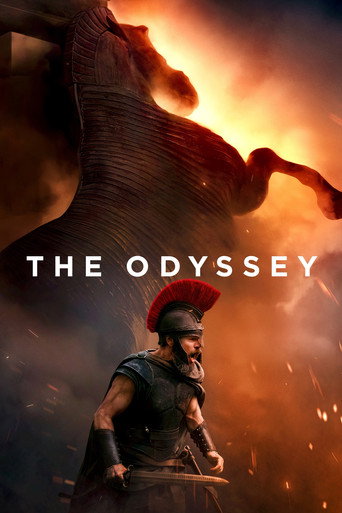
The Odyssey
2026 · Film · 173 min
Directed by Christopher Nolan
Odysseus, the legendary King of Ithaca, embarks on a long and perilous journey home following the Trojan War. Throughout his voyage, he is forced to confront the whims of gods, mythological monsters, and trials that stretch both his cunning and his humanity to the breaking point.
12 positive14 negative4 mixed35 neutralfrom 65 commenters
Where to watch
No streaming data for this title.
68 comments on Hacker News
Agreed. Not to say there is no such thing as franchise fatigue, but fundamentally it’s about quality. The large studios expect us to just gorge ourselves on anything with a favorite logo or name on it like it’s a brand loyalty thing, but movies are about storytelling and emotional resonance. Odyssey made me feel things, so did Spider-Man, so did Obsession. Supergirl did not. Simple as that.
If people really were discerning, stuff like Spiderman and the Super Mario Galaxy movie wouldn't have been big hits. There's demand for slop and demand for good blockbusters like The Odyssey and demand for indie horror.
The biggest movie releases like The Odyssey and Spider-Man: Brand New Day drive huge turnout, including domestic US moviegoers.
When we compare with flops like the Moana remake it really demonstrates that people who love going to the movies are discerning and demand authentic films, which often includes practical effects.
When a movie mostly consists of actors standing around motionless in front of a 360 degree screen stage or a green screen with cheap, rusher AI, people notice and they don’t recommend the movie to their friends.
Unrelated, I wonder if there’s still potential for movie rental shops in more dense urban areas. I think the concept could be more reimagined and focused on a third space, events, maybe involve a coffee shop or similar routine-worthy purchase.
I think the main barrier is that many people don’t have players anymore.
Nah its the movies like Christopher Nolans the Odyssey
This is functionality currently built into Google search. I google "The Odyssey Showtimes" and it shows me when it's playing at all local theaters.
Then I can just pick which time works for me. I have never in my life had a theater be sold out when it's not an opening night or weekend for extremely big films.
Is this something you actually tried to approach before LLMs?
You picked a commercial movie to make your case? Why not Bugonia, The Odyssey, One Battle After Another, Project Hail Mary, Frankenstein, etc. (all recent)
Much of the VFX and CGI industry is already in India.
Movies and shows like Inception, Interstellar, Ex Machina, Tenet, Dune 1&2, Odyssey, Chernobyl, Foundation, and The Last of Us were VFXed in large part by Indian companies like Prime Focus, Makuta, Phanton, and their subsidiaries.
A number of these overlap with HPC and Distributed Systems with a number of major players in the space coming out of the GPU design space like Raja Koduri (AMD, Apple, Intel). Nvidia, AMD, Intel, Apple, and others having dedicated GPU design teams in India since the early 2000s also helped.
> Stagecraft is just one implementation but you don't think that the Unreal 3D worlds that are used behind it are beginning to be generated with AI?
They are not. Source: I have run one of these LED volume studios for 4 years.
> Color management and maintaining context across multiple renders is actually the conversation we were talking about and the software that he is using has mechanisms to define context across a rendered shots and even across multiple projects. He just wasn't using them as it's an alien concept to him. My point is all of that is possible and solved and will become easier as the market matures.
These problems are solved...ACES, DRT, FDL, etc. exist, are open, and AI companies are welcome to utilize them. But for some reason, they don't (or can't.)
> I also have a friend who was significantly involved in Odyssey and I think the reason why so many films are made with film at the moment is because the industry is clinging on to what it believes is authentic when being pushed towards a commoditized race to the bottom.
The reason people are still shooting on film is because it forces you to slow down and think about every decision, because mistakes become very costly. The decision to shoot on film objectively does not make technical sense, and studios would much prefer people shoot on cheaper digital cameras. But filmmakers still use it because of the specific creative mindset it requires of you.
> The end goal of all of this is actually customized content where the film that I see and the film that you see is different because it's rendered to our tastes. There's a whole school of thought there around a collective experience versus an individual experience, but the technology will allow it if it's completely digitally created and one would assume that will be where it will go.
The end goal...for who? Totally fine if this is something you want and interests you, but unless you have a time machine, this is just speculation.
Stagecraft is just one implementation but you don't think that the Unreal 3D worlds that are used behind it are beginning to be generated with AI?
You're right that my relative probably isn't going to be at the top of the list to be hired for that work. He doesn't work in Hollywood level stuff and I also think that he knows he's going to have to fight to stay relevant and compete for the work that's available to him. Fortunately he's at the end of his career and his kids are adults. I think he can see the writing on the wall for his career either way.
Color management and maintaining context across multiple renders is actually the conversation we were talking about and the software that he is using has mechanisms to define context across a rendered shots and even across multiple projects. He just wasn't using them as it's an alien concept to him. My point is all of that is possible and solved and will become easier as the market matures.
I also have a friend who was significantly involved in Odyssey and I think the reason why so many films are made with film at the moment is because the industry is clinging on to what it believes is authentic when being pushed towards a commoditized race to the bottom.
As people stop paying to go to the cinema and Netflix demands tighter and tighter budgets for work, I think we will sadly see the end of this means of production because fewer and fewer people will want to pay for it.
The end goal of all of this is actually customized content where the film that I see and the film that you see is different because it's rendered to our tastes. There's a whole school of thought there around a collective experience versus an individual experience, but the technology will allow it if it's completely digitally created and one would assume that will be where it will go.
In other words, I might want Odyssey but framed as a horror filmed in noir and you might want Odyssey framed as a rom-com and the AI will just generate the version for us based on the original directors prompt. I actually think that's kind of sad, but that doesn't mean that isn't where things are going.
With a few notable exceptions (James Cameron) the film industry is largely unconcerned with "possibility." I think this is often why there is such a big misunderstanding from tech folks about how movies are made, since tech is very feature and tool driven whereas filmmaking is very much process-driven.
The Odyssey was shot on IMAX cameras half the size of a car that weighed 400lbs. It's easy to call that out as being ridiculous, surely a much smaller camera system could have achieved 99% the same results, etc. but that totally misses the point. Nolan could have shot it on anything he wanted, and he chose the less convenient way, because that is his process. If he was forced to use a more reasonable camera, it would not have been a Christopher Nolan film.
Sure, I'm down with that mix of generation + animation + mocap workflow. But at some point, people will going to look around at all the equipment, the people in mocap suits, the thousands of hours of generation and the millions of dollars of compute, and just wonder...wouldn't it be easier to just film someone with a real camera?
This is only going to replace movies that were already using CGI.
If every movie defaulted to CGI over natural settings, you wouldn't have stuff like the Odyssey made...which is setting sales records.
The same way you stand out now. There are giant budget movies out there that are total trash compared to, say, The Odyssey. One that comes to mind that even had Matt Damon is The Great Wall. Such a huge budget and stacked cast (Pedro Pascal, Willem Dafoe) but a garbage movie. The tools being available to you isn't what make a you super.
Sure, but if you watch the Odyssey, you would see how the camera operators struggled to keep focus in some scenes. A modern digital cinema camera would have no trouble with it's advanced auto focus abilities. So the resolution of the film is kinda irrelevant because of that some of the time.
One important difference is that modern movies that shoot in 1:43 IMAX typically shoot everything with other aspect ratios in mind. So a 16:9 home release of The Odyssey is going to be less creatively compromised than an anamorphic film from the 1980s adapted to a 1.33 pan and scan home video release.
We also have two things working in our favor for home video releases on 16:9 displays. First, 16:9 is geometrically well-positioned between 4:3 and 2.39:1, so displaying either of those pillar/letterboxed on a 16:9 screen only leaves 25% of the screen area unused. (We literally chose 16:9 because it's the geometric mean of 4:3 and 2.39:1.)
Secondly, a typical home TV now is simply much larger than a typical home TV 30+ years ago, so the reduced size of a pillar/letterboxed image is still just straight up bigger than most home TVs were prior to the flatscreen revolution.
There are a lot of cinemas showing The Odyssey projected from actual 70 mm film. You can probably find one pretty close to you.
Not every film. It was widely reported that Oppenheimer was color graded photochemically, and the 65mm film physically spliced (the editor of course worked in Avid with digital film scans). This means that 70 mm screenings were projecting a fully analog end-to-end pipeline. The exception, of course, is the visual effects shots, which went through a digital intermediary.
The same seems to be true of The Odyssey, although the reporting is less clear as of now, and I suspect there are many more visual effects shots than Oppenheimer.
> For years I heard people arguing that wider aspect ratios were preferable because they afforded a wider view > Now we're being told the opposite.
I agree with you, but I must also make a special case for IMAX 70mm. It's about the seating position. What we call IMAX 70mm now, was once just "IMAX" and its gimmick was a floor-to-ceiling wall-to-wall screen with a relatively close seating position, such that the viewer felt immersed in the movie. Back then it was commonly used for science documentaries where they could soar you over landscapes and in amongst the sea creatures. So this print of The Odyssey is allowing users to enjoy this same gimmick, but with a legit movie. I remember watching an earlier Nolan Batman film in an IMAX 70mm auditorium --while the picture quality was good, it was not shot to take up all the vertical real estate. So presumably they did not use IMAX cameras when filming (just normal 70mm).
As for widescreen, in ye olden times theatrical releases would use it as a gimmick for big visually impressive movies like Lawrence of Arabia. Eventually nearly every movie in the theater used a relatively wide aspect ratio, and as these were converted to VHS and DVD they were commonly butchered into a "full screen" format that erased the left and right part of the image. (They had to slide the view left and right to keep characters on the screen; people called this pan-and-scan.)
There's nothing inherently better about any particular aspect ratio IMO. What's most important is that you are seeing what the director wants you to see.
Most of that discussion is less about any advantages inherent to either aspect ratio and more about just viewing the film as the director originally intended.
The cinematographer would have composed shots for the main 1.43:1 aspect ratio first while taking into consideration the other aspect ratios (the viewfinder will overlay the different framelines to help make those decisions). The DP then gets to go back in during post and recompose each shot for the different formats as needed, tweaking what was originally shot to do their best to maintain a cohesive feel and emphasis across each crop. With five different formats for The Odyssey[0], I'm sure that was a fun experience.
It's not that one format is inherently better. The frame is a storytelling tool, and you can use different aspect ratios to influence how audiences perceive the film.[1] It's when you start changing it afterwards with little regard for the director's original intentions that we see problems. The old pan-and-scan movie releases for VHS or cheap 16:9 conversions are frustrating examples.
0. https://www.odysseymovie.co.uk/explore-formats/
1. https://www.cined.com/aspect-ratio-as-a-storytelling-tool-a-how-to-with-film-examples/
I think the part you’re missing is the screen size in theatres. I saw The Odyssey in two formats (70mm normal film, and Dolby Cinema).
In both theatres, the screen and image took up the nearly entire height and width of the theatre. The image filled the screen. The 70mm theatre I saw it at had a very wide screen, but not very tall. Filled the wall though
So even if it’s possible to project a digital version in the 1.43:1 aspect ratio, you’d end up with severe cropping on the edges.
That’s not the point of this IMAX format.
The point of this IMAX format is to have a screen that’s literally twice as tall as those normal screens. To accomplish that, you need a really, really big room. Most theatres can’t physically fit these screen sizes. That’s why 1.43:1 IMAX is so rare compared to 1.90:1.
So when you see it in a theatre like that, firstly the image is really big. But the main thing is that the image stretches past your peripheral vision vertically. In fact, at my local one (which recently shut down, no Odyssey), you can’t even see the bottom of the screen, just a slight curve at the edge of the floor. Which doesn’t matter because the image is framed to not put important info there. The point is for the image to be bigger than life.
Showing a cropped version is just not equivalent to that. You could argue that we should have the choice. But I think generally because of how it’s framed, I’d rather it just take up the full size of my TV. So IMAX releases sometimes come out 16:9 instead of cropped top and bottom.
I don't think the extra production cost, for the Odyssey at least, is likely to be offset by extra box office income. If you read about it, the massive cameras and limited running time of one load of film (less than five minutes) sounds very burdensome. That's not to mention the obscene cost of the film stock, as well as developing dailies and having to edit from film (they actually cut and pasted film together for the Final Cut of the IMAX version).
The trailers also looked much worse than the film which I suspect is related to difficulties with this whole process.
The DC area used to have two IMAX theaters with film projectors: one at the Natural History museum, and one at the Air & Space museum.
The one at Natural History lost tons of money. They eventually took it out, sold it for parts, and replaced it with offices and a cafe (which does make money).
They kept the theater at Air & Space, but converted it to IMAX digital. As a result, they are able to easily show pretty much any first-run movie, as well as revivals. That helps them sell a lot more tickets.
The real essential difference in IMAX is the physical shape of the theater. A real IMAX theater has very steep seats that are close to an absolutely huge screen, with huge speakers behind it. As opposed to the “IMAX” found in cineplexes where they just took their largest theater and upgraded the projector.
Films really should be shot differently for IMAX. Closeups need to be a lot less close up. People shouldn’t have to turn their heads side to side just to see one or the other eye of your character. IMO it’s a mixed result in The Odyssey. Directors just can’t resist closeups of actors. And the movie needs to work in regular theaters where most people will see it.
Hmm are you sure 5mm is audio?
This article claims Audio is added via USB Stick or CD
https://www.theppt.org/rewind/articles/where-can-you-watch-the-odyssey-on-35mm-70mm-imax-70mm-film-and-what-format-should-you-pick/
An IMAX 70mm drama is by necessity blurry because of the low depth of field you get with such a large image frame. IMAX is great for flyover films, but a movie filmed in it will look amateurish compared to a standard RED digital camera.
That said, the Odyssey is a perfectly decent film. It would have looked better if captured with more appropriate technology, but it's an entertaining and uniquely American spin on the story.
I enjoyed the Odyssey movie, but didn't think it looked that good. Too sharp and kind of fake looking, almost like TV. (To be fair, I don't live in a real city so we just have LieMAX.) Disappointing visually, but I did quite enjoy the "Braveheart meets Greek myth meets Jason Bourne" aspect of the whole thing.
If you want a very in depth technical look at the differences between IMAX 70mm, 70mm and 35mm for _The Odyssey_, I wrote an article about this last month.
https://www.theppt.org/rewind/articles/where-can-you-watch-the-odyssey-on-35mm-70mm-imax-70mm-film-and-what-format-should-you-pick/
But here are my nit-picks from the article linked here. I'm only commenting on the 15/70mm IMAX parts, because I'm not knowledgable enough about the digital IMAX foramats.
> The extra resolution, up to 18K equivalent
The claim of 18K is entirely untested. No one has ever measured what the theoretical resolution of an 15/70mm IMAX system is. Kodak's film may me theoretically capable of resolving this, but what about the camera lens, the GT projector lens and field flattener, and everything else involved? Until a study is actually done, I don't think the 18K is a good number to band about.
> thanks to the use of single or even dual 15kW water-cooled xenon bulbs
No cinema is using dual lamps. The dual lamps are used for 3D - one lamp per "eye" (right and left). But no 15/70mm IMAX is currently showing 3D, I think the last was the London Science Museum (but that's a guess, so don't take as truth). So it is only single lamp. 15kW is also not always true - some smaller 15/70mm IMAXes use 12kW or around that.
> However, there are only around 24 such theaters in the US, nine in Canada and six elsewhere around the world.
This is incorrect. There are actually 25 in the US, and 7 in the rest of the world, totalling 41 prints.
Over the weekend I learned that the new Odyssey film fails a blind watching test; a friend-of-a-friend is sightless, and reports that the entire second half of the film is unintelligible due its lack of dialogue, in favor of a wall of undifferentiated slaughter noises.
As someone who has read the Odyssey in original, and who has enjoyed it very much, the useful information that I got from this review is that most of what I considered as the best parts of Odyssey are exactly those which are missing from this movie.
This review, like a few other reviews that I have seen, concludes that Nolan's Odyssey is not a bad movie, it is not boring and it has some spectacular scenes, so it may be worth viewing, but it definitely is not Homer's Odyssey at all.
I always dislike when American movies take the name from some classic work of literature, but then they change the story completely and frequently even contradictory to the original.
Nolan had a story that he wanted to show, which did not match any Ancient Greek story, and he should have better done this without calling it "The Odyssey", which creates false expectations, though an unknown name might have generated less publicity and it might have tempted less people to see what it is about.
I haven't encountered something like what you suggest, but I'm probably not the best person to ask because I'm not in linguistic related circles.
But I can tell you that a lot of local philologists don't like Nolan's interpretation of Odyssey because it didn't stayed loyal to the original text, and mainly to the how Odysseus himself is portrayed. The criticism focuses on the fact that Odysseus is portrayed more like a warrior and less than a cunning person. In the begging of Odyssey for example he's described as "πολύτροπος" (polytropos) which literally means a man of many ways.
I haven't seen the movie to have an opinion and to me it doesn't matter how he's portrayed. Sales of Homer's Odyssey have skyrocketed in Britain, which more or less says it all.
I think Tenet was an absolute garbage movie, and Interstellar was mediocre at best. Honestly, I'm not planning to watch Odyssey because those two movies were so underwhelming.
To be fair (and I’m certainly not saying its not a good movie) Odyssey has very little to do with the original story or the worldviews and values described by Homer if anything at all. It’s a modern fantasy movie (i.e. the characters world views are mostly modern) loosely inspired by the Odyssey.
Reminds me of when Oppenheimer released, a bunch of people criticized it for not actually featuring any Japanese characters, instead being relegated to mere dream-shadows that Oppenheimer sees once.
It's almost as if a work entitled "Oppenheimer" is not supposed to be a character study of this American scientist during the war named Oppenheimer.
Juuusttt maaayyybeee, an adaptation of The Odyssey is mostly gonna be about Odysseus and his side of the war, and that's when Troy gets narratively involved. TFA justifies this criticism with a polemic about what a "serious depiction of violence" is supposed to include but doesn't pause to consider that maybe that is not the film's point. Even the source material isn't about the Trojan War---there's another epic prequel for that! Not to mention Virgil's sequel.
She also says, in the same paragraph, that the "Homeric poems easily clear the bar". Sure! The other Homeric poem---the one not the subject of this adaptation---did that.
I'm not saying these are not themes worth exploring just that maybe it is not a mistake that it wasn't included here. Not an oversight, but intentional. Maybe a work of fiction is supposed to have biases (gasp!) and that is just fine.
Damned if you do, damned if you don't. Had Nolan involved the Trojans beyond Zendaya's character we'd be hearing criticism along the lines of the film being "thematically incoherent", "could've had a more focused treatment, easily shaving off twenty minutes to its already unforgiving runtime".
The movie is not a retelling of Homer's Odyssey. It's a retelling of Odyssey's return home after the Trojan war. The movie will be much better if you go into it thinking that.
They are
“ Nevertheless, Wilson acknowledged the impact the film is already having on cultural awareness of ancient Greek literature as well as cinema itself. Saying “the release of The Odyssey is still an event to celebrate,” she suggests: “This epic is bringing audiences back to cinemas … translations of Odyssey, including mine, are flying off the shelves … [and] perhaps the film will persuade a few college administrators not to cut their literature, language and history departments.”
https://www.theguardian.com/film/2026/jul/27/odyssey-translator-emily-wilson-attacks-nolan-blockbuster
To sum it up - the movie is not like the book.
I liked the comparison and expectations based on the source material as I have never read Homer's Odyssey. If anything, the movie inspired me to read The Odyssey.
> Zeus’ law is portrayed as being crucially important, and yet there is no Zeus. Nolan’s vision of the world is not quite big enough to include either real gods or real people who might be different from us.
Maybe I watched a different movie, but there were monsters, giants, cyclops, nymphs and sirens. Why do you need to see the god if you see their offspring laying waste to the world?
> Were Odysseus played as written, modern audiences would have a very hard time empathizing with him. That's the real challenge to successfully adapting the Odyssey. When reading the original, you have abundant time to get into the mental space of the bronze age Achaeans. In a three hour movie that's a lot harder to do.
And this is the strongest criticism of this movie - Nolan took the easy way out of just shoving the story in 21st century America instead of doing the work of transporting us into the world of different values and beliefs. It's an easy snack for infantilised audience who isn't trusted to actually engage into something that steps out of their locally cultural space.
It's about the most damning thing about this movie.
Looks pretty though.
I agree the movie was underwhelming: the characters were underdeveloped and dialogue clunky. It didn't evoke many emotions, and is trying to do too much, which makes the plot bounce all over the place. I get that it's probably hard to put your own spin into a well-established epic like The Odyssey, but this version wasn't too memorable to me. I liked the film better toward the end, but probably won't rewatch it in a long time, if ever. I'll give it a 4/5 for its production quality, but wouldn't necessarily recommend it to anyone who's asking. Essentially, it's a decent action movie with a lot of famous actors and a cool ancient setting.
I believe that The Dark Knight Rises is pretty close to a bad movie. It does have qualities but it barely makes the cut. The rest varies a lot but outside of the more grounded ones (Prestige, Insomnia and The Dark Knight), I find most of their stories and characters very artificial and cardboard. Odyssey is very sanitized but it works very well because the characters and events are by definition representations of ideas.
Still, his movies try to be stimulating even if they don't land, and they all have great moments filmed in ways you've never seen before and that's good enough for me.
"Unlike some of Nolan’s other films, The Odyssey is not boring, thanks to the source material, which is impossible to mess up entirely."
To imply in the first paragraph that a) Nolen's films are boring and b) that it's impossible to make a bad Odyssey movie because the source is so good, made me eye roll so hard I automatically stopped reading and closed my browser tab
The race-neutral casting of Nolan’s Odyssey was inevitably deplored in some quarters. But there is nothing progressive about it. Most of the non-white actors – Zendaya, Lupita Nyong’o, Himesh Patel, Corey Antonio Hawkins, Travis Scott – play versions of the Black best friend, whose only role in the drama is to provide aid to the white protagonist.
It wasn't enough for Emily Wilson (an upper class white British American woman) to include black people in the cast, they should've been the protagonists.
Can you imagine if a film adaptation of the Epic of Sundiata had white actors ? The whole western world would stop spinning.
I really wish all those senseless racial tensions of the US had not spill over to the rest of us.
Nobody in France would bat an eye if a movie had white only cast, as nobody would bat an eye if a movie had black only cast.
> "doing his best to get the general public reading again"
This seems very detached from reality. I very much doubt that many people seeing a movie like this will think "oh, I should read The Odyssey", or "I should read more." And most people who try the former are unlikely to get very far.
I found a lot of Nolan's films overrated, but just got out The Odyssey and would say it was quite good. But, yes, "grandiosity" is true - in IMAX, it was loud and intense.
It's a movie for theaters and not a flashback edgy post; the success of the work is about pleasing the audience. That is already a thing in Homer's original Odyssey, at least as I read it in high school. But now with a few more decades on my ribs, I can quickly find out that the text that I read came from oral traditions that spanned from 1200 to 600 BCE, and after finding its way to written form, a cultural chain of transliterations:
Archaic Greece -> Hellenistic Alexandria[^1] -> Roman Egypt -> Byzantine Constantinople -> Renaissance Italy
Each age was obsessed with something, and the latest stages in that chain are heavily marked by Christian values. So, yeah, swords and explosion and stuff and don't do anything we would consider obscene today which includes sex, though movie directors are completely unabashed about bloody horror. To me, it's not a reflection on the director, but on his audience and their society.
[^1]: https://www.getty.edu/art/collection/object/103T4T
[after a pretty scathing review which I mostly agree with]
> Despite all this, the release of The Odyssey is still an event to celebrate. In what we are told is the streaming era, this epic is bringing audiences back to cinemas. In what we are told is a time of declining literacy and the ‘death of the humanities’, translations of The Odyssey, including mine, are flying off the shelves. Some of those who buy the book or show up in cinemas to watch Tom Holland may go on to study ancient Greek. Perhaps the film will persuade a few college administrators not to cut their literature, language and history departments. Nolan, who studied English at University College London – where students still study The Odyssey as a first year ‘foundational text’ – is doing his best to get the general public reading again, and I am grateful.
She is a scholar of the subject and wrote a well regarded translation of the Odyssey. She is a subject matter expert. And Nolan mentioned her in reference to his movie. I read the whole review and now I’ll read her book.
"But the representation of Odysseus as a reluctant warlord makes a nonsense of the movie’s imagined world. We are not shown that war or killing are bad, only that good men sometimes feel bad about it – a very different point. Any serious depiction of violence, ancient or modern, must show the perspectives of the victims as well as the perpetrators, and the Homeric poems easily clear the bar – but Nolan doesn’t. The Trojans are dehumanised by their masks; we know none of them by name or face. The hands of Odysseus and Telemachus are bloodied only by the most righteous, computer-game modes of killing, and we feel no pity or horror at the deaths of their victims, whether Trojans, giants, suitors or slaves. During the sack of Troy – which he supposedly organised – Odysseus gazes around in bewilderment and horror, as if he has never seen a massacre before."
----------
Odysseus, in the poem, is a bit of a monster by modern standards. He's intemperate, devious, unfaithful, greedy, and excessively violent in all the very human ways that modern Hollywood heroes aren't. Homeric Greeks were basically pirates, and not the Hollywood kind either! One of the epithets commonly applied to Odysseus in the poems is "sacker of cities", and that's in a very literal sense.
Were Odysseus played as written, modern audiences would have a very hard time empathizing with him. That's the real challenge to successfully adapting the Odyssey. When reading the original, you have abundant time to get into the mental space of the bronze age Achaeans. In a three hour movie that's a lot harder to do.
Nolan, by his own account, has made clear that he doesn't consider himself captured by his audiences and makes what he likes so I'd say it's allowed to talk about inclusion or exclusion of material on their own merit, not what people would have to say about it.
Not just in this movie but in general I think Nolan lacks any kind of sensuality, lyrical qualities, humor or eroticism. Which are key features of classical literature. Cosmic seduction, divine erotic passions are a big deal in the Odyssey and Nolan is closer to the "asexual Ken doll Marvel superhero" genre than he is to the classics with this one.
Personally, I was delighted to read the thoughts and perspective of someone who knows and understands the Odyssey better than just about anyone, on the Nolan film adaptation. It was eloquent and educated, and provided some unique criticisms that I've not read elsewhere.
The fact that Nolan claims inspiration from the author's translation adds additional interest and relevance, of course.
Plus, there were some delightfully cutting lines about how abysmally terrible and expository Nolan's dialogue is, which alone were worth the price for admission for me.
I was writing point-by-point response, but it is just too useless.
First, as for the diversity in Roman era, I think it's incorrect to compare it to 100 year ago diversity. It looks like it was the error done previously and historians now acknowledge it was stupid. We find more and more black people at an unexpected fraction. Historians are realizing that people of the roman era did not care about the color of skin as much as our mentality driven by "what is was like 100 years ago" would let us think: some people were mentioned abundantly in historical documents and it turns out they were black and no one cared enough to even mention it; or people being buried in the cemetery as anybody else, with no trace that other citizen at the time even cared (so, no, they were probably not "incredibly rare"). Other elements, such the strategy of the roman empire itself to force trade within the empire or to send troupes from remote lands to manage other remote lands, also indicate that it is not as easy as you think it is.
But my main point, that you don't really react on, is that the phenomena of the "diversity in cast" is order of magnitude lower, in dangerosity and aggressivness, than the phenomena of "right-wing chud". Trust me, if the "diversity in cast" crew was as common and as aggressive as the "right-wing chud" crew is, you would cry right now. It is just another level. It does not mean that the "diversity cast" crew is ideal, sure, they can be criticized when they are doing things that are not smart. But it is strange to totally ignore the ugly right-wing chuds while happily defending their talking point (even if they are right), it just feels your intervention is not about "truthness" or "correct history", it is more about "culture war".
As I've said, there are order of magnitude between the presence of right-wing chuds and left-wing chuds. The right-wing chuds are way more imposing their views on the society. If you are worried about "rewriting history", Hollywood is not at all a real problem. And the "problem" with using a diverse cast is really not a big deal. What is the bad consequence from it, exactly? That people who currently have a totally incorrect understanding of the diversity during the Roman era will now have an incorrect understanding of the diversity during the Roman era because somehow they will base it mainly on Hollywood movies that show actors with __american accent__? At the same time, Nolan's movie is also presenting a story very neoliberal (the economy theory) and friendly-globalisation-story. But strangely, this aspect, totally inaccurate, is apparently not a problem, the problem is "omg, he used a diverse cast that may not correspond to the reality of the time". People being obsessed around that are just idiots playing the "culture war", they are not defending "history" or "truthness".
I don't really recall the movie, but I remember one guy complaining that one movie was criticized for not having a diverse cast, pretending it was being cancelled. Looking up the article they were talking about, it was an article giving the movie 4.5 stars over 5 and encouraging people to go to see it. There was just one sentence saying something like "the cast was a bit disappointing, not super diverse". Parallel to this, the reaction to the Odyssey, for example, are "rage". Right-wing people are really angry about it, they see it as a danger for society and are adamant it is a bad movie, ignoring all other aspects. So, the idea that "diverse cast" is a dangerous cult destroying our society seems to be a bias: people who, ideologically, don't like the idea of diversity, will unconsciously blow everything out of proportion.
So, no, your argument don't really work. You are worried about the people who "see diversity everywhere". Well, sure, maybe there are idiots there. They are rather harmless. Currently, the real problem is the right-wing chuds. These are the aggressive people, these are the ones who want to stop the movies they don't like. They are the ones who want to create movies with, on purpose, rewritten history in it.
And as for the "white-armed" description, if it is really the point of the criticism, then it is even more stupid (and even more uncharitable). First, let's ignore that Helen of Troye is fictitious, half-swan, that "white-armed" may also mean "aristocrat" (same way nowadays we can say "blue blood" without meaning their blood is blue) and all the difficulty of usage of color in Greek text (but I'm sure an answer to that is "academic who say that are all woke"). But secondly, are they stupid enough to complain about a race swap in a context where the actress has an american accent? And what about all the other actors? Or maybe they are obsessed around white-to-black swap because they are too stupid to understand that, because of recent decade of racism, swapping a black character for a white character may not be a smart thing after years where black people were treated as inferior and had no visibility, but that swapping a white character for a black character is not much a bigger deal than swapping a blue-eyed character with a brown-eyed character.
Since "The Odyssey" from C. Nolan is getting a lot of traction these days it is worth mentioning that The 1968 RAI miniseries L'Odissea (directed by Franco Rossi) is widely considered by scholars and critics to be the most textually accurate and faithful screen adaptation of Homer’s poem ever made.
I'm blown away by author's refusal to spend even a second to adversarially pressure-test his idea and try to imagine for a second what the world would realistically looked like with advertisement banned.
Like, the movie industry as a whole cannot exist without advertisement. Nobody would spend hundreds of millions of dollars on production of the scale of Odyssey, if there's no way to communicate to enough people about the movie's existence so they could come to a theater on a given date and pay to watch it.
How can someone take risks and spend time and capital inventing or building a new product if there's no reliable way to let potentially interested people know about it other than word of mouth? What about antisocial people who don't have friends and prefer to not talk to strangers? How are they supposed to ever find out about new shit that could change their lives?
Am I allowed to walk around saying "I really like product X" out loud? If not, then it feels like a freedom of speech problem. If yes, how can you be sure I'm not financially or some other way incentivized to do so by the company producing product X?
The fact that the author doesn't even attempt to engage with any of these questions makes articles like these really infuriating to read.
We know it's not inevitable because people are sticklers about the process of creation today.
People claim certain artists work is uninteresting because they didn't paint or sculpt it themselves but instead acted as more of a creative director.
People claim The Odyssey has more value because its physical effects and uses film not digital.
People claim digital art/digital photography isn't real art/photography still.
It's not an insignificant number of people but yeah it's definitely not everyone too but there are definitely ones born way after the argument was already settled on a lot of these things and still argue it. Will be mostly interesting to see how children today think about the value and ownership of education, knowledge, art, etc in a world where they're completely devalued and democratized and if they still have people who think it's not art if you didn't paint it and it's not your work if you didn't think it.
Nolan made "The Odyssey". It was his vision.
Hitchcock made "Psycho".
Miyazaki made "Princess Mononoke".
While you can say Roger Deakins shot "Blade Runner 2049" or Hans Zimmer scored "Interstellar", even these masters of their craft paired with directors to make their films. The film is still typically the work of the auteur director, and the director (usually) exercises control over all of these pieces.
You can tell when that doesn't happen. You can tell when the producers exercise outsized control. Or when the studio controls the editing table. And it's not like that's ever kept a secret - people talk about this openly and loudly when it happens.
Musk built his empire, and even if he bought his way in, he still used his unique methodology to turn it into what it is today. "Founder Mode", if you will. Same thing with Steve Jobs.
All of this hand-wringing about who painted the shed in "The Evil Dead" doesn't matter. It's Sam Raimi's. Everyone else on set dances to the beat of his drum.
Software can (and will) be like that too.
Game design, company formation, product development, you name it.
You did not make the cheeseburger.
Yet,
Christopher Nolan made "The Odyssey"
Shigeru Miyamoto and Eiji Aonuma made "Ocarina of Time"
Mark Zuckerberg made "Meta"
I feel just as proud of everything I'm making with LLM, image, and video models as I do the code I wrote by hand for years and the photons I shot on film to make movies.
This is just a new higher level thing. I'm still the "director".
It's my design and my taste.
Author is right about this though,
> "Didn't take long. Only about 50x longer than it would have taken Claude to do it."
I'm never writing code by hand again. I stopped in February.
There’s a clear thread of human effort and presence from The Muppets to Space Jam to Dune that this Odyssey movie’s creators understood. People want Amelié, not Avengers. It’s fine to use so much CGI that your film can’t be re-exported in 4K (yes, that’s why) so long as you have people wearing stuff and standing in front of other stuff. It’s not fine to film your entire movie with mocap bodysuits on green backgrounds and having them perform to a tennis ball as co-actor that will be AI-generated from a dead actor later. I probably won’t watch the Odyssey but I will absolutely celebrate this aspect of it to others now that I know.
Is that really the take away?
I think the real take away is that audiences want good movies. The Odyssey is a good movie - it just so happens to be made the hard way.
(Or, in other words, correlation does not imply causation, and that's all this article has.)
https://www.nytimes.com/2026/07/17/movies/the-odyssey-christopher-nolan.html?unlocked_article_code=1.zVA.BFxl.6qco5e2Wq13I&smid=url-share
> The Return is a 2024 drama film directed by Uberto Pasolini and starring Ralph Fiennes and Juliette Binoche. The film is a retelling of the second half of Homer's Odyssey as adapted by Edward Bond, John Collee, and Pasolini.
> The total cost of filming was $20 million, compared to the $250 million spent on Christopher Nolan's 2026 The Odyssey.
> I think there are only two 70mm IMAX theaters in BC, right?
There are a number in Canada: Scotiabank Chinook & IMAX – Calgary, AB; Scotiabank Edmonton & IMAX – Edmonton, AB; Cineplex Cinemas Langley & IMAX – Langley, BC; Cineplex Cinemas Mississauga & IMAX – Mississauga, ON; Cineplex Cinemas Vaughan & IMAX – Woodbridge, ON ;Kramer IMAX, Saskatchewan Science Centre – Regina, SK; Cineplex Cinemas Bayers Lake & IMAX – Halifax, NS; SilverCity Riverport Cinemas & IMAX – Richmond, BC; Cinéma Banque Scotia Montréal & IMAX – Montréal, QC
Most of these theatres are run by Cineplex:
* https://www.cineplex.com/movie/imax70-the-odyssey-the-imax-experience-in-7
* https://www.imax.com/en/ca/news/the-odyssey-in-imax-70mm-film
Except for one at the Saskatchewan Science Centre:
* https://www.sasksciencecentre.com/the-odyssey-the-imax-experience
I agree totally.
The movie is essentially a total rewrite that uses nothing more than the poem's title and character names. Few other details, motives, lessons, or tensions were retained. It should have been called The Odyssey: A Parody.
It is worth mentioning that the original poem was never intended as a strict historical account. One can retell history through a few different lenses: from the perspective of a neutral investigator, from a cultural perspective, or through the literature inspired by that history. The Odyssey was a mythic epic in that third style.
Homer's original poem was written down after many generations of oral tradition in Greek culture around 3,000 years ago. That it survived is a testament to the cultural value of the details, motives, lessons, and tensions embedded within The Odyssey. None of those values made it into the movie.
The issue is not simply the (laughable) liberties taken with casting or the historical inaccuracies. The movie deviated so far from Homer’s vision of a heroic, faithful, and tragic King of Ithaca that calling it The Odyssey is fundamentally dishonest.
Homer’s Odysseus feared and fought gods and mythological creatures while longing for home (nostos, the word where "nostalgia" is rooted). He was confident and clever (metis) and didn’t waste words.
By contrast, Nolan’s Odysseus is a war-haunted loser whose deep trauma and guilt manifest as a brooding, obsessive narcissism focused on securing his throne, people, and his woman.
This movie may indeed be a hit at the theaters, but it is not The Odyssey. It is a parody.
> Waste of time to get these alerts for a movie that has no historical accuracy or value.
The odyssey itself wasn't trying to be historically accurate; it's basically fantasy. Why would you expect that a movie adaptation would be historically accurate?
The IMAX screenings are pre-committed to future movies -- it might be the case that Spider-Man takes over in two weeks and the window for The Odyssey is closed, even if more people want to see The Odyssey in IMAX than Spider-Man.
And yet most reviewers praise it. So either they are all wrong, or you move in very snobbish circles. Because 'an embarrassment' is extremely strong language that should be reserved for very bad movies and im quite sure this isn't.
I didnt care for Tenet at all, which i thought wasted a good concept, but i would never call the movie an embarrassment because it was clearly very well made. I just didn't like it.
But he dared take on The Odyssey, so suddenly everyone is a classical scholar who read it in the original language and has enough knowledge of ancient greek and pre-greek societies to adequately judge it. Because clearly showing disdain for a reinterpretation of a good work makes you a sophisticated person.
The film won't mark generations like Interstellar but is far from being silly.
This is a deliberate interpretation of the Odyssey with a very interresting approach IMO: can a man who destroys a whole civilization can come back home as a hero ? The main theme is about shame and how to deal with it. The film is really pretty good and far above any avg blockbuster.
The Odyssey is not a documentary that sets out to be as visually authentic as possible, it's a drama. If we exclude black people from any roles in western canon, then doesn't that mean we're also excluding them from being part of western culture?
It's literally just manufactured faux-concern about a rumour and a very very minor character role:
Achilles does not actually appear as a living character in Homer's epic poem The Odyssey (as he dies in the Trojan War before Odysseus' journey home).
However, in Christopher Nolan’s upcoming film adaptation, the character is rumored to make a brief appearance as a ghost in the Underworld. Viral rumors suggested Elliot Page was cast in this role.
Nolan movies will continue to fail or succeed, it's a stretch for the GP commentor to tie that to a person cast for a bit part.
For those unaware, Christopher Nolan is making a movie of Odyssey:
> An adaptation of the ancient Greek epic poem the Odyssey attributed to Homer, the film stars Matt Damon as Odysseus, the Greek king of Ithaca, and chronicles his long and perilous journey home following the Trojan War as he attempts to reunite with his wife, Penelope. The ensemble cast also features Tom Holland, Anne Hathaway, Zendaya, Lupita Nyong'o, Robert Pattinson, Charlize Theron, and Jon Bernthal, among others.
* https://en.wikipedia.org/wiki/The_Odyssey_(2026_film)
He's partially right. AI won't be able to write an interesting, wholly original script anytime soon. For that it's necessary to live as a human, to experience anguish, loss, fear, hope, etc. Art, true art, will be the last field to be taken over by AI. Has anyone seen a truly poignant AI image yet, that illuminates something about the human experience? One they would put in a museum? I haven't.
However there is such a large body of work already, all the derivative stuff can be made effortlessly. What would happen for instance if you told the AI of 2050 "I want to mix the Brothers Karazamov with the Odyssey, set on Mars after the apocalypse?" I just tried with Sonnet and its not too bad. Maybe a large enough basis of stories has already been told that most AI scripts will feel novel enough to be interesting, even if they are just interpolations in the latent narrative space humans have constructed.
Actors will be wholly unnecessary. A human director will prompt an AI to show more or less of a particular emotion or reaction. Actors are just instruments.
The three most interesting transformations AI will bring are:
1. Allowing a single human "director" to rapidly iterate on script, scenery, characters, edits, etc. One person will be able to prompt their way through a movie for the price of electricity.
2. Movies will become interactive. "Show me this movie but with more romantic tension / with a happy ending / Walt loves Jesse"
3. Holodecks will allow young people to safely experience a much broader range of events and allow them to grow their souls faster, meaning they can make better movies. Modern movies suck because life is too predictable and tech-focused for good writers to emerge. We won't ever put ourselves in real danger, but what if your senior year of high school was to live through the French Revolution in a holodeck? It would change you forever.
Well I don’t write blogs. Or read much. Or write literary reviews. But let’s pick two.
The odyssey is a very old classic. The framework of the adventure is still great. But Odysseus is a supremacist dick. He’s pretty similar to MCU Iron Man in terms of narrative and depth. We get the sense that it’s ok to kill the people in his home at the end because he is mighty Odysseus but I think that’s pretty lame. I could go on but it’s been too long to cite examples from memory.
A tale of two cities was another one I enjoyed a lot as a teen. The sloppy romanticism of the dude who devotes his life to a love he will never have seemed really quaint, but now seems just pathetic. I’m actually really annoyed when I see behavior like this in fiction now. It’s very frequent in token gay characters because a lot of writers seem to assume that gay people fall in love with straight people and can never get over it.
Stuff that’s resonated with me at a more thematic level recently… let’s say Parasite (Korean film), Mob Psycho 100 (anime, season 1), Over the Garden Wall, Bojack Horseman, and the midnight gospel. Not very universal, but they felt more relevant and more profound. The last one cheating a bit as it’s literally philosophical interviews.
Good literature is entertaining and conveys some greater meaning. Classics tend to do a pretty good job on this, but entertainment and thematic relevance she over time quite a bit.
The original SpongeBob SquarePants movie was a copy of the odyssey’s plot for entertainment but focused on a coming of age theme of what it means to be an adult and whether it was something to strive for. Dare I ask which of the SpongeBob SquarePants Movie and the Odyssey is a better piece of literature for a 21st century kid?
I think it’s a harder question than many would give credit. But I think regardless we should be more eager to discuss thematic comprehension of art with children for the stuff they watch. Because I spent a few years in school writing essays about how every book contained the theme of “Caring” and man that was fucking dumb.