 Hacker Cinema
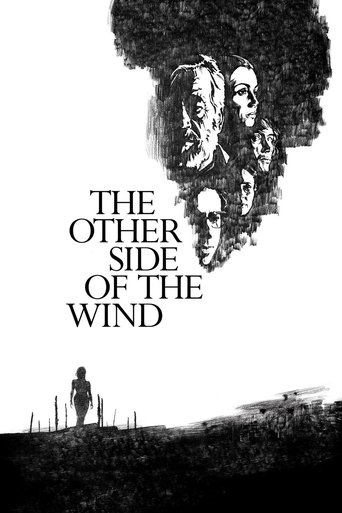
The Other Side of the Wind
2018 · Film · 122 min
Directed by Orson Welles
At a media-swamped party to celebrate his seventieth birthday and screen his avant-garde film-in-progress, a legendary but jaded Hollywood director is faced both with voracious fans and unsettling questions about what became of his lead actor.
1 negative2 neutralfrom 3 commenters
Where to watch
No streaming data for this title.




3 comments on Hacker News
There is a great parallel to this in filmmaking. Some of the greatest films took unexpected turns during production, often forced to change in major ways due to accidents, scheduling conflicts, budget, or last-minute ad-libs which become central themes of their characters. In a number of films, those unplanned additions turned out to be key to the success of the film.
One specific example of this is The Other Side of the Wind, by Orson Welles, in which Welles noted the existence of this magic phenomenon and deliberately sought to make a film centrally driven by happenstance and unscripted ad-libs. In other words: trying to catch lightning in a bottle.
I don't have any experience with those wide screens and how they handle movies but I'd imagine they are very much suited for that kind of content if the player handles it properly.
Concerning the frame rate issue, I was really surprised that most people just don't care or notice at all. After some research it turns out that only about a dozen of Netflix clients on various bluray players, streaming boxes and TVs handle proper refresh rate switching. If your device's Netflix client supports it is apparently pure guess work and anything but certain. Instead they just seem to rely on the display's frame rate interpolation algorithms to fix an issue that shouldn't be there in the first place.
I can live with that for mindless, forgettable content, but if you're trying to sell your service as the future of cinema and put effort into high prestige projects like "Roma" or "The Other Side Of The Wind" maybe they should get the basics right in order to offer a worthwhile big screen experience.
I'm a huge Welles fan, but I find it weird to talk about him as a "workaholic."
Not because he didn't spend a lot of time working (he did! Especially when he was young), but because so little of that time actually resulted in him accomplishing anything. His life story is full of half-finished and only-pushed-out-the-door-because-someone-forced-him-to projects.
Some of these are notorious, like Ambersons, but there are plenty of others. It's All True (https://en.wikipedia.org/wiki/It%27s_All_True_%28film%29), for instance, a vaguely documentary-ish film he spent two years working on in Latin America during World War 2. He shot so much film for It's All True that the studio that eventually inherited it ended up dumping hundreds of thousands of feet of the damn stuff into the ocean just to get it off their books. But even with all that time and footage, he was never able to turn out a finished film.
Or his Don Quixote (https://en.wikipedia.org/wiki/Don_Quixote_%28unfinished_film%29), which he started working on in 1955, spent more than a decade shooting, and which, unfinished and unreleased, he was still tinkering with when he died thirty years later.
Or The Other Side of the Wind (https://en.wikipedia.org/wiki/The_Other_Side_of_the_Wind), also unfinished, which was how he spent the first half of the 1970s.
Or The Big Brass Ring (http://www.amazon.com/The-Big-Brass-Ring-Screenplay/dp/094823816X), a massive, turgid lump of a screenplay that he spent years flacking around Hollywood near the end of his life. (Another director actually managed to film it in 1999. Don't worry about trying to track it down. It is terrible.)
The article doesn't mention any of these projects. In fact it really doesn't mention anything he did after Ambersons. But when he walked away from Ambersons he was only 26 years old! He had more than 40 more productive years ahead of him. While he filled those years with work, though, he lacked focus, lacked discipline, and that lack sabotaged him over and over and over again. He never learned the lesson that "great artists ship." And that's why the story of his life reads as much like a tragedy as it does a tale of genius.