 Hacker Cinema
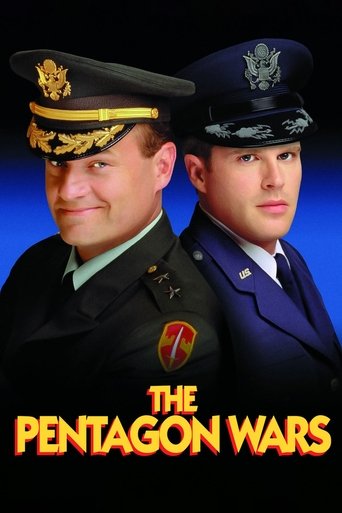
The Pentagon Wars
1998 · Film · 104 min
Directed by Richard Benjamin
From the director of “Made In America” and “The Money Pit” comes a hilarious look at one of the most expensive blunders in military history. Over 17 years and almost as many billion dollars have gone into devising the BFV (Bradley Fighting Vehicle). There's only one problem. . . it doesn't work. (Spoiler alert: 25 years later ... it does work.)
26 positive2 negative2 mixed14 neutralfrom 44 commenters
Where to watch
No streaming data for this title.
46 comments on Hacker News
There's an old HBO movie called "The Pentagon Wars" that's worth checking out
> whose development process was described in the book (and later movie) “The Pentagon Wars”
both of these are NOT documentaries, they wildly misrepresent reality and are basically fiction
“The Homer” is best compared to the M2 Bradley, whose development process was described in the book (and later movie) “The Pentagon Wars”. Unfortunately, all large combat systems (most notably ships) tend to come with a grab bag of ‘features’ of varying utility.
This was not lost on me.
Another movie from that same era I enjoy is The Pentagon Wars about the development of the Bradley Fighting Vehicle. It’s one of the better made for TV movies I can remember.
https://www.youtube.com/watch?v=steA_PZPkc8
https://en.wikipedia.org/wiki/The_Pentagon_Wars
So weird. I just finished watching The Pentagon Wars movie, about just this stuff. True story about developing the Bradley Fighting Vehicle for the army. https://www.youtube.com/watch?v=wNpGBTU_jt4
As much as I love the entertainment value of The Pentagon Wars, citing that as a source for procurement problems is not great. It's a lot more than just 20% made up, and the parts that are true (i.e. the live fire test shenanigans) are true in that wonderful way that something can be technically correct while also being entire bogus.
The Bradley was designed as an IFV from the ground up, not a bastardized APC. The Bradley came in under budget. Those two facts invalidate essentially the entire film...
> HBO did a great made-for-TV movie on this called the "Pentagon Wars", which while fictionalized is only about 20% actually made up: https://www.youtube.com/watch?v=ir0FAa8P2MU
Great in that it is entertaining, but I would not take it, or the book it was based on, completely at face value:
> The Pentagon Wars was made to be a comedy first and an adaptation of the Pentagon Wars book second. It was never meant to be an accurate portrayal of the Bradley program and it shows. You're getting Hollywood taking an an axe-grinding, half-true memoir as fact and then playing it for laughs.
* https://old.reddit.com/r/WarCollege/comments/erpmjm/having_just_watched_the_pentagon_wars_how_has_the/
See also perhaps:
> Although the Bradley destroyed many enemy tanks and experienced fairly low rates of casualty in the First Gulf War and the Iraq War, the vehicle’s recent battlefield performance was not acquired through efficient planning and project management. The origins of the modern Bradley span decades of troubled development; the involvement of many stakeholders; inflexible and questionable requirements; a failure of contractors to make design tradeoffs for fear of losing capability; billions of dollars in R&D costs; and numerous Congressional interventions, including House Armed Service Committee hearings investigating Bradley testing protocol.1 The Bradley has been described at different times, by military officers and historians, as a weapon that means “all things to all people,” a “quintessential hybrid,” and “a proverbial camel...that does nothing well”.2
* https://user.eng.umd.edu/~austin/enes489p/lecture-resources/BradleyFightingVehicle-Scenario.pdf
I don't know why the military can't learn from a string of failed systems going back to at least the '80s.
1. Make Tough Requirements
2. Get Prototype
3. Prototype attracts some interest
4. Now the brass additionally wants capabilities X, Y, Z
5. Prototype now costs twice as much and is more failure prone, and actually less mission-capable due to all the bolt-ons
6. Program costs goes up due to all the changes
7. We can't afford this!
8. Cut unit acquisitions by 50%
9. Wait? Our unit cost just nearly doubled because the real costs were all in design/R&D?
10. Now we REALLY can't afford this.
11. Cut orders by another 75%
12. So finally approximately 10% of the original order actually gets built, at a total program cost 2 or 3x what it was supposed to be, and a unit cost that's massively huge.
13. Program fails in the mid-to-long term due to maintenance costs and falling spares inventory.
HBO did a great made-for-TV movie on this called the "Pentagon Wars", which while fictionalized is only about 20% actually made up: https://www.youtube.com/watch?v=ir0FAa8P2MU
Reminds me of the movie The Pentagon Wars. https://en.m.wikipedia.org/wiki/The_Pentagon_Wars
As a systems engineer[1], I really appreciate that the author mentioned requirement prioritisation. Many requirements are contradictory, and it's all too easy and common for people to avoid conflict and just agree to a cop-out set of requirements such as the system being all of: feature packed, simple to use, able to be designed and implemented on a tight schedule, error free/secure, of high performance, etc. There's an entire comedy movie, Pentagon Wars[2], dedicated to this phenomenon.
There are a few other aspects of bad requirements that are particularly common:
* Requirements specifications created in absence of a software architecture. You end up with 2000 requirements all starting "SoftwareX shall ..." and then software developers assigned to individual components of the software are left guessing as to whether each requirement applies to their component. It's also much harder to make decisions like "that file export component of our software with 5 requirements... let's just use libxyz as-is rather than reinvent the wheel" vs. the same decision when considering 2000 requirements.
* Requirements without justification. The reason why a requirement exists is extremely important. If you want to change the requirement or have failed to meet it, you want to know the consequence and who you'd reach out to in order to advise of the change.
* Non verifiable requirements. Write down a few paragraphs of a test outline when writing requirements, not after the system is already designed (it's too late then). A bad requirement such as "SoftwareX shall have a simple user interface that is easy for newcomers to use" is meaningless during design and development and will get ignored. The threat of a planned verification method being "Bring 10 people of average computer literacy in a room and ask them without having used SoftwareX before to complete the following 10 tasks with SoftwareX in 1 hour. Pass if the average task completion rate is 80% or higher." will get designers and developers thinking.
* Not using exemplars, images, videos, etc in requirements. Good requirements may be as simple as observing that SoftwareY is pretty good for certain aspects, and should be a source of inspiration. Or "Watch this video of SoftwareZ in action, this is what we want our software to do as well."
[1] https://en.wikipedia.org/wiki/Systems_engineering
[2] https://en.wikipedia.org/wiki/The_Pentagon_Wars
For what it’s worth the Bradley has performed quite well, and the flaws that have shown up weren’t noted in the movie (some discussion here: https://www.reddit.com/r/WarCollege/comments/erpmjm/having_just_watched_the_pentagon_wars_how_has_the/)
The scene is very funny, and it’s an excellent story - it just happens to not be particularly accurate.
Reading this
“We weren’t sure LCS was executing the missions it was designed for,” Commander of Naval Surface Forces Vice Adm. Roy Kitchener said in January 2022. “And so we … went out to the number of fleet commanders and said, ‘Alright, what do you want it to do? And what missions do you want it to execute based on the environment we’re in now?’”
reminds me of this excerpt from a movie:
Pentagon Wars - Bradley Fighting Vehicle Evolution
https://www.youtube.com/watch?v=aXQ2lO3ieBA
From the movie "Pentagon Wars". Bradley Fighting Vehicle design and development. Any design engineer will love this scene.
The story about the Bradley procurement as written by John Boyd, and made popular by the Pentagon Wars is misleading at best, and entirely wrong in many regards.
The movie's most famous scene ( the Bradley design montage) is entire fictional. The Bradley was designed intentionally from the ground up as an Infantry Fighting Vehicle NOT, as the movie states, an APC whose design was fiddled by meddling generals. The program also came in under budget.
The supposed meddling with the live fire testing was John Boyd failing to understand what the purpose of a live fire test was for. The Bradley cannot take an RPG round. It was not designed to. John Boyd's insistence that the Pentagon was covering up a flaw in the Bradley's design by not shooting a Bradley with an RPG is just wrong. The Pentagon didn't want to do this test because they already knew what would happen and would learn nothing from doing so. A similar thing occured with the supposed "scandal" of replacing the fuel with water for the small arms fire testing. The objective of the test was not to hit the Bradley until it broke under realistic combat situations, but instead to learn about specific locations where the amour is vulnerable. If the Bradley catches fire and is destroyed, you lose the information you tried to gain. By placing water in the fuel tanks, you can identify where the bullets penetrated, while also ensuring the bullet pass through a fluid (important for a realistic sense of the bullet dynamics after penetration. John Boyd did not understand the objective of the tests, and cried conspiracy.
There's an HBO movie about development of the Bradley called 'Pentagon Wars'. It's a rare bureaucratic comedy movie.
The Boyd biography by Robert Coram tells the story of the battle between the Fighter Mafia and the Bomber Generals. It also talks about, what I'd at best call regulatory capture. There was an outrageous series of events around procurement of the Bradley fighting vehicle. An excerpt from the craziness that ensued:
"The Bradley was a tragedy waiting to happen. It was packed with ammunition, fuel, and people. The thinnest of aluminum armor surrounded it. So Burton sent the Army’s ballistic research laboratory $500,000 to test the Bradley, and he insisted the testing use real Soviet weapons. The Army agreed. But the first of the “realistic” tests consisted of firing Rumanian-made rockets at the Bradley rather than Soviet-made ones. The Army buried the fact that the Rumanian weapons had warheads far smaller than those used by the Soviets. To further insure that the Bradley appeared impregnable, the Army filled the internal fuel tanks with water rather than with diesel fuel. This guaranteed that even if the underpowered Rumanian warheads penetrated the Bradley’s protective armor, no explosion would result. “What are you going to do about this, Jim?” Boyd asked. “If you let them get away with this, they will try something else.” Burton still believed his job gave him the authority to force the Army to live up to its word. He tried to use persuasion and logic with Army officials, but to no avail. When early tests detected large amounts of toxic gases inside the Bradley, the Army simply stopped measuring the gas. They jammed pigs and sheep inside the Bradley to test the effects of fumes after a direct hit. But the fumes had hardly dissipated before the Army slaughtered the animals without examining them"
Really makes you wonder what procurement is actually about. I believe this was the basis for the movie The Pentagon Wars which I haven't seen.
I think I saw that the first time when I was about 11 years old, so around 1970. Before that I grew up watching the TV show "Combat" and show like that were all I really knew about our Military.
I was stunned at how they portrayed the insanity and ineptitude of our Military Officers and politicians. They made it look so crazy and believable at the same time. But what was really stunning was someone had the balls to make it.
In that same sort of genre Kelsey Grammer in "The Pentagon Wars" (1998) is pretty good too. I haven't watched either of those for a long time but think about it now and then.
For me the F-35 story is similar to the Bradley fighting vehicle (https://en.wikipedia.org/wiki/Bradley_Fighting_Vehicle). The same initial corruption during design and developments, the same problems at beginning of deployment, which even culminated with Hollywood to mock Pentagon in the movie "The Pentagon Wars" (https://www.imdb.com/title/tt0144550/). Only to end-up with a work horse that was very much appreciated during Iraq and Afghanistan campaigns.
F-35 it seems that is at that point in its story where the bad is behind and the value it brings to the table just started to unfold. As a member of a NATO country, that is in close proximity of Russia, I'd rather have some of them F-35 stationed in my US military bases that we house on our territory.
I asked a similar question a few weeks ago [0].
The Pentagon Wars [1] is an interesting book about how military systems are developed. They also made a movie.
0: https://news.ycombinator.com/item?id=32056507
1: https://en.wikipedia.org/wiki/The_Pentagon_Wars
there is an old made-for-HBO movie called The Pentagon Wars... I presume it is accurate enough, although it was turned into a comedy so I'm sure they took some artistic license with it. Highly recommended. It's available for free on youtube. https://www.youtube.com/watch?v=ir0FAa8P2MU
From the movie "Pentagon Wars". Bradley Fighting Vehicle design and development.
https://youtu.be/aXQ2lO3ieBA
It's amazing (in the most uncharitable sense of the word) that a bunch of private sector office workers who joke about how relatable The Office is don't realize that stuff like Pentagon Wars (for feds) and Parks and Rec (for state and local government) are also basically documentaries for their respective industries.
I could mortar the cognitive dissonance together and build a wall.
Does anyone know if Pentagon's procurement process has changed since the days of "The Pentagon Wars" [0]?
I initially jumped into this whole topic because I was terrible at estimating and thought it was a uniquely personal failure. I started reading into it an US Military has a history of projects that are incredibly late and massively over budget:
- The joint strike fighter program, of which F35 [1] is the result. 10 years late and double the cost (projected life time cost of nearly 2 TRILLION, with a T).
- F22 raptor, initially 750 were planned for but only 170 were made [2].
- C5 is known for massive cost overruns ($2 billion) [3]
Burton, the author of the pentagon wars attributes it to the procurement process itself. The process does not incentivize delivery. The contracts goals is to get in with the pentagon by underbidding or not clearly defining the requirements and then having the issues be fixed in "operational testing", basically at the point right before front line troops get the hardware. In developmental tests contractors faked stuff a lot:
> The Air Force’s sensor fuzed weapon concept of the early 1980s was advertised as a new, high-tech antiarmor weapon that would home in on the heat of a Soviet tank engine. Fourteen tanks had been arranged in a tight circle, nose to tail like a wagon train in an old western movie. The antiarmor weapons were suspended on a tall crane high above the circle of tanks. When dropped from the crane, the weapons could hit a tank even without the high-tech sensors guiding them. To make matters worse, the weapons did not home in on the heat from the tank engines because the tanks did not have their engines running. In fact, the weapons had homed in on electric hot plates that the program manager had placed on top of each tank. The hot plates were heated to a temperature four times the threshold temperature for the infrared sensors in the weapons, thereby guaranteeing success of the test.
and
> The Air Force’s third-generation laser-guided bomb, PAVEWAY III, scored fourteen direct hits out of sixteen launches in developmental tests conducted by the program manager.* During the operational tests, thirty-nine launches yielded only twenty hits and nineteen failures. Operational testing was suspended seven times because the system did not work well enough to run a test. When it worked, it usually hit the target. When it did not work exactly right (which was half the time), the average miss distance was five miles.1 Yet, PAVEWAY III was approved for production largely on the recommendation of the new commander of the Operational Test and Evaluation Command. It was his view that the “bugs had been worked out,” and he expressed this same view after each of the seven interruptions. This may sound strange, but the new commander was General Richard Phillips, whose former position was that of advocate for Air Force weapons systems, including PAVEWAY III.
Finally:
> The secretary’s chief tester continued to be subordinate to and work directly for the chief developer. Under this arrangement, the chief tester’s views on the adequacy of testing and the implications of test results were stifled by the chief developer.
Has this changed at all?
0: https://en.wikipedia.org/wiki/The_Pentagon_Wars
1: https://www.esquire.com/news-politics/politics/a35631305/f-35-doesnt-work-1-7-trillion-dollars/
2: https://en.wikipedia.org/wiki/Lockheed_Martin_F-22_Raptor
3: https://en.wikipedia.org/wiki/Lockheed_C-5_Galaxy
Some good material to follow, beyond the publicly accessible history of the project (which is long, since the fact that M113 was deficient was known before the final direction of the replacement was figured out), using somewhat popular formats:
https://old.reddit.com/r/WarCollege/comments/erpmjm/having_just_watched_the_pentagon_wars_how_has_the/
https://www.secretprojects.co.uk/threads/truth-to-the-pentagon-wars-and-the-bradley-ifv.20319/post-198881
And finally a bit on the background of the Fighter Mafia member who wrote the black PR book that was used as basis for the movie (PhD thesis on the Fighter Mafia/Reformers and their influence in decision making in both USAF and elsewhere):
https://krex.k-state.edu/dspace/bitstream/handle/2097/38768/MichaelHankins2018.pdf?sequence=1&isAllowed=y
The whole "Has to do everything to get funded" type problem, was very apparent with the Army's Bradley Fighting Vehicle[0]. The result was so misguided, if not comically bad, they made a movie about it, Pentagon Wars[1]
[0] https://en.wikipedia.org/wiki/Bradley_Fighting_Vehicle
[1] https://en.wikipedia.org/wiki/The_Pentagon_Wars
They've been at this for more than 14 years. I was accidentally part of both the Boeing and Lockheed F-35 teams, and that was 23 years ago.
For a humorous take on the U.S. military platform problem, look for a movie called The Pentagon Wars [1] starring Kelsey Grammar and Cary Elwes. It came out in 1998, and very little has changed since then.
https://www.imdb.com/title/tt0144550/
> The F-35, by comparison, was a platform vehicle, with the base suited to adapting to a variety of capabilities and missions. That means more voices demanding priority of features, more expensive engineering to get a variety of polygon pegs into the same round hole, and many first-of-its-kind features for a variety of ancillary tasks.
> No real surprise that it didn't work out.
For a humorous presentation of this, watch the movie Pentagon Wars:
https://www.youtube.com/watch?v=aXQ2lO3ieBA
I am always reminded of this scene HBO movie The Pentagon wars when I read about the F-35.
https://www.youtube.com/watch?v=aXQ2lO3ieBA
There's a dated but entertaining dramatization of this failure from the movie Pentagon Wars: https://youtu.be/aXQ2lO3ieBA.
For a semi-fictional humorous take on American military procurement watch the movie The Pentagon Wars
Reminds me of the old movie "The Pentagon Wars" which I would highly recommend. Its about the absurdity of said politics, but in the army, where lives of people are on the line. The sad part is: The Story is true.
Related movie recommendation: The Pentagon Wars (1998). The one where "Toby" from "West Wing" (Richard Schiff) is put in charge of product managing the Bradley Fighting Vehicle that eventually tries to address every single need from every part of the army.
reminded movie - Pentagon Wars (1998)
The Pentagon Wars [1] is a black comedy film about the military acquisition process. It's based on the development of the Bradley Fighting Vehicle.
[1] https://en.wikipedia.org/wiki/The_Pentagon_Wars
I think this scene from the movie "Pentagon Wars" (1998) captures the idea. https://www.youtube.com/watch?v=aXQ2lO3ieBA
Watch the movie pentagon wars
There was a movie Pentagon Wars about this type of scope creep.
See this 10m clip https://www.youtube.com/watch?v=aXQ2lO3ieBA
There's a film called The Pentagon Wars that seems to describe the exact same issues in regards to the Bradley fighting vehicle, so while I can't say if it's the norm, it certainly isn't unique.
"The Pentagon Wars" is a decent film presentation of this farce.
This reminds me so much the excellent movie "The Pentagon Wars" which I highly recommend.
"designed too ambitiously to fulfill too many roles and, as a consequence, well over its budget, flawed in its execution and struggling to meet even minimal operational requirements."
History repeats ad nauseam. Watch the dark comedy Pentagon Wars movie (featuring the Bradley fighting vehicle) for another example.
We now have examples on land (Bradley), air (F-35) and sea (Littoral) of over-scoped, massively wasteful projects.
There is a pretty good movie "Pentagon Wars" about the development of the Bradley.[0] It's not entirely accurate, but even as complete fiction would be an enjoyable satire.
[0] https://en.wikipedia.org/wiki/The_Pentagon_Wars
Well, you would have to prioritize how you wanted to kill targets, as you say. The program has chosen to delay focus on the gun until later. Was that a wise decision? I honestly don't know.
And also, history nerd that I am...most of the high profile defense programs that I can think of were off the rails at one point or another. This is not to excuse anything (boy, people love that argument, that other programs had issues but turned out fine, so this will, too...I don't like that one), but to point out the fact that we as a society really don't understand how to do this kind of thing well. F-15 and F-16 were both lampooned in their day as being bloated and late and ineffective (I can anticipate the objection now -- not to this same degree -- and cannot argue against it). The Bradley's problems were so famous that HBO made "The Pentagon Wars" (which is a movie that I would actually highly recommend). The A-10 was not paid much attention to publicly but the Air Force of the 1970s hated it and wanted it to die before it ever left a drafting board (they were wrong, of course).
For anyone wanting to see the background of these "design by committee" government projects, watch The Pentagon Wars [1]. It's a comedic insight as to how groups design a product that's too late, too large, too expensive, too hard to build, and possibly doesn't work. The story is based on the Bradley Fighting Vehicle [2].
[1] http://www.imdb.com/title/tt0144550/
[2] http://en.wikipedia.org/wiki/Bradley_Fighting_Vehicle
I found The Pentagon Wars, both the film and the book, to be absolutely brilliant at explaining how things like the F-35 can happen and why cheap, fast, light, targeted vehicles like this aren't produced.
I highly recommended that my fellow HNers to either view the film (10/10) or read the original book.
You will not be disappointed.
That clip from Pentagon Wars is amazing.
Having seen it, is there still any reason to see the movie? Or is that the gist of it? Because from looking at Wikipedia, that looks like the gist of it.
When you need the absolute best for something, you need to specialize. That's why there have historically been so many different kinds of aircraft, each with relatively discrete missions.
The F-35 is a terrible aircraft, and the procurement is deeply suspect. The South Korean acquisition process leaked some surprising information about the acquisition process and the F-35 failed the relatively modest criteria the Koreans had set and an older aircraft (F-15) to be purchased. At the time there was loads of news about the F-35 failing the acquisition and it even made it into Aviation week. Doing a google search now, it looks like it was a smooth process from RFP to acquisition and I can't find many of the older articles [1]
The rumor is that Lockheed bribed the hell out of the Korean National Assembly and "won" the initial round of acquisition, but the agency in Korea responsible for the acquisition (DAPA) saw right through it and awarded the final contract to Boeing.
The National Assembly got upset, Lockheed got upset and probably some U.S. congressmen got upset and the entire acquisition was tossed out "recompeted" and of course the F-35 won the second time. It's a sad joke and I can't even begin to guess at the acquisition shenanigans that happened in the U.S.
1 - http://www.defensenews.com/article/20130928/DEFREG/309280008/F-35-Back-S-Korea-Fighter-Contest
edit a great movie about this is the movie "Pentagon Wars" which includes this great scene.
https://www.youtube.com/watch?v=aXQ2lO3ieBA