 Hacker Cinema
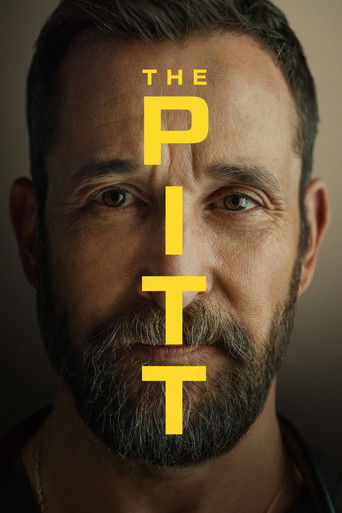
The Pitt
2025 · TV series · 3 seasons
Created by R. Scott Gemmill
The staff of Pittsburgh's Trauma Medical Center work around the clock to save lives in an overcrowded and underfunded emergency department.
4 positive1 negative10 neutralfrom 15 commenters
Where to watch
No streaming data for this title.

16 comments on Hacker News
> 2. We've started expecting "must-see" shows and movies. You want to watch The Pitt, and then are mad that you need to get HBO or whatever and can't just watch it on Netflix. Perhaps you could browse Netflix and find something you'd like, but you have your heart set on a specific show. Obviously (1) is a failing of the streaming providers, but I think (2) is on us a little bit. Cultural monoculture is not good. Following the herd is not good.
#2 is because streaming companies made a promise that they couldn’t live up to — namely, that subscribing to their service would essentially be tv on demand and we could watch the best tv had to offer without the limited scheduling of over-the-air broadcasting. Well, it turns out that one of the great benefits of network broadcasting was that everyone could watch the same show because everyone had access to the broadcast. The streaming companies are expecting subscribers to watch what’s on their service just because it’s on their service, which is exactly what regular broadcast tv had forced everyone to do. Streaming offers the option to watch anytime but not the option to watch anything, even thought that was in fact part of the original promise.
>2. We've started expecting "must-see" shows and movies. You want to watch The Pitt, and then are mad that you need to get HBO or whatever and can't just watch it on Netflix. Perhaps you could browse Netflix and find something you'd like, but you have your heart set on a specific show.
>(2) is on us a little bit. Cultural monoculture is not good. Following the herd is not good.
I don't think this is it. People just want to be able to watch things without too much hassle and without paying too much money. Some people will enjoy following the latest trend, but there are always many more people not watching any particular show than are watching it.
The fact that torrents make it so much easier to find what you want shows that there's nothing technically difficult about this. It's all caused by stupid profit incentives which make the consumer experience so much worse than it needs to be.
> The original promise of streaming was simple. Everything would be available whenever you wanted it. You could sit down in the evening and binge an entire season without waiting a week for the next episode.
That's not how I remember it. Streaming services never had everything. The promise was: there would be something you would enjoy.
There are two reasons why this isn't working for us:
1. They've cut costs and over-optimized on engagement and now frequently a streaming service will literally not have anything you want to watch.
2. We've started expecting "must-see" shows and movies. You want to watch The Pitt, and then are mad that you need to get HBO or whatever and can't just watch it on Netflix. Perhaps you could browse Netflix and find something you'd like, but you have your heart set on a specific show.
Obviously (1) is a failing of the streaming providers, but I think (2) is on us a little bit. Cultural monoculture is not good. Following the herd is not good.
> It's a very energetic intensive process, it cracks ribs.
I feel like lately this is becoming more common knowledge - but still something most people don't realize.
Part of it is probably the fact that it's impossible to depict "real" CPR in popular culture (movies, TV shows, etc) unless the production goes to extreme lengths to use a fake dummy. Even on The Pitt (which seems to make a point of being hyper realistic) I've seen them do "fake" CPR with shallow compressions.
"Have you tried translating these monosyllable words (ga, ma, pa, etc) into English?"
There is a toggle on the top that goes from Swaras to Solfrege - which is the western notation for music.
There is a floating window now that shows what the mapping is between each register and the note, so that it becomes easier for folks to understand the correlation.
"I wonder what the cross over will be like when you do 'western' film and media."
All of the 408 films that you see there is Hollywood films. The list of the movies that constitute this data is listed here : http://arc.quanten.co/browse
"You might want to have a way to tie this to something that the user has already seen as an intro."
If you want to see how this breaks down, We've put out two sample content - one is Anora (which won the Oscar for Best picture last year) and in terms of TV Shows we have also mapped the Pilot episode of The Pitt (though the data used for the analysis was only films)
you can access the complete breakdown for the film and series here:
http://arc.quanten.co/showcase/film http://arc.quanten.co/showcase/series
"I'm interested in why you all wanted to do this project at all."
I used to host a filmmakers club in my open floor office for a few years and used to listen to filmmakers talking about how they make films. While I come from the software world where everything can be A/B tested and there is a beta, test, feedback, iterate, release cycle, it felt odd that films lack any of it - and it is pretty much a hit or miss. And unlike software, you don't get a chance to re-release a film. And the lack of any meaningful audience data and structure data, felt like a huge gap - one that artistic sectors like music and culinary arts have quite well bridged, but the visual story telling world hasnt. That's where the wheels started to churn - that was almost 11 years ago.
We've made a few of that data fully visible. Try this :
http://arc.quanten.co/showcase/film (Anora) http://arc.quanten.co/showcase/series (The Pitt S01)
Turmeric. Honey (on burns)- Medihoney was even used in a recent Pitt episode. Aspirin, though this is older than 50 years.
I kind of have this, and part of this I think is just cognitive load. When something first comes out. There’s this like added mental pressure to like it, to think about how everyone else responds to it. I watched the Pitt because I already had language for it. I loved ER, and it’s basically a spiritual sequel to the 90’s show. I tried Severance, I don’t know if I would like it a few years from now but I think it would be easier to like without the feeling I was supposed to.
This is a bit overstated but I’m analyzing something mildly subconscious, not like a conscious anxiety - it just feels like a lot of work to engage. A few years later the pressure is off, there’s no expectations. You can choose what to engage with in peace.
There’s also in some cases the obvious - if you don’t like Sinners society implies you’re probably close minded and maybe even a little bit racist. And even if I don’t 100% reject that sentiment, I don’t want to consume art in that context, and I doubt the artist would want me to either(I mean aside from wanting the ticket sales) Better to wait a few years and consume it on your own terms. Have some space to look at the landscape and determine what you might really enjoy in the strength of the idea itself. Most of my favorite shows and movies I consumed in that context.
I just rewatched that scene last night on YouTube. Maybe this is the universe telling me to watch the whole movie again...
It's cool to see Noah Wyle getting his due these days (The Pitt).
its all propaganda, movies and all
HBO Told 'The Pitt' to Make ICE Storyline More 'Balanced' https://www.forbes.com/sites/paultassi/2026/02/28/the-pitt-has-an-ice-storyline-coming-and-hbo-wanted-it-balanced/
This is quite the lament. Very well written.
I'm about ten years ahead of the author. I felt this a long time before AI arrived. I went from solving problems for people to everything I tried to ending up in an endless grind of yak-shaving.
I worked my way through it, though. It made me both give up programming, at least in the commercial sense, and appreciate the journey he and I have gone through. It's truly an amazing time to be alive.
Now, however, I'm feeling sucked back into the vortex. I'm excited about solving problems in a way I haven't been in a long time. I was just telling somebody that I spent 4-6 hours last night watching Claude code. I watched TV. I scratched my butt. I played HexaCrush. All the time it was just chugging along, solving a problem in code that I have wanted to solve for a decade or more. I told him that it wasn't watching the code go by. That would be too easy to do. It was paying attention to what Claude was doing and _feeling that pain_. OMG, I would see it hit a wall, I would recognize the wall, and then it'd just keep chugging along until it fixed it. It was the kind of thing that didn't have damned thing to do with the problem but would have held me up for hours. Instead, I watched Pitt with my wife. Every now I then I'd see a prompt, pop up, and guide/direct/orchestrate/consult/? with Claude.
It ain't coding. But, frankly, coding ain't coding. It hasn't been in a long, long time.
If a lot of your job seems like senseless bullshit, I'm sad to say you're on the way out. If it doesn't, stick around.
I view AI as an extinction level threat. That hasn't changed, mainly because of how humans are using it. It has nothing to do with the tech. But I'm a bit perplexed now as to what to do with my new-found superpowers. I feel like that kid on the first Spiderman movie. The world is amazing. I've got half-a-dozen projects I'm doing right now. I'm publishing my own daily newspaper, just for me to read, and dang if it's not pretty good! No matter how this plays out, it is truly an amazing time to be alive, and old codgers like us have had a hella ride.
My wife and I are both "book a week minimum" readers. In 2025 she finished 80 novels. I was in the mid 70's. We've been doing this basically since middle school uninterrupted. Reading is just our preferred form of consumption based entertainment. Last year we watched maybe five movies and I finally got my wife to sit through the fourth season of The Wire. The only "modern" show we're actively watching is The Pitt.
It's starting to sound like reading books has a similar distribution as consuming cannabis. The "daily" users account for 3/4ths of the spending on cannabis despite being 1/3rd of overall users. The heavy consumers consume A LOT and skew the statistics.
Pauses your TV or media player when Claude Code is idling, resumes playback when not idle.
The productivity tool that dis-respects your binge watching habits.
Best way to test this is with a Home Assistant connected media player while watching S02E02 of The Pitt today.
I am funding a series-A for this unique AI startup, interested VC's please be in touch
I've been thinking recently about the scale at which it seems the vast vast majority of people participate in close to zero public discussion online and what a bummer it is.
Basically all discussion platforms are broken for any sort of long term meaningful discussion which I think is at least part of the problem. Even this thread and this comment just the fact that the thread is now 4 hours old the amount of views and chance of getting many responses drops precipitously. On most platforms unless you are someone with a large following you basically have to think like a marketer and post often and early on posts to stand a chance of getting a discussion going. It's always so ephemeral too. Even though posts on a platform like HN on reddit still exist and you can comment on old threads probably 99% of the activity happens in the first 6 or so hours and then it largely ends.
It makes me miss forums where at least you had long lived threads with simple time based post order and a good chance of replies. This doesn't seem to exist on only platforms now and forums have largely faded away.
The fragmentation of discussion has also messed things up. For example yesterday I was listening to a HardFork podcast episode which is a fairly popular pod, topping the charts in at least the tech category, and after listening I wanted to check for discussion around the episode and probably leave a comment or two. I assume this episode had to have gotten at least in the low tens of thousands of plays though perhaps that is way off. I went searching for discussion and basically found a largely dead subreddit for the podcast with no threads being regularly created for the episode and an empty comment section on nytimes which any site comment section is a useless place for discussion anyways. The pod is also posted on youtube which the youtube comment section had the most activity of anything I found but the youtube comment section and the way it is structured/operates is perhaps the most useless of all the platforms for trying to have any discussion. I just don't understand how if at least say ten thousand people listened to the episode surely at least 1% would be interested in discussing it and 100+ people going back and forth would be a large, active, healthy discussion somewhere.
Even threads that seem "active" on sites like HN or Reddit in the context of the actual audience sizes are shockingly small and confuse me. For example The Pitt season 2 just premiered and posted 5.4 million viewers, the subreddit post ep discussion currently has 5.3k comments which is quite high for a show. That is a joke of a percentage though, 0.1%! and even worse in the context of people that are posting probably post more than once in the thread. I understand many and even most people not wanting to post to discuss a show they just watched but how the hell is less than 1 in a thousand!
This post got long which also damages the chance of any engagement due to TLDR culture.
Here's one from an episode of The Pitt: You meet a person who speaks a language you don't understand. How might you get an idea of what the language is called?
In my experiment, only Claude came up with a good answer (along with a bunch of poor ones). Other chatbots struck out entirely.
The Pitt, a recent ER show, features ECMO :)
https://www.imdb.com/title/tt31938062/