 Hacker Cinema
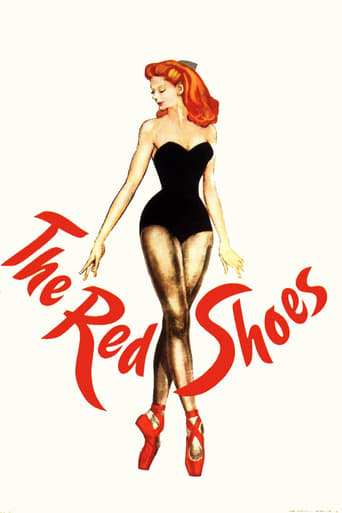
The Red Shoes
1948 · Film · 133 min
Directed by Michael Powell, Emeric Pressburger
A fledgling ballerina falls in love with a brilliant composer, but the jealous head of the ballet company plots to drive them apart.
1 positive2 neutralfrom 3 commenters
Where to watch
No streaming data for this title.




4 comments on Hacker News
I don't take it as harsh criticism. I try to remain intellectually honest about things so feedback and criticism is welcome. Just couldn't back to you earlier as our search experience went down.
For users (demand-side), the problem we solve: There are user groups that currently have a fragmented experience. For example, a specialized solar technician (just throwing out a random example) has to look through a handful of speciality stores to find and compare products that are only sold there. I think there are specific user-groups we can go after that really feel the pain right now of this process. Additionally, as the number of e-commerce platforms increases, it becomes tougher for every day users to find products they are looking for. They have to either go to Amazon or go store-by-store to discover products. The shop.app solves it for Shopify store but there's also millions of sites on WooCommerce, Squarespace, Wix, etc. We get around the empty-state problem with the crawler and now have merchants signing up to get their products indexed.
For merchants (supply-side), the problem we solve: If they sell on their own website, they have to compete against non-product pages on Google. For example, if you sell "red shoes" on your own site, you have to compete against the IMDB entry for the movie "Red Shoes" for people to find you. Additionally, if they sell on their own website and use Amazon (or any physical retailer) for distribution, they give up a percent of their margin. This increases your sell-through but is a smaller amount of money in your pocket.
I'll note that I've seen this problem first hand. In 2016 I launched a game called The 2016 Election Game, which was like Cards Against Humanity for the 2016 US elections. Sold about 5k units fulfilling order myself. And then again in 2020 called DoneWith2020, which was like Cards Against Humanity for the absurdity of the 2020 year. Sold about 34k units using mostly dropshipping. I remember losing out on search / discovery by choosing to sell on my own store but made a much higher margin on each sale (i.e. made about $15 on each $24.99 unit sold). We did work with a company to get on Amazon but always preferred people purchasing on our own site. It was also really hard to get high intent traffic to my store from ads. Would have been nice to send people searching for "funny card game" to my site. Now if everyone has my same dark sense of humor once they landed on the site, is up for debate.
The goal isn't to catch up to Shopify, WooCommerce, etc. but to rather aggregate products across platforms. I do think we can index most of e-commerce products sold on these platforms (my best guess is that it's somewhere between 10 - 20 billion products). This is obviously a very tough data hosting and search problem at that scale. Even Mongo, which is what we use as our primary database, has a limit of 2 billion records.
I agree that it's a traffic problem. Everything comes down to getting users. Based on the number of merchants signing up, we are validating that others have the supply-side problem. It's a matter of nailing down the demand-side problem (i.e. finding the right user groups, building the right features for engagement, etc). We use 'search' as the conduit, assuming that exceptional search will lead to more traffic. But agreed that there are several other factors to solve.
Hi HN! I built Agora as a side-project leading up to the holiday season. I wanted to find an easier way to find Christmas gifts, without needing to go store-by-store.
My wife asked me for a a pair of red shoes for Christmas. I quickly typed it into Google and found a combination of ads from large retailers and links to a 1948 movie called 'Red Shoes'. I decided to build Agora to solve my own problem (and stay happily married). The product is a search engine that automatically crawls thousands of Shopify stores and makes them easily accessible with a search interface. There's a few additional features to enhance the buying experience including saving products, filters, reviews, and popular products.
We've started with exclusively Shopify stores and plan to expand the crawler to other e-commerce platforms like BigCommerce, WooCommerce, Wix, etc. The technical challenge I've found is keeping the search speed and performance strong as the data set becomes larger. There's about 25 million products on Agora right now and we'll ramp this up carefully to make sure we don't compromise the user experience.
I'd love any feedback! And open to any advice on improving the search experience.
I’ll play:
The Thin Man (1934), It Happened One Night (1934), Dodworth (1936), Fury (1936), The Awful Truth (1937), Grand Illusion (1937), You Only Live Once (1937), Wizard of Oz (1939), Only Angels Have Wings (1939), The Great Dictator (1940), His Girl Friday (1940), Philadelphia Story (1940), Rebecca (1940), The Maltese Falcon (1940), Citizen Kane (1941), A Woman’s Face (1941), The Magnificent Ambersons (1942), The Ox-Bow Incident (1943), Casablanca (1943), Double Indemnity (1944), Mildred Pierce (1945), It’s a Wonderful Life (1946), The Best Years of Our Lives (1946), Great Expectations (1946), The Big Sleep (1946), The Red Shoes (1948), A Letter to Three Wives (1949), Sunset Boulevard (1950), All About Eve (1950), A Place In The Sun (1951), High Noon (1952), Roman Holiday (1953), The Wages of Fear (1953). (I slipped two French films in.)
Almost anything by Hawks during those years. Or Hitchcock. Almost anything with Bogart. Or Grant. Or by Wilder.
Tons of noir films skirted the rules.
Look, I’m not a fan of the Hays code but some of those movies were to me better because of what they had to imply.
This is after the Hays code but as an example I recently watched the original 3:10 to Yuma and the remake. I hated the remake. What appeals to me about Elmore Leonard stories is that despite being about bad guys, they have a degree of charm to them (Out of Sight, Justified, Jackie Brown, Get Shorty,etc). The remake took all of the charm out of the original and replaced it with graphic violence and cruelty.
John Waller wrote a book about this 9 years ago which I thought was amazing:
https://iconbooks.com/ib-title/a-time-to-dance-a-time-to-die/
I don't know if anything new has come to light though.
A particular touching thing was that they made red shoes for the dancers, a known expensive colour, to show how much they valued them, but it didn't stop the dancing.
The film the Red Shoes was based on HC Anderson's story, which as far as I can tell has no connection with this dancing epidemic, just that his Dad was a shoe maker and had some spare red material...