 Hacker Cinema
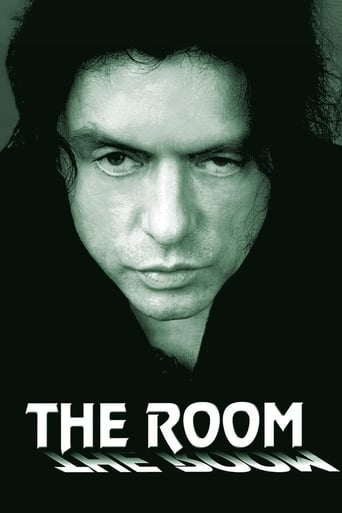
The Room
2003 · Film · 100 min
Directed by Tommy Wiseau
Johnny is a successful banker with great respect for and dedication to the people in his life, especially his future wife Lisa. The happy-go-lucky guy sees his world being torn apart when his friends begin to betray him one-by-one.
18 positive16 negative4 mixed23 neutralfrom 61 commenters
Where to watch
No streaming data for this title.
66 comments on Hacker News
Crypto has utterly failed as a currency. In that regard it's been dead for over a decade. If btc or eth were currency they'd be considered dead by deflationary spiral which is more or less what every economist predicted from the start. Some people got rich by investing but getting rich off of currency speculation is generally awful for people who rely on that currency to live. Crypto has been a success the same way The Room was a successful movie.
>Never awful (anymore), never fantastic
Don't know about that, I always found average awful in itself, even in human output (like most pop), and even more so in AI output.
Something actually awful can be better than average - more entertaining and more felt. I'd rather watch The Room than an average movie.
If we’re comparing bad quality to bad quality, human bad quality is infinitely more interesting. The fact someone wrote, directed, produced, acted in, etc, in something like Troll 2 or The Room is what makes those movies special. It’s the fact you can go “god damn, someone thought this was good” and be baffled at specific decisions they made. It’s the curiosity of “what was going on there”, “what drove those individuals to do this”, “how much of it were outside forces”, “who are these people”. It’s all the reasons which make it worth it to make a movie about a bad movie.
With AI, even if you enjoy it as bad, as soon as you know it’s AI it loses all interest because there’s zero story behind it. The answer to all those questions becomes “a statistical algorithm made it that way”, and that’s objectively a boring answer.
> If there is no objectivity....then you would have no basis to explain why a film is better or worse than another, A student first iPhone short would be equal to The Godfather. A child banging pots would be indistinguishable from a Symphony.
What is the purpose of "art": in general and/or particular works of it? What makes (a work of) 'art' 'good'?
Is PHM 'good' in its purpose? Is The Room? When a child is banging on pots, is he accomplishing his purpose in his 'creative act'?
> I think Michael Bay sometimes sucks (“Pearl Harbor,” “Armageddon,” “Bad Boys II“) but I find it possible to love him for a movie like “Transformers.” It’s goofy fun with a lot of stuff that blows up real good, and it has the grace not only to realize how preposterous it is, but to make that into an asset.
* https://www.rogerebert.com/reviews/transformers-2007
> Do you believe in the concept of objectivity?
When it comes to the concept of entertainment? No.
Is the 2003 movie The Room (written/directed/produced by Tommy Wiseau) "objectively" good or bad?
* https://en.wikipedia.org/wiki/The_Room
If it is "objectively" 'bad' why do (many) people have such a good time watching it? Are they "objectively" happier after watching The Room? Are people "objectively" happier after watching Project Hail Mary?
I remember when I was watching Kick-Ass in the theater, there were some teenagers trying to be funny the entire time.
I initially very politely asked them if they could stop talking because we're trying to watch the movie, but they didn't take that very seriously.
After another ten minutes of their commentary I yell very loudly "SHUT THE FUCK UP!". Extremely loud, I suspect everyone in the theater heard me pretty clearly. I'm a pretty big guy and I have a very loud and deep voice, and of course the theater is dark, so they might have assumed I was more threatening than I actually am. The teenagers shut up for the rest of the movie.
The thing is, though, it kind of ruined the rest of the movie for me. The entire time I'm sitting there, kind of worked up and annoyed that I had to yell at some kids and ruin their Friday night.
I've certainly had good times in theaters too, I like movies, but I've grown a bit tired of it. Now generally the only time I go to the theater is the live showings of The Room.
I swap back and forth between favorit movies. Every few days it may be Goodfellas. Some days it is The Room. But I always return to Kiki’s delivery service and Howls moving castle. Both are absolutely gorgeous and incredibly well told.
I also find myself quoting porco rosso a lot lately.
This a treasure trove of gorgeous lockscreen images. Very excited to put them into rotation.
> This is a massive cope. AI image/video slop is still slop.
Slop content is slop content, AI or not. You don't need an AI to make slop. We've always had films like "The Room", it's just that the financial and time constraints put an upper bound on how much slop was created. AI makes creation more accessible. You've got Reddit for image and video now, essentially.
You are biased by media narratives and slop content you're encountering on social media. I work in the industry and professionals are using AI models in ways you aren't even aware of. I guarantee you can't identify all AI content.
> And if we allow it to take over society, we'll end up with a society that's also slop. Netflixification/marvelization only much much worse..
Auteurs and artists aren't going anywhere. These tools enable the 50,000 annual film students to sustainably find autonomy, where previously there wasn't any.
> You can't make this argument for watching a movie, though. You can't substitute some crap movie like Gigli or The Room for the experience of a cinematic masterpiece like 2001: A Space Odyssey or Lawrence of Arabia. It's like comparing some 4-year-old's crayon drawing to a painting by one of the masters.
You can't substitute mspaint for photoshop either, what a weird take.
And you can substitute any capeshit movie for any other capeshit movie since they're all the same.
Your analogy makes no sense.
>One thing you might be overlooking is that there are often substitutes for the pirated products.
This works for software tools, but it doesn't work for movies or other artistic works. For example, personally, I'm a firm believer that no one should pirate Windows: if you can't afford it, then you have lots of free options available (namely, countless Linux distros). Same goes for Photoshop: if you can't afford it (or don't want to), there's free alternatives like Krita. These software programs are just tools to accomplish a task; if you can't get access to one, you can likely find something else to do the same thing.
You can't make this argument for watching a movie, though. You can't substitute some crap movie like Gigli or The Room for the experience of a cinematic masterpiece like 2001: A Space Odyssey or Lawrence of Arabia. It's like comparing some 4-year-old's crayon drawing to a painting by one of the masters.
> ... heard it every single day, twice a day, throughout your childhood
If it was so terrible, why did it get played so often?
When I think "terrible", I think of the movie "The Room", which has been called the Citizen Kane of bad movies. It is truly awful. The dialog is awful. The acting is awful. There are all sorts of logical inconsistencies where things inextricably appear and disappear. By any metric it's bad. It's so bad that it has a cult following because it's so bad.
"We Built This City" just isn't anything like that.
Compare it to My Humps [1] or What Does the Fox Say [2] or Friday, just to name a few? These are a few random songs that are all miles worse than We Built This City.
[1]: https://www.youtube.com/watch?v=iEe_eraFWWs
[2]: https://www.youtube.com/watch?v=jofNR_WkoCE
> What accolades?
Any accolades, be that professional groups, people's awards, rotten tomatoes or IMDB ratings.
> Race to the bottom, least possible effort, plausibly deniable quality, gross exploitation, capitalist bottom line - those are all things I'd use to describe current "art" awards like Grammy, Oscars, Cannes, etc.
I find them ridiculous in many ways, but no, one thing they're definitely not is a race to the bottom.
If you want to see what a race to the bottom looks like, The Room has a reputation for being generally terrible, "bad movie nights" are a thing, and Mystery Science Theater 3000's schtick is to poke fun at bad movies.
> The media industry is run by exploiting artists for licensing rights.
Yes
> The middle men and publishers add absolutely nothing to the mix. Google or Spotify or platforms arguably add value by surfacing, searching, categorizing, and so on, but not anywhere near the level of revenue capture they rationalize as their due.
I disagree. I think that every tech since a medium became subject to mass reproduction (different for video and audio, as early films were famously silent) has pushed things from a position close to egalitarianism towards a winner-takes-all. This includes Google: already-popular things become more popular, because Google knows you're more likely to engage with the more popular thing than the less popular thing. This dynamic also means that while anyone will be free to make their own personal vision (although most of us will have all the artistic talent of an inexperienced Tommy Wiseau), almost everyone will still only watch a handful of them.
> Art's going to get weird, and censorship will be nigh on impossible.
Bad news there, I'm afraid. AI you can run on your personal device, is quite capable of being used by the state to drive censorship at the level of your screen or your headphones.
It's not like The Room. Tommy Wiseau wanted to be Marlon Brando, a serious actor in a serious drama. He just so happened to write the most embarrassingly revealing movie ever made. All his insecurities are laid bare on the screen, and they're presented so transparently that you can't help but laugh.
Megalopolis is like a Neil Breen movie. A power fantasy with magical powers, with a cadre of power-hungry demagogues who must concede to the morality of the main character.
It is NOT a high budget The Room. It's not an amazing movie, but it has some very good parts. Makes me think of the concept behind that book "Javascript, the good parts". Once you take out the flat, and occasionally cringe, parts, there is a lot of good stuff to be seen (unlike Javascript!).
The Room has no good parts - it's all terrible unintended humor.
I had this notion that all the hip comedy writers in Hollywood should write jokes to make this he next Rocky Horror/Room. Do the old man a favor and help him make at least some of the money back. edit - I am seeing this is a common theme in the comments - there is something joyful about an earnest(?) movie that swings and misses.
> It’s like a high budget The Room.
Another commenter said something which made me think of "The Room" as well:
> it seems like all the actors were given the stage notes to forget how to act, but in a way that only a skilled actor could
For the longest time, I thought that Tommy Wiseau was some sort of Andy Kaufman-esque comedic genius, because how else could one director get so many things wrong, unless it was on purpose?
Until now I really had no interest in seeing this movie. I mean, a character named "Wow Platinum"? Really? But you may have just convinced me to give it a shot.
I was super excited to watch it and I wasn’t disappointed, but for entirely different reasons than I expected. The absolute absurdity of the film is genuinely hilarious, I was stifling laughter for most of the runtime for how ridiculous the acting, situations or environments were. It’s like a high budget The Room.
> I imagine poetry as an often misanthropic and lonely hobby with virtually zero demand for it’s output. Whether written or spoken. Moreso now there are LLMs.
(1) In any big city in the US, you can easily find poetry workshops/meeting groups. I'm currently in one (Boston), we read each others' poetry and talk about poetry every week. It's absolutely ridiculous to think there is no demand for poetry, poetry is one of the -- if not the -- oldest art forms, I mean yeah there are people who read poetry even in 2024. My generic bookstore still has a poetry section where I pay $$$ to exchange for poetry books. There is even a dedicated poetry book shop in Harvard Sq (i.e. they exclusively sell poetry books) and they pay the same (expensive Boston) rent any other business pays.
(2) LLMs write dogshit poetry. Comparing a "good" poem with a GPT-4 generated poem is like comparing "2001: Space Odyssey" and "The Room". Other than the fact that they're both arguably "movies" the quality difference is extremely obvious to people who are familiar with this art form.
the room is pretty well known, and is more memorable / has probably had a bigger impact on cinema than at least half of the entries in https://en.wikipedia.org/wiki/2003_in_film#Highest-grossing_films
"good" or "bad" is sort of irrelevant
The Room is an extreme example because it’s mostly remembered for being so bad that it’s funny, but sure: it has had a thousand times more influence than the hundreds of competent but procedural thrillers that came out at the same time. It will still be watched in fifty years.
I don’t like that list at all and think it’s basically a list of how “traditional” the Lynch film is. I’d put Mulholland Drive first personally.
> In other words: in 2050, Dune 2021 will be perceived as just another sci-fi film, whereas Dune 1984 will still be weird and unique.
Just like The Room is "weird and unique"? :)
> As a side note: does anyone take RT or the Oscars seriously anymore? That whole line of argument isn't very compelling to me, but I guess it is for some.
How much would you agree or disagree with this 'ranking' of Lynch's works?
* https://editorial.rottentomatoes.com/guide/david-lynch/
I've already seen that one. One of the best Rifftrax along with The Room and Twilight, fellow Person of Culture. Me and a bunch of friends used to be zealous bad movie watchers, though we don't do it as often now that we're all scattered.
> Anyone with candles and NASA lenses
It isn't the 1970s anymore: Robert Eggers was able to shoot candle-list scenes for The Witch without NASA lenses:
* https://www.youtube.com/watch?v=qtb0qAu-Hjc
* https://en.wikipedia.org/wiki/The_Witch_(2015_film)
The entire movie cost US$ 4M, which was less the $6M for Wiseau's The Room.
On a more fundamental level it seems like the reason that movies are dark [or long, or shaky-cammed, or mixed with near-inaudible dialogue, or…] is the same reason movies are such strong and specific cultural touchpoints: they are largely the vision and decisions of the people in charge, relatively unencumbered by prosaic concerns such as accessibility or even profit (at the very least, this last one is true per movie: a director whose films flop quickly stops being able to find funding, so the profit concern does assert itself, but even that director mostly gets to make the movie they want to make while on set and in the editing booth).
The proliferation of sequels trading on nostalgia, cinematic universes like Marvel etc., may seem like counter-examples but I’d argue they represent a directing team whose specific vision is making a lot of profit. Profit is an internal motive and the directing team’s wide latitude lets them pursue it, rather than profit being an external concern that steps in scene by scene and tells them to add more lights. (Also note that Marvel’s MCU is well-known for the very particular creative vision driving the entire franchise.)
When the decision-makers have a unique vision, we get cult classics, new schools like “lighting realism”, and also awful movies like The Room. When the decision-makers are influenced by trends, we get waves of shaky cam or dark lighting.
In fairness, mediocre marvel movie is absolute bottom of barrel.
For comparison, The Room got a 9. Maybe metacritic scores follow a bathtub curve with "worst possible" sitting somewhere in the middle?
This movie is honestly pretty terrible, and I say that as a Lynch fan. It's entertaining, but often in the same way The Room is.
I've been meaning to watch Jodorowsky's Dune [1], a documentary about Jodorowsky's failed attempt to make a Dune film. He's even more of a nut than Lynch...I wonder what he would have done with the material.
Because his argument is not good. The structure is “If there is no X, then there is no Y. Because Y, X.” This is circular reasoning which is more obvious if we use the same structure as
“If carbon exists, then carbon-based alien life forms exist. Because carbon-based aliens exist, carbon exists.”
Logically, not wrong, but you missed the most interesting part of the proof: aliens exist?! PG missed proving the most interesting part of his post: that good taste exists. I don’t think reductio ad absurdum really works here because there are millions of possible explanations for the “effects” of good taste. In his example, the fact that people have non-random responses to art.
The problem here is just the fact that people have consistent responses to art does not suppose that there exists some inherent reasoning called “taste.” In fact, many popular things are abhorred as poor taste. I think we can agree that liking Citizen Kane more than Twilight would be called “good taste.” The problem here of course is that “taste” is a sociological construct - not a logical or philosophical one - designed by humans to distinguish class upon non-obvious signifiers. Perhaps you could dress a lower class person in fancy dress and perfume, but any upper class person could snuff them out in a moment by any hundreds of small little signifiers.
PG seems to want to talk about taste without having to say any of the unfashionable things about it, not naming any specific art works or signifiers of taste. He wants to “prove” taste exists without ever even defining it. Without a single example in this framework that lends credence to his ideas. By his logic, Marvel movies and Twilight should be more tasteful than Vertigo because more people more consistently like it. In reality, taste works the opposite way, but it’s not that simple either. Most people would hate Tommy Wiseau’s The Room, but that does not mean that liking it means you have good taste. Rather the opposite in fact. The truth here, of course, is that “taste” is a cultural, social, and economic property and lens, not a logical one. You have to get into real world to argue about taste, which PG seems entirely uninterested in doing.
If I may be a bit tongue in cheek, I would advise Paul that if you want to start talking about taste, you must first talk about scarcity and then irony.
Can you bring some examples of films that are considered bad, rated say below IMDB 5, but are novel in some way? I don't know of any. There are some edge cases "so bad it's good" like The Room, but I personally don't get the appeal of it. And then it's an edge case anyway.
> A number of publications have labeled The Room as one of the worst films ever made.
From the wikipedia page.
> Normally, when I see the same name in all of the roles, I get nervous
I can see why. Lol.
But Primer is really good film. Ofcourse, you will have to checkout an explainer on youtube afterwards.
It's worth watching The Room first, IMO
Speaking of that movie, I can recommend anyone who is familiar with The Room, but who hasn’t seen The Room, to watch the movie The Disaster Artist (2017) instead. I’ve only watched the latter and not The Room itself but watching the latter instead was a nice experience.
https://www.imdb.com/title/tt3521126/
The Disaster Artist is based on the book "The Disaster Artist: My Life Inside The Room, the Greatest Bad Movie Ever Made" by Greg Sestero, and it’s got James Franco portraying Tommy.
"The Room", by Tommy Wiseau, is a movie where Chekhov's gun isn't applied. It contains lots of small happenings with no further relevance. It has lots of other issues, technically speaken.
But together they make this film not only amateurish, but it also gives it a certain kind of realism. In real life stuff happens and still may have no further relevance to the "story" after all. In real life there is nobody enforcing Chekhov's gun.
Together with the other charming mistakes and bad acting the film feels quite authentic. It gives this impression that someone just wanted to tell his story, despite not being as professional as we are used to. Like a little child coming home from playing in the woods that excitetly blabbers out the story of what he just experienced.
The phenomenon of "The Room" being one of the most popular cult movies ever needs to be examined. I think the thing that makes "The Room" work is its raw authenticity. It totally, unashamedly owns its weirdness.
Badly written novels and screenplays often have the feeling of watching a cheap puppet show where the author is clearly visible puppeteering all the other characters because they act unrealistically and in accordance with the author's poor understanding of the world and people. In "The Room", the painfully eccentric author is not only puppeteering, but he's acting and directing it, and not in a hypothetical way. It goes so totally over the top with that that it's epic in an unexpected way because the writing intends to be serious.
>For some not so extreme examples think about what happens if the actors are shit - The Room is a good example. The story is good but the acting is what made it into a "so bad - let's troll this" movie.
I never thought I'd see someone praise the writing of The Room. The acting is bad, but the dialogue is so completely inhuman that I can't imagine anyone doing it well.
You can come up with the best story you have but if I as an audio engineer create a mix where you can't legibly hear dialogue you'd walk out of the theater in anger.
If the cinematographer has constant camera shakes in every shot - even a dialogue scene - then also you can salvage the movie.
For some not so extreme examples think about what happens if the actors are shit - The Room is a good example. The story is good but the acting is what made it into a "so bad - let's troll this" movie.
Right. One could fairly describe both Casablanca and Tommy Wiseau's The Room as amazing movies, but for markedly different reasons. :)
Oooo! Depending on your taste you're in for either a very boring movie or the experience of a lifetime. Complete with an associated rabbit hole of mystery surrounding the director: https://en.wikipedia.org/wiki/The_Room
If you do end up watching and liking it, there is book and a film about the filming of the film to enjoy :D https://en.wikipedia.org/wiki/The_Disaster_Artist
Generally lauded as a bad movie does not make The Room bad art.
Have you seen the film at a sold out crowd at cinema 21 in Portland?
There is a culture of the film and its participating attendees Marvel movies do not match.
You can say it is a bad film or you can say you don’t like that it doesn’t fit with your idea of what makes a movie objectively good. But it is absolutely not bad art.
Bad art is all around us. But it is not The Room.
I admire you taking a stance for The Room but when a movie is generally lauded as one of the worst movies ever made, you are kind of on the losing side. Maybe there's good parts in there and sure, what is bad depends on the viewer. Yet sometimes you just have to admit that even with all the subjective bias removed something is just bad.
There's something intoxicating about the idea of building worlds out of systems, feeling like you've captured infinite permutations of some phenomenon in a simple set of rules. This idea of writing worlds into existence with the flick of a wrist is the thing that first got me into computers. In some sense it's the dream that still keeps me going.
My perspective has been sobered quite a bit over the years - these things are rarely as simple as we might imagine they could be - but it remains heady stuff. I can see how it might give the right kind of person delusions of grandeur.
The egoism on display here is pretty offputting, but I feel kinship with the "dreamer" mentality underneath. This guy had a vision, and he was uncompromising in his pursuit of it, and even if the end result wasn't worth much to anyone else, some part of me has to respect that.
I'm reminded of The Room (movie)'s Tommy Wiseau. Another creative who thought he was a genius and poured his blood, sweat, and tears into his life's passion project, and it turned out to be pretty objectively bad. But it was meaningful to him, and there's something to that. There were no ulterior motives; he wanted to put this piece of himself out into the world. There's a purity of spirit. I think what's missing for these individuals is the self-awareness to know that this thing is mostly just for them, and to be okay with that idea and embrace it. That way lies happiness, I think.
I think if I were to pitch something like the small London theatres, there'd be a market. The differences:
* Smaller screens
* Comfier seats
* Higher quality snacks
* Plus beers, cocktails, small appertiser type meals (e.g. sliders or similar)
* Films known to have cinematic/spectacular appeal from any time rather than just the latest releases.
* 'The Room' playing once a month
I would absolutely pay current cinema prices, plus food + drink for an afternoon of comfort and films that I otherwise wouldn't see, in the atmosphere they were meant for. I guess it brings it closer to theatre in that sense as you tend to have a better idea of what you're seeing, whether people like it, whether you already like it and whether it's going to be worth your time/money.
I agree with you overall. Although I'd point out that some people enjoy watching badly made and acted movies for a different reason. "The Room" is an absolute trainwreck that I enjoy watching.
But yes, you're right. It's funny how recommendation engines seem to rarely get it right as well. I find that the best recommendations come from friends that know me well enough to know what I'd enjoy.
This is why people put it in the "bad movie" category. It is very campy. But if you like bad movies, Starship Troopers is great. That said, I also love The Room and Birdemic.
Yeah but there is a good way to pull it off, and there is a bad way to do it. E.g. the Room also has the premise that it is SO much more about than what is on the surface, but we all know that's a delusion and that the Room is a shallow piece of movie. M. Drive doesn't give that impression, we're left with "wait... what was this about?" feeling which, to me, means it's a great movie. If I left the movie with "this doesn't make any sense, someone must have had a stroke editing this movie" then it would be bad. I think Predestination is an example of movie that is done in a similar vein but is significantly worse (than M. Drive) as in if you hold it to some scrutiny it's clear there is no deeper meaning and it's just intended to be "mind-blowing" or whatever it means.
Another example is David Fincher's 1997 movie The Game.
Many directors tried this, yet none pulled it off like David Lynch. IMHO.
Just my 2 cents. I'm a movie layman.
Perhaps my movie research skills are not too good. When looking for a movie I happily take on or look past the content built to appeal to a wide audience and enjoy the parts of it I find enjoyable. This is my explanation for thinking Outbreak is a great move, and perhaps a little fun and silly. Even ridiculous. But 'bad'?
Are we saying 'want to watch a movie about a virus outbreak'means needing near documentary accuracy with some components? I look at film as a total free for all artistic/author's thing. Cristicising with that in mind seems a bit.. I'm not even sure what to say. I would say yes lazy writing where gaping hard to follow plots or oddball scenes can be difficult but even those are sort of fun if you like experimenting with alternate mindsets. 'The Room' comes to mind. Not 'Room'.
To be clear I don't know anything about how to watch movies properly... so maybe I'm messing up.
Cheers
" coughing, talking, texting"
True, but also laughing, cheering, and applauding (on occasion). For a big midnight release a lot of the fun is waiting with other fans - I loved going to openings of movies like Return of the King (LOTR), even the last awful Star Wars prequel, etc. and waiting with hundreds of other excited people at the Fremont Theater - a grand old theater seating 1100. https://en.wikipedia.org/wiki/Fremont_Theater
If you haven't seen Rocky Horror in a theater instead of at home, you ought to give it a try. Or The Room - bring spoons.
This explains the appeal of RiffTrax and collaborative cult films like the Room.
Yeah, maybe I should clarify; there are "good" and "bad" movies from a theoretical level. My enjoyment largely rests on how interesting I find them. Objectively terrible movies like "The Happening" or "The Room" or "Samurai Cop" or "Troll 2" or "Angry Red Planet" are "bad" because whomever made them seems to have no understanding of film-theory, or what it would take to make a "good" movie, but I find them endlessly entertaining...like watching a trainwreck
The irony of it is that if they had tried to make those moves "bad" on purpose, they wouldn't be interesting at all (at least not to me), and they would just be "bad" on every level for me.
In fact, even when there is sincerity, it's not a truly deterministic system. I think that the first Troll movie is technically objectively worse than Troll 2, but I find Troll 1 to be pretty boring, in addition to being incompetent, while Troll 2 is silly and an utter blast to watch.
Yes and no. If one person posted a bunch of this stuff in one spot, that would be satire, and the ironic contrast between text and intent would be heightened. But having a lot of people do it diminishes the contrast. Here the mass behavior weakens any satire.
SNL can pull off a loud and obnoxious Trump character, because they show they can work in many other registers. But SNL itself doesn't become indiscriminately loud and obnoxious throughout a whole episode in hopes that people will make some meta-level connection between general obnoxiousness and Trump. And for good reason; a tiresome character in contrast to non-tiresome characters can be good drama. A tiresome show is for most poeple just a tiresome show. There's a reason badfilm like The Room is very much a niche taste.
> "All them eager actors / gladly taking credit / For the lines created / by the people tucked away from sight"
These days, in the sway of the auteur theory, it's more the director taking credit for the whole show, at least in the minds of critics.
Apparently, movies need authors, and the director was chosen as being authorial. Movies with one author (The Room) are seen as being better than movies which were collaborations (Citizen Kane) as the former are more tractable to the modern critical theories.
That's overstating it IMO - The Room's production values are pretty adequate. The sets are OK, the sound's decently recorded, it has a proper soundtrack by a real composer, the camera's mostly in focus and properly exposed etc. There are plenty of shitty DSLR films with equally bizarre dialogue, terrible acting, flawed structure etc but the unique joy of The Room is that the decent-ish production values sucker you into thinking you're watching a "real" film.
Reminds me of an interview I saw with one of the co-authors of "The Disaster Artist," the book about the making of "The Room," a famously terrible movie. He said that was what made "The Room" so fascinating - it's rare to find a creative work where every single decision was wrong.
I really enjoyed reading "The Disaster Artist" by Greg Sestero and Tom Bissell. It's about making of the movie "The Room" and it's writer/director/producer/leading actor Tommy Wiseau. It's one of the funniest books I've ever read (about one of the funniest movies I've ever watched) and I would highly recommend reading it to anyone who's curious how this movie came to exist or is just looking for a good laugh.
Other than that I found "1177 B.C.: The Year Civilization Collapsed" by Eric Cline a very interesting read, especially when it comes to methods described to figure out what happened over 3000 years ago. Contrary to it's title it's not very sensationalistic and it doesn't appear to make any claims it cannot back with some sort of evidence (and it tries to present both sides of the argument if something is uncertain).
Of course "the Room" was worse, by a long mile, but it was enjoyable. I have long been a connoisseur of "bad movies". Look for movies like "Hillbillies in a Haunted House" or "Rock and Roll Wrestling Women vs. the Aztec Ape" or one of my all time favorites "Poor White Trash II" (originally titled "Scum of the Earth"). "The Room" had many (unintentionally) funny scenes. "Snowpiercer" was not bad enough to be entertaining, so instead I found it turgid, overwrought, melodramatic, and extremely implausible.
The point is though that this is a question of taste. Maybe my tastes simply aren't aligned with what a lot of other people like. But it is for that reason that I simply don't trust RT. For many things I used to use Ebert, since I could usually predict from his review wether I'd like it.
(I havent looked closely but I do wonder if selection bias impacts review sites. If a limited appeal movie comes out, and the mainstream reviewers ignore it, and all the reviewers that RT aggregates are from the world that the move does appeal to, does it end up scoring much better than if all the mainstream usual suspects had reviewed it.)
Oh, don't get me wrong, I love watching the episode. I also love watching movies like "The Room." To me, "The Naked Now" is "The Room" of TNG episodes. It's a fascinating trainwreck with some hilarious scenes ("Fully functional" being the best, obviously).
What fascinates me is that "Naked Now" was only the second episode of the entire series! It's as if the writers just got together and said, "You know what? Fuck the shark; let's just jump it right out of the gate and get it over with." Or, "Sooner or later, some fanfic weirdos are going to launch a heated debate about whether Data can have sex. Let's address that question preemptively, sparing everyone the flame war."
After you've watched The Room, read "The Disaster Artist: My Life Inside the Room, the Greatest Bad Movie Ever Made". It is a fascinating tale! (And is being turned into a movie of it's own starring James Franco)
Everything Wrong With The Room:
Paradoxically, this video manages to be more irritating than the terrible film it talks about. It's particularly ironic that the reviewer complains about Tommy wiseau saying 'hi' too often, and then peppers the video with metallic pings every few seconds while making nonsensical unfunny asides to viewers.
Oh, hi Mark...
It's really quite fascinating to me how a movie like that, so incredibly terrible with seemingly no irony in it's production, has somehow become a fantastic work of art. It's that piece in the modern museum you think looks absolutely so terrible but something about it appeals to you.
I've probably seen The Room a half dozen times in various settings (movie theater showing it in jest to a huge audience, group of friends over a few beers, etc), and it's always overwhelmingly entertaining because it's just THAT bad. It almost impresses me more that they pulled this off (unintentionally, of course) when compared to some of my actual favorite films.
That is fascinating. I've never seen The Room, but I sure want to now.
It's fascinating because of some similarities to the truly worst movie in history, The Tango Lesson[0]: each movie has one person as writer, director, and star, and (apparently) focuses self-indulgently on the abortive romantic entanglements of the author, who is utterly unaware that nobody else could possibly care.
The Tango Lesson falls through the bottom of the badness scale into a realm where it can't even be enjoyed for its unredeemable awfulness. Everyone I was with thought it was dreadful, and what was left of the audience shuffled out shaking their heads.
http://www.imdb.com/title/tt0120275/
538 is using the wrong metrics. For a movie to be truly, truly, sublimely bad, that badness needs to be recognized - people in some cases will want to watch it for its incredible badness. This means that there are going to be a disproportionate number of both 1 and 10 votes. And the winner based on this is - The Room. http://www.imdb.com/title/tt0368226/ratings?ref_=tt_ov_rt
To really put it through its paces you need to feed it reviews of The Room[1] from imdb:
>It is, without question, the worst film ever made. (--) But this comment is in no way meant to be discouraging. (-) Because while The Room is the worst movie ever made it is also the greatest way to spend a blisteringly fast 100 minutes in the dark. (--) Simply put, 'The Room' will change your life. (0)
[1] http://www.imdb.com/title/tt0368226/
Worst line in history?
I take it you guys haven't seen The Room: http://www.imdb.com/title/tt0368226/?ref_=sr_2
...which, by the way, someone should remake entirely in Plotagon. The acting will actually improve. :)
Fans of the cult movie "The Room" may be interested in knowing that Tommy Wiseau spent a substantial amount of the total budget on securing rights to sing "Happy Birthday".
The corny music along with the establishing shots of SF really, really reminded me of the opening of cult so-bad-it's-good hit The Room [1]
[1] http://en.wikipedia.org/wiki/The_Room_(film)
This need updating. "The Room", a film that came after the article was written, is obviously worse than either "Manos" or "Plan 9", as anyone who saw even its first minutes will readily attest.
edit: I'm sorry. I often forget my colleagues are humourless at this time in the morning.
> I question this. I'd like to see an example of something that really is awful, as opposed to just appearing awful, turning into something great later. I think it is likely that the seed of eventual greatness is present from the beginning.
"greatness" is sometimes in the eye of the beholder. For example, awful movies can sometimes gain a cult following.
Two movies come to mind:
http://en.wikipedia.org/wiki/Leprechaun_2#Reception
http://en.wikipedia.org/wiki/The_Room_(film)