There's a great article on the topic (for USA) by Michael Ventura of Austin Chronicle:
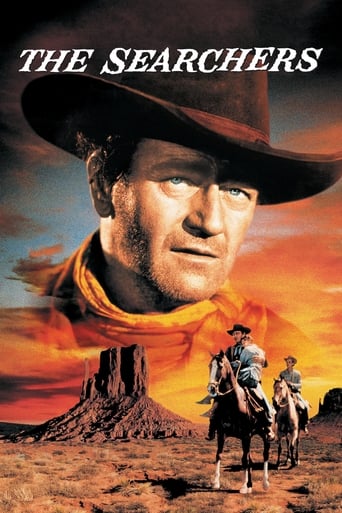
A little clause set between commas in a missive from a reader about a recent column ["Hero vs. Superhero," July 25] -- in that piece I wondered about the effect of today's movie superheroes on little children as opposed to what children saw, say, in John Ford's 1956 The Searchers. The reader was intelligently critical of the piece, but in that clause he doubted that many 7-year-olds ever went to movies like The Searchers. A natural mistake -- he was clearly too young to remember, and how else would he know? But, for me, his error brought back a lost world.
In today's America, where parents chauffeur kids to "play dates," only on the poorest streets do 7-year-olds still roam free ... but they don't go to movies much because tickets are so pricey ... the concession stand is even more expensive ... and you can't just walk into any movie (it might not be rated for kids) ... and you have to know the exact time a film starts ... and shopping-mall movie theatres are rarely within walking distance. Today you're blitzed by TV ad campaigns and product tie-ins in fast-food joints, so you know all about a Hollywood film before it starts ... and today's urban parents panic if their grade-school children disappear, unaccounted for, for hours on end.
Fifty years ago, none of that was so. In the larger cities, two or three movie theatres were in walking distance of most neighborhoods. Each had but one screen. The program began with a newsreel, a few cartoons, and brief "coming attractions" (not today's compilations that tell the whole story). Then the "features" began -- plural, features, for all neighborhood theatres played double, sometimes triple, features, two or three movies for the price of one ticket. Nothing was rated, there were no sex scenes or obscenities; anyone could go to any movie. Admission price for a kid was rarely more than a quarter. Popcorn for a dime, a Coke for a nickel. They weren't supposed to sell kids tickets during school hours, but they did. As for kids roaming about -- "Go play in traffic," our parents would say, and they wouldn't be surprised if we didn't walk in 'til dinnertime, which in our immigrant neighborhood wasn't until after 7.
("Go play in traffic" wasn't so harsh a phrase as it sounds. Where else could we play?)
And you didn't go to a movie, you went to "the movies." You rarely knew the title of the film you were going to see until you saw the marquee -- and even then you might not recognize the title. Big productions were advertised on billboards, but there weren't so many billboards. No ads on the sides of buses, and none in supermarkets (and there weren't that many supermarkets). Second features were never advertised. TV ads for movies? Very rare in the early Fifties, and not so common by the end of the decade. Except for Davy Crockett's "coonskin" hats (and that was for television), massive product tie-ins were decades away. So adults and kids alike went to the movies, to see whatever was playing -- especially during the hot months, because in those days the big pull was to go to "an air-conditioned movie," as the phrase went. Into the early Sixties, movie theatres were among the only air-conditioned public buildings, and nothing was more rare for working-class people (on the East Coast anyway) than an air-conditioned residence. (I didn't live in one until I was 29.)
And there was this, a fact that can't be overestimated: Almost all movies (with Disney the major exception) were made for adults. Kids went to the movies, but few movies were calibrated for kids. Yet no ticket-seller I ever encountered thought it strange for a 7-year-old alone, or a group of three or four, to show up. I went every time I could scrounge the change, and I don't remember ever being turned away.
My birthday is late in October, so I was still 7 in 1953 when I saw my first film without "parental guidance" -- or parental presence. Frankly, it kind of shocks me to write that, for I can't imagine the parents of 7-year-olds today allowing their children to go to the movies alone. In fact, I doubt a lone 7-year-old would be sold a ticket now anywhere in this country. But once upon a time, it was no big deal. (All of which makes urban parents of 50 years ago sound permissive. They weren't. We would never have dreamed of speaking to our parents, or to any adult, as I now hear so many minutely supervised kids speak to theirs. Disrespect was not tolerated. Neither was whining. I know that sounds like an exaggeration. It's not.)
So, at the age of 7, three or four other urchins and I saw Vincent Price in House of Wax -- in 3-D, no less. It was deliciously scary in a harmless sort of way. But that same year I felt true horror at seeing (alone) The Robe; the Jesus I prayed to -- I watched him be crucified, watched the nails entering his hands, and it was among the more shattering experiences of my little life. And then, a different kind of shattering, that same year: The War of the Worlds -- the scene where the crazed mob throws the scientists out of their truck, destroys their work, and so (seemingly) ends all hope that mankind might survive the martian invasion. When later I became an obsessive reader of history, I had occasion to think of that scene many times.
In the spring of the next year, when I was 8, my 6-year-old cousin Tony and I "went to the movies," and what was playing was what I now know to be one of the rarest films by a major director and major star: William Wellman's The High and the Mighty, my first John Wayne film. Tony and I sat through it twice -- that is, we sat through The High and the Mighty, a second feature that I've forgotten, and The High and the Mighty again. For in those days once you bought a ticket you could sit there till the theatre closed. Also, since you just "went," you almost always walked in the middle of whatever picture it was, stayed through the second feature, and watched the first feature until the scene you walked in on. That's the origin of the saying, "This is where I came in" -- people would often leave at that point, with those words on their lips. Not me. I always stayed 'til the end, even if I didn't like the picture. I was (and am) stubborn that way.
The High and the Mighty was about a haunted, limping co-pilot (John Wayne) who'd survived the crash that killed his wife and child. He redeems himself by managing to land a (propeller-driven) airliner that otherwise would have been destroyed. Tony and I walked out whistling the haunting theme music. We went back the next day. Which was the first time I ever went to a movie. I can still whistle that theme, but I've never seen that film again -- to my knowledge it has yet to appear on TV, VHS, or DVD. What happened to it? In any case, I kind of fell in love with John Wayne. He was the man my 8-year-old wanted to be.
Other movies I saw solo or with buddy-urchins: The Blackboard Jungle, East of Eden, Rebel Without a Cause when I was 9 ... The Searchers when I was 10 ... age 11, I saw Edge of the City (the complex friendship between John Cassavetes and Sidney Poitier turned my young head around about race). Eleven, too, when I saw A Face in the Crowd and The Three Faces of Eve. Face left me absolutely stunned -- so much so that I couldn't stand to see the film again until I was well into my 40s. I know this will sound incredibly naive to a modern ear, but Face taught me that those smiling faces on TV were laughing at me. Baby, that changed me. I stopped believing a lot of things that year -- and stopped calling myself a Catholic. I didn't trust a priestly smile anymore. As for The Three Faces of Eve -- my mother had been in and out of mental hospitals, so Eve taught me more than I wanted to know, earlier than I could absorb it, and to this day I've not been able to watch it again.
All of which is to say ... there are good arguments for and against a child seeing such things, though I'm glad I did. Good arguments for and against children roaming dangerously, freely. Yes, disasters happened. You had to learn how to handle men who sat next to you and groped (that was rare, but once was plenty); I'd always grab an aisle seat, and I took to the trick of spilling Coke and popcorn on the seat next to me. But, as W.D. Snodgrass said when asked why he didn't write poems about A-bombs: "I've seen more people killed in their living rooms." It isn't much of an exaggeration to say "the movies," as an entity, raised me. It was like listening in to the conversations of the grownups. Which, we now forget, is how children have been raised for eons. So, reader, yes -- 7-year-olds did see The Searchers, in another world, and in a freer, riskier, more exciting, and inviting country.
This article is fantastic, and really brings together the thoughts I've heard expressed about this in a way that is mostly accessible. I think it's a bit dramatic though. It seems like people in every era look back and say "Why don't we create things with the same care things were created with in the past?" The existence of the question implies that what is being made now is somehow worse than what has been made in the past.
While it's possible this is true, I think it's more likely that this is just survivor bias at work. Nobody remembers the terrible summer blockbusters from years past. This years robots destroying cities were the Westerns and Noir of years past. Everybody remembers Casablanca, and The Good, The Bad, and The Ugly, and these titanic movies overshadow the Noir and the Westerns that they were deconstructing. At some point somebody is going to make The Searchers of robots beating everyone up, and another genre will step in to the role of mass-market crap.
I think the actual argument in the case of the "BRAAM"[1] sound is that Inception is a genre defining movie, on the level of Jaws or Il Brutti. It's become a shorthand for Earth-shattering collisions, in the same way Sergio Leone's soundtracks are synonymous with the west, and the Jaws theme is synonymous with being stalked. You already hear people imitating it to give additional context to stories.
[1] Sidenote, because it bothers me: The sound seems much closer to "BWAAAAA" than "BRAAAAM". This is not important, but it bothers me.
If it's Superman it's already for a younger audience.
Of course with the infantilization of culture that's difficult for a lot of people to fathom, and it even needs to be masked a little (that's what causes the need to have people like Nolan to instill dime-store "darkness" into superhero movies, which supposedly makes it "deeper", while it's still 10 times as shallow as e.g. "The Searchers").
Soviet cinema had lots of masterpieces without "fair allocation of capital" (and lots of corruption one would presume).
And I wouldn't call the Hollywood situation of giving multi-million dollar budgets to BS like Transformers and spare change to far better movies a "fair allocation" either when it comes to artistic merit.
When it comes to art, allocation of capital and "efficient markets" just means more popular works get more money -- it doesn't say anything about their quality, which is part of what the article is about.
(Expecting accusations of 'elitism', I'm not talking about esoteric, self-congratulatory arthouse films either. The Godfellas for example, a mighty good movie, is anything but that, or Pulp Fiction (or, at their era, The Searchers, Vertigo etc.).
> You wouldn't catch many 20 and 30 years old dead in something like Comic-Con 30 years ago.
BayCon has been around for 30 years. Before that, the niche interests just change -- my dad and his friends have been dressing up in 20s garb and driving 20s cars to period events since the 60s. There are Civil War re-enactments and sex clubs and costume parties and all sorts of things.
And anyway, making those things into an indictment of society at large is silly, especially when there are so many trivially easy indictments of society (like the way everyone always thinks this generation is worse than the ones before it).
> Something like "The Searchers" is an order of magnitude more poignant and challenging than Iron Man or Avengers.
Are you being disingenuous, or did you not realize you're cherry-picking here? Spaghetti Westerns and shoot-em-ups and grindhouse films and silent comedies have all occupied a place as entertainment alongside more serious films, and "serious" films, if that's what you're into, are still alive and well.
Try comparing Laurel and Hardy's "A Perfect Day" to The Avengers while comparing The Searchers to, I dunno, Gran Torino or Million Dollar Baby or Interstellar or whatever your poison.
> Just that those kind of movies (and even more naive "action" movies) are prevalent today with the 20-40 demographic, something which wasn't the case in decades past.
And my point is that he's wrong, and history proves it.
This is just a classic rose-colored glasses problem, that's all. People are imagining history as they prefer to imagine it, not as it was.
This page has a picture of the nonexistent 20-40 year olds turning out to see Stan Laurel in 1947: http://www.nwemail.co.uk/memories/stan-at-queen-s-first-royal-variety-show-1.1015949
"When one goes, as I did recently, to a city like Chicago and finds on the South Side, a district equivalent to New York’s Harlem, a two-million-dollar building of a magnificence housing nothing but photoplays, and sees over four thousand people packed in, watching and listening and obviously amused and thrilled, he asks what all this means, and admits, unless he is a Dumbkopf, the coming in of a new order. Particularly is he amazed and bewildered when, in the same city, he witnesses a brilliant spoken farce-comedy, deftly played by distinguished actors, given before half-empty benches – yet in the very heart of the town. What is one to say in the light of such over-whelming evidence? Simply that something has entered the world, suddenly, which grips the people, appeals to them, rivets their attention, and drives them out of the old established theatres."
That was written in 1921.
Context at https://nenaghsilentfilmfestival.wordpress.com/category/friday-facts/
Too many, all arounds us. You wouldn't catch many 20 and 30 years old dead in something like Comic-Con 30 years ago.
>Charlie Chaplin. Laurel and Hardy. Buster Keaton. John Wayne.
Not sure how Chaplin, Keaton and John Wayne are in any way a counter-argument about films being "challenging, emotional journeys".
Something like "The Searchers" is an order of magnitude more poignant and challenging than Iron Man or Avengers. As for Chaplin, there's a reason he is taught in film school, and that is not because he was merely popular and funny.
>Die Hard. Lethal Weapon. Airplane.
Only his point wasn't that there weren't slapstick or action movies back in the day, mostly for mindless fun. Just that those kind of movies (and even more naive "action" movies) are prevalent today with the 20-40 demographic, something which wasn't the case in decades past.
Any comprehensive study of the genre must include movies directed by John Ford; and movies starring John Wayne. There will be much overlap in these two sets. Wayne was not a versatile actor, but any study of The American Western without significant attention to him would be incomplete. "Stagecoach" and "The Searchers" are good examples of their early and later collaborations, respectively. Howard Hawks' "Rio Bravo". Anthony Mann's westerns starring James Stewart. More recent suggestions would include Lawrence Kasdan's "Silverado" and Clint Eastwood's "Unforgiven".
 Hacker Cinema
9 comments on Hacker News
There's a great article on the topic (for USA) by Michael Ventura of Austin Chronicle:
A little clause set between commas in a missive from a reader about a recent column ["Hero vs. Superhero," July 25] -- in that piece I wondered about the effect of today's movie superheroes on little children as opposed to what children saw, say, in John Ford's 1956 The Searchers. The reader was intelligently critical of the piece, but in that clause he doubted that many 7-year-olds ever went to movies like The Searchers. A natural mistake -- he was clearly too young to remember, and how else would he know? But, for me, his error brought back a lost world.
In today's America, where parents chauffeur kids to "play dates," only on the poorest streets do 7-year-olds still roam free ... but they don't go to movies much because tickets are so pricey ... the concession stand is even more expensive ... and you can't just walk into any movie (it might not be rated for kids) ... and you have to know the exact time a film starts ... and shopping-mall movie theatres are rarely within walking distance. Today you're blitzed by TV ad campaigns and product tie-ins in fast-food joints, so you know all about a Hollywood film before it starts ... and today's urban parents panic if their grade-school children disappear, unaccounted for, for hours on end.
Fifty years ago, none of that was so. In the larger cities, two or three movie theatres were in walking distance of most neighborhoods. Each had but one screen. The program began with a newsreel, a few cartoons, and brief "coming attractions" (not today's compilations that tell the whole story). Then the "features" began -- plural, features, for all neighborhood theatres played double, sometimes triple, features, two or three movies for the price of one ticket. Nothing was rated, there were no sex scenes or obscenities; anyone could go to any movie. Admission price for a kid was rarely more than a quarter. Popcorn for a dime, a Coke for a nickel. They weren't supposed to sell kids tickets during school hours, but they did. As for kids roaming about -- "Go play in traffic," our parents would say, and they wouldn't be surprised if we didn't walk in 'til dinnertime, which in our immigrant neighborhood wasn't until after 7. ("Go play in traffic" wasn't so harsh a phrase as it sounds. Where else could we play?)
And you didn't go to a movie, you went to "the movies." You rarely knew the title of the film you were going to see until you saw the marquee -- and even then you might not recognize the title. Big productions were advertised on billboards, but there weren't so many billboards. No ads on the sides of buses, and none in supermarkets (and there weren't that many supermarkets). Second features were never advertised. TV ads for movies? Very rare in the early Fifties, and not so common by the end of the decade. Except for Davy Crockett's "coonskin" hats (and that was for television), massive product tie-ins were decades away. So adults and kids alike went to the movies, to see whatever was playing -- especially during the hot months, because in those days the big pull was to go to "an air-conditioned movie," as the phrase went. Into the early Sixties, movie theatres were among the only air-conditioned public buildings, and nothing was more rare for working-class people (on the East Coast anyway) than an air-conditioned residence. (I didn't live in one until I was 29.)
And there was this, a fact that can't be overestimated: Almost all movies (with Disney the major exception) were made for adults. Kids went to the movies, but few movies were calibrated for kids. Yet no ticket-seller I ever encountered thought it strange for a 7-year-old alone, or a group of three or four, to show up. I went every time I could scrounge the change, and I don't remember ever being turned away.
My birthday is late in October, so I was still 7 in 1953 when I saw my first film without "parental guidance" -- or parental presence. Frankly, it kind of shocks me to write that, for I can't imagine the parents of 7-year-olds today allowing their children to go to the movies alone. In fact, I doubt a lone 7-year-old would be sold a ticket now anywhere in this country. But once upon a time, it was no big deal. (All of which makes urban parents of 50 years ago sound permissive. They weren't. We would never have dreamed of speaking to our parents, or to any adult, as I now hear so many minutely supervised kids speak to theirs. Disrespect was not tolerated. Neither was whining. I know that sounds like an exaggeration. It's not.)
So, at the age of 7, three or four other urchins and I saw Vincent Price in House of Wax -- in 3-D, no less. It was deliciously scary in a harmless sort of way. But that same year I felt true horror at seeing (alone) The Robe; the Jesus I prayed to -- I watched him be crucified, watched the nails entering his hands, and it was among the more shattering experiences of my little life. And then, a different kind of shattering, that same year: The War of the Worlds -- the scene where the crazed mob throws the scientists out of their truck, destroys their work, and so (seemingly) ends all hope that mankind might survive the martian invasion. When later I became an obsessive reader of history, I had occasion to think of that scene many times.
In the spring of the next year, when I was 8, my 6-year-old cousin Tony and I "went to the movies," and what was playing was what I now know to be one of the rarest films by a major director and major star: William Wellman's The High and the Mighty, my first John Wayne film. Tony and I sat through it twice -- that is, we sat through The High and the Mighty, a second feature that I've forgotten, and The High and the Mighty again. For in those days once you bought a ticket you could sit there till the theatre closed. Also, since you just "went," you almost always walked in the middle of whatever picture it was, stayed through the second feature, and watched the first feature until the scene you walked in on. That's the origin of the saying, "This is where I came in" -- people would often leave at that point, with those words on their lips. Not me. I always stayed 'til the end, even if I didn't like the picture. I was (and am) stubborn that way. The High and the Mighty was about a haunted, limping co-pilot (John Wayne) who'd survived the crash that killed his wife and child. He redeems himself by managing to land a (propeller-driven) airliner that otherwise would have been destroyed. Tony and I walked out whistling the haunting theme music. We went back the next day. Which was the first time I ever went to a movie. I can still whistle that theme, but I've never seen that film again -- to my knowledge it has yet to appear on TV, VHS, or DVD. What happened to it? In any case, I kind of fell in love with John Wayne. He was the man my 8-year-old wanted to be.
Other movies I saw solo or with buddy-urchins: The Blackboard Jungle, East of Eden, Rebel Without a Cause when I was 9 ... The Searchers when I was 10 ... age 11, I saw Edge of the City (the complex friendship between John Cassavetes and Sidney Poitier turned my young head around about race). Eleven, too, when I saw A Face in the Crowd and The Three Faces of Eve. Face left me absolutely stunned -- so much so that I couldn't stand to see the film again until I was well into my 40s. I know this will sound incredibly naive to a modern ear, but Face taught me that those smiling faces on TV were laughing at me. Baby, that changed me. I stopped believing a lot of things that year -- and stopped calling myself a Catholic. I didn't trust a priestly smile anymore. As for The Three Faces of Eve -- my mother had been in and out of mental hospitals, so Eve taught me more than I wanted to know, earlier than I could absorb it, and to this day I've not been able to watch it again.
All of which is to say ... there are good arguments for and against a child seeing such things, though I'm glad I did. Good arguments for and against children roaming dangerously, freely. Yes, disasters happened. You had to learn how to handle men who sat next to you and groped (that was rare, but once was plenty); I'd always grab an aisle seat, and I took to the trick of spilling Coke and popcorn on the seat next to me. But, as W.D. Snodgrass said when asked why he didn't write poems about A-bombs: "I've seen more people killed in their living rooms." It isn't much of an exaggeration to say "the movies," as an entity, raised me. It was like listening in to the conversations of the grownups. Which, we now forget, is how children have been raised for eons. So, reader, yes -- 7-year-olds did see The Searchers, in another world, and in a freer, riskier, more exciting, and inviting country.
https://www.austinchronicle.com/columns/2003-08-22/174046/
...just survivor bias at work. Nobody remembers the terrible summer blockbusters from years past.
But people remember Jaws, Terminator, and Aliens.
At some point somebody is going to make The Searchers of robots beating everyone up
It's about time we got something like that: https://xkcd.com/311/
There was that 1st person movie, which actually was kinda cool, but it made me nauseous.
This article is fantastic, and really brings together the thoughts I've heard expressed about this in a way that is mostly accessible. I think it's a bit dramatic though. It seems like people in every era look back and say "Why don't we create things with the same care things were created with in the past?" The existence of the question implies that what is being made now is somehow worse than what has been made in the past.
While it's possible this is true, I think it's more likely that this is just survivor bias at work. Nobody remembers the terrible summer blockbusters from years past. This years robots destroying cities were the Westerns and Noir of years past. Everybody remembers Casablanca, and The Good, The Bad, and The Ugly, and these titanic movies overshadow the Noir and the Westerns that they were deconstructing. At some point somebody is going to make The Searchers of robots beating everyone up, and another genre will step in to the role of mass-market crap.
I think the actual argument in the case of the "BRAAM"[1] sound is that Inception is a genre defining movie, on the level of Jaws or Il Brutti. It's become a shorthand for Earth-shattering collisions, in the same way Sergio Leone's soundtracks are synonymous with the west, and the Jaws theme is synonymous with being stalked. You already hear people imitating it to give additional context to stories.
[1] Sidenote, because it bothers me: The sound seems much closer to "BWAAAAA" than "BRAAAAM". This is not important, but it bothers me.
If it's Superman it's already for a younger audience.
Of course with the infantilization of culture that's difficult for a lot of people to fathom, and it even needs to be masked a little (that's what causes the need to have people like Nolan to instill dime-store "darkness" into superhero movies, which supposedly makes it "deeper", while it's still 10 times as shallow as e.g. "The Searchers").
Soviet cinema had lots of masterpieces without "fair allocation of capital" (and lots of corruption one would presume).
And I wouldn't call the Hollywood situation of giving multi-million dollar budgets to BS like Transformers and spare change to far better movies a "fair allocation" either when it comes to artistic merit.
When it comes to art, allocation of capital and "efficient markets" just means more popular works get more money -- it doesn't say anything about their quality, which is part of what the article is about.
(Expecting accusations of 'elitism', I'm not talking about esoteric, self-congratulatory arthouse films either. The Godfellas for example, a mighty good movie, is anything but that, or Pulp Fiction (or, at their era, The Searchers, Vertigo etc.).
> You wouldn't catch many 20 and 30 years old dead in something like Comic-Con 30 years ago.
BayCon has been around for 30 years. Before that, the niche interests just change -- my dad and his friends have been dressing up in 20s garb and driving 20s cars to period events since the 60s. There are Civil War re-enactments and sex clubs and costume parties and all sorts of things.
And anyway, making those things into an indictment of society at large is silly, especially when there are so many trivially easy indictments of society (like the way everyone always thinks this generation is worse than the ones before it).
> Something like "The Searchers" is an order of magnitude more poignant and challenging than Iron Man or Avengers.
Are you being disingenuous, or did you not realize you're cherry-picking here? Spaghetti Westerns and shoot-em-ups and grindhouse films and silent comedies have all occupied a place as entertainment alongside more serious films, and "serious" films, if that's what you're into, are still alive and well.
Try comparing Laurel and Hardy's "A Perfect Day" to The Avengers while comparing The Searchers to, I dunno, Gran Torino or Million Dollar Baby or Interstellar or whatever your poison.
> Just that those kind of movies (and even more naive "action" movies) are prevalent today with the 20-40 demographic, something which wasn't the case in decades past.
And my point is that he's wrong, and history proves it.
This is just a classic rose-colored glasses problem, that's all. People are imagining history as they prefer to imagine it, not as it was.
This page has a picture of the nonexistent 20-40 year olds turning out to see Stan Laurel in 1947: http://www.nwemail.co.uk/memories/stan-at-queen-s-first-royal-variety-show-1.1015949
"When one goes, as I did recently, to a city like Chicago and finds on the South Side, a district equivalent to New York’s Harlem, a two-million-dollar building of a magnificence housing nothing but photoplays, and sees over four thousand people packed in, watching and listening and obviously amused and thrilled, he asks what all this means, and admits, unless he is a Dumbkopf, the coming in of a new order. Particularly is he amazed and bewildered when, in the same city, he witnesses a brilliant spoken farce-comedy, deftly played by distinguished actors, given before half-empty benches – yet in the very heart of the town. What is one to say in the light of such over-whelming evidence? Simply that something has entered the world, suddenly, which grips the people, appeals to them, rivets their attention, and drives them out of the old established theatres."
That was written in 1921.
Context at https://nenaghsilentfilmfestival.wordpress.com/category/friday-facts/
>Wait, seriously how? Who? How many of them?
Too many, all arounds us. You wouldn't catch many 20 and 30 years old dead in something like Comic-Con 30 years ago.
>Charlie Chaplin. Laurel and Hardy. Buster Keaton. John Wayne.
Not sure how Chaplin, Keaton and John Wayne are in any way a counter-argument about films being "challenging, emotional journeys".
Something like "The Searchers" is an order of magnitude more poignant and challenging than Iron Man or Avengers. As for Chaplin, there's a reason he is taught in film school, and that is not because he was merely popular and funny.
>Die Hard. Lethal Weapon. Airplane.
Only his point wasn't that there weren't slapstick or action movies back in the day, mostly for mindless fun. Just that those kind of movies (and even more naive "action" movies) are prevalent today with the 20-40 demographic, something which wasn't the case in decades past.
Any comprehensive study of the genre must include movies directed by John Ford; and movies starring John Wayne. There will be much overlap in these two sets. Wayne was not a versatile actor, but any study of The American Western without significant attention to him would be incomplete. "Stagecoach" and "The Searchers" are good examples of their early and later collaborations, respectively. Howard Hawks' "Rio Bravo". Anthony Mann's westerns starring James Stewart. More recent suggestions would include Lawrence Kasdan's "Silverado" and Clint Eastwood's "Unforgiven".
Some of the listed titles, since the site seems to be under heavy load:
Books:
* Winston Churchill, A History of the English-Speaking Peoples, Volume I and Volume II
* Philip K. Dick, Minority Report
* Ian Fleming, Diamonds are Forever
* Fred Gibson, Old Yeller
* Billie Holiday, Lady Sings the Blues
* Alan Lerner, My Fair Lady
* Eugene O’Neill, Long Day’s Journey into Night
* John Osborne, Look Back in Anger
* Dodie Smith, 101 Dalmatians
-
Movie titles:
* Around the World in 80 Days
* The Best Things in Life are Free
* Forbidden Planet
* Godzilla, King of the Monsters!
* It Conquered the World
* The King and I
* The Man Who Knew Too Much (1956 remake by Alfred Hitchcock of his 1934 British film)
* Moby Dick
* The Searchers (1956 film version with John Wayne from Alan Le May’s 1954 novel)
* The Ten Commandments (1956 version by Cecil B. DeMille, who also directed a similar film in 1923)