 Hacker Cinema
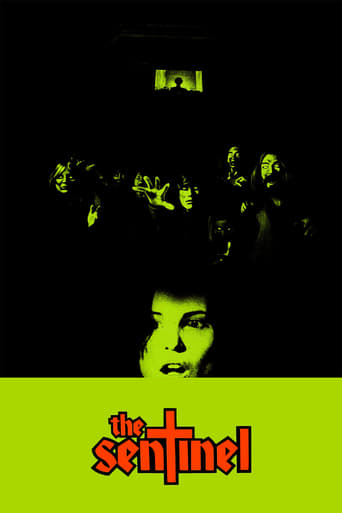
The Sentinel
1977 · Film · 92 min
Directed by Michael Winner
As a young girl, Alison Parker attempted suicide after being traumatized by her father's sexual exploits. Now an elite fashion model, she moves to a Brooklyn Heights apartment building where she encounters a number of bizarre, eccentric tenants and attempts to uncover the building's sinister secret.
2 positive1 neutralfrom 3 commenters
Where to watch
No streaming data for this title.
Videos commenters linked
From YouTube links in the comments below. Most are clips and trailers; “Full” means the uploader says so.



3 comments on Hacker News
The headline reminds me of a good movie from the 70's called The Sentinel--a woman (nun) becomes the person responsible, sitting in a NYC apartment looking out over the harbor, for watching over the gates of hell. Good cast.
https://youtu.be/Z0YdJNeNXLE?si=dGsAp-ojT_TDrJNX
Ever see that movie "The Sentinel" (1977)? Ghosts and/or demons scurrying out of Hell. Lots of nude ghosts there. White eyes. Scary.
Thanks for your thoughtful reply.
I follow your thoughts towards ET, and offer that Spielberg has already realized an epic treatment of the theme: Close Encounters of the Third Kind, in which he develops the idea of corporate society and daytime TV being indistinguishable from an extraterrestrial incursion. That he invited the founder of Auteur Theory and savant of the French New Wave, Francios Truffaut to emcee projects the high awareness Spielberg had of his conceits. To my mind ET merely revisited the scenario of CE3K as something that could be cross-marketed in Happy Meals, exploiting the success of Lucas' Star Wars licensing.
Ridley Scott's Alien is also trenchant commentary on the corporate/TV zeitgeist with an attack by an unstoppable libidinal force of life (Zizek referred to this idea as "lamella") that lives beneath all the levitating signifiers of the "capitalist real" (Mark Fisher).
All of these movies are first and foremost entertainment products, which so happen to code a surprising amount of reflection on the part of their auteur creators on US/UK corporatism and existential angst.
Recognizing the power of the movies on the collective mind, I'll repeat my thesis that the central consideration for PKD is "why do you think you're human?", not "how do humans distinguish androids from themselves?"
PKD created his works un-beholden to the idioms of popular culture, and I regard his oeuvre as profoundly more intellectually free than any Hollywood adaptation can be. The arrow of artist progress goes from books to movies, not the other way around, so beware of reading the movie's themes into the books. He helped carve out a place for science fiction in literature, and the popularity of cinematic adaptations of his work reveals the resonance of his themes, so read the story then look for how the movies hew to the writing.
There's a strange reversal of books adapted from movies, but even in the case of Arthur Clarke's 2001 (vs. The Sentinel) these read as fan fiction.