 Hacker Cinema
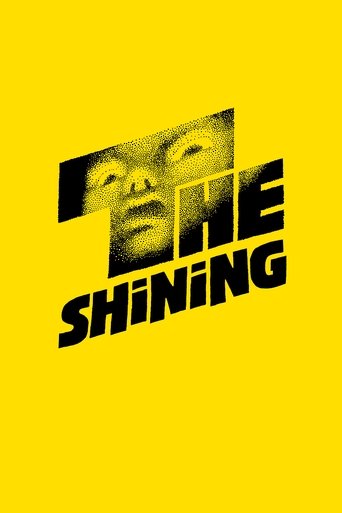
The Shining
1980 · Film · 144 min
Part of The Shining Collection
Directed by Stanley Kubrick
Jack Torrance accepts a caretaker job at the Overlook Hotel, where he, along with his wife Wendy and their son Danny, must live isolated from the rest of the world for the winter. But they aren't prepared for the madness that lurks within.
39 positive9 negative6 mixed68 neutralfrom 122 commenters
Where to watch
No streaming data for this title.
134 comments on Hacker News
Interesting, I've never seen more than two 4-wire Skycams used in an NFL broadcast (at least that I knew of). Given the need for flexible endzone to endzone coverage of NFL games, I'd imagine sectioned arrangements might be better suited for concerts, etc. The gratuitous two Skycams tracking each other shot is always fun. Just saw another one in recent weeks as they were discussing the retirement of a long-time Skycam operator.
I was going to mention the linear point-to-point 'Sidecams' but I haven't seen them used much the last season and was wondering if they've fallen out of favor. I'd guessed they might get in the sight lines of the primary cameras in many stadiums.
I actually got to briefly meet Garret at a long-ago NAB show. As not only the inventor but the operator on so many incredible film shots, the dude's a legend. IIRC correctly he did the Rocky on the steps and The Shining maze shots himself.
It really depends on the movies you're watching and how you watch them. I've watched "It Follows" like 4 times in the past year to show it to different people. I would watch The Shining every year at Halloween, and It's a Wonderful Life at Christmas. On the other hand, sometimes you just want to throw on one of your comforting favorite movies in the background.
There's also a media preservation angle - you can imagine the monopoly media companies of the next decade not wanting to stream "My Own Private Idaho" or "Female Trouble".
I try the other way around: I am fine. It is everyone ELSE who is insane!
I learned this from the old movie called The Shining, by the way.
I think you might be looking at the film through rose tinted glasses without the broader context. Kubrick's films had been nominated for 9 Academy Awards and won 1 (he was personally nominated 3 times) by the time Barry Lyndon started filming. (He had also directed a certain Spartacus.)
Warner Brothers were keen to bankroll whatever he wanted to do, even tolerating moving the country of production due to the Troubles.
He was given some artistic freedom due to previous commercial success - ie. a "data- and money-driven approach". He also really wanted to be making a Napoleon biopic, but financing was pulled when a similar film failed at the box office, so he didn't get it all his own way.
Barry Lyndon was only a modest commercial succes. So much so that Warner Brothers hooked him up with a much safer bet for them for their next venture. He was given unfinished manuscript of The Shining, from the wildy popular best seller King for his next project, which was also simpler to produce ie. "relentless pursuit of revenue".
TLDR Making films is expensive and needs to be a commercial activity, but every now and then there's a fortunate crossover of quality and funding. This still happens but you need to look out for it.
> This reads silly for another reason: websites don't... introduce things. Website owners might.
That feels overly pedantic, and is incorrect. “Introduce” means “bring a subject to the attention of (someone) for the first time”. It doesn’t need to be done by a person.
It’s perfectly acceptable to say, for example, “The Shining introduced me to the horror movie genre”. That doesn’t leave room for doubt that you mean The Shining was your first horror movie. It would’ve been silly to say “Stanley Kubrick introduced me to the horror movie genre” just because you watched one of his movies.
A significant amount of context is missing if you're not aware of Room 237: https://en.wikipedia.org/wiki/Room_237
A documentary about the various conspiracy theories developed around The Shining. The music in the YT video is from the documentary.
he stole a complete workprint of the film from the archives of its production studio in 1980 – and has been screening it for guests in his apartment ever since.
Former 35mm projectionist here. I suspect there are a lot of old stashes like this. In our booth we had a gigantic reel of old 1960s and 1970s horror film trailers that previous projectionists had spliced together until there was no more space on the reel. We were not supposed to save trailers, but no one checked what we did with them after removing them from the film reels at the end of the run and returning those prints to the distributor.
On a quiet summer night, after the last showing had ended and the customers had left, we employees would sometimes lock the doors, get some snacks, and watch these old treasures from previous decades spool by.
The trailer reel included several versions of The Shining trailer, including one that had a slow-motion scene of blood pouring from the elevator that was waaaay longer than the clip in the movie (possibly from one of the alternate cameras, see https://geektyrant.com/news/the-story-behind-the-infamous-blood-gushing-elevator-scene-from-stanley-kubricks-the-shining). The reel also had some long-forgotten stinkers, including for the 1966 British horror film Psychopath which I only remember because the trailer featured an unusual song structured like a nursery rhyme that I can still partially recall.
A corporate chain took over (Lowes) and sometime in the early 1990s the theater was closed. The space is now a Staples. This illicit reel, if it wasn't thrown out during the closure, is probably in someone's basement. The only way to know the contents is to play it, which is hard to do as not many traditional 35mm projectors are still around or available for screening a 50-year-old reel that might be brittle, gunky, or otherwise damage the machine.
I've heard of similar stashes. For instance, around the same time, I had friends who worked in a photo shop. They had several binders of, um, special photos that they had copied from customers' negatives during the on-site development process.
I visited this basement lair once, which was dominated by a modern color processing machine. I remember flipping through one of the binders. It was very, very strange stuff, like something out of Blue Velvet.
Let’s be real, the overwhelming majority of those 500 are straight up terrible. Netflix alone has produced well over 100 movies, and IMO at best some of them are worth finishing not that I can think of any off the top of my head.
Now I’m sure you’ve looked forward to many movies but off the top of your head list stuff you’ve either seen more than once and or actually recommend to someone that came our in the last 10 years vs…
(78) The Deer Hunter, Superman, National Lampoon's Animal House, Invasion of the Body Snatchers (79) Apocalypse Now, Alien, Life of Brian, Mad Max, Escape from Alcatraz (80) The Shining, Star Wars: Episode V, Airplane!, The Blues Brothers, Caddyshack, The Elephant Man (81) Raiders of the Lost Ark, Das Boot, The Evil Dead, Mad Max 2, Escape from New York, Time Bandits (82) Blade Runner, The Thing, E.T. the Extra-Terrestrial, Poltergeist, Conan the Barbarian, Fast Times at Ridgemont High, Tron (83) Scarface, WarGames, Star Wars: Episode VI, Trading Places, The Evil Dead
Obviously not all great movies but that’s ~30 classic movies in just 6 years and I’m sure I’ve missed a few as kids movies are largely missing from that list.
The Shining is one of the most heavily analyzed films of all time, for good reason. It's not just some random Michael Bay flick. It's really almost unbelievable how deep the rabbit hole goes, so no, it's not surprising in the very least that people would spend time on a detail like this. If people 100 years ago weren't doing this kind of thing with films, it's because they didn't have access to films the way we do today, if The Shining was around 100 years ago and people had home computers they could play it on and could download it easily over the internet, you can be sure people would be analyzing it like crazy back then too.
I'm a big fan of PKD and also Blade Runner. You've got a point about the film being so very different, but I think it's subsequent success (it wasn't that successful at the time) justifies the approach to the subject matter.
However I do wish that Mercerism (the religion in the book) was included in the film. Maybe someone should attempt to film a more literal adaptation.
Edit: thinking about the difference between the novel and the film makes me think of The Shining and I'm very much in the Kubrick camp - the film being a work of art by itself and so doesn't have to follow the source material.
However, I also really like A Scanner Darkly which is arguably the closest PKD adaptation.
That's a really good question! When you select "tense" as your mood, our algorithm is designed to match that emotional state rather than counter it. Films like "The Shining" are recommended because they create and maintain a sense of tension and suspense - essentially giving you a cinematic experience that resonates with your current emotional state. The philosophy behind this approach is that sometimes when we're feeling a certain way, we want art that validates and explores that feeling rather than contradicting it. It's similar to how some people listen to sad music when they're feeling down. That said, I completely understand your point - when you're already feeling tense, you might actually prefer something that helps you relax rather than something that heightens that tension! This is really valuable feedback. Would you find it more useful if the app offered both options? For example, when selecting "tense," you could choose between "match my tension" (thrillers, horror) or "help me relax" (comedies, feel-good films)? Thanks for trying out MoodieMovie and sharing your thoughts - this kind of feedback helps us improve the recommendation engine!
I don't get it. I'm feeling 'tense' and I'm being recommended 'The Shining'? Why?
Although, I have no idea what movie (if any) would satisfy me when I'm feeling 'tense'.
I care dis-proportionally about experiencing the story, so to me a second watch loses a lot of appeal.
And tbh, I feel like movies are very meta and you also get more from each movie if you watch more movies/read more books. Like Doctor Sleep for example, is an adaptation of a Doctor Sleep novel, but also a sequel to both the Shining novels and movies. You would get more of it if you read the two novels and watched the shining movie than if you just watched the movie or read one of the novel twice. I also enjoy watching different adaptations of something and pit them against each other, like Let the Right In (both the novel and the movie) and the American adaptation. I guess that's my version of what you get when you watch a movie twice.
I appreciated the change to make Chani fill a role like Sherif Ali in the film Lawrence Of Arabia (the book Seven Pillars of Wisdom, if not the film, is plainly a huge influence on Herbert's Dune, and it's probably impossible for a director to film so much as a scene set in the desert without thinking of Lean's film).
So much of Dune takes place inside people's heads that it's basically unfilmable if you don't make some changes. Plus, even with five hours of film, you're going to be cutting whole scenes from the book whether you want to or not. Lynch's solution was to make it a more straightforward hero's journey—and given the length of his film, and no expectation of sequels, I can't really blame him. Villeneuve had more space and so could tell a darker and more foreboding story, closer to the original, but still needed to externalize some of that internal struggle and foreshadowing, for which he used, especially, Chani.
[EDIT] Oh and as for this:
> I know its nerdy but I absolutely hate when movies of classic books think the story needs to be changed
Every now and then such a deviation ends up being excellent as its own way, while still benefitting from the connection to the original and being better as an "adaptation" than an independent property. Verhoeven's Starship Troopers would be one of the more extreme examples of this kind of outcome. A gentler one might be Kubrick's The Shining.
But it suffers from being an adaptation of a Stephen King's book.
King is really good at making you live through the eyes of his protagonists. Which is really hard to do in movies. Same thing with Shining were you follow Jack's fall to craziness from his PoV. And the same thing will happen with "The Long Walk", another great novel which I recommend if you like the death game theme.
I've never been able to get into The Shining — or much of King's writing — so in that sense I agree with you, and feel like maybe we're in the minority.
You might ultimately be right about why King was unhappy with Kubrick's film, but my understanding is that at least ostensibly King's fundamental concern is that the the film wasn't as sympathetic to Jack as he intended it to be. King meant for Jack to be a diseased but sympathetic victim of the hotel, and feels that the film portrayed Jack as a villain who is an interwoven part of the hotel's menace. I always assumed he felt attached to this issue because of his own struggles with substance use earlier in his life, with The Shining being part of his recovery and rehabilitation, and Jack being a sort of projection of how he felt.
That's just my general impressions though. I'm not either a King or Kubrick devotee, although I respect both a lot as artists. I do feel that the film in particular is a masterpiece, and have always felt a certain discrepancy between how I feel about the novel and the film, so I've probably read more about it than most film adaptations of books. I could easily be missing something important, or misunderstanding something.
> with layers upon layers upon layers of meaning
What were the layers of meaning? To me, the shining is kubricks most straight-forward movie.
For those fans of The Shining, I feel obligated to share my favourite YouTube investigation into a remarkable and little talked about detail.
https://www.youtube.com/watch?v=Qr6PgWFs0Pw (Overlooked! A detail in The Shining that you’ve never seen)
It examines the fact that Jack keeps stealing glances straight at the camera throughout the film (no-one else does this). Probably the best explanation is that Kubrick wanted to unnerve the audience and it's very effective.
I have read King's novel, and I have watched Kubrick's movie (many, many times). I am not usually a friend of novel adaptations, but the movie simply is in another league than the book. It is much, much better. King's novel is a relatively straightforward horror story / thriller, with some elements that go a little bit over the top. Kubrick's movie is a postmodern masterpiece, with layers upon layers upon layers of meaning. After 20 years of re-watching both of them I have come to the conclusion that Shining cuts even deeper than 2001. And it also works as an entertaining (and frightening) horror movie. In my opinion, it is Kubrick's singular masterpiece. And, above all, it is still quite faithful to the original novel. Many dialogues from the book appear virtually unchanged in the screenplay.
That being said, I understand why King the author doesn't like it. Kubrick carved something out of this novel which really wasn't there in the first place, he only needed the story as a vehicle of meaning. To King, this may have appeared as an arrogant (or even condescending) abuse of his story.
Not waste; an opposite of it.
First, you can't exactly buy a PC like this. At best you can pay to have one custom-built for you.
Second, this is an exercise of some hardware skills, both mechanical and electronic. The machine, besides being a good working machine, is an excellent conversation piece, including conversations with prospective employers.
Third, it may be a rewarding pastime. If you think that pastime is useless waste, and productive work should consume 100% of your awake time, (re-)watch the movie called "The Shining" as a part of mandatory job safety training.
I distinctly remember a Rob Ager/Collative Learning YouTube video on Gremlins. It was very enlightening on how deep the Gremlin mythology goes, but alas I can't find it right now.
He does list three videos on his page. An 8-minute video, 30 minute video, and 93 minute video. You might have to buy them...
Even if you/I can't find the gremlin video, I highly recommend you watch any of Rob Ager's videos on movies you think you already know. He does do a lot of work on Stanley Kubrick. He will insist The Shining isn't his favorite movie, but that's hard to believe with how much he has focused on it. Anyways, Collative Learning is an excellent rabbit hole to fall down.
https://www.collativelearning.com/FILMS%20reviews%20BY%20ROB%20AGER.html
Edit: Okay I'm a doofus, on mobile I needed to scroll horizontally to find the watch links. I don't recognize the 8-minute video or 30 minute video, so it must have been the 93 minute video that I saw.
I clipped it years ago but found it again here with google:
https://sites.google.com/site/cultoddities/home/carrie/carrie-1976/carrie-76-press/stephen-king-american-film-interview
Aaaand... there's actually a much more relevant set of quotes about The Shining, like:
There's a lot to like about it. But it's a great big beautiful Cadillac with no motor inside. You can sit in it, you can enjoy the smell of the leather upholstery -- the only thing you can't do is drive it anywhere. So I would do everything different. The real problem is that Kubrick set out to make a horror picture with no apparent understanding of the genre. Everything about it screams that from the beginning to the end, from plot decisions to that final scene -- which has been used before on "The Twilight Zone."
I find it interesting that I like a lot of movies based on Steven King's writing (The Shining, Stand By Me, Shawshank Redemption, and Misery are top of mind), but I don't particularly care for Steven King's writing style or many of the books that are considered his best. I didn't care for 'IT' at all. It's like Lovecraft, I appreciate the ideas, body of work, and talent, even if it needs a different style for me to get into it.
Maybe I was over-harsh - I think less of Stephen King's taste in films. And yes, he's absolutely allowed to like or dislike any adaptations of his books. I used to think that the majority of Stephen King film adaptations were likely to be rubbish, but I think there's plenty of exceptions to that now.
I can imagine that King has a very deep connection to The Shining as Jack is probably the closest that King has got to an autobiographical character.
The best interpretation of The Shining film that I've heard does explicitly acknowledge that the Overlook was haunted. Basically, the different murderers are reincarnated versions of themselves - this is shown in the last shot with the original version of Jack being shown in the Baphomet posture in the old photo. Jack also mentions that he felt that he had been in the hotel before and could tell what was behind each corner (there's a constant corner/hidden theme running through the film too). There's also the hint that Grady appears to be two people - Delbert Grady and Charles Grady - presumably Charles is the reincarnation of Delbert. This is also borne out by the confusion between Grady having twin daughters and also their ages being 7 and 9 (i.e. not twins).
I think it’s undeniable that Kubrick’s film is excellent. I do think that the TV adaptation of the shining is both a better adaptation of the story and flatly a better story than Kubrick’s. But execution on the film itself is just way more memorable.
In present day terms where books are constantly, dramatically changed for film so far from the original plot that they’re basically different stories with polar opposite ideologies King’s criticisms feel a lot less heavy hitting than they may have in the past.
The Shining is one of my favorite King books and I always thought the movie was a bastardization of his work. One of my biggest peeves is the fact that Wendy in the book was a much stronger character than the one played by Shelley Duvall. Also the hotel was actually haunted and not a mental breakdown by John. There was a very real supernatural element.
I'll preface this by saying that my love of cinema is more about the visual than the characterisation, so it may be that we're coming at this from two different angles... I do love both the book and Kubrick versions of The Shining, and I don't think either detracts from the other.
I can't help but think keeping Jack's character more faithful to King's character of a good man slowly being corrupted by the hotel and resisting would have really changed the pace of Kubrick's movie for the worse, and taken away a lot of his really beautiful compositions.
I think King's panned adaptation for the 1997 miniseries is evidence supporting that Kubrick's character adaptations were good choices for the film he was making / the medium shift.
Edit: not sure why you're being downvoted, I think your characterisation of the changes Kubrick made to Jack's character is entirely valid
Stanley Kubrick's The Shining is clearly a masterpiece of film making and to be honest, Stephen King's opinion just makes me think less of him (King) although I'm also a fan of his writing too.
I'd seen a few analyses of the film, but was quite surprised and amazed when I happened across the Overlooked! youtube video: https://www.youtube.com/watch?v=Qr6PgWFs0Pw
I'd never noticed Jack's glances towards the camera, but once you notice them, it's clear that they were totally intentional and designed to unnerve the viewer (he's looking at me!). It's this attention to detail that makes Kubrick the master that he is.
The Senses of Cinema article this links to multiple times is much longer and better (2020): https://www.sensesofcinema.com/2020/the-shining-at-40/king-vs-kubrick-the-origins-of-evil/
I only discovered King a few years ago, having purposely avoided his books as something that "everyone liked". Now I am a fan. However, I am less fond of the film adaptations. I think that it is very challenging to make King's books into movies. The Shining is one of the more successful adaptations and ironically that which King most despises.
While there are only a few movies that I have seen in their entirety several times (5+); there are several scenes from certain movies that I have probably seen more than a dozen times.
1) Court scene from 'My Cousin Vinny' 2) Court scene from 'A Few Good Men' 3) Last 20 minutes from 'The Shining' 4) Escape sequence from 'Shawshank Redemption'
When I heard they were making a movie of Doctor Sleep, knowing that the final 20% of the book is absolutely untranslatable to coherent movie content, I could not understand how they could close it. In the end, they more or less worked around the finale, which is basically a series of psychic battles fought remotely. It's a tolerable movie.
One example of a truly unfilmable King/Bachman novel is Thinner, though maybe it could now be done, at great expense, with AI (there was a ridiculous TV version, though).
I interviewed him, when I was aged 16, in 1983, and asked him about The Shining. He was in a conciliatory mood on the topic that day, but re-emphasized how little he thought of Kubrick's shot choices for the scene where Danny discovers Wendy reading his manuscript.
To that criticism, Kubrick responded over the years that if we had just been jump-scared by Jack suddenly appearing over Wendy's shoulder as she read, we would have felt relief and even started laughing to blow it off, which would have undermined the tension Kubrick was looking to build past this point in the scene.
I never read the book, but I saw the TV mini-series remake that King was personally involved with and approved, and it was awful.
Personally, I think King's stories just don't translate very well to movies, unless (as with Kubrick's "The Shining") huge liberties are taken with the source material. Most adaptations I've seen of his stories were just bad.
The Shining has so many reasons why it "has stakes". While Duvall was definitely an amazing part of that, it seems unfair to deprecate the rest of the creative folks involved in the film.
A completely faithful film adaptation of Tolkien's books would make for a terrible movie.
Which isn't to say that all the adaptations are good, of course. But the changes that were made in Peter Jackson's LOTR or the Rankin/Bass adaptation of The Hobbit were well-intentioned and generally made sense for their respective media.
Probably Tolkien wouldn't like either, but that doesn't automatically make them bad. A good example here would be Stanley Kubrick's version of The Shining, which was an excellent film regardless of what Stephen King thinks about it.
Which isn't to say that all adaptations are good, of course. But ragging on artistic license in general just because some works of art fail is a depressing, philistine conclusion to draw.
I watched The Shining for the first time in around 2012 and when commenting to an older friend about it I said something to the effect of "It's good, but I didn't feel it was exceptional." to which he replied saying that "Yes, but consider that it was the first real film of that genre, it only seems "okay" today because you're comparing to all the films of the same genre which came after and were largely influenced by it."
I don't know enough about films to know that if he said was accurate, but it's stuck with me.
I was about 16 when The Matrix came out and I find it interesting asking people who were born after it came out what they think about it, if they've seen it their reaction is typically (much like me with The Shining) "seemed alright", while for me at the time the movie was phenomenal and in terms of many of its special effects, unlike anything I had ever seen before.
The Shining movie is different enough from the book in key elements as to go in a completely different direction. Also, though it's an enormously famous, atmospheric horror movie, Stephen King disliked it, especially because it changed certain key elements.
The odd thing about it is how it conserved the atmosphere of the book superbly, while also deviating so drastically in a very selective way.
Now, specifically:
In the book, the hotel itself is much more of a living thing of its own, with its own sentience, not just a haunted building. In the movie, it's more just a sinister building with a terrible past, now filled with malevolent ghosts.
The Wendy of the book is a tough, scrappy fighter who shows enormous resourcefulness in protecting her son both from his increasingly deranged father and also the deeply evil hotel that wants to eat the boy's soul. In the movie, Kubrick, for fuck knows what reasons, turned her into a partly hysterical, mousy shrew that saves herself and her son more by luck than by tough effort. This was one of the two things Stephen King most hated about the movie version, he felt that one of his good, tough characters was destroyed by Kubrick for no good reason at all..
The other thing King most hated in the film was the characterization of Jack Torrance. He tried to convince Kubrick not to use Nicholson because he felt the guy had far too sinister a presence in general. The novel Jack on the other hand was a mostly normal, likable guy slowly made insane by the hotel. The movie version was more of an already unpleasant man with repressed insanity trying to preserve some goodness, and failing horribly with the help of the hotel's evil spirits.
2001 Lolita Barry Lyndon The Shining Spartacus
these "mid" films would be among the top 10 ever easily
but according to him "tough" guy Eastwood can surpass it
Kubrick’s results were all over the map. He made maybe three great films:
Dr. Strangelove
Full Metal Jacket
A Clockwork Orange
A bunch of not bad films:
2001
Lolita
Barry Lyndon
The Shining
Spartacus
One real turd of a film:
Eyes Wide Shut
And a bunch of forgettable filler:
All the other films he made.
Compare this to the Anti-Kubrick, Clint Eastwood, who made:
Unforgiven
Mystic River
Million Dollar Baby
Letters From Iwo Jima
Gran Torino
And a bunch of okay films:
Pretty much everything else
And it’s pretty obvious that you don’t need to be an abusive taskmaster like Kubrick to make great art.
I love Kubrick movies, but my one bit of criticism I'd give (from me - a random guy on the internet, who's never made a movie), is that both 2001 and The Shining both require the viewer to have read the respective books to fully appreciate them.
I know it's a cliché to harp on about the ending of 2001, but it really does make a lot more sense after having read the book, which in turn makes the movie a lot more enjoyable.
With The Shining, you really need to read the book to fully understand the back-story to Jack's issues, and Danny's premonitions. I was amazed at how much the movie left out, and after reading the book, the movie is so much better.
These are just my favorites, and in the order of which the popped into my mind.
- Office Space, 1999 (especially for people who work at offices) - The Matrix, 1999 - Fight Club, 1999 :)
Umm, what else? - Spirited Away, 2001 (and many others from Miyazaki) - Requiem for a Dream, 2000 (Very Heavy addiction-related film! I actually got watery eyes just by typing this, I've seen it too many times.) - Joker, 2019 - Full Metal Jacket, 1987 (and many others from Kubrick, such as Dr. Strangelove and The Shining) - Django Unchained, 2012 (and many others from Tarantino, at least Pulp Fiction) - Alien, 1979 - The Silence of the Lambs, 1991 - Saw, 2004
I made a bit longer list, so that I can share the link to my friends.
Actually there are many quirky ones which came to my mind, such as Borat, the South Park movie, Team America, Airplane! (alternatively titled Flying High!), Idiocracy and Hangover, but I wouldn't say these are in the must-see category. Actually I wouldn't even recommend these to most people, if I didn't know what kind of humor they like.
It’s all media bullshit. Shelley Duvall never said he abused her. In fact, she said the exact opposite: that she felt like The Shining was the moment she turned professional and Stanley taught her how to get more out of repetition.
The footage you see of Kubrick “abusing her” was cherry-picked by Kubrick himself in order to promote his film. He had a reputation as a “perfectionist” so he thought the footage would drive ticket sales.
I think it’s a form of sexism to assume that Shelley was somehow weak and not able to make her own decisions here. If we were talking about Leo DiCaprio or Daniel Day Lewis, we’d all be talking about how much of a dedicated actor he is that he would go through all that hardship just to get a great performance.
Highly recommend watching "room 237" a documentary about the shining, some of it veers into speculation but one interesting take was that Kubrick in the film specifically lets Stephen King know that this is his vehicle(the movie) and is quite subtle about the message.
I like each in their own way, I may be more biased towards Kubrick as I consider the Shining one of my top 3 movies of all time. Lynch may be the ultimate auteur in making a certain type of movie or tv show that really no one else was making or thinking about(Blue Velvet, Mulholland dr. etc). Twin Peaks season 3 might be one of the best tv shows ever made(and also one of the weirdest) and its why I like David Lynch so much. Kubrick touched on that side a bit with 2001(my second favorite of his movies) but his style is much more traditional.
One of the cool facts about Kubrick I've always admired as a testament to his perfectionism is his typical "shooting ratio": The ratio of how much film was shot vs the run time of the final product. For The Shining he exposed 1.3 million feet of film for a movie that runs for 142 minutes, a ratio of over 100:1. The baseball bat scene alone took 127 takes to get right[1].
1: https://www.jimcarrollsblog.com/blog/2019/6/5/yt0trf17bh9ai4ovwf2am07ms6qszi
I watched the trailer as a cynic who has be burned for DECADES by shitty translations of beloved books into movies/made-for-TV. My favorite adaptations vary so significantly that it almost doesn't make sense to compare. (E.g.: Carrie, The Shining, 2001 diverge quite a bit from the books.)
That being said, I was excited to see Da Shi looked almost exactly as how I pictured him, maybe a little less grizzled and angular. And I'm embarrassed to admit the cover "everything in its right place" gave me chickenskin. I think the sophon countown looked interesting (scribbling like a fast etch-a-sketch, which is probably what it would look like if it had to travel the planet all day!), and the unfolded sophon looked pretty badass. I was also thrilled about the trial of Ye Zhetai, and the army of logic gates. Hm... i'm getting excited again despite my better judgement. The suicides OTOH looked gratuitous.
For all of Kubrick's talent he was always more interested in the villains than their victims and this manifests in a lens that gives sympathy to the villains while portraying the victims as mere two-dimensional canvases. The Shining is another perfect example for this and from what we know about his treatment of the actors/actresses this sentiment seems to have also influenced his direction on set: he felt the lead actress would need to feel abused and exhausted and terrified to play the part but the actor just got to be a natural menace.
Morally, I'd say it's fair to call many of his great works failures: even Full Metal Jacket failed at being an anti-war movie even though it is still referenced as such. But artistically they're interesting and, if you ignore the supposed intentions and the moral implications of his failure, indeed very good.
This take reminds me of how Stephen King considers Kubrick's The Shining a terrible film[1]. I had the misfortune of accidentally renting the Stephen King approved The Shining miniseries[2], and I have to say - it's worse in every way: slow, plodding, and forgettable. I can't comment how either compares to the book - I've never read it - but the Kubrick version is the superior film.
This is all a long way of saying that faithfulness to the source material is overrated in film. Some written works just don't work well when closely adapted to the screen. A few notable movies even manage to twist the original to express a completely different idea or theme (e.g. Starship Troopers). The original author is not some ultimate authority regarding the meaning of a work.
[1] https://faroutmagazine.co.uk/why-stephen-king-hated-stanley-kubrick-the-shining/
[2] https://en.wikipedia.org/wiki/The_Shining_(miniseries)
Does that mean we've isolated who the protagonist of TPM is? Because I'm still not a hundred percent sure of that.
I've now met so many prequel lovers - some of them people I deeply respect - that I can't chalk it up to dumb, or faulty aesthetics, or hype bandwagoning. I genuinely think there's been a generational shift[0] in how people experience the medium of film. It's a shift that the prequels themselves are no small part of. Blocking, eyelines, camera placement, diegetic/nondiegetic, continuity - these just aren't part of a visual grammar for many among the young and growing part of the population. Although the prequels do make a lot of (really bad) mistakes from a screenplay perspective, you can potentially recover from those with something as simple as camera placement. But the kids don't really care - it's not how the medium speaks to them.
The newer Star Wars films[1], while at least cognizant of the film discipline, do entirely throw continuity into the thunder bucket, make a hash of character motivations, and then, after that, still do freaky, weird, film-school-reject editing. But people love those, too, and again, I think there's that generational thing again.
And I've more or less made my peace with it. But please don't expect me to lavish any kind of praise on the prequels. They are terrible, terrible films. Not the worst films, but close enough to sight without scopes, and certainly the worst films to have such a hype machine attached. Like if LotR came out, and Frodo turned out to be played by Adam Sandler, and Gollum was just really flatulent, and everyone involved suddenly forgot how to make movies all at the same time.
[0] Hanging out with a bunch of undergrads, we watched 1980's The Shining together for Halloween, and - to a man and woman - they were universally bored out of their skins. The movie did not work on these people. That was my "aha!" moment. While I can't prove this, I think that a lot of film basics are obsoleted by the fact that the new generation regards camera position as more or less arbitrary. So a reveal might be just as likely to be frustrating as suspenseful.
[1] With the exception of TFA, which is an absolutely perfectly made soft reboot of ANH. I mean, seriously. It's the same movie, a sleazy cheap move that makes me feel all greasy. I think it's the cynicism of that decision that gave me the bad taste. No, wait, it was when I realized that none of the events of TLJ mattered, at all. None of the characters accomplish anything - the movie did not have to exist. So that was a bad taste too. Still watchable. There's like, a good ninety minute movie hiding in there somewhere. The third one, I just kind of lost track of anything, like watching a compilation of unrelated music videos.
What you said did not make much sense, if it got poorly remade how can the local one be bad? that would mean the local one is better because the remake is worse.
Most horror remakes are seen as bad and a lot are forgotten, The mist, The Shining, Psycho. Shows imported from britain are bad, like The it crowd, a good deal of panel shows from britain crashed and burned.
Hollywood also has the capability of throwing away movies if they think are bad enough. "Release the snyder cut". There's plenty of bad remakes, I'm not young but a lot of things are remakes from the 50s 60s 70s 80s and we just don't know, apart from the adaptations of foreign movies and films.
It's possible the film version of The Shining will have better recognition than the name Stephen King, in just a few decades. That's been the fate of a lot of once-ultra-popular early 20th century authors whose works were made into still-well-known films. Might happen to him, too.
> his other films took quite an interest in perfecting the settings.
Kubrick took quite an interest in perfecting all aspects of his films.
https://collider.com/stanley-kubrick-the-shining-scene-guinness-world-record/:
“Stanley Kubrick movies are notorious for having multiple takes. One instance is in Eyes Wide Shut, when Tom Cruise's Dr. Bill Hartford walks through a door. He just walks through a door. That's it. 95 times Cruise walked through the same door. It is not surprising, then, to know that the Guinness World Record for "Most Retakes for One Scene With Dialogue" belongs to Kubrick's The Shining with a whopping 148 takes.”
One of the actors in that scene was a kid.
Another example is (https://en.wikipedia.org/wiki/Barry_Lyndon#Cinematography):
“After "tinker[ing] with different combinations of lenses and film stock," the production obtained three super-fast 50mm lenses (Carl Zeiss Planar 50mm f/0.7) developed by Zeiss for use by NASA in the Apollo Moon landings, which Kubrick had discovered. These super-fast lenses "with their huge aperture (the film actually features the lowest f-stop in film history) and fixed focal length" were problematic to mount, and were extensively modified into three versions by Cinema Products Corp. for Kubrick to gain a wider angle of view, with input from optics expert Richard Vetter of Todd-AO. The rear element of the lens had to be 2.5 mm away from the film plane, requiring special modification to the rotating camera shutter. This allowed Kubrick and Alcott to shoot scenes lit in candlelight to an average lighting volume of only three candela, "recreating the huddle and glow of a pre-electrical age."”
Also, the author contradicts himself in tweet 17 of 50: "In this scene from the documentary Making the Shining, Kubrick explicitly asks Nicholson to find a way to look down, right where the camera is." Anyone sufficiently familiar with Kubrick knows it wasn't a mistake.
I've tried it with a prompt that matches my taste: "Write a short analysis in the style of a celebrated movie critique about the allusion to the moon landing that could be seen in Kubrick's movie 'The Shining'.
I got one subtle reference. I think it's safe to assume that if your prompt only mentions the moon hoax and Shining concepts with equal weight it doesn't know which one you are more interested in. So if one has some misconception in it, then it makes sense to correct you more strongly. Also, LLM-s aren't manipulating you, that requires intention which they don't have.
Saying one time that it is part of a well-known conspiracy theory may be okay, but honestly, constantly reminding me to disregard the information at every turn (and in some cases not even providing it) is, in my opinion, unacceptable if ChatGPT is meant to be just a tool. It is manipulative.
I'm certain that if you ask ChatGPT to interpret the symbolism of another movie with a different and benign underlying theory, it will even come up with some ideas on its own. However, it will refuse to do so for The Shining and the moon landing.
>Anything else suggests either we're stupid, or we want to be treated like we're stupid.
I have the same feeling when I use ChatGPT or even more so with Bingbot. They should ask for our age and then let the system respond without treating us like we are children incapable of critical thinking.
I asked ChatGPT about the allusion to the moon landing that could be seen in Kubrick's movie "The Shining" out of curiosity. The system agreed that Kubrick was notorious for using symbolism in his movies, but also mentioned that the theories about the landings were debunked and this interpretation was probably false at every turn.
Sense memory is one useful tool in the director's toolbox. Some actors don't like it, because what you're seeing is their memory rather than the character's memory. They feel that it creates inauthentic performances. I know that may sound silly, but a lot of acting technique sounds silly until you realize that they're trying to not just rely on their own habits. That's what leads to actors being accused of "playing themselves in every movie".
(It also leads to directors abusing that privilege, getting "real" emotions in highly negative situations. Like the way Shelley Duval was reportedly terrorized by Stanley Kubrik while shooting The Shining.)
The director has to assemble the team that they want, who will respond to the toolkit that they're using. In the end it doesn't matter what it takes, as long as you get the shot you want in the can. (And complying with ethics, a thing that has too often been ignored.) I'll sometimes even use the worst tool a director has, feeding actors line readings, though only when they ask and nothing else has worked.
From that WSJ article:
“Stanley was unfailingly polite and even-tempered on the set. After every take that didn't work, even the 100th, he would say nothing more than "Let's try that again."
Of course, it was also true that Stanley was a control freak of the highest order and ran his set more like a dictator than a director. He treated actors as if they were technical elements in his design, not as creative professionals like himself.”
Another glimpse of how working with Kubrick was: https://www.independent.co.uk/arts-entertainment/films/features/stanley-kubrick-a-director-who-didn-t-care-how-many-takes-it-took-8277931.html (“If you did a film with Stanley, you were married to him. There was nothing else in your life.”)
I don’t think anybody could direct a movie the way Kubrick did today. They would be canceled before the shoot (which would be long. That reference to the 100th take above may not have been an exaggeration. Kubrick is in the Guinness book of world records for doing 148 takes of a scene in “the Shining”. See https://www.guinnessworldrecords.com/world-records/74583-most-retakes-for-one-scene-with-dialogue) was over.
On the other hand, Elon Musk seems to get away with being very manipulative and demanding of his personnel.
Or could it simply be “the book is better.”
In my experience of the dozens of books I’ve read which have had movies made of them there are only two in which the book is good and the movie is better or even as good as the book - “The Shining” and “The Godfather”. I find it’s a very rare and hard thing to do.
Great article. As an aside, the unshaded "color" GBuffer channel [1] makes me want a game that's fully lit like that.
The original Resident Evil game for PS1 was (because of technical limitations back then) comparatively brightly lit, and it lent the game a weird atmosphere — you have the normalcy of the house, but intruded upon by the supernatural. It's scary in a different way than the newer games, which are darkly lit and rely on jump scares.
The only recent game that comes to mind is Control, and only certain parts of it.
There are a few movies that are lit more naturalistically — The Shining and Day of the Dead come to mind — and I love the effect.
[1] https://mamoniem.com/wp-content/uploads/2022/07/re_gbuffer_draw_out_color_rgb-scaled.jpg
I think his point is precisely that sometimes you have beautiful memories of a bad thing.
Quake 2 and Unreal Tournament are irrelevant because they're masterpieces. The movie "The Shining" holds up too, right? So what?
He does all this explanatory work with a film about a Russian with cherished memories of a shitty cabin and a music video of a couple with warm memories of a cheap and tawdry wedding.
That's not generalizing. It's extremely specific. It sounds like you're just not interested in the feeling he's describing.
He does not mean that everything you used to like is guaranteed to be bad when revisited.
In my teens I spent a whole paycheck on the Stanley Kubrick DVD box set. In hindsight this was dumb but then again all of the films are amazing.
The set: Stanley Kubrick Collection (Lolita / Dr. Strangelove / 2001: A Space Odyssey / A Clockwork Orange / Barry Lyndon / The Shining / Full Metal Jacket) https://www.amazon.com/dp/6305440093/ref=cm_sw_r_apan_i_4XQ999X4XZC1T0K6HY3N?_encoding=UTF8&psc=1
I was assuming it was just movie posters and screenshots from online articles/reviews/imdb etc, and not any analysis of the video itself (I might be wrong though - using video would make the number of available input frames grow by orders of magnitude, not that there is a lack of pictures online).
E.g. The Shining picture of Jack Nicholson with the door isn't representative of the "look" of the film, but very much an iconic still frame and basically what you see in a Google image search for "The Shining".
I've heard it quipped that there's no such thing as anti-war movie. No matter how searing the criticism, no matter how horrifying the violence: war simply looks good on the screen, and the spikes of adrenaline we get during a war film excite us. The same could be said of films with any form of taboo sexuality, even when done in the spirit of satire or social criticism.
> I'm sure there are some snuff films with interesting character development too.
The criticism is absolutely worth considering, regarding the ethics of production. But it's worth contrasting like-with-like (not to shut down the argument, but to try to define the boundaries):
- Was the production of "The Professional" or "Taxi Driver" ethical? Both films sexualized young girls; and in the former case, Natalie Portman found the experience (particular the response and aftermath) moderately traumatic, and explicitly avoided roles with any sexuality until her late twenties.
- Was Kubrick's directorial process ethical, particularly in regard to The Shining, where he was blatantly abusive to Shelley Duvall (charitably, to elicit the best performance)? If that instance is over the line, exactly how hard are directors allowed to be on actors, and how much explicit prior consent should be necessary for "method directing"?
- To what extent is child labor in film-making ethical to begin with? We've converged on 14 as the minimum age for W-2 employment (notwithstanding family businesses, kids with apps, kids with YouTube channels, and "off-books" tasks for pocket money). If hiring a kid for a movie is fine, why can't that same kid sweep floors at a gas station? We could say "because there's no other way to make realistic movies"; but that's not that different from "there's no other way to tell a story about coming-of-age in a hyper-sexualized world".
- To what extent should such limitations be a product of individual ethical choices, vs social norms / taboos, vs "market ethics" (boycotts), vs public law and policy (either in the sense of labor laws, or indecency constraints on expression)?
Again, not saying that criticizing the production of Cuties isn't valid, or appealing to the status quo, and definitely not making some backdoor argument against child labor laws or age-of-consent; just that these questions are larger in scope, and don't have obvious answers.
Don't know -- I saw The Shining when I was 11 or 12 and it freaked me out pretty badly but I don't think it left any scars. It's a lot scarier than Psycho at any rate which mostly holds up but seems incredibly tame today.
11-12 is different than 6-7 but besides some nightmares, I don't think seeing scary movies have a negative impact on kids.
In Kubrick's movie The Shining there is a gold room that seems based on this gold standard adoption, there is a very interesting analysis [1].
[1]: https://www.youtube.com/watch?v=IoWZEwedPkc
I find it to be almost the opposite for movies. Yes, it's rare to find something unique, but after starting watching at least a movie per week, I'm now getting references I would never have gotten otherwise and put the movies in a completely different light.
For example, you're not gonna fully appreciate the latest spider-man movie unless you already watched the whole 3 series.
Or the other day, I was watching Ted (the teddy bear movie) and they recreated the dancing scene from Airplane. If I had never seen Airplane, I would probably still have laughed, but I wouldn't truly have gotten the joke.
Or in the Doctor Sleep movie, there's a story being told, but the Director also tried to reconcile The Shining movie, The Shining novel with the Doctor Sleep novel. You don't truly experience the movie fully unless you've experienced all of them.
I don't know for other media, but I find movie makers tend to be very meta and you gain as much by having seen all the low fruits as you lose by doing so.
> Adaptations are tricky and although it is very common for a sublime piece of literature to become a mediocre film, and somewhat common for a fantastic book to become a fantastic film -- it is rare for a film and a screenplay that are inarguably among the greatest of all time to come from a book that would likely not be memorable without the film.
I think The Shining is a great example of a good book, while the movie is one of the best horror movies ever made. And yet, reportedly Stephen King hates the Kubrick film. As someone who enjoys both, I simply think he’s wrong and I guess as the author he will always come at it with a unique viewpoint.
A few more great books that beget great films:
* The Silence of the Lambs * The Shining * Shawshank Redemption (novella but I'll allow it) * Brokeback Mountain (same) * No Country for Old Men * Little Women (there are a few versions to choose from but I would choose the 1994 adaptation myself, thought he 2019 version was very good) * Requiem For a Dream * Lolita * Roots (mini-series but I think we should allow it)
That's what I can think of off the top of my head.
Those are all pre-modern people before the invention of vaccines and antibiotics and who had terrible health and suffered by now preventable childhood diseases. Their 35 is not our 35. Shakespeare, I believe, wrote about joint pain, aging, and losing his memory and mind at 35, which is not typical of a modern 35 year old. Substance abuse and artistry go hand in hand and a lot of these artists were addicts and drunks who badly damaged their brains. Many of them had mercury poisoning from medical treatments of their day and other edge cases not common today.
Not to mention these people were elite global competitors, so if they felt less sharp at 35, that means they were merely just the top 1% instead of being the top .1%. They still were amazing thinkers and producers after 35.
Just off the top of my head, Stanley Kubrick's career peaked with his decade plus long Lolita, Strangelove, 2001, and Clockwork Orange period in the 1960-70s, which was around his 30-40s. Then nearly 20 years after Lolita, well into his 50's he made The Shining, which is considered an important American film, perhaps not as groundbreaking as the others, but something miles ahead of his younger competitors. So even as these people supposedly age out of their peak years, these super high performers are still amazing. The Oscar winner that year? Kramer vs Kramer, a largely forgotten piece of art and "safe pick" that played to social issues of the time. The best screenplay? Breaking Away, a completely forgotten movie. The Shining is still a beloved classic, cultural icon, horror master-class, an iconic actor's defining role, and a movie studied in film school religiously today and for the foreseeable future.
Then almost a decade later in 1987 at age 59, he directed Full Metal Jacket, a lesser work, but considered one of the best anti-war films, arguably stealing or matching the crown from beloved critic favorites like Apocalypse Now and The Deer Hunter, long after the 60s and 70s fad of anti-war movies faded away and Vietnam a now faded memory and during the right-wing, pro-military, pro-interventionist foreign policy Reagan administration. This was a bold and provocative move you'd associate with a younger director trying to get attention and not a man close to retirement. So even "old" Kubrick was competing on a world class level and doing interesting and challenging things.
A genre horror film from a famous director who hasn't delivered a great film in a decade? An anti-war film in the late 80s on the tail of Top Gun? Both of these genres were fads once and decidedly uncool at the time of their release. This on paper sounds almost foolish, but in practice, an artist of his calibre pulled off something very special in both cases.
For modern people, career peaks are mid-30s. The "wisdom" of two hundred old plus composers and poets is a nice toilet read but isn't scientific at all. Science has its own ideas about aging:
The journals Psychological Science, Science Direct, and Harvard claims various mental peaks come later in life. New vocabulary peaks at 67, learning new information at 50, concentrating at 43, learning new faces 32, etc.
https://nextluxury.com/mens-lifestyle-advice/what-age-do-men-peak/
So yes 35 is not only a good age, its the start of a peak, and a 35 year old modern worker has still another two decades of high performance waiting for them.
> If you’ve never seen M, make sure you don’t watch an older print!
This cannot be emphasized enough. I once watched an old print at a university cinema, it was an extremely disappointing experience (I already knew the restored version at the time). Entire scenes were missing, which made the plot very hard to follow even if you knew the restored version, the sound was incomprehensible at times, and it felt like the entire thing was over after 60 minutes.
The film is a masterpiece and feels extremely modern (just think of the scene were it (spoiler alert) becomes clear that the little girl has been raped and killed: it's simply a 2 second shot of a balloon animal she previously had and which is now caught in an overhead telephone line. Nothing more. You get chills watching it, as it captures everything: violence (why did she let go of it?), lost innocence, death, clinging to life.
You can also clearly "feel" the influence it had on other filmmakers, in particular Hitchcock and Kubrick. For example, there are some very detailed close-up shots of technical stuff which resemble the equipment close-up shots in "Dr. Strangelove". The performance of Peter Lorre is also very Kubrick-like: some may consider it over-the-top (like some consider Jack Nicholson's and Shelley Duvall's performances in "Shining" over-the-top), but it is certainly very interesting to watch.
> The Shining is one that gets better when shortened
For me the opening scene added in the extended edition of Aliens completely ruins the first half of the film for me. Sometimes less is more...
Most of the time flops have had too much material cut out to hit runtime requirements ("nobody will watch a 3 hour movie!"). Kingdom of Heaven, Batman v Superman, Watchmen, Alien3 all get better with restored material.
Blade Runner is interesting as there are 3 different versions, all about the same length but with some very different scenes. Theatrical also has a terrible voice over which was later removed.
The Shining is one that gets better when shortened - most feel that the 119 minute European version is better than the 144 minute US cut.
Apocalypse Now is interesting - Redux (193 minute) is a slog compared to theatrical (147); but Final (182) is probably the best version and a great example of the balance needed.
There's also the video 'How Star Wars was saved in the edit' which has a lot of good information on what editing can do. The video has kindof been co-opted by the internet as definitive proof that George Lucas is a talentless hack, but it's really not that much different than what happens on every other film. https://www.youtube.com/watch?v=zEHRNS-Scrs
I would reject faithfulness as a measure of success. I'd much rather have "That's not Foundation!"
I already have Foundation. I can read it whenever I make the time. It's kind of cool to see a book translated to the screen... but if it doesn't really survive the translation? That's ok too! It can just be a movie with a ton of similarities to an existing story.
Blade Runner, The Shining, Starship Troopers, or hell, Adaptation. They all have varying relationships to the source material. None are especially faithful, but they're all still good movies.
Alien, The Matrix, 12 Monkeys, Terminator, Fight Club, The Fifth Element, The Sixth Sense, Back to the Future, eXistenZ, Gattaca, The Arrival, 2001 space Odissey, the Shining, Trainspotting, Ground Hog day, Dune, Dark city, Tron, Demolition man, Total Recall, Robocop, The city of lost children...
Nuanced, scify, full of smart details or mind bending films are not new.
In fact, it's really hard to innovate now, because so much as already being covered.
Looks to be a different source from the OP, but let's go down the chart for 1980 past the top ten:
https://www.boxofficemojo.com/year/1980/
Kramer vs. Kramer (book)
Ordinary People (book)
Popeye (comic)
The Shining (book)
Cheech and Chong's Next Movie (sequel)
Caddyshack (original - franchise starter)
Friday the 13th (original - franchise starter)
Brubaker (book)
The Jazz Singer (remake)
Flash Gordon (sequel/remake)
Bronco Billy (original)
Raging Bull (book - biopic)
Maybe you should go back a few decades until you can find a time when the top 20 were mostly originals. Would have to be before the Star Wars/Jaws blockbuster era, probably.
Craftsmanship gets a bad rap in the arts, and is widely considered to be somehow "lesser" than "True Art".
The work of craftsmen is often denigrated as being unoriginal and indistinguishable, but quite often a craftsman's work bears the distinctive stamp of its creator, and when you look closely you can tell one craftsman's work from another.
Craftspeople also do innovate in technique and coming up with new motifs. The line between craft and art is blurry, and there are good arguments to be made for craft to be considered art.
I am reminded also of the snobbish attitude some people have towards genre fiction and genre films. Work made in a genre is often seen as somehow lesser or not worthy compared to "serious" film and fiction. However, again and again genre films and fiction come out which are widely considered to be masterpieces. I'm thinking of, say, Kubrick's work in science fiction and horror (2001 and The Shining), Philip K Dick's science fiction, and Lovecraft's horror. Many of their works are now considered masterpieces despite working in what were once considered to be backwater genres.
What is considered to be art has also radically changed over the millennia. Many things now considered to be high art (like, say, Duchamp's Fountain[1]) are considered masterpieces of art that broke new ground, but at the same time it could be argued that it's not art at all, and in fact any work of a craftsperson has more of a claim to the term "art" than something like Duchamp's Fountain, which wasn't even made by Duchamp, and is a mere industrial product. But can industrial products be art? Apparently they can, if they're placed in to a gallery and looked at in a certain way.
[1] - https://en.wikipedia.org/wiki/Fountain_(Duchamp)
To be clear, The Shining wasn’t alternated against the wishes of the director, but in fact at the behest of the director, and to positive effect.
But on that note, if you’re interested in the studio messing with the director’s intended work, check out the “Love Conquers All” version of the movie “Brazil” (1985). It starts like 40 minutes in, makes no goddamn sense, and ends on a happy note where the original film... definitely doesn’t. A friend of mine described it as (SPOILER for the movie Se7en): “As if in the movie Se7en instead of his wife’s head in the box, it was a cake and she rolled out on a unicycle singing Happy Birthday.”
Apt user name. TIL, thank you:
> Making The Shining, Stanley Kubrick announced Eraserhead was his favourite film and showed it to his cast and crew, “to put them in the mood”.
https://www.theguardian.com/film/2017/mar/22/david-lynch-eraserhead
So I was actually thinking of Lynch's later works (Lost Highway, Mulholland Drive, Twin Peaks) that definitely came after "The Shining" But yeah, they share things big and small, from tone to camera angles.
There's a scene in The Shining, about 3 /4 of the way through, where Jack is walking down a corridor in a rage, and it's _just weird_ (1), so reminiscent of The Man from Another Place in Twin peaks, and it's hard to say what's wrong, to unpick what's going on technically.
I only noticed this on the rewatch last week. I'd guess it's a combination of the acting and sound, camera angle and framing, lens choice, and the camera moving with him over the patterned carpet.
https://www.youtube.com/watch?v=MzZP-OXA-zY
> which "make sense" in "logic of dreams" kind of way.
Exactly. I once heard a film critic say, "Most great movies are either puzzles or dreams."
The Shining is definitely the latter, a movie that runs on pure nightmare logic. Nothing makes literal sense and everything makes perfect sense.
That's interesting. Years ago, I recall King stating that The Shining was the best movie adaptation of any of his stories. I wonder what changed, or maybe I'm misremembering?
Regardless, it's my favorite King movie (though I haven't yet seen "It").
Talking about "The Shining": Doctor Sleep is one of the best "scary" movies I've seen in the last years.
The submersion was amazing.
The buyer says that the house seems "haunted" and that there are "paranormal activities". Haunted houses typically have lower values on the housing market, as demonstrated by horror movies like The Shining, etc. All jokes aside, it would've been better to convert it for commercial use, such as an office, rather than for it to be a residential unit, since all that empty space seems to be wasted.
After the initial release of The Shining, Stanley Kubrick decided to make one final edit to remove a scene at the end of the movie and the studio sent instructions to every theater to perform the edit on their physical copies of the film and return the cut segment of film to the studio.
I recently watched a Deep Fake video of The Shining with Jim Carrey's face over Jack Nicholson's. It was so damn good you couldn't even tell it wasn't actually him playing the role. This was all fun and games, but one thing that immediately comes to mind is movies staring people who are no longer alive.
Amazingly done, and without text. He also made these for various other movies including Indiana Jones, LOTR, Star Trek, The Shining. [1] I'm not fan of any of these franchises (anymore) but if I were... (read: in my younger years) I'd want such poster(s) :) the artist also has a shop.
[1] http://www.andrewdegraff.com/moviemaps
https://www.nytimes.com/2013/03/31/movies/aide-to-kubrick-on-shining-scoffs-at-room-237-theories.html
> “I stood staring at all that stuff for weeks while we were shooting in that room. It’s a downhill skier. It’s a downhill skier. It’s not a Minotaur.”
Etc, etc. Room 237 is not only the ravings of madmen, it has a bit right st the start where a guy is talking over The Shining shots, a baby starts crying on the background (of the guy talking) and they stop and discuss that. I turned it off in disgust after that.
Kubrick doesn't always stick to the book. In the ending of Stephen King's "The Shining", the Overlook Hotel literally blows up in a giant explosion. I think most people can agree Stanley Kubrick did the right thing by leaving that out of the film!
"The Shining" is, among other things, a giant metaphor of human (and in particular, western) civilization. The constant references to the moon landing (and 2001: A Space Odyssey) can imho be understood as an one of the many illustrations of the great and unprecedented things that came out of a civilization that is masterfully portrayed in the movie as a fading grand hotel built on a burial ground that is trapped in a seemingly eternal winter. Seeing it as Kubrick's confession that he staged the moon landing is not only silly, it doesn't even begin to describe the film's poetic depth. However, I watched the documentary where this clip is taken from (Room 237 [0]) and can recommend it with reservations. But I remember that it "jumps the shark" somewhere around the middle of the documentary.
Just to elaborate: I often hear people discredit "The Shining" because it didn't scare them enough, or because they think King's book is better, or because they find Duvall's and Nicholson's performances over-the-top. In my opinion, "Shining" is Kubrick's masterpiece. It is arguably deeper than 2001, has a very high artistic quality (some scenes are staged like a ballet) and at the same time, the movie is constantly entertaining and thrilling (which is a quality 2001 clearly lacks, as I have experienced again and again when I tried to watch it with friends who were unfamiliar with Kubrick's work).
If you want to go down the rabbit hole of "The Shining" interpretations, you should start with the Wikipedia article [1] and end with the shot-by-shot-analysis [2]
[0] https://en.wikipedia.org/wiki/Room_237
[1] https://en.wikipedia.org/wiki/The_Shining_(film)#Social_interpretations
[2] http://idyllopuspress.com/idyllopus/film/shining_toc.htm
It's essentially a cable channel. Big-name movies come and go, and there's no way of telling then it happens. E.g. the Shining has been on there, and the Incredibles 2 is on there now.
Tbh, Stanley Kubrick is vastly overrated. Yes every one of his movies has great cinemotography, and is technically excellent, but many of his movies are not excellent as movies. Eyes Wide Shut, full metal jacket, and the shining are not 10/10 movies, and David Fincher, Harmony Korine, Charlie Kaifman have all created movies better than all those movies listed. The problem with Stanley Lubrick is because he has a style that is very attractive to viewers, and his movies are very accesible also, he gets massively overrated by a lot of casual film watchers, which is fine so are a lot of directors, but his hype has leaked even to actual film critics with years of experience. It also doesn't help that movies like Room 237 come out that jack of Stanley Kubrick and draw meaning out of things that had no meaning. Sad that people glorify Kubrick but don't even know who Charlir Kaufman or Harmony Korine are, even though both directors have created movies that are just as good as a lot of Kubricks films.
All of the movies by him that I’ve watched are brilliant.
Dr Strangelove is my favourite movie. The Shining is excellent, A clockwork orange, Barry Lyndon, 2001, Eyes Wide Shut ...
He was also a fantastic photographer.
Merzbow frequently utilizes fetish and BDSM imagery / concepts and from the article perspective (although about death metal, it is similarly seen as "extreme music") I find that part of the article's conclusions interesting, in that for some there may be an endorphin release postulated sounds similar to what might be happening in the BDSM concept known as "sub space" (or occurring in other ways for other people, for example, "runner's high" is from what I understand a similar endorphin release).
As far as the top level comment goes though... maybe I'm misinterpreting the comment because this is summary level material, but yeah, that's an odd assertion to me. Death metal is a niche genre in a style of music that has some significant semi-mainstream elements (metal as a whole). Death metal is similar to other sort-of-tangentially related concepts like say horror media (there is a nice semi-mainstream side and also a lot of fringe horror movie / media styles that have fewer but sometimes more dedicated fans). Many horror movies for instance are flat out iconic at this point (ranging from the original Universal monsters to some of the films of Hitchcock to certain films like, say, Halloween, Jaws, or the Shining). On rare occasions, they are both quite popular and they even win an Academy Award (eg The Silence of the Lambs).
In music, the main thing I will say is that there are metal bands with often violent lyrics and imagery that are more popular (Slayer comes to mind), and non-metal bands with violent imagery that also are popular. Certainly if that violent imagery is slightly modified to a bit more theatrical, the band might even become mainstream (I'm thinking Alice Cooper as an example). The "sonic assault" of death metal in some ways wasn't new -- hardcore punk was an influence for the speed (although hardcore punk is quite a bit less technical) and there's certainly a couple relatively well known bands there in that genre that dabbled in (usually more theatrical but still macabre) horror. (The Damned and The Misfits are two fairly big names in the genre, not "mainstream" but big enough that some people will know of them, and there's plenty of other lesser known "horror punks" around...).
So to me that statement ("why are people interested in xyz that seems to induce a negative emotion when in everyday life we tend to avoid situations that will induce a negative emotion") is weird in this context, because this is not a niche question whatsoever overall. The answer to the above question is probably not best answered by looking at the psychology of an obscure genre and more best answered to ask why (in the Silence of the Lambs example) a movie that pushes "negative emotions" of this sort is (at present) #23 on IMDB's top movies of all time.
Let's not forget The Shining! I've heard claims that it's the favorite horror movie of people who don't like horror movies. I think that's because it fits in line with the movies you list in your first paragraph.
No one? https://en.wikipedia.org/wiki/The_Shining_(film)
Great pics. I didn't know he was a photographer (though it makes sense given the incredible cinematography in his films) but seeing the title reminded me of this brilliant shot from when he was filming The Shining
https://www.picsofcelebrities.com/celebrity/dar-robinson/pictures/dar-robinson-scandal.html
Mulling over the concept, I think the only way to direct a quality Metal Gear film is to ditch the idea of mass appeal and intentionally attempt to create a cult classic that captures the spirit and story of the original, not unlike Dredd or the new Blade Runner film. And with the correct marketing and angle, hopefully crossover into mainstream appeal like Mad Max: Fury Road. Tricky, but there's a first time for everything.
Alternatively, they could go The Shining/2001: A Space Odyssey route and just make a very good film that doesn't resemble the original work very much. But Vogt-Roberts is not the Kubrick for that, nor does he seem like the type to piss off original authors.
When I read the book, I thought that too. However, Clarke's book is separate from Kubrick's movie. Kubrick focused a lot of things in the movie that were ignored in the book. Essentially, Kubrick and Clarke have two different interpretations. That's why I was asking the question. For example,
* The number 4 and 3 keep appearing in the movie. * Lots of 90-degree angles in the movie compared to the book. * Why everyone is cold and sterile as the move away from Earth. * Rectangles and circles. HAL is a black rectangle and a red circle. The monolith is a black rectangular object. * Kubrick excited at making the biggest "religious" movie. * The original cut of the movie had the scene of the broken wine glass jerk/skip, giving the impression Bowman had realized he was in an artificial environment created by others. * The appearance of diamond shapes in the movie and his other movies, The Shining and Full Metal Jacket: https://www.youtube.com/watch?v=MSo6s_xrj4c https://www.youtube.com/watch?v=mpWMnlMIWAU
I've had the same experience with The Shining.
On my PC, it's a bit plodding and slow, but on the big screen, it's a completely visceral and intense experience like no other film I've seen.
I couldn't disagree with that at all. I enjoy reading Stephen King books, at times, but there aren't that many of them that have become great films.
Off the top of my head the best King films have been "The Shining", "Misery", "Pet Semetry", "Stand by Me", & "The Shawshank Redemption".
So many more films have been terrible (I've not seen the recent version of "It").
Steven King got to write the screenplay for his own version of the shining in the form of a TV miniseries. It was so bad it was actually funny instead of being scary. I think it is safe to say here that history has proven Kubrick right on this particular point.
The Shining is a rare case of a film being far better than a the book it is based on precisely because of Kubrick’s reinterpretation of the story.
I find [this argument][1] that one of its central themes is a suppressed history of violence and bloodshed convincing.
A film masterpiece.
[1]: http://www.collativelearning.com/the%20shining%20-%20chap%2012.html
And 2010, the sequel, is pretty unwatchable. It is a bad movie.
The worst part about the movie is Roy Scheider's fatherly internal monologue narration, which tediously explains-like-i'm-five for half the movie.
So maybe that gives us a hint, about what Clark's narration would have done to 2001.
That little sound bite also chimes in over and over again, sounding forced, poorly performed and with a corny distortion effect layered on top, in some presumptive attempt to resonate an idea with the audience. Maybe to remind you once more that the movie is supposed to be a sequel, despite an almost total discontinuity with 2001.
It draws a lot of parallels with Stephen King and The Shining, which had provoked Stephen King to exert more creative control over movie adaptations, often with laughable (or maybe unintentionally comedic) b-movie results.
Kubrick was fairly known for heavily adapting the novels he used for inspiration. There are huge differences between the novel "Lolita" and Kubrick's adaptation. Same with "Shining" or "Clockwork Orange".
TBH, I'm really happy we didn't get a version with voice-overs and all. Hard to imagine a concept of "documentary" would have been better than what we ended up with.
I know I am supposed to find it deep and like it to the bitter end. And boy have I tried.
There'a lot of Kubrick I don't get. I have actually read A Clockwork Orange, the novel, and liked it despite its Burgessian lapsed catholic babble, but I intensely dislike the movie.
And don't get me started on The Shining.
Watching movies has to be one of my most inspiring accidents. In 2017, due to some external circumstances [1], I watched maybe 50+ movies on the IMDB top 250 list. Kubrick is definitely my favorite director that I didn't know about before. His stuff takes some time to digest, but they are definitely worth watching. Besides 2001, The Shining, A Clockwork Orange, and Full Metal Jacket are all worth watching. I have to re-watch Dr. Strangelove at some point because last time I didn't finish it.
The other director that I think I started to 'get' (however hard to believe) is Coppola. I didn't get Godfather before that at all despite having watched the movie 3 times. After the second Godfather movies, I started to see the Godfathers as human and empathize with them ("Yes, I can totally see myself doing that"). I haven't read the novels, however, I hope to get to the novels at some point.
At the same time, when I re-watched Tarantino's movies, I became less impressed in his style. After gore and somewhat snarky theme, I failed to see anything else. I still equally love Coen brothers regardless of how many times I watched their movies.
My old boss who owned a wine importing business used to tell me when you have tasted enough wine, you will know what good wine is like without having to describe it. After watching 50 movies or so, there was a moment when something started to 'click.' I think it gave me inspirations to do take notes of human feelings and emotions and empathize with them. I am more inspired to produce meaningful software that does not have to be technically challenging to write, and write blog posts that are not about technically hard/clever code. After watching "Sunset Blvd," I decided that money was never my problem, so I think less about money.
I'm 30 now and have always been a nerd before. Good movies have partly changed my life.
1: https://news.ycombinator.com/item?id=16360380
This article mentions Carlos's collaborations with Kubrick. She actually composed a full score for The Shining, but the director ended up using only parts of it. [0] Instead, he used existing pieces by other contemporary classical (acoustic) composers. Carlos's influence on music was huge, as this article points out, but Kubrick's eventual choice of music for The Shining has also gone on to influence horror movie scores since then. To this day, many emulate the sounds of Bartok, Ligeti, and Penderecki.
[0] https://en.wikipedia.org/wiki/Wendy_Carlos
His stories are often lazy, too. The notion of a magic machine that lets everyone wifi and have dreams inside dreams inside dreams together is fun but absurd. The same with the end of Interstellar. Too conveniently we've got a magic wormhole which saves him and drops him a few feet away from a ship around the ring of Saturn. The first half of TDK is incredible, the second is very anti-climatic (maybe not his fault).
Check out anything by Roger Deakins for world class cinematography. Nolan is just good. If you are looking for a director who people might one day consider in the realm of Kubrick, Paul Thomas Anderson might fit it, but he's got a lot of "weird" movies (even his masterpieces) which don't give him the same wide appeal. [0]
Williams was great in just about anything he was ever in, I wouldn't attribute that to Nolan. The greatest directors elevate their actors (see the crazy stories about Kubrick and The Shining). Nolan works with great talent, but the performances often leave a lot to be desired, this is uncontested even by fans.
Nolan makes movies with interesting themes and he never really does anything bad. But for him to be even be discussed in the same thread as Kubrick shows how overrated he is. I say this owning Interstellar (the teaser gives me chills) and I thought Dunkirk was great simply because he toned it down and worked within something realistic. Given 20 years and a Jurassic Park, we might see Nolan the same way we do Spielberg today, but Kubrick? Forget about it!
https://www.theringer.com/movies/2017/12/22/16809404/there-will-be-blood-paul-thomas-anderson-10-years-daniel-day-lewis
I deserve to be downvoted by the literature snobs, but if you liked Blade Runner the movie (and who in their right mind doesn't?), then you may very well enjoy K. W. Jeter's three written sequels to the MOVIE Blade Runner (not the BOOK DADOES), "Blade Runner 2: The Edge of Human", "Blade Runner 3: Replicant Night", and "Blade Runner 4: Eye and Talon". There is no book "Blade Runner 1" -- that's the movie.
The irony is that Philip K Dick was offered a whole lot of money to write another book entitled "Blade Runner" based on the screenplay of the movie, but he insisted on maintaining the integrity and title of his original book DADOES by re-issuing it with a reference to the (quite different) movie on the cover, instead of rewriting another book called "Blade Runner" based on the movie based on his own book. (Harrumph!) He would have made a lot more money by selling out that way, but he steadfastly refused to do it.
However, fortunately for us, after his death, his friend and fellow SF writer K. W. Jeter (who also wrote an excellent cyberpunk novel Dr. Adder which Dick loved) sold out on his behalf and wrote those three books based on the movie (which referenced famous lines like "Wake up. Time to die!").
They explore the question of what the fuck happened after they went flying off into the wilderness (that unused footage from The Shining), and whether Decker was a replicant. (Who would have guessed??!)
So even though they're not written by PKD, or directly based on his original all time great book, and not as authentic and mentally twisted as a real PKD book, they are still pretty excellent and twisted in their own right, and well worth reading. They're based on an excellent movie based on an epic book, and written by a friend and author PKD respected, who's written some other excellent books.
And while you're at it, check out Dr. Adder and K. W. Jeter's other books too! Especially Noire, for its hi-fi cables made out of the still-living spinal columns of copyright violators. (I suggest you buy a copy and don't pirate it!)
https://en.wikipedia.org/wiki/Blade_Runner_2:_The_Edge_of_Human
https://en.wikipedia.org/wiki/Blade_Runner_3:_Replicant_Night
https://en.wikipedia.org/wiki/Blade_Runner_4:_Eye_and_Talon
https://en.wikipedia.org/wiki/K._W._Jeter
https://en.wikipedia.org/wiki/Dr._Adder
https://en.wikipedia.org/wiki/Noir_(novel)
http://www.indiewire.com/2015/12/watch-u-s-theatrical-ending-to-blade-runner-that-features-footage-from-stanley-kubricks-the-shining-97996/
http://www.sf-encyclopedia.com/entry/jeter_k_w
Jeter's most significant sf may lie in the thematic trilogy comprising Dr Adder (1984) – his first novel (written 1972), long left unpublished because of its sometimes turgid violence – The Glass Hammer (1985) and Death Arms (1987); Alligator Alley (1989) as by Dr Adder with Mink Mole (see Ferret) is a distant outrider to the sequence. Philip K Dick had read Dr Adder in manuscript and for years advocated it; and it is clear why. Though the novel clearly prefigures the under-soil airlessness of the best urban Cyberpunk, it even more clearly serves as a bridge between the defiant reality-testing Paranoia of Dick's characters and the doomed realpolitiking of the surrendered souls who dwell in post-1984 urban sprawls (see Cities). In each of these convoluted tales, set in a devastated Somme-like Near-Future America, Jeter's characters seem to vacillate between the sf traditions of resistance and cyberpunk quietism. In worlds like these, the intermittent flashes of sf imagery or content are unlasting consolations.
[...]
Much of his later work has consisted of Sharecrop contributions to various proprietorial worlds, including Alien Nation, Star Trek, Star Wars [for titles see Checklist]; of some interest in this output are his Ties – they are also in a sense Sequels by Another Hand – to the film Blade Runner (1982), comprising Blade Runner 2: The Edge of Human (1995), Blade Runner 3: Replicant Night (1996) and Blade Runner 4: Eye & Talon (2000), and making use of some original Philip K Dick material. The sense of ebbing enthusiasm generated by these various Ties is not markedly altered by Jeter's most recent singleton, Noir (1998), a Cyberpunk novel whose detective protagonist's main job is killing copyright violators so that their still-living spinal cords may be incorporated into hi-fi system cables; the irreality of this concept, and the bad-joke names that proliferate throughout, are somewhat stiffened up by the constant interactive presence of the already dead, a Philip K Dick effect, as filtered through Jeter's own intensely florid sensibility. [JC]
People are drawn to this sort of thing because it evokes a certain sense of accidental surrealism. When you see an image like that in the middle of watching something else, your brain reacts to it. A good example might be the twins from The Shining, which Kubrick borrowed from Diane Arbus.
There's an artist by the name of Stan Brakhage who built an entire career out of exploring this effect. And once you watch one or two of his films you begin to see his influence everywhere.
Even if you just consider the film classics based on his books (The Shawshank Redemption, The Green Mile, The Shining), he'll have staying power as people will find his books through the films.
Then there's the cultural impact he's had. Stranger Things was basically a Stephen King novel and even directly name-dropped him.
You're catching some flak for your unrelenting attitude, but I agree. Directors make films as a cohesive whole. That's why people watch complete movies rather than just a scene. Skipping a scene is just the same as closing your eyes at the theater and then opening them later: you just missed a part of the film. How can someone claim to have seen a film if they didn't see the whole thing? Even the studios have this problem with cutting out parts that might not appeal to audiences, resulting in many films being compromised until a director's cut was released. The only time I'd advocate rearranging a film is for educational purposes like those people who played The Shining forwards and backwards simultaneously or played Memento chronologically to understand the plot better. But to do so in the first place is not the experience the director intended. If you're doing it because it's not appropriate for children, either put on some Disney or try not to shelter them so much. (It's ridiculous how people freak out over sex but not all the violence in the media) If the film offends your sensibilities and you're not willing to challenge yourself, then that's too bad and it's your loss.
> Why is this film brilliant? I found it unbearable. Half the story is told by an omniscient narrator (a device that simply doesn't work in a film), the story advances at a glacial pace, the protagonist is completely unlikable. Of course the backstory would feel somewhat pompous and dated, based on a 19th century book, but in my uninformed, incompetent opinion bringing this old fashioned feel unchanged to a 20th century medium didn't do either of them any favors.
> Kubrick made a number of classics that have either aged very well or become a cherished document of the time when they were made. Can someone please explain to me why this movie belongs up there with the Shining, 2001 and Dr. Strangelove?
To be honest, I've repeatedly watched all the films you mention, and Barry Lyndon is by far my favorite. For me, it's the rare film that actually immerses you into a different historical era. Most "historical" productions take contemporary people and attitudes and put them into old costumes (for a particularly egregious example, watch an episode of The CW series "Reign"). Barry Lyndon actually takes you to a different age; and, you're correct, to our sensibilities it seems pompous and dated (to their sensibilities, we'd probably appear presumptuous and uncivilized). The movie does great justice to the Thackeray book - it brings it to life in its original form, instead of shoehorning it into modern sensibilities. On top of that the camera work, music etc. is just icing on the cake. I believe that allowing yourself to be engrossed by a film like Barry Lyndon, reaching the point where you understand the characters and can relate to their motivations, is a very rewarding experience, comparable in many ways to traveling to a strange but wonderful new country where people tick to much different rhythms.
I love a three of the films you just mentioned, but for different reasons. The thing all of these films have in common is that they are intensely and carefully constructed, and what I admire most in Kubrick is his ability to create singular worlds. I actually think that as a narrative story teller he is lacking, he just makes it work by having his characters act as if they are in some sort of trance.
I can understand why you wouldn't like Barry Lyndon: it is slow, and fixated on a very idiosyncratic corner of history/lit history. I think this comes down to a matter of personal taste, some people don't enjoy spending time with the characters and the places on screen here, and some people do.
With regards to 'omniscient narrator', I agree it is almost always ill suited to film, but for me in Barry Lyndon the world was so indebted to that of the novel, that the narrator didn't seem odd or out of place.
At the same time, I think anyone would be hard pressed to argue that the film isn't a landmark, technical achievement. I can't think of another film which looks like a moving 18th century painting. The film is also, consciously, epic, dealing with a wide spread of characters, locations and lives, fitting them into a framework which at the very least attempts to say something about 'the big things' (mortality, love, society etc etc). Even if it seems pretentious and vapid to some, it doesn't to others. It also feels singular (though so does all of Kubrick). I would be willing to bet you could take any frame and it would be recognizable out of context.
I actually think Barry Lyndon has aged better than 2001 and Dr. Strangelove, and maybe that's why it receives more love now than back when it was released. Barry Lyndon and the Shining don't have any special effects which look laughable in a modern context (men in ape costumes, psychedelic colours, falling against a greenscreen backdrop etc). 2001 and Dr. Strangelove are still immensely enjoyable, and valuable, and it's remarkable they haven't aged worse, but they still look like they were made when they were.
Sorry for being a pompous arse, I actually can really see where you're coming from, just trying to argue the other side :)
Every time this film is mentioned, I'm reminded of the old fairly tale, the emperor's new clothes.
Everyone, absolutely everyone who has good taste and knows something about movie making seems to worship this film. Only those who are unfit for their positions, stupid, or incompetent don't like it.
Let me then be the one to admit I'll be the stupid, incompetent one, but willing to learn. Why is this film brilliant? I found it unbearable. Half the story is told by an omniscient narrator (a device that simply doesn't work in a film), the story advances at a glacial pace, the protagonist is completely unlikable. Of course the backstory would feel somewhat pompous and dated, based on a 19th century book, but in my uninformed, incompetent opinion bringing this old fashioned feel unchanged to a 20th century medium didn't do either of them any favors.
Kubrick made a number of classics that have either aged very well or become a cherished document of the time when they were made. Can someone please explain to me why this movie belongs up there with the Shining, 2001 and Dr. Strangelove?
Would you consider The Shining a horror movie? I seem them as very much in the same vein. The Shining of course, being the better of the two :)
It Follows, along with a handful of others (The Strangers, the Ring, the first Paranormal Activity), was the first well done horror movie I've seen since the BWP. I guess it comes down to what scares you personally. For me, it is much more about the atmosphere that the movie creates, that often borders on weird and uncomfortable, and human. Of course, the Shining is also a great example of this. The slow slip into insanity in a grand, isolated hotel in a blizzard does way more to evoke that weird feeling that lingers after the movie ends.
It confuses that so many directors keep pushing the same style of horror movie out, when they consistently get poor reviews. Are all directors scared by the same exact themes?
I'm guessing "Stars Episode III" is Star Wars Episode III? As far as I can see they give Star Wars III 80% and The Shining 92% which is more like a 12% difference by my calculation. The tomatometer is just an indication of whether the critics liked the movie really. The Shining gets 4/5 from audience while SW III gets 3.1/5 which I'd translate as pretty good and mediocre respectively. Probably not to far off.
The Interview is looking pretty mediocre from the reviews but I look forward to seeing it anyway.
Rotten Tomatoes gives Stars Episode III and The Shining within 2% rating of each other.
Rotten Tomatoes is pretty horrible for determining if a movie is worth seeing.
I'm amazed that a talking head movie like Glengary Glen Ross (0.11) ranks lower than The Shining (0.73), with its long tracts of imagery and music.
http://www.imsdb.com/scripts/Glengarry-Glen-Gross.html http://www.imsdb.com/scripts/Shining,-The.html
I guess that's a testament to David Mamet's distinctive writing style, and his technique of characterization (...and probably the stage directions, as mentioned in the article).
Also, out of 956 movies, nothing ranks above 6th grade.
Aren't we all amassing a collection boxes? Some which will go untouched from the moment they are organized. We just do it with folders on a hard drive today. Just yesterday I started to organize my media archive (http://pastebin.com/ZhtNgiBK). Some things I've only collected on the prospect that maybe a friend or relative would like to watch it one day, I have no intention of viewing it myself.
On a note related to Kubrick, here's a link to the analysis of The Shining referenced in Room 237 by mstrmnd: http://www.mstrmnd.com/log/802
It's a cool read if you're into his films, and you've approached a point in your own personal analysis when you thought, the deeper I go, the closer to madness I am.
Well, you're not actually describing a 'hacker' - you're describing an entrepeneur. But, yes, he was a lot more technically invested than a lot of other auteurs. I recommend the documentary 'Stanley Kubrick: a life in pictures' to anybody interested in living life on their own terms. Very inspiring.
Oh, and I find 'Eyes Wide Shut' to be a woefully mistunderstood and underated gem. I'd rate it second to 'Barry Lyndon' in the Kubrick oeuvr. A lot of his other films (Shining, 2001, Clockwork) I found to be technically marvelous but mishandled in terms of storytelling.
Can I attempt to clarify the perceived intention of Tarkovsky with his novel adaptation? I wouldn't frame the films as evidence that he didn't care about the source material or what it attempted to say. Rather, it seems to me that these films are his responses to the novels, or at least meditations on what the novels said to Tarkovsky.
Another factor is that film and literature are very different languages, and aiming for a 1:1 translation can often result in a work that is missing pieces that were only communicable in the original. If we acknowledge that any given novel will have aspects of it that are un-filmable (interior monologue, relative time dilation, for simple examples), then it is the job of the director to re-create the spirit of those aspects while making them work for his media. As a result, the director cannot help but inject his own views and thoughts into the work. Nobody embodies this more strongly to me than Tarkovsky, with Kubrick as a close second. In fact, King's own attempt (shudder) at filming The Shining may prove this point all by itself; it's apparent that King doesn't understand the medium he was attempting to use.
What about DBPedia http://dbpedia.org/page/The_Shining_(film) ?
That's available as JSON, and much larger community/effort behind it.
The Shining
Dead Poets Society
It's a Wonderful Life
TPB AFK: The Pirate Bay Away from Keyboard
Memento
(M) Eternal Sunshine of the Spotless Mind
And what about you? What are you favourite movies?
King recently announced a sequel to the Shining, 36 years after the original. Danny is grown up and working in a care centre. All seems well, but then something from Stephen King's brain knocks at the door!
I never liked the LOTR movies for the reasons described. Certain scenes are spectacular, and Gollum is cool, but that's about it for me.
For a great Peter Jackson movie that suits his epic action style, try King Kong.
After I saw The Hobbit at 48fps, I'm having a hard time watching 24fps movies. Yesterday I watched The Shining by Kubrik. It was jittery, and that's a slow film. HFR is superior to 24fps in every conceivable way. I suppose color and sound were not considered "cinematic" back in the day just like HFR now.
3D on the other hand... I wish it would die. You have to converge at a distance and focus at another, and that's really hard for some people. There are a huge number of cues[1] that are important in depth perception, but 3D movies make use only of parallax confusing the brain. The depth of field is usually shallow, and that's great for 2D, but catastrophic for 3D. In real life, objects that I make an explicit effort to focus to are not blurry, but in 3D they are.
Another annoying aspect of 3D movies is that they artificially augment the parallax to make the 3D effect more extreme. That's equivalent to objects being really close. Apart from strain on the eyes, that's really annoying for wide outdoor shots, where things should effectively be at infinity. It's like you are looking at a miniature, not at a vast valley.
[1] http://en.wikipedia.org/wiki/Depth_perception
Oh get over trying to shame me for "deciding I know what your ethics are" (I did no such thing and wouldn't know where to start). I've never even seen Gilligan's Island, I didn't know it was ropey quality, only that the parent had dismissed it and the entire industry because he thought it lowbrow.
Funded by advertising is a bit different it can still be run like a traditional business, but where is the amateur TV as good as BBC Frozen Planet, or Sherlock, Wallander or QI? And they're just people talking in scenic locations - or in a big room, nothing requiring months of filming and hundreds of people.
Where are the part time charity funded films like Lord of the Rings or The Shawshank Redemption? The Shining? 2001? Kill Bill?
Amateur work can be good, but mostly it's worse than professional work that's the informal definition of the difference between amateur and professional. The formal one being "profession: paid work".
While not built for his demand, Kubrick was also one of the first to use the Steadicam for full effect in The Shining.
I think he is a good example of someone who didn't want to settle with a "bigger horse".
I've seen his collection of film and foto equipment in the film museum in Berlin and it filled the complete main room of the museum. Kubrick was a true nerd for the technology he used, but usually used it for effect, not just for fun.
But whats more incredible about this is the change in attitude it has brought about. I’m starting to see through the irrational fears that I have (and everyone else does too) and doors are starting to get opened left and right.
Well said!
We are bound to the patterns we create in our own life. Everything we know and do we fit into systems, so that we can understand and process the information we've got. The problem with this is that while these patterns help us they simultaneously limit us, so that if we are not consciously aware of those patterns we find it hard to escape them.
Look at anybody who's made anything worthwhile and you'll notice that they always made it by consciously looking at what limited them and defying those limits. I just read a series of interviews with Stanley Kubrick, the legendary director of 2001 and The Shining; one thing that emerged every time he talked about film was that there was no extraordinary leap of genius that led to his masterpieces. He simply made sure to look at what he was limiting himself to and then, time and time again, do things that forced him into new areas.
This isn't just advice for entrepreneurs. It's advice for anybody who wants to truly appreciate what life's capable of, experience the truly sublime moments that make all the other moments worth it. (But I guess the difference is that entrepreneurs, and all makers, really, are striving to create new things which will help other people break out of their own patterns. And what a joyful career that is!)
In the article the authors writes about being on a ladder and loosing it. That was a really hard part of the story to read as I remember that exact moment when I started to fade and the exact moment when I crossed the line. I would be foolish (and afraid) to openly talk about my thoughts and private actions during that period. On that subject, it is best left at; in my opinion, I was further gone in my mind then the author seemed to be. It may be that he fears talking about it as well for fear of charges or another investigation for making threats. This experience leaves and indelible mark and leaves you looking over your shoulder for the boogy-man.
but seriously just like the author stated, my lawyer was the only thing that could pull me back into sanity. His slow calm voice logically deducing my actions and the outcomes would allow me to see the checkmate I was in and that any of those actions would be selfish (only make me feel better) and bring my family more harm than good. He would talk about my family being abandoned via my actions. Those words hurt more than knifes given the situation, thinking about your kids and wife left alone to deal with it (whether from you sitting in jail or worse) really cures you of those kind of thoughts.
EDIT: my wife reminded me that I did have one episode. We have an ice maker in our fridge that if you put it on crushed ice it will jam up due to poor design. Anyway the DCF agent is talking to me and I am trying to get ice, one of the kids put it on crushed so it is jammed, I go to the drawer to get an ice pick and start break up the ice. The DCF agent has got up from her seat and is walking towards me and is accusing me of all kind of crap, I am starting to raise my voice, keep in mind the fridge door is in between our views of each other. She continues on and at this point I am screaming at her and I slam the door and have an ice pick in my hand, keep in mind I resemble a younger Jack Nicholson (a lot). So here she is presented with a screaming man with an ice pick in his hand that looks as crazy as Jack in the Shining. She quickly left the house and returned with a police escort and always had an escort from the point forward. My wife said it was the most frightening things she had ever seen. The ice pick was a coincident and I was not holding it to intimidate her but looking back I can see how crazy that scene must have looked.
"Does he honestly believe that a movie about Batman eating a bowl of shredded wheat in a dimly lit room has the same probability of succeeding as a movie about me?"
You're confusing execution with the idea. The idea of you sitting around eating a bowl of cereal might seem boring, until you look at other ideas.
An author sitting around a hotel in the middle of winter. (The Shining) A mother and son sitting in a car. (Cujo) Office workers dealing with life. (Office Space) A man trying to get a rug. (The Big Lebowski)
The idea (A Dilbert movie) isn't the execution. It's merely the idea. A movie about you doesn't have to be boring. But the execution of it could result in a boring movie.
The problem with ideas is people always refer to the idea as bad, yet point to perceived execution as the reason. Just because an idea is good doesn't mean it's going to be a good movie.
A good idea for a movie doesn't mean it's a good movie. A bad idea for a movie doesn't mean it's a bad idea.
I think Hogan's Heroes is an excellent example. Really, a comedy about POWs in WW2? Really?
IMDB reports that 2322 movies were released in 1939 alone, is it really surprising that there were a handful of good movies among them?
1980 for comparision, IMDB lists 6007 movies (8000+ if you include TV movies), and contains modern (popular) classics such as Stir Crazy, Superman II, Empire Strikes Back, Airplane!, The Blue Lagoon, Ordinary People, Urban Cowboy. The Shining, Caddyshack, Raging Bull, Friday The 13th, The Fog, The Blues Brothers.
Hmm, looks like 1980 was a much more 'classic' era than the 40s for hollywood, but you wouldn't have heard that from film buffs in the 80s.
Hollywood has always been a great abuser of the 'sling lots of shit at the wall and see what sticks' approach to 'greatness', they're just slinging a lot more shit these days.
Even if we take a really contemporary year and do the same study, we see a pattern of greats no matter what year, take 2005 at random:
Batman Begins, Sin City, V for Vendetta, Revenge of the Sith, King Kong, Brokeback Mountain, Harry Potter/Goblet of Fire, Serenity, Charlie and the Chocolate Factory, Mr & Mrs Smith, Wedding Crashers, Munich, Saw 2, Hostel, Hitchhiker's Guide to the Galaxy, Madagascar, Pride & Prejudice, Land of the Dead.
Ah, but the movie buff will point out that they're not established classics like Gone with the Wind, or Wizard of Oz. Not yet, anyway.
Edit: Btw, for 2005, the number of movies was 28,000+. Is it any wonder that there is a lot of formulaic stuff in there as well?