 Hacker Cinema
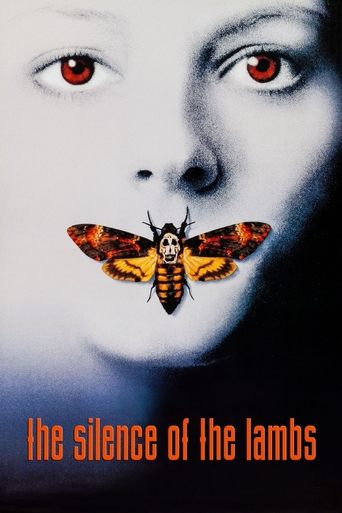
The Silence of the Lambs
1991 · Film · 119 min
Part of The Hannibal Lecter Collection
Directed by Jonathan Demme
Clarice Starling is a top student at the FBI's training academy. Jack Crawford wants Clarice to interview Dr. Hannibal Lecter, a brilliant psychiatrist who is also a violent psychopath, serving life behind bars for various acts of murder and cannibalism. Crawford believes that Lecter may have insight into a case and that Starling, as an attractive young woman, may be just the bait to draw him out.
14 positive3 negative1 mixed18 neutralfrom 36 commenters
Where to watch
No streaming data for this title.
36 comments on Hacker News
These movies also had less intention to be political correct. No one would have spent those blockbuster budgets on stories that were constructed around an ideological narrative instead of good storytelling.
> I was rewatching silence of the lambs and something hit me hard
That the villain‘s sexual orientation is now unthinkable to be portrayed like this? I give this movie a decade until the studio’s employees, its owners and the whole movie-ecosystem will alter the movie via AI to be more compliant with the „current thing“.
Wikipedia has been captured by special interests.
I recently watched The Silence of the Lambs, an Academy Award winning movie from the early 90s. Afterward, I skimmed the Wikipedia article to see if I missed any plot details.
There is a whole section on how the movie is considered transphobic by some nobodies, how the director defends that it isn't, blah blah blah. Having just watched the film, the thought didn't even enter my mind. I realized that the entire section is irrelevant to someone seeking information about the movie and at its worst, an opinion piece or cleverly disguised political shit-stirring.
Wikipedia is full of stuff like this. As a comparison I checked a 'real' encyclopedia (with editors) and of course not a mention of this, just the facts. Any attempt to delete irrelevant stuff from Wikipedia is closely guarded by self-appointed article gatekeepers because it has 'sources'.
I don't think it was Silence of The Lambs specifically - it was the experience this author had of watching that movie at 14 years old. Do you have a movie you watched at a young age, and through it you saw a window into adult life you were certain you would step into?
Silence of the Lambs is just this author's version of that. Mine is a different movie - but the way the author talked about silence of the lambs resonated deeply with me about how I feel watching "my" movie at an older age, and comparing it to how I thought when I watched it at 14.
I also felt it odd to hold up Silence of the Lambs as some kind of a paragon of achievement. I saw it when I was a kid once, and I recognize the memes/lines from it, and I know it occupies a certain place in culture
... but otherwise I don't think about that movie, especially not 2 or 3 decades later. For me personally, it would be OK if it didn't exist. I don't plan to watch it again, ever
I'm very sure the author would say the same thing about what I'm doing -- i.e. "Who cares? It's OK if it doesn't exist"
I think the lesson is: don't take yourself too seriously, and don't take your own personal perspective too seriously.
I get where the author is coming from, and there are some very well-written sentences in this blog post. But I also think that to adopt this world view is a recipe for misery. It's one view of things, not absolute truth
I've seen some movies not knowing anything about them by avoiding trailer (this being much easier in the 1990s...) Movies seems to work better that way.
Though it can be jarring: Eg. Silence of the Lambs or Leaving Las Vegas.
The Onion had a good take on it:
https://theonion.com/wildly-popular-iron-man-trailer-to-be-adapted-into-full-1819594705/
For convenience, I asked ChatGPT to create this table, which summarizes how many times each movie has been mentioned in this conversation so far. It got a few counts wrong (as usual), but it still gives a good sense of the frequency. I hope it can be useful to someone:
| Movie | Number of Mentions | |-------------------------------------------|---------------------| | The Matrix | 9 | | Lord of the Rings Trilogy | 8 | | Pulp Fiction | 8 | | Alien | 7 | | Fight Club | 7 | | Ghostbusters | 6 | | Die Hard | 5 | | Back to the Future | 5 | | Inception | 5 | | Star Wars Trilogy (original) | 5 | | Groundhog Day | 5 | | Terminator 1 & 2 | 5 | | Jurassic Park | 4 | | The Thing | 4 | | The Fifth Element | 4 | | Monty Python and the Holy Grail | 4 | | Ghost in the Shell | 4 | | Interstellar | 4 | | Casablanca | 3 | | Office Space | 3 | | Shawshank Redemption | 3 | | The Godfather Trilogy | 3 | | The Blues Brothers | 3 | | Blade Runner | 3 | | Mad Max: Fury Road | 3 | | Unforgiven | 3 | | Total Recall (1990) | 3 | | The Crow | 3 | | The Princess Bride | 3 | | Akira | 3 | | The Big Lebowski | 3 | | Guardians of the Galaxy | 3 | | American Psycho | 3 | | Indiana Jones Trilogy | 3 | | Kiki’s Delivery Service | 2 | | Ratatouille | 2 | | A Clockwork Orange | 2 | | Mission Impossible (various) | 2 | | Casino Royale | 2 | | Skyfall | 2 | | Ferris Bueller's Day Off | 2 | | Star Trek: The Wrath of Khan | 2 | | Apocalypse Now | 2 | | The Shining | 2 | | Groundhog Day | 2 | | Donnie Darko | 2 | | Dune (2021) | 2 | | Gladiator | 2 | | Predator | 2 | | Seven/Se7en | 2 | | The Dark Knight | 2 | | Snatch | 2 | | Prometheus | 2 | | Schindler’s List | 2 | | The Wolf of Wall Street | 2 | | Dr. Strangelove | 2 | | Silence of the Lambs | 2 | | Kill Bill | 2 | | Real Genius | 2 | | Top Secret! | 2 | | Tenet | 2 | | Tinker Tailor Soldier Spy | 2 | | The Adjustment Bureau | 2 | | The Expanse | 2 | | Pulp Fiction | 2 |
The Thing and Alien are my two favorite movies. Silence of the Lambs is up there too.
Not movies but I've rewatched X-Files and Twin Peaks repeatedly as well.
Of the ~700 movies I've watched (not bragging, just context - actual movie buffs watch thousands by the time they're my age), those I happily rewatch are:
The Thing (1982)
Silence of the Lambs
Alien
Little Shop of Horrors (1986)
Young Frankenstein
Rocky Horror
Raising Arizona
O Brother, Where Art Thou?
Men in Black
Primer
But even those I've only seen a handful of times each. It takes a lot for me to want to watch/read/play something multiple times, as I'm the kind of person who always thinks, "but I could be trying something new, or getting something done".
I am not a woman, but I consider Silence of the Lambs to be in my top five favorite films, and a large part of the reason I love it so much is because of how it actually talks about sexism in more subtle ways. The male characters aren’t overtly sexist to Clarice, but there’s tons of little microagresssions (e.g. multiple male characters making a pass at her when she’s just trying to do a job, the Crawford subtly trying to talk to the police chief without her because he thinks woman can’t handle gruesome details, etc.). None of the characters are really doing anything reportable, and they’re not “bad” people, and they’re not cartoonish stereotypes of sexists. It was something I noticed even as a teenager watching the movie the first time. I would like to think I am a tiny bit more aware of institutional sexism than I would have been without the movie.
It’s too bad that everything else in the Hannibal universe has blown chunks.
These are just my favorites, and in the order of which the popped into my mind.
- Office Space, 1999 (especially for people who work at offices) - The Matrix, 1999 - Fight Club, 1999 :)
Umm, what else? - Spirited Away, 2001 (and many others from Miyazaki) - Requiem for a Dream, 2000 (Very Heavy addiction-related film! I actually got watery eyes just by typing this, I've seen it too many times.) - Joker, 2019 - Full Metal Jacket, 1987 (and many others from Kubrick, such as Dr. Strangelove and The Shining) - Django Unchained, 2012 (and many others from Tarantino, at least Pulp Fiction) - Alien, 1979 - The Silence of the Lambs, 1991 - Saw, 2004
I made a bit longer list, so that I can share the link to my friends.
Actually there are many quirky ones which came to my mind, such as Borat, the South Park movie, Team America, Airplane! (alternatively titled Flying High!), Idiocracy and Hangover, but I wouldn't say these are in the must-see category. Actually I wouldn't even recommend these to most people, if I didn't know what kind of humor they like.
> Of course there’s sex in a movie. Isn’t there always?
> > The answer, of course, is not anymore—at least not when it comes to modern blockbusters
In todays gender fluid world, holding back on details, creating more innuendo enables viewers to project their own thoughts into those plot voids when watching tv or film, and obviously it allows more plot twists in future story lines.
Look at the furore thats generated over the TV SciFi character Dr Who kissing companions.
Another way to look at previous tv and films, is, were they more conformist and thus dictatorial to the viewer and society in general?
> Kids watch terminator and adults love super heroes. But the principle target audiences are different.
So are you saying that terminator is filling in as a father figure in psychological terms?
I think people watch films for the entertainment value as well, not thinking too hard to what is going on, partly because there is alot of detail to take in, its a bit like reading a text book through one sitting, you dont take everything in, but what is taken in and then gossiped about face to face or online, becomes interesting because its meta data for what people think is important.
I watched parts of Silence of the Lambs again the other night, and the FBi Starling portrayal of Buffalo Bill, is arguably academic conformism. This time, I was left wondering how much his childhood messed him up, in particular authority figures, which I dont think gets too much focus in the popular press or law enforcement circles.
The scene with the senator using the persons name broadcast to the hostage takers, to "humanise" the victim, instead of making "it" an object, I think hides the objectification of academia, the law and the state on the populous.
tl;dr authority figures influence the cognitive process, reducing the ability of people to think for themselves, which might not be a good thing.
I’m not necessarily disagreeing with your list, even though some of those are mediocre at best, but yeah I did mean per year, and limited to Hollywood (Parasite for instance not counting). And no, ok, I will also straight up disagree with the second Knives out Movie which I thought was absolute trash. A perfect example of poor storytelling and the form over substance of modern cinema.
But just taking say 1992 you have Last of the Mohicans, The Unforgiven, My Cousin Vinny, Malcolm X, Bad Lieutenant, Scent of a Woman, Reservoir Dogs, Dracula, Chaplin.
And then a bunch of fun schlomp like Arizona Dream, Basic Instinct, Sister Act, Army of Darkness, Home Alone 2, Buffy the Vampire Slayer, The Mighty Ducks, Wayne’s World.
These are all undoubtedly great movies.
And then another huge bunch of watchable stuff easily comparable to some of your mentions like Watcher or High Life.
And 1992 is not an outlier.
In 1993 you have Jurrasic Park, Groundhog Day, Whats Eating Gilbert Grape, Scindlers List, Meanace 2 Society, Alive, Dazed and Confused, Falling Down, In The Name of The Father, True Romance, Demolition Man, Carlitos Way, The Secret Garden, Philadelphia, A Perfect Workd, Cool Runnings, Short Cuts.
In 1991 Silence of The Lambs, Ternimator 2, JFK, Point Break, Thelma and Louise, Boyz in the Hood, The Doors, My Own Private Idaho, Barton Fink, The Fisher King, Naked Lunch.
In 1990 Goodfellas, Hunt for Red October, Total Recall, Edward Scissorhands, Home Alone, Godfather 3, Dances with Wolves, Tremors, Back to the Future 3, Awakenings, The Witches, Wild at Heart, Jacobs Ladder, Nikita, Slacker, Millers Crossing.
And the quality difference is massive too, not just somewhat better. Like just Millers Crossing is miles better than anything that has been made in the last 5 years, and I’m picking at random.
In 1994 Shawshank Redemption, Pulp Fiction, Forrest Gump, The Lion King, Speed, Ace Ventura, Dumb and Dumber, Stargate, Natural Born Killers, The Crow, Clercs, Maverick, Ed Wood, In the Mouth of Madness, Interview With The Vampire.
I could go on.
And this is not even talking about how the 80s is a better decade for cinema, or how the 70s is the peak of the power of the author with far more experimental, artistic, and substantial productions.
Has quality declined? Yes. Massively. Humongously. Stupendously.
My top top pick is actually a youtube channel that does movie essays: https://www.youtube.com/@filmjoy
They are terrifically well researched with a bunch of easter eggs and production backstory and are put together in a high production value, thoughtful way.
They really made me love and appreciate film much more.
I think it's the same way as musicians appreciating music, right?
Non-musicians might say learning more about music theory, makes some music seem less magical in a 'knowing how it was done' sort of way.
But like a musician actively listening, watching film from a more critical viewpoint/lens is really fantastic. You start to think about things like 'who was the cinematographer?', 'Who did the music and score?' and enjoying finding things like how a certain director has a certain motif.
As for the film list:
- The lord of the rings trilogy, is I assume mandatory watching for all at this point.
- The Matrix trilogy, supplemented by the movie essay here: https://www.youtube.com/watch?v=M0VnYcMHuDc
- Whiplash (2014) A J.K simmons masterpiece
- Sicario (2015) Cinematographer Roger Deakins doing some amazing work alongside Denis Villeneuve.
- Blade Runner 2049 sort of an obvious choice but beautifully made, better than the original in all ways except maybe soundtrack. The original Vangelis Blade Runner music is sort of genre defining.
- Black Hawk Down (2001) Absolutely stellar cast some of whom in their first role or wouldn't have their breakout role until several movies later. Possibly one of the most well paced movies, it's extremely clear and coherent throughout. It's also tidy self and self contained, no one said lets make 10 sequels and a cinematic universe. Dealt with the morals and psychology of war that would be further touched on in Jarhead (2005) another great movie.
- The Hurt Locker (2008) If Jarhead is a claustrophobic look at how useless and powerless an average infantry soldier can feel during war, The Hurt Locker is a study of a soldier addicted to it. Through a lens of up close nihilism.
- The silence of the lambs (1991) Hannibal Lecter / Anthony Hopkins with a bunch of scenes that are so good they are studied in film schools. Genre best horror-thriller.
1988 Die Hard http://www.imdb.com/title/tt0095016
1988 Red Heat https://www.imdb.com/title/tt0095963/
1988 My Stepmother Is an Alien https://www.imdb.com/title/tt0095687/
1988 Twins https://www.imdb.com/title/tt0096320/
1989 Honey, I Shrunk the kids https://www.imdb.com/title/tt0097523/
1989 Indiana Jones and the Last Crusade https://www.imdb.com/title/tt0097576/
1989 Tango & Cash https://www.imdb.com/title/tt0098439/
1990 Edward Scissorhands https://www.imdb.com/title/tt0099487/
1990 Home Alone https://www.imdb.com/title/tt0099785/
1990 Pretty Woman https://www.imdb.com/title/tt0100405/
1991 Terminator 2 https://www.imdb.com/title/tt0103064/
1991 Silence of the Lambs https://www.imdb.com/title/tt0102926/
1991 The Last Boy Scout https://www.imdb.com/title/tt0102266/
> When I saw that somewhat ambiguous title, I was hoping it was about that song. Now I have to watch all those videos!
Same here! I thought, "there's no way Talking Heads is near the top of HN".
> Stop Making Sense is one of the all-time great music movies (and I try to watch 'em all).
I still find it hard to wrap my head around the fact that Jonathan Demme, the director of Stop Making Sense, also directed Silence of the Lambs and Philadelphia.
A few more great books that beget great films:
* The Silence of the Lambs * The Shining * Shawshank Redemption (novella but I'll allow it) * Brokeback Mountain (same) * No Country for Old Men * Little Women (there are a few versions to choose from but I would choose the 1994 adaptation myself, thought he 2019 version was very good) * Requiem For a Dream * Lolita * Roots (mini-series but I think we should allow it)
That's what I can think of off the top of my head.
Check out Youtube's Free with Ads movies. Seriously. They've got a good selection of great movies (especially comedies) from the 80s and 90s on there.
Naked Gun series, Oh Brother Where Art Thou?, Raising Arizona, Idiocracy, The Terminal, Major League, Top Secret!, Hot Shots!, Beavis and Butthead Do America, The Terminator, Delirious, Robin Hood Men in Tights, Captain Ron (crap, it's not free anymore), original Robocop, Secret of Nimh, Ghost, I'm Gonna Git You Sucka, Silence of the Lambs, Teen Wolf, to name a few.
It's a smaller selection and they don't seem to stay Free for more than a few months, so you have to keep checking it, but there's some good stuff on there.
I recently watched the films "Hannibal," and "Silence of the Lambs," which convinced me that killers who aren't executed will continue to orchestrate murders from inside prison by psychologically manipulating people.
I think those films really capture what happens when we only imprison killers, even if we feel certain that there would be no public harm from handing down a life sentence instead of the death penalty.
I dont buy that. I dont miss 9600 Bauds modems, Windows 95 or monochromatic monitors. But some things were better before. Not every current thing is better, give me the Godfather 1,2 and Silence of the Lambs versus all movies made in the last 10 years. Compare the kind of discussions you could have in Usenet (cranks included) or the first blogs to the things you see in Twitter or -shudders- Facebook.No contest there.
When I was a teenager in Massachusetts in 1982 I bought the album "Tragic Figures" by a band called Savage Republic on a lark, based solely on the hand-printed album cover. It turned out to be very strange post-punk industrial music. I almost fell out of my chair at the movie theater watching "Silence of the Lambs" when the song "Real Men" from that album came on.
This reminds me of the search for Q Lazzarus. She and her band are famous (or maybe some would say notorious) for writing the song played during Silence of the Lambs when Buffalo Bill does his infamous "dance" in front of the camera. For decades, folks couldn't find any information on her and weren't even sure that she was still alive. Jonathan Demme, the director of Silence of the Lambs happened to be in her cab one night and she played some of her music and he really liked it. He put it into several of his films. It's someone's dream to be discovered like that - and then to fall almost faster back into obscurity?
https://www.stereogum.com/2009727/mysterious-goodbye-horses-singer-q-lazzarus-breaks-her-silence-30-years-later/news/
I'm pretty sure Silence of the Lambs influenced the design and casting of the Dana Scully character. In both Silence of the Lambs and the X-Files pilot episode, you have young women with shoulder-length red hair starting their new job at the FBI investigating the death of women, including the examination of corpses (Dana Scully specializes in forensic pathology while the examination of corpses is more incidental to Clarice Starling's work, but is a very memorable scene in the movie.)
> A small detail many forget is that Netflix pays very different prices for different shows.
Yeah, it's extremely annoying. Netflix essentially mocks its customers by keeping the best works just out of their reach. Almost every time I search for a classic film, I find its sequels instead. The film I actually wanted to watch was apparently too good for Netflix's pay grade.
Netflix has Terminator 1 and 3 but not 2; the first Mad Max but none of the others; Spider-Man 1 and 3 but not 2; several Hannibal movies and a TV series but not Silence of the Lambs; some Star Wars movies but not others; the list goes on...
I thought I was going to be the first to mention Cinemania but it seems you beat me to it! It was a major influence on how I found great/classic movies to watch. It was really informative and just overall a pretty great piece of software for the time. I distinctly remember discovering Silence of the Lambs on Cinemania and they had a clip of the famous "...ate his liver with some fava beans and a nice chianti" scene and one or two other clips from that film and I knew I had to watch the movie. Really interesting product, for sure.
>As a side note, my second reading was provoked by the movie "Silence of the Lambs", where Hannibal Lecter coaches Clarice to, "“First principles, Clarice. Simplicity. Read Marcus Aurelius
Remembered saying something that a man craves for what he sees.
I read the Meditations in secondary school, high school, but it was the Penguin Classic edition I think. I am reading it for a fourth time, a new translation by Gregory Hays that is wonderful. I grew up poor, but went to a Jesuit high school, took Latin for two years, and I've found Stoicism appealing, because it tied in with my family's spartan lifestyle. We didn't have a phone until I was 12 or 13, and a TV until I was 8 or 10 I think. Minimal furniture, hanging clothes out the window, etc. I can see how it appeals to those say in Silicon Valley, as an alternative or contrast to their materialistic, high-tech world, a refuge. I am not discounting that it appeals to them or anyone for that matter, simply because it has a lot of truth or substance to it. I consider part of my life as stoic, and part of it along the lines of romanticism. I've considered learning Koine Greek to read it, and others, in their original language.
As a side note, my second reading was provoked by the movie "Silence of the Lambs", where Hannibal Lecter coaches Clarice to, "“First principles, Clarice. Simplicity. Read Marcus Aurelius." ;)
Classical music in film and tv more commonly signals erudition, not simply villainy. When there is a class conflict involved In film, the higher class characters are more commonly the villains, and an appreciation for classical music signals their remoteness.
Philadelphia uses Hanks’ appreciation for opera to signal his class status, not villainy. Silence of the Lambs uses music and food same way.
Making the direct hop to villainy is too simplistic, and pointing fingers at Clockwork Orange is absurd. That film’s synthesized classical music is used to draw a parallel between the commodification of violence and the commodification of culture more broadly.
Merzbow frequently utilizes fetish and BDSM imagery / concepts and from the article perspective (although about death metal, it is similarly seen as "extreme music") I find that part of the article's conclusions interesting, in that for some there may be an endorphin release postulated sounds similar to what might be happening in the BDSM concept known as "sub space" (or occurring in other ways for other people, for example, "runner's high" is from what I understand a similar endorphin release).
As far as the top level comment goes though... maybe I'm misinterpreting the comment because this is summary level material, but yeah, that's an odd assertion to me. Death metal is a niche genre in a style of music that has some significant semi-mainstream elements (metal as a whole). Death metal is similar to other sort-of-tangentially related concepts like say horror media (there is a nice semi-mainstream side and also a lot of fringe horror movie / media styles that have fewer but sometimes more dedicated fans). Many horror movies for instance are flat out iconic at this point (ranging from the original Universal monsters to some of the films of Hitchcock to certain films like, say, Halloween, Jaws, or the Shining). On rare occasions, they are both quite popular and they even win an Academy Award (eg The Silence of the Lambs).
In music, the main thing I will say is that there are metal bands with often violent lyrics and imagery that are more popular (Slayer comes to mind), and non-metal bands with violent imagery that also are popular. Certainly if that violent imagery is slightly modified to a bit more theatrical, the band might even become mainstream (I'm thinking Alice Cooper as an example). The "sonic assault" of death metal in some ways wasn't new -- hardcore punk was an influence for the speed (although hardcore punk is quite a bit less technical) and there's certainly a couple relatively well known bands there in that genre that dabbled in (usually more theatrical but still macabre) horror. (The Damned and The Misfits are two fairly big names in the genre, not "mainstream" but big enough that some people will know of them, and there's plenty of other lesser known "horror punks" around...).
So to me that statement ("why are people interested in xyz that seems to induce a negative emotion when in everyday life we tend to avoid situations that will induce a negative emotion") is weird in this context, because this is not a niche question whatsoever overall. The answer to the above question is probably not best answered by looking at the psychology of an obscure genre and more best answered to ask why (in the Silence of the Lambs example) a movie that pushes "negative emotions" of this sort is (at present) #23 on IMDB's top movies of all time.
For most of them, yes. But horror is (or at least can be) distinct from fear. "The Silence of The Lambs" is horrifying, but not necessarily considered a horror movie. Likewise "Apocalypse Now", which is mostly about the emotion of horror, but not designed to frighten in any way.
OK you pronounce "Bejing" with a normal, regular, everyday hard 'j' sound as it's supposed to be pronounced (not some fake exotic sounding airy zzzhhhhhh sound you and everyone else just made up out of thin air) and I promise not to kill or pin any butterflies.
I really thought the peeve was going to be about pictures of butterflies on people's mouths (Silence of the Lambs). That bugs me, but I guess with the movie it was supposed to.
One thing I've noticed is that there's a very severe bias in culture against PTSD. There's this idea that PTSD should be a "really big deal" and it only exists in the "goes to 11" mode and nothing else, that it has to be "earned" through truly great trauma. PTSD that exists from more minor things (such as childhood emotional trauma that didn't involve physical violence) is often ignored and sidelined. Consider, for example, the character of Clarice from The Silence of the Lambs. The event that gave that movie its name likely gave Clarice lasting PTSD that she had not overcome even as an adult. Her PTSD wasn't as life damaging as a veteran incapable of holding a job or staying sober, she obviously managed to prevent it from impacting her daily life too powerfully, but it still existed.
There are tons of people walking around with similar or even more "minor" forms of PTSD. And it's causing them stress and giving them potentially harmful behaviors like hypervigillance. Many of them will go through their lives not knowing or even recognizing the possibility that they're experiencing PTSD, because society says PTSD has to be a 500 pound gorilla, and a 2 pound monkey on your back is not even worth worrying about.
> [Lecter] calls [Clarice] at the end of the movie, relaxed, content and ready to murder (and eat) his psychiatrist. He promises her that she’s safe from him and hangs up to follow his prey, while Clarice remains on the phone, repeating his name. The movie gives Lecter the last word...
> [Clarice is] a reminder of just how timid mainstream film can be. In exploitation slasher films, at least the Final Girl gets to kill or castrate the bad guys.
So, let me get this straight - Silence of the Lambs isn't "feminist enough" because Lecter survives? Even though Clarice _does_ kill Buffalo Bill and rescue the Senator's daughter?
The entire premise of this analysis is absurd because Clarice isn't meant to be invincible. Silence of the Lambs is a scary movie, so it needs characters to be vulnerable... Characters that are afraid when a sociopathic killer escapes, knows where they are, and calls them. Also, it would be rather hard to write the sequel "Hannibal" if Lecter doesn't escape.
"He's in his thirties or forties. He's got real physical strength, combined with an older man's self-control." - Silence of the Lambs
A movie quote, but it's an appropriate observation of the "sweet spot" from ages 30-50.
If you maintain the drive and flexibility of youth, those pair well with the attributes that require time to develop.
The premise of "distrust of authority is propaganda" is so self-contradictory that I wonder if this article is a deliberate troll.
I love movies and books where authority is the villain because it mirrors my own (and most other people's) struggles in real life. Children strive for freedom from overprotective parents and overworked and misunderstanding teachers that don't have time to listen to them as individuals. Adults have to deal with bosses, cops, politicians, preachers and other banana dictators who hold the keys to their freedom and prosperity. Anyone who has read Parkinson, The Peter Principle or Dilbert knows organizations have issues. This is not fiction, but unfortunate reality and one that your audience can easily identify with.
It doesn't help that he uses more talented and successful film makers as bad examples. Star Wars had the rebel alliance - a well organized, powerful, and benevolent organization. Even the Empire was competent (until Tarkin and the other senior leadership were destroyed in the first Death Star.) And what does teenagers splitting up in horror movies have to do with the struggle against incompetent and uncaring authority? That example doesn't work but it does make this sloppily-written rant gratuitously longer - an excellent technique to keep readers that disagree with you from being able to finish it. A technique that many commenters here also seem to be abusing.
Silence of the Lambs was a poor example as well. Dr. Chilton (the head of the facility where Hannibal was kept) was as 2-dimensional a corrupt bureaucrat as you can get.
In conclusion: the thesis made no logical sense, the examples were poor, and the writing was needlessly verbose.
I think basing our ideas about incarceration on a Stephen King movie and novella isn't the wisest strategy, any more than using The Silence of the Lambs would be.
I'd almost agree with you, but as you describe it, the result would just be deus ex machina. It's not fair to just pull a resolution out of your butt, that couldn't possibly have been predicted.
Better to have all the facts there, but not in your face. Commonly, a film with focus on a key point, or dwell on an image, to ensure that the viewer gets it, and I think that's a mistake. A good example of a movie that gets it right is Silence of the Lambs, in which all the information is there, but the viewer needs to separate the wheat from the chaff.