 Hacker Cinema
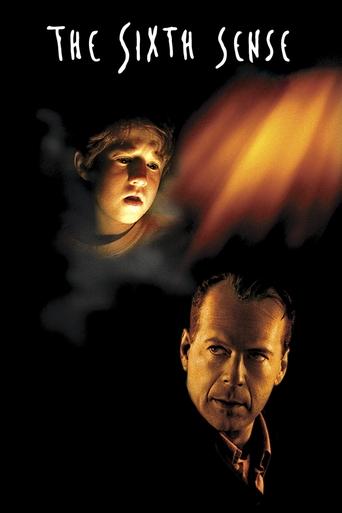
The Sixth Sense
1999 · Film · 107 min
Directed by M. Night Shyamalan
Following an unexpected tragedy, child psychologist Malcolm Crowe meets a nine year old boy named Cole Sear, who is hiding a dark secret.
11 positive2 negative23 neutralfrom 36 commenters
Where to watch
No streaming data for this title.
37 comments on Hacker News
I guess it's a sign of getting old when I see the world classic and expect Gone With the Wind and Casablanca, but instead the list has Arrival, The Martian, and the Bourne Identity. The Sixth Sense is on the list for the US and it's a movie I coincidentally rewatched last night, again finding it to be a masterpiece.
In any case, very different list in Canada: Rocketman, Ford v Ferrari, Little Miss Sunshine, Catch Me If You Can, Jurassic Park, and the Proposal.
The AI overview has made Google search usable again for me.
I often use Perplexity for more complicated questions though.
In both cases, I really like that. I can actually ask a complicated question and get a reasonable answer.
For example, check the answer to "what is the source of vertical straw in the movie The sixth Sense with the flying taxis and all?"
(I said sprawl but the voice to text understood strawz so I left it)
I generally agree.
But there are movies that can be spoiled because of the big plot twist.
Eg. The Sixth Sense, Fight Club, to name a few (and [anime] Your Name, even the recently released Cosmic Princess Kaguya)
And then there are some movies where the plot is so obvious that you could have a LLM one-shot predict the whole thing.
That said if the movie/game/whatever is released for a couple years, I think the spoiler warnings should be optional regardless.
Are you familiar with the movie The Sixth Sense?
I really feel for the Wachoskis. They couldn't not do a sequel, but they had nowhere to go--The Matrix was already perfect.
They couldn't recapture the key reveal of the Matrix. It would be like doing a sequel to "The Sixth Sense"--tag line: "He's Still Dead". And without that, it's just another action movie except "bullet time" is no longer innovative.
Their solution was to go deeper into the mythology and the larger world, but that was never going to be as fresh as the original.
I would have done a time-jump and have Neo be the mentor figure to a new Neo (a Neo-Neo). They'd still be fighting the Architect (and maybe Smith) and they'd still explore the larger world of Zion + Machine City, but the key reveal would be that Neo himself is just a program (like the Oracle).
But what do I know? I'm just a simple programmer.
> The Sixth Sense ... a movie about the challenges of being a bald guy.
wow, am I going to have to go back and watch it a third time?
> It’s interesting to muse about the larger picture here.
I love the idea that, upon seeing the government compiling a database of undesirables under the pretense of fighting autism(?), one can zoom out and discover that the “big picture” is, uh, about autism. That is like watching The Sixth Sense and then writing about how it is a movie about the challenges of being a bald guy.
That is surreal! Like one step away from “The Sixth Sense” movie
The theory doesn't make any sense; unlike The Sixth Sense, the main character in Interstellar interacts with a lot of people. If he's dead, so are they (or they're just figments of his post-death experience).
The journey doesn't make any sense as a post-death experience, since none of the events are tied to his life (before the events of the movie), so there's no deeper meaning to the wave planet, or the ice planet, or falling into the black hole.
Also, Nolan doesn't do meta-contextual films. His specialty is the technical aspects of storytelling (see, e.g., Memento, The Prestige, Dunkirk, and Tenet), not in imbuing deeper emotional meanings into his works. Indeed, one of the big critiques of his films (excluding Dunkirk and Oppenheimer) was that they generally lack any emotional depth.
Yeah, that's kind of what I was thinking of too. And I suspect most M. Night Shyamalan movies after The Sixth Sense.
I think it's a mistake to think that most notable things are the result of "one person". Most big projects, good or bad, are a group effort, and which is why it really bothers me that people act like Elon is singularly responsible for every cool thing to come out of SpaceX or Tesla.
I always find it so interesting when people are eagerly ready to adopt The Matrix as metaphor for whatever they don't like, but are often vehemently against entertaining it as a literal concept.
25 years ago I thought "that's neat" for a clever film twist. Much like the Sixth Sense. But then a few years later I read Nick Bostrom's op-ed in the NYT, and started considering the notion seriously.
In the time since The Matrix we've shifted to a world where we've brought AI further than anyone thought it would be in their lifetimes with continued compounding gains, are using that tech to build virtual twins of ourselves and the world around us, and are even using AI to create dynamic agency and interactions within virtual worlds modeled off human thought processes.
Meanwhile we are still struggling to piece together the shattering realization that while our universe behaves as if continuous at large scales that at low fidelity it converts to discrete units at the point of stateful interactions (and reversed if the state is lost, much like a memory efficient program might do). We just sort of shrug and say it's 'weird' but take it for granted as how the world works because we've grown up knowing that's the case. I sometimes wonder if Einstein would have been so reluctant to think the moon doesn't exist when no one is looking at it if he had hundreds of parallels in virtual skyboxes where exactly that thing is the case when thinking about it.
We process time so linearly it can be hard to think about the future as prologue, but looking at the present relative to 25 years past and thinking about the future, it strikes me that the most preposterous concept in The Matrix was not the nature of its reality, but the notion that there were any bodies in pods somewhere to exit into.
Still, I have no doubt that in another 25 years we'll continue to see it embraced as metaphor while rejected in a more literal interpretation, just in a world where it reflects even less fiction vs science than today.
The irony is that AI agents in a virtual world, if correctly modeling human behavior, would also reject the same concept.
This isn't true. It's rare, but there are some terrific child actors. Watch the original IT to note just how good Seth Green and Emily Perkins are. Dakota Fanning and her sister. Haley Joel Osment felt very natural in The Sixth Sense. Brooke Shields in Alice, Sweet Alice was more in control of her performance than most adults.
Anyway, kids in movies and television shows aren't going away. We have to make sure they are well-treated.
I cant find the source right now but when Shyamalan wrote the Sixth Sense, it was a complete script on about the fifth draft before he even _thought_ of the twist. And I think thats why its such a great movie. Its like a twist that gives you a whole new movie on top of the perfectly good one you've already seen. And the twist is not just a gimmick, it has emotional depth.
edit: I first saw the sixth sense in perfect conditions - a pirated VCD from Malaysia before any publicity for it had happened in the UK, so had no idea what I was getting myself into other than it had Bruce Willis in it. Absolutely blew me away.
edit: found the source:
According to an interview in Scenario magazine (Volume 5, Number 4), Shyamalan had written five drafts of the screenplay before an idea came to him that transformed it into something totally new, leading to a landmark film with powerful performances from the film’s stars. It happened in the sixth draft.
https://www.stevendeeble.com/2016/05/31/evolution-of-a-screenplay-the-sixth-sense/
Your critique is totally spot on. I can’t stomach Shyamalan’s current movies. Oddly though despite the cheap plot twist and how much it got made fun of in the media at the time, I love The Sixth Sense. I still watch it to this day. The scene where Cole sees the dead biker and tells his mom they’re standing outside the car window? Goosebumps every time.
They were used in a lot of films in general for a long time until people decided they weren't "hip" or "cool" anymore. There's a lot of classic MGM musicals too, for instance, with all sorts of fun wipes. Classic TV shows also used to be full of wipes, especially game shows. Modern editing moved to focus almost exclusively on unadorned CUTs, but for a relatively long time in cinema the CUT was just one tool in the toolbox.
Most screenplays the only "scene break" you will see is:
CUT TO:
But it used to be part of screenplay creativity as well that you might want to note the relationship of two scenes with a:
WIPE TO:
Or even a specific wipe (that became most associated with 60s/70s game shows):
STAR WIPE TO:
But these days people generally consider that "wrong" in a screenplay for anything other than a CUT TO or maybe a LONG CUT TO (traditionally used to show that a character died [1] or similar reason to "pay respects to a moment") and a lot of Hollywood feels that scene transitions should be "left" to directors and editors in the creative process (and that in today's films you rarely use anything other than a basic cut, the rest are too "ostentatious" and "distracting"). So the "scene break" in screenplays starts to feel very vestigial now that it's just about locked to CUT TO.
[1] The editing of The Sixth Sense spoiled the movie for me, at least.
I was with you until that last bit.
https://www.soundtrack.net/album/the-sixth-sense/
https://www.what-song.com/Movies/Soundtrack/246/Se7en
Movie soundtracks are about as memorable as they've always been. Most producers cheap out when it comes to the music, so you get a "cookie cutter" soundtrack of the day:
* The tinny, mostly brass in the 50s and 60s.
* The mostly silent 70s, or faux disco.
* The primitive, nondescript synths of the 80s.
* The "nouveau orchestra" of the 90s.
* The "deep bass sound" of the 2000s.
etc etc.
You'd be hard pressed to tell the musical difference between "Treasure of the Sierra Madre" and "The Grapes of Wrath". "Taxi Driver" and "The French Connection". "Rain Man" and "Splash". "Sixth Sense" and "Seven".
It's always the same for music, tv, movies, etc: Every decade has its gems, but most of it is crap.
I remember only really vague trailers before the movie came out. All centered around the "No one can be told what the matrix is.." line. There was kind of a glut of movies around that time (esp. Sixth Sense and Fight Club) that were trying to disguise a reality-bending secret and The Matrix was definitely one of them in my memory.
Once the movie was out though there were more detailed trailers.
Alien, The Matrix, 12 Monkeys, Terminator, Fight Club, The Fifth Element, The Sixth Sense, Back to the Future, eXistenZ, Gattaca, The Arrival, 2001 space Odissey, the Shining, Trainspotting, Ground Hog day, Dune, Dark city, Tron, Demolition man, Total Recall, Robocop, The city of lost children...
Nuanced, scify, full of smart details or mind bending films are not new.
In fact, it's really hard to innovate now, because so much as already being covered.
Yeah, that intro to Dark City was a crime against the audience. And honestly I think it was really shortsighted/cowardly of the studio. If you look at two movies that came just a year later, The Matrix and Sixth Sense, a big surprise reveal was central to both of their appeal. And this shouldn't have been a surprise to the studios... the twist in The Usual Suspects came half a decade earlier, not to mention Empire Strikes Back.
My second least favorite thing studios do is cut the trailer in a way that makes the movie seem totally different or even a totally different genre.
Aside: a friend gave me the Sixth Sense dvd as a birthday gift one year, which I had yet to see, and my idiot roommate at that time was in the room couldn't restrain himself from trying to cleverly address my friend in a way that communicated he knew the twist. Except he'd never touched on clever in his life and gave it away instantly. Nice one Paul. Nice one.
You're focusing on a very specific niche. Sci-fi and adventure were rarely the interest of good film makers, so few sci-fi or adventure films were made.
But that does not reflect on the larger film industry of the 80s and 90s, which was producing many more incredible movies which stood the test of time. 1999 alone gave us Fight Club, The Talented Mr Ripley, Being John Malkovich, American Beauty, The Iron Giant, Eyes Wide Shut, The Matrix, The Sixth Sense, The Green Mile.
There has always been a lot of schlock cinema being produced, but right now it is dominating much more than in the last few decades.
Nowadays you have: superhero movies, sequels, remakes, empowerment of certain groups that aren't me, movies with a political message, or some sad dour art house movie that makes you walk out feeling bummed out about life.
Compare 1994 or 1999 movie releases to 2021.
Fight club, the matrix, forrest gump, Magnolia, office space, sixth sense, american beauty, clerks, etc.
Nowadays: the father?, Mank?, black messiah, , chicago 7?
It's not about creating magical new worlds with thought provoking ideas anymore.
Maybe I'm explaining it poorly but film seems to have gone the way of the music industry.
Commodified instead of inspired.
I LOVE going to the movies.
I just wish there was something I wanted to see.
Hmmm. Great question. What was the most "mind bending" moment in cinema? The ending to The Sixth Sense or the trial and conviction of Harvey Weinstein? When I think of mind bending I think of the thoughts and ideas that break one out of a previous believed framework of thinking. Things that have a lasting impact on how they see and view the world.
"The Bible" (New International Version)
“Capitalism and Freedom” by Milton Friedman
“Imperial Ambitions” by Noam Chomsky
“Evolution and Religion: A Dialogue Book" by Michael Ruse
“The Value of Free Thought” an essay by Bertrand Russel
“The Cultural Contradictions of Capitalism” by Daniel Bell
“Stalking the billion-footed beast” an essay by Tom Wolfe
“Propaganda” by Edward Bernays
“Bonfire of the Vanities” by Tom Wolfe
“Walden” by Henry David Thoreau
“30 Satires” by Lewis H. Lapham
“Cat’s Cradle” by Kurt Vonnegut
Above, in chronological order, are the books that changed my life. It is weird looking at that list, as each book is tied to such a fundamental shift in my life. They each taught me about something fundamentally new and different. Faith, spirituality, economics, thought, power, society, nature, technology. It should appear obvious by looking at the list, there are plenty of opposite pairs, dipole books if you will, present. Bending one’s mind has multiple phases, first when one goes from knowing nothing to knowing something. Depending on what was learned, this can definitely be mind bending. But not everyone rides the second phase, going from knowing something to learning that it wasn’t the whole thing, or wasn’t the only way to interpret such a thing, or wasn’t entirely correct, or perhaps, in our largely subjective world, is not true at all.
Certain books can only speak to certain people at certain times of their life. It’s just the beauty of the whole thing. And to the core of this thread, one actually has to believe something, truly and passionately, in order for them to then have their world view bent and turned on its head. This is the hardest lesson that many won’t really ever opt to face. The core of truth, learning, and wisdom comes when you finally read (and thus think) something that takes a belief you previously held as passionately true, unalterably true, core-to-identity true, and made you wrestle with the reality that it may, perhaps, not be. That’s the biggest mind f* of them all.
One’s entire worldview is constructed of things they believe. But those things you believe come, for some more than others, from what one read, purposefully or not. Seek books that challenge what you believe and enjoy the ride.
I worked in a multiplex in 1999, and that was a great year for movies. The Sixth Sense in particular was the little movie that could. If I remember correctly it was shown for like six months.
> But Hollywood have always done this - recycling old ideas in new wrapping. And Hollywood have always been criticized for being vapid entertainment, empty spectacle etc.
Not to this degree. The last good year for movies was 1999. This is the list of major releases that year:
The Matrix
Fight Club
The Sixth Sense
Toy Story 2
The Green Mile
American Beauty
Being John Malkovic
Office Space
The Iron Giant
Magnolia
Austin Powers
American Pie
The Talented Mr. Ripley
Eyes Wide Shut
Dogma
Galaxy Quest
The Insider
Notting Hill
Man on the Moon
Analyze This
Detroit Rock City
Mystery Men
Bicentennial Man
This is not even the entire list, just the ones I enjoyed and I'm bothering to type.
You can't look at that list and honestly say nothing has changed, because it's just not true. The energy and creativity has clearly moved somewhere else, to TV and streaming services.
This year alone there's two FANTASTIC shows, Chernobyl and Stranger Things S3 that definitely deserve praise.
That's not true, but why let the facts get in the way?
6/10 highest-grossing movies last year were not comic book movies: Dunkirk - Original property Fast & Furious 8 - non-comic franchise based on original property Despicable Me - non-comic franchise based on original property It - remake Beauty and the Beast - remake Get Out - original property Star Wars Episode 8 - non-comic franchise based on original property
The most profitable movie of 2017, Get Out, was an original franchise. This follows on the heels of 2016s most profitable movie, Split, a sequel to an original property (The Sixth Sense/Unbreakable universe).
It's pretty clear cut. It just doesn't batter you around the head with it the way the Sixth Sense does.
One of my favourite details: there are only five* "healthy human specimens" in the entire movie. Everyone else is fat, old, scarred, suffering from a degenerative disease.
Deckard would probably notice this if he had any friends. Instead, he stays home and drinks surrounded by photographs.
*Cue a crack about Brion James
I had the first twist in the pilot. As soon as Elliot entered the ... club rooms, I figured it out. I'm very good with patterns, and one thing that annoys me is knowing how TV shows are going to end before they do. I had BSG early on, Sixth Sense ("I'll bet he dies and we see a ghost. No, that's just too obvious."), watched three episodes of the Mentalist and had the culprit in the first five minutes of each episode - even within the first minute of the first episode I saw. I'm almost at the point where I can quote some more ordinary movies while I'm watching them. (That's not as odd as it sounds, it's the patterns that are used to build each scene and the overall film that are the giveaway, but it's more subconscious than deliberate.)
So where is Mr. Robot going?
Damned if I know. That's what I like about it. As you say, some of the scenes were so odd that it was clear something was up - why is he watching the game from the bench? Why were they so angry with Elliot, and why was the friend such an influence on them? I didn't pick that one, although perhaps I should have re-watched season 1 before starting 2. I don't think that was the big twist, though, that came later - Juvgrebfr'f fhecevfr gung Ryyvbg qbrfa'g xabj jung Cunfr 2 vf tvira gung vg'f uvf cebwrpg, naq nyy gur cbgragvny snyybhg sebz gung. Vf Juvgrebfr hfvat Ryyvbg sbe uvf bja raqf? I think the other shoe has yet to drop on that one.
I think that people who write it off as "just Fight Club" are hugely missing the point - the narrator in that is just too reliable after we learn the twist, and after all, Fight Club was just a backlash against the overall commercial exploitation of the world at the time. Mr. Robot is about n qryhfvbany cnenabvq fpuvmbcueravp jvgu n fbpvny nakvrgl qvfbeqre, jub unf n zhygv-ynlrerq cyna. Jr'ir bayl frra gur Svtug Pyho cneg bs vg pbzcyrgrq, jung ryfr vf pbzvat?
Really hanging out for the finale tonight.
Ooooh... 1999. Fight Club. Go. American Beauty. The Matrix. Boys don't cry. Austin Powers. The Sixth Sense. The Talented Mr. Ripley. The Cider House Rules. Magnolia. Mansfield Park. The Red Violin. Trick. American Pie. ;)
That is despite the fact that installment movies of James Bond, Star Wars, Toy Story, etc., that year.
Everything seemed great that year. Or perhaps if was also a good year for me, and therefore everything seemed good because of that...
I posted this on the site, posting it here too:
I would say a better metric would be "How much did you enjoy this film?" vs "How good is this movie?"
I've been grappling with this problem since subscribing to Netflix, wondering how I should rate a movie I personally did not enjoy that I also felt was incredibly well made. For example, "A Clockwork Orange" is an incredible movie by all means and I would give it 97 stars out of a hundred.... but I hated every single second of it. It's gruesome, sadistic, dark, miserable, and disgusting. But it was undeniably well made.
Rewatchability sucks in the aspect because many movies can't be rewatched, while still being both splendidly produced and enjoyable. Let me make this clearer with examples: "The Sixth Sense," "Rear Window," "The Accused," "The Diving Bell and the Butterfly," "12 Angry Men," "Apollo 13..." The list goes on and on. There are great movies that just don't rank so highly because they're SUSPENSEFUL and that suspense doesn't translate will into rewatches. Rewatching suspenseful movies will make them seem boring and long-drawn.
Rewatching feel-good movies ("Seven Pounds," "How To Train Your Dragon," "Blind Side," etc.) however, is just as good the second time if not better.
tl;dr the rewatchability index will be heavily skewed towards feel-good favorites and epics, and away from dark, gritty, mysterious, and suspenseful. Not a good index.
Sure thing. HN is for things that hackers find interesting, not just programming or startups. Things that are self-referential or “meta” have a strong presence in Hacker culture, Gödel-Escher-Bach and Lisp being totemic examples. Humor is, well, pleasing, and meta-humour combines something pleasing with a nod to something interesting. Finally, creating or dissecting meta-jokes has a hacking aspect to it. What is the structure of this joke? How does it work? What does it say about other jokes? These questions are interesting in their own right.
Humour can be a very serious subject. Why do human laugh? What is the social purpose of telling jokes? Is it important? Or is it a “bug in the system” that we exploit? What is going on in the brain when we laugh at the punch line of a joke? Is it the same thing that goes on when we observe the “switch” ending of a movie like “The Sixth Sense” or “The Sting?”
Or you can just laugh at the jokes and move along :-)
I don't think I'm typically bothered by spoilers, but The Usual Suspects stands out as an example of where it definitely hurt my enjoyment of that movie. I mean, I still liked the movie, but man, I can only imagine how much more I would've enjoyed it without the spoilers.
Also, by this point The Sixth Sense is ruined for me, so I'm not sure I'll ever get around to seeing it.
I find that expecting a twist lowers the enjoyment. The twist, when it arrives, tends to usually be anticlimatic. If it turns out there's no twist, it ruins the whole experience.
I think that's why Shyamalan's later movies are considered so badly.
The "prediction error" point is interesting; I feel cheated when the twist is not so much a twist but hidden information; when one could never have suspected of the truth because not all facts where given. For example, I found the ending of the movie Number 23 to ruin the movie for me, so frustrating it was.
On the other hand, when it makes perfect sense, and facts were there all along, the twist is satisfying. That's why Sixth Sense is so popular.
Also, spoilers aren't always about twists. Telling me the whole plot of a movie robs me the experience of discovering it as it goes. Some of movies I enjoyed watching the most were ones I went in knowing absolutely nothing of what it was about (also some of the ones I disliked the most, but that's another story).
Since he uses The Sixth Sense as his main metaphor, I should point out that I figured out "the twist" before seeing the movie, since I watched it after many other people. Everyone talking mysteriously about "THE TWIST", made it pretty obvious, in combination with the trailer.
I suppose we could extend this experience to startups. Everyone who hears the constant "bubble" talk, and knows about the .com crash would probably be wary of being dead already.
[edit: Serves me right for trying to constructively engage a tortured analogy]
I can't judge on The Sixth Sense, because I saw it knowing the ending and so nothing seemed too surprising. The Matrix is incredibly straightforward: the plot is rehashed philosophy mixed with a pretty simplistic story that allows for lots of fighting. Not necessarily a bad thing, but you watch it and it all makes sense in a cool "What if?" way. That opposed to, say, Eraserhead, where you finish the movie feeling like you've had your mind scrubbed hard with steel wool. Again, not necessarily a bad thing.
There are few recent popular flicks that I think are worthy of consideration -- or at least honorable mention.
I'd add The Matrix. Although it's not great, it did have the most impact on the most people.
I'd add The Sixth Sense for the same reason. When you "get it" then you are almost forced to rewatch the movie to make sure it still all adds up. It does. It was a great work by M. Night, who (to me) is really not doing as well as he used to.
> Instead of having just a few people read through a script maybe it should be free for all to read through and rate. That way you will have a good selling point to Hollywood - "hey - 500.000 people read this script and rated it, they will all go see the movie when it comes out. And bring their friends and family!"
That worked for "Lord of the Rings" but would it have worked for "Sixth Sense"? How about "Blades of Glory"?
Did it work for "300"?