 Hacker Cinema
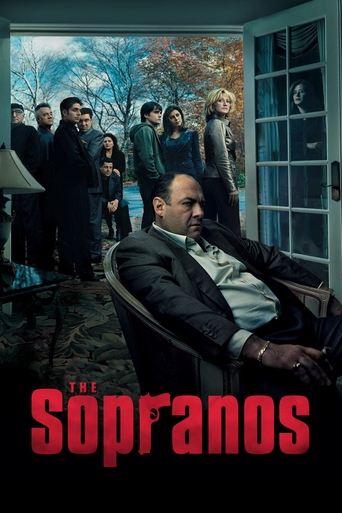
The Sopranos
1999 · TV series · 6 seasons
Created by David Chase
The story of New Jersey-based Italian-American mobster Tony Soprano and the difficulties he faces as he tries to balance the conflicting requirements of his home life and the criminal organization he heads. Those difficulties are often highlighted through his ongoing professional relationship with psychiatrist Jennifer Melfi. The show features Tony's family members and Mafia associates in prominent roles and story arcs, most notably his wife Carmela and his cousin and protégé Christopher Moltisanti.
68 positive13 negative3 mixed105 neutralfrom 189 commenters
Where to watch
No streaming data for this title.
213 comments on Hacker News
Corporations want a reproducible formula that can scale. Creating movies (and TV) is an inherently creative process. The people who end up running these businesses hate that but creativity doesn't scale. This is why reputation and track record is so important in getting any project greenlit. So the likes of Steven Spielberg, James Cameron or Christopher Nolan have a lot of freedom. They can't quite make what they want. A studio still has to bankroll the project and they may not like it. This is how Francis Ford Coppola ended up self-funding Megalopolis and, well, the studios were right to pass, let's be reeal.
This is also why we get so many sequeals, remarks and reboots. It's a property with a proven track record. That's so much easier to get greenlit.
The other thing that happens is that corporations (including studios) can only increase profits by cutting costs and raising prices. And this last one has basically killed the ecosystem upon which movies (and TV) depend. Let me explain.
Once upon a time, LA was relativvely cheap to live in. This allowed people to live there and work on getting their break while working flexible, often service jobs. Waittressing, hosting, that sort of thing. It could be anything, really. But it has to be flexible enough to take time off to go to auditions and jobs and whatnot. It is very difficult to make a full-time career out of working in this industry. If you're an actor and you, say, get a principal guest role on a TV series you might make $1000-2000/day but you only end up working 1-2 days on that every 3 months. You can't live on that. Recently there was a piece on the actor who played Sam in Lord of the Rings having to sell his house even though he made $250k for the 3 movies. That was over several years.
This isn't just for acting. Lighting, camera work, production, direction, editing, writing, special effects, costumes, etc etc etc.
What sustained people were residuals and the relatively low cost of living. Residuals for TV basically got killed by streaming. A lot of movie projects became unsustainable when the VHS/DVD/Blu-ray revenue pipeline dried up. Matt Damon spoke about this.
But the other thing streaming killed was the network TV pipeline. A bunch of screenplays would be written (and sold). I'm talking hundreds. A handful of those would be made into pilots. These days that's maybe 10-15 per year. Previously it was 50-100+. A certain number of those went to a half then full series order of 22+ episodes. Getting one job could sustain you for the year.
Streaming came along. The residuals went away. Those 22 episode seasons became 8-12 episode seasons every 2-3 years if you're lucky. There was no syndication money anymore. Working people in the industry relied upon residuals in dry spells to make a living. And suddenly you needed 2-3 jobs a year instead of 1 and that's really difficult to get and, even if you get it, to schedule so they don't conflict.
And then obviously ticket sales in movie theaters were in decline and fell off a cliff with the pandemic. Starting in the 2000s you had the shift to save costs to places like Atlanta, Vancouver and Toronto. Productions started chasing tax credits all over the world and would immediatley leave when they ended.
Let me elaborate on just one example: writing. To get into this field you generally would start as a production assistant ("PA"). This would generally be an unpaid position initially (an "internship"). At some point if you didn't screw up, you might start getting paid. Then you'd be the assistant to a writer. This would give you experience in a writers room. Hopefully whoever you worked for would give you feedback and teach you things. The next step would be to get a staff writer job. Back in the day you'd get paid for 22 episodes. You'd be on set for filming and you'd learn production. Most producers came from a writing background. Eventually, this career would lead you to being a showrunner. Think Shonda Rhimes or Vince Gilligan or Matthew Weiner. Weiner in particular learned his craft and earned street cred as a staff writer on The Sopranos and he tried to sell Mad Men to HBO.
Now what happens if you get hired to write 8 episodes instead of 22 so you'd getting one-third of the pay. Your job is over before shooting starts so none of these young writers are getting experience to become producers and ultimately showrunners.
It's a bit like how some companies stop hiring juniors and just overwork seniors with the threat of layoffs. Well, those seniors used to be juniors. Don't hire and train juniors and eventually there won't be any seniors. Same thing.
I guess the short version is: streaming killed Hollywood.
There is a clear difference between saying not to do something because it's immoral, and saying doing that thing would be futile.
In the Sopranos, there's an episode where a coffee shop protection racket is ruined because a local shop is replaced by a corporate chain that accounts for every cent daily, and immediately fires any employee involved in a discrepancy. In this case, the theft was prevented not by convincing the mobsters of the immorality of their actions - they simply had their harness replaced with one that no longer facilitated the bad behavior.
I have very little sympathy for “You couldn’t write X today” arguments. Here, X is The Wire.
There is a spiritual successor to The Wire: 2022’s miniseries We Own This City. Same complicated representation of Baltimore. Same complicated representation of American policing. Good critical reception, but less widely-known than a legendary show that ran for six years and sixty episodes.
The substantive difference between the two is that 2020’s-era HBO doesn’t make long-running serials like The Wire and The Sopranos anymore (Hacks is the notable exception).
That’s not a political change forced on them by unnamed leftists. That’s a change in business model.
I just pre-ordered the 4K UHD remaster of The Sopranos, and while on the Gruv site I saw another UHD remaster of a movie I enjoy and ordered it. I am excited to experience this (haven't watched physical media in forever), but I was planning on using my PS5. My research also confirms that standalone players are legit, but they are more expnsive than I figured! I guess I'll give one a try and hope this isn't another addiction...
I think the level of irritation is proportional to knowledge of the technical art of cinema, since what makes a good "shot" is often a discussion of minutiae. There are innumerable examples of better shots in television, particularly in the "second golden age" begun with series like "The Sopranos" and climaxing in television like "Better Call Saul" or "Chernobyl"[1]
[1] Which would certainly have some scenes competing for actual best shot. Calling it TV feels a bit misleading.
I first came across Abelard and Héloïse from an episode of The Sopranos: https://en.wikipedia.org/wiki/Sentimental_Education_(The_Sopranos)
The episode title itself is also a literary reference. I’m sure there are many cultural references that went over my head while watching the show; I really should watch it again.
Be too busy with your goals you have no time to be bored.
Things to do to fill the day -
Workout
Watch Movies/TV Shows. I'm currently re-watching The Sopranos.
Read Books.
Browse Hacker News.
Watch UFC, and football (soccer). Champions League is on tonight.
Kafka at number 3? Meh. It was incredibly dull and tiresome IMHO. I understand it's supposed to be written like a fever dream but to what end? It was simply tedious and difficult to follow.
Then again I also hated the episode of The Sopranos which has an extremely long dream sequence.
Game of thrones will be. No main character is safe since Ned Stark was killed on TV.
No ending was going to be good. Sopranos had a controversial ending too.
Silicon Valley captured the feel of the bay area and did a good job with satire.
2000s would be easier, I think 2010 is about the switch to super hero movies.
I’m really disappointed, because Netflix doesn’t sell any of their content. You have to subscribe.
I own Soprano’s, White Lotus, Batman Movies, etc on regular media, but I can’t get shows like Black Mirror outside of a subscription for the rest of my life.
I really hope they continue to offer physical and digital sales of their media for those who perfer to buy instead of renting.
Paramount, Disney, NBC Universal, etc all still sell their content even though they operate subscription services and I wish Netflix would do the same.
Sad news. HBO has a veritable treasure trove of TV shows like The Sopranos, The Wire, Six Feet Under, Silicon Valley etc. Even their more recent ones like White Lotus, How to With John Wilson are leagues above Netflix. Only HBO can bet on artists’ vision like that.
I cancelled my Netflix subscription 7 years ago, 99% of their content is algorithmic drivel. Mindhunter, Dahmer, House of Cards were something I liked but nothing beyond that. I knew they were trash once I saw the sheer number of spinoffs they have just on Pablo Escobar. They had had one decent run of Narcos but then they just tried to extract every drop of juice out of that one persona. Most of Netflix dramas are just the equivalent of abhorrent and ugly graffiti. Their shows are Exhibit A in what happens if you give into algorithmic drivel and have no human touch to curate them.
HBO has some timeless TV classics that I keep rewatching every year even though I have watched them multiple times. Netflix can’t produce TV dramas like that, ain’t in their blood. Completely different DNAs.
Netflix does deserve all the plaudits wrt to their streaming experience though.
I'd wager that it would accelerate rather than decelerate the growing insignificance of US entertainment.
Good for Bollywood, chinese and russian cinema, and so on. For me personally, I have trouble imagining that HBO would ever again be involved in something on par with The Wire, Sopranos or True Blood, and it's not exactly hard to keep them around on a hard drive somewhere.
His primary dislike for cable television was the amount of "garbage" it offered, while seemingly ignoring that Netflix also has plenty, if not more.
> But it doesn't matter... they're all available at once
I'm sorry but streaming everything is not a panacea. The spigot of worthwhile content is not endless. Ok great you binge-watched the entire season of Stranger Things over two nights. What will you watch tomorrow? And the day after? How much of the show do you actually remember? You lose out on the fun of discussing each individual episode with like-minded people, the wondering about how the next episode will resolve the last episodes drama, maybe watching an episode a second time and catching some additional detail.
I can assure you that watching great television - Sopranos, Breaking Bad, Larry Sanders Show, Homicide: Life on the Street - one episode per week is vastly superior to binge-watching it, even if it feels inconvenient in the moment. (Of course this is with the convenience of DVR so you can time-shift occasionally)
I wouldn’t put The Sopranos in that list. It was telling a story about a small subset of New Jersey people (Jerseites?) but it specifically deals with the complexities of cultural identity, stereotyping, and how the majority of Italian Americans view mafia. Tony attempts to deflect accusations by claiming stereotyping. Dr. Melfi’s ex husband is derisive of the mafia destroying Italian American’s image and is hypersensitive about perceptions. Many normal Italian Americans are collateral damage to the mafia’s parasitic activities.
I wouldn’t put that in the same category as reality tv shows selling hyper dramatized personalities to conform to, and make fun of, stereotypes. Its like saying The Wire and the Real Housewives of Atlanta are both caricatures of black people.
A kickback is a bribe; specifically, a bribe to someone on one side of a larger financial transaction, for facilitating it. As in, vendors A, B, and C are competing for a ten million dollar contract with Walmart to provide some service, so vendor A pays someone at Walmart in a decision making role ten thousand dollars to ensure that they are selected. A small portion of the money that vendor A receives is "kicked back" to the person who facilitated that transaction.
Obviously, this is quite corrupt; that person is supposed to be paid by Walmart to best represent their interests, not select the vendor based on who will best financially compensate them personally.
The Sopranos part is a reference to a TV show about the Mafia, in which (presumably, I haven't seen it), bribery schemes like this are common.
Broadly and imprecisely speaking, kickbacks are illicit payments by a vendor or contractor to a specific member of the customer company for maintaining the relationship regardless of value or worth. It’s a type of bribery.
The Sopranos was a TV show about the Mafia. The Mafia is a criminal syndicate whose operations consist primarily of providing illegal drugs, prostitution, and charging companies in their territory for “protection” often from other groups, but also often from themselves. The show had the mafia use a waste management company’s services as a superficially legal reason to be paying these protection payments.
At least that’s my interpretation.
A kickback is money you take for a favor that isn't legal or allowed or for being in charge of a project, organization etc. Waste management contracting from the sopranos refers to a TV show about new jersey mobsters entitled the sopranos. In the show, they use a garbage disposal corporation to launder the money they make from their racketeering schemes. Whenever the boss is asked about what job he does, he just replies with 'waste management'.
I guess what I don't get is we, to some extent, watch shows for commonality, maybe it differs for some, but half of the fun of a show like the Sopranos is /who/ Tony is, maybe for superhero movies the disposable nature of the characters makes them easier to paper over but the only modding I could imagine would be things like community modpacks that repackage an entire cut of a show to change context, but then are shared as a common pack e.g. "The Snyder cut". Of course though the studios would never release a raw directory of recuttable footage, even if they could generate revenue from the resulting free labor.
The Sopranos has an episode more or less about this, Commendatori. It's basically the glorified crew visiting their "home" in Italy and being your run-of-the-mill american tourists. Some interesting stuff is Paulie asking for pasta and red sauce because he doesn't like the fancy seafood he's been served, and Tony complaining about "lots of fish" to Carm over the phone.
When they get home they immediately resume their LARP and say they felt "right at home" lmao
Wow that scheme sounds exactly like mafia activities in the Sopranos or other movies.
> It took television about 50 years to hit stride and go beyond film, but it got there. Shows like The Wire, The Sopranos, and Mad Men achieved something not replaceable by the movie or the novel.
Can you elaborate on the differences between television and film? Especially considering the examples you cite. I'd agree that live broadcasting is a considerable departure from a film as a medium. Still, the shows you reference are very cinematic - longer, sure, but for me, they are as close to a film experience as possible.
> Speaking of the effects of technology on individuals and society as a whole, Marshall McLuhan wrote that every augmentation is also an amputation.
Nice to see this because I drafted something about LLM and humans riffing on exactly the same McLuhan argument. Here it is:
A large language model (LLM) is a new medium. Just like its predecessors—hypertext, television, film, radio, newspapers, books, speech—it is of obvious importance to the initiated. Just like its predecessors, the content of this new medium is its predecessors.
> “The content of writing is speech, just as the content of the written word is the content of print.” — McLuhan
The LLMs have swallowed webpages, books, newspapers, and journals—some X exabytes were combined into GPT-4 over a few months of training. The results are startling. Each new medium has a period of embarrassment, like a kid that’s gotten into his mother’s closet and is wearing her finest drawers as a hat. Nascent television borrowed from film and newspapers in an initially clumsy way, struggling to digest its parents and find its own language. It took television about 50 years to hit stride and go beyond film, but it got there. Shows like The Wire, The Sopranos, and Mad Men achieved something not replaceable by the movie or the novel. It’s yet hard to say what exactly the medium of LLMs exactly is, but after five years I think it’s clear that they are not books, they are not print, or speech, but something new, something unto themselves.
We must understand them. McLuhan subtitled his seminal work of media literacy “the extensions of man”, and probably the second most important idea in the book—besides the classic “medium is the message”—is that mediums are not additive to human society, but replacing, antipruritic, atrophying, prosthetic. With my Airpods in my ears I can hear the voices of those thousands of miles away, those asleep, those dead. But I do not hear the birds on my street. Only two years or so into my daily relationship with the medium of LLMs I still don’t understand what I’m dealing with, how I’m being extended, how I’m being alienated, and changed. But we’ve been here before, McLuhan and others have certainly given us the tools to work this out.
> The show didn’t just entertain; it created a shared cultural experience.
This is what was lost to streaming for the most part. There are no televised events, outside of sports, that I’m aware of that connects people together. Personalised entertainment makes it hard to have a water cooler discussion about the sopranos or some dumb commercial for Budweiser or whatever. The last vestiges of this are meme movies like the Minecraft movie or maybe old franchises like fast and furious. There’s really very little left that connects disparate people together in terms of media.
Yeah, but compare television of today to that of 1997. I think the real difference is that priorities shifted in the industry with streaming. Serializing a television show weekly at a regular slot, multi-episode narratives were more difficult to follow (viewers would be out of luck if they missed an episode, and they couldn't just stream it later)
So there has been something of a renaissance with television, starting around the time of the Sopranos release in 1999 I think, which there was a market for shows which didn't 'reset' somewhat between episodes.
"Any portrayal of a husband" on TV?
Comedies often have some mockery built in, and comedies aimed at kids in particular like to take shots at authority, but there are a lot of examples I can think of in just the general-TV-millenial-vibe-y things I've watched over the past couple of decades. More than the "bumbling dad" type, I'd say, from things I've seen in the zeitgeist (I guess one recent super typical example is Rick and Morty, though everyone sucks there):
* Arrested Development: Michael is the most competent of the bunch. His father was also quite competent, if an asshole and eventual criminal. But, you know, that put the "sit" in sitcom...
* Luke from Gilmore Girls is pretty consistently more sane than Lorelai, turns out to be a good dad too IIRC; other fathers include a loser and a number of very successful businessmen, teachers, etc.
* King of the Hill: doing his best, often the most sane of the bunch
* Bob's Burgers: haven't watched a ton of this but from what I've seen Bob is a goofball but respectable and wholesome, kinda a Hank Hill. Not a lazy Homer
* Parks and Rec: Ben Wyatt is a pretty positive character
* Brooklyn 99: Terry is practically a superman of competence and seems to hold is own with his wife and kids. Holt is a supremely competent husband. Boyle is a goofball generally and in dating, but that does not really extend to his eventual marriage and child, where he seems to be doing quite well.
* Schitt's Creek: Johnny is the competent center of the family surrounded by comically exaggerated crazy wife + kids
Dramas seem even further away. Where do Breaking Bad or the Sopranos land?
TV was also like this though. It's one of the first things you learn in a 20th century media class. Early TV shows were adapted from radio play scripts, and later written by radio play scriptwriters moving into the new format. That structure and its conventions stayed strongly influential right up until the end of prominent network TV shows.
TV show creators understood and planned for people watching their shows in a variety of environments, with varying degrees and kinds of attention. A lot of what made for example X-files and Sopranos compelling was a willingness to break this convention, so it was still firmly in place by the late 90s.
You could also maybe reasonably claim that all TV shows before those were bad as well. But then you need to view netflix as reverting to the norm rather than being a novel travesty. We are simply exiting a 20 year anomaly where TV was good.
I'm not quite making that argument here though. I think there was good TV before the 90s, so I think this is a constraint on the form that good creators can work through and still make compelling art. Why netflix can't is an interesting question but I think this avenue is a dead end for understanding it.
“ Then they take your money and, based on the Billboard charts, decide that statistically all of this money goes to Taylor Swift, regardless of what song you were actually playing.
(They don't ask us what songs were actually played, and we couldn't really tell them if they did.)
Unbelievably, ASCAP's slogan is "We Create Music". They do not create music, they create lawsuits. The only service they offer is, "You pay me whatever I ask, or I sue you". They provide the same service as in that Sopranos episode where Patsy and Burt try to extort a Starbucks. It's just a shakedown. It's just some wiseguy saying to you, "Here's your cigarette machine, there's going to be $500 a week in it, capisce?"
[…]
You might wonder how they get to that number. Is it all just arbitrary capriciousness? Yes:
BMI: They take your official fire department capacity and multiply it by the number of days you are open per week, and by some dollar amount. Actual attendance does not factor in. That dollar amount is higher if you ever charge admission, higher still if you have DJs, and even higher if you have live music! That's right, they charge you more when bands are playing their own songs. Oh, and of course there's the Footloose tax: it's even higher if you allow dancing. Or if you have a jukebox. (A jukebox!) ASCAP: I don't remember and I can't figure it out, but I think it is roughly the same nonsense that BMI does. SESAC: This one is based on capacity times days open per week, then multiplied by vibes. Also does not take attendance into account. GMR: This one is based on gross revenue times 0.15%. So if you play the same song at an event with a $10 ticket, and at one with a $30 ticket, sometimes that song is worth three times as much.
[…]
Over in one corner: the entire streaming industry, paying nothing. And over in the other corner: small rooms like mine, providing that which is in actuality the only way for many bands to make any money at all, that is, by giving them a stage to play on in support of their t-shirt sales business. Because, yes, the way you make money as a band is to actually be a garment retailer. ”
-- /backstage/log/2024/12/03.html on a site that doesn't like hn very much
Can‘t speak for the others, but I learned that from the Sopranos episode “Christopher”:
https://en.m.wikipedia.org/wiki/Christopher_(The_Sopranos)
Im hopeful US will have some subsidy for real creative works like ive seen in europe.
My limited understanding is that AI could generate Netflix top 10 hits that mostly recycle familiar jokes. The creators made a great product, but i expect anyone who attended film school would rather try something new, only issue is Netflix wont foot the bill (i know, they take a few oscar swings a year now).
Recent examples: TV Glow, Challengers, Strange Darling. All movies with specific, unique perspectives, visuals, acting choices, scripts, shots, etc. Think about the perspective in The Wire, The Sopranos, Curb Your Enthusiasm. There is plenty of great work that obviously is nearly impossible to reproduce by an AI and i hope that AI "art" is taxed in a way that funds human projects.
There's an episode in "The Sopranos" where Tony confronts a jewish man he has cornered:
Ever heard of Massada? For two years, 900 Jews held their own against 15,000 Roman soldiers. They chose death before enslavement. And the Romans, where are they now?
Tony: You're looking at 'em, asshole.
I always liked that scene. It argues that the mafia think of themselves as heirs to the violent Roman empire.
This is really about whether reading highbrow fiction specifically can make you happier.
I find it odd. Fiction was created as and remains fundamentally a form of entertainment. It’s like asking if watching Netflix can make you happier. Yes sure but not usually deeply.
This is just another symptom of how we’ve made literature precious, and appreciating it almost religious, certainly a form of snobbery. The New Yorker will write an article like this on “bibliotherapy” but never take seriously the idea you can get the same affect from binge watching the Sopranos.
Because we don't listen to music the same way we listened in Bach's time.
The Italian movie director Frederico Fellini hated television because it destroyed the ceremony of movie theatres. He complained that before television watching movies was a ritual. People would program it in advance, invite friends, dress sharply, take hours to go downtown (no multiplexes back then) and discuss the movie at length with others. That's how you'd get dense movies like the ones from John Ford, Sergei Eisenstein, Alfred Hitchcock and David Lean.
When television came it banalized the experience. As Fellini said, people would watch movies in pyjamas while the dog was barking outside spoiling it all. True, after some time, television learned how to make solid drama (Sopranos, The Wire, etc). But that was just a glimpse, streaming will erase that.
Similarly, in Bach's time, music was rare and, because of that, meant to be transcendental, to be extraordinary and to be played in extraordinary gothic cathedrals, audiences expected it that way. And, btw, Bach-like music was extremely rare during baroque times. Apart from a few Italian and French composers, no one in the Baroque era did anything really remarkable.
Today, music is played on Spotify. It is cheap and discardable. Can't be Bach, will never be.
Edit: remember, the shift from Bach's standards began during his late years (1750). He was considered old-fashioned and his sons (Carl Philip Emanuel and Johan Christian) began composing in a style different from his father's. 3 crucial elements to understanding this change were the rise of a bourgeois class demanding entertainment, the growing market for concert halls and the industry of music publishing for private entertainment. This lead to the production of music more "accessible", simpler and easier to play. Mozart and Haydn were the new masters.
"Prostate with grief"
Many great sopranos quotes to go along, such as..
"Much like a child, a film has many parents".
I have no idea but I remember the Sopranos episode where Christopher's father in law owns a hardware store and sells fenced goods out of it.
It's not hard, but the owner can get done for it of course.
Have you actually read the article ? It tells a different story:
They wanted Darden to liquidate all of Olive Garden's real-estate holdings and declare a one-off dividend that would net investors a billion dollars, while literally yanking the floor out from beneath Olive Garden, converting it from owner to tenant, subject to rent-shocks and other nasty surprises.
They wanted to asset-strip the company, in other words ("asset strip" is what they call it in hedge-fund land; the mafia calls it a "bust-out," famous to anyone who watched the twenty-third episode of The Sopranos)
The giant slide-deck making fun of Olive Garden's food was just a PR campaign to help it sell the bust-out by creating a narrative that they were being activists* to save this badly managed disaster of a restaurant chain
I've used it logged in, logged out.
I've clicked to "stop showing me this channel" / "im not interested in" etc..
And without fail, it starts showing Maher/Rogan/Peterson/blah blah blah stuff. Which is fine if that's what I wanted, but I'm watching like.. SNL clips, some comedians and movie trailers. And have proactively expressed I don't want to see Rogan/Peterson repeatedly.
There's also shows I cannot get it to stop showing me clips of - Sunny, Sopranos, etc.
Aside from the odd miniseries, TV was mostly sitcoms, cop shows, reality TV over time, etc. Even HBO was mostly a way to watch movies until the Sopranos came along. There's been a massive transformation over the past few decades to TV being something on par with film in terms of talent and production values. I have no idea what the shows on network TV even are these days and, as far as I'm aware, there's nothing with any sort of buzz.
When "The Wire" came out, "The Sopranos", "Breaking Bad", "Better Call Saul", I thought "woo hoo! We are in the golden age of television!"
Then I read about the billions(!) being dropped into new productions of classics like "The Wheel of Time" or a spinoff of "Lord of the Rings"
This was a great feeling!
Then all of those billions started delivering. If you were _lucky_, season one was put together with tons of care and picked over. It was also based on a novel series where the author had done the same. If you were unlucky, the TV became like the radio used to be: just background stuff while you do something else. You don't even pay attention to it.
No matter what, season two almost always had the dramatic quality of a baked potato.
And heaven forbid the algorithmic numbers don't work. Then the thing is a dead series walking no matter what the quality.
You can't make quality art by throwing money at it. Very strangely, it actually has the opposite effect: people stop wanting to take risks. You can make a somewhat mathematically-sound four-quadrant marketing pitch hoping to hit the right taste clusters with a guess at whether it'll work or not, but you're not looking at emotional impact over time. Hell no. Hence the current tidal wave of edgy mediocrity.
I leave the TV on in the afternoons when I'm not working and trying to decompress. I have seen a few good series. They are all lower-budget attempts by high-quality artists using a preexisting literary work. Too often, without a solid canon of literary work, season one is great and the rest of it is just doubling down on whatever stimulus was in season one that the algorithm said people liked.
My opinion is that people are going to like "classic" TV the same way they like classic rock. There'll be something about it that they'll argue about endlessly, but there'll also be a lot of derivative work trying to recapture the lightning of actually knowing what the hell you're doing and being lucky.
I was always skeptical of Apple's ability and willingness to create original content. Any sufficiently large company has competing objectives. Apple in particular does not want to offend governments, offend consumers and alienate suppliers.
This influence over content isn't new. Richard Gere was allegedly ostracized in Hollywood for being critical of China over Tibet. Ellen DeGeneres lost her sitcom after coming out (which extended to co-stars in the episode like Laura Dern). The American flag was noticeably missing from the Moon landing in First Man. So dedicated studios have this problem. Apple has all these problems and more.
The likes of Apple will never push the envelope in the way, say, that HBO did with the Sopranos. And now it's so rare that any of these series actually run to conclusion before being cancelled due to not hitting some nebulous set of metrics.
It's also worth noting that the political climate has changed since Jon Stewart was on The Daily Show. I mean that was before Trump got elected. I think for a lot of people, Jon Stewart is now seen as too much of a centrist liberal.
>Admittedly, a business where this company has slurped out most of the value and saddled you with various software license fees or whatever in perpetuity. But a business nonetheless.
didn't I see an episode of The Sopranos where this was the plot, albeit in mafia dress.
"I was recently listening to a podcast recapping a television show set in the early 2000s, where a current college aged student basically said "I wish I had the experience of being a teenager in that time period - it seemed much simpler as you weren't aware of every bad thing that was happening around the world"
I'm sad that kids these days did not get to experience things like the Sopranos, otherwise known as the best TV series ever.
One hour. Once per week. No binge watching.
This is a big problem I have with modern movies; they're unable or unwilling to simply show, they need to show and tell. It doesn't matter the theme, even wholly unpolitical themes are far too often explicitly laid out, multiple times, with blunt dialogue exposition to the audience who are presumed to only be half-watching the movie.
The smart writing (and smart audiences) have all moved to TV. The Sopranos, Mad Men, Breaking Bad, True Detective, Better Call Saul. These are the shows that respect their audience's intelligence.
The movie business has turned into Disneyland with guns.
There's a Sopranos episode called “Remember When”, in which Tony gets mad at Paulie for living in the past: ‘Rememeber when is the lowest form of conversation’.
Later, he talks to someone else about it, who points out that Paulie has nothing in his life now, and that Tony should accept it is he wants to dwell in more meaningful times.
> the culture that made those days happen
Literally one movie, that was an unexpected hit is your contender for better culture?
In 2001 the highest grossing movie was Harry potter, and right below lord of the rings was monsters inc and jurasic park.
In 2002 Lord of the rings, Harry potter, Spiderman
in 2003 lord of the rings, matrix,nemo and pirates of the caribean.
Like how is that any different to now when you have pirates, spiderman, some children disney movie and fantastic beats which is just more harry potter?
> the old skills are no longer there.
Dune had more practical effects than lord of the rings. In 2001 the TV golden age had not started. Shows like the sopranos and the wire where struggling to find an audience. Friends and CSI reigned. Nowadays House of the Dragon and Last of US two high quality shows, with good use of practical effects are doing better than comparable mediocre daytime tv.
Even blockbusters are in many ways better. Andor is a million times better than anything from the 2000s prequels.
That's mostly because filmmaking is ceasing to be filmmaking, at least for big movies and TV shows.
I tend to ignore new TV shows these days. Why? I just know they're gonna be great for a few seasons at best then start sucking, and I don't feel like wasting my time in the meantime. I can count on one hand non-episodic TV shows in the last 25 years that have maintained their high quality throughout.
The Wire The Sopranos Breaking Bad/Better Call Saul Mr. Robot
Honourable mention for Twin Peaks: The Return, although Twin Peaks didn't exactly maintain its quality throughout season 2 even if Lynch swooped back in to save it near the end.
All cases where one person or a couple people had strong creative control of the project throughout.
I could sit here all day listing shows that started out really good but then it became clear the writers had no idea what they were doing, or the writers who did left.
These shows are all written by committee now. All these garbage Star Trek shows. Westworld has really neat sci fi premises for each season but other than season 1 they always devolve into action schlock because the writers don't understand how to actually write good sci fi.
As for big movies, they feel like they're written by marketing people not writers. They're optimised for getting people into the theatre and everything else is an afterthought.
There's still a handful of auteurs making great movies you could think of as big. People like Tarantino, Scorsese, the Coen brother. Christopher Nolan gets lucky sometimes, but most of his sci fi is ruined by sloppy writing for me(Interstellar...)
One thing is certain for me though. I can't think of a single recent movie I've enjoyed that had lots of CGI in it. The movies with the best writing are pretty much never the ones with huge effects budgets.
The true art of filmmaking lies in the writing. You can have all the effects in the world, the best actors and directors. Doesn't matter one bit if the script is terrible.
Wait, so you're comparing live viewership today with live viewership when the Sopranos airs? Unless live viewership includes people who watch the episode within 2 weeks of airing, I don't see how this makes sense.
People watched the shows live 20 years ago because they usually didn't have another option. If they missed an episode, and weren't lucky enough to have a friend that taped it, it frequently meant they were just going to have to have a friend summarize it for them while they waited for the next one.
Live viewership for everything is way down ("spread out" is probably much more accurate, there's just more options).
The Sopranos started with 2+M 18-49 viewers per episode in season 1 and was doing 4+M by its second season, and then went up to 6-7 for a few. http://www.ratingsryan.com/2020/12/the-sopranos-hbo-ratings-recap.html
Looks like their newer shows do a lot of cumulative views over time with streaming, but a lot less live (that's that 1M/ep number you linked, it seems like).
5+M live viewers weekly 20-25 years ago was a LOT for a premium-premium-cable network. Friends was in the 20Ms, broadcast, for comparison.
But in the streaming model era, the cumulative viewership is probably more important to the total revenue and sustainability, with one big caveat: if people sign up one or two months at a time to binge (like I do!) you're spending a LOT to make a show to get just 20 bucks or so.
> I loved it. It's hard to convey how different it is from flying.
> Then you get on the train and you get to completely relax. I brought a book to read and some stuff like that, but I spent more than half the time literally just looking out the windows.
One of my dreams was doing a transcontinental train trip in the US, and in the months before our child was born, my wife sensibly let me know that "now" was a great time to do it, so I took a 10 day trip around the country that would start in Boston and end in San Antonio, where my wife was traveling for work.
As it turned out, her trip was cancelled, so I made a round trip: Boston -> Washington DC -> Chicago -> Sacramento -> Los Angeles -> Chicago (via Texas) -> Boston.
The trip took 10 days and nights, 7 of which were on the train. I loaded my Zune with as many Sopranos episodes and movies as it would carry, and had some books to pass away the time. I'm pretty sure I made it through about 30 minutes of one Sopranos episode. I went to bed near dusk, awoke and showered at dawn, and spent the rest of the time chatting with folks in the lounge or diner, or watched the world go by from my room. Total cost at the time was $1800 for the entire trip, including hotels and meals for non-train nights.
One moment really stood out to me. We were in the Nevada desert somewhere (this is early 2000's, so no smart phone or GPS for me), and I didn't know where I was, what time it was, or even what day it was. What I did know was that I had a 5pm dinner in the dining car. It was, by several orders of magnitude, the most relaxed I've ever been in my entire life.
Time and life move differently from the overnight train. When a leg of your trip is a 24 or 48 hour end-to-end journey, a couple hours delay on either end doesn't make much of a difference. Seeing the US from this perspective is amazing, from fields to factories to mountains to deserts to valleys and everything else.
>Taking a sleeper car train ride isn't cheap in terms of time or money, but I would highly recommend it. I can't wait to do it again.
I have the benefit of in-laws living in FL in a town that has a train stop, so I managed to convince my family to take the train one time. They liked it, though they did think it got a little long in the end. However, given that our last trip via an airline took 20 hours, including sleeping on benches in an airport, I might be able to convince them to take the train again. Being late isn't fun, but it's far more palatable in a conveyance where you have your own room, can get up and walk around, and has both seated dining and a cafe.
Although I've watched every episode of The Sopranos, it was quite a long time ago. I recall that for the most part, when Tony was pissed at someone, he typically confronted that person, and if he didn't do it personally, the "victim" usually knew why he was getting wacked or beat up or whatever.
But yes, you're correct, within his family -- especially his mother, Uncle Junior, his sister and sometimes his wife -- things are a lot more complicated.
So we're just going to pretend that Season 5 of The Wire never happened? Because that story sure stuck out like a sore thumb.
My point is, all shows have their ups and downs. Sopranos/BB/Wire were great and definitely kickstarted the golden age of television, but Mad Men just hits differently and I think I now know why: the visual richness and spectacular screenwriting/character development.
They are also horrible people in a way that doesn't feel as real in the Sopranos. That's a downside for me, I couldn't watch more than 6 episodes of these horrible, selfish people.
Recently someone gave me this book called "Difficult Men" by Brett Martin. Nope wasnt about mass shootings. It was about the protagonists created in the most popular TV shows in the US and the minds of the writers behind them. So Sopranos, Mad Men, Dexter, Breaking Bad, The Wire, Deadwood, Six Feet Under etc etc. Its a super impressive and ever expanding list of writing. But the common thread is dysfunction. They are all coping badly with whatever situation they are thrown into or run into. And the costs and consequences keep building up and nothing ends too happily.
While reading it I was feeling, this too is a sort of mass attack on the minds of people. Cause its a hope and faith killer. The message is always - here is some entertaining and mesmerizing hypocrisy your small chimp brain hasn't imagined and guess what? Whatever move you make you loose. After reading that book, I see that same message in stand up comedy, in the news media, in tech and business news etc. Probably exacerbated since social media finds and amplifies such things. But I feel the messaging and signaling underneath really needs to be different.
This is kinda like what Amazon does with their channels, which is a bit clunky in various ways, but on the whole I don't hate the model. (besides the fact that the increasing fragmentation of content means I have to have a dozen subscriptions).
What I really want is some sort of meta "subscription manager" where I could mark what I'm currently watching and what I always want access to, and it could manage cancelling and uncancelling the various subscriptions that I have. Even better if it could just give me access to everything through a unified interface. I would pay for this - I think it could save a lot of money.
What I've been doing recently is whenever I sign up for a new thing, I just immediately cancel. That way when I hit the end of the month and I'm not using Peacock or Shudder or whatever other bench team service, I just won't have it any more. If I need it again, rinse and repeat.
Currently the only subscriptions I'm maintaining long-term are HBO and Disney. Disney will probably be a long-runner as long as my kids still want to use it for Bluey and the odd movie. HBO has their classic shows like The Sopranos and Deadwood, plus the Adult Swim catalogue, so they land in a good value spot for me too.
The milestones (from the source code):
//<10 seconds 'A single frame of a film': 100ms, 'It would take light to go around the Earth': 133ms, 'A blink of an eye': 400ms, 'The time it takes light to reach Earth from the moon': 1255ms, 'The fastest Formula 1 pit stop': 1820ms, 'The fastest 1/4 mile drag race time': 3580ms, 'The fastest Rubik\'s cube solve': 4221ms, 'The fastest 40-yard time at the NFL Combine': 4240ms, 'The fastest 1 liter beer chug': 4370ms, 'A skippable Youtube ad': 5000ms, 'A full bull ride': 8000ms, 'The fastest 100m sprint': 9580ms, //10 Seconds 'The Wright Brothers first flight': 12000ms, 'The fastest 200m sprint': 19190ms, 'The fastest 50m freestyle swim lap': 21300ms, 'The Westminster Kennel Club dog agility record': 28440ms, 'A typical television ad': 30000ms, 'The fastest NASCAR lap at Daytona': 40364ms, 'The fastest 400m sprint': 43030ms, 'The fastest NASCAR lap at Talladega': 44270ms, 'The fastest 100m freestyle swim lap': 47050ms, //1 Minute '"Just a minute"': 60000ms, 'The fastest Formula 1 lap at Monaco': 74260ms, 'The fastest Formula 1 lap at Monza': 81046ms, 'The fastest 800m sprint': 100910ms, 'The fastest 200m freestyle swim lap': 102960ms, 'The fastest Kentucky Derby time': 119400ms, 'An NHL penalty box time for slashing, tripping, or holding': 120000ms, 'How long it takes to drive across the Golden Gate Bridge (without traffic)': 135000ms, 'The duration of the "Millenium Force" roller coaster': 140000ms, 'The longest Super Bowl national anthem': 156000ms, 'One round of a boxing match': 180000ms, 'The average song length on Spotify': 183000ms, 'The fastest 1,500m run': 206000ms, 'The song "Never Gonna Give You Up" by Rick Astley': 215000ms, 'The fastest 400m freestyle swim lap': 220140ms, 'The fastest 1 mile run': 223130ms, 'The duration of the "Steel Dragon" roller coaster': 240000ms, 'The duration of "The Beast" roller coaster': 250000ms, 'The song "4:33" by John Cage': 273000ms, 'The longest sky diving freefall': 276000ms, 'The Any% speedrun of Super Mario Bros for NES': 294948ms, //5 Minutes 'An NHL penalty box time for fighting': 300000ms, 'The average duration of a typical sky dive': 330000ms, 'The average time for a drive-thru order': 356800ms, 'The time it takes Jeff Bezos to make $1 million': 402000ms, 'The fastest race car lap around the Nurburgring': 403300ms, 'The time it takes light to reach Earth from the sun': 500000ms, 'The time it takes a rocket ship to reach outer space': 510000ms, 'A typical marching band show': 515000ms, //10 Minutes 'The length of the first space walk': 600000ms, 'The longest a human has held their breath (non-oxygen assisted)': 695000ms, 'The average duration of popular Youtube videos': 702000ms, 'The time it takes an average human to walk 1km': 710000ms, 'The fastest 5K run': 757350ms, 'The average time to bake a pizza': 810000ms, '1% of the entire day': 864000ms, //15 Minutes 'A typical commute in the United States': 960000ms, 'The fastest superbike lap of the Isle of Man TT': 1002778ms, "MLK's \"I Have A Dream\" Speech": 1020000ms, 'An average baseball inning': 1200000ms, 'The song "2112" by Rush': 1233000ms, 'The first angels to appear in the movie "Angels in the Outfield" (1994)': 1275000ms, 'An episode of The Office, Seinfeld, or Rick & Morty': 1320000ms, 'The time it takes to drive the entire Chesapeake Bay Bridge Tunnel': 1380000ms, 'The song "Octavarium" by Dream Theater': 1440000ms, 'A typical Super Bowl halftime show': 1500000ms, 'The fastest 10K run': 1584000ms, 'It takes for Bobby Boucher to get his first game snap in the movie "The Waterboy" (1998)': 1719000ms, //30 Minutes 'The average time to bake a cake': 1950000ms, 'The time it takes until the launch in the movie Apollo 13 (1995)': 2081000ms, 'It takes WALL-E to arrive at the Axiom in the movie "WALL-E" (2008)': 2164000ms, 'The shortest war in history (Anglo-Zanzibar War)': 2280000ms, 'It takes Harry Potter to arrive at Hogwarts in "Harry Potter and the Sorcerer\'s Stone" (2001)': 2381000ms, 'The album "Thriller" by Michael Jackson': 2539000ms, 'The album "Dark Side of the Moon" by Pink Floyd': 2589000ms, 'An episode of Breaking Bad, House, or Firefly': 2640000ms, 'The boot camp sequence in the movie "Full Metal Jacket" (1987)': 2730000ms, 'The album "Abbey Road" by The Beatles': 2823000ms, 'It takes Simba to become an adult in the movie "The Lion King" (1994)': 2849000ms, '10% of a typical work day in the United States': 2880000ms, 'The album "Kid A" by Radiohead': 2996000ms, 'The time limit for the essay portion of the SATs': 3000000ms, 'The time it takes a standard ice cube to melt at room temperature': 3150000ms, '0.01% of an entire year': 3155692ms, 'The album "Fearless" by Taylor Swift': 3221000ms, 'The time it takes for the basketball game to start in the movie "Space Jam"': 3222000ms, 'An episode of Game of Thrones, True Detective, or The Sopranos': 3300000ms, 'It takes Harry and Lloyd arrive in Aspen in the movie "Dumb and Dumber" (1994)': 3394000ms, 'The album "Jagged Little Pill" by Alanis Morissette': 3443000ms, 'The fastest half-marathon': 3451000ms, //1 Hour 'An episode of Top Gear': 3600000ms, 'The inception of Robert Fischer begins in the movie "Inception" (2010)': 3847000ms, 'Riding the longest subway line in NYC from Queens to Inwood': 3900000ms, 'The time it takes Jeff Bezos to make $10 million': 4017600ms, 'It takes before Sean Connery says "Welcome to the Rock" in the movie "The Rock" (1996)': 4022000ms, 'A flight from Syracuse to New York City': 4140000ms, '5% of the entire day': 4320000ms, 'The album "Goodbye Yellow Brick Road" by Elton John': 4580000ms, 'The album "Scenes From A Memory" by Dream Theater': 4626000ms, 'The movie "Primer" (2004)': 4740000ms, 'It takes to fully charge a Tesla (at 440V)': 4788000ms, 'The ferry duration from Long Island, NY to New London, CT': 4800000ms, 'The movie "Toy Story" (1995)': 4860000ms, 'A drive from Syracuse, NY to Rochester, NY (87.5 miles)': 4920000ms, 'The movie "The Lion King" (1994)': 5280000ms, 'The longest State of the Union address': 5280000, //Duplicate time... //1.5 Hours 'The movie "Mony Python and the Holy Grail" (1975)': 5460000ms, 'The movie "Monsters, Inc." (2001)': 5520000ms, 'An average duration of a soccer game': 5700000ms, 'The movie "Reservoir Dogs" (1992)': 5940000ms, 'The longest Innaugural address': 6300000ms, 'A drive from Orlando, FL to Tampa, FL (84.6 miles)': 6660000ms, 'An SR-71 flight from New York City to London': 6896400ms, 'The movie "Alien" (1979)': 7020000ms, //2 Hours //'25% of a typical work day in the United States': 7200000ms, 'The average duration of an NCAA basketball game': 7200000ms, 'The movie "Star Wars: A New Hope" (1977)': 7260000ms, 'The fastest marathon time ever ran': 7299000ms, 'The time it takes to listen to every studio album by Nirvana': 7667000ms, 'The movie "Dogma" (1999)': 7680000ms, 'The average duration of an NBA basketball game': 7860000ms, 'The movie "The Matrix" (1999)': 8160000ms, 'The movie "Fight Club" (1999)': 8340000ms, 'The movie "The Shawshank Redemption" (1994)': 8520000ms, 'The movie "Forrest Gump" (1994)': 8520000ms, 'A drive from New York City to Philadelphia (94.6 miles)': 8520000ms, '10% of the entire day': 8640000ms, 'The movie "Inception" (2010)': 8880000ms, 'The movie "Avengers: Infinity War" (2018)': 8940000ms, 'The movie "Pulp Fiction" (1994)': 9240000ms, 'It takes Voyager 1 to travel 100,000 miles': 9360000ms, 'The movie "Avatar" (2009)': 9720000ms, 'The average duration of an NHL hockey game': 9750000ms, 'The movie "Saving Private Ryan" (1998)': 10140000ms, 'The movie "The Godfather" (1972)': 10500000ms, 'The movie "Lord of the Rings: The Fellowship of the Ring" (2001)': 10680000ms, //3 Hours 'The average duration of an NFL football game': 10800000ms, 'The total time limit of the SATs': 10800000ms, 'The movie "Avengers: Endgame" (2019)': 10860000ms, 'The average duration of an MLB baseball game': 11280000ms, 'The time it takes for a standard ice cube to freeze in a freezer': 11700000ms, 'The movie "Titanic" (1997)': 12600000ms, 'A drive from Boston to New York City (215.9 miles)': 13560000ms, 'Alex Honnold\'s free solo climb of El Capitan': 14160000ms, //4 Hours 'Half of a typical work day in the United States': 14400000ms, 'The flight time from New York City to Los Angeles': 19800000ms, 'The time limit of one session of the Bar exam': 21600000ms, 'It takes Voyager 1 to travel 250,000 miles': 23400000ms, 'The fastest swimmer to cross the English Channel': 24900000ms, //>8 Hours 'A full typical work day in the United States': 28800000ms, '0.1% of an entire year': 31536000ms, 'The time it takes Jeff Bezos to make $100 million': 40173000ms, 'The time it takes to assemble a car': 57600000ms, '1% of an entire year': 315360000ms, 'It takes for the Lōʻihi volcano to rise above the surface of the ocean becoming a new Hawaiian island': Number.MAX_SAFE_INTEGER //285,616 years
> There’s something seriously brainwashed about looking at what’s at offer today and still concluding that because the Sopranos exists we’re still producing good content.
Dirk Gently's Holistic Detective Agency
The Wire
You're the Worst
The Good Place
Too many decent-to-great sitcoms and sketch-comedy shows to list.
Ditto adult animated shows.
Justified
Evil
Several great limited series (e.g. The Haunting of Hill House)
I could keep going. The last couple decades have given us a lot of really good shows since The Sopranos. I watch a fair amount and still have a backlog of probably-great stuff I haven't gotten to yet (including, actually, The Sopranos!) and continue to stumble on shows I've never even heard of that turn out to be really good.
Democratized? It’s more centralized than ever.
Also, giving more projects $5m is not a victory if the cost of a proper production is $20m. It’s just an explanation for why quality is dipping.
Or following your logic and “hundreds of other films”, it seems like you’re under the impression that a good film can be made with $100k.
I’m finding more blind spots and jumps to conclusions in your comment than in the admittedly poorly written article.
Give that, it doesn’t surprise me that you’re one of the ones who are looking at what’s being served as tv shows and actually enjoying it.
If you ask me, “the golden age of TV” is a meme based on a handful of shows, all of them made at the onset of the new economy when the nascent methodologies of the new economy led to authors having outsized influence for a short period of time.
There’s something seriously brainwashed about looking at what’s at offer today and still concluding that because the Sopranos exists we’re still producing good content.
I will give you the enjoyable b-movies, but also remind you that those have existed always, and often in greater numbers.
It’s funny, I’m more sympathetic than ever to pirates, given how frequently creative works are disappeared or moved these days - pulled from streaming for political/social norms reasons (1984 style), “purchased” items removed from libraries for licensing reasons or because a platform outright closes, and then the garden variety shuffling of content between platforms in what seems like a hypermodern version of IP musical chairs (“who has 30 rock this week”).
But at the same time I engage in piracy less than ever before. For me it seems like the hard part used to be obtaining the content — “why can’t I buy or rent the new Sopranos online” — but now the hard part is choosing something worth my time in the oceans of available titles.
This past week I watched a Norwegian miniseries about people stuck in an airport at Christmas (Netflix). Prior week I watched videos from a London Clojure conference (YouTube premium). Prior to that I rewatched an old Jim Jarmusch movie (Criterion). A couple months ago I was on a Hulu binge (The Bear, Only Murderers) before cancelling. I bought a comedy special from Louis CK’s own website. I only used a couple months of a free year of Apple TV, to watch Ted Lasso.
My default is to watch old Anthony Bourdain, either streaming (back when I had Hulu, or when I had HBO Now for Curb Your Enthusiasm) or buy a copy on Apple’s store.
But just as often I look around and give up. Most nights there’s nothing I want to watch. If I can, I make myself read a book or do some coding or maybe a podcast. I subscribe to streaming platforms then cancel. It’s so easy to sign up and then leave.
My point is, if I can find something I want watch it’s only a few clicks to watch it legally for a decent price (helps that I am not in my 20s, income wise). But it’s hard to find anything I want to watch. Piracy is almost a non sequitir these days, most of the time. But sure, if you find something you love, make sure to torrent a copy, because it will disappear eventually for one reason or another.
I wonder if one could employ a legal strategy to 'taint' as many judges as possible by retaining spouses etc. to get a favorable judge. Brings to mind an episode of The Sopranos where Tony Soprano is advised to consult all the leading divorce lawyers in the area to deny his wife the opportunity to retain them if a divorce were initiated (he ends up doing that and crippling his wife's chances of retaining a good lawyer).
I watched AMC when they showed older American films of some note. Same with HBO, when they showed movies before they were available to rent. All the shows they produced themselves never appealed to me. I tried to like The Sopranos and Breaking Bad but they just got repetitive and uncreative.
> I'm astounded that this article doesn't mention what to me seems like a no-brainer: We're in the golden age of television.
I disagree, the golden age of television was the late 90s to early 2010s, from the start of the Sopranos, to the last episode of Breaking Bad. I can’t name a series in the last 10 years that is on par with Sopranos, Six Feet Under, Mad Men, Breaking Bad, Deadwood, or The Wire.
Streaming services killed quality television, House of Cards was the beginning of the end.
It reminds me of a line in a Sopranos episode. Only it substituted penis for bottom.
https://www.youtube.com/watch?v=RHmsqjm4lV0
Did you ever see the episode of The Sopranos where Paulie Walnuts goes to Italy?
If someone mailed me their key along with a letter saying "I want you to go into my house and take my DVD of season 1 of the Sopranos and you can watch it at your home for the next week, but then you have to throw it in the garbage", is it illegal for me to do what they say but then not throw it in the garbage?
Westphalian nation states were established to supercede private armies of mercenaries. If societies now accept extra-legal methods of influence, as vividly illustrated on TV shows like The Sopranos, there will be many organized non-state actors lining up to join the party.
If citizens want a new legal category for extra-territorial operations, beyond extradition, this can be negotiated in a formal international treaty.
>What was most striking is that I don't remember TV being so low-key in the culture, nor how it crept up in importance, despite living through the change.
TV was anything but low-key in culture. In fact because everyone watched a show at the same time, there was much more cultural synchronization/watercooler talk with respect to shows like MASH or Seinfeld.
What did change beginning with maybe the Sopranos was that (a limited slice of) TV became more high culture and displaced film to a certain degree in that regard. (And streaming enabled the sort of serialized drama that was hard to pull off in a fixed time slot broadcast world.)
>the TV listings was just a bare half page showing the names of the programmes, and that was it.
True, but in the US, TV Guide magazine was I believe the most subscribed to magazine in the country. That's where a lot of people got more detailed (though relatively still quite limited) information from.
So why does the right, which claims to stand up for virtue, morality, and the American way of life, love this immoral, anti-American film so much?
It's news to me that the right loves this movie more than the left. That's not my experience among friends. I like it because it illustrates the idea that one should honor thy father no matter how imperfect. Beyond that, who doesn't enjoy palace intrigued. That said, I recently decided against watching The Sopranos again. I'd rather not spend time with disgusting people who hurt the innocent for profit
1992 Basic Instinct https://www.imdb.com/title/tt0103772/
1993 The Fugitive https://www.imdb.com/title/tt0106977/
1993 The X-Files https://www.imdb.com/title/tt0106179/
1999 Sopranos (series) https://www.imdb.com/title/tt0141842/
2004 Lost (series) https://www.imdb.com/title/tt0411008
2004 Desperate Housewives (series) https://www.imdb.com/title/tt0410975/
I just don't understand the level of virtriol about a TV show. Is this the fruit of waning religiosity, where everyone adopts whatever random cause and fights to the death about it?
I thought we got past this malarkey with the stunning finale of The Sopranos... creative art is not there to satisfy your clamouring desires. That is 'content'.
> I can totally see where you're coming from, too, but I think it's pretty disingeous to give a bunch of opinions and then slap the word "objectively" on them.
Whether something is entertaining or not is purely subjective. However, speaking in my capacity as someone who has worked in the film industry for the last 30 years, the writing of the first two episodes was objectively "not good". I think Hesh Rabkin put it better than I can, on Season 1, Episode 10 of the Sopranos when he said, "There’s one constant in the music business...A hit is a hit...and this, my friend, is NOT a hit." The same holds for tv shows.
To chime in about how the article is cherry picking rather than doing deeper analysis: Dark and gritty superhero deconstruction was a product of the '80s and maybe early '90s, and then the '00s had the gritty reboot/reimagining trend for TV shows and movies in general. You also had a lot of prestige drama doing gritty realism with complex, dark antihero male protagonists starting in that era, which kicked into high gear in the '10s. Sopranos to Breaking Bad. Also shows where society was the gritty complex realistic antihero. The Wire to Game of Thrones.
I wouldn't say contemporary culture is any more unhappy than that era, it's just harder to read because there's no GOT type "event" series that everyone is watching right now. Maybe there will be a new cultural phenomenon, or maybe with this glut of streaming content, there won't be. (And if we look at blockbuster films, so many of them are shiny happy Disney-MCU fare, which are definitely not dark and gritty.) It just feels like right now we have a huge array of choices. When presented with that variety, it's really hard to say that it's generally more or less happy.
I do wonder what will replace comic books as the dominant subgenre of pop entertainment. I was hoping we'd get a reconstruction trend with comics like Astro City or Kingdom Come getting adapted, but in writing the previous section, I realized there's no need. For every dark and gritty realistic The Boys, there's multiple Disney+ shows. Batman is a character who's inherently going to have darkness. The majority of superhero comic screen media is escapist and optimistic, and this not-study is cherry-picking.
Here's what I don't get... there's more media than EVER in history (well, by definition there always will be). Netflix started out as a place I could get any movie. I remember my neighbor got "Kellys Heros" in the mail from Netflix and we ate Chinese Food. I felt bad but they offered it. In my family we had no TV and NEVER got takeout. To this day, it's one of my favorite flicks.
So many films, so cheaply to be had. Clint Eastwood did what, 500 films? Surely they can fill up a good catalog.
All this spending on Netflix's own studio is ludicrous cheap-money investment banking startup lunacy.
Just give me a big catalog of films, and give me all the stupid tv shows too. MASH, The Office, whatever. Pay HBO for sopranos and move on.
Or, just be a carrier. That's what Netflix is good at. Delivering reliable and easy to access, good quality streaming. Don't worry about the rest. I love my Roku because I can search and it'll tell me what service has the film or show I want to see. There's a good number of Cary Grant films I get for free consistently.
All that to say, Netflix seems to spend money on stupid stuff.
These days you'd just go to a data broker, who would also tell you what toothpaste they preferred and whether they managed to finish bingewatching The Sopranos.
Having Jackson even nominally involved in the project would be a pretty terrible sign for me, after the Hobbit fiasco (which in turn colored my appraisal of ROTK and, in particular, the extended LOTR editions).
As for the writer's room on this show, it looks solid to me:
* Jason Cahill wrote a bunch of episodes for The Sopranos
* Justin Doble wrote 4 episodes in S1 and S2 of Stranger Things, and those are the only two good seasons of Stranger Things
* Gennifer Hutchison won a WGA award for her work on Breaking Bad, which is one of the best shows ever to air
* Bryan Cogman wrote 11(!) episodes of Game of Thrones
* Stephany Folsom was a writer on Toy Story 4 and Thor: Ragnarak
The two show-runners (JD Payne and Patrick McKay) are people I'm not familiar with, but so was DB Weiss before Game of Thrones.
Except for Sean Bean, I didn't know any of the GOT actors either; they're all famous for GOT now. The Amazon LOTR show could be a debacle, but it won't be because they chintzed out on actors.
> Looking at the imdb page this seems like a corporate driven project rather than a creator driven project with lots of different directors that haven’t don’t anything remarkable and seem to have just done other Amazon shows.
With the exception of, say, the first season of True Detective, most TV shows use multiple directors. The director on a TV show is usually in charge of the technical execution of the writers script - they’re not making many creative decisions the way a movie director does. The creative authority on a TV show generally rests on the lead writer(s), not the directors. When people talk about the Sopranos, they talk about David Chase; Breaking Bad, Vince Gilligan. And in both of those cases they had teams of writers under them who would write different episodes. This didn’t stop those shows from having a strong auteur-driven vision.
In the case of the LotR show, the lead writers are JD Payne and Patrick McKay. I think they’re passionate about Tolkien from what I’ve read. Look them up if you want to know more.
Harry potter movie changed directors a few times right?
Amazon is getting a 160mil tax credit in NZ.
Regarding the team: "The team who will be creating the “LOTR” TV series includes: executive producers Lindsey Weber (“10 Cloverfield Lane”), Bruce Richmond (“Game of Thrones”), Gene Kelly (“Boardwalk Empire”) and Sharon Tal Yguado; writer/executive producer Gennifer Hutchison (“Breaking Bad”); writer/executive producer Jason Cahill (“The Sopranos”) writer/executive producer Justin Doble (“Stranger Things”); consulting producers Bryan Cogman (“Game of Thrones”) and Stephany Folsom (“Toy Story 4”); producer Ron Ames (“The Aviator”); writer/co-producer Helen Shang (“Hannibal”) and writing consultant Glenise Mullins."
So they have established people in the background and a well known franchise. As for not involving Peter Jackson maybe they just wanted to start fresh, no idea but George Lucas isn't involved of the Mandalorian
>As an example, Mad Men, especially because it's set in the 1960s will probably still be watched in the 2060s.
Why ? The only old TV shows I see being popular long term is era defining shows you watch for nostalgia (eg. Seinfeld, Friends). Maybe some real classics like Sopranos that everyone was watching at the time.
Shows like Mad Men ? I really don't see it. And more importantly this LOTR show - how many people are even watching Game of Thrones now and how much interest will it generate in the future ? Unless this LOTR show is somehow groundbreaking with visuals (and it's a lot harder to do now then back when they did the films because the bar was so low back then) - I doubt it's a valuable long term play.
I don't know. 465 million seems still steep for 8 episodes TV show. I am all for it cause Disney has seemingly skimped on their CG budget for their newer shows. So more competition means more TV shows will have film quality production.
But it is a concern, if their show costs more than something like Avengers: Endgame which had some of the biggest actors in Hollywood involved in addition to the probably insane VFX budget.
Obviously COVID would have affected the budget for the show, but I have a feeling that it went way over budget than was initially intended.
Although I agree with the marquee concept. HBO had their own marquee show: Game of Thrones, though it produced a lot of quality stuff like the Pacific, Band of Brothers, Sopranos etc that can be watched for years to come. Game of Thrones on the other hand was a big disappointment for the fans and its negative reception probably made HBO wonder what they would do after it was over (hence the Targaryen origin show and the Jon Snow series are being developed... personally I'm skipping both)
According to Chuck Klosterman in his book on 'The Nineties' more people watched an average episode of Seinfeld than watch the finale of Game of Thrones or The Sopranos.
About the only thing that remains for mass audiences is sport. Even there on demand replays of sports are changing things.
Also don't best selling records or streams or whatever actually indicate far less revenue and a far smaller share of what people are listening to than they used to ?
The problem is, in the world you're describing, it's also plausible for military leaders to automatically exterminate entire categories of people through a web app.
If it's truly possible to build a gun that autonomously shoots Sopranos episodes but also people, I don't see how we survive that. We can barely keep the nukes in the silos as it is.
Basically the achievement here is that they have produced a generic AI capable of engaging in different activities, and from here if we extrapolate, it could lead to even more refinement, wider range of activities with even more dimensions of complexity.
It's reverting to replace somebody sitting in front of a screen, not just artists and coders but literally anything you can do on a screen which also means manipulation of remote hardware in the real world.
Very possible that within our lifetime our networked OS would be able to perform much of these generalist tasks and content creation. I say OS because theres only a few companies that own the datacenters, software and hardware ecosystem to automate, and capital to invest big in a final mile innovation:
Imagine playing Battlefield 15 with realistic and chatty AI while generating Sopranos Season 9 featuring Pauli Gaultieri Jr. with crowdsourced online storyboard to 8k film, while the same AI could be used to scalp money on Google Playstore by generating ad filled free versions of existing productivity apps that it reverse engineered, while your robot maids takes out the trash, cook you a bowl of ramen and massage your shoulders?
The rise of general AI would then optimize the labor force to select candidates based on their "humaneness", no longer the cold rational analytical mind, as those fields are overrun by AI, but what it cannot bring. such "humaneness" would increasingly be mimicked with astounding accuracy that it would become impossible to distinguish what is AI and what is human.
If it can happen with DALL-E-2 and 2D images, it can happen with 3D, moving pictures, sound, music, smell, 3d positional torque (haptic and robotic), socially cohesive and realistic emotion.
We might as well be able to capture entire experiences as we learn to digitally manipulate ALL sensory inputs from vision, touch, sound, taste, etc. Maybe even imagination and mental pictures too, which could be used to fabricate and manipulate objects/vehicles in the real world.
We are being pulled towards a singularity, where we are truly no longer our minds and bodies but whatever our digital avatar of all possible senses live and contribute to a sort of Matrioshka brain.
What would the capacity of such collective knowledge, experiences add to the entropy of the universe and where will it take humanity? Some sort of lightbodies?
Anyways, just extrapolating from this point in the lifetime but future generation of humans could be very much different, socities would function completely different than what we recognize as they would be married in some shape or form of everlasting continuity or eternity.
Apparently Strong Bad was on The Sopranos, which qualifies him as an expert on geopolitics.
Prompt text:
Dear Strong Bad,
What do you think of the situation in
Results:
Dear Strong Bad,
What do you think of the situation in Iran? I’m worried about what’s going on there. How do you think we should deal with it?
(I was inspired to write this question after re-watching one of your scenes on The Sopranos. You were talking about how you’d rather be at the movies than in jail. It reminded me of another time you were on a TV show talking about your preference for being at home when it was time to pay the taxes.)
(What was the name of that show?)
Anyway, do you think we should be talking about this? And, how? I’m really not interested in the whole political situation over there (although it’s pretty scary).
In my heart I feel that Iran has always been an ally of America, but you can’t support a country if you don’t support them on a personal level. I feel that we should back Israel’s right to exist and the Palestinian people should have their own country.
In order to be friends with someone, you have to understand that they are different and you can’t just like them just because they’re your friend. Do you understand?
Let’s look at some recent events there.
Recently, Iran has been trying to blow up some things. The biggest thing was their nuclear test and now they’re starting to make threats to destroy some of Israel’s allies. This whole thing has caused a lot of problems.
The best thing we can do is to take down this country. They’ve had enough of us invading their country (even though our military is the strongest in the world).
How do you feel about that? Do you feel that the U.S. should support them if they have the same ideas as us?
What do you think about the state of the economy there?
(
> The Sopranos cost 2 million dollars per episode
well, actors like to be paid...
you can make an infinite amount of breaking bad episodes without Brian Cranston, Aaron Paul, Bob Odenkirk, Giancarlo Esposito, and Jonathan Banks, but I guess people won't be so keen to pay to watch them.
But even if you use digital avatars, you have to pay them the same amount of money to use their image, because that's what people want to see, there's no way around it.
Besides, the Sopranos is a great show because they spend 2 million on each episode.
I'm sure you can recreate the same quality with a couple hundred dollars, but I'm also quite sure most of us regular humans couldn't.
> The cost of production is already low
The Sopranos cost 2 million dollars per episode. HBO will not be afford to produce an infinite number of those using their existing methods any time soon.
> Technologies like this can lower the cost of production
Seriously, is writing "infinite variations of the ending in Sopranos season 6" the limiting factor here?
The cost of production is already low, what's costly is distribution, for the distributor.
Make your movie and put it on YouTube it's already a thing.
> Sopranos season 6 A new episode of TNG, VOY and the Sopranos every single day!
> Imagine that you could watch infinite variations of the ending in Sopranos season 6
This sounds like a special version of hell…
This DALL-E 2 is absolutely the wildest thing I've seen by far. If we can get it to render 2D images, imagine 2d films, fully textured 3d mesh & environments is almost a certainty in the future.
The implications of this is tremendous. We could be looking at crowd-directed AI generated consumable content.
Imagine that you could watch infinite variations of the ending in Sopranos season 6. Imagine that you could generate a production quality 3D animatable human mesh that can interact with the AI generated 3D environment.
Pair this with ultrasound based non-invasive haptic feedback, taste, smell with some type of 3D holographic projector. The possibilities are literally endless.
Holy moly!!!! We are on the cusp of a completely new way to generate and consume content. Copyright laws will have to be rewritten. Once this pandora box is open it can't be closed.
This happened irrespective of Netflix streaming. Breaking Bad, The Sopranos, BSG, Lost, etc. The thing is serial was fairly annoying if you had to be in front of the TV on Wednesday at 9pm every week to watch something. People would do it for a must-watch miniseries. But as soon as you could do on-demand it was a nice format for a lot of things.
I don't watch stuff unless it has ended and is reccomended by someone who watches shows I generally enjoy. Here's my pitch for the golden age of TV, though most of these are from a few years back. Most on HBO.
The Wire
The Sopranos
Generation Kill
The Deuce
Treme
Show me a Hero
Luck
The Expanse
Sillicon Valley (not actually that funny but like a documentary of our field)
Mad Men
> I feel there are plenty of good shows on Netflix.
Not sure who else feels this but for me:
There's a lack of "regular tv shows". I knew it was over when they got rid of The Office, that was pretty much the only reason I kept Netflix.
HBO Max, Disney Plus, Prime Video, AMC (temporary) all have the shows we regularly go to. Sopranos/Frasier, Simpsons/Star Wars/National Geography, The Office/Friends, Breaking Bad/Better call Saul (just need to see how it all ends).
Heck even Prime managed to bag many of the shows that used to be on Netflix. Aliens, Tora Tora Tora and even Independence Day is on Disney Plus. Lot of movies outside Netflix.
Netflix just has these one off good shows that frankly doesn't attract across the demographic. Sure there's something for everyone but its lacking those "must have and easy to access binge reruns".
That will be a fascinating experience: we've had decades of film and TV made either me-too or as a riposte to the films - and The Sopranos was the latter - so it will probably land very differently for you to people who saw it before Casino, Goodfellas, Sopranos, etc.
> One best example is Breaking Bad
Breaking Bad is my usual example of bad plot building. I'm sure I haven't given it a fair chance as it's universally so highly liked, but the plot events were very much built up so that you could see what's coming. You are already anticipating some events, or they feel predictable and made up, as if precisely to serve the show. They don't come through as authentic.
I stopped watching Breaking Bad in the first or second season due to this poor plot building, and Better Call Saul after a couple of episodes when I realized it's just more of that very same style of bad plotting. The difference to well written shows such as Sopranos is like night and day.
Negative comments about Breaking Bad and pointing out its flaws seems to often receive controversial reactions. I suppose it's because it's the favourite show for so many.
> Marshall McLuhan said that when one medium makes another obsolete, it frees up that previous medium to become an art form — which is what happened with the internet eclipsing TV. Around the early 2000s you had the Sopranos and other long-form TV programming emerge, shows which could genuinely be considered art. Recently there’s a new Soprano’s show based on Tony Soprano’s early life, The Many Saints of Newark. If they announced that next month the Muppets were doing a Soprano’s variant, I wouldn’t be surprised. As I said, everything goes on forever these days, sprawling out into seasons of episodes and spawning relentless new iterations. Kurt knew how to make an exit.
This year's Super Bowl featured an updated Soprano's intro with Meadow and A.J. in order to sell a truck. Other ads also brought back Dr. Evil and the villains of Austin Powers, an aged Jim Carrey reprising his role as Cable Guy, Guy Fieri, and Lindsay Lohan.
Coupland's onto something.
> How would you explain the fact that people paid for cable and premium cable channels (e.g. HBO) in the past when free network TV has always been an option?
The issue you're failing to separate out is that you're talking about entertainment with television. Websites are largely not comparable in entertainment value, and most are not entertaining at all. People will pay a lot for entertainment. That's why blogs are worth $... today and Netflix is worth $226 billion. If people would pay so much for eg blogs (or, again, any other comparable content), there'd be a $100 billion company extracting that monthly payment for producing volumes of written content on websites. Some blog network would have actually succeeded and become a global content juggernaut.
Most of the content online is not of high quality and people will not pay for it, or they'll pay so little for it as to be a sad joke.
Which website compares to the joy and value people extracted from Friends, Seinfeld, MASH, Fresh Prince, I Love Lucy, and dozens of other prominent TV shows from the past ~50 years. Much less the even higher production shows like Sopranos or Game of Thrones. There may be a select few and they're billion dollar services like Reddit with huge volumes of low value content. Do millions of people still talk lovingly about some websites from 2006 like they do decades later about I Love Lucy? Hell no they don't, only a tiny niche group of people does that.
People go back and watch movies over and over again for decades. They listen to the same songs/bands/albums regularly for decades.
Does the average person go back and dig up long dead websites and go through them start to finish on Archive.org, like they do old TV shows they enjoyed (Quantum Leap, ALF, Golden Girls, whatever). Hell no they don't, again, only a very very tiny group of people would do such a thing.
Most online text content is not very entertaining, even in the best case scenarios, that's the difference between the concepts.
Is there lots of funny, amusing, entertaining text content on eg Reddit? You bet. And people will pay pennies for it - if at all - because it's of low value compared to high quality, higher production value entertainment. They'll pay what it's worth, a pittance.
One example is that they were featured prominently in The Sopranos' opening sequence, but were removed after destruction:
https://movies.stackexchange.com/questions/110820/how-was-the-sopranos-title-sequence-changed-after-september-11th-2001
This reminds me of that Sopranos episode where there is a US Marshall named McLuhan. A nurse notices and asks, "So that makes you 'Marshall McLuhan'?", but the Marshall doesn't get it. (Neither did I at the time, to be fair.)
TV Shows:
The Great
Succession
Snowfall
Best storytelling since Sopranos in those 3 I think.
Games:
Warzone
Hell Let Loose
Best social FPS (need friends for Warzone though)
Books:
Denis Johnson (all of his books)
Algorithms We Live By
Behave (best book of the decade imo)
People forget that in the “previously on The Sopranos” recap for that episode they include a scene where Tony’s on a boat and somebody asks him what he thinks happens when you die. “Nothin’, everything goes black” he says.
Everybody who watched that episode saw that, everybody saw Obvious Hitman creeping around in the background, “Don’t Stop Believing” is perfect because you have to be in complete denial to think that ending was ambiguous.
Having a box set as a tiny relic of what you consumed is pretty cool. Not only are they attractive shelf pieces, there was something cathartic about ritualistically putting the Sopranos in the DVD player during a binge. So many things we consume now are ephemeral. Do you remember that movie you watched last week, or that article you read two days ago on HN? Probably not... But, we consume so much now that a physical relic for all our media would be impractical.
I'm the same, except the YouTube.
I just love information, so I watch a lot of documentaries.
Outside of the top shelf of TV (Sopranos, Wire, Succession) it's all incredibly formulaic and boring.
My other Four:
o Firefly - no brainer. Brilliant. o Battlestar Galactica - Has some issues mid-late course, but still pretty end-end enthralling. o Dark (I keep re-watching this over and over every few months. I have many notebook pages full of analysis. Seriously good SciFi for the most part.) o Altered Carbon (mostly Season 1 - but Season 2 was okay)
Big Recommendation:
Not really science fiction (even bigger themes explored) but far superior in terms of overall quality of work/screen writing, and has a similar "concept" that a lot of supposed science fiction shows have - "The Leftovers" - Which I put on my list of the 5 most brilliant things on Television (Sopranos/The Wire/Deadwood/Breaking Bad being the other 4).
I'll give a honorable mention to stuff I loved but I can't totally recommends:
o Travelers - I'm a sucker for a good Time Travel Show. o Foundation - Pretty - I watch it, but I totally would never recommend it. o Fringe - Wow - was totally into this. Definitely an acquired taste though. o Raised By Wolves - Interested in where it's going. Could entirely suck eventually I guess. o Black Mirror - Hit and miss, though hits often enough that I keep coming back to it. o WestWorld - I mean, we all watched it. Season 1 was *awesome* if you watched it in realtime and didn't read all the internet commentary when the aha moment hit you. Season 2 was pretty good as well IMHO. Season 3 was just dreck where the screen writing tanked *but* it paid an *awesome* homage to the very last of the Foundation Novels to bring it all home.
Nothing was stolen on this episode of the Sopranos either: https://www.youtube.com/watch?v=Sg-G1E1UwAY
It's a matter of setting up expectations and balancing that with good story telling.
Ambiguity, elision, out-of-order story telling, etc. are all part of art but it's a delicate balance. There's a contract that artists set up with the audience that will allow them to use these techniques. Primer is one of those where I'm OK with my confusion because the story was interesting without all the answers, and it was setup pretty early on that this wasn't an A to B story. On the other hand, the fade-to-black ending of The Sopranos was, in my opinion, a total violation of that contract. Nowhere did they setup that kind of ambiguity. Yes, it's a series vs. a movie but my point still stands.
No Country for Old Men, again IMO, rides that line a little close. Sure the Bardem character checks his boots at the end but there were some other major gaps that I don't think were set up. It was well acted and produced but expectations were not managed so it still goes into my meh pile.
When it works the it's a lot of fun figuring things out. I'll have to give The Big Sleep a try.
Edit: At the other end of the spectrum, expository lumps are no fun either.
> I don’t want to watch movies or read books where people are just awful to other people, I can open the newspaper on any given day to find that.
I am 1000% with you on this. The success of The Sopranos, Breaking Bad, and Game of Thrones are mystifying to me. I get enough misery and awfulness from the news.
Yea, I totally get how you can make that comparison. I think the difference is that those that support Trump view him being a “self-made” businessman and offering them something. Does he have an ego? You bet, but the stereotypical New Yorker? Idk.
Cuomo is a silly caricature of what the rest of the country think of when they poke fun at New Yorkers: vain, aggressive, crooked, loudmouth bully.
Also, his appearance and mannerisms make him seem like a character from the Sopranos or a Scorsese movie. It is hilarious. He is just so obviously full of shit.
It would be like if the Governor of Minnesota acted and spoke like someone from the Movie “Fargo”.
I do think Sopranos was one of the first but specifically left it off due to it having lots of filler compared to breaking bad. It's a weird middle point where it did tell a movie like story but still lots of the unneeded drama of syndicated shows that came before it.
WW was still quite formulaic. ER, NYPD Blue, etc were all shows that maybe pushed for more consistent storylines but they were still boxed in by old school network expectations, and they got their starts in the mid-90s.
Sopranos was a very clear break in writing style. People like to slot in The Wire next to it, but The Wire was more episodic/restricted and honestly felt like an R-rated network tv show to me.
There are more amazing high budget TV series out now than I have time to keep up with. Many of them are foreign also. It went into overdrive after The Sopranos, so has been going steady for 20+ years.
Anyone complaining "nothing good" anymore just either have terrible taste, or don't know how to do simple searching for new content. Same for movies IMO. There are good films everywhere on almost all the streaming platforms too if you just look for them.
I hate "engagement".
I am a weird person. When I used to go to a movie theater, I stayed and watched the credits at the end. There would be some closing music, and maybe a few outtakes. It was always interesting to see how many people it took to make a movie and what they all did. A nice way to unwind and acknowledge everyone who created the movie.
Lately I've been watching The Sopranos on Amazon. As soon as the end credits roll, a "Next Episode" box pops up in the corner and I am in a race against time to click the teeny Cancel button. I think they give me five whole seconds before auto-starting the next episode.
It pisses me off every time! If I were Tony Soprano, I'd be tempted to hit that corner of the screen with a pointed heavy object just to make it stop haunting me: "You really want to watch the next episode right now. You do NOT want to sit quietly and enjoy the end credits and the cool music the showrunner chose."
But then I would have to buy a new monitor, so I restrain myself.
This "engagement" makes me want to see a shrink.
There's no question that Hollywood has increased their reliance on tie-in franchises and sequels and remakes for money-making--any chart of top-grossing films over the past few decades will make the trend clear. Good non-franchise movies are still getting made, you might just have to look a little harder to find them. Some of it is not coming from Hollywood, but elsewhere.
The trend of higher-quality tv really began with HBO and shows like the Sopranos, when they realized they could get away with stuff you couldn't do on broadcast tv, and have bigger budgets for production and talent. I remember not even having a TV for much of the 1980s--network tv was so bad it was entirely missable. Streaming and cable channels have given a lot of opportunities for niche productions that wouldn't have survived in the old days, or made it past the censors.
Sure, there's tropes and common story elements, that's not new, and it's a feature of every media. Film comedies are still cribbing from stuff invented by Chaplin and Keaton.
Experian marketers [1] were possibly fans of the hit [2] TV show "The Sopranos". [3] [4]
[1] https://en.m.wikipedia.org/wiki/Bust_Out
[2] https://en.m.wikipedia.org/wiki/A_Hit_Is_a_Hit
[3] https://en.m.wikipedia.org/wiki/Linda_Tripp
[4] https://en.m.wikipedia.org/wiki/Identity_Thief
Mention one great TV show that even remotely compares to Shakespeare. Maybe the Sopranos. Maybe. That's pretty much it.
There are great movies (I can't think of any released in the last 15 years though), worthy to be called Art and talked about for generations to come, but great TV? More like absolute brain rotting garbage that's contributing to our cultural degeneration and artistic suicide.
Mainstream Internet with the Facebooks and the Googles is not far behind.
I agree with your core sentiment on movies - but I couldn't disagree more on the topic of TV having reverted to the mean.
It may not all be "Sopranos", but I've seen so many TV shows in the past decade that have pushed boundaries and delivered experiences that frankly, have hit me much harder than almost any movie - and certainly much harder than pre-netflix era TV.
I know everyone has different taste, but I think we've seen a lot of maturation in the past decade specifically in the form of more interesting TV anthology series / single-season narratives (True Detective, Fargo, Watchmen) and dark-ish comedies (Rick and Morty, Barry, American Vandal, Succession). I think networks in general are giving show-runners more space and budget for trying weird stuff, because even if they end up with a show that's too niche for a general timeslot - there's at least the possibility of selling it to a streaming service later (like Arrested Development, The Expanse, and Community did).
I also love the TV show subs. And each of them has its own culture, too. For example, r/thesopranos is basically just a bunch of people discussing the series with quotes from The Sopranos. Makes me laugh out loud every time I read something on there.
>Your point is valid regarding the size of the niche here, but there are probably a thousand other niches that would combine—long tail fashion—into a good chuck of market share.
What niches would those be? Why is HBO Max responsible for all of them? Their parent company made committments to censorship before HBO Max even existed back to when DVDs were being introduced, as stated in the article. I don't even know why OP and yourself are going after HBO for this, apparently Warner Bros made this decision twenty years ago.
> As far as families being upset about their kids auto-playing into offensive content, HBO has already solved for this. They have Sex and the City and The Sopranos on that platform.
Dunno if you use HBO Max or not but, like Netflix, they separate UI and content by age group of the current user
> Mark the naughty T&J episodes as "TV-MA", and a kid-filtered view won't show them, right? (I guess the question is whether they have this ability per-episode, or only at the series level)
Or just not, and not deal with any further possible ramifications. All of these "historical"/"archival purposes/I'm a sensible adult" arguments for Tom and Jerry apply just as well to Amos & Andy since we're really talking about censoring jokes about Black people's physical appearance. Almost seems like a dog whistle if I had more evidence.
> That is a very small audience compared to the very large audience of families who would be upset if the their kids auto-played into unexpected blackface.
Your point is valid regarding the size of the niche here, but there are probably a thousand other niches that would combine—long tail fashion—into a good chuck of market share.
As far as families being upset about their kids auto-playing into offensive content, HBO has already solved for this. They have Sex and the City and The Sopranos on that platform.
Mark the naughty T&J episodes as "TV-MA", and a kid-filtered view won't show them, right? (I guess the question is whether they have this ability per-episode, or only at the series level)
One thing is when The Wire and The Sopranos originally aired it was weekly and if there were any hanging plot threads the viewers would just have to stew in their own theories about what ifs, I remember lots of times wondering about the fate of characters and waiting weeks or years (Drea while the FBI was using her or that Russian in Jersey Pine Barrens? or who was the serial killer? in the projects in The Wire) for resolution and this was prior to when websites covered shows or when I was aware of internet groups/discussions dedicated to the shows, also on Sunday night before the Sopranos was Sex and the City and also airing on HBO was Six Feet Under (I think after The Sopranos when both were live) - so even just consuming one episode a week of these shows was compelling at the time to me for a weeks worth of scheduled TV viewing.
It's not like there's a lot of action going on most of the time--it's mostly people talking. Which is fine! But not everybody likes that kind of show. It also doesn't have the same addictive amount of leaving each episode on a cliffhanger the way more recent shows are written.
I never watched the Sopranos or West Wing, so I can't speak to them. I enjoyed The Wire (bought the box set!), but it's still a slow-paced drama. If that's your jam, it's fantastic. If it's not, it's still worth a shot (it's that good), but it's not "try it for 18 hours if you don't like the genre" good. All IMO of course. And full disclosure: I'm not a big fan of dramas, but The Wire still grabbed me. Hence my caution that it's somewhat slow compared to other fare.
I should watch it again, it's been a long time and it is worth it.
I think TV shows tend to be much more of a mixed bag. The Sopranos (1999), The Wire (2002), and Firefly (2002) were all shows at the forefront of the current renaissance in dramatic television— they were all shot on film, but it's interesting that Firefly for example was natively 16:9 and cropped to 4:3 for its original run, whereas The Wire's "conversion" to widescreen has been a matter of some more controversy, eg: https://www.techhive.com/article/2854439/hbo-remastered-the-wire-in-169-hd-and-it-was-a-lot-harder-than-youd-think.html
Another interesting aspect of Firefly is that the pure VFX scenes (eg spaceship exteriors) were rendered originally at 480p, so when you watch the Blu-ray version of the show, you can see a bit of an awkward transition where the shots of the actors are gloriously crisp, but the space scenes are clearly upscaled.
The dialectic between media and mob is interesting.
"The mob", and, "The mafia" are media terms: no one in the organizations designated called it that, it was "Cosa Nostra" (literally "our thing") internally. Strictly speaking the Mafia solely exists in Sicily.
Likewise for the names of the five families, created by the media after the Joe Valachi hearings; cosa nostra members simply adopted the names for themselves. Internally, different groups under a distinct boss are referred to as "borgata".
Colombo capo Michael Franzese has spoken on the infuence mannerisms and behavior found in The Godfather had an impact on actual guys on the street as they adopted the behaviors and idolized the movies. The Sopranos does a lot to point this out.
It's interesting though that the article leaves out Joe Colombo himself commendeering and editing the script of The Godfather for all references to the word "mafia" and other related offenses which really did happen.
Franzese is also on the record asserting technological change and RICO sentences ended the prominence of the mob.
I feel like he didn't watch the last episode of the Sopranos...
Hard disagree.
First of all, most streaming shows are 10 episodes per season, 12 at most.
But as for the number of seasons, what's amazing about television is how deep and intimate your knowledge of the characters becomes. The kind of emotional depth and resonance you get with characters in the 4th and 5th season of a show is simply unparalleled -- we know their life histories, and the smallest of scenes can shake us with the amount of meaning they convey.
If you think of Mad Men or The Sopranos or The Americans or Breaking Bad -- my god, each season is better than the last because it's like they approach infinite richness. The last seasons get to levels none of the first seasons were able to.
Also, it's a huge rarity for shows to make it to 7–9 seasons. The ones that do are because they're hugely popular and people want to watch them. If Game of Thrones had still had books to work off of, I think pretty much everybody would have loved 3 or 4 more seasons.
Netflix's problem isn't cancelling shows too soon, it's an inability to make anything that endures. They've had loads of shows that won raves upon initially airing but haven't really stuck around much at all.
They haven't managed to make sticky shows like Friends, the Big Bang Theory or even something more recent like Brooklyn Nine Nine that people can mindlessly rewatch over and over and they haven't managed to make top tier prestige stuff (talking Sopranos/Wire level here, they've made plenty a couple of notches below). The whole platform depends on a certain kind of novelty of the algorithm being able to churn up totally new stuff that's okay.
As far as cancelling stuff goes, I get the impression Netflix moreso just doesn't renew? HBO seem to have a formula where a cancelled show will get a special to wrap things up (e.g. Looking, Hello Ladies), always thought that was pretty savvy as it probably costs quite a bit less, makes that one episode into a bit of an event for fans and leaves the overall series a lot more enticing to people in the future.
Well, TV writers are paid peanuts next to mega-church pastors, so there's less scope for charges of hypocrisy. Also scripts are generally developed by a room of writers, not any single one.
But the reality is that it is monitored, but certainly not self-monitored -- it's monitored by advertisers. If an pilot or episode isn't acceptable, advertisers will yank their money in a heartbeat.
This is why mostly all sitcoms preach a "conventional" middle-class morality, because that's specifically what advertisers find palatable. It's also why the first dark/shocking drama on TV -- The Sopranos -- was only possible on a network that was subscriber-supported instead of advertiser-supported, namely HBO.
I would also show TV shows.
For example Rerun the wire or the sopranos one episode a week
Have you really read the entire Western Canon? Listened to the collective oeuvres of Bach, Beethoven and Mozart? Watched the AFI top 100 movies or IMDB’s top 1000? Watched all of The Sopranos, The Wire and Breaking Bad? Read the SF Masterworks Collection?
I’m probably on the few folks who was searching for a copy of “The Witcher Season 1” on Blu-ray until I realized Netflix wouldn’t want to compete against its own platform.
Would be a major point of contention for content producers seeking to become Netflix originals. Traditional studios still produce lossless versions which then see re-releases in whatever format would be best decades after the original run has ended e.g. Sopranos getting a BR release, etc
I heard once of a team mourning the end of Sopranos, because that one TV show ensured that they didn't have to work on Sundays - because their VP would watch it instead of ordering them to prepare new stuff for Monday morning meeting.
Godfather - Goodfellas - Casino, those are the three must see imo. That and every episode of the Sopranos, but it’ll take you at least a week to binge watch those.
Does watching Netflix, HBO, or Hulu count as watching TV? That's how I usually watch television shows and none has commercials.
If I watch broadcast TV it's through my DVR and I skip commercials.
Pretty much the only live TV I watch is sports and there's a lot of advertising there.
I'd argue that TV isn't trash though. There's an unbelievable amount of stuff being made and it isn't hard to find something great to watch. My to-watch list still has Sopranos, The Wire, Breaking Bad, Mr Robot, Westworld S2, Game of Thrones, and about 20 other series on it.
I just wrote this, in reply to an essay about The Irishman https://jakeseliger.com/2019/12/18/links-lessons-to-unlearn-carbon-capture-and-storage-status-and-signaling-and-more :
“The lonesome Irishman.” On the movie The Irishman; the essay almost makes me want to watch it, but not quite enough, because I feel like I’ve seen enough mob movies. After The Sopranos, Goodfellas, The Godfather, and probably some more, plus reading Diego Gambetta’s Codes of the Underworld: How Criminals Communicate, I think that universe is pretty played out. Killing people is also bad. Many of the things that thrive in the underworld should be legalized, like gambling has been and marijuana is being. If gambling, prostitution, and most non-opioid drugs are legal, there’s not much left for the mob to do, and it will be starved of revenue, because most activities are best done using conventional means and corporate or legal structures.
We've seen gambling move from being illegal to being conducted by the state (lottos) or sanctioned and taxed by it. Marijuana is moving in the same direction. Certain other things, we should probably be seeing move that way too.
But of course it's HBO so it'll have plenty of softcore porn embedded within the plot.
Despite the jokes, HBO tend to do a decent job of this stuff. Ignoring the shitshow that was GoT after season 4. The Wire, The Sopranos, Westworld... probably better in their hands than, say, Netflix.
- The Big Lebowski: The Dude
- The Disappointments Room: David. At one point, he says that he plays Xbox and takes naps while he watches his wife Dana work, when he's asked what he does for a living.
- The sopranos: Tony Soprano has a hard time getting his son A.J. to do any work whatsoever.
- Seinfeld: George
And to be fair, the trope does have inverted instances as well, but again it seems to me to be uncommon:
- Married with children: Peg Bundy in the later seasons, Al bundy isn't much better though
> I asked for the most notable movies and shows.
And I ask god for a golden leprechaun every night, but that doesn't mean I'll get one. As a show of good faith I've spent some time researching an answer to your question, but just because you've posed a question doesn't mean you're entitled to an answer fulfilling your criteria.
For me, I've realized that 80% of media is not worth my time. Unless it's something that is 'can't miss' like Martin Scorsese's movie that is debuting on Netflix or Planet Earth II, I can skip it. I use my family's Netflix account, I don't have my own.
I've tried to keep up with the Marvel universe but it's next to impossible at this point. All my favorite shows (Mad Men, Breaking Bad, Sopranos, Game of Thrones) are completed now too. I go to the movies once or twice a year now, at most.
I've said it before but I agree - Netflix sure adds a lot of original content, but I've yet to see a true masterpiece deserving its place among The Wie, The Sopranos or Mad Men and lately I'm starting to think that Netflxi is entirely fine with producing good enough content which adds and retains subscribers while never really stading out. Of course it's entirely reasonable to do so if it's a successful approach, but I can't say I like it and I don't think it leads to exceptional, high prestige content. If HBO produced their content mostly according to numbers while neglecting artistic considerations The Wire would have been done after Season 1.
Furthermroe, did you see the other discussion about Netfli/Hollywood recently here on HN? [0]
From the article:
> Netflix now routinely ends shows after their second season, even when they’re still popular. Netflix has learned that the first two seasons of a show are key to bringing in subscribers—but the third and later seasons don’t do much to retain or win new subscribers.
> Ending a show after the second season saves money, because showrunners who oversee production tend to negotiate a boost in pay after two years.
Propably a financially sound approach, but I doubt I'll stay a subscriber much longer if that's the direction they are heading.
[0] https://news.ycombinator.com/item?id=20403587
The problem with serialized TV is that sooner or later you realize that it's all about making you think that there's something cool that's going to happen in the next episode. Nothing cool ever actually happens, but you don't realize this except in retrospect, and, occasionally, when there has been so much hype that the lack of a payoff is impossible to ignore (c.f. Lost, The Sopranos, Game of Thrones...)
The only exception I can think of is Breaking Bad.
> For example, about 20 million people tuned in to watch the first episode of the latest season of hit show Game of Thrones.
> It was one of the most-watched non-sporting events in TV history.
This is not even close to true.
Nearly 17 million people watched the Murder She Wrote finale in 1996. In the 1970s, each year, the highest rated episodes of All In The Family were consistently over 20 million. Seinfeld had 35 million once. 60 minutes has gone over 20 million many times.
Grace Under Fire, a mediocre sitcom most people here have never heard of, averaged about 20 million viewers for a full season in the mid 1990s.
I love when TV writers act like TV didn’t exist before The Sopranos.
https://en.m.wikipedia.org/wiki/List_of_most_watched_television_broadcasts_in_the_United_States
I find this data peculiar. It's not like we see spikes of murders after horror movies get released or anything like that. All forms of violent crime have been on the decline for decades virtually without exception. And even shows that one might think "glorify crime" like Breaking Bad, Sons of Anarchy, The Sopranos, etc. don't elicit this kind of copycat activity.
I wonder what it is about suicidal content that affects people so uniquely.
HBO was mostly showing Movies aka 3rd party content. Their original content was largely differentiation so people had a reason to pay for HBO over Stars becase they both had movies but only HBO had the Sopranos.
In that context having a small number of very high quality shows works well. But, exclusive high quality moves are really expensive.
Over the next 45 years AT&T does not want to produce a lot of content, they simply can’t stay competitive without a lot of new content.
> GoT is a tentpole show with a rabid audience but it's not especially good (it's no The Wire). Deadwood and the Sopranos are from a different era of TV. Veep is great, but True Detective, True Blood, Boardwalk Empire, Enlightened, and The Newsroom would all be in the middle of the pack at Netflix.
As The Dude once said "Yeah, well, that's just, like, your opinion, man"
Objectively speaking, there isn't a single Netflix-original TV show rated over 9 on IMDB: https://www.justwatch.com/us/provider/netflix/tv-shows?rating_imdb=9
Compared to 7 titles on HBO: https://www.justwatch.com/us/provider/hbo-now/tv-shows?rating_imdb=9
But I think your point is that when we're talking about "The Wire" level production, others have caught up (AMC, FX, etc) and Netflix can simply license those titles. But, there's notable downsides to that (you have to wait, there's a significant cost to purchase, etc). Also, AMC, FX, etc have yet to establish a long-term credibility for consistently creating high quality content...until they do, HBO as the "premium offering" in light of others is still there.
At the end of the day we're talking about whether HBO's content can sustain the justification of paying $15/month. You just need rabid audiences for that to happen, not "one dude on the internet thinks The Wire is greatest thing ever created".
I love Oz, watched every episode during its initial run. But it was not a critical darling at the time.
The bigger sin is not mentioning Larry Sanders. That was a cultural milestone during its time in the same way Sopranos and Sex and City Were. Curbed feels like its spiritual successor.
And of course the one that started it all for HBO in the early 90s, the one that broke the mold for an adult sitcom, from the creators of Friends - Dream On.
Of all the shows you mentioned the only ones I have watched is, OITB (left it at after watching S04 I think), Master of None (both the seasons), I realise that its a drama that leans toward being a rom-com but I do not watch rom-coms at all. Kudos to Mindhunter, indeed that was entertaining and right in my ballpark. Liked House of cards till the time Spacey was there, S06 disappointed me. Season 1 of Making a Murderer was outstanding, season 2 didn't catch my interest. Also the last comedy I watched end-to-end I think was Entourage (which was produced by HBO), The Office (US) and Parks And Recreation, not surprisingly Netflix doesn't stream any of these in my region, Prime Video does the last two and Hotstar streams Entourage.
These are good shows not great ones like The Wire, The Sopranos, Mad Men, BB, Six Feet Under you know about the stuff that critics rave about etc. I don't care if Birdbox was watched by all of Netflix's subscribers, thats precisely the sort of thing that I don't watch the majority of the time, you watch that thing once and you forget that you ever watched it again. I'm now on probably my sixth or seventh rewatch of The Wire, that should tell you something about my viewing habits and why Netflix's content just doesn't work for me. I don't expect a network to consistenly churn out shows like that but at least some of the shows should be somewhere close to that level which HBO continues to do with The Deuce, Succession, True Detective(I know they fucked the dog on S02) etc.
Also you have the time to watch ALL of that, I don't. I work in tech too, I have an hour on weekdays and maybe 2-3 on weekends for leisure, so its only natural that I would be picky about what I watch, the absolute best, currently that would mean shows like The Americans, Escape from Dannemora and shows from the past like Halt and Catch Fire(from AMC), Six feet under, Deadwood which not surpisingly were also made by HBO. Netflix doesn't stream any of that.
I also don't understand how you think AMC won't exist, are they going to be insolvent ? Doesn't look like it, they have a cash-cow in The Walking Dead(I only watched till S06 then got bored) They got two of the best TV shows I liked BB and BCS, BCS is gonna kill it in the next season. They also produced The Terror, a brilliant mini-series which Netflix didn't stream as well and again Prime Video did. As a viewer I don't care about Netflix's subscriber numbers or HBO's lack thereof, I want to watch content I like which sadly Netflix doesn't produce on a consistent basis, this is entirely subjective and I realise that I might be one of the edge-cases in all the millenials when I say Netflix don't tickly my fancy.
I'm not biased towards HBO, hell HBO doesn't even stream in my country, I'm incredibly picky about what I watch since I'm short on time, Netflix churns out a LOT of shows, its only natural that some of them turn out to be brilliant and some of them indeed are, but the rest, like 90% of the shows are just average, they don't work for me, I simply do not have the time to watch them.
In that sense, Netflix is like the Y-Combinator of producing original content. You produce(invest in) hundreds of TV shows(startups) and hope one of them makes it big (becomes a unicorn) and the rest of them, well they would be probably cease to exist after some time.
Mad Men didn't even have an audience when it aired (<2 million viewers most episodes), and airs on a network that likely won't exist in 5-6 years (or at least won't be producing new content), so it's not super clear to me what your point is about those shows as evidence of how a network grows. The way a network grows is by producing content people want to watch, whether that's disposable content made to last a minute or content made to last the test of time. HBO isn't growing because people are subscribing to watch Sopranos re-runs.
Past reporting suggests churn in most subscription content services is very low, so your Netflix cancellation may be unusual. I'd also add that exclusive content is one part of the story, but there's also a lot of licensed content that's very good on Netflix as on other services.
But for what it is worth, I would rank the following Netflix originals to be "top tier" within their genre -- some of these genres lend themselves more to rewatching than others, and some are closer to my taste than others, some held up in quality through their run more than others, so in a sense I am ranking shows based on their peak quality --
Orange is the New Black; Bloodline; Stranger Things; The Crown; Gilmore Girls AYITL; The OA; A Series of Unfortunate Events; Mindhunter; The Haunting of Hill House; Unbreakable Kimmy Schmidt; Master of None; Love; Lady Dynamite; Santa Clarita Diet; GLOW; American Vandal; Maniac; Bojack Horseman; F is for Family; Disenchantment; Hilda; Dark; The Rain; Elite; Chef's Table; Making a Murderer; Shot in the Dark; Wormwood; Wild Wild Country; Salt Fat Acid Heat; Queer Eye; The Curious Creations of Christine McConnell; My Next Guest Needs No Introduction; Lilyhammer; Terrace House; Alias Grace; The End of the Fucking World; Collateral; Wanderlust; Longmire; Black Mirror; Comedians in Cars Getting Coffee.
In addition to these, the following shows are Netflix originals in my region, indicating that although someone else initially funded them, Netflix bought them for exclusive distribution here, and also meet the above requirements:
Babylon Berlin; Bodyguard; Casé; Crashing; Cuckoo; Derry Girls; The Great British Baking Show; Happy!; Happy Valley; The Investigator; Peaky Blinders; River.
I have pretty broad taste in TV and watch a lot of TV while I am programming or running data analysis, so maybe the breadth of stuff I include here is surprising to most. But to the extent your post is a useful anecdote about how Netflix has no great shows, I'm responding to your challenge to "Name one show" that would meet that criteria.
(These are TV shows only, not films. I haven't really liked many Netflix original films although there are a few I would say are great, like Okja and Roma)
I find the “Haunting of the Hill House” to be really, really good. Not perfect by any means, but definitely above average. I’ve also heard good things about “Casa del papel” and about some of their documentaries. I personally think they’re the best thing that has happened to us movie-buffs in the last 15-20 years, since HBO first started to broadcast shows like “Oz” and “The Sopranos”.
Though I’m pretty sure they do have their blank spots, too, just wanted to say that there’s also quality in their offer.
Netflix definitely found greenfield with their business model, however the next few years will be decided by who can create the best original content. Netflix has spent billions on content: signing popular writers / show runners to long term contracts and picking up movies in the indie scene for distribution. However I still don't think they've had a massive hit, nothing Netflix has made can touch Game of Thrones or the Sopranos for cultural impact, and critically even Amazon Studios has had an Oscar nominee (although I think Beasts of No Nation was robbed for not getting a best actor nom).
Disney is rolling out their own streaming service and I'd bet that eventually they will roll ESPN+ into the deal and maybe even ESPN entirely itself. I think once sports gets into the mix the entire streaming domain will radically change.
Sopranos, Curb Your Enthusiasm, Six Feet Under, Sex And the City and The Wire are currently "free" in Amazon Prime.
At some point those licenses will expire but this illustrates the "innovator's dilemma" as applied to HBO.
They have a good business of selling cable subscriptions for new stuff, licensing their past shows to Amazon, Hulu and other willing buyers and selling on-demand access via Apple, Amazon etc.
Now they need to compete with Netlifx, which has a large catalog of licensed, popular shows from all over and their own exclusive content.
To compete with that HBO would have to drop revenue from licensing (there's less reasons to pay for HBO if I can get a lot of their good stuff elsewhere)
Their cable subscriptions are probably going to decline no matter what. Cable subscriber count is on a steady, 6 year decline (http://www.businessinsider.com/cable-tv-subscriber-losses-q2-chart-2017-6) despite being propped by internet + cable bundles.
That decline is accelerating i.e. every year more people are cancelling cable as a percentage. If that continues, it'll be a bloodbath. If the decline stops accelerating, it'll still be bloodbath, just later. I don't see a scenario in which cable starts growing again.
Netlifx model is easy to explain but almost impossible to replicate.
The model is: get so many subscribers from all over the world paying you relatively small amount that you'll be able to outspend any other company in quantity of TV/movie exclusive content, thus making it even more likely to get new subscribers.
This is "rich get richer" model and Netflix is already the richest.
People will be willing to buy 2-3 such subscriptions so that's how many winning slots there are.
So HBO better fight hard for that 2nd or 3rd position, but unfortunately just like BlockBuster or Borders had a good business until they didn't, HBO might not do enough to compete.
Man, this is literally my Plex library. <15 shows that I ever enjoy watching (ATHF, Mr Robot, The Wire, Sopranos, GoT, Squidbillies, House, King of the Hill, Silicon Valley, Buffy, Futurama to be exact.) They still take up a full 1.5TB because I like to get the highest quality rips possible.
Some shows like House I have edited personally to create 'binge versions,' with the intro and outro cut out, with only special episodes that have special endings or intros included. Saves a good chunk of time with House and The Wire when I rewatch them. I wish a lot of other people did this as well. Instead groups stick to following scene rules that leave us with ugly formats, poor management and naming schemes and more. They were created for a different era.
Maybe I'll try to put it out there.
Most of the time when you walk on the beach, you don't have an amazing encounter.
There's a long list of television shows I haven't started yet and wish I had. Game of Thrones, Sopranos, The Wire, Mr Robot, and lots of others. It's surprising how often conversations with friends and strangers revolve around our common culture.
I think a lot of people my age credit their love of sci fi while growing up in the 70's and 80's with putting them on their career path.
My advice would be to watch the TV you want to watch, then take your dog out for a walk after. Best of all worlds.
Only that's not the case at all. Popular cinema and TV are bursting at the seams with antiheroes. From Clockwork Orange through Hannibal Lecter to Sopranos, Dexter, Breaking Bad...
Mind Hunter was the last new show that I kind of liked, and I do think it's worth watching. But I also think the bar is really set low for these shows. Most of them feel like good movies that are stretched out into a series of shows. The beauty of great television is a show that has a great arc, but also where the episodes can stand on their own. You could watch one episode of the first couple seasons of the Sopranos, and be moved by it without ever watching the rest of the show.
I'm a bit surprised by that comment. I actually find Prime to have pretty good content and typically better movies than Netflix (who's movie library has been shrinking pretty drastically over the years).
If you haven't already watched it, I'd highly recommend Season 1 and 2 of "The Expanse" on Prime. There are a lot of pretty great shows on there as long as you don't rely on DC/Marvel shows for all your entertainment. Other shows that are reasonably acclaimed are:
- The Man in the High Castle
- Avatar: The Last Airbender
- The Nightmanager
- Mr. Robot
- Boardwalk Empire
- Downton Abbey
- Sneaky Pete
- Orphan Black
- Dr. Who
- Veep
- The Good Wife
- Transparent
- Hannibal
- Deadwood
- Curb your Enthusiasm
- The Wire
- Six Feet Under
- The Sopranos
This is a massive delay of a reply, but I liked this response so much, I felt I needed to respond.
So, I think you've done a good job on listing modern narratives, but there are others, such as everything from the Sopranos and the Wire to Breaking Bad and Sons of Anarchy where those good/evil distinctions start to blur. You could possibly fit Walter White into the "good who is forever corrupted", but it's tough to say if he was ever good. He was already a somewhat petty, jealous man who was still bitter and jealous of his friends' success. And he was also the victim of some crap circumstances. Or you can look at a movie like Crash (2004 one) at the characters there. How do you fit Matt Dillon's atrocious and racist cop into also being the same guy who can be an amazing hero to even those he victimized? I mention that to say, depending on how you wish to view a narrative, modern or ancient, it can be either very binary or very nuanced.
Death, and Hades, are both judged and thrown in the lake of fire in Revelation 20:14, which seem to be the culmination of His punishments. I’m probably reading a lot into that, but it seems to be describing them as both concepts and individuals.
Ultimately, I would say that the binary definitions of good and evil go back into antiquity, but in some cases, I believe the haziness you see may be down to the ancient mind focusing on a different chunk of the spectrum of virtue than our modern minds. So perhaps, in the same way we emphasize compassion, love, kindness and bravery, etc. an ancient culture might have emphasized honor, fidelity, holiness, courage, etc. But in those cases, I’d say it’s just as binary, but we can haze it up because we hear some violation of modern tropes that the ancients would have ignored.
I'd be surprised if you could find a "Best TV Show of all Time" list that doesn't include The Wire in the top 5. Most them of them have it #1 or #2 depending on how the ranker feels about The Sopranos.
The Sopranos has an episode where Tony tries to use one to get out of a speeding ticket.
https://youtu.be/UZqLLfpxZkY?t=96
Anecdotal but I have had an echo dot for only about 2 weeks and already it has "woken" when nobody was talking to it. It's very disconcerting, as you don't realize that it's listening as it parses some conversation that was never meant for it and then suddenly interjects with some non-sequitur.
Once was when an actual person was speaking and another time was when the TV show 'The Sopranos' was playing in the room. In the latter case, I rewound the show several times and it triggered on the same phrase multiple times (and the character was not saying anything that sounded like Alexa, at least to me)
I don't know where to read, but it seems to me that end of the 90s, TV shows (real and anime) became less episode based but got a whole story arc, like we know from current TV shows like "Game of Thrones", "Breaking Bad" or "The Wire".
I always hear people talking about how "The Sopranos" was the first TV show that did this, but anime like "Neon Genesis Evangelion" and "Cowboy Bebop" came out years before it.
DS9 is exceeded only by "The Wire" but The Wire is not Sci-Fi, but it is by far the most complex television show ever made. I'm afraid to say it eclipses The Sopranos.
Someday-- when we have Blu-rays of DS9, I have a dream of re-editing them into a miniseries that hits the high parts of the show and leaves a lot of the cruft out.
We are more and more nostalgic about everything. But I don't see how people can think TV shows were better in the 70s, 80s or even 90s. Since 2000 we live in the golden age of TV shows. We got The Wire, the Sopranos, Mad Men, the Shield, (Game of thrones?, Westworld?) and a ton of original concepts. I tend to think that nowadays there is more originality and risk taking in TV shows than in the movie industry.
This summer, I watch Twin Peaks The Return, some episodes are the weirdest things I have seen on a mainstream TV channel. I am amazed it was allowed to air at prime time.
Overall, The Sopranos stands near the top in my book, but it did suffer from some unevenness. There seemed to be experimentation with directors that didn't always work (an Imperioli episode comes immediately to mind). And, there were some episodes and arcs that didn't have the same weight overall.
Still top-tier, and I think it laid a foundation that others have built upon, in sheer game-elevation alone.
Maybe I'm nuts, but I couldn't stand The Sopranos. I didn't find Tony Soprano to be a sympathetic antihero at all. Just a vile gangster who I just wanted to be killed in every episode.
Great show with great scripts, characters, and actors who portrayed them. I'd didn't care for season 2 when I was watching it but came around to really liking it when I'd finished the series. My favorite part, though, was the Hampsterdam scenes. It was as close as we get to actually legalizing drugs. I just can't call it best show ever when comparing against The Sopranos, Breaking Bad, and Mad Men. They're all in the top 4.
There is definitely a place for movies, but I think a lot of people really enjoy longer spanning series. In the past TV shows were largely episodic in format and with lower production values compared to movies. But now there is less of a difference in the quality of the medium and the difference becomes long va short format. There are definitely some stories that are best told in one brief sitting, but there is a large market for longer running storylines that you can consume an hour at a time, or binge all day.
Great point about the Sopranos and how that was a forerunner to these successful shows that act as today's benchmarks.
I just lost interest in virtually all movies in my mid twenties. They're too short, too alike, to predictable and frankly boring most of the time. There are very very occasional exceptions, but for me, movies just stopped being entertaining at some point. I don't know if movies changed, or I did.
A friend of mine and I marathoned two seasons of Game of Thrones; that was by far a better experience than any movie has ever provided. Movies are the abridged books of the audiovisual world, in my opinion, with some notable exceptions. Those exceptions seem (to me at least) to be getting incredibly rare compared to the deafening background noise of cynical money grabs, re-makes, sequels, and highly compressed storytelling bolstered with sfx.
What I'm saying is, if I'm not just some oddity in this (and I don't think that I am) then over time people are just going to mostly outgrow movies. It's not that movies are pro tanto bad, it's just that most movies don't play to the strengths of the medium; they exist as remnants of a time when the options were: Book, Broadcast TV, Movie. Frankly, the writing has been on the wall since 'The Sopranos', DVR brought closer, and Streaming means it's actually here, now.
What makes you think "the classics" weren't produced in the same way? The Sopranos was originally pitched as a network TV show.
I really hope they don't lose focus on the quality of their original content.
I understand that not everything Netflix does is tailored to me, particularly due to Netflix' growing, increasingly mainstream audience, diverse and varying preferences, more ground to cover, etc.
However lately Netflix' content simply seems to lack substance to me. It feels as if it's just the superficial result of throwing a promising combination of those very specific tags/categories the services is famous for onto the assembly line and ending up with a show or film that, while ticking all the boxes and not being bad at all, is still pretty far off the masterpieces of the medium. I'm not sure if classics like The Wire, The Sopranos or Mad Men could have been created with such a formulaic approach and I'm missing shows of that caliber on Netflix. Maybe the service should offer brillant content creators the freedom and opportunity to do the shows they want to do, instead of dictating the theme and framework.
> Viewers today expect incredible production value.
Not really, no. I expect interesting movies, and I'd say being an interesting movie doesn't have anything to do with CGI. I'm a film buff through and through and it almost literally pains me when I see that people involved in the movie industry don't seem to understand what their problem is: they don't make films for grown-ups anymore.
The only outlet that has provided interesting movie-like content in the last 10-15 years was television. There's almost no CGI in shows like The Wire, The Sopranos, Black Mirror (to just name a few), shows that have made me casually think about them while I was riding the tramway and the like years after I had last seen them.
I miss great movies.
It's not a matter of being stupid. I watched The Sopranos as each episode came out on HBO, but they aired 6 seasons over the course of 8-1/2 years. That's a long time to keep story lines in your head. It's entertainment, not homework.
Found the first episode really awesome, still haven't watched the second and it's been more than a month. I'm admittedly behind on the times but I've been watching The Sopranos (maybe 1-2 episodes a week) and have made my way to the 4th season now. Stranger Things is on my list of shows to watch though because there's a number of things I really liked about that first episode!
If you enjoyed Black Mirror you have to watch Utopia by Channel 4 in the UK. It's remarkable. Don't search for a synopsis online. It's a sci-fi conspiracy thriller like none you'll have ever seen before.
This is an imdb review that echoed my sentiments:
"First of, I made an account at IMDb solely so that I could submit this review.
Utopia is exceptional. It is a masterpiece. It gets 10\10 from me.
I won't explain what Utopia is about because I don't want to give any possible hint of what is to come, so I'll describe it by comparing it to other things.
Buy the DVD or download the show and your life will get.... stranger. Its rather unsettling how Utopia gets under your skin.
There are a few television shows that share some similarity to Utopia.
For example, if you enjoyed Fringe, the X-Files, then you'll be quite at home with Utopia's paranoid wanderings.
So then you cross the weirdness of Fringe and the paranoia of the X-Files with the violence of Kill Bill and the action\suspense of the Jason Bourne series.
Now cross that already bizarre hybrid with a series of scientific TED Talks given by Joesph Mengale, yes, the Nazi who chopped countless pairs of twins to pieces for the greater good.
I'm not sure which is more bizarre. That description or that incredibly, it works.
However Utopia is much, much darker than any of those. It is the darkest TV series I have ever seen. It also as others have said, feels very real.
A note of warning. When I said Utopia was dark, I was not joking. If you suffer from excessive anxiety or you're squeamish, then do not watch Utopia. Because this TV show is nothing like you've ever seen before, it will affect you. You will be thinking about the themes in it long after you've watched it.
The violence in Utopia isn't actually that strong at all, most of it occurs off the screen. But the intense atmosphere of paranoia which accompanies it makes it brutally real.
On the other hand since the governments of the world have apparently taken a leaf out of Utopia's manuscript lately with regard to surveillance, Utopia could well seem prophetic in a few years time. This really is a TV series for 21st century of flying killer robots and universal surveillance.
The Sopranos changed the way I thought about television. I thought television was for lightweights until I watched The Sopranos. It was like thinking books were mostly about erotica and then coming across Shakespeare and entering a world full of subtle complexities on a bunch of levels.
Utopia is nothing like The Sopranos. But the way it'll change how you view television is very similar.
Just one last thing. There is an American show called "Person of Interest" or something like that which has similar themes. Watch this instead.
In a word: this is intense. "
It also has one of the strangest soundtracks you'll ever hear. Listen to this:
https://www.youtube.com/watch?v=m2f6MfEzhvo
Warning: Do not watch if you are especially prone to paranoia, depression or anxiety.
Implicitly, Netflix is pointing out to the studios that they may be charging more to license their content than what it costs to produce a directly competing property from scratch.
Why, for instance, should I pay as much for a season of X-Files reruns as for the production of an entirely new series of Stranger Things? Why would I pay as much for episodes of The Sopranos, that I have already seen, and have on DVD, instead of another new series of Lillyhammer? I wouldn't, and neither would Netflix. The original content is a reminder to the owners of distribution rights that Netflix is the one who owns the ball, and they're the ones that will be taking it with them if they decide to go home and play alone.
And Netflix originals are getting nominated for Emmy Awards, in competition with AMC and HBO shows. Producing exclusive original content was absolutely the correct play for Netflix at the time they decided to do it, and remains so for the present.
I've recently been binging Sopranos. Last night I watched the season two episode in which an old friend of Tony's who owned a sporting goods store borrowed money from Tony.
When the shop owner couldn't pay back the principle, Tony applied massive interest rates and "fines", and when the guy couldn't pay those, took over his business, using it to order stock that the business couldn't pay for — eventually forcing it into bankruptcy.
As Tony is fond of saying, there's really not much difference between the mob loan sharks and "legitimate" banks, except that the banks have the law on their side so there's less need for knee-cappings and the like.
You tell people here this, they agree with you, and they go right back to watching it.
I had the experience of ... "commuting" between Montreal and Texas in the early '00s ( home was in Texas ) and at that time, TV was enough different that I finally saw it. I knew it was there, but coming home, the television was beyond annoying.
And, of course, I set about finding television that wasn't that way. This means CSPAN, a handful of series in the mold of "The Sopranos" and a few documentaries now and again. Which is nice. But I have a feeling that if everybody does that, it'll collapse.
The "how" is like what Scott Adams talks about with Trump's use of Master Persuader technology. Throw in "The Hidden Persuaders" and the collected work of Marhsall Macluhan too.
Oh, and with vanishingly few exceptions, the popular Internet media are the same or in cases, worse. This site to the exception of course.
> Look at TV before Netflix/iTunes/etc. came along.
I think that undermines your point: Netflix and iTunes are paid content channels. TV used to be freely broadcast over the airwaves (still is, but used to be too) and needed to earn money exclusively from advertising.
Netflix and iTunes were not the beginning of that trend. It started when cable TV came along, and began selling subscription access to content like HBO, Showtime, etc. which have no ads. The differentiator with Netflix and iTunes was the ability to stream TV over the Internet, and consequently pay for it without bundling it into cable, and paying for individual shows/movies a la carte.
It's also taken a while for Netflix and Amazon to begin offering their own premium content. HBO has been in operation since the 1970s, though to be fair its critical mass really began in 1999 with The Sopranos. Netflix introduced streaming TV in 2007 and received its first real primetime Emmy nominations for its own content in 2013 (House of Cards)
In 2015, HBO received 126 Primetime Emmy nominations (Game of Thrones), the most of any network, a spot HBO has held for 15 years in a row according to NYT. That year, Netflix received 34 nominations and the nascent Amazon Studios garnered 12 (Transparent).
1 of those shows is still on TV. Sopranos ended all the way back in 2007.
Anyway, from a business standpoint only having 2 or 3 good shows mean people get out of the habit. Fox fed viewers from Simpsons into American Dad and Family guy, but when most channels are filled with junk people got out of the habit. When The walking Dead has a bad season there is nothing keeping people tuning into AMC.
Think filler B TV like Roseanne or Home Improvement the kind of show where the mass of humanity don't just turn them off even if nobody is lining up for a new episode.
PS: It's also all the same formulas and if you like it that's great for you. But, we are missing a lot of the off the wall TV like the twilight zone or MST3k.
My general impression, based on the success of shows like The Sopranos (and Breaking Bad--although that's more complicated) is that at least a significant slice of the US audience is more willing to tolerate unsympathetic protagonists than was historically the case. Films have always been more varied but they don't require the ongoing commitment that a TV series does.
While the escapism you're describing is certainly widespread, it's completely reductionist to say it's always about that. Particularly in the most popular editions (The Godfather, The Sopranos, etc), the mafiosos do not enjoy a good life. They are often tragic figures, not successful people. Sure, Tony Soprano may have a lot of money and doesn't take shit from bosses or other idiots, but he's also living with depression and suffers from regular panic attacks. And does anyone envy the life of Scarface?
I think it's actually the opposite; what really makes gangster films successful is not our envy of the "qualities," but the fact that we can relate to their flaws, which eventually destroy them. In good films, in which the characters are not two dimensional "bad" guys but relatable people, we take empathize and take pity on them, even if we understand they have no one to blame but themselves - much like we.
(By the way, if you think all fiction makes ordinary life look muted, I suggest you look into the realism movements. I can recommend Scenes from a Marriage, which has nothing that would look out of place in an ordinary life, yet it's a masterpiece)
I just wanted to point out that plenty of people watch shows and movies that focus on characters they dislike. Personally I only saw snippets of The Sopranos and had no interest in the stories or characters, however I do love the 1st 2 Godfather movies even though I find the characters to be largely horrific.
In Breaking Bad, the motivation actually changes quite a bit over the course of the series.
My meandering point is just to say that millions of people watching a show or movie does not automatically mean they condone the actions of the main characters or admire them in any way.
"Admire" is a bit of a leap. We are blurring the lines between fiction and reality a little. Watching a film or tv program doesn't imply any approval or admiration of the content, it means it is entertaining to watch. People do enjoy the romantic mobster world Mario Puzo created, they don't go out of their way to promote the growth of organized crime syndicates in their towns. Nobody offers to pay protection money... ("...if only Salt Lake City had a crime family I could pay protection to....")
The fiction and its interest is interesting, I mean by the end of The Sopranos, I found myself wanting Tony to not get killed or go to jail but also knowing full well that he was a sociopath. It probably has to do with the writing and how they humanized him. You get to view this very different world and lifestyle and then you see some human properties and some similarities to things you know. The difference is what draws you in, but I could relate in ways to Tony the father and Tony the husband. Maybe it is even more simple, I liked watching the stories and I knew if something happened to Tony, the stories would end.
I enjoyed Sopranos, Breaking Bad, all those Godfather movies and more but in no way do I endorse or encourage that lifestyle or those activities.
Hmm. He seemed to me like a dreadful guy. I experience this quite a bit with American films. The "hero" is a dreadful person and I'm hoping they get what's coming to them ASAP.
I couldn't shake this on watching The Sopranos. Too often really disgusting behavior was made to humorous in a way that left a bad taste.
It's not that I'm squeamish. Off the top of my head the last US film I watched where I quite liked the "anti-hero" was "There will be blood". I particularly enjoyed him bludgeoning the preacher with a bowling pin.
Okay. I never "got" The Wire or The Sopranos, either.
Adequate, sure! Best TV series ever? Strange.
Agreed.
The author also seems to assume that everyone reads like he does, pausing to think about each word, "walking through another's thoughts." This is something I've given a bit of thought to recently, interestingly triggered by an episode of King of the Hill. I don't read in this manner and never really have.
I read fiction for the story. I want to know what happens next. I don't linger on a sentence trying to decipher the subtext. It was a great struggle for me to learn to read in that manner for English courses, and I never really enjoyed it.
Meanwhile today there are great TV shows with interesting things to say. The Wire, The Sopranos, and Black Mirror all have gotten me thinking, trying to see from another perspective much more easily than any book ever has.
I believe that our brains don't all work the same way. What the author gets out of reading, I get out of TV and movies and cannot get naturally out of books.
No doubt, though there's also a fair degree of hubris in that statement. HBO is already going strong from a 15-year streak of unprecedented critical success, having birthed genuine cultural touchstones such as The Sopranos and The Wire.
Netflix is making an incredible effort to catch up: They're giving great creative talent a lot of creative freedom, and they've certainly put out some fine prestige content in their first three years, but even House of Cards isn't really batting at the same level as HBO's landmark achievements.
I think when Hastings says "I predict HBO will do the best creative work of their lives in the next 10 years," there's a tiny bit of projection there – he knows HBO will have to continue to put out landmark content because sooner or later, Netflix will indeed have its own, bona-fide Sopranos.
As a fan of long-form episodic cinema, no other rivalry could make me more excited.
> Entertainment, in such a busy world, should be available at the leisure of the viewer, not some game rigged to keep interest over a time.
Well, it can't be. It has to be made first. No matter what, there will always be some kind of a delay in when you can watch the next X of Y, simply because we haven't invented time travel yet.
And I absolutely agree that the broadcast model -- where you see the thing only if you're at your TV at the right time -- is a thing of the past, but there's no reason that means serialization (which is what I think you mean by linear) should go away.
> I think because of binging, better quality content is being created that is more complete and movie like.
I won't argue, by any stretch, that scripted serialized storytelling (non-film) hasn't gotten markedly better over the last few years, but this kicked off long before Netflix dumped an entire season of HoC into your lap and can largely be credited to the shows that really raised the bar, like The Wire, The Sopranos, Mad Men, Breaking Bad, etc. All of those were serialized. Netflix is a johnny come lately to this trend.
And there is actually value in having time to digest what you just watched. You're more likely to think critically about it and less likely to just swallow it as some giant mass of stuff. The social aspect of being in sync with other people -- even people you just met -- can mean finding new ways to think about the story that you didn't have before.
All the netflix model does is make it so our episodes of TV are impossibly long, and their impact on popular culture much much less. People absolutely talk more about shows they're actively watching during a season.
Did you ever see the Sopranos episode where they tried to shake down a Starbucks? The legal pot shop owners will eventually be CVS, Walgreens, etc. There's nobody to dip in acid.
Some very interesting analysis, and in some ways, it raises even more interesting questions about the sampling at IMDB. Who is filling out IMDB reviews and ratings? How many segments are there among the raters, and to what extent are they truly representative of the general, TV-watching population?
Looking at the list, for instance, you see that Dragon Ball Z shows up as one of the highest-rated shows of its decade. Now, perhaps a truly randomized, representative sample of the population really would rank Dragon Ball Z as one of the greatest TV series ever made. But my gut tells me that's unlikely. More likely is that a big cluster of fans of the show have self-selected into rating it highly. What you're actually seeing, in this case, is the power of a very vocal, very rabid niche. [1]
This same effect, in reverse, can artificially deflate the ratings of shows and movies that a vocal minority of the population rallies against. This appears to be the case with Gunday, one of the lowest-rated movies on the site, which David Goldenberg of FiveThirtyEight discusses in a very interesting post: http://fivethirtyeight.com/features/the-story-behind-the-worst-movie-on-imdb/
Finally, we need to filter the data set for size. Ice TV, a show from 1996 with all of 6 ratings on its IMDB page, probably wouldn't pass our gut check for "Best of the 90s," alongside shows like The Sopranos and Friends, which probably got ratings more or less representative of public opinion.
This is a fascinating subject and a really compelling start. But the next step in this sort of analysis is developing a reasonable methodology for parsing and reconciling quality, quantity, and clusters. To give the author due credit, he expresses the appropriate amount of skepticism or reservation when showing results. And his observations about genre and overall trends are fascinating to see.
[1] Of course, this raises some intriguing questions about what, exactly, a "quality" show is. A show that has a large, thriving fanbase is a great show to that fanbase. And to the extent it's attracted a sizable, rabid following, it can probably be said to be a great show in general -- even if it's not everyone's cup of tea. And that's probably fine. Obviously not every show is going to appeal to everyone in the population. Nevertheless, strong-niche shows confound our idea of "generally" great shows and make normative comparisons very hard to do, unless we start factoring for things like strength of sentiment.
I have not had a TV/Cable for about 8 years. I've also managed to avoid having a Netflix subscription and/or having home Internet fast enough to stream Netflix/Hulu.
Giving up at the time, a most addictive show - Lost (Season Two) was incredibly hard. I had to go cold turkey. But after the Season Two ended - I realized that it would never end - there would be a Season Three, Four, other shows etc. Watching TV is one of the most socially acceptable forms of numbing oneself (or entertaining oneself) depending on what your perspective is (paraphrasing Karl Marx - 'TV is the opiate of the masses').
Leaving TV is just a choice. So much easier if you don't physically have a TV.Doing so does not magically free you up to pursue a life of passion and interests - it simply gives you more discretionary time (if you are single). Not having a TV doesn't mean you don't watch TV when at family/friends (for instance, I remember watching 5 episodes back to back of the incredibly captivating Wallander from BBC at my sisters - they binge watch because of kids). Not having a TV is not a magic solution to the 'I'm too busy to X' - it is just a choice that you choose to spend your free time in other manners. Yes, I've missed out on 'Orange is the new black', 'Sopranos', the one with the Meth lord, etc. Yes, you miss out on the water cooler conversations - but is that really a common bond? I know its gone back to Dallas and the 80s and maybe even June Cleaver - talking about TV is just a way to assert that you are in the same loose tribe.
So many people just consume all day, I think - when I meet people socially - I always dig down to find out what they create - like write poems or stories about the people they see on the street - because that is what makes life more interesting.
I have to wonder if it's not just that the rest of the culture has washed away and this is all that's left now. There is a big hole in Houston where That Company used to be...
The cable channels now have to live on a treadmill of serialized movies cast in the Deadwood/Sopranos style or it will also wash away.
Some shows do have that level of coverage. Look at The Sopranos, for instance.
So it's useful to compare The Sopranos to CSI. One difference that is apparent to me is that for any episode of the Sopranos, encyclopedia editors have a much richer body of source material to draw on.
Gateways to editing are good, but gateways to "original research" editing are just painful for the whole project; also, if you attract someone to an editing task and them smack them over the head with how they're doing it wrong, you've probably lost that editor forever.
Just a thought. I'm not sure about the distinction between CSI and The Sopranos.
The problem is that there are too many things in this world which people assure me will be amazing if I just stick with them, and not enough time to try them all out.
Got to season 3 of the Sopranos -- still hated it.
Used vim for 9 weeks as my only editor -- still hated it.
As Amazon Prime's catalog has improved, I've bought fewer videos in the last few years, even as prices have plummeted. (Whole series are selling now for what a single season used to cost!) Good news for my closet space, but to the collector in me it seems so ephemeral. When the copyright on The Sopranos lapses a few hundred years from now, my DVDs and Blu-rays will be in the public domain. Meanwhile, Amazon could lose its license before I get halfway through season three.
Oh my, I could spend hours with this!
'Sopranos' has the same 'Season 4' problem as 'Shield':
http://graphtv.kevinformatics.com/tt0141842
The massive drop in Twin Peaks after the murderer is revealed:
http://graphtv.kevinformatics.com/tt0098936
The awful last season of 'Dexter':
http://graphtv.kevinformatics.com/tt0773262
And that's how you do a last season (Six feet under):
http://graphtv.kevinformatics.com/tt0248654
I felt The Shield dealt with it very well though, especially the developments in the final episodes. We're supposed to hate all the people in the story that torture, and the 'wrong' of empathizing with them is spelled out in the end (in a much better way, I feel, than The Sopranos did).
In fact, I remember being somewhat shocked by Ryan's follow-up, "The Unit", which seemed much more pro-violence and torture (perhaps through some influence of David Mamet).
So audience data when you're talking about original productions can be a blessing and a curse. We don't need big data to tell us that the top four favorite subjects of Netflix users are marriage, royalty, parenthood, and reunited lovers. We've been telling stories about those things for hundreds - if not thousands - of years.
The data can also be misleading, because sometimes what audiences want isn't what's good for dramatic effect. Both Dexter and Homeland suffered from audiences reacting positively to the main character, which caused Showtime to stop the writers from making creative decisions that yes, would have alienated the audience initially, but on the other hand would have made for shows that would have in their later seasons been better received.
Another example: I'm pretty sure that if you looked at the Netflix data it would show that people liked to watch movies and TV shows that either had happy endings or twist endings. The former makes you feel good, the latter makes you appreciate the writing. What people really don't like are ambiguous endings. If we based creative decisions purely on audience data a show like The Sopranos wouldn't have the ending it does. The upshot of all of this is that many writers end up 'cheating' the data to get their shows made. Take Orange is the New Black, where the creator Jenji Kohan has gone on record saying she basically used the main white, engaged protagonist as a trojan horse to get the show commissioned. What I'm basically trying to say in this rant is that using data to inform what shows to commission is one thing, but using it to direct the shows as they progress is another (and something I'm against).
I think its simpler than that. Network TV can't show a boob on a football halftime show without 0.001% of the population howling like morons and the network and government of course caving into them. Its the culture everyone knows they're supposed to want, but don't actually want. They're pigeonholed into a sorta G-PG ish range no more or less.
HBO shows you can produce regular TV drama (Sopranos, etc) at an R rated level and be incredibly profitable, well, at least as long as there's practically no competition.
Hmmm. Whats between G/PG and R that could be popular... PG-13! So that's how you get gory zombie blood splatter and meth cooking on a TV show, and its a profitable sweet spot.
All this discussion about people really liking AMC because they put episodes on netflix is nonsense. They like AMC because "regular TV" isn't obscene enough and HBO is a bit too obscene. Or risque, or "adult" (I hate that characterization). They simply are better targeted to their audience.
Netflix has no shortage of goofy failed major network sitcoms / cop / lawyer / doctor dramas, and no shortage of gore and sex series/movies, so its not merely being on netflix that makes AMC beat the others.
Arguably the best TV Show of all time, The Sopranos, would also have at least an episode blocked.
Two things:
Scale -- HBO is significantly larger when it comes to production capacity. HBO can also have far more shows in production at one time. That scale is partially a product of capital, but also one of point number 2:
Experience -- This one can't be underestimated. HBO first started toying around with original content and series in the early 1990s but it wasn't until Larry Sanders that the show really started to resonate beyond the periphery. Even then, the established TV world didn't start to pay serious attention to HBO until the late 1990s, when you had a swath of hits become bonafide cultural phenomenons (Sex and the City and The Sopranos were hits of a massive global scale beyond anything that cable, let alone premium cable, had seen up to that point).
Netflix has had to start from ground zero. They are essentially right now where HBO was in 1997, when HBO started to shift from acquiring content to paying for original content (Larry Sanders) to making the content in-house (Oz).
Now, granted the current world moves faster -- and Netflix is already potentially approaching the 1997 spot in just two and a half years with this strategy -- BUT content is also now more expensive (The Sopranos and Sex and the City were not $100m shows for a total of 26 episodes like House of Cards is), competition is fiercer than ever and the overall economics of television are not as advantageous as they once were.
I would also say that a third advantage is cable. Yes, cable is an advantage. Why? Because cable often serves as free (or nearly free) advertisements for HBO shows and the bundling of HBO for 3 months free or half-off or whatever is a huge driver in subscribers. Now, Netflix can replicate this, but they'll need to do it at a price and obviously they'll need to assess if giving the cable companies 30% of their monthly revenue is worth the advantages of being bundled.
None of this is insurmountable, but just as starting a movie studio from scratch is hard -- pivoting from a pure distributor into an original content creator/distributor is hard too.
At first, I didn't deal with it very well because I didn't realize what was happening. I thought I had gone crazy, or was in the process of going crazy. Back then, the Internet wasn't as helpful as it is today (or harmful, depending upon how you want to look at it), or I would have Googled it; but I had heard about panic attacks through film and TV (The Sopranos, for example) and I eventually dragged myself into a bookstore to browse the self-help section (something the "before" me never would have done), and there I stumbled across books about anxiety disorders. After a few months of suffering, this was enough to motivate me to see a doctor. Of course, the doctor was familiar with anxiety, and suggested that I see a psychiatrist. This totally blew my mind. A psychiatrist? I was "normal" just a few months before. I had never even considered seeing a psychiatrist for any reason, so I brushed it off, thinking that I just needed to get it under control by myself.
So I spent the next year reading about anxiety, going through workbooks, taking supplements (another thing I had never done before), and trying to "gain control." Turns out, trying to wrest control is a bad way to approach anxiety; it imposes impossible expectations upon yourself--"If only I were smarter and stronger I wouldn't have these panic attacks. I just need to get it together." This kind of thinking makes anxiety worse. And it got worse.
Eventually though, I was able to find a better approach that involved accepting anxiety as a part of my life. I was inspired by something I had read about Zen Buddhism, so I began trying to view my anxiety as an old friend, my old torturer, my own brand of human suffering. Believe it or not, this worked. I began to intentionally do things that made me anxious. Axiety is much less powerful once you acknowledge that its roots lie in the brain, in the evolutionary drive to protect oneself from danger, and you can't consciously control it. All you can do is acknowledge it and move on, or "Feel the fear and do it anyway." I forced myself to reengage in life. I never stayed home when feeling anxious (I found this was the worst possible thing I could do); I accepted invitations to parties, I traveled, I enrolled in college, I moved.
But I continued having recurring episodes of severe anxiety that would leave me crippled for weeks: I couldn't sleep, I could barely eat, I had difficulty doing simple things like grocery shopping. So, at the urging of my family, I saw a psychiatrist (who was not helpful at all, as all she wanted to do was find out whether someone had touched my peepee when I was a boy. Hint: no one had), a neurologist (who was very helpful and very knowledgeable about anxiety), and a new primary doctor. My doctors coordinated to find a suitable medication, an SSRI. With this, coupled with my learned coping skills, I eventually began to feel "normal" again. A few years later, after experiencing no severe anxiety, I dropped the medication and was able to move on with my life.
As someone who has lived in the US, AU & the EU in a few places I'd have to say this article is great. It's something you wind up doing if you live in other places.
America is #1 in quite a few things, such as software, just try naming non-US software companies that matter, it's an interesting exercise. Also the US highway system is excellent, the US's culture of entrepreneurship is also awesome. The best US colleges are the best in the world. US computer games, TV shows (Breaking Bad/Mad Men/Louie/The Sopranos etc) and other things are great from the US.
But in many things the rest of the rest world laughs at the US. US High School education, for instance, is not well regarded. The US health care system is regarded as scary and pretty poor.
There are even other countries that are really good at seeing things overseas and copying. Australia, for instance, got a points based immigration system from Canada, Universal Saving for retirement from Singapore and looked around the world for ways to reform the Australian Reserve Bank.
As I say in another comment, it really picks up in season three. It goes from being a merely decent series to a mindblowingly well-made one that deserves a place alongside The Sopranos and The Wire. You may want to give it another shot.
Walt is portrayed as a good (if deeply flawed) guy whose path to crime corrupts his good character and has (despite his initially good intentions) unintended and violent consequences for the people around him. In the later seasons he starts making some morally pretty indefensible decisions.
If we've learned anything about how the writers' minds work, it's that they like having characters realize the long-ranging and tragic repercussions of their own selfish actions. So if anyone dies at the end, it won't be Walter, it will be his family, and it will be his own fault.
Personally I like Walt, for all his flaws. Watching the series certainly is like watching a train wreck in slow motion, but it's a really well done train wreck. Note that it really picks up (in my opinion) in season three -- it goes from being a merely decent series to a mindblowingly well-made one that deserves a place alongside The Sopranos and The Wire. You may want to give it another chance.
The thing that bothers me most about this is I credit HBO for leading the charge with innovative content that as a whole brought TV to a much higher level. They took big chances even when it wasn't profitable to do so.
I've had a serious love affair with the network beginning with Dream On, The Larry Sanders Show, then moving on to Oz (yeah it was a 'male' soap opera I guess :), Sopranos, 6 Feet Under, Deadwood - which I didn't particularly _love_, but highly respected, and most of all The Wire (best thing to ever grace the screen IMO - they lost $$ on it throughout its run)... and then I killed my cable sub and haven't seen anything of their's since.
Now Mad Men and Breaking Bad are my two favorite shows, they're both on AMC, and I can easily purchase each season on iTunes HD for just north of $30. Every episode is available hours after they originally air. I'd pay twice that much.
Of course, the problem is HBO is just too tightly coupled to big cable. They're one of the main attractions, and as such the kickbacks they get are tied to contracts that prevent them from wresting their content to any great degree. Until this model changes, their A content won't see the light of day, and more draconian measures are likely to be put in place to thwart piracy. It's not HBO itself per-see, but HBO as a proxy for big cable; as a defense mechanism to prop up a flailing business model.
Here's why HBO requires you to subscribe to their channel to watch Game of Thrones.
If you watch Game of Thrones, maybe you'll also watch Veep or Girls or Eastbound & Down or Life's Too Short. You might notice that HBO staggers their series so they overlap for roughly half their run. The Sopranos and The Wire never ran in lockstep, The Wire would start roughly halfway through The Sopranos run. They're trying to get you to continuously subscribe, rather than just subscribe for the 13 weeks Game of Thrones is on.
I know, you're too smart to fall for that, you're just gonna PVR Game of Thrones and stop recording exactly when the episode ends. You're never going to see anything except Game of Thrones no matter what HBO does. You, however, are still atypical. Maybe the day will come where HBO's trick doesn't work and their subscribers routinely cancel and resubscribe so it's most advantageous for them, but for now it works well enough that offering Game of Thrones a la carte is a money losing proposition for them. The sales they'll get from MG Siegler and yourself will not offset the subscribers they'll lose who would rather just pay for HBO continuously than go without Game of Thrones.
HBO (and other content producers) may be stubborn and short sighted, but they are not stupid. They've run the numbers. If you want to change their minds, you have to change the numbers and, regrettably, that means you have to boycott them completely. Pirating their content just signals it's valuable and HBO is right to keep availability costly (whether through direct pricing or obnoxious distribution terms).
This article is a little hyperbolic.
First, the item in question was Overt Act #28 out of 103. Case law is not going to rest entirely on this French Sopranos episode.
Even then, overlaying a copyrighted work with translated subtitles isn't transformative. What's Up Tiger Lily is transfomative. Fansubbing is not.
Finally, any website that allows public upload and sharing knows that copyrighted works will eventually end up on their servers illegally. It's how the company handles it from that point forward that matters. This (among numerous other examples):
ppp. On or about January 28, 2010, in an e-mail entitled “activating old countries,” a user of a Mega Conspiracy site asked BATATO: “where can we see full movies?” BATATO replied “You need to go to our referrer sites. Such as www.thepiratecity.org or www.ovguide.com[.] There are the movie and series links. You cannot find them by searching on MV directly. That would cause us a lot of trouble ;-)"
is not the way to handle it.
It's worth keeping in mind that The Wire is a product of HBO, and cable TV. They are now well established, but they were once upstarts in their own way.
HBO got its start showing rewarmed mainstream Hollywood movies, months or more after their theatrical releasee. This though was enough to make them one of the few bright spots on the vast wasteland of Gilligan's Island and Bewitched reruns that was cable TV. For that, cable operators were able to extract a premium. From there, they branched out into various bits of original programming.
Then came original programming like Oz, Sopranos, the Wire. This was TV that people regarded as art, and as art, superior to anything on network television and hollywood movies.
Other examples to consider, early Miramax and Merchant/Ivory.
Firefly (as some-one mentioned underneath) are perfect examples of shows that would thrive under Netflix.
I have to disagree with this, Firefly is not the type of show Netflix should be focusing on. They need shows with low production costs with broad - lowest common denominator appeal. Expensive shows catering to a niche market (which they pretty much already have captured) is not what they're trying to do here.
There's a few ways they can go, sitcoms and short form comedies are going to be much more profitable for them at this point so Better off Ted is a much better fit.
Then there's the Showtime/HBO premium market (which folks are already paying for as a premium service). But even here I think they'd play it safe short term - more Sopranos and True Blood type mass appeal then Boardwalk Empire and The Wire (both are great, but much more focused market).
I think you raising "hackers" with this is the perfect way to describe the situation. Goldman are hackers in the same sense the main stream media refers to crackers as hackers, not hackers in the creative sense used by this community.
Futures markets have a purpose, in food and energy for example, but GS along with others has been manipulating them in dodgy ways. Ditto for this article and aluminum. They helped Greece cook the books to enter the eurozone, and then insured against Greek default knowing there would be bailouts. They recommended to various customers to invest in all sorts of CDOs while at the same time betting against them having internally decided they were going to fail. There is absolutely no doubt in my mind that there should be numerous prosecutions in relation to GS but incompetence in public officials with a generous sprinkling of corruption makes this unlikely.
I'm a big fan of America but I've never understood the romanticism around the mafia (the Godfather films and the Sopranos TV series for example). If I had friends in the mafia I would disown them, and I'd seriously rather die than join it. While GS is perhaps not as bad directly, indirectly the consequences of their actions have been and are enormously immoral. I recommend you challenge your friends on these issues firmly, send them a link to Salman Khan's story[1] and tell them to put their (no doubt considerable) talents to better use: doesn't have to be a non-profit either. Even if they decide not to leave they should be made aware that there is social sanction associated with being linked to, if not directly involved in, the vortex of corruption surrounding that company.
[1]http://en.wikipedia.org/wiki/Salman_Khan_(educator)
It probably hasn't helped that TV can now feature long-running complex shows (Lost, the Sopranos, the Wire, Dexter, Mad Men, the Office, etc) that 2 hour movies can't beat in terms of character exploration and plot depth.
You mean except for The Sopranos, The Wire, The Shield, Mad Men, Breaking Bad, The West Wing, Six Feet Under, Dexter, BSG (gak), Friday Night Lights, Lost, Sons of Anarchy, Deadwood, Extras, Damages, Weeds (gak), House...
What's tricky about this comparison is that there's so much North American TV. A lot of it is ABC sitcoms, yes.
Thanks for the comment and sorry if my writing style's not to your liking. My post was not written to hurt anyone, quite the opposite. I have my own writing style, yes. It's not for everyone, yes. But you don't need to come here and try to organize a mob against, to try to force me to conform to your joy-sucking rules.
It's your choice and your right not to accept people who are different from yourself. God knows half of America is full of rabid, Jesus-loving attack dogs who try to force their beliefs on the rest of us. If you don't mind, however, could you please try to suffer in silence and keep your crying, bitching, and trolling to yourself. Thanks :)
BTW, if you don't like words like "ass" and "fuck" and all the rest of those naughty words that cause you cry out and try to rally a mob for a witch hunt, you might want to avoid blogs such as "500 Hats" by Dave McClure. Here's Dave's bio: http://500hats.typepad.com/500blogs/about-dave-mcclure.html here's one of his posts: http://500hats.typepad.com/500blogs/2006/11/why_you_want_yo.html and here's every post he's written with the words "ass" or "fuck" in it: http://www.google.com/search?hl=en&source=hp&q=ass+or+fuck+site%3A500hats.typepad.com&aq=f&aqi=&oq= Can you still see, or did all those naughty words blind you?
Better stay away from TechCrunch, too. That Arrington has a mouth on him! Of course, it's nothing like that Zed Shaw. Hehe, I love those guys. You know, what really burns me up, though, is little people who use words like "shit" and "fuck." Who do they think they are! We gotta teach them a lesson, don't we. We gotta stomp them back down where they belong. After all, only "important" people are allowed to use "bad" words.
Oh shit, better not read any William Shakespeare, either: http://socyberty.com/education/evolution-of-profanity-how-swear-words-came-to-be/
Damn, or watch award-winning movies, such as "Pulp Fiction," "Mystic River," "The Departed," etc. Or any of those award-winning HBO shows, such as "Sopranos," "Deadwood," "Entourage," "The Wire," etc.
Fuck, fuck, fuck, what's left for you?! Well, at least you've still got your Fox news, church, and tea party friends, right? Speaking of which, where you at the rally? I heard Palin's speech was great! She's so smart and wholesome and funny and right. I love her! She's got my vote in 2012, I've had about all the "hopey changey" stuff I can handle outta that Obama guy!
Do you now see how ridiculous your attack was, Brett? And do your employers and university (Amazon.com, Trilogy, LiquidPlanner, and Yale, if this is you: http://www.linkedin.com/in/brettbender) know you're harassing people on Hacker News when you should be working and making them look good? In both cases, probably not, but I'm not going to argue. Life's too short to waste time with miserable people. Good luck. Seriously.
Cheers!
PS: I took out the asterisks and did some polishing and now the post is making the rounds all over again. Thks.
Watched it - it was ok. Nice relaxing tone/pace.
He basically argues that if one person is in charge (has final cut), the product will be as good as their taste. If no one is in charge and decisions are made by consensus / bureaucracy, then the result will be as bad as the worst persons taste. The test for whether you really have final cut is whether you'd get to release something that is crazy and no one else agrees with. Ex. the ending of the Sopranos. His advice is that if you don't have official final cut, but you know that you're right about something, you can "take" final cut by making your way the only viable option. Ex. Hitchcock planned meticulously and only filmed enough footage to make exactly the movie he wanted, with nothing extra that the studio could use to edit it and make it worse.
Yes "Lost", a little "The Wire", yes "The Sopranos".
If the info is essential to "keep up" -- that is, it wasn't completely predicted by the earlier trajectory of the show, and it's not easily ignorable as subsidiary to the main plot -- then it is a "twist", in my meaning.
The shows you mention use multiple overlapping story arcs -- some for just the current show, some for several episodes, some for the season, some for the entire run -- in order to fight short attention spans. There's something for everyone, including lots of short cuts between simultaneous (or flashback) story lines, to keep the pace of "reveals" sufficient for even fidgety, clicker-happy viewers.
I appreciate your stance, but you completely missed my point.
The point was that users aren't exactly rational. Sure, they won't need a new OS, but Windows 7 is good, and on that merit alone people, especially with old XP machines, will switch.
While I don't like to argue with analgies, it is fitting here.
The example I made was the Sopranos. When the creator set out to write the show, he was told it would fail, as people didn't need another mafia show. After all, the Godfather came out in the 70s and there have been multiple similarly themed shows/movies since.
In summary, the only thing I was trying to point out, is that when people like something, they will get it. Regardless of whether they need it or not. For yet another easy example, people don't need a new ipod every 6 months, yet they continue to sell.
No - haven't owned one for many years. Occasionally I download or get DVDs of very good TV shows - I watched the Sopranos, for example, and made myself a re-run of Twin Peaks.