 Hacker Cinema
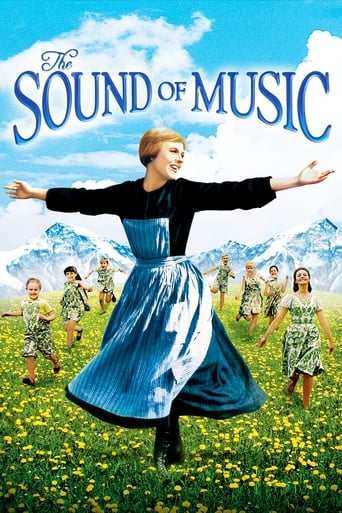
The Sound of Music
1965 · Film · 174 min
Directed by Robert Wise
In the years before World War II, a tomboyish postulant at an Austrian abbey is hired as a governess in the home of a widowed naval captain with seven children and brings a new love of life and music into the home.
5 positive5 negative1 mixed18 neutralfrom 29 commenters
Where to watch
No streaming data for this title.
29 comments on Hacker News
Film (and television) seems studiously underrepresented given the presence of authors, playwrights, poets, and musicians. Musicals are also absent.
I'd also suggest that cultural impact plays a strong part in Homer's prominence. The American Homer would probably be older rather than more recent (at least by present reckoning).
Francis Ford Coppola / Mario Puzo, The Godfather; Michael Curtiz, Casablanca; Steven Speilberg; Orson Welles, Citizen Kane; Richard Rodgers and Oscar Hammerstein, Oklahoma!, South Pacific, The Sound of Music, etc., might make my list.
see the movie The Sound of Music
Even modern film is often not great, particularly theatre prints that aren't explicitly made for archival purposes. There was a fascinating YouTube video recently where the author pushes back on the purported superiority of fan-scanned 4Ks now competing with official, studio-supervised restorations:
https://www.youtube.com/watch?v=uQwQRFLFDd8
Obviously DNR and bad HDR jobs are kind of their own issue, but he focuses specifically on coloring and the notion that theatre prints are themselves often wildly inconsistent and change over time, so it can be extremely difficult to even establish a baseline for what a film was meant to look like or even what it actually looked like upon release.
As a modest 4K collector myself, it frustrates me when certain films seem to sit in indefinite limbo, but Amadeus (released this week) looks fabulous and was absolutely worth the wait, so I have hopes that the people taking their time to do right by films like Ben Hur and The Sound of Music are doing so for the right reasons.
It's not really the opposite though.
The opposite of "British thing people in Germany love but few in UK have heard of" would be "German thing people in country X love but few in Germany have heard of".
"The Sound of Music" doesn't really count as an example of the opposite, because it is more of an American thing than a German or Austrian thing. It is an English-language 1965 American musical film, based on an English-language 1959 American stage musical, based on an English-language book written and published in America by an Austrian-American woman. Despite the Austrian setting, and parts of the film being filmed in Austria (the remainder was filmed in LA), on the whole it is more American than Austrian.
There were two West German films made based on the same book, Die Trapp-Familie (1956) and Die Trapp-Familie in Amerika (1958), and the creators of the 1959 American musical got their initial inspiration for the project from watching those West German films. Still that doesn't change the fact that the American musical and American film are American not German or Austrian. And I'm not sure how much of the actual content of the American musical and film are due to those West German films, as opposed to them merely being a motivator for the musical's creation.
I find the conclusion unlikely to have the effect size they describe and there are two similar explanations that fit the data better.
Take the name "Maria" in the US. In the 1930's a girl with that name would have strong odds of being from a Catholic background, probably from a large family, maybe Hispanic/Italian/Porto Rican. Then the film the "Sound of Music" came out, and the number girls of being given the name Maria tripled in the 1960's and 1970's. And these new Maria's were born to parents who were trying to evoke a white, blond, energetic, musical Austrian image.
The "stereotypes" associated names change each generation. One big of tell of this, from the linked study, is that adults don't revert to chance on children's names, but are in fact actively worse than chance. In fact, adults are more "worse than chance" on matching children than adults are "better than chance" a matching adult faces.
It's not that adults aren't getting data from looking at children's faces, it's that they are mapping what they are getting to an incorrect mapping!
I still refer people to the classic film review of The Sound of Music:
https://www.theonion.com/the-onion-looks-back-at-the-sound-of-music-1819595755
There was nothing like Star Wars when it appeared. I watched it outside the US and remember being absolutely blown away.
My kid doesn't care about Star Wars nearly as much as I do, obviously - but the big thing about it are the memories from when I first watched it. It would be great to see a new Star Wars movie that can engage kids today in the same way it engaged us so many years ago.
Also, have in mind that a lot of old blockbuster movies can look silly today (Sound of Music is one I watched recently), but you have to appreciate them with the proper time period context.
I'd say I'm a big fan of Gilliam's look/style and "Brazil" definitely epitomizes that. I didn't see it until sometime in the last decade, so it's hard to imagine that it was ever a comedy really, though Bob Hoskin's performance was certainly amusing and memorable.
Upon reflection, "12 Monkeys" is another movie that was thought-provoking but will probably not get another play-through from me (well done Gilliam?). Perhaps as you suggest, reality has just become a bit too much and I'll just put "The Sound of Music" on on repeat from here on out, or whatever the cinematic equivalent of paintings of boats and pretty landscapes may be.
Maybe your theater is the exception? Are you in a city? Here in central NJ, im seeing the same business as pre-pandemic. I have AMC monthly pass and so I see a lot of movies. Apart from blockbusters like Barbie or most superhero movies, the theaters are practically empty. Yes there are weird exceptions such as The Sound of Music but that was essentially a scam because many viewers were given free tickets by conservative organizations just to boost their numbers. But normally any non big blockbuster has a small handful of people or almost nothing. AMC is also still closing theaters in places like Charlotte NC which I would normally assume is a growth area.
The first Coltrane Album I got was with Dolphy doing Rogers & Hammerstein's "Favourite Things" which is approachable, haunting, beautiful, and listed in this article as the breakout hit. Coming to it almost 20 years after (it was a 1961 release, the year of my birth) it blew me away. Songs of my childhood (saw the sound of music every year on holiday for a while there. The 60s didn't have a lot of new films in circulation close to cheap caravan parks apparently.)
Coltrane played with amazing theories of chromatic chord structure[0] which he diagrammed, Like the Bauhaus design theorists did for their colour logic models
[0] https://en.wikipedia.org/wiki/Coltrane_changes and https://www.openculture.com/2017/04/the-tone-circle-john-coltrane-drew-to-illustrate-the-theory-behind-his-most-famous-compositions-1967.html
In a similar vein, "Sound of Music"[1] about the Austrian Trapp family is a very popular Christmas movie in the US, but barely anyone in Austria (and Germany) watched it. The reason may be that Schnitzel is served with noodles in the movie[2]. NO Austrian would ever do that!
[1] - https://en.wikipedia.org/wiki/The_Sound_of_Music_(film) [2] - https://oe3.orf.at/stories/2916424/ (German)
I frequently enjoy "weird" movies that audiences tend not to like. But there have been plenty of movies that audiences and critics both enjoy despite a lack of high-brow or polarizing content. I'm thinking of (e.g.) The Godfather, E.T. the Extra-Terrestrial, The Sound of Music, Contact, Disney's animated Beauty and the Beast, Jurassic Park, Terminator 2, Alien, the original Ghostbusters, most Pixar movies...
I feel like there is something pretty blah about most big-budget movies today, but I don't think that it can be explained by saying that filmmakers are progressively removing polarizing elements. Now that I consider it, most big-budget action movies in the past were blah too. The action movies that first come to mind are the ones that I have enjoyed enough to re-watch, but the 1990s had plenty of blah action movies. Maybe the problem is just too many big-budget action movies.
Back in the day I used to carry around a couple Betamax (yes!) cassettes so when the teachers called out sick we could watch something on tv. The school only owned two movies - The Sound Of Music and Romeo and Juliette (with several minutes of static recorded over a love scene). You can only watch the first 40 minutes of The Sound Of Music so many times. I was a hero for having Bullet and Dirty Harry on standby.
Say what you will about the Hays Code, but I would hardly consider Gone With the Wind, The Great Dictator, Casablanca, It's a Wonderful Life, Sunset Boulevard, The Ten Commandments, The Bridge on the River Kwai, Ben-Hur, Spartacus, Psycho, West Side Story, Lawrence of Arabia, To Kill a Mockingbird, Paths of Glory, It's a Mad, Mad, Mad, Mad World, Mary Poppins, The Sound of Music, or, you know, Citizen Kane to be especially "crappy" movies.
It is possible that will change when Disney starts selling their subscription service in Sweden.
Disney will likely use its huge archive to sell subscriptions.
That likely is the reason Home Alone isn’t on public tv in the Netherlands, as tinus_hn says in https://news.ycombinator.com/reply?id=21871486
If they play it hard, a lot of traditional Christmas movies will move behind a paywall. For example, Die Hard and Jingle all the Way, commented on this page, all are from 20th Century Fox, which is Disney owned, as is The Sound of Music)
> I feel we reached transparency for professional analog recordings some time in the 1980s, and I would argue that this applies to analog film as well.
Not sure what you mean by 'transparency'. Either way, go back and look at an 8k scan of 'Lawrence of Arabia' or 'The Sound of Music'. The image quality is robust and resolves everything perfectly.
Even an '80s title captured on 35mm that is scanned properly will hold up against something shot on an Arri Alexa today. The 'blurry' reputation comes only from the subsequent formats like broadcast television and VHS that people caught a lot of these titles on.
Like they've survived the past 20. Hollywood ticket sales have been declining sharply since 2002. [1] That's also the year that their inflation adjusted profits also peaked. Hollywood started making more and more awful movies while trying to argue that 'this is what people want.' Well, it clearly wasn't, isn't, and won't ever be. Nonetheless they'll continue down their current trajectory because they think they're right, as this article emphasizes.
Here's an extremely relevant article about Hollywood. [2] Hollywood has been one of the earliest adopters of active utilization and commercialization of "AI technologies". Scripts are actively analyzed using machine learning systems to try to predict profits. Guess what the AI says? Stuff that made money in the past will keep making money, and things that didn't won't. And what do we get out of Hollywood? Repetitive rubbish whose only novelty is tossing in some identity politics to, in this article's phrasing, offer a "more representative portrayal of the world in which we live."
More to the point, think about some of the all time greatest movies (as well as money makers). Here's [3] a list of the top 10 by gross. Tellingly, only 3 of the top 10 were made after 2000. But now consider the other films - Gone with the Wind, Titanic, Star Wars, The Sound of Music, ET, The Ten Commandments, etc. These films were all, if not extremely unique, certainly not derivative rubbish. Now look at the 21st century films and you'll see a whole bunch of generic superhero movies and sequels. Even if not the product of AI, it's certainly the product of a mindset that's no different than a profit oriented regression analysis of the past - the less glorified truism of what "AI analysis" is.
Maybe the biggest problem with Hollywood is summed by one sentence in the AI article I referenced: “[AI analysis] takes a lot of the risk out of what I do.” No, it just makes you comfortable releasing crap that you'd otherwise recognize as crap. Interestingly the producer that gave that quote ended up releasing two mega-flops after the article and has not released anything since. It's not like we've even scratched the surface of possible ideas, but Hollywood has become uncreative, lazy, and averse to any and all risk - to the point that they'd rather drown than try something else, so long as it happens slowly.
[1] - https://www.the-numbers.com/market/
[2] - https://www.nytimes.com/2013/05/06/business/media/solving-equation-of-a-hit-film-script-with-data.html
[3] - https://en.wikipedia.org/wiki/List_of_highest-grossing_films#Highest-grossing_films_adjusted_for_inflation
They are remembered because they were quite good. We also remember the "Sound of Music" from the same era, and it's anything but anti-establishment.
But my points wasn't that ALL movies were like that, but that far more movies were like that. The 60s had a whole counter-culture, anti-establishment and protest movement that's not the same as the 80s (decade of the self, yuppies) and 90s or even today (identity politics and conservatism battling it out).
Decades do have a character and certain tendencies or fashions if you like, including in the arts.
That's reasonable, but again this is the #2 grossing film for the year in the US. #1, #4, #5, #7 where PG kids movies. #3, #8, #9, and #10 where comic book movies in a long string of comic book movies.
So, yes revenue was down, but the movies where also very derivative. The top grossing films adjusted for inflation are Gone with the Wind, Avatar, the first Star Wars, Titanic, The Sound of Music, E.T. the Extra-Terrestrial, The Ten Commandments, Doctor Zhivago, Jaws, Snow White and the Seven Dwarfs.
The Force Awakens might make #10 on that list while being the only franchise movie to do so. But, no movie from 2016 is even close.
TSOM is the WWII generation looking back on the struggles and evils that defined their world, and finding hope and beauty in it. The von Trapp family does not defeat evil, they escape it - an archetype that maps neatly onto the cold war era where evil persisted (the USSR) even after it had been defeated (the Allied victory). It was also escapism from the turmoil of the mid-60's, including the unfolding, slow-motion disaster of Vietnam. It's no mystery that millions of Americans flocked to a romanticized version of the last great and good conflict that occurred during their lifetimes.
The escapism of TSOM is still apropos, especially during times of conflict. If you believe the world is a hard, cruel, unjust place, why would you only watch movies or read books that feature hardbitten themes and tragedies? Wouldn't you want to take a break and forget and clear your mind for a while? It was the WWII generation's proximity to struggle that made them susceptible to escapism.
> Most likely I will not watch The Sound of Music again for a long time, four or maybe even eight years, and that’s okay.
Ahh, I see, this is about president Trump. It's remarkable how much people will let an election define them and dictate how they will live and entertain themselves. Scratch that, it's not remarkable, it's absolutely crazy.
Agree with this. The article seems quite focused on politics and Trump. It even ends on: "Most likely I will not watch The Sound of Music again for a long time, four or maybe even eight years..." Italics mine.
In addition to the politics, the author did appear to at least want to comment on art too, how art is made and consumed right now. For whatever reasons, maybe too nervous to try such a thing on the Paris Review Crew readers who know better, beyond a couple "ironically" mild suggestions on passivity and "art being good is not the same thing as art doing good", the author doesn't say much about TSOM or art in this thing.
I kind of feel bad for her (assuming it's a her), she seems to still like/want keep watching this movie "in spite of herself" and the political climate notwithstanding. I guess it's all fun and games, until people you don't like get elected. VonTrapped is right.
Kid's movies that touch on adult subjects, but at a simplistic level that apes at understanding... Like Marry Poppins and Women's suffrage. It's in books too, like The Whipping Boy, where oppression by the nobles is a whimsical journey of discovery. How to introduce children to adult concepts through art, without creating a false narrative that presents over-simplified half truths? Not sure what the answer there is, but The Sound of Music definitely falls into that... von-trap (couldn't resist the pun).
Instead of the useless title "So Long, Farewell", the webpage's html has a meta <title> which better describes the author's thesis: <title>The Empty Nostalgia of ‘The Sound of Music’</title>
My tldr: the author Kate Guadagnino describes her changing assessment of TSOM from being obsessed with it to being dismissive of it.
The obsessive stage included being hooked by the songs' earworms and reading a book bio from the actress playing the oldest child. [js2 corrected]
The dismissive stage is noticing that the Nazi depiction is too tame and not historically accurate of all their evils. In other words, she now sees the movie more like critics who derided it including Pauline Kael and Joan Didion.
I think I've captured the essence of her essay but I didn't find it to be interesting. Perhaps other readers who upvoted the story to the front page can tell me if I missed something.
To me, an analogy would be writing about not listening to Prince's song "1999" because she's come to the realize that annihilation from nuclear war is a terrible thing. She saw the photos of Hiroshima victims and was horrified by the layers of burned skin peeling off. Therefore, to write a song that has bouncy major chords with a dance beat about nuclear destruction is "empty". Even though she loved the song as a teenager, she will now bid "farewell to '1999'" and tell us all about it.
Or one could write an essay about no longer visiting the Disney amusement ride, "Pirates of the Carribean" because it trivializes the real violence in the 1500s[1] of slavery and murders (including beheadings).
I think the author wants to convey that switching the perspective about TSOM from the naive innocence of "songs with hooks" to a more enlightened criticism of "inaccurate Nazis" as a maturation.
I disagree and think it's perfectly reasonable for people to continue watching TSOM reruns for the "doe a deer a female deer" and not care that it doesn't try to be a Ken Burns documentary film.
[1] https://en.wikipedia.org/wiki/Piracy_in_the_Caribbean
Just watched the Sound of Music with Ivanka and the kids. Good movie, very successful! Shows family values and when America was great!
This is so perfectly Trump.
I've only seen it once under considerable protest and after quite a few glasses of wine, but I detested The Sound of Music. If I need "the vague threat of Nazism" and the golden age of something or other, I'll take Casablanca any day.
Well, sure, but what's that got to do with actual music instruction and how musicians talk about music? Movies aren't always entirely accurate representations of the world, particularly on highly technical topics.
Knowing solfege because you heard it in a movie and using it on a daily basis in the process of teaching or making music are independent concepts.
Anyway, conversation here has brought it to my attention that it is still pretty common, there are some areas where it is useful (maybe even better than numbers, as in the singing and vocal training area; I personally have recognized the limitation of numbers when singing minor notes, for example), and that my own experience was only partly representative of music pedagogy in the US and elsewhere. That said, when I'm teaching people about music, I still plan to only use numbers...the areas where solfege would be useful are pretty advanced, and require more than watching Sound of Music to understand.
Having some fun imagining what films would be available.
Godzilla, because he's the people's monster for destroying Tokyo.
The Sound of Music, where a family escapes an oppressive regime - probably not.
Seriously? ANY pixar film puts those to shame in terms of depth. The entire back story of UP was about a widower; Finding Nemo, same story - talk about darkness and light. How about The Incredibles, Wall-E, Monsters Inc, all fantastic story telling and incredible depth. It even goes further back than 80s, to movies like The Sound of Music with the Nazis.
Again, your biases are only fuzzy nostalgia and it seemed bigger to you then cause your brain couldn't contextualize it as well.
If you adjust for how ticket prices have grown over the years, the highest-grossing films of all time are:
1. Gone with the Wind
2. Star Wars
3. The Sound of Music
4. E.T.
5. The Ten Commandments
So in those terms, we haven't actually had a new highest-grossing film of all time for seven decades. The nominal biggest movie ever, Avatar, really only comes in 14th.
Source: http://boxofficemojo.com/alltime/adjusted.htm
Taking the top movies in adjusted domestic gross, dividing by their non-adjusted domestic gross, and then multiplying that ratio by their worldwide gross, you get:
1. Gone with the Wind - $3.04 billion 2. Titanic - $2.34 billion 3. A New Hope - $2.24 billion 4. E.T. - $1.93 billion 5. The Sound of Music - $1.92 billion 6. Jaws - $1.73 billion
As of this post, Avatar is 2.05 billion and climbing. Will it be the most watched movie of all time worldwide (in theaters), or will Gone with the Wind retain its dominance? *Data taken from boxofficemojo.com.