 Hacker Cinema
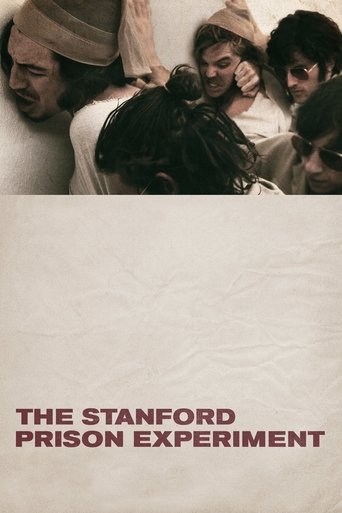
The Stanford Prison Experiment
2015 · Film · 122 min
Directed by Kyle Patrick Alvarez
In 1971, Stanford's Professor Philip Zimbardo conducts a controversial psychology experiment in which college students pretend to be either prisoners or guards, but the proceedings soon get out of hand. Based on a true story.
2 negative3 neutralfrom 5 commenters
Where to watch
No streaming data for this title.


5 comments on Hacker News
The namesake 2015 movie was almost as much of a pain to watch as being in the experiment itself would have been.
Human-created science carries human biases and so does engineering and even math which is supposed to be pure and objective.
James Burke presented this idea really well in episode 10 of The Day The Universe Changed. Biases sneak in when you decide what you're studying, how you're studying it, how you collect data, how you interpret the data, etc.
The process itself might be unbiased, but that doesn't mean the application of that process is devoid of bias. Anyone remember the stanford prison experiment, the machine learning chatbot that 4chan turned to racism, or however many AIs people have designed that have looked at data and drawn racist conclusions?
Are these things racist because racial stereotypes are objective immutable facts, or because the bots don't understand the context of those stereotypes?
It's probably prudent to figure out the answer to that question before publishing. At least present a few hypotheses to explain the results.
Milgram experiment, sorry... must have got hit by autocorrect there: https://en.wikipedia.org/wiki/Milgram_experiment
You can add the Stanford Prison Experiment (Zimbardo) to the list of, now unfalsifiable, experiments that inexplicably are regularly taught in university settings when they cannot possibly provide any useful data to the sciences: https://en.wikipedia.org/wiki/Stanford_prison_experiment
The idea that many if not most universities create educational programs based on these very obvious problematic studies, leads me to believe that the scientific community can be as guilty of info-tainment bias as the general public. I only wish that I'd been able to continue in academia so that i could have at least a small voice in changing this problematic dynamic we live with.
They literally made a movie about the Zimbardo experiment in 2015. It couldn't be more obvious that people care more that it be true than whether it might be false: https://en.wikipedia.org/wiki/The_Stanford_Prison_Experiment_(film)
I could say the same about a few psych experiments that were actually conducted. The Stanford prison experiment [0] seems rather awful, and it actually got released as a thriller this year [1].
But this particular one seems to be much like Clockwork Orange and Human Centipede, staring into one another's eyes and speaking candidly.
[0] https://en.wikipedia.org/wiki/Stanford_prison_experiment
[1] https://en.wikipedia.org/wiki/The_Stanford_Prison_Experiment_(film)
Not sure about on stage but there's a few film depictions related to the Milgram experiment - http://en.wikipedia.org/wiki/Milgram_experiment#Media_depictions
And looks to be a stage play based on Zimbardo's Stanford Prison Experiment - http://en.wikipedia.org/wiki/Stanford_prison_experiment#In_popular_culture
http://entertainment.ie/theatre/feature/ABSOLUT-Fringe-2012-Broadening-Glass-Doll-Productions/211/3254.htm