 Hacker Cinema

The Sting
1973 · Film · 129 min
Directed by George Roy Hill
A novice con man teams up with an acknowledged master to avenge the murder of a mutual friend by pulling off the ultimate big con and swindling a fortune from a big-time mobster.
5 positive1 negative15 neutralfrom 21 commenters
Where to watch
No streaming data for this title.
Videos commenters linked
From YouTube links in the comments below. Most are clips and trailers; “Full” means the uploader says so.



24 comments on Hacker News
Reminds me of this classic line from the 1973 movie The Sting:
"What was I supposed to do? Call him for cheating better than me in front of the others?!"
Said in response to being out-cheated at a high-stakes poker game.
Except in this case, it sounds like that's exactly the path they have chosen.
https://getyarn.io/yarn-clip/7612c4ce-1077-479f-a7bf-617dbc6fc6d1
The author may really like "The Sting" but the movie was a rip-off of a book by David Maurer, and all of the con mechanisms in the movie were lifted without permission from his book. The theft was later settled privately for a huge sum.
I love the fact that he intended to become a card shark but his mom steered him towards magic instead, and then he got hired by the US Army to teach enlistees about the various scams they might encounter overseas, in addition to serving as the "hands" for Paul Newman in the movie The Sting, which was about conning a mob boss? Damn, "interesting" is apt!
https://en.wikipedia.org/wiki/John_Scarne
Whenever someone acquires a morally-neutral skill (like "card manipulation" or "martial arts") that can be used for "good" or "evil" and chooses the former, that's almost always a good story... especially if they flirted with the latter...
There are two really good links to videos that I post in this discussion
https://news.ycombinator.com/item?id=44467685
which is supported by my commentary. In one you see Mamdani speaking for himself (if he keeps his cool like that while his enemies go apeshit... he wins!) [4] and in another some good analysis from people who are skeptical of his policies (as am I) who are still impressed with how he communicates.
You might say "couldn't a high D (dark traits) person mask as a low D person, as a wolf in sheep's clothing?" I don't think so, or at least they usually won't.
Contrast that to corrupt New York politicians like Cuomo, Adams, Clinton and such who don't know enough to be ashamed of their own behavior.
Narcissism in particular is considered to be an underdevelopment of the personality, as an absence rather than a presence. [1] [2] High D people don't understand Low D people and would have a hard time passing. A High D person who was successfully Machiavellian in a Low D culture (say Utah [3]) would probably have to pass but if you're in a culture where folks like Trump and Musk and the above New Yorkers are perceived to be successful if not "genius" you're not going to understand why you need to do that hard work.
As they say, "you can't cheat an honest man". There's that famous movie The Sting where they set up a trap for a crime boss based on his greed which has the same structure as those advance fee scams where they get somebody to (allegedly) pay to help an African general launder money. High D people victimize other High D people, Narcissists seduce other Narcissists. A person who presents as Low D is really Low D, particularly in a high D place like New York [3]
I found [3] lately and I've been doing a lot of reading about the calibration and implications of that scale, particularly how it relates to other tests
https://www.npr.org/2019/06/20/734141432/what-dropping-17-000-wallets-around-the-globe-can-teach-us-about-honesty
where the highest D country in the world (China) had the lowest rate of people returning wallets.
[1] Kohut Analysis of the Self
[2] Kernberg Borderline Condition and Pathological Narcissism
[3] https://www.pnas.org/doi/10.1073/pnas.2500830122
[4] Note there is no "billionaires shouldn't exist", no impugning the character of people who vote for someone else, and none of those weird words like misgynoir that make minorities and working class people run, not walk away
Story time. A friend of mine in highschool was a ranked pinball player, just significantly better than the rest of us. Their game of choice was Medieval Madness, having logged countless hours on that machine.
As a mischievous high schooler, I was a huge fan of classic con movies like The Sting, and legendary hustlers like Titanic Thompson [1]. One of my favorite stories about him was when he took a standard horseshoe pit, extended it by a foot beyond regulation, and practiced on it for months. Then, at the appropriate time, he challenged a professional horseshoe player who unknowingly playing on a subtly modified field couldn’t understand why all their throws were falling just short.
To that end, I decided to pull a harmless little prank on my buddy.
We were friends with the owner of the local arcade, so after closing one night, I talked to him about a setup I wanted to try. With his permission, I took some adjustable furniture risers and placed them under the back two legs of the Medieval Madness machine.
The result was a subtle increase in the incline (just a few degrees) but it made a big difference in gameplay, especially for someone attuned to the machine’s usual angle. Visually, the machine looked completely normal and indistinguishable from the others. It was nestled between other games, so even if someone had known to look for a difference, the risers were virtually invisible.
Both the arcade owner and I spent the rest of the evening practicing on the steeper table. Naturally, we challenged our friend to play Medieval Madness the following day.
Their game was totally thrown off. I managed to get close to their score which under normal circumstances would’ve been borderline impossible. I didn’t quite pull it off, but I got close.
They were still incredibly skilled, but I remember them muttering under their breath, clearly irritated at missed shots, failing to hit the usual ramps, and even some inexplicable ball drains. I think if they'd played longer they would have swiftly adapted. My armchair analysis is that professional pinball players probably have to subtly adapt to the fact that even the same game across different tables will have subtle variances (strength of flipper solenoids, etc).
I never did tell them what happened.
[1] https://en.wikipedia.org/wiki/Titanic_Thompson
I punched in 1972 and there were some fantastic movies that year (The Godfather, Deliverance, Cabaret, Solaris, Jeremiah Johnson, Aguirre - the Wrath of God, The Last House on the Left, Silent Running, The Heartbreak Kid, Fat City, etc.).
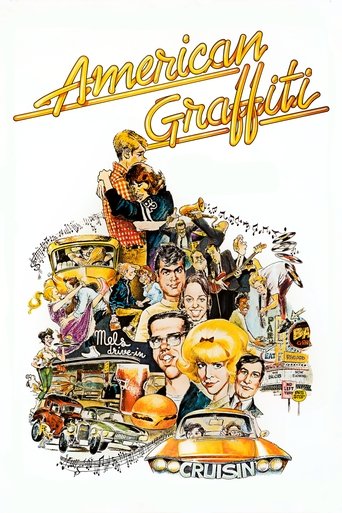
Also tried 1973 — same (The Day of the Jackal, Soylent Green, Westworld, The Wicker Man, Papillon, American Graffiti, The Sting, Serpico, Mean Streets, High Plains Drifter, Don't Look Now, Badlands, The Long Goodbye, Jesus Christ Superstar, The Three Musketeers, Fantastic Planet, etc.).
I think they simply made better movies decades ago.
- The Sting - The quintessential con movie.
- Amadeus - "Too many notes, Mozart!" A heavily romanticized retelling of the somewhat apocryphal rivalry between Antonio Salieri and Wolfgang Amadeus Mozart.
- Disney's Robin Hood - Get the dope on your horoscope~
- The NeverEnding Story - Because who didn't want to soar through the air on a luck dragon?
- Iron Monkey (少年黃飛鴻之鐵馬騮) - A retelling of the Chinese folk hero Wong Fei-hung, with classic wire-fu and excellent fight choreography.
I tried entering "Marty Feldman" as a search query. Unfortunately, the responses don't show movie titles, but I couldn't spot him in the few that I tried. "The Sting" was one movie that I could identify.
Needs more work.
More notably he wrote the Maple Leaf Rag, which is still taught to piano students to this day, and was featured in The Sting[0], 1973's Best Picture winner.
[0] https://www.imdb.com/title/tt0070735
Sounds quite misguided.
Of course intimacy is a two-way transaction. It's also a thing where the chain of events and actions happen, and there are many possible breaking points, which at beast move the interaction to square one. So to summarize in short words, "make women like me" means passing this chain of events - from men's point of view - so that there's a passable chance to actually complete the transaction. Note that the situation is hardly symmetrical for men vs. women - I'd argue men are much more forgiving and willing to continue the chain of actions should something go sufficiently unexpected, in the wrong enough way.
I would guess you don't see the attempt to square the perspectives because it could be too obvious to talk about. Like, when we talk about programming we usually assume ability to handle basic addition of numbers under a hundred, which comes handy - and similarly when we talk about relationships we assume the two-wayness just the same, there's no need to talk about it.
> Sales people don't try to close a deal without getting to know the customer first.
This could vary widely. One can study somebody else for long time - see e.g. https://www.imdb.com/title/tt0070735/ The Sting, where the conspirators take time to study the ways their counterparts behave. Or in other case one could fly by the seat of your pants on a dance floor, when he sees a woman partner for some minutes at best. There could be little opportunities to get to know the other side better though - Tinder illustrates that when you make a split-second decision having barely even studied the image on the screen, not saying anything about the person themselves.
> Why do you think it should work any different here?
I guess because the analogy doesn't quite holds.
> the top grossing films of the era (70s) were no better than the MCU of today.
These are the top films, and second place, for 1970-74
70 Love Story, Airport
71 Fiddler on the Roof, Billy Jack
72 The Godfather, The Poseidon Adventure
73 The Exorcist, The Sting
74 The Towering Inferno, Blazing Saddles
I only stopped because I got bored copying and pasting. I'm not convinced the MCU stuff really compares. And I love all that Marvel stuff! Maybe if they could do a decent soundtrack. .
It's behind a paywall, but according to a summary [0], Marsalek or someone from Wirecard built fake physical branches of banks on the Philippines. The auditors of EY were invited to come to these branches to talk to actors who convinced them that the 1.9 billion EUR of Wirecard exist on their bank accounts.
It reminds me somehow of the movie "The Sting"...
[0] https://www.focus.de/finanzen/boerse/wirtschaftsticker/schauspieler-in-der-videokonferenz-ex-wirecard-vorstand-marsalek-das-drehbuch-seines-fast-perfekten-bluffs_id_12340700.html
If you, like me, hate cheating and being cheated, you should really read the mentioned book "How to Cheat at Everything". Another book that I recommend is "The Big Con" by David W. Maurer. And if you are one of the few people who have never seen "The Sting" you should watch it now. It is one of the best movies ever and you may learn one or two things about cheating.
Edit: I just found that the book has become really expensive. It used to be 19 US$.
Not television but the 1936-46 Universal Pictures one was especially pleasing and impressive to me.
https://youtu.be/nLx4ucZ8v4Y
Recreated in 1972 for "The Sting" which at the time was a film made as a bit of a nostalgia trip. https://youtu.be/AsMEneC7F4o
The musical score of The Sting (a great movie, I agree) was notable because of the orchestral arrangements of Joplin's music, which of course was originally written for solo piano.
I like ragtime. The syncopation, the snappy rhythm-- it's good music.
I also associate it strongly with 'The Sting'. An old movie, but a great one.
Sort of like the big con in the movie The Sting, but real.
"It was low-tech, basically the company that transmits the draw managed to record it minutes before, tell insiders the numbers and later transmit the video as if it was real-time."
Not unlike the premise of the film, "The Sting".
This is, more or less, the premise of the film "The Sting":
https://en.wikipedia.org/wiki/The_Sting
All MLMs are scams. I hate using the term pyramid schemes, because if you use that term all of the MLM apologists will start cranking out very long-winded philosophical definitions of pyramid schemes that obscure the true point.
The MLM "model" can be summarized thusly:
- 1. Give people pretty good business advice from a host of good business books
- 2. Give people a very positive exciting environment
- 3. Give people literally the WORST job ever created with a product that cannot exist on its own in the marketplace if it wasn't being artificially propped up by hundreds of thousands of distributors
MLMs are scams. And no matter how much they try to attack other industries by saying how unethical they are, or how much they lie about their products, that can never and will never absolve them for the damage they have done to so many lives.
ALSO: something else you'll notice is that people who've been involved with MLMs might recall them fondly. This is just a defense mechanism (an extremely understandable one) to prevent having to view oneself as being duped. I think it's a shame though because we'll all be duped or scammed to some degree in our life, no need to change the past. Anyway reading "The Big Con" by David Maurer right now, a book by a sociologist about con-men in the 1940s. It's the basis for the movie "The Sting", and its remarkable how many people in the book are conned but refuse to believe it, and even years later still think their guy is out there, about to return their money at any time with 20x the profit or whatever.
EDIT: Also it is nearly impossible to look this stuff up on Google. MLM people have so carpet bombed the search sites the first 30 or so links will be links to Youtube videos with titles like "Is XYZ company a scam??" that find of course it's not. Occasionally a random legitimate news article will leak through. Otherwise they've literally walled the world off from anti-MLM information.
In the US, 900 miles was just from where I was in DC, north to Pennsylvania, west to Ohio, across Ohio to Indiana, south to the town Fort Wayne in NE Indiana, west to Warsaw, IN, and then south 15 miles to the farm of the family of my girlfriend and, later, wife. So, before we were married, I drove the 900 miles often, commonly mostly at 90+ MPH, and after we were married drove it usually at least once a year, at Christmas.
When we went for Christmas, we were carrying way too much stuff to fly or take a train! And when we got there, we stayed for a few days and still wanted our car to get around, to restaurants, movies, friends, more shopping, etc.
In Europe, they think that a car engine with 3.0 liters of displacement is large. The engine I was using had either 5.7 liters of displacement or, in two cases, 6.5 liters of displacement.
US and Europe do some things in different ways!
That part of Indiana is sparsely populated. So, from the farm, the nearest airport with much in service is at Fort Wayne about 50 miles away.
Let's see: The 6.5 liter car I used most often had a 2.56 rear axle ratio and at 90+ MPH got about 18 MPG. Gas cost about $0.25 a gallon. Then the cost of gas for the 900 miles was
900 * 0.25 / 18 = 12.50
dollars, $25 round trip. Heck just the taxi fare from the Fort Wayne airport to the farm would have been about that. To use a plane or train, round trip, would have meant four long taxi trips, total cost much more than the gasoline for driving my car.
For trains, actually at one time the US had one heck of a rail network with relatively good passenger service. Mostly the rails are still in the ground. Actually the little cross road town three miles from the farm did have a rail line and a station -- not used by passengers, if at all, in years. Sure, at one time could have caught a train at that station and, with lots of transfers, gone to Chicago, New York, San Francisco, etc. Lots of transfers and then waiting between trains.
In simple terms, in the US, by about 1955 or so, cars put the passenger trains out of business. The US still has one heck of a good freight rail network.
While Indiana is sparsely populated, keep going west to Iowa, Nebraska, South Dakota, Wyoming, Montana, Idaho, etc., and we're talking miles and miles and miles of hardly a person in sight.
In the US, there's density enough for trains to have a shot between, say, Richmond, VA north to DC, Baltimore, Newark, NYC, Greenwich, Stamford, Hartford, and Boston. And we do have such trains; spent a lot of money on the trains; our VP Biden spent a lot of time on those trains between Baltimore and DC; but those trains lose money. And parallel to those tracks we have airplanes -- maybe they make money, but the TSA has made airplanes a little less comfortable than either an unanesthetized root canal procedure or a barbed wire enema. "Open wide, look at the birdie, and then grab your ankles and back up to the officer .... Have a pleasant trip."
"Next time it's my car; even for 2000 miles."
In the US there are lots of other efforts to spend big bucks to have trains across the Midwest, north and south along the west coast, e.g., LA to SF and maybe up to Seattle, maybe between Houston and Dallas in TX, etc. Lots of efforts. For decades.
For commuters to NYC, NY has trains north to Poughkeepsie and NE to Greenwich, Stamford, Hartford, or some such. At least the one to Poughkeepsie has been losing money, and now when register a car in that area have to pay a special tax to support the trains.
How do we pay for roads, bridges, etc. for cars? We're supposed to be covering that out of gasoline taxes, which are not trivial. The result is called the Highway Trust Fund; it may have a stack of IOUs from loans for other purposes.
I live 70 miles north of the Wall Street area which is at the southern tip of Manhattan in NYC and for a while worked in that area. I found that except in the worst of the rush hour, my car was, door to door, faster than the trains. And I was not using a high performance car.
Apparently the NYC subways work well -- I can believe that. But Baltimore put in a subway, and while I was at Johns Hopkins University there in Baltimore, once was in a lecture that analyzed the welfare economics of the Baltimore subway; welfare economics is where add up all the costs and all the benefits and see for what projects the total of the benefits is greater than the total of the costs. The lecture reported the totals of the costs and the benefits, and the costs were higher than the benefits. So, from the point of view of welfare economics, the optimal decision, given that the subway construction was done, was just to brick up the entrances and f'get about it. Or, if there were some really good benefits for that subway, adding up the value of the benefits still didn't have the benefits exceed the costs. That's what happened in that case; just why I don't know.
Drawing from several decades of recent history, broadly, passenger trains don't work very well in the US. There are lots and lots and lots of people who very much want passenger trains to work well here, but the golden age of US passenger trains was from, say, 1930 to 1955 or so. E.g., there are several Hollywood movies, North by Northwest, The Sting, that show something about what train travel was like then. Basically in the US, the long distances, low population density, Interstate highway system (Ike regarded as crucial for military logistics for US national security), etc. shot the passenger trains between the eyes. One biggie reason: People already owned a car, say, just to get to the grocery store, the coin laundry (people commonly had cars before they had washer/driers at home), schools, friends, etc.
Another factor was that trains had a bad reputation because at one time they were seen as exploitative monopolies. To push back, we got the Interstate Commerce Commission (ICC) with a lot of economic regulation of the trains. If a road needed a bridge over some train tracks, then maybe the train company was asked to pay for it. The unions saw the train companies as soft targets and, with the help of Congress, took advantage. So, by 1955 or so, many people in the US regarded passenger trains as something they would like never to see again.
So, for the 900 miles to Grandma's for Christmas, with lots of luggage, presents, camera equipment, and on and on, and the desire for a car when get there, the cost was really just the direct marginal operating cost, so I and nearly everyone else with a car took their car. E.g., when I drove that 900 miles, it was less than five miles from my apartment to an Interstate highway, and then I was on Interstate highways or similar for all but the last 15 miles where the traffic was very light and the roads fine.
Yes, people have thought of the idea of having a car drive onto a special car of a train and then let the train do the driving while the people sat in the car, listened to the radio, now watched a movie on a laptop with a DVD, talked, etc. Didn't work -- not enough people came.
Since the 1950s, the US has had a love affair with cars.
Europe and the US have some significant differences.
Actually, for shorter distances, there are good intercity bus lines in the US. Typically can get to/from a smaller city easier on bus than train or plane.
As I recall, all of Germany is smaller than just the smaller US state of Oregon.
There are a lot of places in the world where distances are large and population density low; we will see what they do about passenger transportation -- Mongolia, Siberia, Alaska, most of Africa, most of Canada, most of South America, much of South Asia around, say, Afghanistan, etc.
Highly recommended reading if you are ever tempted to take advantage of an apparent scam in progress: David Maurer's The Big Con, the hundred-year-old story of swindlers who stole tons of money by setting up fake stock scams, then luring bystanders into placing side bets on the scams-in-progress.
(This is the book that inspired the 1973 movie The Sting, but it's nonfiction.)
People still fall for the classic cons. Don't be one of those people.
Not too impressed with the course.
My qualifications: I got started in optimization scheduling the fleet at FedEx. In the words of FedEx founder, COB, CEO F. Smith, my work "Solved the most important problem facing the start of Federal Express" and the output from my software was "An amazing document".
Later my Ph.D. research was in optimization and, in part, what I'd wished I'd known while at FedEx.
Since my Ph.D. once there a problem in 'resource allocation' that became a 0-1 integer linear programming problem with 40,000 constraints and 600,000 variables. I derived some math, wrote some software, and in 905 seconds on a 90 MHz PC got a feasible solution within 0.025% of optimality.
And there have been other problems.
For the video, a good, first suggestion for an attack on a knapsack problem is via dynamic programming.
By a wide margin, the most important topic in optimization is the simplex algorithm for linear programming. While the algorithm directly solves many problems in practice, it is the most important tool in solving optimization problems that are not linear programming. Usually there the role of linear programming is as a local linear approximation in an iterative scheme of better approximations.
Much of the reason for the power of linear programming as a tool in larger iterative schemes is the several ways can take a linear programming problem and an optimal solution for it, make some changes in the problem, start with the optimal solution for the old problem, and get an optimal solution for the new problem very quickly.
Good starts in linear programming include:
Mokhtar S. Bazaraa and John J. Jarvis, 'Linear Programming and Network Flows', ISBN 0-471-06015-1, John Wiley and Sons.
Vavsek Chvatal, 'Linear Programming', ISBN 0-7167-1587-2, W. H. Freeman, New York.
Yes, the min-cost capacitated (each arc has a maximum flow it can carry) network flow problem, a special case of which is the transshipment problem (find the least cost way to ship some one good from factories to warehouses; also the source of the Kantorovich Nobel prize in economics) is a linear programming problem, and there the simplex algorithm simplifies and becomes the network simplex algorithm. Curiously, and of importance for fast computation, in the network simplex algorithm a basic feasible solution corresponds to a spanning tree in the network. For that problem, don't miss the W. Cunningham idea of a 'strongly feasible basis' or the more recent polynomial algorithm of D. Bertsekas.
A significantly large fraction of real problems in combinatorial and discrete optimization can be solved as min-cost capacitated network flow problems via the network simplex algorithm. A big reason is, if the flow capacities are all integers and if have an integer basic feasible solution, then the simplex algorithm maintains integer basic feasible solutions for no extra work and, with the usual assumptions, produces an optimal integer basic feasible solution. So this is a case of linear programming where get integer linear programming for no extra effort; really, since nearly all the arithmetic is just integer, don't have to be concerned about roundoff error and get the solution for less effort.
Yes, in combinatorial and discrete optimization, along with the rest of optimization, linear algebra helps.
Curiously, one of the more powerful approaches to combinatorial optimization is a technique from nonlinear programming called Lagrangian relaxation, and there commonly the main computational step is linear programming. With that technique, some nonlinear duality theory can yield some bounds on how far are away from an optimal solution; such duality theory is what yielded the bound of 0.025% above.
For combinatorial optimization there is, say,
George L. Nemhauser and Laurence A. Wolsey, 'Integer and Combinatorial Optimization', ISBN 0-471-35943-2, John Wiley & Sons, Inc., New York.
William J. Cook, William H. Cunningham, William R. Pulleyblank, and Alexander Schrijver, 'Combinatorial Optimization', ISBN 0-471-55894-X, John Wiley & Sons, Inc., New York.
In the OP, the emphasis on NP-complete and algorithms that are worst case exponential is a bit exaggerated. E.g., as in the work of Klee and Minty, the simplex algorithm is worst case exponential, but in expectation in practice it is low order polynomial -- for why, there was some good work by K. Borgward.
For integer, combinatorial, and discrete optimization, I have yet to see a claim that getting approximately optimal solutions is in NP-complete. In particular, if in a real problem have saved $10 million and have a bound saying that can't save more than another $2000, then why spend millions trying to save the last tiny fraction of the last penny and guarantee to have done so? If are willing to sacrifice the last penny, then it is not so clear (so far at least to me) that really are being forced into exponential algorithms, either average or worst case.
The claim in the OP that combinatorial and discrete optimization are part of computer science looks like a case of 'academic theft'! Such optimization has long been regarded as part of applied math and there part of operations research. The material has been of interest in, say, departments of mathematical sciences. Some parts of optimization, e.g., control theory, have been regarded as parts of electronic engineering. At times it does appear that academic computer science wants to regard every topic that makes heavy use of computing as part of computer science! It looks like computer science has gotten tired of just quicksort, AVL trees, BNF, YACC, and RDBMS! :-)!
The claims in the OP about the importance of optimization in the economy are a bit over enthusiastic. Maybe the importance would, could, and should be there, and maybe in Australia they are there, but my experience in the US is that there are essentially no significant non-academic career opportunities in optimization. E.g., at one time near year 2000, I had a nice, long talk with one of the leading US headhunters in technical fields, and he finally confessed that in the previous year in all of the US there had been exactly one recruiting request in operations research. He "packed it in" (from the movie 'The Sting', i.e., gave up) and went to law school!
Here is a good future -- although a wildly long long shot -- for integer, combinatorial, and discrete optimization: At present, all but quite simple problems in such optimization are solved by some experts attacking each problem one at a time, exploiting special structure of each problem, trying various techniques, and, hopefully, finally getting some good results. It's custom, one-off, bench scale, expert, creative, hand work and often, really, some applied research.
In addition, there have long been programs that can be used to pose or enter problems in integer, combinatorial, and discrete optimization suitable for solution by a 'solver'. The problem is, since the programs are general purpose, the 'solvers' to be used are also general purpose and, without the hand work, too often in practice are not powerful enough.
Presumably a polynomial algorithm of low degree that showed that P = NP could be the core of a general purpose solver powerful enough to make solving such optimization problems easy and routine.
Lacking such a solver, in practice patience with such optimization has long been a bit thin.
So, what the heck happened? In much of physics, say, planetary motion, we can write down some equations the real system must solve. If the equations have a unique solution, then that solution must be the right one for the real system. At times since early in WWII, such physics was of enormous value for at least the US DoD.
So, given such an equation, solve it. This technique often worked for, say, initial value problems for relatively simple ordinary differential equations. Alas, for the partial differential equations of fluid flow, the Navier-Stokes equations, the situation was usually a bit challenging.
Also in problems for the US DoD, e.g., 'logistics' or how to move a large army across a large ocean in least time within capabilities of existing resources, could write down some equations and other mathematical specifications that a 'best' solution had to satisfy. So, then, to say how to move the army, just 'solve' the equations, etc. This work was called 'operations research', and at times the US DoD was very enthusiastic about it. With enough US Federal Government research grants to academics, parts of academics got enthusiastic about it. And so did Bell Labs.
But there was no law of the universe that said that finding solutions to such mathematical specifications would be easy. Yes, Navier-Stokes is another example of difficulty. Now, in cryptography, so is the fundamental theorem of arithmetic, that is, factoring a positive integer into a product of prime numbers.
Clay Mathematics Institute in Boston has more than one prize of $1 million available for progress on such things.
Net, it does very much appear that for now making money by building a popular Web site and selling ads on it is a much easier way to make money! And, at times, in such work some applied math, possibly new, can be an advantage. But, clearly for now, the grand goals of integer, combinatorial, and discrete optimization are too difficult for 'prime time' in practice in mainstream business.
Or, problem A can make a lot of money if we have a lot of applied math and computing. So, let's attack problem A. Alas, that much applied math and computing, or even just part of the computing, may be much more valuable for solving other problems!
Sure thing. HN is for things that hackers find interesting, not just programming or startups. Things that are self-referential or “meta” have a strong presence in Hacker culture, Gödel-Escher-Bach and Lisp being totemic examples. Humor is, well, pleasing, and meta-humour combines something pleasing with a nod to something interesting. Finally, creating or dissecting meta-jokes has a hacking aspect to it. What is the structure of this joke? How does it work? What does it say about other jokes? These questions are interesting in their own right.
Humour can be a very serious subject. Why do human laugh? What is the social purpose of telling jokes? Is it important? Or is it a “bug in the system” that we exploit? What is going on in the brain when we laugh at the punch line of a joke? Is it the same thing that goes on when we observe the “switch” ending of a movie like “The Sixth Sense” or “The Sting?”
Or you can just laugh at the jokes and move along :-)