 Hacker Cinema
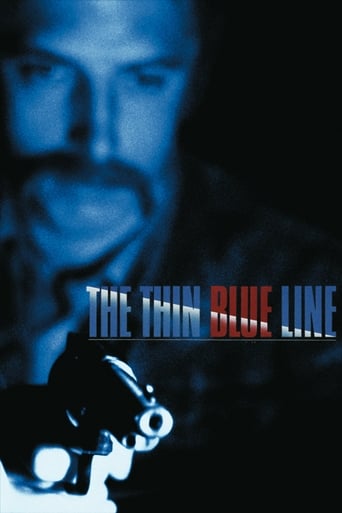
The Thin Blue Line
1988 · Film · documentary · 103 min
Directed by Errol Morris
One night in November 1976, after his car breaks down on a road outside Dallas, Randall Dale Adams accepts a ride from teenager David Harris. Harris is driving a stolen vehicle and, later that night, when Dallas police officer Robert Wood pulls the car over to check its headlights, he is shot and killed. A jury believes Adams is the killer, but stylized reenactments and interviews with key figures, conflicting testimonies and evidence are presented to argue that Adams was framed by a corrupt justice system, ultimately leading to his exoneration.
15 positive5 neutralfrom 20 commenters
Where to watch
No streaming data for this title.
20 comments on Hacker News
Here is the list from the thread: --- 1. A Man Named Pearl
2. Once Upon a Time in Northern Ireland
3. Microcosmos
4. Crip Camp!
5. Keep The River On Your Right
6. All The Beauty And The Bloodshed
7. Harlan County USA
8. Stay on Board: The Leo Baker Story
9. Good Night Oppy
10. We Met in Virtual Reality
11. All That Breathes
12. Still
13. Can’t Be Stopped
14. The Amazing Jonathan Documentary
15. Searching for Sugarman
16. AKA Mr Chow
17. The Pigeon Tunnel
18. Little Richard: I Am Everything
19. I Know That Voice
20. Genghis Blues
21. Kings of Pastry
22. 20 Feet From Stardom
23. Stevie
24. Anvil: the Story of Anvil
25. Searching for Sugar Man
26. King of Kong
27. The Gleaners and I
28. Touching the Void
29. Cane Toads: An Unnatural History
30. 20 Days in Mariupol
31. Minding the Gap
32. How to Survive a Plague
33. Speciesism
34. Free Solo
35. Jim Allison: Breakthrough
36. Seven Up! series
37. Bowling for Columbine
38. The Fog of War
39. Rivers and Tides
40. Capturing the Friedmans
41. Spellbound
42. King of Kong
43. Crip Camp
44. Jesus Camp
45. Jiro Dreams of Sushi
46. Flee
47. Man on Wire
48. Queen of Versailles
49. The Thin Blue Line
50. Time Indefinite
51. The Gleaners and I
52. My Life as a Turkey
53. Happy People
54. Grizzly Man
Different strokes for different folks. I watch a lot of old films. My letterboxd watchlist currently contains 365 films which can be streamed thusly:
69 are available on Criterion. 61 are on HBO. 22 are on Amazon Prime. 17 are on Netflix. 15 are on Hulu. 6 are on Disney+.
240 are available as rentals on on iTunes.
(And I have no idea who Larry Wright is or why I should give any credence to his snarky remark where he picked two films that are not at all representative of the full Criterion catalog and neither of those films are currently on Criterion in any case. To pick a random selection of 5 on Criterion from my watchlist: Story of Women, White Material, Woman in the Dunes, Piccadilly, The Thin Blue Line.)
Into the Inferno - Werner Herzog. Documentary on volcanoes where the director allows the filming locations to bring other topics to the forefront.
Lo and Behold, Reveries of the Connected World - Werner Herzog. Film about the internet.
The Thin Blue Line - Erol Morris. Film about a murder of a police officer that comes to a different conclusion than the court did about who the murderer is and led to the release of an innocent man and the incarceration of the guilty one.
The Civil War - Ken Burns. There's a reason it's a classic!
Good Intentions - Walter Williams. Film about how economic policies that sound good often have the reverse effects that they intend to have.
I recommend Fast, Cheap, and Out of Control by Errol Morris. It’s a series of interviews with passionate geniuses in various areas, including a naked mole rat scientist.
I watched it in the 90s and gave me awareness that there’s people who have very deep interest in a subject and achieve fulfillment in studying and working in an area.
Morris directed many other good documentaries- Thin Blue Line, Fog of War- but I think FCOoC is his best.
Also Herzog’s Fitzcarraldo (there’s a documentary and a fictional portrays) is interesting to show how someone can work on a seemingly pointless and impossible task. This was helpful in programming as frequently areas of interest seem so confusing to people outside my mind.
I love documentaries, and these are my favourites. All very worth a watch.
- The Crash Reel
- McConkey
- Buck
- Apollo 11
- Carts of Darkness
- The Wild and Wonderful Whites of West Virginia
- Samsara
- Baraka
- Brooklyn Castle
- Spellbound
- Drew: The Man Behind the Poster
- Crumb
- The Jinx
- The Art of Flight
- King of Kong
- Indie Game: The Movie
- Capturing the Friedmans
- OJ: Made in America
- The Barkley Marathons
- The Seven Five
- Murderball
- Unbranded
- Gringo: The Dangerous Life of John McAfee
- Big River Man
- Hoop Dreams
- Word Wars
- Free Solo
- Long Shot
- Meru
- Being Elmo
- All This Mayhem
- Jiro Dreams of Sushi
- The Cove
- Project Nim
- Alone in the Wilderness
- Behind the Curve
- The Dawn Wall
- Grizzly Man
- 13th
- Winnebago Man
- Man vs Snake: The Long and Twisted Tale of Nibbler
- Get Me Roger Stone
- Icarus
- 13th
- Koyaanisqatsi
- The Thin Blue Line
- An Inconvenient Truth
- Oklahoma City
- Virunga
- The Staircase
- Evil Genius
- Undefeated
- Betting on zero
One of my favorite filmmakers and a really interesting interview. Especially about the Rashomon movie, I never really thought about it in that manner. His early films like Gates of Heaven, Vernon, Florida, and The Thin Blue Line are some of my favorites ever.
https://www.criterion.com/search#stq=errol+morris
I listened to a podcast with Errol Morris on the same subject, and got a similar impression that there was no need to be so harsh. IIRC Errol's main academic argument against Kuhn was that he simultaneously touted his idea of "paradigm shift", but also that the best way to study the history of science was to be very meticulous about only making inferences directly from primary materials. Morris's concern was that since we are in a different paradigm than say Newton, the inferences we make from his works will be tainted from it own viewpoint. In other words, you can't have it both ways--either past ways of thinking are unreachable or "paradigm shifts" are not real.
This was all tied into Morris's views on epistemology more generally. He directed The Thin Blue Line, which was the first crime documentary with dramatic reenactment. Reenactment can be argued to be inauthentic, but he argued that it is no more problematic than taking someone's verbal account, as was common in documentaries at the time. In some sense by putting pictures to words the director can ensure that the victims account is misinterpreted as little as possible.
Grizzly Man: https://www.imdb.com/title/tt0427312/ -- the folly of humans when it comes to interacting with wild animals well illustrated
The Fog of War: https://www.imdb.com/title/tt0317910/ -- whoa. Just: whoa.
The Thin Blue Line: https://en.wikipedia.org/wiki/The_Thin_Blue_Line_(1988_film) -- when a conviction goes wrong.
I guess I really like Errol Morris and Herzog? Probably.
Cool. I hadn't known the exact provenance of that. There's also "thin blue line" meaning police force[0] (separating decent folk from criminals and chaos) as opposed to a military force[1] which is a red line.
I would add that red lines are topical with Brexit[2] negotiations in the media, lines beyond which this British government is unwilling to step.
[0] Movie https://en.wikipedia.org/wiki/The_Thin_Blue_Line_(1988_film) and TV show https://en.wikipedia.org/wiki/The_Thin_Blue_Line_(TV_series)
[1] https://en.wikipedia.org/wiki/The_Thin_Red_Line_(1998_film) – one of the best films about war ever in my opinion
[2] https://www.theguardian.com/commentisfree/2017/dec/05/theresa-may-brexit-red-lines-reckless-hostage-dup-promises-cant-keep
If you're very close to the interviewer's eyeline, there's a risk that the interviewer shifting will block the subject.
In his pre-Interrotron films (e.g. The Thin Blue Line), he put the camera fairly close to his head, so it's not direct address, but close.
This situation is a bit reminiscent of the Randal Dale Adams[0] case, which was the subject of the documentary The Thin Blue Line[1]. In a nutshell, Adams was sentenced to death for the murder of a police officer based on the fabricated eye-witness accounts, and more importantly the testimony of another suspect. Won't spoil it for those that haven't seen it. It's a good documentary though, albeit with somewhat cheesy reenactments.
[0]: https://en.wikipedia.org/wiki/Randall_Dale_Adams
[1]: https://en.wikipedia.org/wiki/The_Thin_Blue_Line_(1988_film)
I'm sure there's lots of examples, but in the documentary world, The Thin Blue Line was about a man wrongfully accused of murder on death row, who was retried and released as a direct result of the movie.
Also, I think Triumph of the Will played a huge part in helping Hitler come to power. And in the US, The Birth of a Nation helped the KKK explode in popularity. These aren't particularly uplifting examples, but I think it's clear that a popular movie can have a huge effect on the political landscape.
I actually have a friend who became an NYPD officer (!!!) at some point last decade.
Ask him if he's got any crazy stories about stupid shit other cops have done. Then ask him why he hasn't reported them for doing it.
That's the real problem, a very real application of "one rotten apple spoils the barrel." The problem isn't so much the individual police who violate the public trust (there will always be bad apples as long as there are humans involved), it is all of the others who turn a blind eye to those violations.
Those cops who never commit any overt violations but let other cops off with a free pass are the ones responsible for eroding public trust because they teach the public that it is an "us vs them" mentality. As a privileged white guy 99% of the time your interactions with the police will probably be just fine, but even you never know when that 1% bad apple is going to show up, but you do know his buddies won't do anything to hold him to account for what he might do to you.
I think you probably understand this to some extent, referencing "the thin blue line" (the documentary of that name actually turned the phrase on its head), I just wanted to spell it out for anyone else who might not be familiar with the ironic definition of that term.
Another classic is Errol Morris's The Thin Blue line, which pioneered the reconstruction technique seen in many documentaries and non-fiction crime shows that followed.
Check out Errol Morris' documentary The Thin Blue Line. It really makes evident the "career" climbers in the justice system and how they can spoil freedom for those who they target.
http://movies.netflix.com/WiMovie/The_Thin_Blue_Line/60034937?locale=en-US
This man's documentaries are amazing. It is a shame that one of the techniques he pioneered--the reenactments in 'Thin Blue Line' have become part of the ruin of documentaries. When 'Thin Blue Line' showed reenactments, it was to reinforce uncertainty, so you could easily see the conflicts in the statements of different witnesses. When the Discovery Channel uses reenactments, it is a cheap trick to dramatize the past, and implies certainty where none exists.
Many of Morris' files are about belief, knowledge and certainty. Take 'Mr. Death' for example. It's about a guy--not necessarily a bad guy--that thought the Holocaust was implausible, and tried to prove it. The problem was he didn't know as much as he thought he knew, and his tests were fatally flawed. The had the hubris I've often seen in engineers that science conveys certainty.
If you want to see another side of Morris, his commercials for Miller High Life:
http://errolmorris.com/commercials/miller/miller_ducttape.html
Errol Morris: "The Thin Blue Line". If you are pro-death penalty, then you need to watch this film.
The thin blue line is a great movie about those who fall through the cracks of justice.
Dark Days is great. It's about people living in a train tunnel in NYC: http://www.imdb.com/title/tt0235327/
Errol Morris' movies are all good. Fast, Cheap and Out of Control is pretty widely known. But also check out The Thin Blue Line, which is built around multiple reconstructions of a crime scene and got a death penalty sentence reversed: http://www.imdb.com/title/tt0096257/
"Enron - The Smartest Guys in the Room" seconded! It is by far my most favourite documentary.
In addition, I like the following documentaries:
- "Client 9: The Rise and Fall of Eliot Spitzer" http://www.imdb.com/title/tt1638362/
- "Planet Earth" IMHO one of BBC's best productions with some of the most amazing nature shots ever (e.g., a [presumably stratospheric] shot that looks like fog or fire but is really a swarm of flies) http://www.imdb.com/title/tt0795176/
- BBC has also two of the best documentary series regarding the second world war: "The World at War" (http://www.imdb.com/title/tt0071075/) and "The Nazis: A Warning from History" (http://www.imdb.com/title/tt0207907/)
- Errol Morris' "The Thin Blue Line" (http://www.imdb.com/title/tt0096257/) and "The Fog of War" (http://www.imdb.com/title/tt0317910/)