 Hacker Cinema
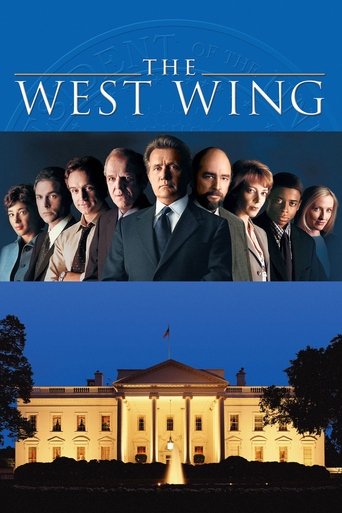
The West Wing
1999 · TV series · 7 seasons
Created by Aaron Sorkin
The West Wing provides a glimpse into presidential politics in the nation's capital as it tells the stories of the members of a fictional presidential administration. These interesting characters have humor and dedication that touches the heart while the politics that they discuss touch on everyday life.
46 positive7 negative2 mixed77 neutralfrom 132 commenters
Where to watch
No streaming data for this title.
153 comments on Hacker News
I've heard this idea before but I think it's primarily hindsight. At the time The X Files was on, there were even more popular shows about strong institutions, like Law & Order or The West Wing. So if popular TV was influential, why didn't society evolve toward those portrayals? I think we can look back today and say "that looked like this," but it doesn't mean that caused this.
It took something far more powerful than a TV show that was mildly popular for a few years to create what we live today. It took the great flatness of the Internet. As Terry Pratchett predicted to Bill Gates back then.
There was an interesting part of an episode of The West Wing where some politicians were trying to cut this budget to make room for something else (maybe National Parks?). It was neat to see the arguments on both sides, both for an against this. In general, it seems like it gets some poor uses, but also some culturally valuable ones.
Unfortunately I don't remember the references off hand.
I do think there's value in a society encouraging the arts. I don't know what that best implementation is (if at all), though.
'The West Wing’ had an episode where the US plan to invade Canada was a plot point (https://westwing.fandom.com/wiki/A_Good_Day). Of course there is a US plan to invade Canada - no matter who the president is, the armed forces would try and be prepared for any eventuality no matter how unlikely (in the episode the plan was over a hundred years old, but it existed). Similarly, it would not be unusual for Canada to have war gamed a US invasion.
You're misunderstanding.
> if the delivery conduit uses AV1, you can optimize for it
You could, in theory, as I confirmed.
> It's already built, and Netflix is championing this delivery mechanism.
No it's not. AV1 encoding is already built. Not a pipeline where source files come without noise but with noise metadata.
> and provides the best possible image quality?
The difference in quality is not particularly meaningful. Advanced noise-reduction algorithms already average out pixel values across many frames to recover a noise-free version that is quite accurate (including accounting for motion), and when the motion/change is so overwhelming that this doesn't work, it's too fast for the eye to be perceiving that level of detail anyways.
> This scheme loses a major opportunity for new productions unless the director can provide a clean master and an accompanying "grain track."
Right, that's what you're proposing. But it doesn't exist. And it's probably never going to exist, for good reason.
Production houses generally provide digital masters in IMF format (which is basically JPEG2000), or sometimes ProRes. At a technical level, a grain track could be invented. But it basically flies in the face of the idea that the pixel data itself is the final "master". In the same way, color grading and vector graphics aren't provided as metadata either, even though they could be in theory.
Once you get away from the idea that the source pixels are the ultimate source of truth and put additional postprocessing into metadata, it opens up a whole can of worms where different streamers interpret the metadata differently, like some streamers might choose to never add noise and so the shows look different and no longer reflect the creator's intent.
So it's almost less of a technical question and more of a philosophical question about what represents the finished product. And the industry has long decided that the finished product is the pixels themselves, not layers and effects that still need to be composited.
> I wish Netflix could go back and remove the hideous soft-focus filtration from The West Wing, but nope; that's baked into the footage forever.
In case you're not aware, it's not a postproduction filter -- the soft focus was done with diffusion filters on the cameras themselves, as well as choice of film stock. And that was the creative intent at the time. Trying to "remove" it would be like trying to pretend it wasn't the late-90's network drama that it was.
Mmmm, no, because if the delivery conduit uses AV1, you can optimize for it and realize better quality by avoiding the whole degrading round of grain analysis and stripping.
"I can't ever imagine a streamer building a source material pipeline that would handle that."
That's exactly what the article describes, though. It's already built, and Netflix is championing this delivery mechanism. Netflix is also famous for dictating technical requirements for source material. Why would they not want the director to be able to provide a delivery-ready master that skips the whole grain-analysis/grain-removal step and provides the best possible image quality?
Presumably the grain extraction/re-adding mechanism described here handles variable grain throughout the program. I don't know why you'd assume that it doesn't. If it didn't, you'd wind up with a single grain level for the entire movie; an entirely unacceptable result for the very reason you mention.
This scheme loses a major opportunity for new productions unless the director can provide a clean master and an accompanying "grain track." Call it a GDL: grain decision list.
This would also be future-proof; if a new codec is devised that also supports this grain layer, the parameters could be translated from the previous master into the new codec. I wish Netflix could go back and remove the hideous soft-focus filtration from The West Wing, but nope; that's baked into the footage forever.
I introduced this to my old company years ago and called it Big Block of Cheese Day after the West Wing episode [1]. We mostly focused on very minor bugs that affected a tiny bit of our user base in edgey edge cases but littered our error logs. (This was years ago at a, back then, relatively immature tech company.)
It had the same spirit as a hackathon.
[1] https://westwing.fandom.com/wiki/Big_Block_of_Cheese_Day
This was a minor plotline in one episode of The West Wing where they discussed a couple of the details the article gives about it, with the additional claim (which I'm unsure of the truth of) that it was influenced by the creator of it having grown up in the Soviet Union and therefore having incorrect assumptions about how much food prices would influence poverty in the long term. (I forget how it turned out, but I remember that the member of the administration hearing about this was at least initially against updating the poverty line calculation because it would cost them politically for the number of poor people to go up while they were in charge, to which the expert describing the new explanation replied that they already are poor, and the new calculation would just be recognizing that fact).
One should note the officers in the missile silo at the opening of the film:
Michael Madsen of Reservoir Dogs and Kill Bill, and John Spencer of L.A. Law and of course, The West Wing.
> To put it another way: you have shows that have strong enough writers where they don’t need gimmicks to keep your attention. And you have shows that are intentionally about the gimmicks. Then you have shows that aren’t about the gimmicks but the writers don’t have enough confidence in their work to avoid putting them in anyway.
Can you elaborate a bit about the gimmick(s) in Halt and Catch Fire? I think it's a drama, so there are human concerns and interactions, but that's like, what tv shows are? I don't know what you mean specifically.
> Shows like The West Wing, House of Cards etc aren’t about gimmicks and don’t need them.
The West Wing is statist propaganda for liberals. House of Cards is statist propaganda for neocons.
> Shows like Mr Robot are about the gimmicks. And that’s ok too because you know it’s meant to be silly drama.
I actually really appreciate that every hack shown on Mr. Robot had a real world POC and used actually existing tools and techniques. The storyline is hokum and gives hackers a bad name, but black hats are kinda supposed to have a bad name. Elliot is kinda gray hat, but he definitely violated CFAA multiple times and would probably be dead or in jail irl.
This episode of The West Wing was exactly what came to my mind when reading the headline.
"But you can't do that." "Why not?" "Because it's freaking me out."
Such an entertaining show.
West Wing, Chernobyl, Westworld Season 1, Breaking Bad
Remember that "The West Wing" episode where geographers petition the White House chief of staff to replace the Mercator projection with the more accurate and less Euro/US-centric Peters one? This one looks designed to stroke the Yuge ego of one Donald J Trump...
The West Wing episode is what I always think of when I think about the penny, and I almost referenced it myself
There has been a long-running campaign to get rid of the penny, to the extent that there's a "West Wing" episode that features the campaign. Ironically, Canada got rid of the penny in 2012-2013, after relatively little debate.
Ever watch the West Wing? The first episode should do it.
One of the signs of dog whistle use is the situations in which the term is used that raises probability beyond the credible level of coincidence.
In 1999 the show writers of the West Wing accurately predicated this in an episode about the selection of a Supreme Court Judge:
"It's not just about abortion, it's about the next 20 years. In the '20s and '30s it was the role of government. '50s and '60s it was civil rights. The next two decades are going to be privacy. I'm talking about the Internet. I'm talking about cell phones. I'm talking about health records and who's gay and who's not. And moreover, in a country born on the will to be free, what could be more fundamental than this?"
- Sam Seaborn (Rob Lowe) West Wing (ep: The Short List) 1999
- We've seen massive breaches of EMR systems
- We've seen massive breeahes from dating apps (Grindr) outing Gay individuals
- None of these entities faced significant consequences for their actions and continue to operate with large amounts of profit.
- 2 years after this episode the Patriot Act was passed. We've failed on privacy so far.
Of all things happening in a West Wing episode (although to the White House, not the Senate) to still be topical 25 years after airing, this would not have been high on my list. I'm not sure to consider myself overly optimistic or overly naive...
By demonetizing him, they’ve “done something” and if there is a further outcry they can take more drastic steps. It’s like the very first West Wing episode “a proportional response”.
They just want to be seen as “doing something” and if they do it first they seem cooler than other platforms. Didnt deplatform him, just demonetized. They have done this to a lot of other non-mainstream political voices.
To be fair, the West Wing was pretentious in so many other ways that this is one of the few clips that borders on genuinely educational. Flawed? Yes. But it's not an educational show, it's a bizarre hyper-liberal hour-long lecture to the viewer where for some reason every single character talks like an over the hill Jewish man with the same verbal tics and expressions.
And honestly, it's a bit pretentious to publicly denounce an entertaining TV show just to seem smarter than everyone at cocktail parties.
> Why do you presuppose that others infer & arrive at the same interpretations you do? Isn't your own form of generalization from the subjective inferences made from your own individual mind, to the thoughts of others, presumptuous?
No, you're just being stupid.
This isn't a new issue. There's an episode of The West Wing about the evils of the Mercator projection. It aired 22 years ago.
When you write an essay doing nothing more than repeating a several-decades-old cliche, people are going to assume you don't have anything to say other than the content of the cliche they heard decades ago. And they will be right.
The faux outrage is hard to take. I grew up with the chopped up non Mercator maps and nobody cared looking at one or another.
It was called out multiple times in my geography glasses in the 80s that the flat contiguous map was wrong and we spent lots of time looking at globes and North or South Pole centered maps.
Nobody is being oppressed or underrepresented by this projection. This isn’t an episode of the west wing.
Right? Is there a person above 25 that hasn’t seen the episode (or clip) from The West Wing about map projections at this point?
If you want to see a good (fictional but pretty much on the money) depiction of this, check out the episode “King Corn” from season six of The West Wing.
Even then it was blatantly obvious that corn ethanol was all about subsidising corn farmers, but the state’s political importance made it impossible to do anything about.
I often tell this Latin phrase to my students that I came across in the TV show West Wing:
"corruptio optimi passima" : The corruption of the best, is the worst.
They're using it the way I would expect if their only experience with the word was that episode of The West Wing. Which is to say, not correctly.
Obviously not literally everything was there, but for example Disney stuff was and now it's on Disney+, NBC stuff is now on Peacock, CBS stuff is now on Paramount+, etc. etc.
I'm sure it's true in quantitative terms that new streaming services are net new content, but there's a very long list of popular movies and shows that used to be on Netflix and no longer are, and a very long list of publishers that use to make new content available on Netflix and no longer do.
A very abridged list of existing content that Netflix lost: Star Wars, Marvel, Pixar, Disney movies, The Office, Parks and Rec, The West Wing, Lionsgate movies, Doctor Who, 20th Century Fox movies like X-Men, ABC Shows like Scandal, Naruto, most Star Trek shows, and on and on
All of this is regionally dependent I think, some things are probably still available outside the US.
There's an episode near the end of The West Wing where it's C. J. Cregg's first day as Chief of Staff. Of course, this same day, a national security emergency has arisen involving weapons-grade plutonium. The whole day goes by, with C. J. increasingly frustrated as the Secretaries of Defense, State, and Energy all pass the buck on the crisis.
The President is able to nudge C. J. to put together a tiger team. With a few words, he has resolved the crisis.
Until I saw this, I never understood corporate structures. Why are reporting lines structured so customers can languish until the CEO barks an order to address? But during a normal day-to-day, the top executive needs stability. Anyone incentivized and empowered to single-handedly address problems is also-by definition-someone who wields immense political power. So departments are set up. The implicit standing order is "maintain stability." And whenever process actually needs to change, the top executive routes around the communication chains he has established.
I don't know if anyone in India cares what the maps look like, but I do care: despite having seen the West Wing episode in (checks notes) NINETEEN NINETY-NINE, I did not realize (1) there was a site I could go to that would apply the Mercator distortion to any country, or (2) you can draw a sinusoid from Pakistan, through the Mozambique Channel, around Cape Horn, and back up across the Pacific to Kamchatka that is a straight line if you're sailing it on a boat. Both are in the article, but you'd never know that to read your comments.
You and I both know that you've got a hang-up about, I don't know, wokeism? Progressivism? Antiracism? Whatever it is: I'm not disputing it. I'm not telling you you're wrong, or that you can't have whatever weird politics you've landed on. I'm telling you that bringing it up incessantly on every thread on Hacker News violates the guidelines, and helped wreck this thread, and you should stop.
Please stop.
Or maybe it's just because you can build a site that corrects the Mercator distortions and see Kenya get as big as Greenland, or see Antarctica become the largest continent on the planet, and that's just super interesting?
The article is not about "maps are racist". The idea that Mercator has persisted, into an era where nobody needs a map projection to navigate, owing to racism isn't a new one. Your "in recent years" gives up the game here, since this argument was banal enough to be the centerpiece of a freaking West Wing episode 20 years ago.
I think you maybe need to give this stuff a rest.
Must watch: Why are we changing maps? from The West Wing
https://youtu.be/eLqC3FNNOaI?t=44
Not disagreeing, but this comes from further back than a decade. It goes all the way at the very least to Gingrich, when Republicans locked on the religious vote by attacking the "immoral conduct" of Bill Clinton. It worked so well that they've made it a structural element of their strategies. You can see the traces of this even in the political allegory of clintonism that is The West Wing - this episode was filmed in year 2000: https://www.youtube.com/watch?v=f3VHK1NXIBw
Keeping these technologies in the hands of a few has its own set of severe negative consequences.
In the case of nuclear weapons, one of those consequences is that poor countries are denied the ability to defend themselves.
This led to the bullying and invasion of countries without nuclear weapons by countries with nuclear weapons (most recently Russia invading Ukraine, but China and the US are equally guilty).
I'm reminded of a line from the TV show The West Wing, something like: "India must and will be a nuclear power. That way, we'll never be dictated to again."
Just to be pedantic: in The West Wing, season 1, episode 8, this is a key plot point. According to this episode, the Antiquities Act does give the president this power.
Since this is a really silly but rewarding conclusion to the episode, I'm going to have to disagree with you on this.
[0] https://westwing.fandom.com/wiki/Enemies
Getting strong flashbacks to that West Wing episode 20 years ago^ where Albie Duncan touches on this:
"'Free trade is essential for human rights'. The end of that sentence is, 'we hope... because nothing else has worked.'"
^ http://www.westwingtranscripts.com/search.php?flag=getTranscript&id=73
Graeber's books reprogrammed my brain. But I'm still struggling to connect the dots:
What does Iroquois style participatory democracy actually look like?
We need movies and soap operas. To tell the stories.
Like West Wing, House of Cards, Mr Smith Goes To Washington, The Wire. Show the human drama and machinations. Events, issues, and people. Conflicts and resolutions.
Participatory democracy is not all puppies and ice cream. The advocates would be well served to show that it's just another decision making strategy. Hopefully superior to what we have today.
Like how Approval Voting is better than Winner Takes All. We'd still run elections. Just more robust with better outcomes, so therefore less drama.
As an example, I recently wanted to watch The West Wing. I pay for Netflix and Hulu already, but the show is only on HBO Max. OK, fine, I guess I'll pay for a month of HBO like I've done before to watch Game of Thrones.
Ok, uh, what's it called now? HBO Go? HBO Now? Oh, HBO Max, ok. I live in Japan now, so I'm region-blocked, great. Time to open the VPN. HBO already seems to know that server #1243 is a VPN, but server #849 works OK for now.
Ok, time to create an account. "Account with that email already exists"? Ok, so let's log in using my old HBO Go credentials. Looks like there's some kind of account migration problem and the account is stuck in the "account verification" phase but I can't get it to send me a new verification email. There's a little pop-up chat window for the support team, let's try it. Three separate support agents and thirty minutes later, I have a working verification email. But my payment information is out of date. OK, let's update it. HTTP 505 error. Wonderful.
Ok, that's enough: Type "West Wing season 1 episode 1" into Google. Thirty seconds later I'm watching in full HD and there's popcorn in the microwave.
Well that's the thing; I do keep pretty well up with public affairs, and from what I can tell, most of these ideas come from academia, but without much rigor or data to support these new taxation plans, and the legislators who support them do so for largely un-scientific reasons (e.g. has a good hook for a title).
So when I say this all seems slapdash, I mean that I'm thoroughly unimpressed with the way by which these taxation plans are coming out of the woodwork. Feels like an episode of West Wing, the one with the Cartographers for Social Equity.
I've noticed how quickly I become depressed when I have nothing to do. It's sort of like the properties of a gas- my lethargy expands to fill the volume of space I have. When I was on a sabbatical between jobs instead of going to museums and art shows and exploring new hikes and doing other things I'd think I would enjoy I laid around and binge-watched The Wire and the West Wing.
When I'm busy I actively block out time to do those activities and plan for them and look forward to them. It's a weird phenomena but I'd guess if I was wealthy enough not to have to work (which I'm not!) I would need to keep working anyways to keep some structure in my life and avoid depression.
TABITHA You've got to sign the land mine treaty, Toby.
TOBY Whoa... What happened to the nuance of diplomacy?
TABITHA Oh, sorry, the shoes are shined.
TOBY No we-we're there now, you-you can't go back.
TABITHA Sorry.
TOBY Right.
TABITHA 142 countries have signed it, 84 have ratified, 12 destroyed there entire stock.
TOBY Yes.
TABITHA You know who hasn't signed it? Us and Cuba.
TOBY You know who initiated it? Us. And the nations of the world rallied around it in yet another impressive display of American leadership.
TABITHA And then?
TOBY We bolted.
TABITHA Right.
TOBY And the reason we did is because we love anti-personnel land mines. We love 'em. And we think the government should be in the business of selling them, like the Post Office. In fact, the Post Office is the sales venue we've been considering.
TABITHA Toby. I-I got a...
TOBY It's Korea. Tabitha. There are 900,000 North Korean soldiers in the DMZ, and the only thing stopping them from walking into South Korea are 37,000 US troops, and about a million land mines along the border. We have said over and over that we would be thrilled to sign this treaty if we could have an exemption for South Korea and we have been rebuffed. Rebuffed... I say.
From The West Wing, Season 3 – Episode 16 – “The U.S. Poet Laureate”.
Reminds me of that West Wing episode and the parable of the man who lived by the river.
"I sent you rust, cracks, and an engineers report, and your building still fell down."
> The thing about smoking is that when you quit smoking you quit it every day. [...] So do yourself a favor and avoid any substance that creates such light switches in your mind
Unfortunately there are switches that one cannot just avoid - like food.
I was watching a West Wing episode last week, where a character says "An alcoholic cannot have 'just a drink'." It's the same for a food addict, except s/he must have 'just a portion'. I have a decent record with shaking off addictions, but with food I just can't go cold-turkey and it kills me.
Who would have thought.
Amongst all the companies complaining they can’t find workers, they seem to all maintain a truly massive cognitive dissonance and lack of complete self reflection.
Good for Chipotle for demonstrating actual leadership.
If anyone here is a fan of the tv show The West Wing, I always like the quote
You are so fond of calling yourselves the "leaders of the free world." So, lead.
I feel companies often so enjoy calling themselves and being called leaders in their industry but they forget to actually lead and demonstrate leadership
I LOVE that West Wing episode. A group of kids get shuffled around the white house, not important, ignored. The leader of his school group gets to ask a question to President Bartlet after impressing a staffer.
"Do you think the budget deficit is especially unfair to younger Americans?" -> " a follow up, do you think we'd have such a large deficit if children were allowed to vote?" Such a good use of debate.
I think it's worth debating whether to give teens the right to vote. In my mind at least to 13 and up - but it's capricious / hard to draw the line or come up with 'tests' that aren't flat out repeating our disgusting past treatment of Black Americans.
The West Wing episode [clip below] spells out some of the argument:
I miss the West Wing universe. Would be awesome to see a reboot optimistic show about getting things accomplished, showing a vision for how it's possible to tackle climate change and our other ailments. But move the show past today's progress (it does not treat women well/give them voice, stance on gay marriage etc).
https://www.youtube.com/watch?v=hSDxg-bDw1A
Yeah, but Indiana is a good case study for why daylight savings time isn’t very effective. Didn’t they end up using more energy after switching to DST? I mean, they really changed because the show The West Wing had an entire episode about it, and nominally it was to keep in better sync with the East Coast. But they were able to measure actual energy changes as opposed to the theoretical benefits that are normally cited for DST.
(I lived in Indiana at the time they switched to observing DST, but I was on team central time zone)
I'm not sure overall-length would be affected by "short attention span" -- it would be "entertainment spikes" or I suppose "average time between significant events". Perhaps the best term is pacing -- how fast does the story flow?
You can keep someone with ADHD fully engaged with the same topic indefinitely, if you can keep the pacing fast enough to hold their attention. Video games and Casinos being the king of this.
So you'd expect slower films/tv to fall out, and things to get faster and faster -- packing more in shorter timeslots, with less slowdowns for things like background, general discussion, landscape shots, etc.
From that perspective, I'd say action flicks are definitely getting faster; bay's transformers being the king of it -- so quickly paced you can't even understand what the hell is going on; just the "feeling" of mechanical combat but it's really just a blur of sounds and machinery. Marvel too has basically dropped all pretense of a real "plot" -- it more a sequence of random flashy combat and big landscapes/weaponry/powers that suddenly ends with the credits.
I'm not sure if however you could say intentionally slower genres like political dramas are getting faster by necessity of the masses' devolving minds; I don't watch enough of the newer ones to say. But even comparing something like West Wing to House of Cards, the latter is clearly more "packed".
Following your line of reasoning, all Muslims are evil because a few associated Muslims did bad things.
> If you find out that someone is best friends with someone you despise, you will automatically assume the worst about them.
Or maybe your friend has knows them better, or understands them better, or compartmentalises
I don't like that my dad likes Trump but he's still my dad and I still love him.
It reminds me a little of the West Wing episode "The Supremes" where everyone assumes the conservative supreme court judge they are considering giving a seat is the height of evil only to find that he's a reasonable person who can actually make valid arguments from the right's pov as is not just "guilty because he's on the right"
This isn't an episode of West Wing. Thousands of radicalized Trump supporters tried to overthrow American democracy through a violent attack on Congress and the Vice President. These people aren't going to listen to you or me, they are in a cult where they worship the President and his rotating cast of confidants. Going after those specific people is the only way to turn down the temperature and prevent future acts of violence.
It's not like there's a lot of action going on most of the time--it's mostly people talking. Which is fine! But not everybody likes that kind of show. It also doesn't have the same addictive amount of leaving each episode on a cliffhanger the way more recent shows are written.
I never watched the Sopranos or West Wing, so I can't speak to them. I enjoyed The Wire (bought the box set!), but it's still a slow-paced drama. If that's your jam, it's fantastic. If it's not, it's still worth a shot (it's that good), but it's not "try it for 18 hours if you don't like the genre" good. All IMO of course. And full disclosure: I'm not a big fan of dramas, but The Wire still grabbed me. Hence my caution that it's somewhat slow compared to other fare.
I should watch it again, it's been a long time and it is worth it.
This comment is baffling... Netflix isn't social media. It knows far less about its customers because your interactions are limited to chosing what to watch.
I don't even know that documentary you mention, and I can assure you it has nothing to do with this decision whatsoever.
(Because it's really a rerun of West Wing that got the FTC into high gear here. "Hell yeah, let's do some governing", someone shouted, and they all started briskly walking)
While the Big Short is a good movie, this scene reeks a little bit of the same type of "eureka-insights" that permeate Hollywood fiction like the West Wing and pop-not-science books like those written by Malcolm Gladwell.
Obviously unemployment is bad for people, and it had adverse effects on people leading to depression and suicide. But the 1%-unemployment-40k-deaths stat seems too neat to use as a statistic, because there are so many variables that affect health & suicide in a community to make drawing a specific numbered correlation like this accurate.
The way they didn't realize Bartlet was shot until he started to bleed from the mouth was copied straight from what happened to Reagan.
During the West Wing, Sorkin was a master at dramatizing real life when it worked, or inventing plot points completely when that would play better.
Like Christan Slater destroying his $1400 glass ash tray with a hammer to demonstrate that it's expensive because it's designed to break in to dull pieces and thereby not be dangerous in the heat of naval combat, justifying the cost. Except in real life they'd just use one made of metal.
That so much of it was authentic (to a television standard) gave suspension of disbelief for the made up bits, and seasons 1-4 are consequently some of the best television ever made.
I still remember the first time I learned about this. I was watching the West Wing (Season 2 Episode 16[1] which explains the problem pretty quickly) for the first time in the early 2010's and was absolutely blown away that we'd never been taught about this in public school (U.S.A.). Having graduated High School and a couple of years through undergrad, and just then realizing that my entire perception of the relative size, and in some cases position(!), of the continents is basically just wrong. It was actually a generally useful thought exercise though, because it really forced me to confront the fact that I need to consistently reflect on whether my previous assumptions on even basic topics hold true.
I'm not sure it would be worthwhile to advocate for changing the default projection at this point due to the logistics, but at least teaching kids about the issue, which can be covered in no more than a few minutes and is obviously not super complex, just so they're aware of it seems totally worth it!
[1]: https://www.youtube.com/watch?v=vVX-PrBRtTY
Hi there, and welcome to HN. Have you done any analysis (or know of studies) that bear on the wonky technological (or tech adjacent) issues that tend to consume this forum? Examples would be copyright and patent issues, broadband availability, antitrust, net neutrality, technological unemployment [0], free trade / tariffs / trade war, H1B visas, gig work (eg. Uber), R&D spending, space exploration, AI/algorithmic biases/ethics, open source, capital gains taxes, etc.
Conversely, how do you view the structure and detail of party and candidate platforms (eg. Warren's "I've got a plan for that" vs., well, anybody else)? Is more detail better or worse in terms of election results?
[0] I've always had a soft spot for this episode of The West Wing: http://westwingwiki.com/2014/04/season-5-episode-19-talking-points/
In the UK, Doctor Who is clearly an outlier. The other really long-running shows are soap operas like Eastenders or comedy panel shows.
But in the US, there seem to be an awful lot of outliers, and it's on the strength of those series that Netflix initially established their following: Friends, The Office, Park and Rec, Seinfeld, Community, The Walking Dead, The Blacklist, Gilmore Girls, Grey's Anatomy, West Wing, That 70's Show, Supernatural, Criminal Minds, and I could keep going, honestly, for quite a while.
So yes, there's an extent to which 5 or 8 seasons is less common, but the goal for US shows has been 100 episodes for decades now, which is usually 5 seasons of 20+ episodes each.
If Netflix is adopting a more UK-like approach, that might result in better TV eventually, but it would be nice for creators to know they have to tell their story in 16 episodes rather than 100.
I'm no authority, but as far as it goes the author probably encountered plenty of actual upper class americans at ivy league schools. I was inspired to watch a few episodes of the West Wing to see if I could sus out what he was talking about. I could pretty easily tell that Aaron Sorkin wrote it from a middle class perspective that fetishized and idealized wealth, education and power that he did not himself possess. I can see why ivy leaguers would like it, since it flatters them at every chance.
Damn.
Time to watch “The Supremes” episode of West Wing and cry.
The relationship between RBG and Scalia served as inspiration for one of the most beloved post-Sorkin episodes of The West Wing. The Supremes, 5x17.
So I guess The West Wing was right about this back in 2001
> Josh: Putting out fires isn't necessarily our policy?
> Sam: Fire's good for the environment under certain circumstances. Forests have a natural cycle that requires purging burns to reinvigorate growth.
> Josh: Someone just said that to you, right?[1]
[1] http://westwingwiki.com/2014/04/season-3-episode-3-ways-means/
The West Wing (tv show) even had an episode around it “Take our the trash day”[0].
[0] https://www.imdb.com/title/tt0745682/
I really don’t understand why the guy can’t keep quiet and let people who obviously know more about the topic do their job.
Because he judges how well he does his job on the performance of the stock market. He speaks to sooth the jitters of Wall Street.
It's not unique to the current administration. Most presidents have done this. It was even a recurring theme in the TV series West Wing.
There was a “West Wing” episode where Air Force One’s landing gear wouldn’t come down; they talked about the possibility of a “hard landing” on a runway sprayed with (fire suppressing) foam, IIRC.
Edit: looks like the foam practice was discontinued in 2002: https://en.m.wikipedia.org/wiki/Foam_path
I feel so seen! For a very long time, I couldn't sleep without watching TV shows on my laptop, to the extent that I'd have insomnia if the Internet went out. In fact, even though I've weaned myself off it for the past several months, I'd probably still have trouble sleeping if I didn't at least know I could watch reruns of 30 Rock if I had trouble sleeping.
More to the point: just like the author, there's a very particular kind of TV I'd watch to sleep: nothing for the first time, and nothing tense. The West Wing and the US version of The Office were both great for me, since there's so much of it to get through. I've probably seen every episode of The West Wing at least 15 times by now.
Which, to me, sort of answers/challenges the concern the author has about binge watching. On a normal night, I'd barely make it through half an episode before I'd notice time slipping as I watched, my cue that I'm nodding off and should shut the laptop. I'm never watching first-run stuff like Mindhunter or Russian Doll, the stuff Netflix really wants me to be streaming, because it'd keep me alert.
> Isn't there an old film where a small island declares independence from the US, declares war on the US and then surrenders after 5 minutes to get aid?
I feel like it was an episode/arc in The West Wing.
In today's episode of "Things I Learned from 'The West Wing'"
Leo: "Andrew Jackson, in the main foyer of the White House, had a big block of cheese."
Josh: "...and a Wheat Thin the size of Lake Tahoe."
There's an episode of the West Wing that goes into this, "The Short List". One of the characters, Sam Seaborn is questioning a nominee of the supreme court about his position on privacy. It's classic Aaron Sorkin writing, but it might address your question.
https://www.youtube.com/watch?v=GaEBXmeaXbI
I love this projection (either side of the map). While I've known since childhood about the size distortion of the Mercator projection (one need simply look at a globe), I never saw any of the size-preserving projections until a West Wing episode ("Somebody's Going to Emergency, Somebody's Going to Jail") featured the Peters projection. The Hobo Dyer projection shown here is even cooler.
The U.S. govt from the top down, and even state and local governments will create a LOT of bureaucracy that provides no added value. Beyond that, they create purchasing systems that force higher spending. When states have tried to create different systems to stop corruption in those lines, the corruption just shifts and it winds up about the same.
There's a good episode of the West Wing about this. Everyone thinks that all of the government bureaucracy is useless until they confront the reason that it exists: to deal with specific issues within the government's scope of authority. Some bureaucracy is wasteful/far outlived it's purpose, but that is the exception not the norm.
I'd rather see the gov't cut most programs, and allow taxpayers to take roughly half of their own tax burdens and direct them to charities directly. Let people fund what they actually care about directly and advocate themselves.
If you think government is wasteful just wait until you see how much administrative overhead is wasted at charities and (for-profit) companies. You'd immediately demand for all of that spending to go back to the government.
You also started to have the national networks assert more control over the local stations which led to some successful attempts at shows with both series- and episode-long plot structures, like Babylon 5 & the West Wing.
That’s not what happened.
There are two reasons why serialized shows were not popular on network TV until recently.
Syndication - the networks always had control over what got sued during prime time. But they also made most of their money via syndication outside of prime time and with the cable channels. It’s really hard to syndicate serialized shows for the second reason...
If you miss either the first few episodes of a serialized show or miss an episode in between, you probably wouldn’t even bother about watching it. Now with video on demand via streaming the TV networks can tell the audience to catch up by going to the website/going to their cable providers VOD offerings, etc.
Netflix - serialized shows are very popular on Netflix where binge watching is a thing. Even the cable channels that buy syndication rights can also offer catchup/and video on demand.
Cliff-hangers long predate modern television, and seem to be endemic to any serialized content. The term itself dates back to the late 1800s, and it’s use has been derided in every medium from books to radio to film to television.
It also wasn’t a purely American thing. Go watch some of the old black-and-white Dr. Who episodes, for example; you’ll see some prime examples of cliffhanger- and recap-dominated television.
The exception seems to be late-20th-century television shows, where the syndication system meant that episodes might be dropped or reordered arbitrarily by the local station. This made it difficult to impossible to have any kind of changing circumstances like an overarching plot except at big events like season breaks. Star Trek: TNG is a good example here; the interpersonal relationships between characters don’t really evolve very much, and when they do it’s part of a season-break spanning two-part story. Those reliably had every character in danger at the break to provide the studio leverage during contract negotiations.
As the premium television channels started getting into producing their own shows, they didn’t have the problem of local affiliates reshuffling their schedule— their distribution model let shows have an overall plot, but they still add to be acceptable for viewers that expected to get a whole story each week. This gave us shows like Stargate SG-1 which still had very formulaic episodes, but also a continuity between them.
You also started to have the national networks assert more control over the local stations which led to some successful attempts at shows with both series- and episode-long plot structures, like Babylon 5 & the West Wing. Vestiges of the old system remained for quite a while, though, and is a large part of why Firefly was never commercially successful— it was produced with continuity from episode to episode in mind, but the network aired them in a seemingly random order instead.
https://en.m.wikipedia.org/wiki/Cliffhanger
Binge reading to me isn't actually good its just necessary to consume information, we do that already with our feeds and sites like this.
With fiction I want to take my time, so no books can wait.
Netflix to me is this generation's radio, its background noise. It produces some good content but we only truly tune in for that release. On most days it's old episodes of the office, fraiser and the west wing.
1) Casey's a great storyteller, filmmaker, and success. Just like anyone else who reads a book 4 times. Or practices a programming problem over and over again. I study how he accomplishes things over and over again.
2) As for priorities, I've been a software engineer since 1999 (CTO of two YC companies, W06 and S11). And the biggest thing holding me back? Not enough people using the things I make. You express as much with the XDP article. So I've realized I need to get a lot better at spreading my ideas than just programming them. Build it and they won't come.
3) Somehow I got good watching TV in the background while I program. Got a lot of practice doing things like math homework in front of the TV as a kid. I built Draft (http://draftin.com) the writing software while I watched West Wing in the background for like the 10th time. Some people like going to cafes. Listening to music. I like putting on inspiring/fun TV that I don't have to think a lot about. I can't do this with cerebral shows.
--
I don't usually reply to comments like these because it came across almost like a personal attack? You'll lose it when I tell you, one of my favorite pastimes is just watching Sesame Street with my kid :) instead of programming.
Who cares what I do with my time? It's my time. I don't play golf. I don't go out. I don't paint. What I do do though in my free time is write, make movies, and look for inspiration everywhere.
But I do hope the above did shed some light on why I think writing the article above was important to me and why it's subject matter I bother with at all beyond just programming.
I feel like my expectations for a president have been unrealistically set by the TV show the West Wing where president Bartlett is often staying up until 3am reading hundreds of pages of policy reports, not getting into Twitter fueds and refusing to read anything handed to him.
An oncologist wishing more money was spent on cancer? In other news, water is wet.
First of all, the optimal place for me to spend my money is not necessarily the optimal place for someone else to spend theirs. We can't know for sure, of course, but who were would have preferred Elon Musk start a cancer research firm instead of SpaceX? Secondly, there is no universal "cancer" that we can fight. There are hundreds of different types, just as distinct as different diseases. You could turn pancreatic cancer into a chronic condition tomorrow and no make any progress at all toward curing oropharyngeal cancer.
There's a great exchange in the West Wing episode "Galileo" about just this type of narrow minded viewpoint.
Sam Seaborn: There are a lot of hungry people in the world, Mal, and none of them are hungry because we went to the moon. None of them are colder and certainly none of them are dumber because we went to the moon.
Mallory O'Brian: And we went to the moon. Do we really have to go to Mars?
SS: Yes.
MO: Why?
SS: Because it's next. Because we came out of the cave, and we looked over the hill and we saw fire; and we crossed the ocean and we pioneered the west, and we took to the sky. The history of man is hung on a timeline of exploration and this is what's next.
No to mention the fact that all the cancer drugs in the world will not save us from an asteroid. If we don't get people living and populating on other planets, the human species is doomed.
Could you provide an explanation for your proposal? Why the west wing? Why repeat the episode? What is it about Sorkin's dialog that drew you in?
Lots of people gave great writing advice in this thread, so I'm going to throw out something different that may or may not resonate with you: Watch seasons 1-4 of the West Wing on Netflix. If you come across an episode that sticks with you, watch it a couple more times, maybe even put it on like background music (Sorkin's dialog often feels melodic).
"Ever since the American-Norwegian crime drama “Lilyhammer” became Netflix’s NFLX, +2.32% first original series to premiere in 2012, the company has been committed to voraciously generating new content in addition to its huge library of existing TV shows and movies."
"huge", my posterior.
U.S. context: In the last couple of years, aside from a very few new headliners (e.g. "Rogue One"), and some lingering headliners from older contracts (e.g. "West Wing", Star Trek), and ever-fewer good independent productions, I find Netflix's streaming library to be the dreggs of barely acceptable quality. (People will watch it when there's nothing better.)
Netflix streaming seems to be more popular than ever, but, "Jessica Jones", "The Crown", and a few other Netflix productions aside, Amazon Prime is bringing more engaging content into their lineup than Netflix is. (And that isn't saying too much. Most recently, on Prime, I'm enjoying re-watching the old "Kung Fu" show from the 70's -- in good if not spotless, widescreen prints -- apparently, original filming was with cinema-format cameras.)
There are still some worthwhile titles on Netflix streaming (U.S.). But after a few months, you've seen them all.
For those of you outside of the U.S., for all that your catalogs are smaller -- so I read -- you should know that, in the U.S., almost no new major films end up on Netflix. And almost all of the older ones are now gone -- contracts expired. Per what I read and hear, some do still end up or remain in other countries' NF catalogs.
I own several TV's but I end up watching a lot of TV and Movies on my iPad anyways.
It's nice to pick it up and take with me to the bedroom, my desk, my dining room table, the bathroom, etc. Wherever I want to go, it follows.
Also, movies in particular have terrible audio mixing for in home usage. The dialogue is way too quiet and the effects are way too loud. I end up adjusting the volume on the TV the whole time I'm watching it. This is less of a problem on the iPad because I'm a lot closer to it.
16:9 TV's are also bad for watching movies. If I want the movie to be a reasonable size on my TV, I need a much larger TV than I actually want to have. Again the iPad fixes this issue by being close to my face.
edit: Also, watching 90's TV on Netflix is fantastic on the iPad because it lets you zoom in to the center of the 16:9, remastered show for a full screen, 4:3 viewing experience. It's great for Friends, the West Wing, Buffy the Vampire Slayer (which is not on netflix anymore), etc.
3/
> what about tax evasion
This is a point that I have raised loudly before I joined. A point that I have raised internally in a fashion that I can only describe as scathing (making a very direct connection with a project that Mark praised and government-funded education). I was later told by people who cared to move the needle on tax that my anger was unhelpful and delayed their own effort. Facebook does it because of its environment (big international American corporation who misinterpret fiduciary duties to their investors) and should be the first company to break that mold (mainly because Mark genuinely doesn’t care about money). I was explained why it’s so slow (Basically, Americans hate government and think that it is inefficient; truth is: they are right, US civil servants are terrible. Countries where civil servants are competent don’t have that issue, and you can expect to get senior leadership to change their opinion on that topic if more non-Americans reach senior positions. Paying tax when you think private foundations are more efficient seems unethical. I don’t like it, but the point makes sense.) I would be happy to vote for anyone (presumably at the European parliament) willing to make it legally impossible for them not to pay proper tax.
> what about political censorship in kashmir
I’m not familiar with that process, but I’m happy to admit with the people who manage that team that they are overwhelmed by their responsibilities and are trying to find a solution to help with political interference. Solutions at scale include a combination of political science, machine learning and clever product design that I wouldn’t trust anyone but Facebook with.
> or maybe political censorship of the kurds
Same: accusations like that are constant. They often come from biased media, which make them quite ironic to process -- but doesn’t make it less important. I don’t think it is a simple process and I don’t think that the company is neglecting it. They are just trying to address it with a hard-to-explain multi-layered approach, using a lot more technology than journalists imagine.
> or religious and political censorship in pakistan
Same. You are basically starting to blame Facebook for the existence of conflict in places where… I mean, censorship didn’t started there. I would not be surprised if Facebook got punked by local authorities. If you want to help, I am sure that the company is hiring political wonks to help explain what is really happening, how to address it.
> what about the censorship of the rohingya trying to tell the world about their persecution
I think that you either over-estimate my ability to travel, or my trust in the objectivity of The Guardian and Al Jazeera. I have no doubt that those places face horrible hardships. I have no doubt that Facebook should, and does, care. I wouldn’t be surprised if their take was more nuanced than what you can get from reading one article on the topic, and I would be even less surprised to see that The Guardian both believes that Facebook should not interfere and have a moral duty to fix the problem.
Facebook is now a meaningful player in the political arena. They are growing to that realisation and hiring people who can help, thinking about what they role can and should be. If you think about them strongly and want the right to tell to Mark, to his face and repeatedly that he’s wrong and misinformed, my recommendation is that you join the company. Disent is not very helpful without the full context, but you absolutely can influence and make things better from the inside. (You can fuck things up too: God knows I did. I didn’t even mention the Growth team constant over-reach; privacy groups simplifications… So many things where data was telling that my instinct was wrong.)
> at what point do you take responsibility for your actions in the context of facebook as a company?
Ten years before I joined; literally before Facebook was started. I made myself responsibly for explaining my PhD to friends who work for the anti-trust authority in Europe. I failed so far: there are no meaningful enforcement of social-media based monopolies.
> i understand that companies are often unethical in tiny steps until they're a monster,
I don’t think that’s true -- and I’ve worked for pretty much any type of (civilian) “bad” company you can think of: Exxon Mobile, TelCos, etc.
Companies have hard choices to make. They get blamed for the ones you see; no one realise that the choice was actually very easy, very impactful either way when they get big. Sometimes the outcome is murky, but the decisions are rarely hard, and very rarely made in the name of greed, or pure evil. There often is a greater good to defend. They just choose to shut up about it because of people like you, who will attack them rabidly even if they tried to save children’s lives.
The best example of that kind of discussion that I could find was actually in the pilot of The West Wing, and pretty much the staple resolution of every episode of TV show:
https://www.youtube.com/watch?v=P4h0_bz2Qew
> PS: exhibiting restraint in this post was . . . difficult.
That’s fairly obvious, so is the fact that you suffer of it, on many levels; and your hatred is not rational. If you realise that, and you want to change, try to ask people who defend Facebook, including pretty much every employee. Don’t tell them that they are wrong. Ask what they are doing. They won’t because the company takes confidentiality very seriously but you’ll be able to tell that they are doing it to defend something bigger than themselves, something that they know is incredibly positive.
There’s not much I can do about your anger, other than to point at it, and tell you: I’m more than familiar with legitimate criticism of that company. The recent scandal is not it. If you want to address real issues, start by making sense of what they are trying to do, what they bring, why they are so successful and influential. Why people expect to find reliable political information there -- and why they expect others to find it too.
That should help you understand what many in the company are still missing: lack of international sensitivity, how to behaviourally engage users to care, lack of clear communication; and what they certainly are not over-looking but still need to do a lot more of: fighting spammers, abuse and government over-reach.
Reminds me of the Toby Ziegler quote from The West Wing: http://www.imdb.com/title/tt0745679/quotes/qt0993895
These guys take apart The West Wing. Sad that it's only the teaser, the full episode is excellent.
https://soundcloud.com/chapo-trap-house/episode-101-teaser-aaron-dorkchin
Today Presidents don't make the law. Potential candidates (and their parties) do.
There's a great episode of The West Wing about the Iowa caucuses and the ethanol mandate.
This immediately made me think of this quite relevant moment from the television show, "The West Wing".
Watching this year's politics unfold, it's a bit amazing to me just how much of what we're currently encountering was reflected in "The West Wing". Then again, while the faces and ads change, much of our national policy and politics is actually of a long-standing nature.
I chose a YouTube clip of the relevant moment that also includes a couple of minutes in front of it, for some context. I added a time parameter to skip to the relevant moment within it.
https://www.youtube.com/watch?v=VyqzPu5pX6U&t=120
The administration of the sitting President, President Bartlet, has negotiated his opponent in the upcoming election, Governor Ritchie of Florida, into having one "real" debate, as opposed to two debates with a format so constrained it would have allowed only for sloganeering. (Ritchie wanted less debates -- the reason he agreed to this.)
The first debate question, and response, speaks directly to the parent's point.
If you have never watched "The West Wing", might I suggest giving it a try? Yes, it is an ensemble show that therefore cannot exactly reflect the nature of the Oval Office and West Wing (i.e. there are more people involved). But it was advised by a number of key people from the Clinton administrations, and the writers speak very informatively and, ultimately, very elegantly, to key issues of our national policies -- and to the character of many people devoted to public service and that we wish to see in public service. On both sides of the aisle, actually -- as demonstrated in the show.
There's an episode of The West Wing where IIRC Donna was contemplating getting out of jury duty by employing something like this tactic. She was told in no uncertain terms by Josh and/or Sam that she would be thrown in jail for contempt if she did.
That does not seem to be the case in the real world, though. Who would have thought that fiction would lie to me.
I've been putting off watching "The Wire" -- I stopped shortly into season 1 -- because I just couldn't take any more depressing scenarios in my life.
Yes, this is a personal comment, and probably as such, OT.
But, it's time. As another commenter says, "the cycle repeats."
I got on the wrong side of that cycle. As a quippy quote on Facebook just reminded me again, yesterday, "The fears we don't face become our limits."
When Trump was elected, I started rewatching "The West Wing."
(By the way, many of the issues we currently face -- issues, not personalities -- the writers of that show addressed in interesting and informative fashion.)
It's time for the counter-point.
Not quite out there, yet. Still watching a show. But, closer to the world we live in.
Sorry for the personal comment, here, in a way.
Today's little quote from the same source, on FB: "Be very careful what you think. Your thoughts run your life."
A reason I held off on watching "The Wire."
But it's time, now.
I love Netflix, but they really need to invest in some more depth for the UI.
Let me curate my own lists and my own history per profile, including removing stuff from dynamic lists. I don't want to have to go into my account settings (something only the account owner can do) to remove recently watched items from my account history and then have to wait 24 hours for it to actually happen.
Let me build new lists and manually dump a tv show or movie into them.
Let me search all offerings, sortable and filterable alphabetically and/or by release date.
Let me view my profile's total viewing history if I'm interested. Even for titles that are no longer viewable on Netflix. A neat feature would be to group these by title. So you can show just "The Office" or "Game of Thrones" or "The West Wing", which can be expanded to a list of seasons, each of which can be expanded to a list of episodes, showing which ones I've watched and which ones I haven't.
--- --- ---
As enjoyable and useful as Netflix is, the fact that it still remains essentially a completely non-customizable list of "what's popular" is just incredibly lazy on their part.
There is a West Wing episode "20 Hours in America" (it's 2 parts) where some characters are left behind by the campaign motorcade and try very unsuccessfully to make their way back to Washington. One of their many false starts involves a local difference in how daylight savings time is observed. They have a volunteer drive them to one of the later campaign stops, but this county has different time and they are an hour late.
After the November election, I started rewatching "The West Wing."
Yes, as a "cast" show it is somewhat unrealistic with respect to the scope/number of people involved in daily West Wing activity, policy, administration, etc. And it is purposely idealistic. Nonetheless, it summarizes and states well many principle and practicalities of the Executive, Administration, the other two branches of government, and provides a not insignificant education to the general viewer of how all that works and why.
As well, it portrays the idea of good -- but imperfect -- people doing their best within an imperfect system.
Next up, perhaps: "The Wire." I started it about a year ago, but I was not in a place at that time, myself, where I could easily/reasonably take its message as I've heard/read it described.
"Mr. Robot" I've found excellent at describing a contemporary technical but also a social milieu, and thoughts on same, with which I'm all too familiar.
Recently, I've been revisiting old/classic movies starring Bogart. There is an essence of the American character in them, perhaps both reflected and thereby instantiated down the succeeding years and decades. A taciturn but thorough awareness and expectation of self-reliance.
Viewing such as this seems to inform me, to some degree. Hopefully not in too distorted nor misleading a fashion.
A lot of contemporary viewing reflects some contemporary thinking and news items, but comes with a lot of bulk. There's only so much Marvel content I can take, for example. It becomes distracting, consuming, rather than informing.
What concerns me in good part now, with the direction paid streaming is going, is that while production values are increasing, with limited libraries and historical content, it may be trending towards a contemporary consuming as opposed to informing.
Yes, we're living in Hell's Kitchen. (Well, I feel that way, more than infrequently.) But I don't really think we are going to punch our way out of it.
There's an episode of The West Wing that brilliantly uses that misconception. Can't find it on youtube unfortunately.
I doubt that such cooperation is actually the result of (at least overt) pressure (and couldn't find anything in the article implying it). I think it may be the result of some more subtle mechanisms.
First among them is simply that there's nothing wrong with the data collection in the first place, and that the US/NSA is on your side. I'm rather uninformed about Swedish politics, but a generally positive view of the US is shared almost universally among the European elite. Many have studied in the US, binge-watched The West Wing, or simply see the positive role the US has played in Europe over the last 70 years. The only exceptions I can think of are France and some left-of-left-of-center parties.
Secondly, for someone working on or leading such efforts it's tremendously flattering to be noticed by the NSA. It may seem strange to think such basic emotions could influence policy, but I'm absolutely certain that there are people, from the actual programmers up to and including ministers, who love being invited to whatever the NSA version of WWDC is, and that they can influence policy.
Having started my career making military radars, I've always been amused by tourists that criticize the cost of products that are required the have extreme performance and reliability in industries that are highly regulated to ensure compliance. The best simple explanation I've ever seen for the seemingly excessive cost was from an episode of West Wing:
https://youtu.be/7R9kH_HOUXM
While an ashtray may seem trivial, this example shows that in life-or-death situations, every detail must be considered and doing so is not cheap.
If there are any other West Wing fans here (and apparently there are!), you have to check out The West Wing Weekly podcast. It's hosted by two people, one of them Joshua Malina, who played Will Bailey on WW, and is basically them recapping each episode, as well as interviewing people from the show or somehow relevant to the episode (e.g. senators, etc).
Seriously, if you love the West Wing, I can't think of any way that you won't love this podcast.
You should watch the TV show The West Wing.
Reminds me of the first episode of the west wing, after President Bartlett apparently rode his bike into a tree.
"What do you want me to tell the press? That the president, while riding his bike, came to a sudden arboreal halt?"
> I haven't found a way to reconcile these two views yet
I'm not sure what your difficulty is. There's almost no cost to create a copy, but creating the original has many costs. Since no one is going to pay for creating the original upfront, the developer asks people to pay for the copies, and legal protections ensure that's possible.
Reminds me of an episode of West Wing that discusses the cost of pharaceuticals:
"Why do they charge $100 for a pill that costs $1 to make?"
"Because the first pill cost $100,000,000 to make."
Reminded an episode of the west wing:
> It doesn't matter if most voters don't benefit. They all believe that someday they will. > That's the problem with the American dream. It makes everyone concerned for the day they're gonna be rich
http://www.westwingtranscripts.com/search.php?flag=getTranscript&id=48&keyword=american%20dream#thequery
On the one hand, I understand the rationale. I even remember something similar being written into an episode of "The West Wing".
On the other hand, the U.S. citizenry has had it "up to here" with "too big to fail".
Too big to fail politics? Political careers? (Not to mention all the other "too big to fail' careers we seem to have, these days, particularly at the top.)
Enough.
> Shibboleth entered mainstream culture (and when I learned it) via a West Wing episode called "Shibboleth"
The concept of a shibboleth entered mainstream culture many centuries ago; it is a story from the Bible.
Read up on Shibboleth [1]. Using language or phrasing, it's a way to suss out members of a certain group. One can argue that the internet memes are a type of shibboleth for internet groups. One example is The Narwhal Bacons at Midnight [2]. I'm sure YC alumni have some type of shibboleth to identify themselves in situations.
Shibboleth entered mainstream culture (and when I learned it) via a West Wing episode called "Shibboleth" [3]. The clip is worth a watch.
[1] https://en.wikipedia.org/wiki/Shibboleth
[2] http://knowyourmeme.com/memes/the-narwhal-bacons-at-midnight
[3] https://www.youtube.com/watch?v=fqkaBEWPH18
The theory[1] is that the DNC wants to release all the bad stuff they have on Trump but don't want to do it themselves[2]. Reminding people about how many corps have been hacked actually doesn't hurt Clinton's e-mail argument that much[3] and it gets a whole lot of juicy stuff out against a candidate that isn't really an expert at political maneuvers. When protestors can beat up your supporters, and its your fault, you really don't know what you are doing[4]. Throwing a little more hate in the media works.
1) which I am explaining, not advocating
2) It actually follows a The West Wing episode (without the hacking, just using the mail, same process - different parts)
3) polling shows people who believe she did something wrong weren't going to vote for her anyway
4) as we see Trump's personnel changes this week
// my person got beat and I hate all of the above
There's a significant difference between hosting old-media content in a discoverable way on the internet for the first time (i.e. TV and movie clips off your DVD collection) and re-hosting internet-native content under your own account.
The former actually provides a service: I like to be able to show people and revisit funny scenes from i.e. West Wing episodes, and often that prompts me to go re-watch the episode from a legitimate source. The latter has no net gain for the user over just linking, but screws over the OP.
IIRC from a West Wing episode (where spoiler, the Speaker of the House becomes president due to an invocation of the 25th Amendment) one cannot serve two branches of the government at the same time. I'll try to find the law that backs that up.
Edit: I think the rule in question is the Ineligibility Clause: https://en.wikipedia.org/wiki/Ineligibility_Clause. Contrary to how it was phrased in the WW, this seems to only affect serving in the Legislative branch and the Judicial or Executive branch at the same time. I don't think it in itself puts limit on serving in the Executive and Judicial branches simultaneously.
I first heard about Nellie Bly via the early West Wing episode. http://www.imdb.com/title/tt0745595/quotes?item=qt0297998
I hadn't realised that she had also done a Jules Verne around the world.
I'm speaking out of my ass here:
1. What is the lesson to be learned?
I believe that the lesson to be learned isn't that drug use makes you better or worse. It's that people of all walks of life abuse drugs. Even people who are very successful. Despite the immense power of drugs. It is still the person, not the drug that determiness a person's life. Aaron Sorkin is a crack head. He's starring in that new Steve Jobs film, but has also worked on such successes as West Wing and The Social Network. Does crack make you successful? No.
2. All I've seen in drug users is wreckage and death. Maybe I haven't seen the whole picture.
Drug use is rampant in the United States. It's just hidden or is not considered drug use because a prescription is involved. Remember how out in the open alcoholism used to be? (Think Mad Men. Or talk to a grandparent about how things used to be.) Alcoholism didn't just go away. People just started keeping it to themselves.
3. Is there an upside to drug use? If there was a safe performance pill maybe I would try it.
Amephatimes, Speed, Aderall. All the same drug. All abused across the country by college kids. I really don't know what the long term dangers of amphetamines are. Not only college kids are abusing them, that's just where it's most obvious. People use them as smart pills. They apparently allow you to focus on working and studying for hours.
In closing, I think being smart and talented can also come with sadness and other mental issues. Sometimes drug use is a way for talented people to self-medicate. The talent and potential is still there. It's comes down to the individual whether drug use will inhibit them from their goals.
The West Wing didn't even strive to be realistic. It often was intentionally optimistic. I agree you need a TV show centered on how politics really works, probably closer to House of Cards when you think about it.
I dunno, I like most of Sorkin's work. However I couldn't watch "The Newsroom" past four or five episodes. You're right, it seems like The West Wing's characters all re-hashed into TV news characters and it was too cloying.
I still go back and re-watch The West Wing every couple of years. Yes some of it is cringe-worthy, but as a non-US citiizen when first broadcast I learned a few things about US politics and it caused me find out more, especially from a historical point of view. He also does some nice things such as dropping in interesting educational nuggets such as the Peters Projection cartography stuff in the second "Big Block of Cheese" episode (S2E16) [0].
[0]: https://www.youtube.com/watch?v=vVX-PrBRtTY
"That's the ten-word answer my staff's been looking for for two weeks. There it is. Ten-word answers can kill you in political campaigns. They're the tip of the sword.
Here's my question: What are the next ten words of your answer? Your taxes are too high? So are mine. Give me the next ten words. How are we going to do it? Give me ten after that, I'll drop out of the race right now. Every once in a while... every once in a while, there's a day with an absolute right and an absolute wrong, but those days almost always include body counts. Other than that, there aren't many unnuanced moments in leading a country that's way too big for ten words."
--President Josiah "Jed" Bartlet, The West Wing Season 4, Episode 5 (2002)
There's an often referenced and interesting argument from the TV show The West Wing where a republican woman argues against the ERA (Equal Rights Amendment) based on the same question - passing an amendment saying women are equal somehow implies they weren't under Article 14 of the Constitution.
https://www.youtube.com/watch?v=PQIkLTLf_IQ
How many 10 year olds do you think watch the West Wing or C-SPAN?
And you do realize that most politics is local. You need to watch local access cable of town meetings, not C-SPAN, to get an idea of what most politics is like. Bartlet never walked in the local city parade, mingled at the 4th of July town pancake breakfast, nor had to listen to the local kook make a complaint.
Watching West Wing for an idea of how politics works is like watching a documentary on Einstein. Even if completely accurate, it's still a very unusual example.
Similarly, most actors are not celebrity actors. Wil Wheaton's blog, for example, doesn't match what little I've read from the tabloids, and Wheaton is one of the more well known actors.
Guarantee everyone in this comment thread saw that episode of the West Wing where CJ meets the cartographers for social cartography. Me too. Big block of cheese, indeed...
Sometimes I feel like half of my HN comments are about this guy, but Aaron Sorkin (writer/creator of A Few Good Men, The West Wing, The Social Network, and recently The Newsroom) wrote this line in a not-very-successful TV show 15 years ago called Sports Night, which is the same phrase but slightly nicer, and has stuck with me.
Dan is a TV host who did a Variety Fair interview in which he was semi-pro drug legalisation.
> Dan: The validity of your read on what most of the country thinks notwithstanding, Stanley.... Actions are immoral. Opinions are not. And I won't apologize for mine. Discussion is good, and for those of us fortunate enough to be the subject of magazine articles, it may be our responsibility from time to time to try and raise the level of debate.
Maybe a bit but it also helps avoid people looking for every little trap:
Representative X stated the value of a house was $751k. It appears that Zillow/Trulia/our in house expert appraiser thinks it's $1.5M. Why the discrepancy? Is the appraiser in their pocket? Who is going to prosecute this obvious attempt at circumventing property taxes? More at 11...
Looking at my rep and some others it looks like hard amounts are required for things that are easier to give perfect amounts on i.e. speaking check from X, reimbursement from Y.
Though I agree the format is awful and the scanner looks like it needed a good cleaning. Pure speculation on that front though, these were filled out by a staff, scanned on a cheap office machine, emailed to someone else, manipulated/printed/rescanned and eventually put online.
Though, I'm may be a bit biased towards the mundane after watching the disclosure episode of West Wing last night...
Reminds me of a great conversation in The West Wing (one of the best written shows ever made, in my opinion).
A senator (ENLOW) has put an anonymous hold on building a supercollider, the white house deputy communications director (SAM) wants to help his old professor (MILLGATE) get the budget approved for it, and this is near the end of the episode:
ENLOW I'm a Democrat, Sam. How's a 20 billion dollar astronomy lecture gonna help the President get elected? SAM It won't. "We've discovered a seamless, intellectual framework for the universe" isn't a good 30-second spot. ENLOW If only we could only say what benefit this thing has, but no one's been able to do that. MILLGATE That's because great achievement has no road map. The X-ray's pretty good. So is penicillin. Neither were discovered with a practical objective in mind. I mean, when the electron was discovered in 1897, it was useless. And now, we have an entire world run by electronics. Haydn and Mozart never studied the classics. They couldn't. They invented them. SAM Discovery.
MILLGATE What?
SAM That's the thing that you were... Discovery is what. That's what this is used for. It's for discovery.
(I tried to find a clip, because Sorkin's writing is even more beautiful when acted by Rob Lowe.. but can't on YouTube.)
I like how this generally confirms my opinion of shows; I can only infer that I hold meta opinions/no opinion of my own. Season 2 finale of The West Wing as some of the best tv ever, though.
I love the idea of grassroots online petitions. This site pulls from both our democratic spirit and technological resourcefulness.
In practice, though, it often just reminds me of West Wing's fifth episode, "The Crackpots and These Women," where a sort of open house allows staffers to hear policy proposals from UFO enthusiasts and those who want to build a costly national highway system exclusively for wolves.
(Currently, the highest rated petition calls for the deportation of Justin Bieber.)
I think you've got the right explanation. There have been a few TV shows about the presidency since The West Wing and none of them caught on—they were all terrible shows!
The West Wing and House of Cards are popular for the same reason: exceptional writing, production and acting.
Indeed, I’m reminded of a great Season 2 episode of the West Wing, and though fictional, points out that to go up against and wipe our a drug cartel in the jungles of Colombia would require a 10 to 1 troop ratio to secure victory. Many of these narcoarmies have over 20,000 soldiers, so we’re talking quite a large expeditionary force. Certainly something to think about.
Not to mention it would be a jungle war and likely resemble insurgencies. And as you note, someone will fill that void.
From the recent Penn Jillette AMA on reddit:
"I'm very very careful with my time. I try to do nothing that someone else could do. So, I write, I perform and I spend time with my family."
http://www.reddit.com/r/IAmA/comments/1opzae/penn_jillette_here_ask_me_anything/ccue825
This doesn't answer the dichotomy of work vs. family, but puts it in a different context. What is the most effective way to spend your time?
The president's daughter scrapes her knee, but there's also a school shooting? I think Obama's gonna be giving a speech, and Michelle's on neosporin duty.
(West Wing spoiler alert 2003) The president's daughter is kidnapped? Well, I hope John Goodman is available, it's about to get Season 4 cliffhanger in here. Someone else can be president. Right now it's not the most effective use of Martin Sheen's time.
Reminds me of a scene from a West Wing episode in which the lesson is that good press control means not over-reacting to small points like this.
(One of my favourite scenes for their acting, though I can't find a video.)
SAM Yes, I hired the guy, but that's not... Legitimate news organizations are going to cover this to say nothing of the people who hate us who are going to run it over, over, over, over, over...This guy was here for three minutes and he was fired. He is not credible. I'm a lawyer, I'm telling you. That has to be made clear. Every time he makes a factual mistake we got to come out with a press release. Every time he misquotes or misidentifies anyone we need to have an affidavit swearing to the truth. If there's a comma in the wrong place he needs to be killed until he is dead and he needs to be killed again or he is going to keep biting at our ankles and I mean all through the campaign. He needs to be a joke, or we're going to be. C.J. [snapping fingers rhythmically] Boy, boy, crazy boy. Keep cool, boy... SAM I'm not screwing around. C.J. Me neither. Sit down. SAM I'm not going to be a victim of this. C.J. Let me tell you something I've learned in my years. There are victims of fires. There are victims of car accidents. This kind of thing, there are no victims--just volunteers. Of course we'll get in the game. I'll talk to the editors of the major papers but we're not going to publicly refute every bogus charge. First of all, there are too many of them. Second of all, I'm not going to give this guy and his book the weight of the White House. As far as the press is concerned I've read the book because I had to. You have a vague recollection of the guy but he wasn't here long enough to make a lasting impression. Have you read the book? Of course not. You're too busy doing a job.
At the end of the day, nit-picking down to this level just makes you seem desperate to discredit, regardless of how true (or otherwise) your main arguments might be.
I will now have to find the time to watch these "quality" shows to see if in fact they are quality programming. It would be great to be able to tell TV networks that they should focus on creating quality programming, instead of just getting the best advertizement deal and that this would boost their ratings/revenue. While I cannot think of any great TV shows, there have definitely been exceptions, like The West Wing, which I didn't watch live, but I'm now watching on NetFlix and can certainly say that the show is of very high quality. The West Wing has set the bar for what I qualify as quality programming, so if AMC's programming is there, no wonder they are doing so well.
Anybody remember the West Wing episode where a reporter wants a story about the President calling a lame-duck session of Congress?
He asks the press secretary "has he considered it", which she knows is a trap -- sooner or later the reporter can escalate it into her asking the President if he's considered it. And as soon as she asks him that, it will be factually true that he will have "considered it", since the thought of that as an option will have been in his mind. At which point the reporter can write the story he wanted to write, saying "the President has considered calling a lame-duck session of Congress..."
In the West Wing, a US TV Show that is no longer on air after 8 seasons, the White House communications director leaked to the press that the US had a military space shuttle. He leaked this so that astronauts on board a disabled shuttle could be rescued. In the TV show, the public generally agreed with what he did and treated him as a hero.
(This is where the relevant part comes into play)
Before the communications director was unceremoniously fired by the President, the President told the communications director:
"When you walk out of here, there'll be people out there, perhaps a great many, who'll think of you as a hero. I just don't for a moment want you thinking I'll be one of them."
(disclaimer/spoiler: The communications director was pardoned by the President after much deliberation on the President's part. This was mainly due to his very close friendship, and the fact that the communications director had a family on the way)
What we remember as 2000 is actually closer to 2005:
* Wifi, laptops, andcell phone are ubiquitous, smart phones are just beginning to emerge.
* laptops are reasonably powerful compared to desktops.
* Streaming media works fairly well.
* Broadband internet is fast enough to stream movies at a decent quality.
* LCD screens have pretty much replaced CRTs.
* TV is no longer just 480p.
* Social networks exist.
* google maps, and mapquest exist.
* wikipedia exists.
* gmail is in beta.
* MP3 players have hard drives instead of flash chips and can store a large number of songs.
Another great way to realize how ancient 2000 was compared to now is to watch the first few seasons of the west wing.
I believe step 4 is something like Jed Bartlet's response to Ted Marcus in the West Wing episode "20 Hours in LA" (http://www.youtube.com/watch?v=qc77OgcrSW8).
The president is a human starting gun. If Obama made a press release saying "We will fix this," it _instantly_ becomes a major part of the national dialog. Putting out a positive response saying "we support this and want to make it happen" is a weaker form of that. It puts it in articles, newspapers, on the minds of the FCC, the Library of Congress, Representatives and Senators.
Getting legislation changed is (and probably should be) a _huge_ hurdle. Step 1 is to put the problem in front of people that have the power to make changes. This does that in a big way.
I strongly suspect that this joke predates not only the TV show, but also the construction of the West Wing.
Yes, The West Wing is worth watching in its entirety.
I don't think this will come as a surprise to anyone. Most people have thought it's ridiculous for ages.
From the very first episode of the West Wing, in 1999: http://www.youtube.com/watch?v=3ZTUTuSqqG4 (just an anecdotal argument against the ban).
I believe that technique (called 'map bunnies' in the mapmaking domain) has been used to discover copiers, but that subsequent legal/social action against the transgressors is not based on the damages caused by the bunny-copying itself, but the now-detected larger pattern.
IANAL, but I would expect the copier-of-fake-listings to have a number of defenses in such a situation.
It would be hard to prove any real damages from the copying of just those fake listings – any loss of business is due to the copying of the bulk of other real listings. To the extent those other real listings are 'facts', reproducing them may be a protected activity under US legal precedent ('Feist'). The false items don't change the key issue at all. (Statutory damages might still be a problem.)
Further, consider:
• Someone couldn't intentionally hoax a newspaper and then sue the newspaper for having reproduced their creative work of fiction.
• If I tricked you into downloading a file labelled "public-domain video of the 1997 state-of-the-union address", which is actually the 'West Wing' pilot episode, it'd be hard for me to collect damages for copyright violation.
To some extent, passing off material in the form of something else – where that something else would otherwise be legal to disseminate – can easily be considered implicit permission to treat that material as if it were the first thing (true facts, hot news, copyright-unemcumbered information, etc).
Injecting the false data still serves a 'detection' purpose but probably can't serve a 'damages-heightening' purpose. (And, detection isn't at issue in this scenario: PadMapper has announced their intent and technique publicly.)
It seems that we need to have a conversation about truth, art, and the space between the two. Just because it happened doesn't mean it is worth telling. Just because it happened doesn't mean that it will sell. Just because it happened doesn't mean that it is art.
Benjamin Franklin probably didn't do anything with a key and a kite and a thunderstorm. Did you know? Do you care? It makes a good story so we tell it. We build the mythology of our heroes (and villains) through the best narratives that we can construct, not necessarily the most true. Aaron Sorkin is not a truth-teller; he is a storyteller. His entire purpose is to entertain and he has a knack for doing just that.[0] Hopefully he manages to do so with this film, because there are parts of Steve Jobs' life that would do incredibly well with the Sorkin treatment. Personally, I can't wait. The author of this piece is not so excited. I have some advice for him: don't watch it, particularly since you don't seem to know the difference between biography and story.
[0]: See: The West Wing, Social Network, A Few Good Men, Moneyball.
Nope, nope, and nope, but yes on the TV shows.
To elaborate: I've been gambling many times, but have never felt the same compulsion as I get when I drawn into a good video game. Heck, I have trouble sitting at a blackjack table for more than half an hour.
Ditto board games. I've done some all-night Risk games with friends in the past, but those were out of sheer machismo, and no food/bathroom breaks were missed.
On the other hand, for really strongly arced TV shows I do find it hard to tear away. When I discovered the West Wing last week (how did it take me this long to find this show?!) I ended up marathoning the first season over two days, entirely unintentionally.
I might have an addictive personality...
I hope it's OK that I go of track and rant a bit about Rands in general, instead of specifically this post. Because Rands reminds me so much of both Joel and Yegge, in a very specific way. All of their posts make sense, I agree with them and I like them. Most new insight is often just provoking enough that I find myself arguing with it for a few moments before buying it wholesale. Nothing that pushes me far away from my existing core of values and ideas. At the same time it's very well written and hard to dislike. The rands test, for example, I circulated to my managers the second I read it, much like the Joel test.
The last few days I've rewatched a bunch of my favorite West Wing episodes. In a sense, reading Rands reminds me of that. It's well written, I agree with it and I enjoy it and recommend it, even though it might not teach me anything new.
How does this mean that TV is broken? Because you can't get instant access to every show ever created? That's not a TV problem, that's a you problem. That says nothing about TV. It does point to a weakness in distribution, but there are a variety of ways to get legally content these days: over the air, cable, satellite, online streaming (Hulu, Netflix), online purchase (Amazon, iTunes), buy or rent a DVD of a season of a show, etc... all of which can be played on a traditional TV.
If you want to make an argument, argue that distribution is broken. TV as a content production industry is still doing okay.
BTW - that was a good episode of the West Wing. While it was all done in flashbacks, you get to see the history of how people came to work in the West Wing. Donna's character particularly got more interesting after that episode. But you probably don't want to watch just that episode, it was the second half of a two-parter.
http://www.imdb.com/title/tt0745640/
It's not ideal that you have to use a mishmash of services to get what you want when you want it. But there are multiple delivery mechanisms for a lot of popular content.
For instance, you could watch the West Wing Season 2 on iTunes: http://itunes.apple.com/us/tv-season/the-west-wing-season-2/id203756198 Or Amazon Instant Video: http://www.amazon.com/gp/product/B0047N63NE/ref=tmm_aiv_title_1
I have money, and I want to watch Season 2, Episode 2 of the West Wing, which my friend just told me is worth watching.
I cannot give them my money, to watch it. I could wait a couple days for Netflix to mail me the DVD, but by then the impulse might pass.
TV is broken.
Many people will know about this projection (and first have heard about different projections in general) from The West Wing episode Somebody’s Going to Emergency, Somebody’s Going to Jail (http://en.wikipedia.org/wiki/Somebody%27s_Going_to_Emergency,_Somebody%27s_Going_to_Jail).
in fairness, the popular TV show "The West Wing" is practically a crash course in how to do this... so it's not unique to our government :)
Personally I find books are just as capable of engagement as TV or the internet, and I actually have an iPad in my bedroom for the same logic as jgc has a kindle.
On it I have TV shows that I've seen many times (a few favourites such as The West Wing), to the point that I still enjoy watching them, but at the same time know what is about to happen. These are great for getting me to sleep, and because I'm not having to actively concentrate on what I'm reading, I can fall asleep as soon as I'm ready to, while the iPad plays on in the background - unlike a book, where I have to actively decide when to make the switch from reading to sleeping.
For the TV trivia inclined, there is an episode of West Wing (Stirred Season 3 #18) where the President lectures on it saying JB is ordering a weak drink.
Take with grain of salt, as the series also reports some stories like the whole "NASA Pen/USSR Pencil" story as fact. Fiction tis fiction.
Zuckerberg is flat-out wrong in his assertion that Hollywood doesn't understand people building something just because they like building things. I'm quite sure he's right when it comes to some people in Hollywood, possibly even many of the most powerful people. But I'll bet that what gets a great writer like Aaron Sorkin up in the morning is the same kind of creative impulse that drives hackers. Sorkin is a hacker - just in a different medium.
None of which is to say that Sorkin's portrayal of Zuckerberg is at all accurate. In the West Wing, Sorkin once wrote: "You think I think that an artist's job is to speak the truth [but] an artist's job... is to captivate you for however long we've asked for your attention." I think he's quite right, but it's a heck of a philosophy if you're making a movie about someone still living.
You mean except for The Sopranos, The Wire, The Shield, Mad Men, Breaking Bad, The West Wing, Six Feet Under, Dexter, BSG (gak), Friday Night Lights, Lost, Sons of Anarchy, Deadwood, Extras, Damages, Weeds (gak), House...
What's tricky about this comparison is that there's so much North American TV. A lot of it is ABC sitcoms, yes.
I think it's from The West Wing episode "Guns Not Butter":
http://www.tvloop.com/the-west-wing/show/quotes/joshua-lyman-josh-68-percent-think-were-giving-too-322784
In The West Wing Sorkin created some of the smartest and interesting female characters in the history of television. If he wants to create a fictional universe in which quasi-historical figures inhabit a more sexist world, and in particular if he wants to do that with a view to establishing an ironic subtext for the film (social network as rooted in deeply problematic social structure), then I think he's earned the right.
I am amused that Zuckerberg's profile page lists The West Wing as one of the two TV shows he likes.
Ender's Game is the only book, which isn't too surprising.
Funny, last night I watched a West Wing episode where they mention the possibility of a smallpox outbreak. Is it still true that there are just a handful of smallpox vaccines on hand in the US?
West Wing did it...
http://tv.yahoo.com/the-west-wing/show/episode/15164/recap&vers=long&start=8
Yeah, those are some of my favorite shows (I watch Sports Night whenever I stay home sick). Sorkin only wrote the first four seasons of West Wing which is why they're really the only ones worth watching.
Sorkin is a fantastic writer. Some of the best TV shows of the past 12 years (The West Wing, Studio 60, Sports Night) were written by Sorkin. When I first heard about Sorkin doing a Facebook movie I was dismayed. However, now, given all the things that are going on with Facebook, I think it shows he has an insight beyond most (this movie has been in the works for quite some time now).
The West Wing. It's not a movie but it has the same motivational impact on me now that Star Trek had on me when I was a kid.
What a misleading title! I was all excited that he'd actually solved the problem, and I could download something.
As Toby says to Will in an episode of the West Wing: "don't come to me with half a thing and not be able to - you know, after you've walked me to the brink..."
I'm with you on video games, anime, and sci-fi/fantasy; for some reason, things targeted at geeks always rub me the wrong way. For instance, I can for the life of me not figure out why people enjoy Battlestar Galactica.
I'm not with you on TV. The best films I've seen in the past 5 years are nowhere nearly as good as The Wire or the first 4 seasons of The West Wing.
you make it sound like an episode of 'The West Wing,' I think that they will spend more time trying to solve their actual security issues than trying to distract from the problem
I watched the first 4 seasons of The West Wing on DVD. I've enjoyed some episodes of The Family Guy and The Simpsons.
When I was in high school I watched Star Trek:TNG.
I haven't had cable in 5 years though, so watching TV is pretty rare.
The West Wing is by far the greatest television show ever created. Second would probably be Arrested Development.
1) Facebook is useful to me in order to a) always have up to date contact information b) have a central place where I can browse photos and c) have a quick introduction to new people that I friend, and see what they are into d) and keep tabs on what all my weak connections are up to. I don't have any major issues with Facebook.
2) I'm selective about what I watch, so I don't browse YouTube. I watch the Daily Show and selected PBS documentaries online. Occaisionally I rent a movie from Amazon Unbox, but the selection is terrible. I use NetFlix to watch old The Wire and West Wing episodes. I wish I could watch those shows online, but they are not available.
3) I wish there was a small niche news site for thoughtful political commentary and policy analysis (as opposed to the endless ranting on reddit). New.ycombinator and programming.reddit.com are great for my programming, business, and startup news.