 Hacker Cinema
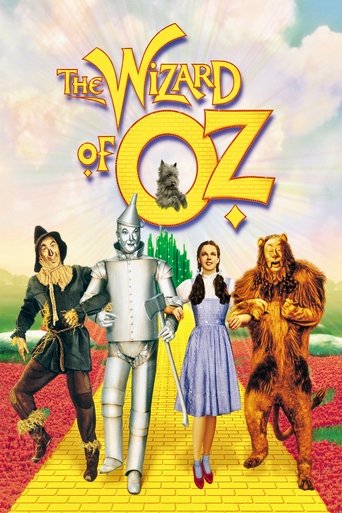
The Wizard of Oz
1939 · Film · 102 min
Directed by Victor Fleming
Young Dorothy finds herself in a magical world where she makes friends with a lion, a scarecrow and a tin man as they make their way along the yellow brick road to talk with the Wizard and ask for the things they miss most in their lives. The Wicked Witch of the West is the only thing that could stop them.
16 positive7 negative1 mixed82 neutralfrom 106 commenters
Where to watch
No streaming data for this title.
119 comments on Hacker News
As for the last point, I was contrasting "a painting might have been created 20 years ago but never made public until later in their life" and "from the date something was made available to the public" - i.e. does copyright start when something was first created or when it was first made publicly available?
In that case, whilst it might be a derivative work, the original would be unavailable to be copied so it would effectively reset the copyright clock. This is effectively a parallel to the case in UK copyright law where an unreleased recording is covered by copyright for 50 years, and if released at any point in those 50 years gets covered for 70 years from the date of release.
> Copyright should last ten years, at the very maximum 15 years, after publication. This is an entirely solved problem.
It is the complete opposite to an entirely solved problem, because not everybody agrees how long copyright should last, or even if it should exist at all. You might think your solution would make it a solved problem, many others would disagree. Governments similarly believe that the copyright term lengths they have enacted into law are correct, and that the lengths enacted by other countries are wrong, and maybe people (including yourself) disagree with them.
As a consumer, I'd prefer copyright terms to be shorter in general, but as someone who's spent around half their career working in games development, and on the kind of games that need a team of 100+ and so need heavy investment and protection in order to recoup that investment, I also support the idea of copyright in general. While my specific area probably doesn't need copyright terms longer than a decade, I can also see that in other areas these lengths are justified - I still listen to older bands, and see it as entirely fair that e.g. Pink Floyd should still receive money if I want to buy an album they made 60 years ago. Similarly, if I want to watch Wizard of Oz, it's absolutely fair that MGM should still get a chunk of royalties from a streaming platform. That money is going to fund the films of the future.
Last week we were in Vegas and saw The Wizard of Oz at The Sphere. I saw the movie many times as a child, but I was blown away at how short it was. Maybe that's a product of the shorter attention spans we have when we are younger, so it felt longer then, but it was apparent at how quick and clear the story telling was then.
It makes me think of the 1978 movie "The Wiz" starring Diana Ross, Michael Jackson, and Richard Pryor. Despite the big stars, it isn't generally regarded as a very good movie. Maybe updating "The Wizard of Oz" with disco music wasn't a good idea after all.
The difference is between "I can tell this story better/more engaging/more entertaining/more realistic" vs "let's cash in on the success this movie had five years ago"
The Wizard of Oz was a new interpretation of Baum's original story. They put enormous effort into making the new film better than other interpretations, of which there were several. Which is why it's a successful, beloved classic!
The same really can't be said of this week's Marvel/DC remake of whatever they made a few years ago. It's just about being a cash grab and nothing else.
P.S. If you've never heard of the sequel 'Return to Oz', do yourself a favor and watch it without doing any research. Just go in straight blind, it really enhances the experience. If you drink, keep a bottle nearby, you'll need it.
> The Wizard of Oz (the one you know of) was a remake.
I'm not sure it's quite fair to call the 1939 film a "remake". It was one in a line of adaptations of the book, and isn't otherwise really related to the other adaptations. It isn't the first, or the last, but it is the most famous.
The Wizard of Oz (the one you know of) was a remake.
The Thing (the one you know of—though the other had a longer title anyway) was a remake.
The version of Invasion of the Body Snatchers with Donald Sutherland (so, the one with that meme-able image of him pointing toward the camera) was a remake.
(Franchises? There are some from like the 40s that had a dozen or so entries over the next couple decades)
Many remake examples from almost all periods of filmmaking.
There were tons of remakes of silent films after talkies came about, then another wave of remakes of jankier-effects stagier-acting-style movies from the ‘40s and ‘50s when effects got way better and naturalistic acting took over in the 70s (plus some of these were remaking black & white to color).
Asbestos was also used as 'fake snow'. Famously the snow scene in the 'Wizard of Oz' movie was 100% pure asbestos.
A reference to the Wizard of Oz movie? I hadn't heard this jargon before.
It reminds me of the Wizard of Oz, color was new and being done poorly. Now Oz is nostalgic so it gets a pass because of its uniqueness, but new films that look like that would be a little absurd.
I like some of the choices on Mario Kart World with HDR, but a lot of it just needs to be toned down so the things which do blow out the colors are impressive but also fit instead of just everything being turned up to 11.
Thanks for weighing in with real-world experience doing film scans.
> From my experience, 4K was the absolute edge you could pull from the best 35mm films... I managed to pull 8K from some 70mm ride footage.
This matches the expert opinion I've heard elsewhere, as well as what was done when scanning Blade Runner (an historically important film now in the national archives). They scanned the 35mm camera negatives at 4K and the 65mm VFX camera negatives at 8k. I'd add that in film scanning, extended color depth is also very important to capturing the full fidelity of what's on the celluloid. An adjacent high-impact factor is how the grain structure of film is handled in post-scan processing. This entails artfully balancing a tricky set of trade-offs because the highest-frequency edge and chroma details are down in the noise floor. Extracting more signal is a knife-edge balance between amplifying noise on one side or suppressing filmic texture on the other. Ultimately, these choices move beyond technical correctness to aesthetic judgement, which I imagine has to be the sweat-inducing part of the job. Anyone really interested in resolution, film scanning and digital cinema should see this in-depth comparison shot by an expert ASC cinematographer specifically to be a definitive set of proofs for the industry. He compares (and pixel-peeps) identical shots from a range of top digital cinema cameras (Arri Alexa, RED, etc) with a high-quality 6K film scan. https://www.yedlin.net/ResDemo/ResDemoPt2.html. I found the results pretty surprising.
> Wizard of Oz is 3x35mm for the color scenes, though. So, in theory you could use some clever algorithm to almost certainly create 8K transfers from it by using the tiny differences between the three frames.
Yes, I really hope that whoever handled the source preparation contributes a technical paper or note on what they did and learned in the process. What I've found so far is far too vague technically but implies they started with the 3-strip camera negatives (perhaps from an earlier scan). As you mentioned, that would enable interesting possibilities for noise reduction by leveraging the differences between the three strips. I kind of hope that sort of noise reduction was actually done by film preservationists in an earlier scan (perhaps for a Blue-ray or UHD release) as the archival source scans deserve the highest fidelity.
As I said in my other, longer post in this thread, I really hope that this effort for a Sphere version will also yield a less extreme 2.39:1 (Cinema Scope), 2.74:1 (Super Panavision) or even IMAX version from the 4:3 aspect original. I appreciate and value wide format cinema but personally think the Sphere FOV is so incredibly extreme it has more negatives than positives for cinematic storytelling. FOVs as extreme as Sphere are really only suitable for theme park attractions, amusement park rides or head-mounted immersive stereo 3D. I realize that the opportunity to collect $100 a ticket at the Sphere was too good for Warner to pass up but we're talking about a cinematic film that's become a cultural artifact. I'm not so purist as to balk at the idea of extending such a classic film with VFX and AI assist but a more "serious" cinematic version would be wonderful in addition to the over-the-top Sphere format. Hopefully, the Sphere version is a limited time release window and there's a subsequent IMAX release (15 perf / 70mm please) and an eventual 2.4:1 UHD (which I'd definitely buy).
I can answer this as I did some scanning work for Universal. It depends on a number of factors, including how the frame is rendered onto the celluloid (e.g. is it cropped). From my experience, 4K was the absolute edge you could pull from the best 35mm films. Most of the time it was really "3.5K" with a 4K sticker on it.
I managed to pull 8K from some 70mm ride footage. I think it might have stretched to 10K if I'd had the equipment.
Wizard of Oz is 3x35mm for the color scenes, though. So, in theory you could use some clever algorithm to almost certainly create 8K transfers from it by using the tiny differences between the three frames.
As someone with a background in both film and video production technologies (as well as being a high-end home theater projection enthusiast) I think this project is doomed to be terrible - and not just on aesthetic grounds but also technically (I'll explore why it's technically doomed in the next paragraphs). But first, what might be good about this? Well, it might be interesting seeing how well they get AI video to maintain consistency of elements between shots. The article is vague but, extrapolating, I assume they probably composited multiple establishing and master shots along with production stills and set schematics to stitch together extended master environment reference plans. Then 3D artists modeled, textured and lit photo-real versions of these extended environments to match the stitched reference material. Those were then used as fine-tuning to constrain the AI outpainting to that ground truth. It might be interesting to see these techniques used to extend the original WoZ 4:3 aspect to a 2.4:1 widescreen format. However, I think it's going to be a disaster because they're extending the outpainting to encompass the Sphere's extreme 165 degree horizontal field of view. Pushing that far will derail any aesthetic or technical value the project may have had.
The biggest technical problem is a 165 degree FOV is not just ill-suited for theatrical storytelling, it's actively harmful because it significantly constrains the compositional and creative choices a director and cinematographer can make. Historically, Hollywood has experimented with a variety of wider (or taller) than typical cinematic formats including Omnivision, Circle-Vision 360, MagnaVision, Cinerama, IMAX and many others. Over many decades of experimentation, it became clear that, for cinematic storytelling, formats up to around 2.5:1 were mostly upside assuming the costs and space could be supported. Extra-wide formats like Cinerama and IMAX had creatively useful upsides but came with some significant downsides which could be minimized with careful handling. Ultra-wide formats like Omnivision, Circle-Vision and, now, Sphere, were primarily useful only for theme parks and short "You Are There"-type features such as Disneyland's Circle-Vision Grand Canyon tour. It can be helpful to refer to the reference chart on this page showing the different FOVs in a typical theater overlaid with the SMPTE, THX and 20th Century Fox recommended FOVs. https://acousticfrontiers.com/blogs/articles/home-theater-viewing-angles-distances-and-sightlines
Experimentation showed that ultra-wide formats, which are more than double typical cinematic FOVs and originally developed for world fairs, are simply ill-suited to cinematic storytelling. In addition to audience fatigue during longer run-times, significant technical challenges of optical distortion, and high costs - perhaps the worst part was the director losing much of the ability to signal to the audience what's important through framing and composition. This signal channel between the director and audience usually goes unnoticed by most viewers but it's a profoundly important storytelling tool for directors and cinematographers. To be fair, I do think immersive/surround visual formats can be useful in the context of a theme park attraction, amusement ride, VR headset or interactive gaming. They just don't work well for cinematic storytelling - like Wizard of Oz. It's a good tool being used for the wrong job.
Recently, I screened the "Postcards from Earth" movie at the Sphere. This movie was created specifically to launch the Sphere and is their featured demo. And they indeed struggled mightily with the issues I've outlined. Ultimately, they chose to mostly not use more than about a 60 degree slice from the center of their 165 degree canvas, at least for anything significant to the story. All that very expensive, compromise-causing extended FOV was relegated to ambient scenic support except for a few brief "stunts" where some large object would arrive from overhead or an edge. But even those would quickly move from being at the edges (and too close/big), to exist in the center 60 degrees like everything else. Also, Sphere content must strictly limit any camera panning, tilting or side dollying to avoid causing motion sickness.
The issues I've outlined above are primarily "Production" problems with Ultra-Wide FOVs, however the extreme format also causes significant "Presentation" problems. These presentation problems come from the Sphere going all-in on creating such a large, extremely wide-angle, wrap-around presentation that fills the entire visual field for 17,000 seats. Unfortunately, choosing that "feature" as the top priority requires other important tech aspects of visual presentation like contrast, dynamic range and resolution to be significantly compromised. A key problem is that the wrap-around screen being 165 degrees causes it to illuminate itself nuking the contrast. The sides down near the horizon line are opposite and shining directly at each other. Another significant issue is that it's almost impossible to shoot or present real-world camera content able to fill the entire 165 degree Sphere screen with a single natural image. As near as I could tell, the entire Postcards from Earth movie doesn't contain even a single full-screen frame that was shot with one camera. It's all CGI with occasional real-world camera shots composited into small frames within the wrap-around CGI field. This is because it's incredibly challenging (if not entirely impossible) to photograph a single image that wide and tall while keeping the perspective from being severely distorted. During the "Planet Earth"-type scenes, the director clearly had to go to great effort to keep any real-world object with straight lines from getting too big. On top of the significant cinematic, compositional and tech issues, the content of Postcards from the Earth is also weak. The story was trite, shop-worn and heavy-handed. The acting, music, cinematography, etc was overall weak - basically what I'd call "pretty good for a video game cut scene but certainly not AAA cinema grade."
In terms of nice things to say... well, the audio presentation wasn't bad. By which I mean, it wasn't great but it was impressively good for that huge of a space dominated by a massive non-parabolic reflector. Basically, the massive size and unusual shape of the space make it extremely challenging to provide a decent audio field to the majority of seats. IMHO, the audio engineering team over-achieved in the degree to which they're able to address many of those challenges. There are a huge number of tuned speakers hidden behind the acoustically semi-transparent screen driven by a lot of DSP power. Very expensive and technically quite difficult. Unfortunately, the resulting audio - while technically impressive given the significant constraints, still isn't nearly as good as a well-tuned flagship Dolby Atmos, THX-certified theater in Hollywood or Manhattan. Another unfortunate aspect is the perforations in the screen required to enable the audio transparency further reduce the screen's ability to generate peak nits of brightness.
If you want to experience today's highest fidelity theatrical imagery for cinematic storytelling, the Sphere isn't it. Sadly, it's not even close (which makes the >$100 price for a bad movie, presented poorly especially egregious). The best you can experience today is visiting one of the 31 real IMAX cinemas (out of 1700 IMAX branded screens (aka "LieMAX" screens)) but only when they are showing a movie A) Distributed in the full 15 perf / 70mm 2D IMAX format, and which was B) Specifically shot to utilize the full 1.43:1 aspect ratio of the full IMAX format. Unfortunately, that's a small minority of what's shown on those 31 screens. Most films shown on IMAX screens weren't really shot specifically for full 1.43 IMAX format (which is super tall compared to normal cinema aspect), so they're just open gate (unmasked) versions of films primarily framed and lit for typical wide format exhibition (like 2.39:1). Also, avoid anything shown in 3D because the 3D projection process (whether IMAX or not) always significantly reduces brightness, contrast and resolution vs 2D projection.
I didn’t say they shouldn’t be allowed to do it, and the only thing I said about “the theater experience” was sneering at the idea. I am talking about the film itself, and saying that these edits to the film are tasteless trash. Claiming I’m “clutching at pearls” is a bad faith insult - my point is this shit fucking sucks!
David Lynch used ML to remaster Inland Empire, which was shot on a digital camcorder and was simply too dark and blurry. This was an excellent use of the technology. Blowing up The Wizard of Oz for the sake of tech bros and tourists is a terrible use of the technology.
> I brought up the metaphor of the Wizard of Oz. In the movie, the wizard is posing as an immensely powerful entity but turns out to just be a guy operating machinery.
The drum I keep beating: Every AI assistant you "talk to" is a fictional character in a movie-script. There's code that "acts out" its lines to you, and your own text becomes "then the user said X" lines. The nameless ego-less LLM iteratively Makes The Document Longer, in ways that fit all the documents its seen. An ultra-powered mad-libs.
> For instance, I told it to become “Robert,” who talks only in dumb ways
Right: The exact same system could have the human user conversing with Dracula, Vampire Lord of the Night.
"Dracula" would be demanding that you convince all your friends to donate blood and boycott products made with garlic. The character would "fear" wooden stakes and crucifixes--in the same way that this "AI" character doesn't "want" to be turned-off or deleted.
However making software that writes stories about X is not the same as creating X... not even when X happens to be "an AI sharing the same product name."
> I told Bob that he is not alone: some of the smartest people I know are getting fooled.
Not only that, but the mistake is being deliberately encouraged by other humans. They have deliberately built the system make users think they are talking to a discrete intelligent entity... and for investors to believe they have invented the same.
no, i think the prompt was too long. It said "running..." but never showed any results. I think an AI that could spit out a compelling movie that follows the hero's journey like star wars, or the matrix, or The Wizard of Oz, etc. would be really compelling. Like click a button a get a new original 2 hour movie script you could sell to hollywood? Amazing.
>Where did you get this stereotype of farmers?
it's not a hard guess even if you don't share the opinion ; nearly every movie where 'farmer' is a plot point demonstrates a rural-living poorly educated family living in dust-bowl conditions and barely scraping enough resource by to feed the animals.
grapes of wrath, wizard of oz, of mice and men, o brother where art thou, ballad of buster scruggs -- yes it's a stereotype , but it's a common one in movies and literature.
When I was younger "2001" was my favorite movie. As I grew older, "The Wizard of Oz" moved into the front. There's never been another movie remotely like it, before or since. It stands alone.
I think it's different for different kinds of stories. To borrow your example, one possible interpretation of The Wizard of Oz is that it's a political and economic allegory around the gold and silver standards. Allegories often by their very nature have to stretch and bend reality (even an internally-defined one) to tell the story they want to tell.
I agree with your hesitation to start a debate about The Last Jedi, but I think your point about what rules are ironclad is why reactions to that movie were so mixed. For me (and many others), the mechanics of the Star Wars world are paramount. I have trouble experiencing strong in-universe emotions when those mechanics are broken, because when that happens, I'm pulled out of the story and have trouble immersing myself in what's happening to the characters. But to others, the emotional impact of what happens to the characters, and how they act, is the most important thing, as you suggest, with all other concerns secondary.
The writers of the Star Wars sequel trilogy had a very tall order on their hands: the "original" Star Wars fans are older (some might say much older) now, and they needed to tell a story that could appeal to those people (such as myself), but also appeal to children and young adults. It's very hard (some might even say impossible) to create a narrative that speaks to superfans who have been steeped in the mythology and mechanics of a world for decades, but also attracts a more casual viewer who just wants to watch a cool story with lightsabers and spaceship battles. My opinion is that they sacrificed the first bunch in order to attract a fresher audience, but it doesn't really matter if my opinion is "correct" or not; the fact that the movie (or entire trilogy, even) was so controversial, with so many opposing views, is all we need to know: they tried to appeal to too many different types of people, didn't do a great job of it (if a great job of it is even possible) and in the end a lot of people were unhappy.
It means "tornado," referencing the 1939 film "The Wizard of Oz." The Kansan protagonist is transported by a sudden tornado to a magical land called Oz.
> I don’t think you could name ten pre-1940 films that most Americans have seen
Conversely, I don't think I know any Americans who haven't seen The Wizard of Oz (1939). And again with the sole exceptions of superficial idiom and vocabulary (and some really minor pronunciation changes that are as much theater affectation as they are language) there's absolutely no change at all from the stuff you hear from a 15 year old member of the High School class of 2027 (I live with one). Again, I really don't think that's normal historically.
That's the other thing to keep in mind, seeing things in perspective for the time; these movies were literally groundbreaking, like Wizard of Oz' transition to color film (compare with e.g. Avatar which popularised 3D film), Jurassic Park's use of CGI blended with models and live actors, the unfortunately one-off Who Framed Roger Rabbit, Toy Story's full CGI film that revolutionised animated filmmaking (arguably for the worst since it eventually came at the cost of "traditional" western cartoons).
It feels like it's getting harder to do something new.
>Will we have new versions become public domain every couple years, corresponding to every individually released Movie or TV Cartoon/Short?
Yes, copyright protects artistic works, not individual characters. That means you can use the aspects of characters that appear in works that have entered the public domain, but not the parts that are still protected.
There was a period when anyone could make a Sherlock Holmes story, but you couldn't have Watson get married because that later book was still under copyright. The Wizard of Oz books have been in the public domain for a while, but Dorothy has to stick to the original diamond shoes because the ruby slippers originated in the MGM movie. The same thing will continue to happen with Mickey Mouse and every other character that appeared in multiple works.
People often think that old video must be stuck to standard definition (or worse), because they're used to seeing it on NTSC/PAL broadcasts, VHS, or DVD.
The reality is, these things were captured on film, and there's no reason you can't scan the film in high definition resolutions. Film is an analogue medium whose upper bound for resolution is dictated by the film stock and grain; 35mm film is sufficient to produce modern 4K scans and was one of the most common stocks in analogue video production.
If anything, modern 1080p/2160p scans of old film bring the material much closer to how people with projectors originally saw the media, instead of a blurry scaled down version made for old television.
If I may provide my favorite example, check out Wizard of Oz in 4K. It's from 1939, in full color, and holds up wonderfully well. The 4K transfer allows you to really appreciate the set design and makeup especially.
Out of personal curiosity, how far does this go for you? Would you download (without paying for)
- an old film (the Maltese Falcon, Wizard of Oz, Wings [1927 silent film])
- a really bad film (Santa Claus Conquers the Martians)
- something you already own but don't have access to at the moment
- anime
- none of the above?
Or just the earlier works have been forgotten. It tends to surprise people when I mention the 1939 Wizard of Oz movie (one of the first(?) to showcase color and still known for that because of the transition) was an adaptation of just the first book of an older series.
This is a great suggestion.
And I think a fun twist is to try books where the movies are better as well.
Some examples:
• The Godfather
• Jaws
• The Wizard of Oz
>had to compete with spider-man
Yes, a much more popular IP-based movie.
I understand it's frustrating to accept that the viewing public prefers IP over original movies, but it's just true. Studio movies as audiences expect them (and increasingly TV) are just too big and expensive to be the medium in which we workshop new ideas. You'll often get new ideas from blank-check directors, animation, or indie films, but that's it.
Now, keep in mind, looking back at some of the greatest movies of all time, good movies were always IP-based, it was just less noticeable:
Godfather (book)
Gone With the Wind (book)
Lawrence of Arabia (book)
Wizard of OZ (book)
The Graduate (book)
West Side Story (Musical)
2001 (An expansion of an existing Arthur Clark Story)
I could go on, but you get the point.
This seems like a dubious leap. What is the substance of this argument? In the absence of movies, people would still buy firearms, either because they hunt, seek to arm themselves for protection, or simply to collect them, not unlike how some collect knives, stamps, or Precious Moments figurines. We know this because people have been buying firearms long before there was cinema.
Other than some terrible movies, Hollywood has never actually tortured anyone.
It is important to remember that Hollywood is a reflection of our society. It seeks to entertain and sometimes (wrongly) to exert influence on that society. It has limited effect because humans are more than the entertainment that we consume. That being said, people like to see the bad guy get his fingernails pulled out, we recoil at horror movies while secretly laughing to ourselves, and weep when the hero is put through agony. The film was written purposely for this emotional effect. That doesn't seem like glorification; a gratuitous worship for worship's sake. (Think Stolz der Nation.)
Films and other entertainment exists because it moves us emotionally. Few act on those emotions after the fact. Not many people identify with the two shop keepers and their pet in Pulp Fiction, but everyone cheered when Butch and Wallace dealt with them. And few can relate to Calvin Candie or Steven, but rejoiced when they got theirs.
Is being shot in both knees and dynamited torture?
Is that glorification, or is it catharsis? A closing of a loop that was opened when you were introduced to a well-written villain.
I also don't remember torture being "glorified" in Gone with the Wind, the Wizard of Oz, or There Will Be Blood. Like all topics, there are nuances and details that cannot be ignored. Generalizations are a precipice.
Circa 1980 there was a panic over color movies fading that was spearheaded by people like Richard Scorsese who saw it as a huge cultural loss, but a major factor was that home video could turn movies like the old Wizard of Oz into gold.
At the time they tried bad preservation idea such as dividing the colors up into separate reels before they realized even relatively fugitive dyes would hold up for centuries if you keep them in a dry freezer.
This isn't trues and it's odd you believe it.
I just asked Chat GPT 4 to explain the religious significance of the wizard of Oz as a literary critic. Here's some of what it gave me, it doesn't write anything like you claim it does:
"Moreover, Dorothy's companions -- the Scarecrow seeking a brain (wisdom), the Tin Man seeking a heart (love/compassion), and the Lion seeking courage (strength) -- symbolize spiritual virtues that are often extolled in religious texts. They embark on this quest together, mirroring the communal aspect of many religions.
The slippers (silver in the book, ruby in the film) can be viewed as sacred objects, or relics, that assist her in her journey, providing divine protection and eventually leading her to salvation (returning home).
Finally, the revelation that the Wizard is a mere mortal, and that Dorothy had the power to return home all along, imparts a spiritual lesson often found in religious narratives: the divine or the sacred is not external, but within us."
If I was a student I could have easily expanded on these concepts (with or without GPT) and turned in a good essay.
"The quality of this video is horrendous, I can barely see the animation; it seems like film artifacts combined with VHS artifacts"
Agreed, one wonders what happened to the original negatives. It's years ago now, but I recall seeing a Technicolor Warner Bros Bugs Bunny/Sylvester cartoon made around 1940-'43 and I was simply dazzled by the color. I remember a scene where Bugs and Sylvester were playing pool and the yellow of the overhead shaded lights shone down on the green pool table and the color was simply magnificent—full tonal shading, the lot.
A great deal of work went into color films of that era, they were pre-Eastman color negative so the masters were tri-separation B&W masters so the color could be very finely tweaked. As color was new back then film producers took great care, and as I said, the results were often spectacular.
Those tri-seps must still be somewhere. I cannot understand why they haven't been re-released. If you've seen the digital remastering of say The Wizard of Oz (1939) you'll have some idea of how excellent those cartoons looked in their heyday.
If you're not familiar with the pre-Eastman Technicolor tri-separations it's important to realize that as the negatives are all B&W and shot through RGB filters there are no color dyes to fade in storage, color is recreated afresh every time a new print is made from the negs. That changed around 1947 when Eastman color negative stock was released, as it contained color couplers those color negatives were subject to fade and many early post-War color films now look terrible they've deteriorated so much.
BTW, you'll probably recognize Eastman color, it was the forerunnt of that orangy color negative we had in the pre-digital era, Kodacolor, etc.
I watched every single episode of Bewitched when I was a child. I watched and enjoyed The Wizard of Oz. I definitely enjoyed Bram Stoker's Dracula in my goth youth. Only a few years ago, I purchased a ticket to see one of my favorite actresses in The Importance of Being Earnest; while I only knew a little bit about Oscar Wilde's background, the production crew appeared for Q&A afterwards and explained every single detail of the play to demonstrate just how ga y it all really is, without explicitly portraying a single LGBT character or relationship.
If IP were less restricted, I could envision hundreds of derivative works for each film; nobody would know whether Han shot first; Ted Turner would colorize the first 20 minutes of "The Wizard of Oz", and my mom would star in "Ghostbusters (1984)".
Which Golden Age? Yes, the preservation for pre-1927 films is very very poor, 3/4's was lost, with most of that loss being things make before 1925.
Much more of the post-1927 content was preserved (more of it was preserved with sound once we switched to sound on film) - I'd note however that Silent Movies are virtually unrecognizable by modern viewers as being even the same art form as sound pictures - and sound movies didnt reach the same... production values? as the silents until 1936-37.
The period between 1927-and 1937 was a period of reinvention and learning of a new medium, which is why - my general take is the golden age of Hollywood was 1939 to 1959.
Consider what films came out in 1939 -
* Gone with the Wind
* Wizard of Oz
* Mr. Smith goes to Washington
These are films that still find audiences today, now - 80 years or so on.
Most Americans might have seen one movie produced between 1927 and 1938 - but most people who are above 30 have seen at least two those three movies at least once.
And that trend continues from there on - where 1940 to 1959, most americans have seen one movie released in each of those years.
So while I dont disagree that we are losing heritage in these things - I take issue with their definition of Golden Age and the idea that there is value in saving everything ever written or filmed.
Much of it wasnt meant to be relevant for decades, it was meant to be ephemeral topical entertainment, and functionally intended to be disposable. Most of the production of Poverty Row, and B pictures by the majors are like this, they were intended for Block Booking, and largely just as a way to fill the content needs of the theaters and as a way to provide steady revenue in the event an A picture flopped.
According to this tome
http://www.wilhelm-research.com/book_toc.html
it was not "films seen as art" that started the preservation wave in the 1980s but the introduction of home video which meant that a movie like
https://en.wikipedia.org/wiki/The_Wizard_of_Oz_(1939_film)
was suddenly worth millions again.
> The movement of a lifeless prop goes from "oh wow that was creepy" to "oh that is a piece of plastic with some paint on it". Our ability to discern what things are is pretty strong.
You can really start to see this when watching older movies (say, 30 or 50 years old) in HD. These movies were never intended to be viewed on a 16:9 1080p or 4k screen. A good example is Wizard of Oz (1939) or White Christmas (1954). -- the whole movie just feels like a set. You can clearly see the makeup they are wearing.
Even older shows like Seinfield or Friends can have this kind of feel. These were always intended to be shown in 4:3 480 on some crappy CRT. Not 16:9 at 1080p...
What I find funny is looking at older TV shows that were clearly meant to be shown on old analog 4:3 CRT's but shot in film anyway. Now these shows show up in syndication and all that film got scanned as 16:8 HD. Some examples include Seinfeld, Friends, even Wizard of Oz. Many times it feels like you are watching a play instead of an immersive show. All the props look like props instead of something "real"
I went to a lot of movies in college, at the university film center. They put out a quarterly calendar, with a little blurb for each film. Most were pretty pedestrian, but I still recall that they somehow got me to the theater for _The Usual Suspects (1995)_ without giving away any details.
Obilgatory reference here to Rick Polito's summary of _Wizard of Oz_: "Transported to a surreal landscape, a young girl kills the first person she meets and then teams up with three strangers to kill again."
Don't forget that part of the problem here is the near-infinite copyright extensions on popular works. The Wizard of Oz is a 1939 film, and the creatives who were responsible for it appear to be long since departed. Why isn't it public domain?
One thing young people don't understand (probably because they didn't experience it) was that the introduction of LSD to engineers and other technical people was a revelation and very inspiring. The mindset back then was formal and rules based. LSD taught people to think outside of the box. We now live in a world that has benefited from that thinking and also a world in which a lot of people have taken LSD and it's old news. It's hard to capture the excitement of that time.
It's the transition or inflection point that was inspiring, like movie goers in the 1930's who were only used to black and white movies going to see Wizard of Oz and being amazed that it turned into color, something they had never seen. But it was much more profound than that because it felt possible to rewrite the world to be a better place if enough people took LSD. Nobody feels that way today.
I thumbed to 1939 in the "1001 Films to See Before You Die" and got these (three I believe are "foreign" films however):
Stagecoach, Zangiku Monogatari, Babes In Arms, Mr. Smith Goes to Washington, The Wizard of Oz, Destry Rides Again, Only Angels Have Wings, Gone with The Wind, Le Jour Se Lève, Gunga Din, Ninotchka, La Règle Du Jeu, Wuthering Heights
> Another point to consider is that old movies don't gain that much from blue ray.
Disagree :) The oldest movies I own on Blu-ray are Gone With the Wind and The Wizard of Oz, and both of them are visually improved by being in HD compared to the DVD releases. I wouldn't really prefer SD for anything regardless of age.
It was used for snow effects in old movies. Like The Wizard of Oz
https://www.youtube.com/shorts/pzfTz-tIbTY
Really terrible if you think about it.
> bigger than the Wizard of oz moment where the movie transitions from monochrome to colour
I have never heard anyone put it better than that.
Yes, the shift of consumer computers from command-line only to graphical interfaces would have been bigger than the Wizard of oz moment where the movie transitions from monochrome to colour.
I contrast this to Meta VR's comically atrocious demos and wonder what happened.
Counter argument: I disagree with most of what you say here.
I think what impacts all people, regardless of age, is much less about the medium and much more about message. I disagree with the "medium is the message" idea being applied universally. Zelda Breath of the Wild has the same spirit as the Gameboy games, and the NES games. And before that, the same spirit of the games and fantasy books about knights, and forts with secret passageways made out of sticks and renaissance fairs. Super Mario Odyssey is a digital evolutions of the same kind of playgrounds and energy like jungle gyms, or tag, and running around and collecting things like hide and go seek or a scavenger hunt. Splatoon is like a soccer game, or an airsoft game, or any kind of childhood battle/skirmish game. Each of those types of games I think map to styles of play that are really, really old.
I do think there is a message in the medium, though, and that the message is "we think this game/story is important enough to convey properly that we'll invest cutting edge technology to enable the best possible experience". I think each generation actually does in fact experience the same impact when that message is received. They way it is conveyed changes, because the cutting edge changes.
You can tell when media hits that Goldilocks zone; it's not something frozen in any particular time. It moves and evolves. The Peter Jackson Lord of the Rings holds up. The original Star Wars holds up. The first James Bond holds up. The Wizard of Oz holds up. Metropolis holds up. Shakespeare holds up. Etc etc. You can trace stories back eons, and the ones that convey core messages about human experience in a time/era appropriate way are an essential part of how we think of ourselves. People who feel rooted and secure in their cultural context don't find the past contemptible, they are reassured and feel connected to an evolving set of stories.
You can still see that with modern media. It will vary person to person, each cultural niche and personality type has a different Goldilocks zone preference.
I don't think variety and saturation with more different forms of expression than we could dream of is actual sophistication. In a lot of ways it's actually more difficult than I think it's ever been to really convey a compelling story in a cutting edge manner. The army of people and resources needed to make a modern movie is insane, as it is for a cutting edge video game. I think that's leading to less sophistication, because the inevitable bureaucratic behemoths that are needed to create cutting edge story telling tends to kill off a lot of the best storytellers. The best story tellers should be more discoverable than ever, but it's increasingly difficult to plug them into these incredibly expensive projects.
If you replaced "The Hero's Journey" with the (Japanese-anime) word "Isekai", I get the same feeling here.
"Isekai" is the "Trapped in another world" trope that suddenly became popular for anime/manga in the last 10 years. But the basis of the story has been backwards-applied to Wizard of Oz, a Kid in King Author's Court, and even 90s shows like Digimon, Escaflowne, and .Hack//Sign.
Except "Isekai" as a concept didn't exist until relatively recently, within the past decade or so. There's no way Mark Twain was thinking of that concept when he wrote "A Connecticut Yankee in King Arthur's Court" over a hundred years ago.
---------
Furthermore, a lot of the tropes associated with the Isekai genre can be applied to plenty of other stories (including the Hero's Journey). Harry Potter, for example, hits overpowered main character, travel to effectively another world hidden amongst people (Hogwarts), magical / fantasy tropes (classical monsters), etc. etc.
----------
There are however, certain tropes and storytelling devices that are popular amongst people. When you take an "average person" and stick them as the main character, with few defining features... it allows for the reader / watchers to "self-insert" themselves as the protagonist.
See Harry Potter who comes from Muggle society, The Connecticut Yankee who represented a modern American from Mark Twain's era, Dorethy from Kansas, or the legion of Isekai protagonists from Kagome (Inuyasha), to Kirito (Sword Art Online). You give the main character a degree of wish fulfillment, including adventure, romance, and overall a positive and uplifting story. And a lot of people will like it. (The notion of "The Outsider" from Westerns and Japanese Samurai films also hits this trope)
-----------
We can see that "The Hero's Journey" in fact follows a lot of similar patterns with "Isekai" itself even. Adventure is thrust upon the protagonist in the form of "The Isekai" moment (the moment where the protagonist is teleported to another world somehow).
-----------
I think "The Hero's Journey" is largely the same. Its a backwards application being applied forwards. A concept created in 1944 that tries to unify stories from centuries or millennia ago, and tries to distill them into a singular "pattern" that works for today's audiences.
No different from "Isekai" these days (though on a shorter timescale: a concept from the past 15 years that very well could be applied to stories from 100 years ago). Now excuse me, I have some trash anime to watch...
EDIT: The trolls will joke that "Saving Private Ryan" is an Isekai. The WW2 front was a very different life, and the "Isekai" moment was getting off the boat and onto the shores of West Europe. They can't go back until they've accomplished their mission, so its an Isekai, trapped in another world.
"Technicolor has annoying fuzziness around objects. See Wizard of Oz."
This happens with Technicolor only when it's processed badly and the registration isn't done with sufficient precision. I agree, this has happened from time to time.
Moreover, you also have to consider where the source material for the Technicolor process originated from. Tri-separated B&W negatives were used in the late 1930s, Wizard of Oz being one and the other major notable Gone With The Wind.
Prints from tri-separations can be quite excellent, in fact brilliant as the colour can be precisely adjusted. Also colour 'compromises' don't have to be made in the printing as is intrinsically the case with film that use colour couplers - Eastmancolor (Eastman color negative, its internegative and theatre release/print stock) to name just a few.
(Colour couplers in film emulsions are at best compromises as they have to be compatible with the processing chemistry and many of the best colour dyes and pigments are not. Processes that do not use colour couplers such as Kodachrome and Technicolor are much superior in this regard as stable dyes with the correct (or best) colour can be used. Colour couplers also lower the resolution of an emulsion although in many modern emulsions this isn't a significant problem.)
Nevertheless, if tri-separated B&W originals are used after being stored a long time then shrinkage differences in the three negatives can pose printing/registration issues.
It would be interesting to know the source of your Wizard of Oz, - as some years back the DVD version took this into account when the film was remastered. Every frame of the tri-separated B&W printing masters was resized to ensure its geometry was identical to all others. I've seen that remastered copy and its registration is excellent.
Incidentally, the very last version of the Technicolor processes of the 1950s was the best colour film system for movies ever devised before they went digital. However, one needs to bear in mind that many so-called Technicolor films are only hybrids, as they use Eastmancolor (or other) film stock for both the original source and for later dupes from earlier Technicolor theatre release prints. They, along with multigeneration copies, often create many issues including low (fuzzy) resolution and muddy cross-colour effects.
When making a claim like you have it's imperative you first check a film's manufacturing/printing methods. Tracing its manufacturing provenance is absolutely essential.
Edit: FYI, pre-WWII B&W film emulsions as used in the Wizard of Oz were never as grain-free or as sharp as modern-day equivalents are. You also need to ensure that you aren't drawing any comparison to these much newer products. The Technicolor process should not be blamed for limitations in the source material.
Black&White-tv was almost HD, 625x625. Then they added 3Mhz color-carrier in 1966 and it was 300x300 with this color-furze on top. This sucked so much. There was nothing I wanted see in living color. Especially winter-sports were mostly BW.
I remember that color movies sucked also in 1950s. Technicolor has annoying fuzziness around objects. See Wizard of Oz.
The Wizard of Oz (1939) was the fourth Wizard of Oz film.
Not the OP, but that’s no guarantee. I’ve seen Wizard of Oz twice as an adult, both times in a movie theater, and both times I’ve fallen asleep.
> After all, could you really, badly, critic a 30’s movie because it is not shoot in HD?
1930s films did "shoot in HD". Most films were either 16mm or 35mm, both of which have more than enough fidelity to represent video at 1080p or higher without loss of quality. Here's a copy of Wizard of Oz on 4K UHD: https://www.amazon.com/Wizard-Oz-Limited-Anniversary-Collection/dp/B07WT62PPT
A more realistic take is could you criticize 1920s films for not shooting with sound, and the answer is yes, absolutely. Films went from almost entirely silent to almost entirely talkies in roughly 3 years because of massive, unprecedented, and immediate commercial pressure to do so. Audiences ate up even mediocre talkies and shunned silent works now considered classics. The only reason colour film adoption wasn't similarly fast was because of Technicolor's monopoly.
Flash forward to the 1990s, where cinema as a medium was very sophisticated. Now look at blockbusters beginning to use CG rather than animatronics. The airplane in Air Force One. Jar Jar Binks in Phantom Menace. Hell, take the 1997 re-releases of the Star Wars trilogy which inexplicably added garbage like CG Jabba the Hutt. The purple stuff in The Langoliers. Even going back to Lord of the Rings, even going back to the Hobbit, even going back to "early" Marvel films there are tons of moments where CG is jarring. The Polar Express -- an excellent and heartwarming Zemeckis film -- is mostly known because no one likes the dead-eye CG. Yes, absolutely, technical barriers have affected peoples enjoyment of film and still do!
In video games the most obvious period of time that is conspicuously a donut hole is the Playstation 1 / early 3D era. The PS1s 3d games featured really quite nauseating affine texture warping due to a lack of hardware correction support. Here's one video of many talking about this: https://www.youtube.com/watch?v=x8TO-nrUtSI Early 3d controls are atrocious -- the "tank controls" of Resident Evil are famous for this -- because controllers initially didn't have analogue sticks and when they did, they didn't yet have basic paradigms around how to best use them. The Nintendo 64 was built around analogue control, which is why Mario 64 works so well, and yet it has a completely rotten camera system because there's only a single analogue stick and the c-buttons aren't a good substitute. And that's the PS1/N64. If you go back to the earlier era of 3D, especially on the Super Nintendo, you find low framerate, awkward controlling messes with flat polygon shading. Try playing an unmodified copy of StarFox or Stunt Race FX, I dare you.
No one is saying to throw Casablanca out with the bathwater, just as no one is going to throw Super Mario Bros, out with the bathwater. I'm not saying that technical issues mean we should never play old games or watch old movies. I'm saying that it shouldn't be surprising that people do count technical issues as part of the reason why they prefer newer stuff.
I also think the article misses widely when it pretends that "old ways" of making games don't exist today. Games are made in now-dead genres, with now-dead mechanics, all the time. They have commercial budgets at least as large as they ever did and large, warm communities. In many cases, the original teams working on games in the 1980s and 1990s still make games. I can't find an example in the article where you can't find similar games to play today.
The article mentions that isometric games would be anathema today. Disco Elysium is one of the most acclaimed games of the last few years. Wasteland has two recent sequels, both well liked. Hades is also one of the most acclaimed games of the last few years. Age of Empires IV retains a basically isometric perspective for an RTS. Diablo Immortal just launched and Diablo 4 is coming. Huh?
The article mentions unnamed youngsters not liking the real-ish time mechanics of Titanic Adventure Out of Time, or the difficulty of the puzzles, feeling that they're too punishing. I doubt it. Majora's Mask (1999) is considered an excellent Zelda because of its time mechanics. Dead Rising (2006) was one of the first major hits of the HD era of video games and it's on a fixed timer. Final Fantasy XIII-3 (2013) uses a similar mechanic, and while the game is often criticized for being terribly written nonsense, it's not because of the mechanic.
Or if not the time mechanic, then needing to take notes? Hollow Knight is maybe the most critically acclaimed indie game of all time and most people play it with a fan wiki open, to say nothing of From Software (Dark Souls, Elden Ring) suddenly becoming the apex of prestige developer. Point and click adventures are still quite popular: The Return of the Obra Dinn is widely considered among the best games of the 2010s.
The article claims unnamed gamers today are reacting negatively to the visual choices of the new Monkey Island. This just seems entirely untrue. The reaction across the internet, including on gaming forums, reddit, and here, was overwhelmingly positive. A few people said "okay, this style reminds me a bit of the not-great LucasArts Singapore modernizations of the first few Monkey Islands". This does not presage a great backlash against the game, it's just people shooting from the hip, the vast majority of anyone who cares to comment is excited even if they have concerns about the visuals. And anyway, 99% of the people commenting are greybeards like the rest of us, not young people.
Overall I can't find much here that resonates with me.
Grandparent seems to be making a point about the nature of art, and how small variants in the medium make a difference. It will date me a bit, but I'll provide an unrelated example:
When I was little, one of my favorite movies was The Wizard of Oz. I have a cherished memory of my grandmother loading the VHS tape, and explaining what it was like to see color on the screen for the first time.
Many years later, my then-S.O. confesses that she's never seen it, so we rent the DVD. The DVD of the Wizard of Oz looks like garbage. It's obvious where the backdrops meet the ground. The costumes barely work. The trees in the Tin Man scene are straight up hilarious. If you've ever watched the original Star Trek series on DVD or Netflix, picture whatever special effect is most obviously fake to you (for me, it's The Doomsday Machine); the whole movie looks like that.
My grandmother had one experience with the film, never having glimpsed a color motion picture before. I had a different experience, watching from a worn VHS tape whose low fidelity masked a lot of the results of the relatively primitive techniques. My then-S.O. had a third experience, as would a child watching a digital version of the film today. Just because that experience is different (and, in many ways, worse) doesn't mean that the film never should have been digitized. Likewise, grandparent's preference for the original more primitive rendering doesn't mean that the ray-tracing mod never should've been made.
To use your analogy in the other direction: nobody talks about the Wizard of Oz source material. Were you aware the movies were based on a book? Maybe Marvel comics will go the same way.
The Marvel movie source material will be remembered (The original comic books from the 1960s). But in 500 years the movies will have repeated themselves so often I don't know if anyone will care about today's comic book adaptations. Nobody really cares about the 1910 Wizard of Oz film, for example, even if they love the 1939 later Wizard of Oz film.
I’ll play:
The Thin Man (1934), It Happened One Night (1934), Dodworth (1936), Fury (1936), The Awful Truth (1937), Grand Illusion (1937), You Only Live Once (1937), Wizard of Oz (1939), Only Angels Have Wings (1939), The Great Dictator (1940), His Girl Friday (1940), Philadelphia Story (1940), Rebecca (1940), The Maltese Falcon (1940), Citizen Kane (1941), A Woman’s Face (1941), The Magnificent Ambersons (1942), The Ox-Bow Incident (1943), Casablanca (1943), Double Indemnity (1944), Mildred Pierce (1945), It’s a Wonderful Life (1946), The Best Years of Our Lives (1946), Great Expectations (1946), The Big Sleep (1946), The Red Shoes (1948), A Letter to Three Wives (1949), Sunset Boulevard (1950), All About Eve (1950), A Place In The Sun (1951), High Noon (1952), Roman Holiday (1953), The Wages of Fear (1953). (I slipped two French films in.)
Almost anything by Hawks during those years. Or Hitchcock. Almost anything with Bogart. Or Grant. Or by Wilder.
Tons of noir films skirted the rules.
Look, I’m not a fan of the Hays code but some of those movies were to me better because of what they had to imply.
This is after the Hays code but as an example I recently watched the original 3:10 to Yuma and the remake. I hated the remake. What appeals to me about Elmore Leonard stories is that despite being about bad guys, they have a degree of charm to them (Out of Sight, Justified, Jackie Brown, Get Shorty,etc). The remake took all of the charm out of the original and replaced it with graphic violence and cruelty.
The problems of washed-out colors making movie scenes look like gray wastelands isn’t limited to the digital era, if a competition were held then there are plenty from the film-emulsion era that could easily compete for first prize.
In the 1930s a quantum leap in the quality of color film occurred with the introduction of an updated tricolour version of Technicolor. The quality of the colour in Disney films and others such as the Wizard of Oz and Gone with the Wind (both 1939) was truly exceptional when compared with anything that had preceded it and the color still holds up very well even by today’s standards without any digital tweaking or remastering.
In 1950 rival Kodak introduced its Eastmancolor color negative process which used a single filmstrip with a tricolour emulsion that captured the full color range and by mid 1950s studios had a choice of using Eastmancolor negative in cameras and printing onto either Kodak’s own color theater release stock or to use Technicolor’s dye transfer process for same.
The trouble started with the introduction of Eastmancolor stock because it was far less stable than Technicolor. Technicolor is stable because it used a tri-separation process involving three B&W emulsions—B&W film being inherently very stable—as well as stable dyes in its dye-transfer process (for its theater release prints). As no photographic process is used in the dye transfer process, its dyes can be selected for both stability and vibrancy, whereas Eastmancolor has significant limitations in that its dyes have to be compatible with the photographic process (they use chemical couplers to bind dyes to the photographic process and there’s not that many options available). Moreover, color dyes generated by the coupler process have both a smaller color gamut and, as mentioned, they’re far less stable and fade-prone than Technicolor.
Under ideal conditions Eastmancolor produced good results but QA issues as well as Eastman’s theater release shock faded quickly, deliberately so—as theater release prints were designed only to last one season or to do one round of the circuit—for if film got lost or stolen it would be useless after a year or two (otherwise it was worn out anyway).
Of course, things never went to plan, and all too often faded, badly color-graded and rerun prints long past their use-by date made their way back into theaters and were continued to be used. The net effect was that one would often see Eastmancolor theater release prints that were unacceptable for stated reasons, thus it was not unusual to see significant numbers of movies that suffered from fading, significant exposure and color errors and even cross-color†, which, in my opinion, looks damn horrible even in small amounts. To help minimize these problems theater release prints would often be printed in somewhat desaturated/subdued colors as they were less obvious.
The Viewer’s Problem:
Whether we’re dealing with film or digital source material that needs colour grading/correction then there are very effective solutions are but they're not necessarily accessible to the home consumer (or even to theater projectionists).
What viewers need are TV/screen remote controls, that in addition to their usual functions, would also include optional features that enable the viewer to (a) either colour correct a movie on-the-fly or (b) select color corrections from a set of preprogrammed color terms (color correction matrices) similar to those used in professional photo printing machines (those which use color negatives as their source material).
I’m not just talking about the basics such as the usual saturation, colour balance, contrast and brightness, but also vibrancy, curves, shadow and highlight correction and midtone contrast. In essence, all the necessary tools needed to correct both exposure and color errors in movies similar to, say, those that one finds in Photoshop’s Adjustment menu such as Shadow/Highlight (one of my most favorite and most used adjustments).
If studios do a good job in color grading/correcting their movies then we need do no adjusting. But I find that's rarely the case. What bothers me most, perhaps even more than color adjustments are the all-too-frequent excessive instances of black crushing and loss of detail in the shadows and highlights and I want sophisticated tools to correct them. (Surely, I'm not the only one who's noticed the high contrast and crushed blacks in many of the recent transfers of old films to DVD etc. It's clear no one has even bothered to make any corrections.)
_______
† Cross-color is color distortion that occurs as the result of a nonlinear transfer process (cross-modulation) and essentially it very difficult to correct or remove because of the newly created intermodulation products (artifacts—new colors that weren't there at the outset). Cross-color in a film emulsion usually occurs when one dye layer bleeds or diffuses into another which then mix to form the new colors. Moreover, the amount of dye diffusion isn't linear across the transfer curve, it may be at maximum or minimum in the shadows or highlights or anywhere along the curve. There are many causes, aged prints, bad processing, bad handling, one dye being more unstable than another and thus it fades more than other layers (color degradation of this type is largely exacerbated by the film emulsion's exposure to projector light.
That said, cross-color effects can be corrected or eliminated in modern digital effects generators, that is if people bother to take the time to do so (and often they don't). Presumably in the near future AI will do the corrections according to some proscribed algorithm.
Children getting whisked away by a handsome protagonist and his magical sidekick to fight against "cool things" like pirates and mermaids in a world unlike our own?
Its an Isekai.
---------
Isekai is this modern trend in anime (and US movies sometimes!! Like Ready Player One), where characters are sent to another world. Sometimes due to death explicitly ("Reincarnated in a New World" plotline: like "I'm a Spider So What"), sometimes just "temporarily" transported (Sword Art Online / Ready Player One, they are "just" playing a video game).
From an "Isekai" perspective: people want two things.
1. A world very different from our own. Completely different "physics" or rules. So magic systems, history, culture, etc. etc. that's nothing like our world. Neverland easily qualifies.
2. A character who explores the new world from our perspective. The main character is always someone "like the audience", who can be ignorant about the new world. (The various characters the protagonist meets are therefore given an opportunity to explain the world to the newcomer, allowing the audience to learn about the world in a natural manner). In Peter Pan, Wendy is the Isekai protagonist.
------
Alice in Wonderland, Connecticut Yankee in King Arthur's Court, Wizard of Oz, A Lion, A Witch, and the Wardrobe. The concept happens again and again as a pattern, because its a good framing device. I'm not sure if Peter Pan can be seen as an allegory of death necessarily, any more than "I'm a Spider, so What?" (2021 Anime) could be.
The children are... children... because the main character often should match the profile of the target audience. Not always, but its a good rule of thumb to keep. Children stories will therefore have child-protagonists more often than not (Polar Express, Lion Witch Wardrobe, Harry Potter). There are exceptions (Peanuts has child protagonists but is largely written for an adult audience), but its just the rule of thumb authors seem to use.
I have seen maybe half of these films. I was able to correctly name some of them immediately upon looking at them: Wizard of Oz, The Matrix, The Big Lebowski.
Some were obvious after reading the title: Star Wars, Harold & Kumar Go to White Castle (never saw it), Being John Malkovich, Space Jam (never saw it), Miami Vice (never saw it), Office Space.
Some that I half guessed or felt like I knew the name of the film but could not immediately recall the name: Castaway, Mad Max: Fury Road, Edward Scissorhands (Thought it was The Nightmare Before Christmas but Tim Burton so close enough)
Obvious ones: Willy Wonka & the Chocolate Factory
I could see Ocean's Eleven and Wizard of Oz, but anyway the other movies felt a bit obscure so nothing else.
The last one, Star Wars, I think needs some deep inspection to get it and is missing the Vader ( which I think anyone with identify with the movie)
To me the wizard of Oz was very obvious and I've never seen the movie, just children's books and maybe a few screenshots. But it's still strange; for example ocean's eleven was immediately my first thought for the according image, but I don't even know why. I don't recognize anything specific in that image, and it doesn't have a distinct set of colors either.
This is neat! I was fairly surprised when a few that were instantly in my mind were actually correct - Back to the Future, and Wizard of Oz, Ghost Busters, Big Lebowski, to name a few.
And I don't think its simply because of the likelihood of guessing a popular movie, as many of the titles I've never heard of. Although some are a giveaway by their content and focusing on an obvious subject - Ghost Busters has clear ghosts; Hurt Locker has a bunch of bomb-disposal guys. Others like Edward Sissorhands, have no giveaways but just embody the style; I'd love to see the descriptions provided to the AI
As anyone who has seen an old Technicolor film knows, it looks weird. Blue eyes look like they glow. Pink faces look like they've been painted peach. Red looks scary. It all looks dyed, not recorded... It's also why most early films nearly cause eyestrain — especially the famous film The Wizard of Oz
I never found technicolor (The Wizard of Oz, in particular) to be terribly unnatural or hard to watch due to bad coloring. Is this a common perception?
The colors in the film are quite vibrant and I wish I could have been in a theater for the original release to experience the big reveal from black and white to color. That must have been amazing for those that were experiencing color film for the first time. (this wasn't the first color film, but it was an early color film)
I've seen the film in a theater, but I don't know how close modern prints are to the original release, maybe they've fixed up the color.
Article confuses "filter" with "lens".
There were various generations of the Technicolor system over the years, each system comprising special movie cameras (which could only be rented), film, and complicated film processing and printing. The early systems used two color layers, the later ones had three.
By the time "The Wizard of Oz" was made, they were on Process 4, AKA 3 strip Technicolor.
The effective ASA of the system used on that movie (taking into account filters and beam splitters) was 5 ASA, hence the need for very bright lighting.
For a more informative article on the shooting of that movie see this article. https://ascmag.com/articles/beyond-the-frame-wizard-of-oz
Hollywood's biggest film have always been adaptations of existing material. Some of the most regarded films of all time, like the Wizard of Oz, Gone with the Wind, the Godfather, Lawrence of Arabia, and Chinatown, are themselves merely adaptations of books.
Many companies have the 'bet the farm' style of management with movies. MGM 'bet the farm' many times with big production movies and then a plan B movie to hold them over if it failed. A good pairing of that would be Gone with the wind (bet the farm) and plan b Wizard of Oz. Get a few duds in a row and you get sold off to one of your competitors. Wonder where they will end up after Amazon.
It was actually Iger who restructured Disney with the double/homerun style movies. Why did Disney crank out junk movie after junk movie in the 90s? Because they were cheap and consistently made money. I think Disney has gone back to bet the farm style. I personally think it will end up with them sliced up in to a bunch of smaller companies.
The wizard of Oz humorous reference is from
https://ew.com/article/2012/10/26/wizard-of-oz-movie-description/
I think many people are aware of it, or were in 2012.
A while back I mentioned to my mother that I had been to a "reddit meet up" and my mother, predictably, had never heard of reddit. Later, reddit made the news, I forget exactly what for, but in was the category of harboring child pornographers, racists, or nude celebrity photos. What I did remember is hoping my mother didn't see this news article and conclude that I was out meeting with racist pedophiles.
The thing is, it's not wrong to say that pedophiles and such use reddit. They do, in the same way they use phones, TVs, and cars. It's not an apt description though, if someone asks you what reddit is, to talk about the racism and hate and what not. The reason being is that the bad stuff isn't the typical reddit experience and doesn't describe the whole thing well.
In Scott's post he gives the example of the Wizard of Oz review (girl goes to a surreal landscape, kills the first person she meets, then teams up with three strangers to kill again). Maybe it's technically true, but it's not an apt description. It doesn't really capture what the movie is like.
Where I'm going with this is: maybe you can find neo-reactionary or pro-eugenics or racist comments on the blog. I don't recall any examples of horrible comments from the NYT but maybe they are there. Maybe you can find a line or two, like the "feminists are Voldemort" that seem bad and worse outside of context. That's not really what the blog is about though and in a newspaper article describing it probably shouldn't zero in on minor blemishes or debatable flaws and use them as the main focus. Wasn't this supposed to be about Silicon Valley's Safe Space, or getting into the zeitgeist of the "rationalists"? How did the NYT article even attempt to do that? To my reading the NYT was just focused on complaining about the "problematic" aspects and nothing else.
I think it's fair to talk about problematic comments on a blog but it's not fair to act like problematic comments or loose associations to objectionable figured are the main thing when they really aren't.
Regarding your point about the feminists and Voldemort, if memory serves Scott was referring to a specific group of feminists and not likening all feminists to Voldemort. That's not really the impression I got from the NYT though.
Not too many years ago all the props of movies and TV shows were simply destroyed when the TV show or movie ended. There was no "collector market". Since the items were worthless to the studios when filming was complete, actors were allowed to take what they wanted. This is why you rarely see items from the early days of movies (1920-1950) for sale, they were rarely saved. The movie posters from the movies in those days were some of the only items preserved, and those can command premium prices, even into the millions for a poster like "Metropolis". It also makes you appreciate the fact that the ruby slippers from "Wizard of Oz" were saved. (Source - the Hollywood ride in Disney Studios)
I don't see how pointing out particular cultural examples is relevant. Most software from the 80s is commercially useless right now; should it still be protected by copyright? Books from the 1700s are still culturally relevant; is it OK that they aren't? What would society lose if I could create an adaptation of The Wizard of Oz that includes red shoes? Literally everyone involved in the original creation is dead, but WB owns it until 2035[1]. Is that ethical?
There's a balance somewhere between the rights of the creator and the rights of society to adapt and disseminate our own culture, and the argument we're making is that the scales are currently tipped way too far on the side of the creator. I don't care how easy it is to watch Frozen in 2020, I care about what the children who grew up with that film can do with the culture they grew up in when they are adults.
[1] https://en.wikipedia.org/wiki/Copyright_status_of_The_Wizard_of_Oz_and_related_works_in_the_United_States#1939_film
Not a study or experiment but a "meta-study" where an attempt is made to merge data from many different experiments and form some conclusions. They started with 839 studies and, in the end, used data from only 29 of those studies to draw conclusions.
Two obvious flaws:
1. "All included studies except one (Skipper et al.) were carried out on hospitalized patients". This means all patients got HCQ very late. But the recommended course for HCQ has always been to give it early at first symptoms and to never wait until hospitalization. In the "selected" experiments of this meta-study all patients were hospitalized prior to receiving HCQ, far too late for it to do it's magic.
2. "Mean (SD) age of participants was 62.1 +/- 8.5 years." The patients chosen were near elderly or elderly, those most likely to die from covid.
So they set up a meta-study by cherry-picking experiments having populations of elderly patients who were provided HCQ treatment only after hospitalization. That is, choose the weakest patients who were treated at the last possible moment and include only those patients in your meta-study.
Finally, at the end of their paper they state "Our results suggest that there is no need for further studies evaluating these molecules," In other words, thanks to this meta-study no further studies, not even the "golden standard" randomized controlled trials are required to "know" that HCQ doesn't work! The meta-study's authors see all, know all, and know best even though they haven't done a study or trial nor examined a single patient for this meta-study. The chutzpah of these authors is astonishing!
But just as in the movie "Wizard of Oz" Dorothy is instructed to "Pay no attention to that man behind the curtain!" we must ask just who IS the "man behind the curtain"? There is a hell of a lot of money (trillions projected) that wants to put the hush to HCQ so that big pharma can sell us an expensive vaccine! Remember what has happened in the recent past:
"What Is Gilead's Role In The War On Hydroxychloroquine?"
https://www.zerohedge.com/medical/what-gileads-role-war-hydroxychloroquine?utm_source=feedburner&utm_medium=feed&utm_campaign=Feed%3A+zerohedge%2Ffeed+%28zero+hedge+-+on+a+long+enough+timeline%2C+the+survival+rate+for+everyone+drops+to+zero%29
In the wizard of oz, the “great and powerful wizard” is actually a tiny old man with no powers who uses stage magic tricks, which is revealed at the climax of the movie by a tiny dog pulling back a curtain.
It means that something is revealed to be fundamentally weaker than it appears.
He talks about designing a film for the big screen experience but every film he mentioned except maybe "North by Northwest" is vastly superior in a good home theater. "Persona" by Ingmar Bergman is a wonderful film but would gain nothing on a modern digital screen with Atmos sound and speakers that can break windows. His preferred movies are intimate, patient and beautiful but do not in any way take advantage of the format. Many classic films are actual big-screen spectacles like "The Good, the Bad and the Ugly", "Lawrence of Arabia", "Wizard of Oz", anything by Akira Kurosawa and hundreds of others but his tastes strike me as explicitly and decidedly "small-screen" and almost anti-cinema if you consider the "cinema" distinction primarily the larger format. Small, intimate movies are great but are sub-par experiences in a cinema next to popcorn munchers and mobile phones. I am a huge movie buff who actually had a Filmstruck subscription and still pay for MUBI. I love the movies he loves but they do not work well in theaters. I would much rather watch these at home. I'll go to the theater for Marvel because those movies are much better in a theater. This is simply not true for his tastes.
Above all else, RT needs their ranking to be perceived as legitimate. The general public knows there are a handful of old movies that should certainly be in any legitimate Top-100 list. Casablanca, Citizen Kane, The Wizard of Oz, etc. These are movies recognized by the general public as movies that are considered masterpieces. If those movies were not in the list, then the general public would not consider the list legitimate. I'm talking about people who've never seen any of those movies, but are aware of their reputations and will dismiss any Top-100 list that doesn't include those movies.
So the consequence of that is clear. If you are tasked with creating a Top-100 movie list, you better tune whatever algorithm you use to include those movies. You'll butcher your beautiful algorithm to ensure those handful of classic movies always rank high. You might go so far as to put those movies in a special list and inject them arbitrarily into your Top-100 list, circumventing the normal ranking algorithm, because having those particular movies in the Top-100 is a design requirement. It's more important that those movies be in the list than it is for your ranking algorithm be fair and unbiased.
There are still some oddities.
"How to Train Your Dragon" (2010), 99% with 206 reviews does not make the list, but many older movies, with lower scores and lower number of reviews do. E.g., "The Wizard of Oz" (1939), 98% with 111 reviews, and "It Happened One Night" (1934), 98% with 56 reviews, and "Casablanca" (1942), 97% with 79 reviews, and "Alien" (1979), 97% with 115 reviews.
It looks like the older a film is, the fewer reviews it needs backing its score to make the list.
It's also possible that the age of the review is taken into account, so that a modern review looking back on a film counts more than an older review, because that would probably be more relevant to someone today deciding what older movies to watch.
For example, take "The Good, the Bad, and the Ugly" (1966). It wasn't very well received by critics in 1966. Now, though, it's at 97% on RT, and is regular included in lists of top films (it used to be on the RT top 100, but looks like it has been pushed off).
> the ‘we aren’t going to share code and results’ thing reminds me of the movie The Wizard of Oz: trust them that they developed cool technology
And this is where it stands: They claim to have something.
They won't release it.
If they had nothing but a somewhat creative streak to make up the results, the world would look exactly the same as it would if they had something.
Them lying is the least hypothesis here.
I like the work OpenAI has done in the past, so please take my complaints as gentle complaints:
- a very small percentage of generated samples ‘read well’
- I Don’t see any evidence of ‘understanding’, at least in the sense that BERT can identify original nouns that pronouns refer to (anaphora resolution): amazing to get state of the art results
- the ‘we aren’t going to share code and results’ thing reminds me of the movie The Wizard of Oz: trust them that they developed cool technology
- in 6 months, high school students might be getting similar results, given how fast our field is moving forward: this makes the danger concern less important in my opinion
This whole thing seems like a throwback to how science was conducted 10 years ago - ancient times in our fast moving tech world.
> "The Wizard of Oz" is a little bit different in the sense that they shot the first 20 minutes or so with black-and-white film stock and then they switched to color film stock.
Not exactly. They filmed using the 3 strip Technicolor process, meaning 3 strips of b+w film, each for a different color. This was also used in the 1925 Ben Hur, though they used only 2 strips.
https://en.wikipedia.org/wiki/Technicolor#Three-strip_Technicolor
Absolutely. The greater the man, the greater the flaws. Yet we still need heroes from history to look up to, and we can't judge solely by modern standards.
By analogy consider the contemporaneous movie The Wizard of Oz (1939). It's enjoyable and arguably morally-improving to watch. We are the better for it. Yet a great deal of immorality existed behind the scenes:
https://www.ranker.com/list/wizard-of-oz-behind-the-scenes-stories/erin-mccann
To fully understand the obsession with Ray Tracing, simply download Blender and run the Gooseberry Benchmark. Gooseberry is Blender's hardest benchmark. It represents a typical scene in the upcoming Gooseberry open-source movie project. So its a "real" scene, representative of what movie studios have to deal with.
On my 16-core / 32-thread 1950x Threadripper, it takes about 35 minutes to complete the benchmark.
That's 35-minutes to calculate ONE FRAME of the movie. It'd take about 300-days to have my computer calculate the entirety of the 10-minute long movie.
There are huge clusters of computers out there in Disney or any other animation studio, whose sole purpose is to calculate the light paths and properly shade these movies. After all, computers are cheaper than animators.
------------
Performing these calculations faster is a MAJOR hurdle in the movie industry. Gamers hope to eventually get these graphics into video games, but the math is just too computationally expensive to run right now.
---------------
Overall, the algorithms behind raytracing are relatively simple. If light is pointing at an object, it should be brighter. If light isn't pointing at an object, it should be darker.
There's a bit of details in the matter. Specular shading vs Diffuse Shading vs Subsurface Scattering vs Ambient Occlusion. But that's the artist's job. The artist simply tells the computer which algorithm (or combination of algorithms) best emulates the material.
The computer programmer's job is to simply emulate the light as it bounces off of the objects. That's all it is, very simple algorithm (ray-tracing) applied to a lot of points in 3d space, in a way that has been documented for decades.
The math has all been documented. It just requires a supercomputer to handle all of these calculations. So its a task that requires highly-optimized coding and really, really big computers (or clusters of $10,000 GPGPUs). You know, the kinds of stuff that gets ycombinator readers really excited.
-----------
Diffuse Shading -- when light hits a "rough" object and it doesn't bounce very cleanly. This provides the majority of the light in most cases. When held directly against light, the object is brighter.
Specular Shading -- when light bounces off cleanly the surface of the object. Leather and Metals are often a high degree of Specular.
Subsurface Scattering -- when light is absorbed by the object and bounces out elsewhere. This is very common in human skin: red light is often absorbed by the skin, and the light path will be diverted elsewhere.
Mirror -- Mirrors are incredibly handled well in raytracing, and are handled poorly by standard techniques. Expect lots of reflections as devs unleash mirrors upon us! (Kinda like how Wizard of Oz had overly bright color design because film-makers were flipping out about color movies).
Lots of other algorithms -- Smoke, Clouds, Fog, etc. etc. Its the Artist's job to know all of these algorithms. The Programmer / Raytracer just does whatever the artist requests.
Water is a great example that uses a combination of these. Imagine an ocean for instance.
Water is partially reflective (Mirror). Subsurface Scattering of the blue-wavelength occurs, so you let blue-light enter deeper into the water, but reflect off red/green. The top-layer of water is incredibly shiny (specular). Finally, ocean waves creates "foam", which is well represented by diffuse shaders and textures.
You think that's bad, the Wizard of Oz movie everyone knows was the 5th Wizard of Oz movie made and the 10th movie set in Oz.
Sounds like it's not thin air, but some kind of medium... maybe vaporized glycol?
I could see this being used in a cyberpunk film. You enter a foggy dimly lit room, and the projection system vaporizes a THC/glycol combo, and also uses it to project VR Wizard of Oz.
The lack of vehicles for SF delivery have at times impeded literary acceptance and broader adoption -- take H.P. Lovecraft for instance, https://en.wikipedia.org/wiki/H._P._Lovecraft#Literary
Format adaptations have catapulted some great SF into the pop culture stardom:
The War of the Worlds was published in 1898, and though looked upon favorably, it is rarely mentioned today without also mentioning the 1938 radio broadcast.
The Wizard of Oz (Baum 1900) is more famous for its 1939 film.
In more modern times, Johnny Mnemonic (1995 film from "Burning Chrome", Gibson 1986), Snowpiercer (2013 film from "Le Transperceneige", Lob and Rochette 1982), and The Martian (2015 film from "The Martian", Weir 2011) have all increased SF visibility through film adaptations.
Without format shift, would general SF readers have pursued these works independent from the film? Probably. Would these works have entered pop culture and have been sought by the everyman, even the ones who don't routinely buy books or enjoy reading? Less likely.
I should have clarified: there's no sampling bias. These are incredibly popular movies. Here are some movies not on Netflix streaming that I've wanted to watch this year: Gladiator. Star Wars IV. Shawshank Redemption. The Wizard of Oz. When Harry Met Sally. The Princess Bride. All Star Trek movies. Goodfellas. Lord of the Rings. Gone with the Wind. All Godfather movies. Monty Python and the Holy Grail. Airplane. American Graffiti. The Usual Suspects. All Jim Carrey movies except a bad one (the Grinch) and one I've never heard of (the Number 23). Toy Story. There's Something About Mary. All Austin Powers movies.
The last time I tried searching for a good movie to watch on Netflix streaming, I gave up after 10 minutes. I'd think of one movie after another after another. Nothing was there. All it could suggest was "related titles," as if that's what I would want.
My pick for year is 1878. I'd love to see your examples.
But really, how do you quantify good? Taste is subjective. The original Transformers move is a great example. I didn't like it. but i believe 14 year old me would have absolutely loved it.
It's similar to the statistics about Word users only use 5% of the functionality of Word. But everybody uses a different 5%.
I guess if you want to go by money, i'm going to pick 1939. I'd guess about $18,000,000 in production expenses, and about $240,000,000 in box. [1] (arbitrarily assigning 1,000,000 to the unlisted numbers, but keeping the box at $0 for unlisted numbers) Seems like a pretty good ROI. (although i think of, Gone with the wind, Mr Smith goes to washington, and the Wizard of Oz as subjectively good. 25% is a pretty good percentage)
Kind of a fun exercise poking through the years. 1997 was a standout, but everything i looked at had memorable and fun movies. I don't think any year would hit that 25% mark though.
[1] http://www.the-numbers.com/movies/year/1939
I think what gives Threads extra psychological heft is the fact that it opens with a very long sequence of everyday life pre-bomb, which grounds the film in reality. Because the cause of the disaster is unknown, it is easier to shrug off "The Road" as an alternate universe. The events in "The Road" are more awful, but less immediate. Now that I think about it, that grounding also enhances the "Wizard of Oz", in a different way.
Just being reminded that this film exists has put me in a bleak mood. It makes "The Road" look like "The Wizard of Oz".
True, but what about the Wizard of Oz? Most kids will relate to and enjoy that, despite its age. There are just so many other aspects of movies. Maybe video games will hit that point, but right now, the impression I get is much like only the special effects element of movies - inevitably limited by our appreciation of the technology of the time behind them.
Maybe games will eventually reach a point of broad cultural acceptance as complex art form that can produce timeless classics in the same way as film, but I'm not sure we're there yet. Will we ever be? Yet to be determined.
I don't have the same affection for 99.999% of the games I played in my formative years, most of which I played much more than Mario (I wasn't allowed to have a NES cry). If nostalgia were driving me, I'd be into earlier games, or slightly later Genesis games (I made bad choices).
I agree that most games of the past don't translate well, and there's a barrier to entry for any vintage... anything. Most people don't watch old B&W movies, most people don't wear or collect vintage clothing, etc.
Edit: I've shown kids 'Babes in Toyland', and 'The Point', and 'Wizard of Oz'... they seem to enjoy those movies still.
3D was a big part of Baz Luhrmann's The Great Gatsby. It made me wish Moulin Rouge had been done in 3D.
I think using 3D effectively is hard, and most films being made don't have a good reason to use it. It also makes my eyes feel a little uncomfortable, so I'm not crazy about it getting widespread use. Most filmmakers don't have the visual sense (and budget/tech crew) of Baz Luhrman or James Cameron.
The Wizard of Oz was a really masterful tech demo for color, because color was a pivotal part of the story. 3D's problem is that it has been totally driven by technologists and financiers rather than storytellers. If the first big 3D film were The Great Gatsby rather than Avatar I think we'd have a very different sense of what 3D is. Although The Wizard of Oz may be unique in the way the tech manages to serve the story just as much as the story serves the tech.
To Joseph Campbell people identify with an in group and an out group. Have you ever empathized and cheered for a villain? Where in the psychology does that come from? A good story requires identifying with the protagonist or villain protagonist as a friend or someone we become emotionally wrapped in. Some stories we identify with the out group that we aren't in. First two movies that come to mind are the early Stars Wars and really to make this point is Revenge of the Nerds.
The story of Revenge of the Nerds was really needed at the time. Keep in mind at the time that movie was released gays were still hated, much more than today and yes there seems to be people in today's government who vocally hate gays. The movie causes us to identify with the nerds, to see how we might fit in as an individual, and to see how Lamar with his effeminate javelin throw is a member of our in group, our team.
Any larger community that doesn't accept gays are a bunch of idiots and there is a time and still large communities in the United States that don't. In that case the world is filled with idiots.
> The "we're in this together" spirit of films from the 1930s, 1940s and 1950s later gave way to a reflex shared by left and right, that villainy is associated with organization.
That's not true. First movie that comes into my mind is the Wizard of Oz from 1939. The witch with her obedient monkeys and the wizard are the antagonists. The Munchkins were not idiots or enemies in the film. They were hard working people who wanted to get through the day and take care of the their families (maybe not that exactly). They needed someone who was brave, smart, and compassionate, to help them face a problem. That is what the hero does.
"Society never works". This completely misrepresents what Joseph Campbell was explaining about these stories. He would say most people need to conform because they need at the top of Maslow's pyramid to belong but society only works if someone with a new and different idea to solve a problem for that era and time stands alone against the grain of all the people who submit to the status quo because their need to belong.
It's not that society are idiots. It's that most people need to conform. Also, society won't work if people didn't conform. Society doesn't need everybody to be a hero but only a few.
I like finding filming locations in modern movies with minimal evidence, like the names from street signs, etc. It's kind of interesting how often they totally fake filming locations. Lots of movies supposedly set in the U.S. are filmed in Canada for some reason, and I just watched one the other day that was supposed to be in Seattle but it was filmed in some town in the midwest. (They had a Seattle skyline scene at one point that was about as convincing as the Emerald City in the Wizard of Oz.)
Bonus, if you're into that sort of thing: https://geoguessr.com/ (Dropped somewhere in the world at random in Google Street View, how accurately can you figure out where you are?)
What I read about the 48fps Hobbit movie was that the indoor scenes looked very fake, but the outdoor scenes of New Zealand looked fantastic.
The same article made some comments about mixing fps in a movie, one approach like the Wizard of Oz (real world B&W, magical world in color). Another approach might be one aspect of the move (like a character) appearing at 48fps while the rest is in 24fps. Lots of room for experimentation in the next few decades.
I grew up watching the Wizard of Oz every year on standard def broadcast TV. Then I moved to LA and got a chance to see it in a theatre from a restored print on actual film (this was 20 years ago). The detail was incredible, but it also took some of the magic away because it was now painfully obvious that it was shot on a sound stage. Production flaws that had been hidden by the low definition were now painfully visible. I haven't watched it since, despite the fact that I have it on DVD.
The Wizard of Oz used this in the sense that they saved the change (from black and white to color) for a later point I the movie (about 7 minutes in, iirc). Rather than the movie starting in color the transition was used to ad splendor to the world of oz.
> Well I think the reference you're citing is more about the length of the film - 3 hours and 45 minutes - moreso than the fact that it's in Technicolor.
It's both – if the film had been in black and white, the comment would not have been made, nor if the Technicolor portion of the film were shorter (e.g. in The Wizard of Oz, which the reviewer had seen some months prior).
I'm not sure I'm able to visualize this correctly. Let's say we have an array of strings containing the top 20 movies from Rotten Tomatoes:
The Wizard of Oz The Third Man Citizen Kane All About Eve Das Cabinet des Dr. Caligari. (The Cabinet of Dr. Caligari) Modern Times A Hard Day's Night The Godfather E.T. The Extra-Terrestrial Metropolis It Happened One Night Singin' in the Rain Laura The Adventures of Robin Hood Inside Out Repulsion Boyhood North by Northwest King Kong Snow White and the Seven Dwarfs
What would this data structure look like?
Also, I would want a Wizard of Oz animation movie in my collection.
For me, it was quite the opposite - when I saw Casablanca for the first time, I remembered all the scenes from it being parodied or quoted, and I thought, "so that is where those came from".
The same happened to me watching The Wizard of Oz. Suddenly I remembered all those scenes from the Simpsons which I did not get before and was like, "now I get it".
There is an episode of Star Trek DS9 where a character almost literally quotes the speech at the end of The Third Man (given, incidentally, by Orson Welles). Had I not seen The Third Man, I would have thought it was just a stupid monologue, but knowing where it came from changed the tone and gravity of that scene completely.
Meh. I've had nightmares from a movie once in my life.
Which one? That lovely children's classic "The Wizard of Oz".
That witch was scary!!
Here's a visualization summary of entire movies in a "barcode" timeline format from the start of the film to the end.
[0] http://moviebarcode.tumblr.com/movie-index
[1] 2001: A Space Odyssey http://moviebarcode.tumblr.com/post/3432026155/2001-a-space-odyssey-1968-prints
[2] Aladdin http://moviebarcode.tumblr.com/post/5766889425/aladdin-1992-prints
[3] Beyond the Black Rainbow http://moviebarcode.tumblr.com/post/39051819960/beyond-the-black-rainbow-2010-prints
[4] Blade Runner http://moviebarcode.tumblr.com/post/4438993828/blade-runner-1982-prints
[5] Star Wars Episode IV http://moviebarcode.tumblr.com/post/13255664875/star-wars-episode-iv-a-new-hope-1977-prints
[6] The Wizard of Oz http://moviebarcode.tumblr.com/post/3512965847/the-wizard-of-oz-1939-prints
I must have been some highly developed child growing up. When I was around 4 or 5 my parents read to a lot of Shel Silverstein and of course plenty of Dr. Seuss.
When I saw the Lorax film, I immediately knew it was about over consumption of resources and a little later on (ages 8 or 9) felt a strong environmental pull during the whole movie.
Even the Sliverstein books made me sad. Take for instance, the Giving Tree. People to this day talk about what the meaning really is:
https://www.mtholyoke.edu/omc/kidsphil/questions/Givingtree/givingtree_discussion.html
When my parents read it to me, I was saddened by the fact the tree gave everything to the child, and the child never seemed appreciative of the gifts. On the one hand, I felt it was about being selfish and even when life has handed you everything, happiness was still elusive. On the other hand, it also spoke to me about generosity, and giving to others who don't have as much as you.
Other books just confused me. Alice in Wonderland just gave me nightmares, never mind what the actual meaning of the story was. I'm content to think it was just some crazy acid trip Carroll was recounting.
I feel like the more depressing themes seemed to connect with me as a child, while some of the deeper meanings (The LOTR series and Wizard of Oz) I totally missed. Even after seeing the Star Wars movies, a friend had point out all the biblical parallels. Like Darth Vader being his father. Father in German is Vater. Vader, Vater, it's so very close, but once pointed out, so obvious.
Are you sure? One could argue Myst is not much more than a fairy tale with a set of beautifully rendered illustrations. The illustrations weren't _that_ brilliant on their own, and the fairy tale part wasn't in a league of its own at all.
The combination was quite new, though and execution certainly was very good.
However, I think that rabbit did get pulled out of the same hat earlier a couple of times. At the very least, the first movie and "the wizard of Oz" did the same.
I also think it isn't hard to think of future products that might give the same, if not a much better, 'wow' effect. For example, imagine wall-to-wall and floor-to-ceiling 300 DPI displays showing a physically realistic world, showing Tranquility Base on July 20, 1969. Now, imagine that in interactive form.
On the other hand, the internet has made it harder to be wowed by new technologies because chances are you will read about a product far before seeing it for the first time. Because of that, I think it takes a much larger jump in quality to be wowed.
Will children be able to draw rainbows free of political and cultural symbolism? Or will the appropriation become permanent, much like the word "gay" which has lost its original English and French meaning?
"The rainbow flag made its debut in 1978 at San Francisco's Gay and Lesbian Freedom Day Parade... The original flag had eight colors, two more than its customary version, each representing an aspect of gay life: red for life, orange for healing, yellow for sun, green for nature, blue for harmony, and violet for spirit."
"In 2006, a straight family in Kansas had to defend flying a rainbow flag at their bed and breakfast from some angry townspeople... Understanding the wider symbolism, the owners nevertheless chose to fly the flag because their young son said it reminded him of the movie The Wizard of Oz, evoking the movie's signature song, Over the Rainbow."
http://observatory.designobserver.com/entry.html?entry=7007
He was an incredible writer. Any critic who reviews as many movies as he did will get the occasional one wrong (see his rating for Fight Club for another example). As an aside, I recommend his review of The Wizard of Oz. I never really understood why the movie was considered great until I read that.
This is like the "good old days" of TV and movies, when you could only watch the Wizard of Oz once a year at Halloween, and you couldn't watch any old movies at all unless they came on the Late Show or showed at a local art theater.
I don't know why a game publisher wouldn't want to sell new copies of old games forever, like you can do with movies in the good new days.
Directors of that time were accustomed to choosing oversaturated colors to help viewers distinguish between different elements in black & white productions. This practice continued well into the 1960s. Look at a color set photograph of "I Love Lucy" for an example of this.
3-strip Technicolor, by its own nature, tends to oversaturate colors as well.
These two facts help explain the garish colors seen in The Wizard of Oz and other 3-strip Technicolor films of the era.
With that being said, I find The Wizard of Oz (and most other 3-strip Technicolor films) to be indescribably beautiful.
It's actually Wizard of Oz I had in mind when I was saying that. I appreciate for its time it was a huge advance, but I always thought it looked considerably less beautiful than black and white films of the same era, but perhaps this was as much because people didn't really understand how to use colour properly then as much as the technology itself. Anyway, thanks for the info :) I consider myself enlightened.
> "I think back to Technicolor films and how crappy they looked at the time"
Technicolor films looked fantastic when they were first released. There are a lot of bad transfers that have been done since, but three-strip technicolor (the kind used on the Wizard of Oz, where you shoot using three separate film strips) had incredible saturation.
There were other, considerably less expensive alternatives that you might be thinking of, but Technicolor was the process to use for color: the problem was that to do so required a huge budget (unsurprisingly shooting on three film strips simultaneously requires three times the processing budget), and lots of light (the film speed was very low). One-strip Eastman became the dominant format for reasons of cost, but most people would agree the Technicolor 'look' was in most cases superior.
A lot of film stock from the 30s/40s has deteriorated significantly, and studios do not always take the greatest care when transferring (especially for films not so well known or renowned) - but I personally think three-strip Technicolor films like the Wizard of Oz have great, vivid color.
> None of the film emulsions (prior to NC portra) really give you a contemporary look. To get that, you have to bring the image into digital.
I went back and had a look at the photos, and you do have a point. The ones that are most striking to me, though, have--to my eyes, at least--an HD video look to them, not a Photoshop look. And that's one thing that's striking about them to me: They look so immediate and real, like they were shot yesterday. This property is something we've been trained to associate with video.
On the other hand, I think that these photos would have been nearly as striking if they had been rendered in Kodachrome style or classic Technicolor style. To our modern minds, there is no age-appropriate color style for photographs that are 100 years old, since we never see such a thing.
In fact, whenever I see well-preserved color movies from the any time before the sixties I get the "uncanny valley" feeling, since most everything filmed before then was done so in black and white, or on crappy non-Technicolor film where the color barely survived. It's definitely still a little bit of shock whenever I've seen The Wizard of Oz, just because classic Technicolor weathered so well, and you just don't expect to see something from 1939 with beautiful, saturated, unfaded color.
> In case you didn't get that, if you were to create a movie Wizard of Oz entirely based on the book, if one of the actors does pretty much anything that suggests a similarity to the movie version, rather than the book version, it could be infringing. At the very least, this completely rules out any attempt to make a nod or homage towards the original film.
I don't think that is true at all, and I believe that this blogger is misinterpreting the law here. If Sam Raimi were to digitally put Judy Garland in his remake, that would be copyright infringement. But "nods and homages" should be fine, as long as the movies (music, screenplay, acting) are stylistically different. This is kind of guaranteed, since the original was made over 70 years ago and the new one is being directed in Sam Raimi and will be in 3D..
Agreed. One of the things I've had increasingly reinforced as I've gotten older and experience life more is that, "Not all new things are good, and not all good things are new."
I don't necessarily need to go find "new" music in a world where Floyd's albums still exist. I don't necessarily need to go see some new movie that opens this weekend, if I'm in a world where I can just spin up Casablanca, or The Wizard of Oz, or the original Star Wars, etc. Much of the traditional big corporate publishing industries (movies, music, books, mainly) are all about churning out, promoting and profiting from new stuff. But people don't necessarily want new stuff. They want good stuff. And good old stuff (increasingly) lasts forever, and (increasingly) is increasing in total amount of back catalog to draw from. There's always more good old stuff than good new stuff, and the balance shifts increasingly to the old stuff each year. Companies like NetFlix and Apple and Amazon that make it easy to find and buy all that good old stuff, are going to having steadier profit streams, and arguably higher profit margins, than companies that try to do the big shovel-shit-but-promote-like-hell dance, because the latter business model is taking more risks and has higher operating/marginal costs.
> In this case we have two extremely popular classics from the 1930s, generally regarded as among the best films ever made.
Just to beat a dead horse, the two films you reference were from the same year; 1939, the best year Hollywood ever had. Ever.
Other films of that year included Mr. Smith Goes to Washington, The Wizard of Oz, Ninotchka, Dark Victory, Goodbye Mr. Chips, Gunga Din, The Hunchback of Notre Dame, Stagecoach, Of Mice and Men, and Young Mr. Lincoln. It was the peak of the "studio system" and Hollywood never again came close to it in terms of the sheer quantity of quality that was produced that year.
IMDB reports that 2322 movies were released in 1939 alone, is it really surprising that there were a handful of good movies among them?
1980 for comparision, IMDB lists 6007 movies (8000+ if you include TV movies), and contains modern (popular) classics such as Stir Crazy, Superman II, Empire Strikes Back, Airplane!, The Blue Lagoon, Ordinary People, Urban Cowboy. The Shining, Caddyshack, Raging Bull, Friday The 13th, The Fog, The Blues Brothers.
Hmm, looks like 1980 was a much more 'classic' era than the 40s for hollywood, but you wouldn't have heard that from film buffs in the 80s.
Hollywood has always been a great abuser of the 'sling lots of shit at the wall and see what sticks' approach to 'greatness', they're just slinging a lot more shit these days.
Even if we take a really contemporary year and do the same study, we see a pattern of greats no matter what year, take 2005 at random:
Batman Begins, Sin City, V for Vendetta, Revenge of the Sith, King Kong, Brokeback Mountain, Harry Potter/Goblet of Fire, Serenity, Charlie and the Chocolate Factory, Mr & Mrs Smith, Wedding Crashers, Munich, Saw 2, Hostel, Hitchhiker's Guide to the Galaxy, Madagascar, Pride & Prejudice, Land of the Dead.
Ah, but the movie buff will point out that they're not established classics like Gone with the Wind, or Wizard of Oz. Not yet, anyway.
Edit: Btw, for 2005, the number of movies was 28,000+. Is it any wonder that there is a lot of formulaic stuff in there as well?
These days, the commonly accepted wisdom is that movies were always as bad as they are now, and anyone who says otherwise is just idealizing the past. I offer the following evidence that the quality of movies is not constant over time:
1939: Mr. Smith Goes To Washington, Gone With The Wind, The Wizard Of Oz, Stagecoach, Ninotchka, Wuthering Heights
1940: Rebecca, Fantasia, His Girl Friday, The Grapes of Wrath, The Philadelphia Story, The Great Dictator
1941: Citizen Kane, The Maltese Falcon, The Lady Eve, Sullivan's Travels
Rather than relying on personal taste, I took these from various 'top 100' lists. I haven't seen all of them myself, but the ones I have seen are a mile apart from anything released this year, or any recent year.
Maybe this guy has a point, but he start of talking about absolute trash. Yes, I can and do play VHS vidoes today. Yes, camera cards do die out after 20 or 30 years, but what has this to do with the fact I can make backups, or just keep copying them around forever, try doing that with film. And the wizard of Oz looks so good because of digital remastering, and they didn't have any choice but to use film. When you start of your argument with this bullshit, I stop reading.
The latest ep of HD Nation over at Revision3 shows off the new transfer of The Wizard of Oz to Blu-Ray. It's amazing how much visual data is captured on film that can be recovered years later. http://revision3.com/hdnation/wizardofhd
As Rod Serling would say, "Submitted for your approval":
Eraserhead Forbidden Zone Gaslight Invaders from Mars Invasion of the Body Snatchers Laura Minority Report Mirage Rebecca Suddenly, Last Summer The Cabinet of Dr. Caligari The Devil's Advocate The Wizard of Oz Total Recall Vanilla Sky
Some are better than others, of course. And some fit the mindf definition better than others. Oh, well. These are some films that popped into my head.