 Hacker Cinema
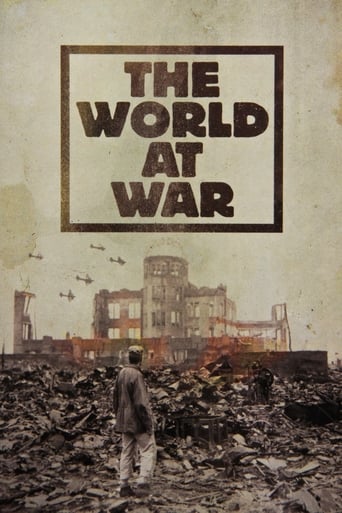
The World at War
1973 · TV series · documentary · 60 min episodes · 1 season
A documentary series that gives a historical account of the events of World War II, from its roots in the 1920s to the aftermath and the lives it profoundly influenced.
18 positive1 mixed5 neutralfrom 24 commenters
Where to watch
No streaming data for this title.
27 comments on Hacker News
I love this style of documentary, I feel like we had it even when I was a kid in the 90s - 00s and as an adult in the 10s, but now is totally a dead style.
Sadly, it is not produced anymore. The producers chase a style and person that no longer exist, so they get their panties in a twist and make TikTok style and "true crime" style interviews is all I see from newer documentaries sadly. Women love "true crime" so 50% of new docus are just true crime drama slop.
I used to watch all or most of our state TV ones but they are no longer as good (They do some of their own buy buy in most from BBC, Showtime and PBS.)
I have been watching World at War and The World at War and such. Should watch Civilization and How should we then live?
None of the history classes in grade/high school I attended advanced after 1900.
However, I knew a lot about WW2 because my dad (and relatives) was heavily involved in it, and also became a historian when he left the AF. He had a mountain of history books, mostly about aviation and WW2. I read some of them, and watched movies like "The Blue Max" and "The Battle of Britain", the "World At War" series, and so on. There are also endless WW2 documentaries on TV.
My neighbor was a paratrooper who lost his leg, my dad's best friend was a P-51 pilot who had his face burned off in combat. WW2 vets were everywhere. They're all dead now, and WW2 is ancient history.
> I suppose you also hate Dante's Inferno for similar reasons?
I don't hate anything or anyone, because hate and rage are solely negative, but, I didn't bother reading that middle ages tripe any more than I read "Wuthering Heights".
That said, reading it is just one dimension, seeing and hearing it on a giant screen being portrayed by attractive people is three or four dimensions.
> David Lynch is more ethical than you, I think, because he did not run away from the depraved but wanted to understand it
I've seen "The World at War". The "Genocide" episode is the last time I wept, seeing a dumptruck full of bodies get dumped into a trench.
I understand it better than you, my friend, because I also know how to get to "Blessed are the pure of heart, for they shall see God." I'm certainly not there yet, but I've made some bit of progress, after much trial and error.
David Lynch and TM are literally the antithesis of that attainment. He wrote and directed BV and profited off it. I think Marc Maron once described a "comic" that took a shit on stage; that ain't art, that's just disgusting.
"What a fool believes." --Michael McDonald
People always shit talk the middle east and Africa for being war-torn and poor but they seem to forget that Europe was even worse a hundred years ago.
While watching a documentary like 'The World at War' I kept asking myself how these people could live like this, the abject poverty, complete destruction and casual brutality was completely normal to my ancestors not too long ago.
It's disheartening but it's also inspiring because it shows that change is possible and it can happen very fast if there's a social desire for it.
What the United States did to bring lasting peace to the warring European nations is a testament to that.
I'd be interested in your take on the UK documentary The Death of Yugoslavia[0], available on YouTube. It gave me the distinct impression that the US didnt have a strategic vision so much as they got unwillingly dragged into it and felt that they had no option but to try and solve it.
As a lay person not from the Balkans, I was impressed that the filmmakers got all the major players to speak candidly, on camera, about their involvement. Mladic, Tudjman, Milosevic, all there for example. Reminded me of another great series, the World At War.[1]
[0] https://youtube.com/playlist?list=PL-ur6mGQeTOmuwxnBW-ssXWDD-w5AEH9E&feature=shared
[1] https://youtube.com/playlist?list=PLYxy4la9w2tfotW1Xs-7oICGflf4dJtj5&feature=shared
The BBC 'World at war' is an absolute masterpiece. A contender for greatest documentary ever made. It is obviously UK-centric, but well worth anyone's time to watch.
The last strategic offensive the Nazis mounted in the Soviet Union was in 1943, which failed. The failure at Stalingrad occurred only months earlier. The Eastern Front at the time was already using 80-90% of Nazi material and manpower. I and most others doubt that utilizing the small remainder would have cinched it for them.
>In the exact same documentary series as I first mentioned (World At War,) a Nazi military official argues that the Allied bombings were successful because they forced the Nazis to split their forces along two separate fronts. They were unable to divert their ammunition, air support, etc to Russia because of the bombings.
It seems like this general forgot that the remaining Nazi forces were not solely defending against strategic bombings, but waging an active war in North Africa, and then Italy.
The invasion of the Soviet Union was a losing tactic if, and only if, the Nazis had to fight on two fronts. The Allies had to attack the Nazis from the west in order to make them lose. That’s what they did by bombing.
This isn’t a niche opinion. In the exact same documentary series as I first mentioned (World At War,) a Nazi military official argues that the Allied bombings were successful because they forced the Nazis to split their forces along two separate fronts. They were unable to divert their ammunition, air support, etc to Russia because of the bombings.
ah yes never watch documentaries about war either then? Masterpieces like The world at war etc?
The World at War was actually produced by Thames TV for ITV, not the BBC, back in the days when they made documentaries. It’s an excellent series though. Laurence Olivier is a great narrator.
"The world at war" is an amazing documentary of WWII, even if it is quite old now.
The World at War - BBC documentary series about WWII. Shows humanity simultaneously at it's best and worst.
The Vietnam War - Ken Burns documentary series. Very balanced and sobering take on the Vietnam war, events leading to the Vietnam war, and unrest in the US during that period.
The Fog of War - Errol Morris doc about Robert McNamara.
The Salt of the Earth - Doc about photographer Sebastião Salgado
Alone in the Wilderness - Dick Proenneke films himself building and living in a remote cabin in Alaska
Also can't go wrong with Adam Curtis.
I'm not generally a fan of made-for-youtube, but they do have some classic documentaries on there. Including "the most expensive factual series ever made", https://en.wikipedia.org/wiki/The_World_at_War . Made in the 70s, it was long enough to regard it as history but recent enough that senior participants were still alive and available to be interviewed.
My grandmother also. It's amazing how many in the US not only don't know about this, but become angry when you tell them.
Yet for the generation that lived through WW2, you can talk to anyone who was on the wrong side of the iron curtain and they will tell you what it was like.
The BBC documentary World At War (1973) covers this in episode 21. https://www.dailymotion.com/video/x3oeao1
This is also covered on Wikipedia now https://en.wikipedia.org/wiki/Rape_during_the_occupation_of_Germany
"Female deaths in connection with the rapes in Germany, overall, are estimated at 240,000.[2][17] Antony Beevor describes it as the "greatest phenomenon of mass rape in history", and has concluded that at least 1.4 million women were raped in East Prussia, Pomerania and Silesia alone.[18]"
In Hungary: "According to Skrabski, it’s possible that as many as 800,000 Hungarian women were raped, and the violence included gang rape and sexual torture. Pregnancy resulting from rape was so widespread that the government suspended its ban on abortions for several months during 1945, offering abortion and STD treatment services free of charge." https://www.washingtonpost.com/blogs/she-the-people/wp/2013/11/24/silenced-shame-hungarian-women-remember-wartime-rapes/
There are many well documented stories of these atrocities in all the areas occupied by the Red Army, most too gruesome to include here. Anyone can do their own research, the information is out there, even if many don't want to hear it. When you want to understand why Eastern Europe is falling over itself (foolishly, IMO) to join NATO and integrate into the West, these types of things need to be understood as being in the background.
"Punching up" is just an excuse for racism. See Matt Taibbi's review of some popular pro-racism books here: https://taibbi.substack.com/p/on-white-fragility
I recommend watching the excellent BBC documentary World At War (1973) -- You can watch it on Daily Motion (c.f. https://www.dailymotion.com/video/x3p7c46). They had western reporters interview Nazi officials asking them to explain all the anti-jewish policies, and the answer is basically "We're punching up." They argued that jews were overrepresented and had too much power in German society; "we are merely righting the balance".
In fact, if you talk to any racist, they will give you plenty of reasons explaining why the group of people they hate deserve to be hated and that he is merely "righting the balance". Everyone believes they are acting in the name of ultimate justice and that the hated group is deserving of the abuse.
So I would recommend some self-reflection before making excuses for hate. None of these excuses are valid, they have all been tried before, and all these ideas such as "punching up" have been discredited since the 40s. Those sympathetic to Hitlerian race theory should not be sources of moral or ethical guidance.
The World at War (https://www.imdb.com/title/tt0071075). 26 hour-long episodes; one of the best documentaries I have ever seen.
The World at War
https://en.wikipedia.org/wiki/The_World_at_War
It's a BBC series that chronicles the second world war. It was made in the 1970s and features interviews with the people who were actually there. I really recommend everybody watch it at least once in their life.
I think you can find it on YouTube.
Based on all the historians I have seen talking about that time period, the Russians captured and sent every German they could get their hands to labor camps during the later part of world war 2. An approximate two to three million German prisoners was captured during those years and about 1 million died in the camps.
The documentary The World at War postulated that the only reason why its not higher is that when the Germans had lost and started retreating most of the east German population fled in mass to the west because they know the USSR would treat them very similar to how the Nazi treated Russians during the occupation. About 10 million USSR civilians died and about 26 millions in total so the USSR had a lot of reasons. I have not heard any historian that claimed that USSR did not pursue revenge. I have heard however that the only reason Berlin was not razed to the ground was because allied troops rushed there hastily during the siege in order to be able to claim half of it after the war.
This is covered by the first episode of the World at War. https://www.youtube.com/watch?v=0b4g4ZZNC1E
I saw it in the documentary series “The world at war”. I think the episode about Kamikaze fighters. Japan had virtually no oil supplies. Here’s an article about it. http://thenexthurrah.typepad.com/the_next_hurrah/2006/05/the_japanese_ma.html
Ok they don’t chop down all of their trees. Of course they still have trees.
The World at War documentary series has a good episode about dunkirk.
One of the small boat captains describes picking up soldiers from the beach on dunkirk then getting back to sea, where they were met by a UK frigate. The frigate offered to take the soldiers to let the small boat go back to the beach(as was the plan) and the captain said "no chance mate get your own soldiers we're off back to blighty"
Some great lines in that series
> Especially check out episodes 5, 9, and 11 to see how the Soviet people, not the army, beat the Nazis.
It's worth noting that the DVD release of The World at War starts each episode with some remarks from the series producer about its production, and for those episodes he alludes to them having to agree to soft-soap parts of the story of the USSR at war that skewed against the regime's approved line in order to get access to interview subjects and rarely seen archival footage.
Which is not to knock the series in any way, it's a fantastic work of documentary filmmaking -- just to note that the episodes dealing with the Soviet war experience should be approached with a skeptical eye.
I think the US command was still very aware of the lessons learned from WWII and particularly, those of how the Soviets defeated the Germans in Operation Barbarossa. The Soviet army might have pulled the triggers, but it was the Soviet people who ultimately won the battles and the war for them. They were resolute and could not be broken, even in facing the most daunting of environmental, emotional, and physical challenges. The Soviet army was largely a joke at the start of the war due to Stalin's purges of the military. They were soundly beaten time and time again by the Nazis. It was the sieges of Stalingrad and Leningrad where the people, ordinary citizens, made the difference. This bought the Soviets enough time to properly regroup, retrain, and rearm to end up fielding the largest, and later one of the most effective, armies of all time. If the people had given up or evacuated, the Soviet Union probably would have collapsed or been beaten back too far into Siberia to matter. The civilians were their ultimate weapon. I think the US command still remembered this when picking targets. You can shroud that however you want in terms of moral superiority -- a quick blow to the populace vs long years of sieges and urban warfare.
Aside: The excellent documentary "The World at War" is available on YouTube. Especially check out episodes 5, 9, and 11 to see how the Soviet people, not the army, beat the Nazis.
It would be an extension or cousin of the BBC "World At War" series from the mid 70s, episode 16 which covered life in germany or 18 which covered occupied territory life. I guess better added as an appendix to ep 18.
WaW is a truly excellent documentary, however be prepared that it not a new wave American style documentary ... there will be no historical re-enactments, no computer graphics, no nostalgic soundtrack, no camera panning across photographs ... I wish we had more "real" documentaries like WaW, its almost a completely separate genre from the modern american style.
I have to agree with everything you said from my study of WWII, but just providing some elaboration.
"(3) Versailles. There were 'reparations'. So, Germany printed money to pay off the reparations more quickly. Then the inflation ruined the finances for much of Germany and created more bitterness."
Some of the Allies were going to make the same mistake in WW2 with repartitions once again. The French wanted to take the Ruhr, the industrial heartland in Western Germany and annex it into France. Other ideas were to make Germany an agrarian society. The primary reason the US created the Marshall Plan was to ensure the reparations and the initial dismantling of the German Industry (later repealed) that were forced on Germany (mostly the taking of IP, such as patents) would not cripple it and make it fall into the hands of the Soviets[1].
"(8) German Army Politics. The German Army had some funds for political activities, liked what they saw in Hitler, and provided just enough 'seed' money to keep Hitler going in politics."
The army did sort of a bittersweet deal with Hitler. Most of the army was not fond of Hitler, but they did see him as a way to restore their faded glory. They made their "deal with the devil" though when they agreed to take an oath to Hitler in return for Hitler dismantling the SA, which the Army saw as thugs and did not want integrated into the army (who thought of themselves as principled and aristocratic). Much of the army took that oath quite serious as well due to the Prussian tradition of loyalty to their country and leader--believing that betraying the oath was to betray their country. However, elements of the military still thought Hitler was mad all the way back to 1938 and had plotted to kill Hitler[2]. However, the capitulation of the UK and France in Czechoslovakia[3] and the later invasion of Poland quieted most of the planning to assassinate Hitler for the time being.
Also anyone who has not seen them, I reccomend the BBC's Fall of Eagles[4], BBC's The Great War[5] and the BBC's World at War[6]. Watching them back to back explains quite a bit about how the 19th Century Monarchies led to WWI and how WWI led to WWII.
[1] http://en.wikipedia.org/wiki/German_reparations_for_World_War_II
[2] http://en.wikipedia.org/wiki/1944_Adolf_Hitler_assassination_attempt#Background
[3] http://en.wikipedia.org/wiki/Munich_Agreement
[4] http://en.wikipedia.org/wiki/Fall_of_Eagles
[5] http://en.wikipedia.org/wiki/The_Great_War_(documentary)
[6] http://en.wikipedia.org/wiki/The_World_at_War
I think most Asian countries invaded and occupied by the Japanese Military would have to disagree with that. Probably none of us are old enough to recall what it was like during that time, but from historical research and documentaries of accounts of civilians at the time, there's many good reasons Japan's military was crippled severely, just as Germany's military was. Also, it was not like either were left defenseless. The United States was bound to defend Japan by treaty and West Germany became part of NATO.
Crippling their militaries, each country took to dominating economically instead and benefited the world much more than any of their previous military actions did.
Semi related, but anyone interested a good World War II series and has not seen it, I reccomend the BBC's World at War (http://en.wikipedia.org/wiki/The_World_at_War). Lots of first hand accounts and interviews of leaders and their staff at the time of WWII.
"Enron - The Smartest Guys in the Room" seconded! It is by far my most favourite documentary.
In addition, I like the following documentaries:
- "Client 9: The Rise and Fall of Eliot Spitzer" http://www.imdb.com/title/tt1638362/
- "Planet Earth" IMHO one of BBC's best productions with some of the most amazing nature shots ever (e.g., a [presumably stratospheric] shot that looks like fog or fire but is really a swarm of flies) http://www.imdb.com/title/tt0795176/
- BBC has also two of the best documentary series regarding the second world war: "The World at War" (http://www.imdb.com/title/tt0071075/) and "The Nazis: A Warning from History" (http://www.imdb.com/title/tt0207907/)
- Errol Morris' "The Thin Blue Line" (http://www.imdb.com/title/tt0096257/) and "The Fog of War" (http://www.imdb.com/title/tt0317910/)