 Hacker Cinema
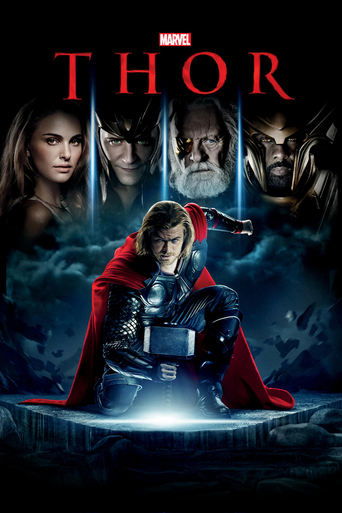
Thor
2011 · Film · 115 min
Part of Thor Collection
Directed by Kenneth Branagh
Against his father Odin's will, The Mighty Thor - a powerful but arrogant warrior god - recklessly reignites an ancient war. Thor is cast down to Earth and forced to live among humans as punishment. Once here, Thor learns what it takes to be a true hero when the most dangerous villain of his world sends the darkest forces of Asgard to invade Earth.
9 positive13 negative23 neutralfrom 45 commenters
Where to watch
No streaming data for this title.
46 comments on Hacker News
One of the EU's backstop "Fuck Trump" options is to stop enforcing America's IP rights.
Maybe this USB stick full of MCU movies isn't the highest possible quality and two of the Thor movies are missing for some reason, however it cost less than €20, so who cares ? Oh it's illegal? Well my government said they don't give a shit about that until you get rid of the orange lunatic
In a world where American media companies are also trying to fuck over consumers that sort of action could probably get a rotting corpse re-elected in a landslide, that's one of the reasons it's on the backstop threat list - dry policy responses don't connect with voters, but "make as many copies of their stuff as you like" is incredibly popular.
> “Before starting the series, we stuffed ourselves to the gills with Norse mythology, as well as almost every other type of mythology – we love it all! But you’ve got to remember that these are legendary tales – myths – and no two versions are ever exactly the same. We changed a lot of things – for example, in most of the myths Thor has red hair, Odin has one eye, etc. But we preferred doing our own version.”
https://scifi.stackexchange.com/questions/54400/why-did-early-marvel-writers-change-thor-from-his-legendary-red-haired-appearanc#54405
Huh, did not know that. As an Icelandic person I knew about Þór the Norse god much earlier than Thor the marvel character. I never really pictured his hair color, nor knew he had a specific hair color in the mythology. I actually always pictured him with a beard though. What mostly mattered though was his characteristics. His ill temper and drinking habits, and the fact that he was not a nice person, nor a hero, but rather a guy who starts shit that gets everyone else in trouble, he also wins every fight except one (he looses one against Elli [the personification of old age]). The little I’ve seen of him in the Marvel movies, he keeps almost none of these characteristics.
EDIT: My favorite story of him is the depiction of the fall of Ásgarður, where Loki and some Jötun are about to use the gods vanity against them and con them out of stuff they cannot actually pay for a wall around Ásgarður. Þór, being the way he is, cannot be around a Jötun without fighting and killing him. So rather than paying up (which the gods cannot do) Þór is sent to see this Jötun, knowing very well that he will be murdered. This betrayal is marked as the beginning of the end in Völuspá (verse 26).
Last night the family and I tried to watch Thor on Disney+. Everything appeared to be fine at first, but something was obviously off. The audio mix was screwed up really bad to where I could barely hear them speaking, and all the sound effects were basically non-existent, but the ambient music was extremely loud. I flipped over to Amazon Prime and rented it so we could continue our movie.
I pay for Disney+, Disney got their money and if I’d decided to pirate it instead of the convenience of Prime video I wouldn’t have felt an ounce of guilt. I keep trying to do the right thing, and they keep moving the goal posts. Whether it be adding DRM that increasingly causes the media to be available on less devices, or adding yet another service I have to invest in. DRM doesn’t work and only diminishes the user experience.
If you want my money meet me where I’m at. Stop forcing garbage down the pipeline.
I think you’ve actually understated the rather precipitous drop off of 007’s campiness. It wasn’t a mistake, the intention was to reboot the series in the same vein as Batman Begins, where he becomes an unbearably gloomy figure who exists as a morally ambiguous antihero brooding among the gritty backdrop of a fully corrupted world.
Don’t get me wrong, I am a fan of both franchises, and enjoy the gritty Bond on its own terms, without tying it to the frequently almost farcical source material. I can easily understand why the “gritty realism” action genre trend didn’t last long, and why some folks do not enjoy it, it quickly becomes somewhat oppressive to endure. I think that’s why Taika Waititi’s Thor movies were so well received, they offered a lot of the fun-for-its-own-sake set pieces that were more common in the late ‘80s-early ‘90s action films.
Patrick H Willems did a really good YouTube video where he talks about “vibe films” [1], where things like plot details and character development are prioritized behind an overall mood and sense of style. Examples cited include Miami Vice, Bond films, and more recently Tenet.
[1] https://youtu.be/ZStkUxC4iL4?si=GSecJKBdbzMcQDVF
I think it's the opposite. I think the adults are watching series that have more complicated plots, and require a longer attention span. They're taking their kids to go see movies like Thor and Transformers where there might be sexuality (Megan Fox doing pretty much anything) but no one is actually getting it on. Part of this is almost certainly large movie studios not wanting to push the bounds of conservatism, but it might also be that actors nowadays are less willing to get their kit off.
Of course, my head canon is that Neo and Trinity killed off the movie sex scene in their Zion romp in The Matrix Reloaded. I can't put my finger on what it is that makes it so offputting, but it makes tortoise sex look hot by comparison.
Was Logan Marvel Studios, though, or Fox? (I know I could easily look this up, I'm just making conversation).
In the 00s I really liked the Marvel movies. Then came Marvel Studios to ruin everything. But even in the beginning, the first couple of films were really good: Iron Man, Captain America and Thor. But once they started to expand the "MCU" I quickly lost interest in the films. I like character driven stories that focus on the person behind the power. Batman is interesting because of Bruce Wayne, Spider-Man is interesting because of Peter Parker etc. When you start doing these big mash-ups and team stories, like Guardians of the Galaxy and Avengers, you lose focus on the individuals and it becomes lots of long, drawn-out & boring action sequences.
But if I remember correctly, Fox held the film rights to the X-Men property. So when Marvel Studios got off the ground, they did everything but X-Men. I don't know if that ever changed.
In any case, I agree. Logan was really good. And it was really good, in my opinion, because it was character-driven and not just 13 hours of drawn out, boring as hell, CGI "porn" action sequences. And I figure it was like that because it wasn't made by Marvel Studio.
Yes I found it helped train/improve my stress response along with wym hoff breathing. I found it makes me less likely to overreact and it apparently improves focus/attention.
The nordic countries have been doing polar plunges for a long time for similar reasons. They say it helps with depression too.
Chris Hemsworth, the actor who plays Thor did a mini series on National Geographic and one episode feature it.
Counterpoint: it’s our culture that’s stuck.
Hollywood DOES make tons of original films every year. Many of the large studios have specific subsidiaries just to produce or distribute a wide range of originals.
The issue is that known franchises will always be a relatively safe bet. Audiences don’t reward novelty, with the exception of the few breakthrough hits. Audiences generally want to spend their money and time on known entities.
That people think Hollywood is “stuck remaking films” is testament to how little attention people pay to stuff outside the mainstream.
This is why Marvel is so successful and why their strategy was brilliant. Early Marvel films were often stinkers like Thor/Thor2 but people keep going back for more because each new film cements them safely in people’s minds.
People don’t generally care if the film will be great. They’ll happily go see mediocre films because they’re risk averse.
I’ve worked for years in film. The most banal remakes always did way better in box offices than the really unique and critically acclaimed films.
Hollywood is a reflection of audiences, and capitalism demands appealing to the majority
That's not really how it works. Eating a good diet (yes, including protein) and having a good exercise routine and executing both strictly for a number of years can lead to have a good natural body. That does not lead to having a body like Thor though.
Not to mention that makeup, specific lighting, timed pumps and short term dieting tricks can be used for movies. How an actor looks on the day of a shoot isn't how they walk around looking.
I recently did a month of Disney+ when they sent me promo for first month for $2.99.
During that month I watched the Pixar movies Soul, Luca, and Turning Red (and rewatched Onward). I also watched the Disney movies Raya and the Last Dragon and Encanto. And Wes Anderson's Isle of Dogs. Oh, and also the latest Dr. Strange and Thor Marvel movies, plus the Loki series.
Are you seriously claiming that all that was garbage?
> Contrast Galadriel who acts like a self righteous dickhead with Aragorn who was reluctant to accept his calling spent and three movies proving himself to be worthy of honor and love
You mean three books, right?
The difference here is that Aragorn was written by Tolkien, this show wasn't and has completely betrayed the original material.
Race or gender swaps are not a big issue, but they become one if the purpose is the swap for the swap just for marketing purpose.
Elves are almost eugenetically born all the same, want to add some diversity? Go for humans.
Wanna piss off the audience so that the debate will create more engagement? do exactly what shouldn't be done, because it's out of character.
Another example is the new Disney's Pinocchio, were the Blue Fairy is portrait by a black woman. The problem is not that she is black of course. but that the original story is set in Italy, Tuscany, mid 1800, were no black woman was ever seen and she is also described as "il viso bianco come un'immagine di cera" that translates to "her face as white as a wax image".
It becomes clear that the black blue fairy was put there to check a box and not because she serves some need to modernize the story, which is exactly the same that Collodi wrote 140 years ago.
EDIT
it's the same reason why people cricized film directors that casted Scarlett Johansson for every role or the god awful Ghost in the shell live action where, not only the story was orribly mutilated, but the setup was very very far from the original Japanese one, completely ruining the experience.
It's not about the colour of the skin or the gender of the actors, of course, it's about expectations. I expect Black Panther to be black, Thor to be white and blonde, Ghost in the shell to be set in futuristic Japan etc.
We were talking about a Marvel action flick, I don't think incredible dialog spanning multiple minutes is much of a thing apart from exposition dumps. I asked GPT-3 to spit out some paragraphs from a hypothetical script for Thor 5:
INT. DARKNESS We hear a faint beating heart. A moment later, we see a light slowly growing in the darkness. As the light grows, we see that it is coming from a glowing object in a person’s hand. The object is a hammer.
We see the face of the person holding the hammer. It is Thor. He looks tired and beaten.
Suddenly, we hear a voice from the darkness.
Black Panther: You are not welcome here, Thor.
Thor: I know. But I must speak with you.
Black Panther: You have nothing to say that I want to hear.
Thor: I come bearing a warning. Thanos is coming.
Black Panther: We are prepared.
Thor: He is not coming alone. He has an army.
Black Panther: So do we.
Thor: Thanos is not like any enemy you have faced before. He is ruthless and he will not stop until he has destroyed everything that you hold dear.
Black Panther: We will stop him.
Thor: I hope you can. Because if you cannot, then all is lost.
Eh, looks real enough to me. Fine tune the model with all the specialities that make up Marvel movies and you'll crank out good-enough drafts in no time.
Most hilariously (to me) is the vast difference in 'powers' between superheroes. There are the 'Gods' - some literal, like Thor, or godlike otherwise - and the 'normals'. Gods can fly, shoot lasers from their eyes, or call down lightning. Normals can, well, shoot bows or kick really well.
So in the ensemble movies (like Avengers) you get teams where some of the members are in no danger at all - the Gods - while the others are very much in danger! Except of course, the viewer knows that none of the good guys are really at risk of serious injury.
I'm sure directors try to avoid or work around this, but fundamentally if the big bad guy can knock out the strongest god (eg Thanos vs Hulk) then if they so much as strike one of the normals, they should really be dead.
Finally, it's very funny to me that Scorsese got criticised for expressing an opinion on movies. I mean, I've watched a lot of these crappy superheor movies, and they are enjoyable enough at times, but it's not great cinema ...
> Patents last 20 years. Mickey Mouse has been copyrighted for nearly a century - more than most human lifetimes
My point is that Mickey Mouse is a trademark. An Apple patent expiring doesn't allow people to using Apple logos. Likewise a Disney copyright expiring shouldn't allow people to use Mickey Mouse.
The cartoons themselves and any characters that aren't still in regular use is fair game.
> how long is “fair” for a government granted monopoly to one of the worlds richest corporations? Especially one busily buying up IP after IP that it did not originally create?
I agree it sucks, but this is why we need to make sure we understand the difference between content and trademarks. eg anyone can make a movie about Thor since that folk story is public domain. And I agree the copyright on content like the Marvel Universe movies shouldn't be around 100 years (I forget the exact duration, but it's always being extended anyway -- which I also disagree with by the way).
> The natural conclusion of your principle here is eternal corporate copyright.
No, that's literally the exact opposite of what I'm saying!! I'm saying that the character "Mickey Mouse" should have different rules applied because he is more than just a creative figure. Because he is a trademark. And thus trademark rules should apply to him in addition to copyright rules. However any content with Mickey Mouse in should be public domain after a reasonable period and that period currently is not reasonable.
Music has similar distinctions. A song will have different copyrights on it, for the performance, for the writing, possibly any artwork (eg album cover).
> When would you be comfortable with Mickey Mouse (or anything else) going public domain? 200 years? 300? Should it ever?
Personally I think 20 years is reasonable for the cartoons. For the mascot, he should be trademarked (and is), so as long as Disney are using his likeness.
I would comment as follows.
Iron Man - sort novel for setting marvel tone but mostly banal action movie
Iron Man 2 - banal action movie
Thor - banal action movie
Captain America: The First Avenger - particularly banal action movie
Marvel's The Avengers - banal action movie
Iron Man 3 - banal action movie, sort of interesting to see protagonist suffering PTSD anxiety from being a superhero
Thor: The Dark World - banal action movie
Captain America: The Winter Soldier - first interesting take. Patriotism is not the same as government obedience. Real fight choreography approaching a soft john wick.
Guardians of the Galaxy - Early rock and roll aesthetic pretty interesting
Avengers: Age of Ultron - banal action movie, perhaps mcu lowpoint
Ant-Man - superhero heist movie, literally deconstructs larger than life superhero tropes. I think thumbs up
Captain America: Civil War - by this point doing the mcu's own thing, which is novel, but probably not interesting outside
Doctor Strange - banal action movie
Guardians of the Galaxy Vol. 2 - aesthetic still feels mostly fresh.
Spider-Man: Homecoming - super down to earth high school drama, frustrated working class villains suffering the fallout of superheroes, seems interesting to me
Thor: Ragnarok - great film, very genre savvy. Rare achievement to make godly strength brutes feel really engaging to watch. Taika Waititi is a genius.
Black Panther - pretty good. interesting aesthetic. directly addressing racial tensions.
Avengers: Infinity War & Endgame - Mostly fan service and not too surprising but honestly still novel.
Ant-Man and the Wasp - Ehhh I really don't remember
Captain Marvel - Beginning had some great hard sci fi imo. Thought the ending message of newly apotheosizied female not needing to prove herself to her evil male mentor was a solid take, whereas a classic "mano a mano" kind of showdown would be so typical of the genre
Spider-Man: Far From Home - Villain emphasizing themes of the power of deceptive media? heck yeah.
Wandavision - Really bizarre and interesting start. Unfortunately non-self-aware conclusion
Falcon and Winter Soldier - Active discussions of race and the problematic nature of superheroes being supremacists? Very good.
Loki - kind of a super cliche topic (time cops) that is also somehow really rare? eh.
honorable mentions for Logan and Deadpool for being just great; and the Amazing Spiderman for its excellent aesthetics despite terrible writing.
Because they're high quality and there's a fair amount of variety; three MCU TV shows out this year are all quite different from each other, for example.
Shang Chi just came out, and while there are some familiar Marvel beats, it still manages to feel moderately different from any of the previous MCU films. People go to see even an obscure character like Shang Chi because Marvel has done a good job of building trust that even their crappy movies are still okay.
It's apparent that many of the critics only watched the early movies that were more same-y -- by the time you hit phase 3 they're doing a much better job on average differentiating the films. Thor 1/2 vs Thor 3 is a perfect example of this, with the first two being competent but rote, and then Ragnarok being wildly different (and simply better).
I think Thor being C-level comes from a pure MCU standpoint: the first two Thor movies weren't as well-rated as the rest of the Phase 1 and 2 movies. They're the only two anyone considers skipping for newcomers/when re-watching the MCU, with TDW being the least important of the two (and the plot points in the movie are explained in the first act of the movies they were set up for, that being the reality stone and Loki disguised as Odin).
After the second Avenger's movie (Age of Ultron) I found the quality seemed to increase and became fresher and less repetitive (Guardian's of the Galaxy, Thor Ragnarok, Spider-Man Homecoming).
But still if you didn't like the first 8 movies, you probably won't like the next 14 movies.
But I still highly recommend Thor Ragnarok. Even as a standalone movie. Especially if you didn't like the first two Thor movies.
Short answer is willingness to take risks and good taste.
For risks:
1) Casting unknown or washed up actors in leading roles
2) Switching up the genre with every movie. Iron Man was a classic super hero movie, Thor was fish out of water, Captain America was a spy movie, Ant Man was a heist movie, Guardians a space comedy, etc.
3) Forcing people to watch past movies to understand new ones. Accepted wisdom before Marvel was no one would do that so you have to dumb it down.
I soured on the superhero franchise business due to a combination of factors (the out of character Man of Steel, that first boilerplate Thor film, the ghastly Green Lantern, and finally reading Worm made everything else seem shallow by comparison) and have stepped back to look at it as an industry in a kind of spiral of intolerance to risk.
They want product, they want it on a pipeline, they want guaranteed returns and they do not want to gamble about it. This has been true for a long time but we're seeing a difference of degree here. Movie production is not merely evolving but speciating -- and I think the new species is going to look like a subscription streaming service (with tie-in product) that releases dopamine-tweaking algorithmic product on the kind of tick-tock schedule for which Intel longs.
You're not helping your argument though.
Those were great films, however, they were niche.
'Superbad' was a big, hollywood thing. A cultural touchstone that we remember, make jokes about, memes.
Very few people ever saw Booskmart or The Death of Stalin.
The Globalization of Hollywood - and increased cultural sensitivities have changed this.
Comedy doesn't cross borders as well as Thor.
Without going into details, cultural sensitivities and fear of Twitter mobs is a 'fundamental' issue. It's not a side issue it's a primary driver. Have a listen to the podcasts and talks by various comedy writers, you can see the evolution.
People with power have their knives out to destroy others - some of them obviously need to be cancelled, and some others raise some questions, but there are very, very few left with the power to make the jokes they want. Everyone else has to kowtow in fear. Comedy requires 'absolute safe spaces' in order to work, particularly writers rooms, which, if we could record what they say ... my god we'd all be offended.
I'm hoping that this will just be a 'phase' but I'm afraid it may not be as the issues overlay with ostensibly historical issues of social justice, and as soon as we broach that domain, everything becomes deadly serious and we all act like good corporate citizens.
It may very well take an established 'provider' like a different kind of Netflix with a different set of sensibilities.
Edit: listen to Tina Fey and Judd Apatow podcasts and less public interviews, they hint at the shift while being very polite about it.
After the first Thor movie, myself and many more. After Thor: Ragnarok, it really seemed about right for him to break out. Very interesting character when played right, could have been another actor but Hiddleston has really made him his own.
This is sad as it appears to be the beginning of the end of moviegoing as a mainstream pastime. Watching a movie at home simply isn't an equivalent replacement and it has nothing to do with the size of the screen. Going to the theater is a social experience. You simply can't replicate the experience of seeing Captain American catch Thor's hammer in a sold out crowd on opening weekend. Also going to a theater is a purpose driven choice in a way watching a movie at home is not. It allows you to focus all your attention on a movie that simply can't easily be replicated at home.
The thing that the MCU does—that Star Wars has not yet figured out how to do—is have multiple parallel stories that only occasionally intersect. Marvel can release a Guardians, Spider-Man, and Thor movie in the same year because those movies basically have nothing to do with each other.
In contrast, every Star Wars movie is squeezed into a single linear storyline. Lucasfilm has created alt storylines but so far they are all in TV shows, not movies.
> I have a theory that this obsession with superheros is part of a greater obsession with continuity. Whether it's TV shows or cinematic universes, people crave a sense of continuity in their narrative.
I have a strong suspicion this part is correct, but that most are unaware of it. Kind of a "you don't miss what you never had" situation. Not so sure about the rest.
Aside from realizing it about myself several years ago, here's some evidence:
* Up above, someone mentioned a couple of failed cinematic universes [0]: Warner/DC and Universal's Monster Universe.
* No one has mentioned a second successful one: The Conjuring Universe.
* The Conjuring Universe did one of the exact same things that the MCU did, that the failed ones did not: Separate films drawn together.
* The MCU's first films were completely standalone, just sharing things like Coulson and Fury as easter eggs, and only later drawn together into the same universe. Until Avengers, it was entirely possible for the casual moviegoer to miss this, creating a low barrier to entry - you didn't have to know the previous film, as you would a sequel. Iron Man, Thor, and Captain America could each draw in a different audience.
* The first "universe" film in the Conjuring, Annabelle, was designed to work standalone instead of as a sequel, same as the first MCU films. Like the MCU, they included callbacks that fans could catch, but nothing important that broke the movie's flow. Again, low barrier to entry for moviegoers who are used to standalone films and don't want to commit themselves to a longer series.
* On the flipside, DC and Monster both announced up front they were creating a cinematic universe, before the first movies were even out. This created a high barrier to entry for casual moviegoers - they knew up front they'd have to see further movies to get the full story.
I think that's the big key, capturing the casual moviegoers with seemingly standalone films, then holding their attention with extended continuity only after they're invested. It's really easy to go see a second movie if you'd already seen the first. Conjuring and MCU both did that well, without creating an initial commitment by announcing multiple films.
[0] https://news.ycombinator.com/item?id=21577536
> Is there are second example?
Captain Marvel ends with a fight, but the entire point of the movie is that the people we are taught to fear as an insidious infiltration into our society are, in fact, only trying to make a home for themselves, and lash out only when terrorized by an imperial power. The hero of that story is a soldier who realizes she has been used as a weapon against innocents, and who then sets out to make amends.
Thor is about someone with the powers of a god and the simplistic morality of a child, and his entire first movie is about learning restraint and the importance of peace.
Iron Man is about an arms dealer who realizes, quote, that he has more to offer the world than things that blow up. This isn't the best example, because he's still better known for making things blow up, but he also becomes the world leader in clean energy. Iron Man also creates a rampant AI and learns that even though he's a genius, he can't build a suit of armor around the world, especially without the world's permission.
Black Panther has some reasonably complicated things to say about imperialism and the White Man's Burden. And, I guess, the stupidity of placing the world's most advanced technology and weaponry into the hands of a man who can win a fistfight about it.
I disagree, at least at the matter of degree.
Scorsese said "[f]or me, for the filmmakers I came to love and respect, for my friends who started making movies around the same time that I did, cinema was about revelation — aesthetic, emotional and spiritual revelation. It was about characters — the complexity of people and their contradictory and sometimes paradoxical natures, the way they can hurt one another and love one another and suddenly come face to face with themselves."
The paradoxical nature has been there between Thor and Loki, for example. Or Thanos and Gamorra.
The most revelatory Marvel movie was Captain America the Winter Soldier.
"Steve Rogers: The Future? How could it know? [Sitwell laughs] Jasper Sitwell: How could it not? The 21st century is a digital book. Zola taught HYDRA how to read it. [Steve and Natasha look at him in confusion] Jasper Sitwell: Your bank records, medical histories, voting patterns, e-mails, phone calls, your damn SAT scores. Zola’s algorithm evaluates peoples’ past to predict their future. Steve Rogers: And what then? Jasper Sitwell: Oh, my God. Pierce is going to kill me. Steve Rogers: What then?! Jasper Sitwell: Then the Insight Helicarriers scratch people off the list. A few millions at a time."
Coincidence or intentional, the fact that they kept that plot line after Snowden, that took balls. IIRC a lot of films around 2001 re-shot in respect of 9/11, and they could have re-shoot if they wanted to avoid it.
I can agree that these aren't the forefront of most Marvel plots. But I can think of far more movies that I'd accuse as not-cinema before I'd go after Marvel.
We went to the mall this weekend and literally saw adults carrying large hammers from the movie "Thor". Presumably Marvel's Thor features in the new movie too?
I thought the first Thor movie was the better one of the Marvel movies, perhaps it was because of Kenneth Branagh's influence, and his experience with Shakespeare; he did the family conflict in Asgard quite well.
The hero's journey is the reason I find it so hard to care about anything that happens in Marvel and most fantasy films. Knowing what comes next (Oh look, here is the part where Thor/Black Panther/Spiderman/etc loses his power) really kills my interest in the plot.
> don't composite an impossible image. And if you composite, don't claim the opposite like Lik is quoted as claiming in the article.
Let's say I took a picture of someone in a Halloween costume. Let's further say that I called it a picture of the Amazing Mutant Bigfoot, blew it up to the size of a building (in picture size though) and composited this "bigfoot" onto a city, apparently being trampled in his chivalrous outrage at bottom-feeding city dwelling humans.
RAWR, HUMANS, RAWR!!! (notice the use of punctuation by bigfoot)
If I composite an impossible picture like this, sell it to Walt Disney for the movie, RAWR, HUMANS, RAWR, starring Scarlett Johansson, does that mean that people should believe the picture is real-life? If Marvel says that Thor, God of Thunder is not a Movie but a documentary, so what?
> ads are such an integral part of our lives
I'll skip the futurama reference for now, but for me ads are far rarer than in the 90s. Adblock handles most things online, iPlayer, Netflix and amazon don't really have adverts on TV (they have a graphical menu but I would call that an advert), Spotify doesn't have adverts. Sure there are a few adverts if I go to somewhere like london, and Sainsbury's advertise their own deals in store, and of course products on the shelf are adverts in of themselves, but the only advert I have seen in the last 24 hours was one raising awareness of cistic fibrosis in a billboard outside of Sainsbury's. Oh and the train announcement saying "the on board shop is open for teas coffees and light refreshments". There wouldn't have been any product placement in the episode of once upon a time I watched last night either.
The TV jingles I remember from childhood are still etched in my brain, the adverts I see in this decade are ones I hunt out depberatly (the John Lewis Xmas advert for example, or film trailers, or something about amazon delivery people stealing your sofa that was recommended at work)
I did see adverts on Saturday night when we went to see Thor. I don't recall what was advertised other than odeon limitless, the trailers are adverts too of course, alas they don't really work - we'd rather see more films at the cinema than we do now, but getting babysitting is a pain. We missed Spider-Man and kingsmen for example.
If anything there are more opportunities to avoid adverts than ever before.
I agree with you if the content is actually stretched out (like filler episodes), but I find a lot of TV made for streaming is lacking filler content and is just telling a longer story. It's to the point now where when I watch a 90-120 minute story a lot of the plot development feels seriously rushed because it has to fit that 90-120 minute timeline.
One example that springs to mind is in the first Thor movie. I didn't even realize the love interest was actually supposed to be that because it felt like they met and interacted for a grand total of 30 minutes (in their world, not screentime) before the climactic ending with Thor and love interest kissing.
I watched iBoy on Netflix as well (90 minutes) and despite any other criticism of the plot or production value, it just felt like things escalated incredibly quickly without any time for character development or fleshing out any plot details.
Dan Golding's response seems pretty on-the-nose to me. Although I think he's right to cite Zimmer as someone who pioneered a certain method and style that has become prevalent in a big chunk of movie genres, I think the real culprit here (if you want to lay the blame somewhere) is just the economics of the Hollywood filmmaking system, which prizes cost-control, speed, and consistency of product above all else.
It's sad to see the composer Patrick Doyle get cited in both of those video essays for his music for Thor (which I agree, is generic and boring) because it illustrates the extent to which really talented film composers can get absorbed into this system. His scores for Henry V [1], Dead Again, and Carlito's Way all stand out as really shining example of 90s-era film scoring.
[1] Great example of his work here: https://www.youtube.com/watch?v=A-yZNMWFqvM
Their movies had a good blend of quality and 'newness' since they weren't reboot. Thor was surprisingly well executed and strange at the same time. But they may pulled the Saint Seiya string inside of me (who else?) with their golden armour and nordic mythology.
Try to actually think about it. What movies fit that formula?
Iron man - no, an arrogant man built his own powers Thor - no, an entitled boy temporarily had to cope with the absence of his powers to earn them back The Hulk - no, he is not a great wizard, he is trying to cure himself Captain America - you could make an argument for it, but no, he auditioned for his powers Batman - no Guardians of the Galaxy - no Spider-man - OK, especially in "The Amazing Spider-man" they played the destiny card Superman - sort-of, but he grew up with his powers Green Lantern - yes Daredevil - sort-of, but his wizards power is "not actually blind" X-men - sort of, but their powers are a civil rights race analogy
Most comic book movies do not fit the boy-who-thinks-he-has-nothing-is-actually-a-great-wizard formula and those that do tend to be less successful.
Seems like Thor and Wolf of Wall Street show up on every list. Some movies just seem wrongly categorized, but the biggest problem is there just aren't enough movies for it to be very useful yet. You need the top 1k movies at least I think.
Another site of this type http://goodfil.ms/
Sex sells, and that works both ways.
It's hard for me to come up with a better analogy, because I don't watch the traditional female equivalent of a Bond movie, whatever that may be. However, I sure know that Thor's bathing scene, with his perfectly tanned, flexing muscles glistening in the candlelight in the newest movie sure as hell wasn't for my benefit. And from the annoying hoots from the group of girls behind me, I can surmise they felt their price of admission justified.
Again, I know it's not a great analogy. Thor, while not being the most interesting character by far, is surely not just on screen as simply a flexing bicep. That said, the Beast from Beauty and the Beast didn't transform into a scrawny ugly man, either.
I feel for this guy - people can't understand that what he wants is "Life his way" and not to be a martyr to society burning his happiness to solve up equations. The greater good and so forth.
But there is a fundamental angle that I find odd about people's perception of intelligence. People expect intelligence to be always found alongside ambition.
When I watched "Limitless", it did hit me in an odd way. If I suddenly could out-think 99% of humanity, I wouldn't be running for president or becoming a stock trader profiting off the market. Actually, I don't know because I'm not that intelligent - but is that kind of ambition pasted over by Hollywood on top of intelligence?
In comparison, everything from Thor, Dark Knight, Iron Man and even the new Wall Street movie was about clean power - hell, even Inception has got the guy with the windmills. That I felt like was an ambition that could occur with genius (i.e "First thing you do, is find the biggest problem on your planet and beat it").
But government official or company executive?
That feels odd.
I came to say something similar. Much of the tech like light-speed travel and other advances will not be around for a very long time, perhaps never. There's a fine line between sci-fi and fantasy. Lots of ideas have been done in other movies, like The Matrix, with instant learning through brain programming, lifelike VR simulations. Men in Black, Thor, Contact, Aliens go from sci-fi to unrealistic fantasy.
I think Star Trek tries to maintain a balance that still looks attainable. Also, perhaps there's a shortage of grandiose discoveries lately. We know the Higgs exists, the universe is flat from WMAP, quantum entanglement is gaining practical use. But this isnt as useable for movies as say discovering that we live in a universe with other galaxies, etc...
VLC struggles with DVD playback. In fact most DVDs this year will simply not play at all in VLC due to the menus causing it to crash.
Some random examples: Thor, The Dictator, The Avengers Assemble, (essentially everything published by "Walt Disney Studios Home Entertainment", and many things published by "Paramount Home Entertainment")
Now one might say to "just disable menus!" but unfortunately that is ineffective as they have put a bunch of fake tracks on the disc which cause you to bounce around the movie out-of-order.
Playback works fine on Windows Media Player, PowerDVD, and most hardware players. Only VLC and the DVD extraction software seem to crash. Unfortunately there are likely things in the spec' which allow this.
Top ten movies for 2011-
1. Harry Potter and the Deathly Hallows Part 2
2. Transformers: Dark of the Moon
3. The Twilight Saga: Breaking Dawn Part 1
4. The Hangover Part II
5. Pirates of the Caribbean: On Stranger Tides
6. Fast Five
7. Cars 2
8. Thor
9. Rise of the Planet of the Apes
10. Captain America: The First Avenger
Yes, every single one is a comic book or a sequel. That's why they get made, they're what people pay to see. Everyone complains about it, everyone sees 'em.
If you want different movies to be made, go see different movies.
Thanks for clarifying!
You make a good argument that Ebert's argument isn't sufficiently scientific. Ebert also doesn't provide any data for his hypothesis that the degraded qualities of movies is going to effect box office returns.
However, I think these are the wrong criteria for judging the article. I don't think Ebert's it's meant to be scientfic, nor is his article primarily about economics. I saw it as more of a love letter, which is very personal, very subjective. His last paragraph:
"I despair. This is a case of Hollywood selling its birthright for a message of pottage. If as much attention were paid to exhibition as to marketing, that would be an investment in the future. People would fall back in love with the movies. Short-sighted, technically illiterate penny-pinchers are wounding a great art form."
The primary purpose of the article isn't to explain the potential economic impact of the degradation in projection quality, or to provide scientific proof that the majority of people are affected. It's to say that movies look shittier, and to explain why - and to express how sad it makes him that movies are looking so shitty. I saw the remark about how people would be less likely to return to theaters as more of an expression of his unhappiness than as the central point of his article.
Personally, I found the article very helpful. I saw Thor opening weekend, and I was confused about why it looked so dim. It was disappointing to me to view something so graphically rich in a way that made it look it was 50 years old and faded. I didn't know what was wrong, but now I do, and now I know how I can attempt to see movies in a way that I'll like more.
I truly believe 3D can be a massive plus for the theater experience. But there hasn't been a match of "good movie" and "good 3D" yet. Not outside of animation. DRIVE ANGRY had good 3D. PRIEST has good 3D. But they aren't good movies. THOR was a decent film with awful 3D.
A big part of it is experience, too. DRIVE ANGRY was the second 3D film for its director. PRIEST is like the millionth 3D film for its cinematographer.
The time will come. I'm sure of it. I just hope it comes while people still see 3D films.
My biggest problem with 3D movies is that although 3D means you're supposed to be seeing the action as real in front of you, they keep using weird camera lenses that have weird effect on the scene.
Take for example Thor 3D: most of the scenes involving wide shots are good if you take off the glasses, but if you put them on, the combination of 3D and the wide angle lens makes your brain think that you are watching small puppets, and not the intended "people next to huge rocks".
There are lots of bad 3D movies because of this, and I cant believe nobody complains about it. The only movies that seem to work in 3D are animated cartoons.
Just saw Thor last night. That was a very entertaining movie!