 Hacker Cinema
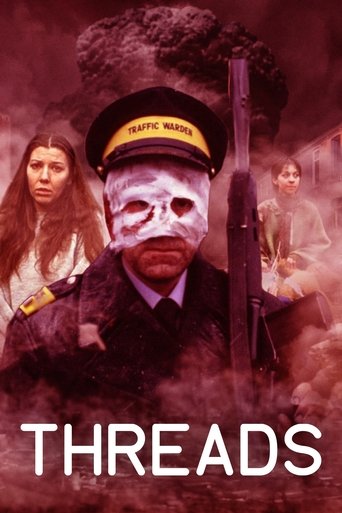
Threads
1984 · Film · 117 min
Directed by Mick Jackson
Documentary style account of a nuclear holocaust and its effect on the working class city of Sheffield, England; and the eventual long run effects of nuclear war on civilization.
62 positive14 negative1 mixed36 neutralfrom 113 commenters
Where to watch
No streaming data for this title.
148 comments on Hacker News
Threads (1984 film), not Threads (social network).
We were told, non-stop and repeatedly, that we would probably all die in a nuclear holocaust before we reached adulthood. And yeah, lots of my generation decided that they'd rather spend their few remaining months touring South America rainforests or hiking Nepal than doing the "productive" things that the people likely to blow up the world wanted us to.
And then they didn't blow up the world. Well, crud. What do we do with ourselves now?
I'm not even slightly exaggerating, by the way. About half the popular media was depictions of how the US would blow up Russia, Russia would blow up the US, or what live would be like after the US and Russia blew each other up. Red Dawn. Most movies with Sylvester Stallone. The Day After. Threads. I assure you those weren't kitschy, ironic things we winked at. We generationally kinda reconciled ourselves to the idea we'd never grow old enough to drink. And then, we were labeled "slackers" for not having followed the same traditional routes as previous generations.
I'm hugely sympathetic to Gen Alpha. I get it, kiddos. I see you there, and I understand.
I have to wonder what part of me has become jaded to the point that the movie did not feel that intense to me. I won't go into details on why I think this movie isn't intense, but it's too new to spoil anything for those yet to see it.
It's not the same as something like Threads (1984) to me.
In the 1980s, the BBC did a realistic nuclear war movie called Threads. It is a classic and always relevant. The scene I found most shocking was in the aftermath, when the children of the survivors can't read or even speak properly. There is this record player and they have no idea what it is for or what music is, because they have never heard of it. One of them plays with it, intrigued that the turntable moves, but that is about it, nobody is hooking it up to get everyone dancing.
I live in the UK which has been slow compared to the USA when it comes to TV. In the 1960s, Americans were watching 4+ hours a day of colour TV, with a vast choice of channels. It took is about three decades to catch up in the UK. I think the same can be said for Europe and elsewhere outside the USA. We have just been behind with TV watching and several other American conveniences, such as driving everywhere and convenience foods.
At the start of this year I made 'reading part of an actual book' my new years' resolution. It was going well for all of six weeks (then I had to spend a log time from home, away from my books), but why did I need to make it something I was committed too with a resolution?
There was a time when I would literally fight over books, magazines and newspapers with family and friends. Before then, there was a time when, as a child, I would be reading by moonlight until the small hours.
Then, before my time, before TV, the cinema and radio, was a time when people would go out to a hall to listen to someone read the latest Dickens installment. That was 'peak book' even though literacy wasn't great for everyone.
Nowadays books have been relegated to what people have on show in the back of a Zoom call, sometimes contrived, often not so contrived. There is a long history of doing this. Middle class people used to buy books for the parlour to show they were educated, often with out of copyright classics, hardbound.
I suspect that some people read more for the 'bragging rights' than for the pleasure of reading. I also suspect that any surveys on book reading habits are going to be unreliable since it is easy to say 'year I read three books this year' and cite the three that you had to read under duress as a schoolchild.
> UK garage and rave culture took off in the UK with influences from reggae, soul and R&B. Now with the help of BBC Radio 1
I think there's an important middle step here, which is stuff that wasn't "banned" but was nevertheless not on the playlist, and the pirate radio stations whose personnel gradually went mainstream. Both from the Radio Caroline era (Jonnie Walker, rock) and Kiss FM (Trevor Nelson, UK garage). Let's not forget the government's attempts to ban the rave scene.
In comics you had 2000AD and Judge Dredd, inspired by the French Metal Hurlant.
> If you really want to argue for British dystopian science fiction movies
Not movies, but TV: Doctor Who (often dystopian), Blake's 7, the Prisoner, and the little-seen but extremely prescient Doomwatch. And of course the darkest nuclear apocalypse movie, Threads. Filmed in the parts of Thatcher-era Sheffield which looked like they had already been nuked.
UK always simply had less money and a narrower set of TV/radio gatekeepers. The diversity and inventiveness is there nonetheless. So, yes, a lot of things have to get American money and licenses in order to be made.
> Yeah, what I've learned from films like "Threads" and "The Day After" is that you very much want to die in the first 20ms of a nuclear war. Don't dig a hole to hide in, put your lawn chair on the roof and hope you're close enough to ground zero to get a peaceful and dignified end.
That's all fine and dandy if you only have yourself to think about...
Yeah, what I've learned from films like "Threads" and "The Day After" is that you very much want to die in the first 20ms of a nuclear war. Don't dig a hole to hide in, put your lawn chair on the roof and hope you're close enough to ground zero to get a peaceful and dignified end.
I find myself returning to this Metafilter comment a lot over the years, from someone who survived war in Bosnia. (Warning: graphic content.)
> I was conscripted into some faction of the Bosnian Army in order to "defend" our city. In truth, we had few arms or anything with which to defend. And as a very tall, largely starved girl, I wouldn't have made much of a soldier anyhow. So I was a "nurse." No training, of course. And no supplies, either. I was near the front line fairly often. There wasn't much you could do.
> One day, some shell exploded right on or near two young soldiers and they were torn into dozens of pieces. I say "dozens" because it wasn't hundreds or millions - I'd seen that happen too, and it's totally different. You could count these pieces. They were big lumps. A fellow "nurse" and I were near enough that we got there before anyone else. There was no one to save.
> As these soldiers were Bosnian Muslims whose bodies - what there was of them - would be returned to their families, we realized that we needed to collect these pieces to put the soldiers back together, kind of, because Muslims believe a body should be buried "whole" - to the extent that it's possible. With "only" dozens of pieces, it's kind of possible to do this. So we set about trying to match parts - one guy's leg get ripped off above the knee, but this leg has the knee attached, so it can't be this first guy's. That sort of thing. "Look," my fellow "nurse" said, "this one ate rice!" Rice was one of the few kinds of food that was readily doled out. Everyone hated it because they were tired of it, because it required a lot of water to cook (and no one had running water) and because it required a lot of heat to cook (and there was no gas and the trees were mostly gone and we'd already burned most of our books.) But we hadn't had rice in a while; this soldier must have been had some at home, stashed away.
> This guy's stomach was blown up, so rice was all over the various parts of his body that came from his torso. And I remember being so happy, because the hardest things to connect to a specific person are internal organs, but this guy's organs had rice on them, so you could tell they were "his." Ones without rice were, presumably, the other soldier's. So the job of piecing together bodies was made much easier than it normally would have been, when you try to make each "body" weigh about the same, even if you know parts are mixed. Of course, I don't need to add that when something like this happens, it's not just people - and rice - everywhere, but uniquely awful smells, and the flies get there so fast I still don't know how they do it.
> Later that day, I snaked my way to my aunt's, a few kilometers away. I remember smiling; I rarely smiled during the war. My aunt had made soup - good soup - and I ate a lot and told her and my cousins about my day. We all agreed it that things had gone pretty well, considering. I was pretty happy about piecing two young men together successfully because of the rice and having a stomach full of warm soup.
> War is dehumanizing. If, as in the Okinawa quote, you still worry about getting shit and piss on you, if you can even still smell the rotting flesh, and if it bothers you enough that you consider not eating your rations, if you can still consider your situation to be something like "hell's own cesspool," well . . . then you're still pretty fucking lucky. People like to read about that stuff; that's why they make it into popular movies and comic books.
> People don't make movies about the happiness of a young girl who finds she can reassemble people with ease, thanks to the fact that one of them ate a lot of rice earlier that day. Because it isn't very romantic or macho and it isn't full of hard-ass symbolism.
> The thing about war, too, is that it affects many many more civilians than it does soldiers. The military-centric ideas in the article don't grasp that. War, according to romantic notions going as far back as the Greeks, is more about guys toughing it out than women and children left to pick up the pieces.
https://www.metafilter.com/87979/Losing-the-War#2886398
This one, too:
> I found that piece very hard to read - self-serving and smug in the sense of looking for romanticism. I reckon that, if the author had ever seen war, he'd be quite embarrassed by it.
> Guess what - most people prefer the movie version of any human experience. War is mostly long, boring, cold, hungry and tedious . . . then every once in a while someone lobs a grenade at you or shells your house or a sniper's bullet pierces your arm or rapes and kills someone you know and you get hysterical . . . and then it goes back to being long, boring, cold, hungry and tedious for eons and eons. While I like a lot of the human experiences eschewed by many people I know, war is one in which the movie version is quite plainly preferable.
https://www.metafilter.com/87979/Losing-the-War#2886358
There’s some amazing (and harrowing) content in her comment history — highly recommend giving it a read. It made me realize that even films like Saving Private Ryan present war as a titillating kind of hell. Something like Threads will probably come closer to the truth of it.
I watched the film “Threads” last night, anyone in any doubt about the horrific consequences of a nuclear exchange should watch it. The speed at which society falls apart is simply terrifying. Those poor souls unlucky to be in a war zone will understand better than I ever will. The world needs a new order.
You can see my street in Threads, but I’ve always found the film faintly hilarious, almost like a Python sketch. Ingrained class prejudice shining through I suppose.
I watched Threads for the first time recently and it really did ruin the rest of my day. I still think about it regularly. It influenced my thinking on the threat of nuclear annihilation a lot.
If you don't feel like watching the whole film (and you definitely should, the first third is all lead-up and it's masterfully done - and the aftermath part is the most believable post-apocalypse I've ever seen in a movie) you should at least watch the bombing scene:
https://www.youtube.com/watch?v=MrHoMSRZOS4
It was a sort of spin-off from an episode of the BBC pop-sci documentary strand QED. A few years before Threads they did an edition called "A Guide to Armageddon" in which they descibed in detail what would happen to London if a bomb was dropped over St Paul Cathederal. They also used make-up to show the sorts of injuries people would receive. A lot of the people involved in the documentary went on to work on Threads.
It's on YouTube if you want to check it out.
https://archive.is/IwLEw
But, but, but, I've seen the movie "Threads (1984)" so now I'm an expert and it's not possible.
Also how come all the children in the area can still speak, in "Threads" children mutate and can't speak like a reverse Spiderman.
This seems like Doomer-denial fake news, the movie Threads (1984) was the real one.
We do proper apocalyptic books and films in the UK! If you survive "Threads" and "When the wind blows", why not wash it down with some dystopia! 1984, Animal Farm, Children of men.
Other apocalypses and dystopias are available. The UK is not the sole source of them. 451F, Brave New World ...
Threads is the most harrowing movie by far. Remember watching it in college and not being able to get out of bed the next day because I was so fucking depressed.
Reminds me of Threads, the movie.
It's on YouTube, but I won't link it here because it's probably the most horrifying film ever.
Threads, mentioned elsewhere, is a good cure for hoping to survive a major nuclear exchange.
The first (IIRC) episode of Burke’s Connections is also pretty good for this. The exploration of how dependent we are on electricity and petroleum fuel, and how fast things would get very, very bad if the power simply went off and didn’t come back on, even for folks we think of as being pretty self-sufficient like farmers (“suppose they do have great-grandfather’s plow buried somewhere in the barn, and escaped a dozen other ways things could already have gone lethally wrong within the first year—do they have oxen? Draft horses? No, almost nobody has those anymore” or words to that effect). A largish nuclear exchange would turn the power off and it’d be off for a while. On top of all the direct damage from the bombs.
(The broader point of that episode is that this is basically what we’ve always done: develop new technology, then use it to increase our population such that most of us would die if that tech vanished, starting with the plow, then irrigation, et c; by the mid 20th century we’d reached that point with electricity and petroleum products)
Worth watching the British film Threads. That shows the aftermath quite realistically.
Have you seen Threads? https://www.imdb.com/title/tt0090163/
I think the irradiation of soil everywhere would mean a total collapse of agriculture. Maybe some tribes in Papua-Ginea would survive but I am pretty sure only ghouls could live in USA and Europe.
Threads (1984), while it was made for TV in the mid-80s and some of the effects are dated, there's an almost visceral, gnawing, devatastaing, haunting (choose your adjective because not one does it justice) feeling that attaches to yourself that has yet to leave me, I think about that film every few days, especially now with some of the more recent, insane developments in politics and international relations. It reinforced how absolutely fragile everything in this world is and how close a situation to today that film showed might really be. One viewing is enough for one lifetime.
> I haven't watched Threads, but I'd highly recommend watching this film
Make sure you are in a good mental headspace.
Threads is VERY harrowing and will leave you reeling for a couple days.
Somewhat off topic
Sort of reminds me of *The War Game*[0], a BBC pseudo-documentary on a nuclear attack against Britain in the 1960s, was sort of censored.
The BBC or government said "the effect of the film has been judged by the BBC to be too horrifying for the medium of broadcasting.", but got shown to a select few, and then got played at film festivals a year later and won an Oscar for best Documentary in 1967.
"The film was eventually televised in Great Britain on 31 July 1985, during the week before the fortieth anniversary of the Hiroshima bombing, the day before a repeat screening of Threads."[0]
I haven't watched Threads, but I'd highly recommend watching this film. It's not gory, it's almost satirical, but also horrifying.
> The War Game is a 1966 British pseudo-documentary film that depicts a nuclear war and its aftermath.[1] Written, directed and produced by Peter Watkins for the BBC, it caused dismay within the BBC and also within government, and was subsequently withdrawn before the provisional screening date of 6 October 1965.[2] The corporation said that "the effect of the film has been judged by the BBC to be too horrifying for the medium of broadcasting. It will, however, be shown to invited audiences..."[3]
The film eventually premiered at the National Film Theatre in London, on 13 April 1966, where it ran until 3 May.[4] It was then shown abroad at several film festivals, including the Venice one where it won the Special Prize. It also won the Academy Award for Best Documentary Feature in 1967.[5][6]
The film was eventually televised in Great Britain on 31 July 1985, during the week before the fortieth anniversary of the Hiroshima bombing, the day before a repeat screening of Threads.[7]
[0] https://en.wikipedia.org/wiki/The_War_Game
Of all post-nuclear-apocalypse stories I've seen or read, I think the movie Threads (1984) (https://www.youtube.com/watch?v=vgT4Y30DkaA) does the best job hammering home just how miserable and hopeless life will be for everyone except a tiny fraction of lucky and privileged survivors.
Maybe those are the people who will still be worrying about investments after WW3...
Threads: a stark contemplation of isolation and desolation, total population collapse… and I hear there’s a movie with the same name.
And there was a bunch of primetime TV content about the nuclear apocalypse when a large part of Gen X was at an impressionable age.
"Threads" (UK), "The Day After" (US) are two big ones. Two lesser known ones that had a profound impact on me were "Special Bulletin" and an episode of the new Twilight Zone called "A Little Piece and Quiet"[1]
[1] - https://www.youtube.com/watch?v=Or1UX7z8YBM .. this run of the new TZ had many episodes about nuclear destruction
I like your sentiment but I don’t think it’s true. We were in the thick of the Cold War. The movie “Threads” - discussed here a few days ago - would be released two years later. The Falklands and other wars started.
Honestly, the world was a bit of a mess in 1982.
If disturbingly realistic nuclear war movies are your jam, check out an older UK production from the 50s called The War Game. Threads actually lifts a number of images from it and it was equally terrifying in its time.
The same director did another interesting one called Culloden, in which a 60s BBC documentary crew visits the historic battle as it happens. Hybrid fiction/history experiment.
It’s kind of impressive that the most awful thing in that film isn’t my hometown getting immolated in nuclear fire, but what happens afterwards.
I was very depressed one weekend and decided to watch threads, when the wind blows and the graveyard of the fireflies back to back. How I didn’t off myself after that unbelievably bleak triple bill I’ll never know.
i watched it once
highly recommended
i will never watch it again
as obscure pointed out, it's on the archive, while that still exists: https://archive.org/details/threads_202007
maybe watch it at a time when you have good emotional support and time to recover for a few days afterwards?
today there are bigger threats but the risk of a second nuclear war hasn't gone away yet
Nuclear weapons are humanities biggest extensional threat, moreso than climate change, but it rarely seems to be discussed in public forums. Films like Threads and Day After Tomorrow should be a requirement in civics classes for states that possess nuclear weapons.
I’m not sure what case can be made for mutually assured destruction bringing peace to the world. Is it causal to how there are relatively fewer people who die in wars during our modern times? Is it correlated with the global improvement in standard or living? or is it merely a statistical blip that will be “evened out” when a nuclear war takes place?
I do think it’s a pipe dream to eliminate nukes; however I do wish there was some way to increase the amount of time required between intending to use them and actually using them. The 1979 incident at NORAD (https://en.wikipedia.org/wiki/List_of_nuclear_close_calls#9_November_1979) is a great example of why the latency shouldn’t be minutes between intent and implementation. Increasing this latency to days, then weeks, in a verifiable manner could give time for cooler heads to prevail.
The depressing thing is that so long as these weapons exist, it’s not a matter of “if” they will be used, it’s a matter or “when”.
Threads is a great movie in many ways. One of them is its accurate, well-researched depiction of the state of nuclear war planning in the UK at the time. The Sheffield city emergency operations center is depicted much as they were in most UK cities, with some discussion of the more protected Regional Seat of Government. There is a quite accurate depiction of the HANDEL telephone early warning network, and the greasepen board which would be used to enter detonation reports reported from UKWMO.
It seems primitive from the modern perspective, and it is, but the design of some of these systems was cutting edge within the cost constraints of the time---HANDEL, for example, using the distribution network of leased lines that had been established to distribute the "speaking clock" audio to telephone exchanges. The hierarchical reporting systems designed for nuclear attacks, with information moving up a hierarchy and reports moving back down, were originally developed (principally in the UK) for air defense but advanced significantly during the Cold War and created the basic architecture for many of the first networked computer systems, which were essentially automation of the established systems.
The aftermath depicted in the film is largely drawn from (and accurate to) reports prepared by both UK and US civil defense organizations, but tends to take the more pessimistic route---not at all an unreasonable choice, as these agencies had a tendency to be rather rosy in their forward-looking work. This seems to have been more a political attitude than a result of the actual analysis of the time, as reports alluded to the worst outcomes being likely and some programs were secretly initiated under the assumption that survival of population centers was infeasible (e.g. the famously secretive US mass relocation program). But planners also felt that, from a practical perspective, it was important for the public to be optimistic. "Expect the best, prepare for the worst" is a positive take on the era, although for political reasons the "expect" often got a lot more resources than the "prepare."
I usually see “Threads” (1984) paired with “When the Wind Blows” (1986), which is a British animated film with similar themes. It’s really good if people are looking for something to watch.
https://en.m.wikipedia.org/wiki/When_the_Wind_Blows_(1986_film)
This is the first thing I thought of when Meta released Threads. I winced when hearing the name. This film is burned into my memory after renting it from a cult video shop way back in the day.
Part of the subtle brilliance of Threads is how it deliberately withholds information from you. You do NOT learn the fate of many of the characters. Including---spoiler alert---the character you initially THINK is the main protagonist, until halfway through the film when he disappears with never another trace. You do NOT learn the fate of the rest of the world besides the UK. All of this is brilliant because the characters themselves would also never learn those things.
It amazes me the sheer quantity and variety of apocalyptic and post-apocalyptic film and other material. Jericho is generously a prime time drama with a backdrop of nuclear attack.
There’s a sort of seriousness/grimness continuum from Threads and other films on one end to the cartoonish Sam Hell Comes to Frog Town on the other end.
Threads is the grimiest, most horrific movie I've seen. I did not think a movie could affect me in such a way until I saw it.
I found the original Fallout games 15 years ago or so, and got interested in post-apocalyptic worlds and wanted to watch a movie about one. Threads was the first movie I saw, and after watching it I didn't want to watch another one.
There was a mini-series called Jericho, which was about a coup in the USA. It began with a series of nuclear attacks on cities, and portrayed the resulting descent into inter-communal violence, gangsterism, shortages and hardship.
It wasn't anything like as scouring as Threads was. If anything it was more like a soap; they made rather light of nuclear winter and fallout.
I liked it, except the weak ending of the truncated second series.
For anyone interested in this subject / genre I recommend "The War Game" by Peter Watkins [1]
Also by Peter Watkins, "The Journey" (aka "Resan") [2]. Quite long, that one.
Threads is one of relatively few films I have ever been inclined to re-watch. In fact, I watched it soon after the first covid lockdown started, followed by bingeing on "I Shouldn't be Alive". Quite curious about the psychology behind those viewing choices!!
[1] https://en.wikipedia.org/wiki/The_War_Game
[2] http://pwatkins.mnsi.net/journey.htm (NOTE: not SSL!)
[3[ https://en.wikipedia.org/wiki/I_Shouldn%27t_Be_Alive
This was a common take, and is the opposite one intended. Both "Threads" and "The Day After" had this problem. A contemporary take:
https://lifeinhellarchives.tumblr.com/image/176779648696
You see? The "Adult Version" is that after a nuclear war everybody dies. But in fact, that had been the received wisdom for many years. These 1980s movies were actually trying to impress upon people that after such a war, there would be survivors who would keeping suffering for a long time.
"Threads" however annoyed me in that everyone seem to regress to a pre-civilization mental state, even losing their grammar. In reality, much of the world (including most of the southern hemisphere) would be untouched and would be sufficient to get the supply chains sort-of working again (at least in a few decades).
It's entirely happenstance, but I like the accidental reference to BBC Threads (the nuclear war TV film). Not only is it a "post apocalypse" evacuation site to many people, but the opening narration of the film muses on how society depends on the "threads" between us and others. Essentially describing the network effect that social media platforms live and die by
After? You're seriously going to claim that Threads -- an app entirely for threaded conversations -- is named not after the ubiquitous term of art from Twitter, but it's named after a 39-year-old animated horror film that most people have never even heard of, let alone seen? That's your contention?
I too name my applications after unrelentingly grim post-apocalyptic British films¹ that harrowingly depict the catastrophic failure of institutions and the dire social and cultural outcomes that accompany the collapse of civilization. This does seem perfectly on-brand for Facebook.
[1] https://en.wikipedia.org/wiki/Threads_(1984_film)
> I've not seen anyone mention this yet, but: UK twitter is laughing at "Threads" because it's also the title of a notorious made-for-TV horror film about nuclear war https://www.imdb.com/title/tt0090163/
No, they're not.
Also came to see if anyone mentioned Threads, the film. Really great film, but certainly leaves an impact on the viewer. Slack has a feature called 'Threads' and for a long time after they introduced it, every time I opened the app I got a shiver of fear down my spine. This is one of quite a number of reasons I don't imagine I will be using Meta's offering.
I've not seen anyone mention this yet, but: UK twitter is laughing at "Threads" because it's also the title of a notorious made-for-TV horror film about nuclear war https://www.imdb.com/title/tt0090163/
> There's massive pent-up demand for an alternative
I'm not quite convinced by this; I think there's demand for things to go back how they were, but that's unsmashing the glass and is fundamentally impossible. Everyone seems to be resentfully clinging to the sinking platform until they hit a "f you I quit" moment, such as being rate-limited or their favourite account being deleted without warning.
Not to be confused with the 1984 film, Threads.
A film about life before, during and after a fictional nuclear attack.
Many people believe that the film "Threads" from 1984 is one of the most accurate depictions of the aftermath of a nuclear war.
https://en.wikipedia.org/wiki/Threads_(1984_film)
Damn. I must have exceptionally dark taste in media, because I've definitely got a few "well, that was good, but I kinda wish I hadn't read/watched it" things in my history, and The Road wasn't even close to qualifying. I'd say the film Threads hit me harder, to pick something with similar setting and circumstances, though that's still not quite in that category.
(It Comes at Night is probably my #1 in that category for film, and I guess Watts' Blindsight in books—both messed me up for days after, the former with some depressive nihilism, the latter with days of fairly intense derealization that weren't too fun—and I'm not normally especially prone to either of those, I don't think)
maybe something like the BBC Threads film is the way to go?
plot of threads:
- nuclear war happens - all humanity suffers horribly - ends with scene of deformed stillborn child
plot of artificial super intelligence:
- tech company creates AI - idiot CEO enters badly thought out goal in an attempt to capture 2% more search market share - AI begins to executes goal - idiot CEO initially delighted at results - at some point AI becomes super-intelligent as it helps it achieve its goal - all life on earth is casually exterminated by the AI as it becomes better at achieving its goal, acting as a global scale combine harvester - no humans, animals, bacteria, fungi... anything biological, ever again - ends with scene of 100% of the earth's surface converted to NVIDIA GPUs
Considering that there's been multiple cases of almost-oops-nukewar...
If you are offered the opportunity to go back in time and, say, kill Hitler, don't take it. You might come back to "Threads".
This is something that the film remake of "The Time Tunnel" left out. (The film is pretty OK.) If you really did have the ability to change the past, you'd need to be prepared to come back to a post-nuclear wasteland. So, your facility would need to have access to enough power generated on-site that you could keep going back and changing things (once? twice? thrice?) until you get it right and we're back to our world where the world wars haven't (yet) gotten past Number Two.
From what I remember, Threads was even broadcast in the Soviet Union – with a little disclaimer that Soviets never did (and never would!) strike first, so that that part of the movie was "western propaganda".
But the rest of the film is so apolitical, and so hauntingly well done, that even the "bad guys" in it liked it.
It's really a testament to the film's quality.
> You should watch Threads (1984), the most messed up film ever made, produced in part by the BBC
No you shouldn't - atleast not without thinking about it first. I still remember its dark, unremitting bleakness 38 years later - it really makes you think about whether its better for your family to die in the initial blast rather than 'survive'.
You should watch Threads (1984), the most messed up film ever made, produced in part by the BBC
https://www.youtube.com/watch?v=vgT4Y30DkaA (trailer only)
It's about the lives of average people before, during and after a fictional nuclear attack in the UK.
That's ridiculous. Works of fiction can and do carry messages or reflection. Threads (the film) is a more impactful depiction of nuclear war than any dry report can ever hope to convey.
In fact, this very book proves that! It touched public opinion in a way that obscure and dense reports did not. That's just how people work.
Heck, are you a Christian? You might be familiar with a certain 1st-century apocalyptic preacher who liked to speak in parables...
That was not an appeal to emotion. That was pointing out that observing that some portion of humanity survives is blatantly talking past the stated purpose of these kinds of measures, which is to reduce the size of the portion that doesn't.
If your floor on what is acceptable is, as the "we survived" standard implies, the base continuance of the species, then you're effectively allowing that even a situation like what happened in the movie Threads is acceptable and it would not be ethical to try and prevent such a situation from happening.
On the other hand, if that isn't actually what you believe, then you should construct rhetoric that is consistent with your actual position.
There is still time to deescalate if only sane people would we can avoid this cataclysim. Only one person near me shares this concern. We really need something like a new threads movie and fast. People are too young to remember the danger and are sleepwalking into an unwinnable conflict.
> the movie Threads
Had to look it up, seems the movie was seen as optimistic ...
https://en.wikipedia.org/wiki/Threads_(1984_film):
"[...] a dramatic account of nuclear war and its effects in Britain, specifically on the city of Sheffield in Northern England. [...] A third and final attack targets primary economic targets such as the Tinsley Viaduct. This third attack causes massive structural damage to Sheffield; the blast and heat kill an estimated 12 to 30 million people in the U.K. in the wider exchange. [...]"
> which obviously hits closer to home.
Maybe, but as I said I've watched it in Italy, as Italian, and almost everyone was watching it that night.
Also, I was merely pointing out that before Threads there was this other movie that pioneered the idea of the atomic holocaust.
There's also China Syndrome from 1979, but even though I think it's a better movie than The day after, the premise is different and the threat is the atomic energy industry, not warheads.
I agree.
Threads is more realistic, but The day after literally ignited panic in millions of families (I remember watching it on Television when I was 6, almost any other neighbour household was watching the same thing!)
I would also add the more prosaic Wargames, also from 1983, to the list of movies talking about a "Global Thermonuclear War" and, similarly to what Princeton is doing, simulating "A strange game" where "the only winning move is not to play"
"Threads" can still be seen for free on youtube.[1] Highly recommended. It's still by far the most terrifying nuclear war movie I've ever seen.
[1] - https://www.youtube.com/watch?v=5Srqyd8B9gE
Both are very good and shocking movies. I personally found Threads more grimly realistic, and more relatable. This might be because I've watched Threads only a few years ago, while it's been decades since I've seen The Day After.
Here's the obligatory contextual mention of the excellent UK film "Threads": https://en.wikipedia.org/wiki/Threads_(1984_film)
Threads is a film that haunts me to this day, despite only having seen it once, in about 1998. For reasons I don’t fully understand our science teacher in secondary school was talked into showing it as an end of term film to show a class of 15/16 year olds. She refused to watch it with us, for reasons that will be pretty obvious to anyone who’s seen it.
There’s a very short list of films that I think are both absolute masterpieces and something I will never watch again, and Threads sits squarely at the top of that list.
The film The Day After is worth watching, and it's on youtube: https://youtube.com/watch/?v=Iyy9n8r16hs
Threads (1984), the UK counterpart, is memorable, very bleak, and also worth watching: https://archive.org/details/threads_202007
I loved Koyaanisqatsi, trailer here: https://www.youtube.com/watch?v=PirH8PADDgQ Not your typical documentary.
Anything by Werner Herzog is incredible as well, I find his approach extremely sympathetic and respectful to the subjects but without sacrificing detail (EG Grizzly Man)
Not strictly a documentary, but Threads by the BBC is a researched film depicting life in the UK if every city was hit by a nuke and it was incredibly disturbing and informative: https://en.wikipedia.org/wiki/Threads_(1984_film)
Carl Sagan's Cosmos has to be one of the most charming and moving documentaries I've ever watched - arguably a little out of date now but it reached a place the subsequent Cosmos series just couldn't reach.
MayDay! Air crash investigations are all amazing documentaries that manage to balance pretty intense technical information with real life suffering very skilfully and they are incredibly engaging.
The Plague Dogs is so unrelentingly bleak, few films have the spine to just be utterly hopeless. It's like a "children's" version of something like Threads or The Lighthouse lol
There was the threat of nuclear war during the Cold War, environmental concerns around overpopulation, deforestation and acid rain. And there were dystopian movies like Terminator, Alien and Threads with fears around technology, corporations and world war. Older people did have to deal with the possibility of bad future outcomes. It seems to have been forgotten in the 90s and and the first decade of the 2000s when those issues didn't seem so world ending in the absence of the Cold War and the failure of environmental doom predictions from the 60s though the 80s.
Moral wrongs are typically built from subjective moral frameworks and those frameworks IMO are more interesting than the conclusive wrong/right outcome they may yield.
Example: Getting a populace, which already thinks in extreme terms about the future, to view more extreme content about the future, is probably risky and downright unhealthy for a lot of those who will view & then feel increased stress or anxiety
Counterexample: Allowing the populace to exorcise its fear through an affecting viewing experience could be a really good outcome in terms of creating more careful discourse; see for example _Threads_ or _The Day After_
Personally I have to say I lean toward the counterexample, especially if a variety of filmmakers are making different films about the consequences of given timelines. In this case you get a dilution or diversion of energy through varying psychological perspectives, which is helpful in creating systems of nuanced thought.
You can also do this within a single film and this has become a more common way of handling narrative perspectives in modern cinema.
And more generally I lean toward "here's a good way to go about this process of thinking about X" rather than "should we do this X thing" because you can fill the judgment-vacuum with ideas that people can use, rather than simply creating a massive and risky judgment vacuum by casting perceptions of what may happen.
Interesting Q though, you got me thinking.
Honestly, this movie is the most realistic fictional depiction. It's time range is before, during and after:
Threads (1984) via https://youtu.be/5Srqyd8B9gE
And if you want to know how the world would like after the movie Threads, read the following book:
A Canticle for Leibowitz (1959) via https://en.wikipedia.org/wiki/A_Canticle_for_Leibowitz
First of all forget about what popular media tells you. And yes that includes the "Threads" film, which somehow keeps popping up when people think "realistic post-apo".
Second, evaluate your risk. Depending on where you live your danger might be extremely limited, or enormous. But just like during the first wave of the pandemic, location is the key. Is your country threatened by a neighbor? Is it isolated? Is it rich or poor? Do you live close to military or other strategic infrastructure?
Finally, you can start preparing. But only after the first two.
In my case when the corona started spreading I've bought couple of packs of masks, latex gloves, vitamin supplements and antipyretics (reduces fever). And when the first emergency was announced (about 9 days later) I was fine.
I didn't waste money on stuff that remained plentiful, I didn't buy expensive toys like a fallout shelter. I was calm and evaluating my risk before doing something.
You should too.
Are you sure you know enough about knock-on effects of nuclear war?
I can recommend the writings of William J. Perry [1] and for blunt emotional effect the BBC movie "Threads" [2].
[1] https://en.wikipedia.org/wiki/William_J._Perry
[2] https://en.wikipedia.org/wiki/Threads_(1984_film)
not really a simulation but the movie “threads” gives what seems to be a very crude and realistic potential scenario viewed from the population standpoint.
The only movie to give me nightmares and sleepless nights. The Day After had little impact on me but Threads was on a whole different level.
For some reason I also still remember a scene from https://en.wikipedia.org/wiki/Special_Bulletin - the news crew trying to understand why the NEST bomb squad was running away just before cutting out...
If you are a well-off resident of a high-income country, are open to moving far from your current place of residence and preparing appropriate shelter and stockpiles, you can certainly prolong your life as a biological organism.
But can you meaningfully prolong your life as a human being, the inheritor of a specific culture and history? No. You could have no meaningful future after every human being's past had been rendered meaningless by the war.
If you want to understand what the world would look like after a global nuclear exchange, the Bulletin of the Atomic Scientists is a good starting point. The movie Threads does a good job focusing attention not on the "day after", but the abject misery of the decades that follow, about which nothing could be done.
https://thebulletin.org/ https://www.youtube.com/watch?v=5Srqyd8B9gE
I always get that video recommended underneath footage of atomic bombs going off or movies like threads.
Fitting, because the Reagan administration didn't realize at the time that they were accidently convincing the increasingly old men leading the USSR that the US was preparing a first strike on the evil empire.
Yup, The Day After feels like willy nilly optimistic romantic comedy next to Threads, I have same feeling about extremely overrated romantic movie The Shawshank Redemption compared to much more realistic Das Experiment (judging by my military experience which was sort of prison).
No, let's be honest, rich West won't go into (nuclear) war with Russia over poor Ukraine which does not have gas/oil (see previous US invasions) and is neither NATO/EU member. As it was proven numerous times West can't agree even on strict sanctions, so to think they would do anything which could potentially lead to direct war with Russia is pure sci-fi. They would Putin take whole Ukraine, Moldova and other former soviet (non NATO) countries before antyhing close to war would happen, there is still plenty of countries to take before stakes are higher.
I highly recommend watching Norwegian TV show Occupied which I finished just days ago (3rd season not worth anymore), which describes pretty accurately European politics and what would happen if Russians "attacked" rich country.
But yeah, as fan of Threads (1984) I thought about nearest shelter, whether I would risk our own building nuclear shelter which is quite deep or try somehow put whole family in our small basement (I think no direct window outside) or hide in our top floor concrete apartment in case of attack, but in the end especially in case of nuclear attack seems quite pointless trying to hide from it. I wish I would have basement as my father (living in west of Slovakia) which is pretty huge like living room in building with 50+ cm thick walls, so all you need to do is cover the windows.
Ever seen Threads (1984) though? Or for something less outright depressing, perhaps the first few episodes of James Burke's Connections?
Both make it clear that should something cataclysmic befall us all we'd be faced with the near-impossible problem of restarting agriculture. Modern, surplus-generating, agriculture isn't possible without modern society, starting with the basics like fuel and fertilizers (and everything else that's connected: the rule of law, supply chains, logistics, PhD-level domain knowledge and expertise, and so on). Those who survive "the event" would be forced into a life of sustenance farming for generations - and while you might think some semblance of modern civilization could be reestablished within a few years, consider that if everyone is sustenance farming for themselves, that leaves almost no-one left to do the actual reconstruction work, and that includes rebuilding fertilizer plants, fuel refineries, oil extraction, and agricultural machinery production.
Without anything close to today's industrialization and automation being restored within a few years (hint: very unlikely) it only gets worse: our modern society depends on an educated workforce. Under a "everyone sustenance farms for themselves"-scenario that means there's no-one to sufficiently educate the tens of millions of school and university-age people, assuming those kids aren't press-ganged into farming for their local district before they can even read or write, so with that outlook what hope is there to rebuild and operate oil refineries from scratch?
And "rebuild from scratch" is the word. While Russia might no-longer have enough strategic warheads to completely obliterate the northern hemisphere (at least for now), I'd bet a week's worth of my future postwar turnip ration that Russia has all of North America's oil refineries and related infrastructure marked as primary-targets, such is total war - so in the aftermath it definitely wouldn't be as simple as reconnecting some broken pipework and wiring-up a generator: the entire gulf-coast's set of oil refineries would be obliterated.
So, yes, you're not wrong: we will all band together, but I'll add that we'll band-together for a world of suck for 10-20 years before we mostly succumb to then-untreatable cancers, and our offspring will grow up as illiterate and uneducated serfs.
I must say, relocating to Chile or New Zealand is looking very attractive right now...
Nuclear weapons is humanities biggest existential threat, and few people talk about it in popular culture. At any given point in time, we're 30 minutes away from the complete destruction of civilizations we know it today. I highly recommend diving into the movies & books below to begin understanding the issue and simply be in awe that humanity is capable of creating such horrific and destructive weapons.
First, watch "Trinity And Beyond: The Atomic Bomb Movie" [https://www.imdb.com/title/tt0114728/]. It gives a great overview of the nuclear weapons program history and his incredible video footage of tests.
Next watch "Threads" [https://archive.org/details/threads_202007]. Be warned, it's depressing, but it does a great job dramatizing what a nuclear attack might look like, including its generational impacts.
Finally, read "Command and Control" [https://en.wikipedia.org/wiki/Command_and_Control_(book)]. The book discusses how nuclear weapons are actually secured and designed to prevent accidental use. A movie was created if you prefer to watch that [https://www.imdb.com/title/tt5598206/].
When you get through these three pieces of material, you'll have a much better understanding of the history behind this weapons, how destructive they are, and hopefully think critically about whether or not they're worth the risk.
The thing I worry the most about is unintentional or accidental use of a nuclear weapon quickly snowballing into something that ends humanity within 30 minutes. That's what's at stake.
That other movie is Threads (1984), the scene you describe is in the trailer and the full movie is available at archive.org (https://archive.org/details/threads_202007)
And our reality would segue into the storyline of Threads. The 1984 BBC film should be mandatory viewing for all people in positions of power. The bombing is only the start of the horror. https://www.youtube.com/watch?v=vgT4Y30DkaA
Ya reminds of the (awesome but at the same time horrific) post apocalyptic film Threads: https://m.imdb.com/title/tt0090163/?fc=2&ft=29&fm=1
Agreed. When people talk about the scariest horror films, I always think that nothing comes remotely close to Threads. It left me feeling quite disturbed for a full week.
The nightmare-inducing 1984 film "Threads" portrays a nuclear holocaust that begins with exactly these kind of small tactical nukes. <Spoilers>The nuclear conflict begins with the USSR using a nuclear-tipped SAM missile to wipe out a US bomber squadron. The US retaliates with a tactical nuke to wipe out a Russian base. After that, things get ugly fast.</Spoilers>
"In class, I’ve shown students movies from the nuclear age, hoping that Gregory Peck’s stoicism about the death of the world in On the Beach or Charlton Heston’s damnation of all mankind in the final moments of The Planet of the Apes might make them understand some of the smothering fear of living in a world on the edge of instant oblivion. I make them watch The Day After and read Fail-Safe and Warday. To younger people, these films and books now seem like relics from some lost civilization, full of mysterious, apocalyptic texts and angry cinematic gods."
He should have shown them Threads.
Do yourself a favour and never watch the BBC Movie from the 80s called Threads about a nuclear war breaking out. Incredible movie but by far the most depressing thing I've ever watched. I felt down for days after watching it during college one time. Never been so effected by a movie. Quite a remarkable piece of work.
There is this movie called 'Threads' filmed in Sheffield for the BBC about nuclear war. Made back in the 1980's it has a scene in it with a record player that I can remember. The record player and records are not understood by the post-nuclear survivors, they don't know what it is for. It is a metaphor for culture and what it is to be human.
Early 90's dance music was the soundtrack to my student life.
The records of the 'rave era' didn't have much going on with the sleeves. Compared to the rock and roll records of the previous generation or guitar based 'Indie' music the sleeves were very different, you would be lucky to have 33 or 45 rpm written on the record correctly. Something had been lost in that the sleeve artwork didn't have the same value. However, the logo for the label (printed on the record's A-side label) did look cool rotating around at 33 or 45 rpm.
Having an actual record player was not strictly necessary as, in student life, you would be somewhere else most evenings where 'decks' existed. I knew a few people who had the latest and most hard to obtain records but had no record player. They certainly didn't do tapes either. Records could be bought unheard by them in the store and played for the first time in a venue with the big speakers and a crowd. People could DJ that way, all their money in vinyl, nothing spent on audio kit and willing to subject unsuspecting victims to new music.
In those days and in that genre it was £5 - £8 for a 12" single that would have one song and inevitable remixes. A £50 a week budget was reasonable on student means. Nowadays I can't imagine anyone paying that much for their music.
CDs were available but the reasons for not buying them were many. The mixing thing was one factor, you couldn't play a CD at 'plus 8' (rpm) unless you bought one of those CD players for DJ things. But the most compelling reason not to buy the CD was that you wanted the limited pressing of a thousand vinyl from a small label, not the printed by the million CD from a major label. By the time the successful original vinyl made it from the small label to the big label (and on CD) music had in fact moved on. Plus the major labels somehow washed all life out of the music they published.
Decks were important - Technics 1210's - but there was something cool about just having a basic record player that had no sophistication whatsoever, not even auto return. To get up, walk across the room, find the next track, swap the records over removing fluff from the needle and sit down again had something to it that you don't get with an mp3 player. The recall to find a song in a sizeable collection when all the sleeves were ambiguous was also a skill. There was also a certain amount of filing, putting everything back when every wall space had records stacked against it was inevitable tidying up after a good night.
Returning to 'Threads' and where the world is going with C19, I worry about students today not being able to get their music the vinyl way at house parties. Having every song ever made on Spotify is great, particularly when you have Discogs, but the mystique has gone.
FYI you can watch it here: https://tubitv.com/movies/531445/threads
I had a high school teacher show us Threads during a breakout portion of 10th grade history where, for 9 weeks, you learned all about nuclear war. It has stuck with me my entire life. Somewhere about 2/3 of the way through the course we watched the film. It singlehandedly hammered into me what weeks of still imagery, theory, and historical facts could not.
What you learn most importantly from it is, while the initial hyper-violent effects of a proper nuclear war are so much more horrendous than anything humanity can imagine based on anything ever seen prior, it's the slowly diminishing quality of life that spirals out from it that reminds you of the futility and pointlessness of it all. When, ten years later, you see life is operating at medieval (or worse) levels, it's a truly crushing feeling.
The film is available on Amazon (for purchase only), I believe. Everyone should watch it, but I cannot emphasize enough that for some people it can be a real stressor. It has no happy ending.
Threads is a very good movie. Potential viewers should know that it's old and the special effects have not held up well, but it very much captures the terror of nuclear conflict quite well.
By far the most terrifying movie I've seen on nuclear war has been Threads.
If you can find a good copy of it, watch it.
Also, many people these days act like the threat of nuclear war went away with the end of the Cold War. But the threat is still very real, and there are still thousands of nuclear weapons that the US and Russia continue to aim at each other, not to mention the rest of the world's nuclear powers, some of which have been at war with each other before and stand a good chance of going to war again.
Another film that deals with Nuclear Holocaust, albeit more of the direct aftermath is BBC's Threads[1].
[1] https://en.wikipedia.org/wiki/Threads_(1984_film)
The director, Mick Jackson, later made Threads [1], which is one of the bleakest, most depressing films ever made. Highly recommended, though not for the easily disturbed. It's filmed like a documentary, not too different from A Guide To Armageddon.
He also made Connections [2] with James Burke, which is a fantastic documentary series about the history of science.
(His later, very commercial Hollywood work is less interesting, though Steve Martin's L.A. Story is great.)
[1] https://en.wikipedia.org/wiki/Threads
[2] https://en.wikipedia.org/wiki/Connections_(TV_series)
In the Cold War a very few rich people built concrete bunkers in their basement, and the Swiss mandated it for all properties.
It just was. It was what we were born into, and grew up with. Peace movements and CND were big in the sixties and seventies. So was John le Carre, and all those Cold War movies - good, bad, and awful. Aside from that, most of us couldn't care less. We made jokes about it. We watched Threads in 1984 without a care, after watching it however...
Oh God, Threads. The article is right, that really is one of the bleakest movies ever made, right up there with Grave of the Fireflies and Henry: Portrait of a Serial Killer. I didn't even encounter it until long after the Cold War had ended, and it still made a huge impression on me; I can only imagine how people viewing it in Britain in 1984, at the height of Reagan-era confrontationalism, must have felt.
I remember watching Threads for the first time. It is the most hardest hitting movie I have ever seen. I could barely will myself to get out of bed the next day after I watched it the first time. A shocking, shocking but brilliant depiction.
I was twenties. The era government sent everyone the "Protect and Survive" leaflet and showed the public information films, Threads gave everyone nightmares. It stuck with you, unforgettable, people were talking about it for ages after.
The grimmest, bleakest TV ever made. Quite remarkable considering it obviously had a budget of pennies. Yet I'd also highly recommend it.
"The Day After" is a schmaltzy Hollywood feel-good family movie in comparison.
There's an old movie called Threads[1] that is probably the most disturbing depiction of nuclear war I've ever seen. Highly recommended.
There's also an interesting, realistic simulation of how a conflict betweeen Russia and NATO might start.[2]
[1] - https://en.wikipedia.org/wiki/Threads
[2] - https://www.youtube.com/watch?v=M0D3A5dnAqg
I laughed, but you're right, I'm sure the state of emergency measures are still there in some form, since you never know when they might be needed. I always thought such a thing would be fairly clear cut, but possibly state of emergency is the only way Brexit is going through...
Still that veneer of civility and rule of law is important, however artificial it sometimes seems. Democracy is all too fragile. I remember the nuclear war programme Threads, and the documentary at the same time - possibly Panorama - where some petty bureaucrat or councillor was positively itching for Armageddon to happen just so he could start shooting people. I think he only had a very minor place in the emergency hierarchy. It was his answer for every disagreement - shoot them - he must have mentioned it a dozen times!
See you in camp... :)
The film Threads (which strived for accuracy) had a full scale nuclear attack on the U.K. preceded by a high altitude nuclear detonation over the North Sea, in order to knock out as many systems as possible with an EMP. And from the Starfish Prime test, we know that such events also create an unusual coloured light display.
That raises an interesting point that was not covered in the plot of Threads - the strategy behind the nuclear exchange and how it played out globally.
You're certainly right, that at one stage the plans the Soviet Union had for the UK resembled what the UK did to Heligoland.
In the film, if the West had initiated the exchange with a surprise counter-force first strike, they could have potentially disabled a significant proportion of the Soviet Union's strike ability. If this were the case, one of the morals of the film would have been that even if the majority of enemy warheads are destroyed, they'll still have enough to destroy you.
Another scenario is that the Soviet Union went first with a limited strike, and the West retaliated destroying any further offensive capability.
There are also scenarios where counter measures worked, devices were a lot less reliable than expected and so on.
Thankfully none of this was ever played out, but there is a whole spectrum between nothing and everything (and the politics - MAD, et al) to go with it.
How about Threads? (https://www.imdb.com/title/tt0090163/) I watched it just a couple years ago and ffs it got me into a sombre mood for a month at least...
Threads is outstanding. I rarely if ever had a nightmare after watching something but that movie is so frightening and depressing that the first time I watched it I could barely force myself out of bed the next day. Incredible work by the BBC.
I haven't seen The War Game, but that's the ending from Threads (and Wikipedia lists a different ending for The War Game).
Threads is an interesting film from the 1980s, with a very bleak tone about the prognosis after a full scale nuclear conflict. I have read modern analyses of it that suggest it was perhaps too pessimistic in the long term effects.
I still have occasional nightmares about Threads (https://en.wikipedia.org/wiki/Threads). Mostly about the milk bottle melting. Possibly the scariest TV show I've ever watched - largely because it was set just down the road in Sheffield.
Previous civilisations have given up the wheel. The Japanese did, then in the Middle East the wheel went by the wayside where animals rather than wheels suited the compact cities.
Just saying that because some people don't understand that there are good reasons to give up those clumsy wheel things, they ain't the bees knees.
In the post nuclear war movie 'Threads' there is a quick loss of education and language in the nuclear winter years. A girl is shown with a record player and records, this scene is about how the girl has no idea what this is for, the very culture of music is not conceivable, it has been lost.
All tech is given up in the apocalypse. As is language and civilisation. It becomes a life of harsh survival. Violence becomes the universal language that everyone understands, that's it.
This is still an outcome our politicians have not gone to rule out for us. With our taxes we pay for tens of thousands of nuclear weapons to be pointed at us.
If we just give up the cult of militarism then we will be fine.
Whether or not China has technology to directly threaten US aircraft carriers or air defenses is pretty inconsequential IMO. Both sides have had thermonuclear weapons and ICBMs for decades. Are US aircraft carriers immune to Chinese anti-ship weapons? Then the US gets the opportunity to spark thermonuclear war if they press that advantage against Chinese forces. Are US aircraft carriers vulnerable to Chinese anti-ship weapons? Then it's the Chinese who can start WW III by sinking them.
The movie Threads is still terrifyingly relevant:
https://archive.org/details/threads_201712
I suppose that with improved military forces China can intervene in weaker states' affairs like other P5 members do. There's always room for another nation to participate in the Syrian civil war.
Threads indeed, this one really brought it home:
"the film was the first of its kind to depict a nuclear winter. Certain reviewers nominated Threads as the "film which comes closest to representing the full horror of nuclear war and its aftermath, as well as the catastrophic impact that the event would have on human culture" (from Wikipedia)
People underestimate just how fragile civilisation actually is.
From the description at the top of the thread it's as if we'll just come out of our shelters after a week and everything will go back to normal, we'll just drive down to Arby's for dinner, maybe catch a movie.
More people need to watch Threads.
I really recommend a BBC made movie from the 80s called Threads. I reckon it was the most harrowing thing I've ever watched on TV.
Hi all - I'm the author (backed by a very capable team) of the YouTube nuclear attack video. I appreciate the commentary and the dialogue about Threads, The Day After, The war Game, Fail Safe and other such movies, all of which inspired us in making our own modest production. Ben Marking.
There was this great surge of nuclear scare in the early eighties. Threads, The Day After, and on lighter note WarGames are among the movies which came out of that scare.
I lived through those years. I was scared. I went and saw The Day After on what I believe was its first European showing, in Copenhagen a few days after the American TV airing had made a big splash in the news. It didn't tell me anything I didn't know, but I was seriously shaky all the same, going home that night. I'm still sort of incredulous to find us all alive in the 21st century. And at times I wonder - were we all just in silly hysterics back then? But then I read up a bit on things like Operation Able Archer, autumn 1983, and realize how clear and present the danger really was.
I think what gives Threads extra psychological heft is the fact that it opens with a very long sequence of everyday life pre-bomb, which grounds the film in reality. Because the cause of the disaster is unknown, it is easier to shrug off "The Road" as an alternate universe. The events in "The Road" are more awful, but less immediate. Now that I think about it, that grounding also enhances the "Wizard of Oz", in a different way.
No qualifiers necessary, Threads is easily the most terrifying movie I have ever seen.
Threads is undoubtedly the greatest horror film ever made. Monsters can't come close to the reality of what humans can do to each other.
Fanstastic movie, and very very 80's. Not nearly as terrifying as Threads, which is by far the most terrifying nuclear holocaust themed movie I've ever seen, but still very much worth watching, especially for fans of "what if?" scenarios, and those who enjoy wondering what people would actually do if they thought nuclear war was really going to happen.
Another scary nuclear holocaust movie: Miracle Mile (1988) [1].
Framed as a love story, it's set during a single night in LA as a man accidentally picks up a ringing pay phone and hears what seems to be a soldier who has misdialed his father and calling to warn of an impending missile launch.
It's an incredibly tense film as the man anguishes about whether the phone call was fake or not, and decides to make an attempt to get out of town, but not before getting his girlfriend. It doesn't have the documentary realism of Threads, but the atmosphere of dread is a fantastic, and the structure -- a long "After Hours"-type night of craziness while nuclear holocaust is looming -- is pretty unique.
[1] http://m.imdb.com/title/tt0097889/
One of the reasons Threads worked because it felt like a documentary about ordinary people. That bloody voiceover with its calm measured tones describing the absolute horror that was unfolding...brrr.
I've read enough about Threads to know that I absolutely do not want to see it. Just reading the story in the article makes me queasy. The article calls The Day After "reassuring and sanitized," but from what I remember, that was something of a nightmare.
The movie Testament also came out around this time and it's often brought up in the same context as The Day After and Threads. Watching Testament felt like a gut punch.
I wouldn't tell anyone else not to watch Threads. (How could I? I've never seen it.) But if you are going to watch it, you should brace yourself emotionally. If your idea of a post nuclear apocalypse is driving around in cool cars like Mad Max in the Road Warrior, you probably should watch Threads.
I wonder if societal expectations of the end of the world will affect how it does play out, should the unthinkable happen. Threads is a horrific, profound work- but it's also very rooted in the anxieties of densely urban England. In the U.S. there's much more open land, unclaimed wilderness, and so the concept of post-apocalyptic plenty abounds, whether in survivalists building compounds in forests and fields, or the looting of abandoned malls in zombie films. The prepper subculture has been around long before current geopolitical realities. In the face of nuclear apocalypse, those who can't flee to New Zealand will just preemptively take to those compounds[0].
It'd be interesting to see a work of art that includes our culture's awareness of prior works of art.
[0]https://news.ycombinator.com/item?id=13462865
https://news.ycombinator.com/item?id=13482107
This article is about a film called Threads, not about hazards in concurrency or parallel computation.
People don't seem to understand how close to the edge of disaster we still are. The message in movies like Threads and The Day After are quite relevant today, despite how impossible they may seem. While an intentional war may be less likely today, the danger of an accidental one is just as real.
Threads was definitely the most terrifying film I've seen about nuclear war. Highly recommended.
I must watch Threads given all the talk about it in this thread, but I guess I'll be the lone dissenter that will come out and say that The Road was an absolutely horrible movie. I found it so drawn-out, boring, interminably long. I realize it was presenting life in a post-apocalyptic future, but that's no excuse to have no plot to truly speak of in its 111 minutes of runtime.
Then again, I hated Mad Max and only sat down to watch it at the theater because of the ridiculously-good critical reviews it had amassed. I found it a pointless exercise in hedonism and a testosterone-fueled car chase filled with gore and nudity for their own sake.
Absolutely. When people ask me what the scariest horror film I've seen is, I respond with "Threads."
As far as I know, the post-nuclear world is most accurately described in the 80s UK movie "Threads". It's the bleakest and most depressing movie I've ever seen, like a never ending nightmare. Don't watch it, unless you like being in a bad mood for days.
Threads has to be the most upsetting film I've seen.
A few years back I started watching Schindler's List and I decided I wanted to watch something a bit less depressing and stumbled onto an evening on Channel 4 that was showing The War Game, The Day After and then Threads.....
Edit: The War Game is worth watching - the BBC refused to show it as "the effect of the film has been judged by the BBC to be too horrifying for the medium of broadcasting":
https://en.wikipedia.org/wiki/The_War_Game
If you think The Day After is grim then you should see Threads - the UK BBC equivalent:
http://www.imdb.com/title/tt0090163/
The one I remember most as a kid was actually the QED episode "A Guide to Armageddon":
https://www.youtube.com/watch?v=9GJttnC8PoA
Edit: The part starting around 6:40 gave me nightmares when I saw it...
The 1965 The War Game was so bad (i.e. realistic) that it wasn't broadcast until relatively recently:
http://www.imdb.com/title/tt0059894
Just talking to someone about "Threads" yesterday. IMHO the best "after the nuclear holocaust movie" (even more so than The Road), I think of all movies it was the one with the biggest immediate psychological impact on me (a rare thing)...I remember watching it and quite simply not wanting to get out of bed the next morning as I just felt a nuclear war was inevitable, we were all screwed anyway - and humanity sucked.
The calm official-sounding voiceover in Threads is the worst part of it all I reckon. It just gives it the feel of a documentary which makes it even scarier.
Another classic British film on the subject was Threads. It's basically "Well, wow, we're rather boned while the US/NATO and the Soviets hash it out."
Ah! About that I'm not a good person to listen to, for I was born, raised, and have retired to a city that's a hair's breath from the USA's "Tornado Alley", and for that reason we are deadly serious about Civil Defense. So during tornado season, every Monday at 10 am if the weather was good, the sirens would sound for testing. And they of course sound when a funnel cloud was sighted, and they saved a lot of people from death or injury (in my case) the 3rd time in my life when it was for real: https://en.wikipedia.org/wiki/2011_Joplin_tornado and http://www.ancell-ent.com/1715_Rex_Ave_127B_Joplin/images/
That said, surviving nuclear war isn't that difficult. Threads was ludicrous propaganda; if your nation is prepared (UK and US no, Switzerland and Israel yes), or if you're lucky and either aren't in the path of serious fallout or can arrange a shelter ... well, one theme of Threads was correct, medium and longer term survival is the trick. But the portrayed bigger environmental effects as well as cancer rates and the like were flat out lies (this based on reading the Wikipedia summary and my 45 years worth of study of nuclear war survival).
Don't know about that Q.E.D. episode, but it was unrealistic: while the U.K. is like many other nations in being a "one bomb nation", that is, taking out the one central city takes out almost everything and everyone important "at the top" (compare to the US were D.C. is nothing but government, however much they like to pretend it's e.g. a cultural center :-), London would get a nice saturation spread of more efficient sub-megaton warheads :-(.
If your government had really cared, and could afford it (that's the trick, I suppose, post-WWII and serious socialism), it could have been arranged that you'd get that 4 minutes warning and have a blast shelter to get into. By the same token, the US could have spent 1/3rds of a year's Cold War "defense" budget and outfitted enough shelter spaces for every resident, including a year's worth of food.
But don't worry, sooner or later nuclear weapons will again be used in anger :-(, and a lot more people and nations will get serious about surviving them. If you want be prepared today, take a gander at Nuclear War Survival Skills, the book on expedient nuclear war survival: https://en.wikipedia.org/wiki/Nuclear_War_Survival_Skills
(Note you need the real, green cover book to get the correct scale diagrams to make a Kearny Fallout Meter, not to mention the need for a paper copy if the lights go out/EMP messes things up, but the free on-line versions will get you started.)
Actually, the BBC did one documentary that was in some ways even scarier than Threads: Q.E.D. - A Guide To Armageddon:
https://www.youtube.com/watch?v=9GJttnC8PoA
It goes through the details of what would happen if a 1MT bomb exploded the center London - which is, of course, completely catastrophic. Then it calmly mentions that London would have probably been hit by at least 30 bombs...
Threads is probably the most chilling nuclear holocaust movie I've ever seen. Highly recommended (if you can find a good copy).
You know, I tried to rewatch Threads a couple of years ago just to see if I'd been desensitised to graphic violence. I hadn't been! I don't watch horror movies and graphic violence on the telly, they genuinely scare and disturb me. So that's my excuse for not making it through the first 45 minutes of Threads as an adult!
I think one of the scariest things for me was that it was set in the north of England where I'm from. Normally disaster movies are all about London and the south-east corner of the UK if they are set in the UK at all. I'm from the North West, and it was the sheer ordinariness of the people that they managed to capture so perfectly that made themselves empathetic to me. It actually felt as though I might have known some of these people. I think it was that deep empathy that made it much easier to place oneself in their position, fucking terrible position though it was.
You know, I was thinking about what you said about fearing nuclear annihilation and I think I'm more worried about it now. At least in the good old days there were only two likely candidates to start lobbing nukes about the place, these days who knows who's going to be the first to set one off.
When I was a kid I remember watching Threads with my family. I had friends go on and on about how freaky The Day After was, which I never saw until about 2000 or so.
Those kids who talked about being scared by TDA obviously didn't watch Threads at the time. I still shudder thinking about some of the scenes.
I did rewatch it not too long ago and just kind of shrugged. I suppose that's a statement on both how far we've come in terms of actually fearing nuclear annihilation as well as the graphicness of horror movies.
I was 11 at the time the Berlin Wall came down, and I remember my mum waking me up and telling me to come downstairs. She was patiently trying to explain how important all this was, but as I sat there watching all of these people joyfully smashing a giant wall to pieces I kept thinking, "I wonder if I can ask for a sledgehammer for Christmas, if people on the telly are using them it must be okay for me".
So yes, that was me growing up in the UK during the 80s. Cold War tensions, threat of nuclear war, proxy wars springing up all over the place and at the end of all that my abiding memory is "hmm, sledgehammers are cool!"
That and the film Threads[0], possibly the scariest film I've ever watched and if offered the chance to watch it… DON'T.
[0]: Nope, not linking to it. I'm doing you a favour, seriously.
https://www.youtube.com/watch?v=5AUYCnzmDJY
I'd recommend you watch Threads (found the full version on Youtube), which is arguably the best serious look at a post-apocalyptic world.
TL;DR: Humanity wouldn't die out but it would certainly regress 1-2 centuries at least.
The most frightening and realistic depiction of a nuclear holocaust that I've seen is a 1984 BBC film called Threads.[1][2]
You can watch it for free on youtube.[3]
[1] - https://en.wikipedia.org/wiki/Threads
[2] - http://www.imdb.com/title/tt0090163/
[3] - http://www.youtube.com/watch?v=_MCbTvoNrAg
Related to your link, Not propaganda, but a weird pseudo-documentary drama about nuclear devastation over Sheffield: http://en.wikipedia.org/wiki/Threads
It's a "fun" watch, probably the most frightening piece of film I've ever seen.
EDIT: and a link to the fun part, for the lazy http://www.youtube.com/watch?v=IKLSGLjcJJc
I can recommend watching Threads to get some idea of just how grim things would probably have been in the UK had there been a war at that time.
http://www.imdb.com/title/tt0090163/
NB Threads, although it depicts an absolutely devastating attack on the UK (~90% dead within a few years), actually uses a rather optimistic attack plan - a real attack would actually have been far worse.
http://en.wikipedia.org/wiki/Square_Leg
The BBC drama "Threads" still scares me 25+ years after I first saw it:
http://www.imdb.com/title/tt0090163/
One thing to note about this drama, where over 90% of the UK population are eventually killed, is that it is based on an official exercise called Square Leg that was generally regarded as being rather optimistic, a real attack by the Soviets would probably have been far worse:
http://en.wikipedia.org/wiki/Square_Leg
I'm probably having a bit of a downer on the subject as I watched Threads last night - http://www.imdb.com/title/tt0090163/
While quite possibly the least cheerful film ever made - it was based on a UK military planning exercise (Square Leg) that was actually pretty optimistic. In the optimistic version - only 90% of the population of the UK is killed, in the realistic ones it is much worse.
Single biggest thing: no Cold War.
Go watch Threads:
http://www.imdb.com/title/tt0090163/
and if you aren't old enough, consider that people lived with this kind of threat for decades.
Doesn't look like anyone else has mentioned _Threads_ (http://www.imdb.com/title/tt0090163/) a British, very harrowing, gritty look at the outbreak and aftermath of a nuclear strike.
Ditto. I asked for movies like wargames, military, strategic, nuclear, and it was way off. It gave me movies like Meteor. I was expecting things like By The Dawns Early Light, Threads maybe, things like that.
Sorry, complete miss.