 Hacker Cinema
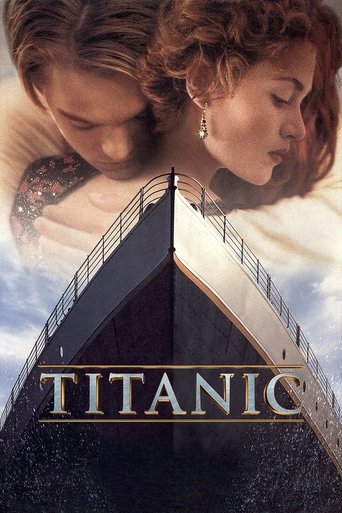
Titanic
1997 · Film · 194 min
Directed by James Cameron
101-year-old Rose DeWitt Bukater tells the story of her life aboard the Titanic, 84 years later. A young Rose boards the ship with her mother and fiancé. Meanwhile, Jack Dawson and Fabrizio De Rossi win third-class tickets aboard the ship. Rose tells the whole story from Titanic's departure through to its death—on its first and last voyage—on April 15, 1912.
14 positive22 negative8 mixed171 neutralfrom 215 commenters
Where to watch
No streaming data for this title.
247 comments on Hacker News
Regarding the "Titanic" film, from the Linux Journal (https://www.linuxjournal.com/article/2494):
> We rapidly concluded the DEC Alpha-based systems served our batch-processing needs very well. They provide extremely high floating-point performance in commodity packaging. We were able to identify certain floating-point-intensive applications as port targets. The Alpha systems could be configured with large amounts of memory and fast networking at extremely attractive price points. Overall, the DEC Alpha had the best price/performance match for our needs. [...]
> At this point, the decision was made to purchase 160 433MHz DEC Alpha systems from Carrera Computers of Newport Beach, California. Of those 160 machines, 105 of the machines are running Linux, the other 55 are running NT. The machines are connected with 100Mbps Ethernet to each other and to the rest of our facility. [...]
> The floating-point power of the DEC Alpha made jobs run about 3.5 times faster than on our old SGI systems.
Yeah, even in like 1996/1997 for certain industries there were hints as to the way things were going, even if it took 4/5 years for the transition to fully take place.
For example, in 1996/1997, Digital Domain (VFX industry) used a 'render farm' cluster of Carrera Alpha workstations running NT to render the Titanic film, instead of SGIs running IRIX. (SGIs were still often used on the artists workstations though, but progressively that shifted).
By 2001, many of those machines were x86 which were then often as fast as the SGIs and Alphas, even with x86's stack-based floating point architecture which handicapped it a bit, and the significantly higher memory bandwidth and larger caches of the SGIs.
Expensive movies are liked because they look impressive much more so than cheap movies. Say Titanic in past. Or Lord of The Rings. If AI can do the same they don't actually care if it was expensive or not.
I think you miss the point. Think of the movie Titanic, where people were on the boat for a very long time, as opposed to merely an overnight trip.
Right? I keep telling people that Titanic wasn't a documentary, it was an instruction manual for the future. Look the deleted scenes. You don't lack the ability to understand your situation, you simply lack the information required to understand how hopeless you are. Poof, and this comment is gone.
In a possible defense of grandparent, whenever I pirate movies these days (seldomly), it would be not because I don’t want to pay, but either because I want the offline reliability or because I just can’t find it elsewhere.
(The latter would however not be the case for Titanic, I imagine.)
Think of a movie.
You had literally -zero- input in what your brain gave you as an answer. It just gave you something, you can make up whatever story you want to tell yourself, "it's my favourite movie", "I saw it last week", whatever you want. It doesn't change the fact that the words on your screen triggered some neural pathway in your brain that is totally out of your control and landed on "Titanic".
> It only costs me like $180 a month in API credits
In The Netherlands you can get a live-in au-pair from the Philippines for less than that. She will happily play your Beatles song, download the Titanic movie for you, find your Gorillaz song and even cook and take care of your children.
It's horrible that we have such human exploitation in 2026, but it does put into perspective how much those credits are if you can get a real-life person doing those tasks for less.
The entire history of the US is founded on white supremacy. From the genocide of Indigenous people, to slavery, to Hiroshima, Korea, Vietnam, Iraq, Afghanistan, Palestine...
Only Titanic and Avatar earned more money (inflation adjusted) than this film:
https://en.wikipedia.org/wiki/The_Birth_of_a_Nation
Your case would have been better if you had used Mad Max: Fury Road, or even Titanic as examples, rather then a mediocre TV show nobody remembers. Ugly Betty used green screens to make production cheaper, that did not improve the show (although it may have improved the profit margins). Mad Max: Fury Road on the other hand used CGI to significantly improve the visual experience. The added CGI probably increased the cost of the production, and subsequently it is one of the greatest, most awesome, movie ever made.
Actually if you look at the scene from Greys Anatomy [0:54] you can see where CGI is used to improve the scene (rather then cut costs), and you get this amazing scene of the Washington State Ferry crash.
I think you can see the parallels here. When people say they hate AI they are generally referring to the sloppy stuff it generates. It has enabled a proliferation of cheap slop. And with few exception it seems like generating cheap slop is all it does (these exception being specialized tools e.g. in image processing software).
as someone who had a DiCaprio lookalike in his middle school when it came out, who attracted ALL the girls' attention, and also as someone whose first date ever was to see Titanic
I begrudgingly have to admit it is a very good movie
It was pretty good, but many movies were that good. I picked Titanic specifically because it was broadly popular and culturally relevant.
Was Titanic actually that good of a film? Perhaps I should watch it again now that almost three decades have passed.
It's kind of like the difference between something being enjoyable for you, and something being widely popular?
In a hypothetical world of "AI can produce a lot of extremely high quality art", you can easily find (or commission) AI art you would absolutely love. But it probably wouldn't be something that anyone else would find a lot of value in?
There will be no AI-generated Titanic. There will be many AI-generated movies that are as good as Titanic, but none will become as popular as Titanic did.
Because when AI has won art on quality and quantity both, and the quality of the work itself is no longer a differentiator against the sea of other high quality works? The "narrative/life of the artist" is a fallback path to popularity. You will need something that's not just "it's damn good art" - an external factor - to make it impactful, make it stick in the culture field.
Already a thing in many areas where the supply of art outpaces demand. Pop music, for example, is often as much about making sound as it is about manufacturing narratives around the artists. K-pop being an extreme version of the latter lean.
> so obviously Qualcomm that it seems silly for the article to call it “company 2”
Redactions / aliases are sometimes quite transparent. When policy dictates that it must happen they do it even when it is not hard to puzzle out who the redaction / alias hides.
There is the famous interview where the NTSB was interviewing an expert in relation to the Oceangate tragedy. The expert's name was redacted, but he was described as "Co-Designer / Pilot of the Deepsea Challenger" which is already quite a specific thing. Not a lot of people can claim that. And then the interview started like this:
Q: So how did you get yourself started into submersible operations? <redacted>: Well, I'm sure you are familiar with my film Titanic.
I'm leaving the solution as an exercise for the reader. But it is a real world "Lisa S. No, that's too obvious. Uh, let's say L. Simpson." situation.
That was my point tho, they are not conservative, Titanic is basically the story of a bouregois woman who on her deathbed remembers a one time fling she had when young, despite a whole life spent with another man. It can be categorizd as cheating of sorts, from a conservative POV, yet it is incredibly popular all around the world as a "romantic story". Similarly a lot of the American rom-coms involve some sort of cheating and they are wildly popular in other parts of the world.
Its not wokeism the issue, its the decrease in artistic quality of movies overall, helped partly by the ideology over craft spirit and the laziness from rentier and extractive studios.
I remember getting my hands on a rip of Titanic, burned onto 3 CD-ROMs in 1997/1998 before it was released to video. I used the CD burner at school to sell copies to other students, and got in trouble for it lol. Just having a copy of the movie before it was released was really something.
I just went through a bunch of old CDs that had DivX rips on them a couple of years ago. Binders with hundreds of CDs. I thought that they would still look decent and I was going to back them up... back to my hard drive. But no they were really terrible. I donated the binder to Goodwill, hoping that someone might find the surprise...
They were fine when you had a CRT TV to play them on, we even had a DVD player from LiteOn that would play DivX videos back then.
Lol reminds me of that partially redacted document about the Titan submarine that imploded.
There was like "submarine expert number 2, name redacted" and in expert 2's testimony he said something like "you may recall from my film, Titanic, that..." and I mean it could be anyone or maybe is definitely James Cameron
Not quite but close. Titanic, like a lot of movies of the 90s and 2000s, was shot in Super 35. In Super 35, the image is ~4:3, but it requires optical printing or scanning to produce a release print, since the image is both not the correct aspect ratio and also occupies the area used for optical sound.
So it was not "cropped in the theater"—the theater got a standard anamorphic print. To go from the Super 35 negative to the anamorphic print, they both cropped and optically squeezed the image (in the case of the non-vfx shots), and scanned, cropped, squeezed digitally and printed back to film (in the case of the vfx shots). This was a few years before they did full "digital intermediates."
Some movies were shot in 4:3 (ish) and cropped in the theater. Titanic is an example.
(For the pedantic, yes there is a name for this technique, and yes the ratios aren't exactly 4:3.)
> and my recent hyper-fixation (seems to spark up again every few years), the sinking of the Titanic.
But the rest of your comment reveals nothing novel other than anyone would find after watching James Cameron's movie multiple times.
I suggest you go to the original inquiries (congressional in the US, Board of trade in the UK). There is a wealth of subtle lessons there.
Hint: Look at the Admiralty Manual of Seamanship that was current at that time and their recommendations when faced with an iceberg.
Hint: Look at the Board of Trade (UK) experiments with the turning behaviour of the sister ship. In particular of interest is the engine layout of the Titanic and the attempt by the crew, inexperienced with the ship, to avoid the iceberg. This was critical to the outcome.
Hint: Look at the behaviour of Captain Rostron. Lots of lessons there.
There's a fascinating and redacted interview with an "anonymous" subject about the disaster. To say the least it's an unsuccessful attempt to hide the identity of the individual:
"Q. So how did you get yourself started into submersible operations?
A. Well, I'm sure you're familiar with my film Titanic. When I set down the path to make that film, the first thing that I did was arrange to be introduced to the head of the submersible program at the P.P. Shirshov Institute in Moscow, a guy named..."
https://media.defense.gov/2025/Sep/17/2003800984/-1/-1/0/CG-115_INTERVIEW-DEEP-SEA-EXPLORER_REDACTED.PDF
I don't think they came out later. They existed in the spec from the beginning and some very early long movies were a single disc (e.g., Titanic). Some movies still needed flipping or two discs, like Gone with the Wind but it's just too long.
My first job out of uni in the mid 2000s was working on line doubling and film mode detection for Imagination Technologies (makers of the graphics chip in the Dreamcast). Faroudja was our benchmark!
Felt like a real baller with a giant HDTV on my desk, but less fun was watching test scenes from Titanic at 1FPS over and over.
> The bifurcation of incomes pre-AI should be a warning that we're reaching a point where the average human (in physical ability and knowledge) can no longer efficiently create value.
IMHO, the value will be in creating f2f human interactions — stuff that AI and robots will only be able to simulate but never replicate.
That may sound flippant, but real human interactions are already being sought after (relatively) widely, and I think that this trend will continue.
The masses will always be the masses, the elite will always be the elite, and there was a small anomalous blip in this trend in the mid- to late-20th century that has dribbled over into the early 21st century.
The vibe in the movie Titanic for how the upper decks and lower decks lived pre-collision (and to some extent post-collusion) is pretty much how I imagine life will be in an AI/robot-powered future.
[Note that the Titanic example can be nitpicked, but the upper deck people were shown to be having stuffy fun in a relatively posh setting, while the lower deck people were letting loose in a very relaxed and social way. That is my point in mentioning it.]
For the same reason it was searched for in painting for so long, and for the same reason movies and plays often meticulously recreate (or film in) real locales and use period-appropriate attire: people, by and large, love looking at reality way more than stylized images.
There are exceptions, but the general public will almost always prefer a photo-realistic renaissance painting to a Picasso portrait, a lavish period piece like Titanic to an experimental set design like Dogville.
> Even for individual movies. For all the men-in-spandex movies, the best selling movie (by tickets sold) in modern times is Titanic, 27 years ago.
This looks incorrect, at least according to Wikipedia; its list of films by box office admissions[1] includes a few Chinese movies from the 1980s with higher numbers.
Unless the 80s don’t count as modern times - but I’d say it’s not that far from the 90s.
[1]: https://en.m.wikipedia.org/wiki/List_of_films_by_box_office_admissions
>Has this person forgotten Titanic, one of the best-selling movies of all time? It's extremely formulaic, predictable,
Wait... I've never seen it. Don't tell me the ship sinks!
1997 was an absolutely phenomenal year for movies. Life Is Beautiful, Boogie Nights, Jackie Brown, Titanic, Donnie Brasco, The Fifth Element, Good Will Hunting, As Good as It Gets, Austin Powers International Man of Mystery, Gattaca, LA Confidential, Men in Black, Liar Liar, Amistad, The Game, Con Air, Contact.
There was a lot to do in 1997, just not as much to do without leaving home. We went to movies because they were affordable and great movies were being released.
Also, that was the era where new multiplex theaters were being built with great sound systems, so it was worth going to a theater for the high-quality experience. While quality consumer electronics are more readily available today than ever before, I feel like the vast majority today only watch media with headphones, TV speakers, or maybe a 2.1 stereo+sub setup.
A major contributor to Titanic being the best selling movie by tickets sold is the amount of people that went to watch it multiple times, and going to see a movie multiple times in 1997, while not common, was not unusual because it was 1997 so what else are you going to do?
Hollywood has always been a little bit dumb, a little bit over-written. It's hard to have both artistic individualism and a reliable business. This is not a new trend.
The examples are not very good. I would take Gladiator II, but Megalopolis was a self-funded project which is completely out of left field, and The Apprentice... I'm not sure what it's an example of. Many more titles are dismissed with a couple words. They really lose me when it comes to Anora. That's quite possibly the worst take I've heard about that film yet, and I've read some Letterboxd reviews.
> What feels new is the expectation, on the part of both makers and audiences, that there is such a thing as knowing definitively what a work of art means or stands for, aesthetically and politically.
Before rushing to judge today's movies, shall we remind ourselves what popular movies 20 years ago were? There were some real stinkers there, too, and they were not more smartly written in this regard. They just weren't.
> The point is not to be lifelike or fact-based but familiar and formulaic—in a word, predictable.
Has this person forgotten Titanic, one of the best-selling movies of all time? It's extremely formulaic, predictable, and intentionally so. It's basically opera, not really a new genre.
Not disagreeing with the economics behind it, but this movie-goer walked away decades ago when the "super hero" genre became Hollywood's focus.
Even before that though otherwise decent movies were starting to play heavy handed and treating their audiences for children that need lecturing — need "The Moral of the Story" spelled out for them. I disliked the "book-ending" that was popular when Titanic, Saving Private Ryan (and even Schindler's List) were released.
Music in film too has, for some time now, been telling us how to feel much too often. In romps or swashbuckling films it's probably an expected part of the genre. I just wish there were more quiet films where we are left to feel for ourselves.
Billy's death in The Last Picture Show (and as metaphor for the death of the town) is an excellent example of old-school film making where you just let the film do the talking. And then it is us, the viewers, who are left talking about it, thinking about it afterward.
Maybe the biggest tragedy of heavy-handed film making is it leaves nothing to really even ponder afterward. I kind of like films that leave you thinking about them much, much later.
While I remember seeing great films like Cool Hand Luke, Summer of '42 and The Last Picture Show, working through the "1001 Movies to See Before You Die" has been a real eye-opener to how much film can be art and how far we fallen from anything close to that.
Perhaps we'll get another "New Wave" of young filmmakers to break the corporate log-jam.
I actually have less than zero excuse. I was a 13 year old nerd when it came out - PRIME market.
But I think even then I was allergic to hype. Same reason I've never seen a vast number of well loved movies. Like Titanic. ... just a contrarian LOL.
We didn't have the money to go to movies. So I think the exposure to entire cohort of my fellow nerds having seen it three times over opening weekend, wearing the t-shirt every day, and talking endlessly about it for weeks made it easy for me to just nope out by the time it came out on video. That and I was really hitting the "girls and rock and roll" part of puberty and probably ran as far and as fast as I could from stuff that reminded me of being younger. Enough biography. LOL
Fun fact: movie sales, in terms of tickets sold, peaked in 2002. [1] All the 'box office records' since then are the result of charging way more to a continually plummeting audience size.
And this is highly relevant for things like this. People often argue that if movies were so bad then people would stop watching them, unaware that people actually have stopped watching them!
Even for individual movies. For all the men-in-spandex movies, the best selling movie (by tickets sold) in modern times is Titanic, 27 years ago.
[1] - https://www.the-numbers.com/market/
I have had a question for a long time, and this may be my one chance to ask someone who actually knows how these things work.
When you were working on this, have you considered playing music that (and please don't take this the wrong way; this may be exaggerated but maybe you will understand what I mean) pre-retirement non-musicians would listen to, where the composer is still alive, and that hasn't been played in the same venue a hundred times? Looking at the Gewandhauses schedule right now, there's absolutely nothing for me.
The San Francisco Symphony plays a top-tier movie (Top Gun, Titanic, Lord of the Rings, etc.) with the film music performed live by the orchestra every few months, and I go to many of these. I got tickets for the Game of Thrones series finale concert (different venue). I absolutely loved Video Games Live, which actually has been in Leipzig too, but in the Arena, and well over a decade ago. I went to a Lindsey Stirling concert, who I knew from YouTube.
So my question is: Why can't the Gewandhaus do something like that regularly? Why can these events only be available in large cities like San Francisco? It's actually frustratingly difficult to find such events in smaller cities. Is it licensing/artist fees? Not interesting for the local musicians? Events like this reliably book out large venues several times in a row, so can it really be lack of demand? Maybe only from the wrong customers?
The Abyss is a movie by James Cameron, who also made Terminator, Terminator 2, Aliens, True Lies, Titanic, and Avatar.
"The Abyss" is about a deep sea crew that encounters ... aliens...?
And yes, in general, I recommend The Abyss. It's definitely not the same as Project Hail Mary, but it does have similarities.
Name one good movie since Titanic
I feel like this is tied to the overall decline in movie and music quality. Maybe I'm just getting old. There is no more "Titanic" or "Nirvana". Lots of people have noticed the decline in audio mixing in movies as well, which has led to a generation of younger adults who need captions for regular movies. A discrete audio system would probably help with this but for what? How many times are you going to watch latest Avengers?
No, this discussion doesn't have to be qualitative. You dismiss Little House on the Prairie, which is ironic because Laura Wilder quite literally wrote an exact biography that had some details (like the death of her brother) that were left out in the child-friendly books. I'm so thankful that she wrote both kinds of books so that folks can't honestly dismiss the "bad old days" as objectively worse than the present.
Your chronological snobbery reminds me of a similar blindness that modernity has for the "women and children first" policy when the Titanic was sinking. When they made the movie, the director deliberately altered the story because he believed nobody would believe the truth. Yet the truth is, women and children were a whole lot more likely to survive than men, indicating that policy must have taken place[1].
The reality is, if you read first-hand accounts of the west, you see an incredible optimism, an incredible amount of sacrifice and an incredible amount of shared community on the west. That is so alien to our modern culture, where most people know a prophet of doom and gloom, people think that "community" is something you can purchase with a membership or find online, and conspiracy theories (real and imagined!) are a constant hot topic.
[1] https://en.wikipedia.org/wiki/Women_and_children_first#20th_century
I’m not a huge fan of his, and maybe you’re only talking about more recent films, but Terminator and Titanic have more than “minimal cultural heft” as far as Hollywood movies go.
What's more, the biggest hit of 1997 swept the Oscars the following year. I'm not the biggest Titanic fan in the world, but it gave moviegoing masses what they craved: spectacle and pathos. And it was considered the best film of the year just for doing that with aplomb. It was very Old Hollywood in a sense. These days, "blockbusters" are thought of as just expensive-to-produce slop for the lumpenproletariat, so the studios treat them as such. No one wants to produce a blockbuster with the sort of care and attention to detail that went into, say, Star Wars Episode IV: A New Hope. Or even Titanic.
What's worse is that comedy is a minefield, as somebody somewhere is bound to be offended and launch a cancel campaign. So comedy films, including the once-beloved rom com, just don't get produced anymore like they used to. Any attempts at humor in movies has to be rolled in to something else -- superheroes talking in aggressively annoying Whedonese and the like -- and housewives must content themselves with Hallmark Channel glurge. And what humor is there is cringey as fuck because it's either entirely toothless or it's a "Straight white men, am I right?" type of thing because you are still allowed -- and encouraged -- to mock that group.
I mean, the normally sequel-averse Jim Carrey came back to do three movies about a video game hedgehog because those are the only movies being made in which he gets to flat-out do Jim Carrey stuff.
> Look at movies set during various decades;
In the 90s a lot of movies had accompanying songs that would go into the charts. I remember Titanic, Bond movies, Godzilla, gangsters paradise, some Bryan Adam’s and Aerosmith songs.
I don’t know if that is still the case today as I listen mostly listen my own Spotify playlists or ”classic” radio stations (meaning 90s/00s music nowadays).
I can imagine it was an effect of the commercial music industry at the time and these songs were heavily subsidized by the movie’s marketing budget to get into the charts.
This would make an excellent movie, something like Titanic showing the luxury onboard and then the deterioration of the situation albeit not as dramatic.
Two rescuers died while attempting to reach the stranded passengers.
https://youtu.be/hYa51nRB344
Fun!
Amusing little occurrence: playing around with different dates and movies, I got one where the still (from Love Actually) was of a different movie the characters were watching in-universe (Titanic).
I get what you're saying, I was watching this the other day:
Titanic (1997) - Iceberg,Right ahead https://www.youtube.com/watch?v=bYOn3-PhA9c
It's all so incredibly manual, from the guys who literally stand at the front of the ship just looking out for icebergs, to the man running and pulling on a giant ringing lever of some kind to tell the engine room what to do, the guys in the engine room running around in a panic, yelling orders across the room, turning giant wheels, the levers being pulled to shut the engine down, the guys manually shovelling coal stopping and shutting the boilers... it's all so manual
Meanwhile today a majority of that is fully automated and/or a few clicks of a button
The movie would be a hell of a lot more boring today!
Titanic 2024 edition:
Some random person most likely: Iceberg right ahead!
Random staff member: We know... we're going around it
But your comment reminds of this:
What will AI Programming look like in 5 Years? https://www.youtube.com/watch?v=eaedq1Jl2fc
It's the same I see with ICE engines vs EV's, and smart phones and laptops compared to desktops
All the manual work in the world is going away... but I guess if you're really itching for manual work farming and the trades don't seem to be going anywhere... yet
As to AI, I quite like it, I use:
https://www.nomic.ai/gpt4all
Which runs LLM's on my local PC which is running on my solar and solar battery, so no co2 emissions ^^
and as I have trouble learning, sometimes I have to search for 5 to 10 websites explaining something before I 'get it', with AI it helps for me to poke it and go, explain this, almost like a second person is there just to try and help, sometimes it helps, sometimes it doesn't.
Same with coding, sometimes it might just give me an idea or a thought that I wouldn't of had without it that gets me closer to where I want go.
Fyi you can search "titanic movie Wikipedia !" And when you use a bang it doesn't count against your searches. Or at least that's what it was like before I moved to the unlimited plan :)
Titanic another notable exception, but to be honest I don’t really believe this as a rule and think it has more to do with pacing then runtime. There are long films that don’t feel like they are dragging and short films that do.
i guess they want to make another titanic movie? maybe i am wrong but who knows?
This incident, together with the news that the 1997 film Titanic employed a Linux-based render farm to composite special effects shots together (one of the first such Linux deployments for a major Hollywood film), led to the Slashdot-era joke: "Linux renders ships. Windows renders ships useless."
Fun fact: the Rolex "deep sea" sea-dweller contains Helium and an Helium valve. I'm not too sure how they keep the Helium from escaping. James Cameron (who made the movie The Titanic) actually strapped a Rolex sea-dweller "deep sea" to a little robot submarine and sent it to 10 000 meters deep to see if Rolex was full of shit or not.
Turns out the "veblen good" did quite well and didn't break.
And James Cameron got a limited edition Rolex Sea-Dweller deep sea model named after him.
> Well, I don't particularly like sports betting, but it doesn't seem worse than any other form of entertainment. Titanic had a 200 million dollar budget in the 1990s to produce about 444,600 movie frames and a bit of sound. Was that a good use of resources?
Sports betting is non-productive, money goes into a sink and gets absorbed without production. The production of Titanic had to hire hundreds to thousands of professionals through multiple companies to produce something, those people and businesses get paid and spend it back in the general economy (both to produce their product and the surplus that gets generated goes back into investments for the next project).
Productive activities are always much better for society than non-productive ones like sports betting.
Well, I don't particularly like sports betting, but it doesn't seem worse than any other form of entertainment. Titanic had a 200 million dollar budget in the 1990s to produce about 444,600 movie frames and a bit of sound. Was that a good use of resources?
Though to come back to the main argument: you seem to be comparing Apples to Oranges here?
So the first thing is: how are those companies making money? That could be via Facebook ads, or via sports betting, etc. The second question is: what are those companies doing with the money. That could be investing in eg training neural nets, or returning it to shareholders.
When you invest money, that's the same as spending resources. That's only worthwhile, when in expectation you get sufficiently more resources out later than you put in now.
In contrast, when you return money to shareholders, no resources have been spend. It's up to the shareholders what they want to do with their 'resource-coupons' (ie their money).
From the point of view of Facebook, dividends vs investment both look like spending money. From the point of view of the economy, the former is a mere transfer of resources, the latter is spending of resources.
(You could argue that it's better in some sense for Mr Zuckerberg to control these resources than for the average investor to have that control. I'm sympathetic to that argument, especially if you carefully state what sense you have in mind.)
> On the whole, which is better? What moves the needle in terms of bringing humanity forward?
Dividends only move money around. They don't move the needle one way or another. It depends on what the shareholders are doing with the money.
Btw, Amazon and Tesla show that 'the markets' can be extraordinarily patient with companies that they believe in. It's just that most managers don't have nearly as much charisma. Anyone can (and does!) say they have great long term plans, but it's hard to tell the charlatans from the true visionaries. So as a safe default, markets often prefer hard-to-fake signs of progress, like dividends.
It's not fizzing, you're going to be able to say:
render 40 hours of Harry Potter film based on every detail of all books or:
create a sequel to Titanic where Leo DiCap comes back from the dead and rezzes Godzilla and you'll be able to watch that. Imagine that in every content vertical, we haven't even scratched the surface.
It most certainly is.
I worked at Wal-Mart in Canada for seven years when I was younger and during the summer, when I worked more hours, I would see the department managers and the upper level store managers do it every morning during the week. Wal-mart really pushes the idea of winning. Everything is about being the best at generating profit and beating the local competition into submission. The location I worked at completely destroyed a Zellers, Eatons, Bi-Way and possibly others that I'm forgetting.
I worked in the electronics department and my manager had the discretion to price big new movie releases below the competition (he would actually check out the competition himself). We had a line that snaked through the entire store for days when Titanic came out since we had the best price for a large radius. Having the best price on an item would be something that would be mentioned during the morning meeting and would be something everyone in attendance would get excited about.
fwiw I don't think you overreacted. It's not like anyone's making hbn read this story. it's like complaining about the movie Titanic, that because we know the boat sinks, its not worth watching.
the alternate version of this post goes "I fixed my dad's Internet. The neighborhood's tree grew too tall and blocked the signal so I upgraded the 10 year old hardware. The end." How much less fun and interesting is that?
Titanic was a “triple screw steamer,” meaning it had three propellers - port, center and starboard. The port and starboard propellers were capable of being reversed, while the center propeller could only propel forward. You can see this in the 1997 movie as they show the props when they throw the ship into reverse.
The center prop (that only goes forward) is the one directly behind the rudder, so the theory is partly that they lost some steering advantage when they lost the center prop.
If a movie with famous actor makes 100M more than without them, why shouldn't they get a significant portion of that?
Is that DiCaprio number salary, or profit/revenue sharing as a producer? Looking at [0] it seems like his highest salary was $30M. He made more on Inception and Titanic, but that was total income, not salary.
Anyway, when thinking about it as cost and value, then it makes sense in our economic model.
I just did a quick search on Walmart.com for DVDs <= $6 and found plenty of mediocrity but also:
- Shawshank Redemption - Despicable Me 1 & 2 (for $5 total) - Scream 1-3 (again $5 total) - Beverly Hills Cop 1-3 (same) - Tombstone - Unforgiven - ET - A Star is Born (2018) - Sleepless in Seattle - The Thing (1982) - Seabiscuit - Once Upon a Time in Hollywood - Titanic
I would say any of these movies is better than 95% of the movies available for streaming on Netflix (conservatively).
I disagree. It will be better because it's driven purely by passion. Art runs in my family even today, I am fully aware of its value as well as cost. It is not a career and artists knew that then and now, supplementing their decadence on expression of value through film purchases, luxurious pigments, toxic but beautiful chemicals, or instruments that were sure to never make back their purchasing price. Someone (not my family) made Stonehenge in his backyard but it had no commercial value, it still is a very impressive feat and I admire the ingenuity. Art without monetary value is always the best, and previous problems such as film costs and paint prices are solved digitally, so the lack of commercial interest shouldn't hurt art at all.
Commercial movies have lots of CG, big budgets and famous actors while small budget indie movies have been exploding despire their weaker technical specialities. Noah's ark was made by amateurs while the titanic was made by experts.
Titanic isn't just any random 1997 movie... it may well be considered a classic some decades from now.
On the other side, a movie that never got struck down at any point in history won't be dramatically subversive nor give something you wouldn't have got from any of the thousands of area optimized mixed-up versions that emerged from the classics.
As a modern viewer you won't get much more from Romeo and Juliet than from the Titanic.
In that respect, randomly sampling movies is underrated and should be the go to if you're trying to change your life.
Yes, based in fact. Titanic was a major VHS release which was too long at the time to go onto one VHS tape*
Justwatch tells me Titanic is on Disney (in my region), and available to rent or buy from half a dozen stores.
Looking at justwatch US, it seems that US streaming even more fragmented than the UK, but it's available to stream in a few places.
All will give you the full movie
* in the US I assume, I'm sure I had it a single tape in the UK
>Don't. Just leave it. Be happy it was found, but just be respectful and leave it.
I don't see anything inherently disrespectful about rasing the plane from the seabed. I recall people telling James Cameron that he should leave the Titanic alone but he made a great movie and brought the ship back in to the public imagination and didn't disrespect the fact many souls were lost tragically. The ship was deemed not economically viable to salvage but this plane is much much smaller and it may be worth putting in a museum.
I'm presuming you are offended on behalf of other people but if not can you elaborate why you find the idea so offensive or disrespectful?
All good points.
I posted the PDF but should have quoted, “it is not possible to extend the length of protection for a copyrighted work by creating a derivative.” But, I get your point: is it possible to practically extend a copyrighted work by defending a carefully-chosen derivative?
I was surprised how broad this can go: the Copyright Act of 1976, 17 U.S.C. Section 101: A "derivative work" is a work based upon one or more preexisting works, such as a translation, musical arrangement, dramatization, fictionalization, motion picture version, sound recording, art reproduction, abridgment, condensation, or any other form in which a work may be recast, transformed, or adapted. A work consisting of editorial revisions, annotations, elaborations, or other modifications which, as a whole, represent an original work of authorship, is a "derivative work."
So, it appears I’m not clarifying anything. But, maybe we look at the things which are not derivative works. Let’s say a movie shows a copyrighted picture on the wall. There seems to be a six-second convention beyond which a production assistant would typically obtain permission.
The Titanic story comes to mind: James Cameron paid for a particular painting shown in Titanic. It was re-released in 3D and he was asked to pay again. So, within the industry, his derivative work enjoys protection, but insider copyright agreements do not survive the derivation.
https://news.ycombinator.com/item?id=3890204
https://archive.ph/VF2AR
Scrolling the top of the article looking at movies I’ve never seen, I didn’t think anything of it.
It wasn’t until I saw a movie screenshot I was familiar with (“Titanic”). At that point I had to agree with the headline: I immediately said “yeah, she does look like a Pixar character” as the revelation came that I had mostly forgotten what a film looks like. I don’t think this perspective is too alarmist.
Detailed and specific, yes but someone’s got to do it.
And Titanic (1997) was 3 hours, 15 minutes, and Che (2008 film) had some road show screenings at 4 hours, 27 minutes.
But Andy Hardy Gets Spring Fever (1939) was only 80 minutes.
Road show movies, with an intermission between the two acts of the film, don't have good economics. Lord of the Rings as three movies sells more ticket than one long one, and you can offer both evening and late shows.
An additional thought regarding Up-scaling: Until about 7 years ago, almost all digital VFX (including on True Lies and Titanic mentioned in the article: done by Digital Domain at the time) for film was still being rendered/delivered at 2K (other than occasional larger format things like IMax), so it's almost certain that in the 90s/2000s, while the plate footage on film might in theory have been very high resolution if scanned (if the film stock was good enough), the VFX delivered for it will have been only good enough for 2K resolution as that's what it was rendered/delivered at originally.
So anything "requiring" a 4K release would almost certainly have had to have been up-scaled, unless the studio managed to get the original VFX vendor to re-render/comp and deliver 4K footage which I've heard of happening in a few cases (Star Wars re-releases, some Pixar stuff), but other than that isn't generally done and the VFX can only be upscaled from the "original" delivery.
How would you create Titanic locally? Who would invest the massive amount of money required to make a film, especially one like that, without expecting a return?
I'm not sure 2023 is a good year to compare against, what with the actors' and writers' unions striking for several months? If you look at the list of "2023 movies", you see titles such as Coraline (Remastered), Star Wars Episode VI, Titanic (25 yr Anniversary) and probably some others that I missed which are not really 2023 movies...
I guess I always look at UI as like movies. Sure, we know a good movie when we see it, and "everyone" knows what a good movie is. Yet that's totally wrong as one person's "Dumb and Dumber" is another person's "Titanic" - and you should look at that comment from both perspectives.
People still make bad movies that should be good. And make good movies that should be bad. If it was easy, everyone would make good movies.
There's no real consistency in any of it. Sometimes breasts are PG-13 (Titanic) but usually any breasts are an automatic R (most other modern movies, except for those with sufficient "art cred"). In movies from the 1980s or earlier, breasts could be in a PG movie (Airplane, Logan's Run.)
The PG-13 rating was created in response to violence in PG movies (somebody getting their heart ripped out in Temple of Doom), not nudity.
> Imagine if the only way to watch Titanic was to find a used VHS tape, and maintain your own vintage equipment so that you could still watch it.
Well, maybe not for "Titanic" but there are tons of movies for which the process is pretty much exactly like that.
Video games as a broadly consumed medium are a relatively young feature - let's say some 40 to 50 years. Now, try to easily access most films from the first 40-50 years of cinema!
And even for newer films, if it wasn't for streaming, you would find yourself in the situation that you either watch your favorite movies on outdated technology, or that you have to keep on rebuying the same movies over and over again. And even streaming services provide a fraction what e.g. the original Netflix DVD rental had to offer.
> The media would not be reconciled to the idea that such eminent persons should suffer such a cruel fate.
You're imposing your own narrative here. The interest was driven by the Titanic and deep sea exploration. Whomever the six people were means nothing. I've watched documentaries about this type of Titanic exploration and now the subject of those documentaries is part of a slowly developing catastrophe.
Is he beating himself or getting free marketing for his movies?
Another generation can watch Titanic now
“I made ‘Titanic’ because I wanted to dive to the shipwreck, not because I particularly wanted to make the movie,” he told Playboy in 2009. “The Titanic was the Mount Everest of shipwrecks, and as a diver I wanted to do it right. When I learned some other guys had dived to the Titanic to make an IMAX movie, I said, ‘I’ll make a Hollywood movie to pay for an expedition and do the same thing. I loved that first taste, and I wanted more.”
What a guy! And in a playboy interview!
I was talking about the movie Titanic…
This is barely on topic, but "there aren't many submersible vessels in the world able to go so low" caught my eye and I will use this opportunity to throw shade on the US DoD as partially responsible for the lack of such vehicles in current day. Yes, I'm pretty salty about this one.
The small submersibles used for Titanic the movie for filming the wreckage were Mirs* and a marvel of engineering for their time. However "[t]he level of technology flowing into the Soviet Union raised concern in the US and Rauma-Repola [the Finnish manufacturer] was privately threatened with economic sanctions."
* https://en.wikipedia.org/wiki/Mir_(submersible)
So having the movie Titanic as source data to a generative model finetuned for a specific prompt “output the whole movie” to dump the movie as playable mkv, then distributing only the model and the prompt would be considered legal in Japan?
Chinese here. It is true that in some intervals every year, only locally made movies are played in cinema. I agree it is a bad move, too. But I believe the reason is to help local movie industry to grow better. In April, we are rerunning an old Conan movie, an old Slam Dunk, as well as Titanic.
We love good movies no matter who made, just like people in any countries. But western movie industry are really decreasing. The last new western movie I watched is Avatar 2, which sucks. On the other hand, local movies do improve in many aspects. The stories are good; there are some good jokes and there are always some (our) political views expressed explicitly or implicitly. Just like those good old Hollywood movies. I'm proud to see that.
We don't prefer local movies, but we also don't hate them. Most of us will choose whichever with better quality. And the most important thing is: yes, we do have the right to choose (at least most of the time). So in my opinion, stop making excuses and try hard to make better movies.
I remember the first time I used SUSE - I received some Digital Ultimate Workstation 533au computers from Compaq that were used to make the movie 'Titanic' and they had SUSE preinstalled on them. While I was a fan of Red Hat back then, I was surprised how stable and similar SUSE was to Red Hat - so I kept running it for the remainder of their lifespan. A decade later I ended up authoring the SUSE Certification books for Novell.
Why not? Familiarity and association with positive emotions surely has a strong effect on our music tastes. It's why people often gravitate to the music of those around them they identify with.
The movie Titanic single-handedly turned me into a classical music aficionado.
It is questionable whether or not HFR is appropriate for film. I do agree that the motion blur you get in 24fps is excellent. I also like it even better when viewing on a 70mm film print.
In my opinion, it would be great to see select scenes in HFR such as the famous docking scene from Interstellar. I don't feel there are any scenes that warranted HFR in Titanic and was curious to see what they would have chosen. Surprisingly very few scenes were added in HFR and the moments that were in HFR were very brief.
The HDR is pretty nice but I think the main appeal of this release is to allow a new generation to see it in theaters and the 25th anniversary is just an excuse to allow this. Keep in mind that it is a limited release that I hear will end in a week or so.
[1]: https://www.youtube.com/watch?v=onVhbeY7nLM
The 1998 movie was remastered in 4K and 3D in 2012 in time for the 100 year anniversary of Titanic's sinking.
This is a re-release of the 2012 remaster in which they have added HDR and some select minor moments in HFR(in the very few theaters that support this).
The original was released in 2.39:1 while the 2012 remaster was released in 1.78:1 (i'm assuming taken from the original cut since it was a remaster)
>(also mildly horrified at describing films that came out in my lifetime as "old", but I guess I'm just miscalibrated there. I've not actually seen Titanic myself purely because of how long it is!)
Well it is now 25 years old so I guess it depends on your definition of old. I guess it is not that old...it is not black and white lol!
Well since you haven't seen it, if you have any interest in it, you might as well see it now on the big screen in a premium format since the opportunity is there(if you can). I have seen it in AMC's Dolby 3D implementation and Cinemark's XD implementation. The Dolby had the HFR but the XD has a slightly larger screen from what I could gather. Both were quite good but I believe the Dolby had the better picture quality.
Keep in mind this film was "supposedly" the highest grossing film of all time and held that title for 12 years. Might make sense to see what all the commotion is about if you are interested in those things. (I say supposedly because it depends on how you count inflation figures of Gone with the Wind. As a result some say Titanic is only the second highest grossing film)
> However, this time around you get HDR and HFR (in addition to the 4K and 3D you got in 2012) so thats nice. On the downside, when I went to see it, the HFR scenes were very limited and oddly chosen seconds here and there so i'm not sure if it adds anything. Frankly I feel the same about the 3D. While this film is a pretty good implementation of the technology, was anyone really asking to add 3D to this movie?
Slightly confused by what this release is - is it a remake or a remaster, or have they reshot some bits of it? The original was shot on regular 35mm at the regular frame rate, so is all this .. interpolated?
(also mildly horrified at describing films that came out in my lifetime as "old", but I guess I'm just miscalibrated there. I've not actually seen Titanic myself purely because of how long it is!)
Edit: the aspect ratio seems to be a source of contention. It appears to have been filmed on https://en.wikipedia.org/wiki/Super_35, which has a "raw" 4:3 ratio of the full frame of the film but is intended to be cropped (matted) to wider ratios. Individual cuts could then be derived from that, which does imply that the squarer ratio releases have parts of the scene that are not visible in wider ones.
It seems to be miniatures of the two submarines at the beginning of the movie
Starting at 1:20 you can see the real thing here: https://youtu.be/PcuKfOomVbM
I'm guessing these miniature submarine shots were overlaid on top of real shots of the titanic? And then VFX were added to make the subs look cooler. Spliced with other shots to make it look like the scientists were inside the subs.
The YT comment was even more interesting than the clip
The milestones (from the source code):
//<10 seconds 'A single frame of a film': 100ms, 'It would take light to go around the Earth': 133ms, 'A blink of an eye': 400ms, 'The time it takes light to reach Earth from the moon': 1255ms, 'The fastest Formula 1 pit stop': 1820ms, 'The fastest 1/4 mile drag race time': 3580ms, 'The fastest Rubik\'s cube solve': 4221ms, 'The fastest 40-yard time at the NFL Combine': 4240ms, 'The fastest 1 liter beer chug': 4370ms, 'A skippable Youtube ad': 5000ms, 'A full bull ride': 8000ms, 'The fastest 100m sprint': 9580ms, //10 Seconds 'The Wright Brothers first flight': 12000ms, 'The fastest 200m sprint': 19190ms, 'The fastest 50m freestyle swim lap': 21300ms, 'The Westminster Kennel Club dog agility record': 28440ms, 'A typical television ad': 30000ms, 'The fastest NASCAR lap at Daytona': 40364ms, 'The fastest 400m sprint': 43030ms, 'The fastest NASCAR lap at Talladega': 44270ms, 'The fastest 100m freestyle swim lap': 47050ms, //1 Minute '"Just a minute"': 60000ms, 'The fastest Formula 1 lap at Monaco': 74260ms, 'The fastest Formula 1 lap at Monza': 81046ms, 'The fastest 800m sprint': 100910ms, 'The fastest 200m freestyle swim lap': 102960ms, 'The fastest Kentucky Derby time': 119400ms, 'An NHL penalty box time for slashing, tripping, or holding': 120000ms, 'How long it takes to drive across the Golden Gate Bridge (without traffic)': 135000ms, 'The duration of the "Millenium Force" roller coaster': 140000ms, 'The longest Super Bowl national anthem': 156000ms, 'One round of a boxing match': 180000ms, 'The average song length on Spotify': 183000ms, 'The fastest 1,500m run': 206000ms, 'The song "Never Gonna Give You Up" by Rick Astley': 215000ms, 'The fastest 400m freestyle swim lap': 220140ms, 'The fastest 1 mile run': 223130ms, 'The duration of the "Steel Dragon" roller coaster': 240000ms, 'The duration of "The Beast" roller coaster': 250000ms, 'The song "4:33" by John Cage': 273000ms, 'The longest sky diving freefall': 276000ms, 'The Any% speedrun of Super Mario Bros for NES': 294948ms, //5 Minutes 'An NHL penalty box time for fighting': 300000ms, 'The average duration of a typical sky dive': 330000ms, 'The average time for a drive-thru order': 356800ms, 'The time it takes Jeff Bezos to make $1 million': 402000ms, 'The fastest race car lap around the Nurburgring': 403300ms, 'The time it takes light to reach Earth from the sun': 500000ms, 'The time it takes a rocket ship to reach outer space': 510000ms, 'A typical marching band show': 515000ms, //10 Minutes 'The length of the first space walk': 600000ms, 'The longest a human has held their breath (non-oxygen assisted)': 695000ms, 'The average duration of popular Youtube videos': 702000ms, 'The time it takes an average human to walk 1km': 710000ms, 'The fastest 5K run': 757350ms, 'The average time to bake a pizza': 810000ms, '1% of the entire day': 864000ms, //15 Minutes 'A typical commute in the United States': 960000ms, 'The fastest superbike lap of the Isle of Man TT': 1002778ms, "MLK's \"I Have A Dream\" Speech": 1020000ms, 'An average baseball inning': 1200000ms, 'The song "2112" by Rush': 1233000ms, 'The first angels to appear in the movie "Angels in the Outfield" (1994)': 1275000ms, 'An episode of The Office, Seinfeld, or Rick & Morty': 1320000ms, 'The time it takes to drive the entire Chesapeake Bay Bridge Tunnel': 1380000ms, 'The song "Octavarium" by Dream Theater': 1440000ms, 'A typical Super Bowl halftime show': 1500000ms, 'The fastest 10K run': 1584000ms, 'It takes for Bobby Boucher to get his first game snap in the movie "The Waterboy" (1998)': 1719000ms, //30 Minutes 'The average time to bake a cake': 1950000ms, 'The time it takes until the launch in the movie Apollo 13 (1995)': 2081000ms, 'It takes WALL-E to arrive at the Axiom in the movie "WALL-E" (2008)': 2164000ms, 'The shortest war in history (Anglo-Zanzibar War)': 2280000ms, 'It takes Harry Potter to arrive at Hogwarts in "Harry Potter and the Sorcerer\'s Stone" (2001)': 2381000ms, 'The album "Thriller" by Michael Jackson': 2539000ms, 'The album "Dark Side of the Moon" by Pink Floyd': 2589000ms, 'An episode of Breaking Bad, House, or Firefly': 2640000ms, 'The boot camp sequence in the movie "Full Metal Jacket" (1987)': 2730000ms, 'The album "Abbey Road" by The Beatles': 2823000ms, 'It takes Simba to become an adult in the movie "The Lion King" (1994)': 2849000ms, '10% of a typical work day in the United States': 2880000ms, 'The album "Kid A" by Radiohead': 2996000ms, 'The time limit for the essay portion of the SATs': 3000000ms, 'The time it takes a standard ice cube to melt at room temperature': 3150000ms, '0.01% of an entire year': 3155692ms, 'The album "Fearless" by Taylor Swift': 3221000ms, 'The time it takes for the basketball game to start in the movie "Space Jam"': 3222000ms, 'An episode of Game of Thrones, True Detective, or The Sopranos': 3300000ms, 'It takes Harry and Lloyd arrive in Aspen in the movie "Dumb and Dumber" (1994)': 3394000ms, 'The album "Jagged Little Pill" by Alanis Morissette': 3443000ms, 'The fastest half-marathon': 3451000ms, //1 Hour 'An episode of Top Gear': 3600000ms, 'The inception of Robert Fischer begins in the movie "Inception" (2010)': 3847000ms, 'Riding the longest subway line in NYC from Queens to Inwood': 3900000ms, 'The time it takes Jeff Bezos to make $10 million': 4017600ms, 'It takes before Sean Connery says "Welcome to the Rock" in the movie "The Rock" (1996)': 4022000ms, 'A flight from Syracuse to New York City': 4140000ms, '5% of the entire day': 4320000ms, 'The album "Goodbye Yellow Brick Road" by Elton John': 4580000ms, 'The album "Scenes From A Memory" by Dream Theater': 4626000ms, 'The movie "Primer" (2004)': 4740000ms, 'It takes to fully charge a Tesla (at 440V)': 4788000ms, 'The ferry duration from Long Island, NY to New London, CT': 4800000ms, 'The movie "Toy Story" (1995)': 4860000ms, 'A drive from Syracuse, NY to Rochester, NY (87.5 miles)': 4920000ms, 'The movie "The Lion King" (1994)': 5280000ms, 'The longest State of the Union address': 5280000, //Duplicate time... //1.5 Hours 'The movie "Mony Python and the Holy Grail" (1975)': 5460000ms, 'The movie "Monsters, Inc." (2001)': 5520000ms, 'An average duration of a soccer game': 5700000ms, 'The movie "Reservoir Dogs" (1992)': 5940000ms, 'The longest Innaugural address': 6300000ms, 'A drive from Orlando, FL to Tampa, FL (84.6 miles)': 6660000ms, 'An SR-71 flight from New York City to London': 6896400ms, 'The movie "Alien" (1979)': 7020000ms, //2 Hours //'25% of a typical work day in the United States': 7200000ms, 'The average duration of an NCAA basketball game': 7200000ms, 'The movie "Star Wars: A New Hope" (1977)': 7260000ms, 'The fastest marathon time ever ran': 7299000ms, 'The time it takes to listen to every studio album by Nirvana': 7667000ms, 'The movie "Dogma" (1999)': 7680000ms, 'The average duration of an NBA basketball game': 7860000ms, 'The movie "The Matrix" (1999)': 8160000ms, 'The movie "Fight Club" (1999)': 8340000ms, 'The movie "The Shawshank Redemption" (1994)': 8520000ms, 'The movie "Forrest Gump" (1994)': 8520000ms, 'A drive from New York City to Philadelphia (94.6 miles)': 8520000ms, '10% of the entire day': 8640000ms, 'The movie "Inception" (2010)': 8880000ms, 'The movie "Avengers: Infinity War" (2018)': 8940000ms, 'The movie "Pulp Fiction" (1994)': 9240000ms, 'It takes Voyager 1 to travel 100,000 miles': 9360000ms, 'The movie "Avatar" (2009)': 9720000ms, 'The average duration of an NHL hockey game': 9750000ms, 'The movie "Saving Private Ryan" (1998)': 10140000ms, 'The movie "The Godfather" (1972)': 10500000ms, 'The movie "Lord of the Rings: The Fellowship of the Ring" (2001)': 10680000ms, //3 Hours 'The average duration of an NFL football game': 10800000ms, 'The total time limit of the SATs': 10800000ms, 'The movie "Avengers: Endgame" (2019)': 10860000ms, 'The average duration of an MLB baseball game': 11280000ms, 'The time it takes for a standard ice cube to freeze in a freezer': 11700000ms, 'The movie "Titanic" (1997)': 12600000ms, 'A drive from Boston to New York City (215.9 miles)': 13560000ms, 'Alex Honnold\'s free solo climb of El Capitan': 14160000ms, //4 Hours 'Half of a typical work day in the United States': 14400000ms, 'The flight time from New York City to Los Angeles': 19800000ms, 'The time limit of one session of the Bar exam': 21600000ms, 'It takes Voyager 1 to travel 250,000 miles': 23400000ms, 'The fastest swimmer to cross the English Channel': 24900000ms, //>8 Hours 'A full typical work day in the United States': 28800000ms, '0.1% of an entire year': 31536000ms, 'The time it takes Jeff Bezos to make $100 million': 40173000ms, 'The time it takes to assemble a car': 57600000ms, '1% of an entire year': 315360000ms, 'It takes for the Lōʻihi volcano to rise above the surface of the ocean becoming a new Hawaiian island': Number.MAX_SAFE_INTEGER //285,616 years
Jim Carey as the protagonist of titanic does sound like a great movie. I’m sure he would have found space on that piece of wood and survived.
Wouldn't and indeed likely couldn't. Cameron's talent in the early years was writing very fast paced films with stock characters - but adding a richness and depth to those in theory cliche characters (especially the women) that transcended the pulpiness of the material. Viewers got the best of both worlds - action comics meets cyberpunk punchy SF scripts, and (frequently working class and female) witty, humanised characters. This juggling act has been missing (irrespective of their financial success) from his films since Titanic.
Something that frequently gets lost in the consideration of the work of artists is that is doesn't always improve. Lots of artists / craftspeople make less vigorous, audacious work when the pressures of early career establishment are removed.
Spielberg and Lucas are both great examples of the same thing - with the same mix of humanised, droll, often working class protagonists much more richly drawn and well portrayed than was common for the time. Without these characters and this balance of pacy storytelling, the blockbuster has become mushy fan service. See any recent marvel, 'fast franchise' film, or indeed Avatar.
My understanding: When the Titanic sank, almost all the poor people died because it was standard policy to lock the gates at all times and prevent them from coming up on deck from their cheap accommodations. No one thought to unlock them as the ship began to sink.
Locking the gates after people begin trying to flee like rats from a sinking ship seems like rather desperate behavior and won't stop the ship from sinking. It reads like someone hemorrhaging money who has no clue how to entice people to want to be there, how to foster good conversation etc and is defaulting to habits that grow out of having power over people of a sort he does not have over Twitter membership.
I thought about passive-aggressively posting a movie clip of the Titanic sinking and the locked gates on Twitter but that's the behavior of someone afraid to speak their mind. I have fewer than 400 followers and no meaningful engagement that I'm aware of. Perhaps I won't know what I've got til it's gone, but Elon Musk is welcome to ban me if this comment is a bridge too far for the man.
Policy on HN is "Move slow and preserve things." People swear this site never changes, though it does. It just does so unobtrusively.
A lot of social stuff is hard to learn, even harder to teach, especially to someone doing it all wrong who wants to believe someone else's behavior is The Problem, the whole problem and nothing but the problem.
Social things don't work that way.
It takes two people actively cooperating to tango. It only takes one fool determined to step on everyone's feet to make it impossible to dance at all.
Not sure what my next step is, but it seems it's time to plan for a future without Twitter.
This is the behavior of someone who has no clue how social media actually works.
Edit: I will add that "free speech proponent" as a platform policy is always a shit show and only someone incredibly naive, to put it charitably, would think that's a great thing to promote as their official position/policy.
People have been doing photo analysis for a long long time, and have gotten quite good at doing geolocation based on details in the background that the average viewer ignores. Spy agencies are especially good at it. There's many a spy movie that offers glimpses into this, but The Good Shepard comes to mind.
Even as a joking kind of thing, the opposite has been done. There's a famous exchange between Neil DeGrasse Tyson and James Cameron about how the sky in the Titanic was wrong. Cameron accepted the challenge, and on a remastered version had the sky replaced to be historically accurate.
It's a game to some people. It's a challenge. It's self rewarding in this case, sometimes there might be actual rewards of sorts. Hell, I've spent more hours than I'd like to admit on Nasa's website where use the images taken by the astronauts on the space station and align them on the globe. I got nothing out of it other than being entertained by the challenge, learned about some new places on the globe when I would try to find out why that place was interesting to the astronaut to snap that particular image, etc.
The Oscars often don't agree with critics, either. I don't think anyone had Ordinary People, Dances with Wolves, Titanic, Shakespeare in Love, Crash, Green Book, even CODA at #1 on their year-end best of list. Best Picture is usually going to favor something that is at least serious enough that the voters don't feel like children for loving it, i.e. they're never going to award a tentpole or franchise entry, sci-fi, fantasy, horror genre-type stuff will only very rarely even be considered, but they're also going to favor relatively inoffensive, unchallenging, often feel good work that isn't particularly novel or ground-breaking, which is more what critics will lean toward. They also have a tendency to reward message movies and films about filmmaking and Hollywood itself, even if no one likes them.
I'm not arguing, but what are some examples?
I'll start: Spielberg.
I would argue with this, though: "Avatar and Titanic presumably aspired to be excellent films as well."
No, I don't think they did. I think by now Cameron had internalized the screenwriter's gospel of character arcs and what audiences (presumably) want to see, and regurgitated it. "Excellent" to him meant "what people will pay for."
To be fair he also created The Terminator, Aliens and Terminator 2: Judgement Day—all of these films were blockbusters and arguably excellent films.
Avatar and Titanic presumably aspired to be excellent films as well. The visual effects that went into each were nuts, and Titanic's production values were quite good.
Why legendary directors sometimes end up making progressively worse films later in life is a rather complex question.
Cameron is strange because he is a legitimate genius at some parts of movie-making. For all their mediocrity, Titanic and Avatar have exceptional action sequences - and Cameron is a bonafide genius at that.
I present to you, ladies & gents, James Cameron:
https://en.wikipedia.org/wiki/James_Cameron
Avatar and Titanic are stunningly mediocre films. But look at the box office numbers.
What about fiction like American Psycho, We Have Always Lived in the Castle, Pride and Prejudice, or The Tempest? Do they not deliver social commentary on the human condition that equals (or maybe even surpasses) 1984? Are you equally dismissive of thrillers and romantic films? Is Tinker Tailor Soldier Spy vapid? Was Titanic a froofy waste of film?
Many of your questions indeed have already been answered in the first few episodes. Just a few quick points:
> Repainting, changing the interior and all that involves a shipyard.
The ships were in shipyards together after the damage to the Olympic, and major parts were swapped between them. Sure, many people would notice.
> Why not have them on route and near by the Titanic
They were meant to have ships nearby.
> how exactly do you sink a perfectly good ship?
The iceberg wasn't meant to sink it. When the ship left port, there was a large fire on board, one that had been going for days or weeks.
the report says
- the titanic did not beak in two parts
- there was no substantial suction
So the movie is inaccurate
I’m still not entirely clear on the process that caused brainwraps. Ultimately, it was the platter not spinning fast enough to keep up with the rate the film was paying out, but I don’t know why the tension switch wouldn’t have had it keep up. Maybe a switch that required too much tension was constantly getting just a little behind? It was an interesting feedback mechanism to account for the need to constantly change the speed of the platter though. I also recall that some of our platters were a little warped and the movie could start to shift around the platter as it got to the end because you ended up with this large hollow ring of film. Particularly a problem on longer films. Assembling the films was always a fun end to the week. Every Thursday night, new films come in on 8 small reels by courier and you would assemble them onto 2 large reels, and then onto the destination platter. Then you get to watch it as a qa pass and see all of the new releases in your own private midnight showing. A nearby theater neglected to do this with the premier of Titanic and and ended up with the last half of the movie backwards and upside down on the first showing as I recall. Here’s a video of the platter system running for those having trouble picturing it: https://youtu.be/bETnkNYuFVg
As a fan of post-modern movies, I would love if this was the case. However I’m afraid that you are misremembering history a bit here. Postmodern movies heydays have long passed. I’m afraid the reached their peak in the 90s with e.g. the Danish dogma movies (pun intended), independent American movies like Clerks, etc. In fact Pulp fiction was a counter punch to the scene by taking elements of postmodern movies, telling a pulp story and dressing it in a Hollywood film. Ironically it is a long running joke among postmodernists to over-analyze Pulp Fiction with a postmodern reading.
Postmodern films got a tiny resurgence around 2007, but never with the same popularity as the pomo scene of the 90s.
So Lord of the Rings is made between those two modes. The movie industry is living in the wake of the unexpected Titanic success, and the studios are trying to create the next big hit. Movies like Gladiator, Pearl Harbor, Cast Away, Meet the Parents, The Mummy, Moulin Rouge! or Chicken Run etc. is what most people are seeing. The themes of the post modern movies is indeed far away.
With the Amiga it is possible to use an external clock source as the system clock and to switch the video chip horizontal and vertical sync pins to inputs so they can come from external source instead of internal system clock based sync generator.
The addition of the Amiga toaster, meant that Amiga saw use in the TV and Movie Industry in the late 80's and 90's. A number of high profile projects used the Amiga.
https://en.wikipedia.org/wiki/Video_Toaster
Here's a listing of some of the famous uses of the Amiga https://www.amigareport.com/ar134/p1-12.html
Some notable ones, were Babylon 5, Titanic,
I think the '90s had a bit more variety than the '10s and (for now) '20s. E.g. we seem to have lost good legal procedurals, thrillers, weird fiction, and "small scale" sci-fi.
Fo example, what are the'10s equivalents of "A Few Good Men", "Seven", "Dark City" and "The 13th Floor"?
There is _some_ stuff, but less than before, replaced by a massive amount of super hero movies or long-running franchises.
As a support clue, I invite you to consider the winners of the MTV Movie Awards, which are more "popular" than other Awards:
92 Terminator 2: Judgment Day 93 A Few Good Men 94 Menace II Society 95 Pulp Fiction 96 Seven 97 Scream 98 Titanic 99 There's Something About Mary 00 The Matrix (bonus: not 90s)
compare with the 10s
10 The Twilight Saga: New Moon 11 The Twilight Saga: Eclipse 12 The Twilight Saga: Breaking Dawn – Part 1 13 Marvel's The Avengers 14 The Hunger Games: Catching Fire 15 The Fault In Our Stars 16 Star Wars: The Force Awakens 17 Beauty and the Beast 18 Black Panther 19 Avengers: Endgame
I have the feeling most "risky" movies, for lack of a better word, have moved to streaming services.
If they're pirating Titanic (https://www.npr.org/2017/07/05/534742750/watching-foreign-movies-is-illegal-in-north-korea-but-plenty-do-it-anyway), they're probably pirating the MCU.
I think two things are going on, everyone remembers movies they watched as a kid/teen and thinks they where unusually good. It’s not that there was a golden age of movies, it’s that you personally had seen fewer movies.
That said, the ratio of original movies to sequels/franchises changed. Fast forward 20 years from Star Wars to 1997 and sure yet another Titanic, Jurassic Park 2, and a James Bond film but also, Men in Black, The Fifth Element, Liar Liar, As Good as It Gets etc so still mostly original movies.
But fast forward to 2017 and the top 10 movies included: Pirates of the Caribbean 3, Harry Potter 5, Spider-Man 3, Shrek 3, National Treasure 2, The Simpsons Movie, and Transformers. I Am Legend based on a book and 300 based on a comic. So only Ratatouille was actually new.
I remember watching a documentary on the Titanic movie and they said oranges were considered luxury only the rich could afford
I think the basis could be that the newer trains were too light to stay sunk, being made of a material that is lighter yet stronger. Also it so happens that construction details matter. The article cites corrugation, which allows panels to be lighter yet just as strong. The article also cites spot welding. You can weld together steel panels in many ways, and the article doesn't say how the Redbird cars were constructed, except there's an implication that there's no spot welding. The Titanic was made of "iron" as the dramatized architect said in the movie, but he seems to speak poetically [1][2]. The ship hasn't quite dissolved like an aspirin.
[1] https://www.moviequotedb.com/movies/titanic/quote_23821.html [2] "The 2,000 hull plates were single pieces of rolled steel plate" https://en.wikipedia.org/wiki/Titanic#Building_and_preparing_the_ship
I don't agree at all with the thesis
In terms of GDP, stock market gains, innovation, STEM research, the US is probably ahead of the rest of the world. Look at how US companies pioneer the Covid vaccine for example. The biggest and largest of tech companies are based in the US.
One explanation is that none of this is our fault. We picked all the low-hanging fruit, solved all the secrets, invented all the easy inventions, told all the good stories, and now it’s genuinely harder to keep up the pace of idea generation.
In some ways this is probably true. Science and technology are much more complicated than they were in the 1890s, or in the 1790s. But the fear that nothing is left to discover has always been misguided. In the mid-1890s, the U.S. physicist Albert Michelson famously claimed that “most of the grand underlying principles have been firmly established” in the physical sciences. It wasn’t even 10 years later that Albert Einstein first revolutionized our understanding of space, time, mass, and energy.
This is probably the answer to why it seems like things have stagnated, but it doesn't not means there is stagnation or that America is running on fumes.
Throughout the 20th century, Hollywood produced a healthy number of entirely new stories. The top movies of 1998—including Titanic, Saving Private Ryan, and There’s Something About Mary—were almost all based on original screenplays.
But many movies were still based off of real life events or books. Truly original screenplays that are not based off a historical event or a book are rare, afik.
What sort of innovation do people expect to see for things to not be stagnating? I think expectations are too high.
Remember the Titanic movie? Girl didn’t take the seat in the live boat. Di Caprio gave her his place on the floating wood - and drowned.
I used to work in translation industry, so I think I've got a pretty good idea why this could have happened. The toy manufacturer or local distributor hired some audio company to do polish recording. They then outsourced to someone and probably screwed up with payments,so ended up getting 'alternative' recordings. The company was cheap,so no QA was done either. Boom, the cactus is now on the shelves. Our company picked up some major airlines in Asia to translate their inflight film catalog,as the last provider did it in a way that 'Titanic' became 'Drowning dicks' and etc.. The languages involved were quite exotic but still spoken by millions.
> I'm 50 and hence rather older than several films on the subject. Titanic has always been held up as the ship wreck within my lifetime for several reasons.
I’m 49 and agree with all of this. My father is 76 and it’s always held a fascination for him too. He had me read A Night to Remember which he himself had read as a kid. I remember following the discovery of the Titanic by Ballard with great fascination.
I'm 50 and hence rather older than several films on the subject. Titanic has always been held up as the ship wreck within my lifetime for several reasons. I think the key one is the notion that she was considered unsinkable and yet sank on her maiden voyage. In Belfast, where she was built, they like to say she was fine when she left there. Schadenfreude.
When she left Soton for NY, there was a long, slow burning fire in one of her coal bunkers. Apparently this was fairly common in steam ships. This ship was absolutely massive for the time and let's face it a set of steam engines/turbines of that size, powered by coal are essentially explosions waiting to happen in many places. That's basically how they work too. Then you stick it on an extremely unforgiving ocean and plough a track over several 1000 miles at a pretty high speed. Add crew and passengers and a huge number of distractions and other operational things like plumbing and you have a recipe for disaster simmering away.
How the crew avoided going mad on these monstrous Heath Robinson (Rube Goldberg for the left pond) contraptions is absolutely beyond me. I'm not too surprised that she hit an iceberg if the boss decided to head into an ice field, just to shave a few hours on the crossing time. This is a vessel that steers like an iceberg and is basically staffed by crew who are already half maddened by the complexity of stopping her from exploding or worrying about the pre dinner champagne being too warm.
She also had a few other firsts and I think that she sent the first SOS over wireless, all this stuff adds to the story. Add in a few conspiracies (was she really the Olympic - that's a no for me) and that is really why she gets top billing. The films are a result not a cause.
This could be somewhat unpopular as an opinion, but Titanic's sinking has been romanticized greatly, fueled partly by a slew of Hollywood movies. There were several great ships marking their firsts - Titanic was just one of them of its time.
If we delve into 20th century maritime history, passenger accounts & disaster records of ships such as SS Lusitania or MV Wilhelm Gustloff were far more shocking to read, as compared to RMS Titanic.
yeah this sounds like "top grossing movie" phenomenon. Since the movie market is always growing and there's inflation, a top grossing movie today doesn't necessarily mean it's more successful/popular. eg. if you consider avatar (2009) which grossed $2.8B and titanic (1997) which only grossed $2.2B, titanic is actually the top grossing one once you account for inflation.
Except that doesn’t happen on Quora. So what happens on Quora?
You ask a question - when did Titanic sink? And usually the answers would be someone talking about how (in)accurate the film is. They’d talk about where they went to college. They’d talk about their exes and how they missed the last bus home after they watched the film with their ex. If they’re in the mood you’ll also get to learn about mangoes and furniture. Things like what’s the chemical formula of water and then that of ice after enacting a cliffhanger. Or secret knowledge such as ice is kinda harder than water. And some lamenting thoughts such as it was all the fault of ice. They were at the wrong time in the wrong waters. They might have forgotten about mentioning the day when Titanic sank. Good part is by now you would have forgotten that as well.
I wouldn't call it scamming, but 173MB is not small at all. At the resolution of this model, you can easily fit the entire Titanic movie in 173MB. Maybe even have enough space for audio.
Furthermore no one is saying the model "memorized every possible combo". However imagine you have a set of keyframes (maybe even multiple fragments per frame) and you need to interpolate between them? Not that hard of a task, isn't it.
Models don't care about simulating our "intention" properly. They care about fitting the input in the simplest way possible. Think about a model like a lazy worker merely trying to look like it's working.
None of this makes NN less exciting, but it should inform us you can't go 0 to 60 in one step and hope the NN would have great insight about what it's doing.
We need models that make smaller conceptual jumps, i.e. models that understand 3D space, then models which understand transformations in 3D space, then models which understand citicscape, etc. etc.
now here we go, I had this exact same feeling after doing a contract job recently. I'm going to place this url (https://truzzi.me/hire-me-pay-what-you-want-interesting-work/) into a db and start a site and also add my own profile and... wait, how will this different from linkedin? its like at some point, I need a MOTIVATED programmer that will give me that 24/7 move mountains full effort. Like there is famous James Cameron quote while he was filming 1997 Titanic movie, something about his top professionals needed to play like it was the superbowl. So like how does a company hire that vs. its all on them to make US interested in the project? I'm just playing devils advocate. I think there is a happy medium somewhere.
My wife got a high end Ph.D. in sociology: E.g., two of her profs were President, American Sociological Society. Well, high end sociology tries to be a science of groups of people.
Well, the theory of that field can start with a statement, observation, claim such as
"It’s a hundred years later and we still imitate Europeans and ape European culture when we want to pretend to be rich and upper-class."
I can believe that some or much of that is true! E.g., way back there when I wanted to learn to cook so I could serve something good to guests, I went for European cooking, sure, especially French cooking. Much of that cooking is still like the first class dinner scene from the movie Titanic! Even now, I'd like to serve guests something from Vienna coffee house cakes -- some of which look spectacular, even if actually they don't taste better than good American apple pie, warm, with good vanilla ice cream!
So, the statement seems clear enough, might seem like good insight, maybe it's obviously true, etc. Still, it turns out, it is usually not easy actually to validate such a statement just from data, e.g., survey data, and associated statistics. More generally, literature, i.e., belle lettre, is awash in statements that maybe one would like to validate with data and statistics as sociology science but which in practice is tough to do.
But for belle lettre, there is a way out!
First, f'get about asking if the statement is true in some scientific or statistical sense.
Second, instead, call the statement art as in the definition "the communication, interpretation of human experience, emotion". Then look at the statement as an example of such "communication, interpretation", that is, just see if the statement does communicate some emotions, impressions, feelings, beliefs, behaviors, suspicions, etc. of some people, maybe even some strange people with no attempt to consider average, most, or all people.
First, then with a lot of such examples of belle lettre, can accumulate a catalog of possibilities for people, call it a collection of Bayesian statistics priors, as first cut guesses when meet a new person.
Second, if some of those claims, etc., from literature seem to describe ones self, then can start to believe that are not alone, not the Lone Ranger, not a total anomaly different from everyone else.
Uh, I wish my various literature teachers, at least one of them, would have made those points to me!
> Anime is not the dominant form of media in Japan, and is largely targeted at a relatively narrow age band. Outside of the main target demographic, you're not going to get a lot of familiarity with anything but the very largest show.
The top two highest grossing films in Japan are both anime; Spirited Away and Demon Slayer. Titanic follows at a distant third. Forth is Frozen, which you could argue is basically anime.
I live in Japan, and most anime is not really my thing, but its huge and definitely mainstream here.
Sigh. Thought it's an article about getting off from a start-up/business that's sinking; not literally the Titanic itself. Amusing but well written, triggered some flashes of Titanic movie while reading it though.
Perhaps not impossible - sometime after 2040, a deep learning model reconstructs the entire "Titanic" (the James Cameron film) from a total of 1,000 frames, the script, and voice samples of the actors.
I paid accident claims for five years. The vast majority of claims were either people working the system and finding ways to get their regular chiropractic treatments covered as accidents or "an accident waiting to happen."
In some cases, the "accidents waiting to happen" were egregious enough that the policy didn't pay anything. Accident policies always have a list of provisos that boil down to "Were you doing something egregiously stupidly dangerous for funsies when you got injured? We aren't cutting you a check!"
It was only a really tiny percentage of claims that were clearly and obviously "Damn. Wrong place, wrong time. It sucks to be you, dude." In five years, there were only about three claims that made it hard for me to sleep nights, even though I routinely read police reports and ER reports describing quite serious injuries (plus lots of really minor injuries -- see above about getting regular visits covered as "accidents").
I tend to not like articles of this sort. I don't like reading, for example, about millionaires and billionaires who have bunkers in New Zealand and a jet waiting "just in case" things go to hell over night.
All that does is it tells me the rich people running the world aren't doing enough to run the world well. They foolishly imagine that after they run the world into the ground they can handily escape the consequences of their actions and only the little people will really suffer because of it.
The Time Machine by H. G. Wells was published in 1895. The crux of the plot is that "in the dystopian future, the descendants of hard working servants will be eating the sheeple descendants of the helpless rich." (a message that tends to get lost in movie versions of the story).
That's a much more likely scenario if things truly go to hell. The rich people whose wealth and comforts depend upon stocks and bonds and working financial markets and the like will not likely come out on top.
It will be soldiers and hunters and people with real survival skills pertinent to the dystopian scenario who will suddenly be the people with power and social backing. Rich people skills only work to keep you on top if you keep your civilized world humming along nicely and don't let it go to hell in a hand basket.
Kind of like the scene in The Titanic where the rich guy tries to bribe his way onto a lifeboat and gets told "Your money isn't worth anything to me at the bottom of the sea." The guy he was trying to bribe was going to go down with the ship. He had no further use for money. He would be dead within a few short hours, tops, and he knew it.
I know why these articles appeal to people, but I wish they had less appeal. I wish actually resolving our problems was a more popular topic, but any time I try to talk about real solutions I'm given a ration of crap.
No one wants to hear that we should be doing x, y and z practical, unexciting thing today. It isn't any fun to talk about that. Most people just want to imagine some fantasy in which things get really and truly crazy bad -- as if they aren't bad enough currently -- but bad in a way where heroics somehow save the day rather than, say, washing your hands and not rudely blowing your nose next to people under your mask while standing in a crowded Walmart.
Articles like this are mostly escapist fantasy where people imagine themselves the hero in some future that plays out like an exciting movie. It helps them forget the dull reality of our current serious problems for a bit while not requiring them to actually fix anything in earnest.
What's supposed to be the take-away from this? Is it to prove that knowing one or two bits of trivia and maybe a formula, by rote, can make your (unaided) estimation of related things vastly more accurate? That's all I'm getting from it, but maybe that's what's intended.
Examples: if I didn't happen to have an accurate-enough figure for the diameter of the Earth in miles, plus a formula for the surface area of a sphere, plus roughly the proportion of the Earth's surface that's land, all in my head, there's no chance at all I could produce a useful-for-any-purpose-whatsoever estimate of "area of the Asian continent" without researching it (at which point I could just look up a fairly exact figure, without knowing any of that). Year of Alexander the Great's birth, well I happen to know roughly when Aristotle was active and that they were alive at the same time. Otherwise, again, I'd produce a useless-for-most-any-purpose guess. Total US currency, I bet knowing something like the current annual GDP of the US would at least narrow that down, and is something someone might plausibly have at hand (I don't, my guessed range on that would be hilariously bad). If you have a sense of blockbuster movie budgets and/or returns, which one can acquire from paying attention to entertainment headlines, it's easy to come up with a reasonable range for Titanic's box office receipts. And so on.
Is the point that trivia's highly valuable, actually, if you have to estimate a bunch of arbitrary stuff purely from memory?
Speaking of fact vs fiction in _Titanic_, https://www.econlib.org/the-anticapitalist-mentality/ the other week happened to mention:
"'On 14 April 1912, Benjamin Guggenheim, Solomon’s younger brother, found himself on board the Titanic, and, as the ship started sinking, he was one of those who helped women and children onto the lifeboats, withstanding the frenzy, and at times the brutality, of other male passengers. Then, when his steward was ordered to man one of the boats, Guggenheim took his leave, and asked him to tell his wife that ‘no woman was left on board because Ben Guggenheim was a coward’. And that was it. His words may have been a little less resonant, but it really doesn’t matter; he did the right, very difficult thing to do. And so, when a researcher for Cameron’s 1997 _Titanic_ unearthed the anecdote, he immediately brought it to the scriptwriters’ attention: what a scene. But he was flatly turned down: too unrealistic. The rich don’t die for abstract principles like cowardice and the like. And indeed, the film’s vaguely Guggenheim-like figure tries to force his way onto a lifeboat with a gun.'
Now, here come the interesting questions. When the scriptwriters did rule out the inclusion of this scene, did they do so because they thought the audience would consider it implausible? Because they themselves despised the rich so much that they did not want to concede even one of them the moral high ground? Because they feared their movie would be considered capitalist propaganda, if they included Ben Guggenheim as a hero?"
No, that's a complete myth, probably propagated by the Titanic movie. Third-class women (& children of course) were MORE likely to survive than a male in First-class.
That's not true. The Titanic was never competing for the Riband as it couldn't hope to compete with the Lusitania on speed. (That was made up for the movie.) The Lusitania was not a Hospital Ship, it was still a passenger ship at the time of its sinking. The Britanic, Titanic's sister ship, was a hospital ship that was sunk by a German mine in WWI. Maybe you're mixing the two up.
Titanic was a mainstream movie, but the attention to detail is on another level entirely. They just didnt develop the concept enough and think though the consequences. There is a great plot in there somewhere
That doesn't work for "accidentals".
"My Heart will go on" (Song from the Titanic movie) is a good example where no amount of transposition will work. The tension of the song comes from playing the "wrong" note. (My __heart__ will, emphasis on "Heart" is extremely tense because its an accidental: not actually in the key that its being played in).
I don't think there is such a social contract. As far as I can tell, the only two things Bohemian Rhapsody got right was a) Freddie Mercury was gay, and b) Queen played at Live Aid. One of the villains in the Titanic movie in real life was a hero.
I was listening to the Unchained podcast when DPRK defector Yeonmi Park was a guest. She escaped from the DPRK when she was 16 and just having watched the movie Titanic (that her uncle had gotten hold of) once as a kid influenced her thinking a lot.
https://unchainedpodcast.com/yeonmi-park-on-why-doing-business-with-north-korea-is-like-buying-a-ticket-to-a-concentration-camp/
I thought the Titanic disaster was pretty well-explained as an accident caused by incompetence and hubris. The ship wasn't "unsinkable"; they just advertised it that way, but it was no match for a big iceberg. The ship was sailing through an area with icebergs, and going fast too, and it was nighttime. IIRC, the captain was in a rush to get to the destination (sorry, it's been a while since I watched Cameron's movie). Really, all it took was the decision to go full-speed through an area with icebergs at night to cause that disaster. Then other stuff afterwards was sheer incompetence and classism, like not fully filling the lifeboats.
Assassinating one person by sinking a whole ship is a pretty crazy way to kill someone; it's surely far easier to just hire someone to club him when he's walking the street somewhere. However, with Epstein, there's no such similarity: he was the only one to die, and since he was locked up in prison, anyone wanting to kill him really didn't have much choice, if they wanted to get him before he testified against someone. And there do seem to be a disturbing number of things that went "wrong" for this to happen.
You are correct, but I think your prediction false. We need to remember that "Hollywood" is a specific set of entities. We're not talking about independent film producers. We're talking about the largest film publishers. And those film publishers are like publishers in any other creative endeavor - they have been almost completely eliminated in having any business reason to exist. While their empires were built upon solving the problem of distribution, that no longer has any value whatsoever. In fact, due to the ways they built their distribution networks, they are severely hampered in the ways in which they can actually do distribution compared to purely digital/online firms. Distribution, the golden goose that made them billions, is now a noose around their necks. Whereas once they funded new productions as a side hustle, something that was necessary just so they had something to distribute, their role as a source of money is now the only thing they have to offer that has any value.
Anyone can distribute a movie. A clever 12 year old who knows how CDNs work can set up global distribution in their spare time for fun. This is a problem. Being reduced to a source of funds in a creative business is almost guaranteed business death. In the past, total control over the distribution chain allowed movie publishers to manipulate things to be profitable. There is a very inconvenient fact that businesses in the creative space have to deal with (although they never admit it, not even to themselves) : the public response to any creative work is random. Truly and perfectly random. There is nothing you can do to improve your odds, they remain even. Sure it seems like there are things you can do to bend things in your favor, like use big-name stars, throw a lot of money at the project, etc. But run the numbers. It doesn't work. Not even a little. For every Titanic or Avatar you have a Waterworld or an Ishtar. The book 'A Drunkard's Walk' has a couple chapters about the creative fields, book publishing and movie publishing specifically, where they go through the research and the numbers. It's just random. The audience is different every time, so it makes sense that the end result is randomness in the theaters on opening weekend and right after publication.
So what do you do if you're a business who wants to make money, and your industry has changed from being this thing you could control and make profitable, kicking your failures aside as fast as possible and keeping your successes around for as long as possible, to being mostly a game of chance? You lean on the little control you still have, of course, and movie companies definitely do that in the theaters. Good luck catching a movie after opening weekend if not many people showed up that weekend. Maybe go see Avengers: Endgame for the third time? But that's pretty limited in how much it helps. It still hurts badly to drop $10 million filming a movie and then having to kick it to Bluray or streaming after 4 days in cinemas. What you do is play it as safe as humanly possible. You don't take any chances. You make sure the movies have big names, have big special effects, have big budgets, and you definitely don't do anything that would ever risk limiting your market whatsoever. You don't mention religion, you stay away from politics, you absolutely prostrate yourself at the feet of anyone and try to make the most broadly palatable thing you can based on aggressive focus-testing, analytics, etc. You go wholesale soulless. It's the only option, really. And it probably still won't work. It will probably still catch up to them eventually. Because you can't escape the numbers, and big chances even on the safest bets at the craps table is still gambling.
The creative work will continue to come from independent filmmakers, and their destiny is bright. Not billion-dollar Avengers: Endgame bright, but bright enough to keep yourself warm beside and make a living off of. No longer do they have to keep their fingers crossed and hope Weinstein buys the rights and puts it on a shelf somewhere to prevent it from competing against him in the box office. They can sell to Netflix or Amazon or Disney or just "publish" the thing themselves. And a niche market is fine and survivable.
This is based on perception, but it is not supported by the numbers which is why I made sure to source my comments. Profits are riding on inflation alone. Only one superhero movie made it into the top 10!
Even on ticket numbers for the big movies, everything is in decline. For instance Avengers Endgame is, by far, the biggest movie in recent decades. Yet it sold 3 million tickets fewer than e.g. Titanic. This is made even more remarkable by population growth. The population since 1998 (when Titanic was released) has increased by nearly 28%. Even the US population has increased by more than 19% since then. Titanic sold 94,524,324 tickets. A population normalized comparable success would move more than 112 million tickets, and that's using just a 19% growth factor.
Avengers: Endgame, the mega-hit of the 21st century, sold 91,353,296 tickets. The industry is dying and blaming absolutely everything except their own decisions which, in turn, is likely contributing to their own demise as they refuse to accept responsibility for their own declining results. One of the countless parallels shared between Hollywood and the big budget game industry.
Like they've survived the past 20. Hollywood ticket sales have been declining sharply since 2002. [1] That's also the year that their inflation adjusted profits also peaked. Hollywood started making more and more awful movies while trying to argue that 'this is what people want.' Well, it clearly wasn't, isn't, and won't ever be. Nonetheless they'll continue down their current trajectory because they think they're right, as this article emphasizes.
Here's an extremely relevant article about Hollywood. [2] Hollywood has been one of the earliest adopters of active utilization and commercialization of "AI technologies". Scripts are actively analyzed using machine learning systems to try to predict profits. Guess what the AI says? Stuff that made money in the past will keep making money, and things that didn't won't. And what do we get out of Hollywood? Repetitive rubbish whose only novelty is tossing in some identity politics to, in this article's phrasing, offer a "more representative portrayal of the world in which we live."
More to the point, think about some of the all time greatest movies (as well as money makers). Here's [3] a list of the top 10 by gross. Tellingly, only 3 of the top 10 were made after 2000. But now consider the other films - Gone with the Wind, Titanic, Star Wars, The Sound of Music, ET, The Ten Commandments, etc. These films were all, if not extremely unique, certainly not derivative rubbish. Now look at the 21st century films and you'll see a whole bunch of generic superhero movies and sequels. Even if not the product of AI, it's certainly the product of a mindset that's no different than a profit oriented regression analysis of the past - the less glorified truism of what "AI analysis" is.
Maybe the biggest problem with Hollywood is summed by one sentence in the AI article I referenced: “[AI analysis] takes a lot of the risk out of what I do.” No, it just makes you comfortable releasing crap that you'd otherwise recognize as crap. Interestingly the producer that gave that quote ended up releasing two mega-flops after the article and has not released anything since. It's not like we've even scratched the surface of possible ideas, but Hollywood has become uncreative, lazy, and averse to any and all risk - to the point that they'd rather drown than try something else, so long as it happens slowly.
[1] - https://www.the-numbers.com/market/
[2] - https://www.nytimes.com/2013/05/06/business/media/solving-equation-of-a-hit-film-script-with-data.html
[3] - https://en.wikipedia.org/wiki/List_of_highest-grossing_films#Highest-grossing_films_adjusted_for_inflation
A large number (possibly all, but I didn't check) of those companies are global. Here are a few examples of how revenue breaks down for some (randomly chosen big) movies from some of the firms on the list.
AT&T owns Warner Bros, and makes things like Harry Potter. Picking one of the movies, I see that the US box office is only about 1/4 of the worldwide gross. [0]. Not to mention that AT&T is itself a global firm for upwards of a century.
Disney owns Marvel, which made Avengers Infinity War. A whopping 2/3 of that revenue came from outside the US [1].
Comcast owns Universal, which made Jurassic World. That movie had 61% of its revenue from outside the US [2].
CBS owns Paramount, which made Titanic. More than 2/3 of that revenue came from outside the US [3]. Of course, that was a massive movie - what about something like Shrek the 3rd? Interestingly, roughly 60% of that revenue came from outside the use as well [4]. Take a look at What Women Want, almost 20 years ago, and 1/2 of that revenue came from overseas [5].
Netflix is in over 190 countries, with more than 70 million subscribers outside the US. This is even more impressive when you realize that Netflix was US-only as recently as 2010 [6].
Obviously I could go on, but I think I made my point - US media companies dominate the globe for movies. I could also nitpick and note that they left off video games entirely, even though they are bigger than some of the companies on this list. But no matter how I slice it, it is not a local market, and hasn't been for years. Hence my strong disagreement with your position.
[0] - https://www.boxofficemojo.com/movies/?id=harrypotter72.htm
[1] - https://www.boxofficemojo.com/movies/?id=marvel0518.htm
[2] - https://www.boxofficemojo.com/movies/?id=jurassicpark4.htm
[3] - https://www.boxofficemojo.com/movies/?id=titanic.htm
[4] - https://www.boxofficemojo.com/movies/?id=shrek3.htm
[5] - https://www.boxofficemojo.com/movies/?id=whatwomenwant.htm
[6] - https://hbr.org/2018/10/how-netflix-expanded-to-190-countries-in-7-years
This is the process of eroticization, of making distasteful things appealing, seen a lot in film. Schindler's List does this with the Holocaust, Titanic sidesteps it by overlaying a love story, Irreversible confounds it by [spoiler] ending at the beginning of the story, and so on.
I was at university working on a side project: I wanted to have my own movie torrent website. The idea was to list movies and under each movie list the best available torrents.
This is now a pretty common feature, but at the time trackers only had a list of file going like Titanic.1998.DVDRiP.Proper.MyGroup.
I was able to fetch the torrent, but the hard part was linking each torrent the correct movie (by IMDb ID). I tried for ages to get it right with reg exp to extract the movie title from the torrent name, use the IMDb API, and so on until I found the solution.
The solution, was to just simply take the torrent name, extract the year as the last 4 digit sequence, remove all regular tokens like dvdrip, TS, xvid and so on and perform an automated google search on the string: IMDb "Everything else" (Year). and extract the ID from the first result. It took me less than an hour to implement, and gave absolutely glorious results, matching movies with typos, rejecting non movie torrent and generally getting a fantastic accuracy.
I went on to release the website, which went on to become semi famous in the field and the consequences for me were :
- Sometimes complex problems actually have simple solution, think outside the box, you don't have to do everything yourself.
- I actually earned money from some ads I put there, which made uni life a lot funnier. I also experienced what it's like to put a ton of efforts in a product only to get a very slow growth. And then see "something" happen, and you get rewarded for all of that. In a way I felt like a founder.
- I maintained the website for years. I was able to apply most of what I learned in my lessons on an actual product, learn new stuff on my own, and faced challenges like scaling that my peers simply could not grasp. I finished uni with top grades and a significant reason for that was my illegal torrent website.
- I got a ton of recognition for my work from friends and family. Even met someone at a bar that wanted to show me the cool website he found when we started discussing movies. One of my bets memories. I started working at BigCo and did not get that kick anymore, which prompted me to change path and work in startups. Really happy with that choice.
The code itself was simple, not really beautiful or efficient, non scalable, completely against any TOS you can dream of, and the goal was to aid movie piracy. It dod not generate million of USD. It probably did not change the life of many, but it changed mine
> What a member of the elite class of legislators knows about pop culture is an awful barometer
No it's not. "Pop culture" (or "mainstream"-ness) must reach even "a member of the elite class", to be pop culture. The point at which something becomes "pop culture", is precisely the point at which it becomes equally likely that you've heard of it, no matter which demographics you're a part of. If there's even one demographic (like busy rich old white men) that can still be completely isolated from a thing's "reach", then that thing is not pop culture yet.
If all 20-year-olds know about something, but all 40-year-olds do not know about that thing, then that thing is not "pop culture" (or "mainstream", either-or.)
On the other hand, if 10% of ten-year-old boys and eighty-year-old women and plumbers and astrophysicists and farmers and investment bankers have all heard of the thing, then it is "pop culture."
Try that criterion out. It really does work:
• Beanie Babies? Pop culture.
• Pogs? Not really pop culture. They were a fad, but they died out before they reached universal intelligibility.
• The movie Titanic? Pop culture.
• The movie The Matrix? Not quite pop culture. My grandma hasn't seen it. Yours probably hasn't either.
• Pokemon in general? Not pop culture.
• Pikachu in particular? Pop culture. (Thus the recent movie.)
• Snoopy? Pop culture. Americana, even. ("Americana" being a word meaning "pop culture, but pretty much only in America, so we've latched onto it as a thing that reminds us of America.")
• Hello Kitty? Pop culture elsewhere, but not-so-much in America, despite what certain stylists like to think.
It is by this same criteria that I claim that "video games up to 2003" were not—as an abstract gestalt—part of pop culture, and that "video games starting in 2004"—as an abstract gestalt—were part of pop culture. They went from being "Hello Kitty" to being "Snoopy"; from being "The Matrix" to being "Titanic"; from being "Pogs" to being "Beanie Babies."
This theory comes from a TV documentary broadcast in 2017 that's been pretty thoroughly debunked:
http://wormstedt.com/Titanic/TITANIC-FIRE-AND-ICE-Article.pdf
I used to have the model file for the Titanic directly from one of the animators for the movie saved on a zip disk. The click of death made that file forever lost.
Star Trek movies are like if the Titanic had to fight off the combined fleets of all WW1 and WW2 powers.
There's a reason the ships get blown up.
This is the first I've heard of this. In tech circles I feel like calling it "oceangate" is odd because I immediately think of some sort of conspiracy or drama :D
I was fascinated by the Titanic after the movie came out (~13 at the time) and while the progress here to be able to take a trip to see the ship is impressive I would be terrified to try something like that.
In some cinemas, for some especially long films.
I have only encountered breaks twice: for Titanic and Pearl Harbor.
Infinity War had no break where I went to watch it.
So you're saying that in a free market no one could get the capital without the IP? I'm sorry, but I feel that's ridiculous. They could still have access to popular actors, directors, screenwriters.
Franchises aren't everything. Otherwise the highest grossing movies wouldn't be Avatar and Titanic :)
Back when Titanic came out, some classmates of mine saw the movie 9 times in theaters.
Abuse is likely a big factor but there are likely some honest actors in there too.
> Brilliant! Except, erm, which one of the top 50 grossing films is telling somebody's story?
I don't believe it. I googled for fun and https://en.wikipedia.org/wiki/List_of_highest-grossing_films#Highest-grossing_films only Titanic and Finding Dory qualifies :|.
I don't mean things-I-don't-like—there are lots of things I don't like that aren't bad—I mean books that are the literary equivalent of some of the worst films that make it on MST3K or Best of the Worst succeeding in a field of direct competitors, many of which are in every way superior, and not on the strength of any kind of cult following or reading-ironically or whatever, but for... some unknown and perhaps unknowable reason. It's like Cry Wilderness outperforming ET at the box office, and its fans not seeming to be in on any kind of joke, but sincerely preferring it. Just baffling.
Or if Titanic, to deliberately pick a movie that's not gonna win the hearts of many film snobs anyway, had had every single shot nigh-comically misframed, weird scene transitions right in the middle of significant speech or actions, a CG Titanic that occasionally floated above and out of the water for no obvious reason, extras playing all the speaking roles, and so on, had still performed just as well and been popular among ordinary audiences, who betrayed, in interviews, no apparent awareness that the film was totally and obviously messed up in fundamental ways that ruined any kind of story or message it may have been trying to convey. But that actually happens sometimes with books. And then the critics go "wait... what? Did you... actually read it? It's very, very bad. I mean, you did notice that, right?" and the fans say "you just hate fun! Get your head out of the clouds! People like different things!" It's very confusing.
Actually, now that I think about it, maybe this happens with books and not with movies because movies—especially those with any hope of popular success—pull you through the story rather by the nose, so it's more jarring when they entirely fail than when a book does. Maybe some people are so much better than me at getting lost in books that they're seamlessly replacing dialog, entire paragraphs of text, whole scenes, plot lines even, with things that don't suck, not even realizing they're doing it. I guess that'd explain it, if they're unconsciously live-fanfictioning the thing in their head to make it better.
Many of the works that have received the most cultural success have been science fiction.
Of the five top grossing films, Avatar and Jurassic World are very clearly science fiction, Star Wars and The Avengers are arguably science fiction. It's only Titanic that couldn't be claimed to be science fiction.
The situation is probably similar for TV Series too.
The status problems of science fiction are arguably related to its extreme popularity.
This did make me nostalgic. More so for the IRC Warez scene. Dalnet, Undernet, Effnet. I spent some time #3dwarez chatting with people sharing cracked copies of software. Many of the people worked in the industry but couldn't afford the 25K licence for personal use. So they traded it around.
I was recently cleaning out some boxes of lost hardware. I kind of hoped I would find an old zip disk that had a copy of the 3D model file for the Titanic movie. Someone from the studio made it available. I think it was a lightwave 3d file and at the time had to download a copy of that just to view it.
This reminds me of an awesome site my friend Ben Howdle built called moviesascode. Users would contribute tiny code snippets that summarised a whole movie. As an example:
.titanic{ float:none; }
Unfortunately he lost the site when he switched hosts, I've been badgering him for years to restart it.
James Cameron ("Avatar", "Titanic", etc.) used to argue that high frame rate was more important than higher resolution. If you're not in the first few rows of the theater, he once pointed out, you can't tell if it's 4K anyway. Everyone in the theater benefits from high frame rate. This may be less of an issue now that more people are watching on high-resolution screens at short range.
Cameron likes long pans over beautifully detailed backgrounds. Those will produce annoying strobing at 24FPS if the pan rate is faster than about 7 seconds for a frame width. Staying down to that rate makes a scene drag.
Now, Cameron wants to go to 4K resolution and 120FPS.[1] Cameron can probably handle that well; he's produced most of the 3D films that don't suck. He's going to give us a really nice visual tour of the Avatar world. For other films, that may not help. "Billy Lynn's Long Halftime Walk" was recorded in 3D, 4K resolution and 120FPS. Reviews were terrible, because it's 1) far too much resolution for close-ups, and 2) too much realism for war scenes. Close-ups are a problem - do you really want to see people's faces at a level of detail useful only to a dermatologist? It also means prop and costume quality has to improve.
The other issue with all this resolution is that it's incompatible with the trend towards shorter shot lengths. There are action films with an average shot length below 1 second. For music videos, that's considered slow; many of those are around 600ms per shot.[2] They're just trying to leave an impression, not show details.
[1] https://www.polygon.com/2016/10/31/13479322/james-cameron-avatar-3d-4k-hdr [2] http://www.cinemetrics.lv/database.php?sort=asl
Prolog indeed seems eminently suitable for this use case.
For example, let us consider the first use case shown on the page:
graql>> match $x isa movie; $y isa person; $z isa movie value "Avatar"; ($x, $y) isa directorship; ($y, $z) isa directorship; select $x;
This finds movies directed by the director of Avatar.
Here are a few relations in Prolog that we can use for this example:
movie('Avatar'). movie('Titanic'). movie('Aliens'). movie('Terminator 2: Judgement Day').
person('James Cameron').
directorship(X, Y) :- movie_director(X, Y). directorship(X, Y) :- movie_director(Y, X).
movie_director('Avatar', 'James Cameron'). movie_director('Titanic', 'James Cameron'). movie_director('Aliens', 'James Cameron'). movie_director('Terminator 2: Judgement Day', 'James Cameron').
These are Prolog facts and rules that suffice to illustrate this use case.
In Prolog, we can query this database as follows:
?- findall(X, (movie(X), person(Y), movie(Z), Z = 'Avatar', directorship(X, Y), directorship(Y, Z)), Xs).
Note how closely this query corresponds to the initial example!
Prolog answers with:
Xs = ['Avatar', 'Titanic', 'Aliens', 'Terminator 2: Judgement Day'].
Note that this is in fact more complete than what the example shows:
results>> [ {"isa": "movie", "value": "Titanic"}, {"isa": "movie", "value": "Aliens"}, {"isa": "movie", "value": "Terminator 2: Judgement Day"} ]
Interestingly, this misses Avatar!
Very nice. In the 1990s, when I was doing Softimage physics plug-ins, I met the guy who did the first good water surface shader. The first application was Waterworld, which was such an awful movie the reputation rubbed off on his plug-in. Then he sold some to Titanic, and the business improved.
(Add-ons for Softimage were a crappy business. "400 people chasing $4M in revenue", one Softimage rep told me.)
> This is boat allocation on Titanic all over again.
Contrary to James Cameron's abominable film, boat allocation on the Titanic was quite fair. One's odds of survival were better in First Class, but this was likely due to First Class passengers being closer to the life boats. Notably, women & children had a markedly better chance of surviving than men, despite not being notably 'privileged' in early 20th century society.
C.f. http://blog.minitab.com/blog/real-world-quality-improvement/analyzing-titanic-survival-rates
Titanic (1997) is a pretty well-known example. There isn't much of a lesson to draw from that movie that would have averted the disaster. It simply uses the disaster as a plot element to tell a story about love.
>rejecting the idea that we live in the best possible world is necessary if suffering is to motivate achievement
This is a very important point. I think the key is to accept that our nature is to be motivated by suffering, and not try to transcend that. I suppose this is what Camus was talking about when he described Sisyphus as being happy. Essentially, you can't use the belief that the world is perfect as a justification for anything, because nothing you do (or refrain from doing) can alter the perfection of the world. And that means you can't look at civilians dying and just shrug your shoulders because hey, it's all perfect, right? It's not something that can be used to justify inaction. It doesn't offer any moral guidance at all. It's just a different way of thinking about the world.
Also, the actual Titanic sank in less time than the Titanic in the movie.
That's reasonable, but again this is the #2 grossing film for the year in the US. #1, #4, #5, #7 where PG kids movies. #3, #8, #9, and #10 where comic book movies in a long string of comic book movies.
So, yes revenue was down, but the movies where also very derivative. The top grossing films adjusted for inflation are Gone with the Wind, Avatar, the first Star Wars, Titanic, The Sound of Music, E.T. the Extra-Terrestrial, The Ten Commandments, Doctor Zhivago, Jaws, Snow White and the Seven Dwarfs.
The Force Awakens might make #10 on that list while being the only franchise movie to do so. But, no movie from 2016 is even close.
It seems that 3D is better suited to slow-moving, large-scale images than typical Hollywood action sequences. I can't stand 3D action movies, they make me dizzy. Especially when it's combined with shaky cameras!
But Gravity was awesome, animated 3D movies from Disney/Pixar are generally OK, and I really enjoyed the 3D version of Titanic that James Cameron produced in 2012 for the 100th anniversary of the sinking. (It's the same movie that came out in '97 but converted to 3D. Most of the time, you don't even realize that it's 3D. It's quite subtle.)
>Wikipedia claims that itis the best-selling, non-Walt Disney VHS film ever. But according to a 1998 press release from Blockbuster, the film “Titanic” broke records in video home sales, surpassing several Disney filns as well as “Jerry Maguire.”
Why print a wikipedia claim you know is incorrect? Also, two errors in one paragraph (itis, films)
My suggestion: use a nonsense answer and use it for all of them. I don't reuse passwords but for exactly the reasons you state the answer to all my security challenges is something like "Because a kipper doesn't red the blue."
Alternately have a few nonsense phrases for stock challenge questions (first car, first pet, favorite <thing>, etc.) It's better than using the real (googleable) answer.
Finally, as Dale Carnegie would have loved: the more absurd it is the easier it is to remember. So while you won't remember if your favorite movie is the matrix or titanic, but you WOULD remember "I clocked blithely cookie everywhere." as the answer when you see that question.
"Want to Know What Virtual Reality Might Become? Look to the Past
No doubt some future V.R. creators will figure out how to tell cinematic stories or make compelling game experiences.
The director Chris Milk, in a widely circulated TED talk, called V.R. systems "Empathy machines," a description echoed by other V.R. auteurs.
The paradox of V.R. is that when you see the world through someone else's eyes, you can't actually see the person's eyes.
Donning V.R. goggles, visitors entered a parallel version of the forest, where they could shift in and out of the perspectives of different creatures, from midges to frogs to owls.
"This isn't storytelling." If V.R. allows you to project yourself onto the deck of the Titanic, I suspect we won't want the entire James Cameron-style back story about a dashing artist and his fleeting romance with a wealthy young woman facing an arranged marriage.
"We weren't expecting it really," Steel says about the process of creating "In the Eyes of the Animal," "But by the end of it, we were all thinking, If you'd had a stressful day, it's super nice to just put it on and just explore. You always find new perspectives and angles. With these bigger trees, you're scanning so much detail that you notice stuff in V.R. that you wouldn't notice in real life. We're stuck at five to six feet high, and so you rarely go down and put your chin on the floor. But in V.R., you just stick yourself down there, and you're like: 'I love it down here! Look at all these pine cones!' ".
In an age when action movies have acclimated our eyes to multiple cuts per second, and in which video games bombard us with nonstop carnage, there turns out to a surprisingly meditative quality to the world we inhabit with V.R. goggles on."
89% reduction using http://smmry.com/
Goodness gracious, I cannot think of a single movie I would like to "own". Is it just me? Am I the only one who doesn't like to watch the same 90m video over and over ?
Sure I dont represent every consumer, but I think this is why netflix is successful: not overselling the customer. You get to use the content and put it back. I know how Titanic ends, I dont need to see it over and over again. I get no utility from that. Some flicks might have fanatics that want to "own" it (whatever that means), but most dont.
And ad or promotional spend? This is a missing factor, surely?
A movie will have a reputation: good, bad, or indifferent. But a movie also has to be known. Ad spend gets the movie in front of eye-balls at least insofar as it gets to be known to exist. But also word-of-mouth, which is like free ad spend. This is why there are slow burners and mega-flops.
Incidentally this is why I have refused to see Titanic, Avatar, and the latest Star Wars in the theatre. If you scream in my face I'm not going to watch your movie in the theatre. Hype turns me off seeing something, but that's just me not wanting to roll with the crowd perhaps, and not a function of hype itself. Seems like most people don't react this way though.
Read what I wrote:
> I'm not going to go around telling the plot of a movie to people (that's a dick move)
I have let other people decide what they care about. I'm just voicing my opinion about it. I'm not "spoiling" anything here. And, fine, my opinion is that anyone that cares about "spoilers" has first world problems. I have been yelled at (literally yelled at, like I'd just punted a puppy across the room) because I said something as obvious as "The Titanic sinks in the end", and often from movies of similar vintage.
Seriously, don't read reviews, don't watch trailers, and don't ask people their opinions of movies if you don't want "spoilers". Most of us aren't dicks, we won't go around telling you what happens in a movie unprompted (at least, not a recent movie, maybe as a way of explaining our references to older movies).
It's a reference to the Celine Dion song from the movie Titanic.
It's a joke - the comment references a song [0] from the movie Titanic, which prominently features a sinking ship.
[0] https://en.wikipedia.org/wiki/My_Heart_Will_Go_On
I'd suggest a Hollywood movie studio model. One parent company that can groom and produce multiple games in different genres. Each game gets its own company with money invested in development and profits over a limited lifetime in sales. No one expects Titanic to make the same amount of revenue in year 2 as the year it gets released. Expect a huge spike in revenue for popular games early on with a long tail of diminishing returns. If you can capitalize on the intellectual property like Disney does you can create a merchandising revenue stream that may last a long time.
That's mostly because the Independence Day director was known for being very cost-effective and frugal. It was a blockbuster, but didn't start as a big spending production like the Titanic for example.
But even that is 10 times what Fargo cost already.
Sub 10 million have been small peanuts in Hollywood even in the eighties, by Fargo's time a movie was not even taken seriously by big studios if it had such a budget.
Heck -- an A-list actor would command 10-15 million just for himself.
It's particularly ironic that the author included this quote:
>“When I coach women, I tell them how wonderful they are. Women won’t make the ridiculous projections about their companies that the guys will. They won’t say the really stupid thing the nerds do. They are a lot more realistic and practical and humble.”
Soon after this line:
>They told investors their project was the next Pinterest—the way screenwriters tell movie moguls their scripts are the next Titanic.
And then they quoted Shanley Kane and I lost the ability to take the article seriously.
It always amazes me how the people in the content creation industries keep their jobs. Even though comprehensive studies have shown that the public responds randomly to entertainment products, they still skate by claiming to 'know what the public wants.' Analysis of the decisions of past executives at movie companies showed that executives who were said to be "on a hot streak" were mostly benefitting from the results of projects started by their predecessors, and then when their "streak" ended and they left, their replacement got the same benefit from the projects they left in the pipeline.
The book 'A Drunkard's Walk' analyses various different industries and situations and shows where randomness shows up. The success of media is one of the strongest ones. No factor correllates with success. Not budget, star-power, genre, directors, nothing. For every runaway hit there are exactly as many abyssmal failures. Before Titanic hit theaters, film critics and industry insiders were dead certain that it would prove to be the most monumental theatrical failure in history, making Kevin Costner's Waterworld look like a walk in the park. Of course, they were wrong. They will always be wrong as often as they are correct. Their entire careers are built on, quite literally, absolutely nothing. These executives choose what gets produced, and they are incompetent at it. Yet they are paid millions of dollars. It's astonishing that they get so far with unmitigated bullshit.
This is why large movie production houses will die. Their performance has always been random in terms of producing successful content. But they always made up for it by having total control of the distribution. Now, distribution is worthless. Any 12 year old with an Internet connection can distribute media better than large corporations can. Take away that control and profit from distribution, and those companies will end up simply fading into bankruptcy after enough failed projects pile up.
Well the Congressional Cinema Club could put on some special showings and ask for sponsorship
- Car Manufacturers Lobby: Bullit
- Anti Car Lobby: Duel
- Trans-Atlantic Airlines Lobby : Titanic
- Construction Lobby: Bridge over the River Kwai
- Elon Musk : Iron Man 1 or 3 (but not 2)
- The Hamptons Tourist Board: The wicker man
- The Banjo Players association of America: Deliverance
- Tesla Car Showrooms: Death of a salesman
- Climate Change Deniers Lobby: Some Like It Hot
- Liberal Atheists for a kinder America: Any Harry Potter
He explains why himself: Birdman opened in the United States on October 17. It is not, financially, a consequential movie; it was released by Fox Searchlight, the prestige, indie-ish subdivision of 20th Century Fox; it has made decent money (nearly $21 million domestic) for the kind of film it is; it will win a bunch of awards over the next three months and lose a bunch of others. It is a good movie, but the type of good movie it is has nothing to do with what the movie industry is about.
Typically a film like this loses some money at the box office once all the costs are taken into account (even though Birdman got a lot of great advance PR on the late night TV circuit and so on); the theatrical release is essentially a giant advertisement for the DVD/rental/streaming/broadcast windows.
What can you do? The market for franchises or blockbuster films (most of which either have franchise potential or big ancillary tie-in potential, like Titanic) is huge because that's what most people like - an amazing, larger-than-life spectacle. Same reason Shakespeare built so many stories around exotic locations and courtly intrigue, same reason Dickens leveraged class distinctions to ratchet up the drama between his characters. I find these complaints a bit odd considering that many of the big franchises originate in the comics world, which was the dungeon of literary publishing for decades. these franchises are successful not just because of spectacular elements but because of the highly refined storytelling skills of the creative teams. To a large extent they're building meta-narratives of multiple interconnected stories that draw on a common fictional world and are designed to reinforce each other, for both economic and aesthetic reasons - a modern panthetistic mythos that lays out a different worldview from the singular ideological perspective that was a cultural staple of the past (while also containing its own ideology, of course).
Incidentally, it's off that the piece doesn't address how Josh Whedon went from directing The Avengers in 2011 to shooting a modern adaptation of Shakespeare's Much Ado about Nothing in his own house/backyard, featuring several of the same actors (eg Clark Gregg, who plays Agent Colson in the Marvel superhero 'world').
Today we have a different model: The modern studio chief loves business, success, replication, and reliability, and nobody expects him to offer even the most cursory nod to anything that smacks of ideals that relate to content;
That's because the modern 'studio' is just the crown jewel in a business conglomerate, and development now happens within production companies. It's been going this way ever since Uncle Sam busted the studios' vertical market and forbade them from owning theaters or signing stars to highly restrictive contracts. There's a good albeit somewhat tendentious history of the motion picture business here: http://www.law.nyu.edu/sites/default/files/ECM_PRO_060965.pdf
fairy godmothership of independent producer Megan Ellison. The grace of billionaires is not a great business model on which to hang the hopes of an art form
Megan wants to make money as much as any other producer and just has a different strategy for doing so (and I don't mean that as a criticism). Look, the film industry is a bit like the restaurant industry: you have a few megacorporations at the top, like McDonalds, Burger King, Starbucks - everyone knows their food is of low overall quality but it remains popular. Then you have other fast food providers that do the same sort of thing but slightly better in some ways and worse in others, for a slightly smaller audience. Then you have some specialty fast food outlets like Chipotle that make pretty nice food for more money and are very successful but an order of magnitude smaller than megacorporations. Then you have smaller chains (often family owned or closely held), then a wide variety of regular restaurants, and scrappy disruptive food trucks on the outside. It's your typical power-law distribution.
If you're running some sort of artisinal restaurant, you're in competition with McDonalds insofar as they also sell food and dollars spent there are not winding up in your register. But in another sense you're not, because you don't want to make your living selling $5 meals off plastic trays, you want a more intimate relationship with your customers, you like having little boozy gourmet parties with the wait staff after the customers have left, and you like starting work at 11am instead of 5am.
MARK HARRIS is the author of Pictures at a Revolution: Five Movies and the Birth of the New Hollywood and Five Came Back: A Story of Hollywood and the Second World War.
Gee, sounds like Mr Harris is trying to put together a little franchise of his own. If you're planning to write pop film criticism you'd probably do well to pick some other number of films to analyze besides five.
James Cameron (Titanic, Avatar, etc.) wants to get frame rates up to at least 48FPS. He considers that more important than resolution, pointing out that higher resolution only benefits the first three rows in a theater.
With the low 24FPS frame rate, pans over detailed backgrounds look awful. This is a serious constraint on filmmaking. Cameron's films tend to have beautifully detailed backgrounds, and he has to be careful with pan rates to avoid "judder". "The rule of thumb is to pan no faster than a full image width every seven seconds, otherwise judder will become too detrimental."(http://www.red.com/learn/red-101/camera-panning-speed)
There are some movies from the 1950 and 1960s where this is seriously annoying. That was when good color and wide screen came in, and films contained gorgeous outdoor shots of beautiful locations. With, of course, pans. Some of the better Westerns of the period have serious judder problems. Directors then discovered the seven-second rule. Or defocused the background slightly, if there was action in the foreground. Some TVs and DVD/BD players now have interpolation hardware to deal with this.
The author's analysis of the human visual system is irrelevant for pans. For pans, the viewer's eyes track the moving background, so the image is not moving with respect to the retina.
The Studio Ghibli film Spirited Away (2001) overtook Titanic and is still the highest grossing film in Japan.[1] Another Ghibli film, Howl's Moving Castle, also passed Mononoke on that list.
[1] http://en.wikipedia.org/wiki/List_of_highest-grossing_films_in_Japan
The study, which is planned for the spring, is designed to include three groups of 24 women with Stage 4 breast cancer who are in stable condition and undergoing hormonal therapy. Two groups will gather at resorts in San Miguel de Allende, Mexico, under the supervision of Langer and her staff. The experimental group will live for a week in surroundings that evoke 2003, a date when all the women were healthy and hopeful, living without a mortal threat hanging over them. They will be told to try to inhabit their former selves. Few clues of the present day will be visible inside the resorts or, for that matter, outside them. In the living areas, turn-of-the-millennium magazines will be lying around, as will DVDs of films like “Titanic” and “The Big Lebowski.” San Miguel de Allende, which has historically been a place known for its nearby healing mineral springs, is a Unesco World Heritage Site, and many of its buildings look as they did a few hundred years ago. “The whole town is a time capsule,” Langer says. (The other group at San Miguel will have the support of fellow cancer patients but will not live in the past; a third group will not experience any research intervention.)
WTF. And what happens when you had cancer in 2003 but got cured, would it come back? Better avoid The Big Lebowski in that case.
We have a broader semantic navigation technology that is driving this site. Shortly we will be doing apps for books, video games, and business.
We think that why movie recommendations are so hard is because people might like the same movie for different reasons. For example, if I told two friends that I liked the movie "Titanic", and asked for a recommendation they might separately recommend "The Perfect Storm" and "Avatar". Two very different movies, but both would count as good recommendations for different reasons. The problem, is that when a person recommends a movie to you, they have already filtered it according to what they thought was interesting about the movie.
Having said that it is still the best way to discover new movies. We believe that easy to use semantic browsing is a good middle-ground for any information discovery.
nanocrowd is very cool. I have not heard of the company before, but they have a very interesting take.
>This is just flat out wrong. "Depthifying" things in post produces better 3D, full stop, because a single 3D depth works poorly across the entire image.
No, you're flat out wrong. Again, would you colour in a black and white film in postproduction and expect an accurate result?
As movies normally create depth by blurring objects at different distances to mimic the human eye, this interferes with actual focusable depth if it is postprocessed into 3D. It is possisble to do it right, but it takes the best part of a year (see: the 3D-ifying of Titanic), not two weeks like Disney moview or Clash Of The Titans took.
Point taken about animated films usually having better 3D, but that is exactly because it's easier and cheaper to produce natively.
It's interesting that a similar technique for pitching movies (e.g. Terminator meets Titanic) is strongly discouraged while for startups it is encouraged. I wonder what makes the same approach elicit different reactions across industry lines.
It applies to a lot of special effects too. Many — probably most — special effects are striving to look organic. For example, did you notice that half of Titanic was shot in front of a green screen? Were the special effects in the Adventures of Superman TV series better because their chromakey work was more noticeable?
It isn't that the special effect doesn't have an impact, but that you don't specifically notice the effect because it blends seamlessly into the rest of the film.
Avatar and TDK historic points in film. AKA Dancing with Smurfs, and The Movie With More Plot Holes Than The Titanic. Hum, I beg to disagree.
Overall, I got a good laugh from the list. Seriously, this list should be called "things white US kids (of my age, granted) like". Rather than a history of cinema, it belongs more in the "comedy generated by computer" genre. Exhibit one: City Lights isn't there. Exhibit two: Modern Times isn't there. No Le Voyage dans la Lune, no Man With Camera, no Great Train Robbery, Rashomon isn't cool enough to make the list, Vertigo is too weird, and Battleship Potemkin is, like, too commie, you know. The final straws would be Independence Day and It's a Wonderful Life making the list.
I mean, On the Waterfront looks like it's very good (I haven't seen it), but, but, it was released in the same year than motherfucking Seven Samurai!
When are these numbers ever inflation adjusted? Biggest grossing movie of all time inflation adjusted is still Gone With the Wind, but that didn't really stop people from talking about Titanic or Avatar.
The interesting thing about black/gray markets is that they crop up when demand isn't otherwise being met. So yeah, the Avengers gets pirated for one of two reasons:
1) It's not available where people want to watch it
2) It's not available for a price they want to pay
It's a fascinating problem, really. I doubt movie studios will ever be able to meet the "free" demand, but piracy in general has put all sorts of pressure on them to get movies into peoples' hands quicker. The Hunger Games was a huge hit and will be on BluRay within about 5 months of its theatrical release. It'll be out on iTunes at the same time.
Historically, this is a vast improvement. Titanic took about 10 months to go from theater to VHS. This was back in the day when places like Blockbuster had exclusive rental windows for a while too, so it was more like a year before non-pirates could purchase it for home use.
If people could reliably pirate high fidelity copies of movies between the theater and DVD releases, I suspect that timing would shrink even further.
Some of his movies are good. Some of his movies are intentionally crafted solely for popularity (Titanic, for example). When doing so results in multi-billion dollar revenues can you really blame the guy?
> Regardless of what one may think of his movies; this is bad ass.
Hmmmmm.... Aliens, Titanic, Avatar... not to mention Terminator, T2, The Abyss. Many people consider his movies to be bad ass and innovative as well. He's one of the very few directors where I can count on him setting his own bar so high that I'm going to love whatever he makes. Along with Ridley Scott and Spielberg, and more recently Nolan and Fincher joining their ranks, in my eyes.
Pixar wasn't a "money-printing-quality hit" because other studios make a lot of money on some movies too?
Titanic's studios have had plenty of flops and shitty movies to offset their successes. Pixar has had a string of commercial and critical successes.
They're riding a hit. I know this borders on heresy here, but the iPhone/iPad ecosystem is really just one very good product that hit an amazingly lucrative sweet spot in an emerging market. They're printing money with it because they got there first and best (c.f. Microsoft), not because their "leadership team" is reliably able to produce hit after hit.
Even Jobs only really got one money-printing-quality hit like this in his career. Most of "his" other stuff was great, sure, but mixed with equally great competitors (Pixar -- Toy Story was huge, but so was Titanic) or never managed to break into the market due to bad timing or market conditions (Mac OS).
Seriously: if all that Apple can do with that $100B is produce a top flight movie studio or a distant-second competitor to an established monopoly, it's not enough. They should give the cash back instead.
If an artist puts out a CD, making a good-faith effort, you haven't been "wronged" if you don't like it, any more than you're "wronged" if you go on a first date and don't click with the person. That's life. You're not guaranteed to be entertained. That guarantee is not possible for anyone to make. Even the movie Titanic was a massive hit, yet is considered a schlock fest by many. You can't please everyone, so it's not really fair to penalize someone for not doing so.
Hell, the song you like today, you may hate next month. The song you hate today, you might love ten years from now when they lyrics are suddenly relevant to your life somehow.
And okay, a CD might suck. But it was probably the best they could muster. Creativity's like that. There's probably not some "fantastic Bush tracks" hiding on a server that they held back for some reason.
It's not like if Porsche intentionally, and deceptively, put a Skoda drivetrain in a Cayenne to increase the profit margin at the customer's expense.
That sounds like something that only works in theory. Hitting it perfectly frontal is nearly impossible, and then it'll continue to rub on one of the sides after the first impact.
Also remember that much of the crew thought the Titanic was unsinkable (at least that's what popular books and movies suggest...), so an attempt to hit it frontally in order to provide more damage seems quite far off.
>This is just sad, I get the impression from the comments and up votes that tech does not get Hollywood. Hollywood business only work because only Hollywood is willing to give Christopher Nolan 200+ million dollars to make Dark Knight, ditto with James Cameron's Avatar.
Your comment is somewhat ridiculous because these examples are not risks. Christopher Nolan was well known before Batman Begins in writing Memento. James Cameron wrote the script for the original Terminator and directed Aliens, T2 and the highest grossing film of all time in Titanic. Anyone would've bet on these two individuals.
I generally am completely anti-copyright.
My main argument goes like this:
(lemma) All Evil and bad in the world is the result of scarcity.
(lemma) Knowledge and experience are components of the Good (or at least not of the Evil).
(fact) Knowledge can be duplicated for negligible cost with modern technology.
(conclusion) Distribution of knowledge, being effectively free, is also part of the Good.
(fact) Copyright limits distribution, increasing scarcity.
(from above) Scarcity is the root of all Evil. Copyright increases scarcity.
(conclusion) Copyright begets Evil.
A bit Old-testament, mind you, but I really do believe this to be the case.
You are absolutely correct in the idea that without copyright modern cinema (for example) wouldn't exist.
The problem I have with your example of movies is that there are many assumptions being made that I don't think are reasonable: we don't "need" big-budget movies, society isn't automatically "better off" because of the movies, and the movies don't "need" to cost as much as they do.
If movie production had to be paid for, up front, before being made and put to film, this would be fine. You would bet your ass that "Hollywood Accounting" would disappear, because the margins would be too slim to allow otherwise.
You have a pile of money and expectations that you'll make a movie; if you don't pull it off, you are publicly shamed (thank you Internet!) and never able to raise a cent again. If you do pull it off, you got payed (you did factor in cost of your time in your budget quote, right?) and the people got their movie. If it's pirated it doesn't matter because it was already totally paid for. It's a wonderful thing.
The Great Pyramids of Egypt and the Great Wall of China and the World archipelago in Dubai are all amazing achievements--but would you ever pay for them today with a straight face?
For good measure:
Consider the top 50 most expensive films of all time ( http://en.wikipedia.org/wiki/List_of_most_expensive_films ), and then consider how much money they brought in. The entire system was a "valid allocation" because of copyright guaranteeing a return on investment, whereas otherwise it never would've gotten made ("So, you want me to pay you $20 so in 4 years I get to watch a movie about the Titanic?").
And now think about how many people in the US couldn't afford medical care. Or couldn't afford housing. Or couldn't eat healthily. Or couldn't afford education.
This, while the very society and civilization they've ceded control of their lives to goes to great lengths to ensure the unequal distribution of goods and services! Goods and services that ought to be free to duplicate!
The whole thing is an embarrassment to our species.
I don't mind for a damned second paying for a project, but I most certainly mind subsidizing thugs to beat a captive market while people are suffering.
~
I'm not against movies, art, music, literature, or whatever else. I just think that regulatory capture of modern copyright (and for that matter, patent) law is more trouble than its worth.
At the end of the day, you do realize that the endgame of this all is not being able to tell another human being a story or sing them a song or show them a picture without paying a fee somehow?
Copyright is enforcing the idea that that most noble of pursuits--sharing, alleviating that one great Evil of scarcity for your fellow man--is somehow wrong. It's disgusting.
It's also part of crazy Hollywood acounting. The more you can charge against the film the better, that's why flops like Titanic and Empire strikes back still haven't made a profit
You don't want the film company to actually own anything because then the people owed money might have something to go after
Banner ads piss me off more than a commercial break. I'm used to advert breaks in movies around the holidays when every network runs old movies so I'm sure it wouldn't be a huge leap.
Perhaps cut the breaks to every 30 minutes or so. An advert break every 10 minutes in Titanic would likely induce suicide.
From a user's perspective, after describing your company as the "Airbnb of pet sitting" you may have to follow that up by describing what Airbnb is. My parents (the benchmark by which I judge all potential customers) would have know idea what Airbnb is...but they do know that their golden retriever needs a cheap place to stay while they go on a cruise next month. So the best way to describe it to them is:
Stayhound - we use social connections to help pet owners find pet sitters for less than kennels charge
I can't speak from experience with investors, but to me describing your business as the "X of Y" makes it sound derivative, like the old style of movie pitches (e.g. "it's When Harry Met Sally meets Beetlejuice...on the Titanic!"). I think it's better to succinctly describe your product or service, while avoiding marketingspeak or names of other companies. Of course, investors may think otherwise.
Certainly 3D realistic games (AAA FPS titles, for example) are very expensive to make. However, many of them also have fantastic returns and have generated extraordinary revenues. Just as in the movie industry there is a place for both high and low production values.
Modern Warfare 2, for example, was the highest grossing entertainment launch in history, including blockbuster movies, making a third of a billion dollars in a single day. Today only perhaps 2 or 3 films have had higher box office revenues than Modern Warfare 2 has made. No sane person would pass up a chance for such revenues. More so when you consider that at that scale games cost far less than movies to produce: MW2 cost about $60 million to make, whereas Avatar had a budget of $237 million, Titanic had a budget of $200 million, and even the Return of the King had a budget of $94 million.
Hollywood seems to be chugging along just fine, and the gaming industry seems to have lower costs and comparable revenues.
Try again.
The argument is not that copyright is unnecessary. The argument is that "honoring copyright" and "taking legal action and attempting to secure government oversight to prop up an obsolete, commodity-based business model" are nowhere close to being the same thing.
To assert that Barlow is attempting to confuse is totally disingenuous. The two issues are conflated. They're conflated because the rights-holders have conflated them. He's not sitting on that stage debating a panel of artists and philosophers; the majority of them aren't even proper economists. They're just the guys who have the most to lose if things change, and they're attempting (I would argue illegally/unconstitutionally, but until we can get a handle on lobbyism, 1st and 4th amendment rights violations, and continuing trends towards oligarchy in this country... que será, será) to leverage as much influence as they can muster to legislate their poor business model into continued existence in a world which no longer supports it.
Let's take the honorable Mr. Gianopulos' example: when someone asks you for a couple hundred million dollars to make a movie about some blue aliens, you'd like to be compensated.
First of all, "some blue people on another planet"? Now, I'll be the first to say that I felt Avatar was mostly Pocahontas with better visual effects. But come on. Gianopulos was a poor Greek kid from New York City, he attended college and law school, then immediately went to work in Hollywood. This is his entire life. He's on a stage insisting that the sanctity of these (his?) arts must be protected by any means (currently legal or not) necessary. And he still can't get six words out of his mouth without being completely dismissive of the art he professes a desire to protect. This is one of the two biggest successes of the man's professional career. I wonder if he refers to Titanic as "some fucking thing about a sinking boat."
(The attitude illustrated in the preceding paragraph is the foremost reason many of us consider these people to be pig-fuckers, incidentally. I'm going to step outside the bounds of rational discourse for a moment and risk some downvotes to make an audacious assertion: If you (not you, edanm, who I'm replying to, but you, the reader) believe that these multi-billion dollar media conglomerates actually concern themselves with art or the livelihoods of artists, or that they intend to protect anything but their own bottom lines, or that they are somehow entitled to the role of sole, perpetual rights holders and distributors of any media created by anyone, anywhere, ever (as their comments indicate that they believe they are), you need to please see your way right the hell out of this discussion—maybe do some light reading, I'd recommend starting with Lessig's Free Culture— because you clearly don't understand what the fuck is going on here. Yeah, there was a lot of hyperbole in there. I'll leave it up to you, dear reader, to sort out whether or not I'm full of shit.)
Now, down to brass tacks. What Mr. Gianopulos is really concerned with is Avatar as a vehicle for his well-deserved compensation. So let's take a look, shall we?
Avatar budget: ~$237,000,000 Avatar worldwide gross as of Jan 2011: $2,039,472,387+
According to News Corp's 2000 Annual Report [1], 20th Century Fox grossed roughly $1 Bn worldwide for all films released in FY 2000, and nearly half of that (~$494 M) was a result of them duping viewers worldwide into watching Star Wars: Episode 1 (including me, on opening day, the bastards). I was a freshman in high school by the end of FY 2000, which means Napster was in it's last throes, but Opennap networks were as numerous as they'd ever been and more configurable clients like WinMX were widely distributed, Newsgroups and IRC Warez/Scene channels had been hot for years, and the Kazaa's of the world were coming soon, with Torrents and an infinity of blogs posting an infinity of Rapidshare links on the horizon. I "knew" (on the internet) a guy at the time who had over a terabyte of music available for download, when a terabyte was an unfathomable amount of data. He had a cushy job where he could more or less take home as many hard drives as he wished, whenever he wished, and he filled them up largely with multi-hour trance and techno DJ sets, at quality levels way above the average back then.
All of this is to say, in FY 2000, if you knew how to work the internet and were so inclined, you could get anything you wanted, for free. Maybe you had to wait a few days for it to download on your dial-up connection, and it may have occupied 20% of the remaining free space on your 20 Gb hard drive, but you could get it. All those people who paid repeatedly to see "The Phantom Menace" multiple times in theatres? They definitely knew how to download a copy of it well before it was released on DVD. And yet they still paid. Weird, right?
Flash forward a decade, when broadband is prevalent, storage is cheap, and the tools and understanding required to download any given copyrighted work are not merely the domain of geeks and organized crime, but are in fact readily available to your dentist, my mom, an increasing percentage of the elderly, and everyone on earth under 25 years old. Also, probably dogs. Yet 20th Century Fox managed to nearly double FY 2000s yearly gross with a single film. But Mr. Gianopulos is concerned about compensation. Better call the lawyers. Actually, better just get international heads of state to issue mandates that henceforth Sony/BMG, Time Warner, CBS, NewsCorp, Viaporn...I apologize, Viacom, NBC/Universal/GE?/Comcast??/Whatthefuck and the weeping ghost of Walt Disney are the sole arbiters and proprietors of any creation which may be construed as "media," and furthermore will act as government contractors wherein they will be responsible to define and enforce the meanings of the words "art," "artist," "music," "culture," "innovation," and most importantly, "deserve."
None of this even begins to address the astronomical budget of a film like Avatar in an age when a $200 cell phone can record higher quality video for a longer period of time than a $15,000 professional camera and $40,000 worth of film could 15 years ago, nor the fact that marketing ANYTHING to a worldwide potential customer base has gone from "complicated and expensive" to "marginally free, and the easiest shit ever." My passion, music, also suffers great tribulation resulting from the decisions of the aforementioned pig-fuckers, and as you'd imagine I have quite a lot to say on the topic, but I've already written a ton here, best to let some of you tell me why I'm doing it wrong before I carry on.
[1] http://newscorp.com/report2000/filmed_ent.html
(edit: changed caps to ital, removed superfluous characters)
This conversation brings to mind Neil deGrasse Tyson's quip about Titanic, the movie (the fact that they used the "wrong" sky):
http://www.youtube.com/watch?v=ICsgjqVvtM0
But I think little things like that do make a difference, even if it's just to a small audience, for example "chip art" http://smithsonianchips.si.edu/chipfun/graff.htm People in general appreciate attention to detail, but mass consumerism has somehow discouraged it - and I think that's sad.
> Star Ship Troopers > human-on-human violence, people being ripped limb from limb..
> Titanic > a nude scene and a sex scene, it had a suicide attempt, a suicide on screen, ..
You seemed to complain that the rating organization requires older age on the viewers of Star Ship Troopers than Titanic. Do you really consider these two scenes as being equally bad for the kids?
Moreover, I bet that being immersed in an interactive scenario and controlling parts of scenes is more captivating and can influence you more than merely watching something passively. Not to mention the number of hours kids typically spend playing such a game is vastly higher than what they spend watching a movie of the same level of violence/nudity.
As for real-life violence, I do not think "people being ripped limb from limb" is a usual happening in any school playground.
Why are you letting your 12-year old play video games 'for hours on end' to begin with?
I used to play 18 rating games when I was 10 because I bought them (UK legally enforced rating system FTW), when 3/4 of the games I was killing zombies with green blood and my parents didn't see much difference between what I saw in video games and what I saw on TV.
Incidentally I'm literally talking about Carmageddon (released 1997) and Star Ship Troopers (released 1997). The former was rated 18, the latter was rated 15 in the UK. The former involved killing Zombies and destroying cars. The latter involved human-on-human violence, people being ripped limb from limb, aliens being mutilated and tortured, a cow getting ripped to pieces, and multiple scenes with full-frontal nudity. Also released that year was Titanic, which again had a nude scene and a sex scene, it had a suicide attempt, a suicide on screen, it had someone killed with blood while trying to escape a sinking ship, it also dropped the F-bomb and a dozen shits amongst other swear words; it was rated 12 in the UK.
I'm sorry, but the themes in video games (at least when I was growing up) tended to be more child-friendly than most of the movies children were permitted to see or we allowed to see by their parents.
If you don't want your kids playing violent video games, then don't let your kid play violent video games. You have zero justification to impose your rules and values on anyone else.
I also find it very foolish that you cannot see that video games are rated insanely over the top with almost no common sense applied "because they're interactive".
Honestly, I think your 12 year old likely has received more life-time emotional and mental damage by being in school surrounded by other children than they ever would being exposed to violent video games. Also note that it's a very limited subset of gamers that only play FPS games.
The Social Network is a film about startups, they won't re-tell the story for every successful startup.
For example, Titanic had numerous films made about it (http://en.wikipedia.org/wiki/Template:Titanic_on_film_and_TV), but not every ship that sinks gets a movie, these didn't: http://www.infoplease.com/ipa/A0005329.html
Great break down!
I think it's important to remember that groups B and C aren't static.
In my, completely unsubstantiated, opinion group B would be much larger for blockbuster media.
Think a new video game from Valve or Id Software or movies like Avatar or Titanic. These types of media don't really need piracy to market due to the fact that many/most people already know they exist. I would also guess that they gain much less from word of mouth, but I'll fully grant that's just an opinion:)
On the other hand you'd have "indy" games and movies, and other niches like anime, where piracy may actually help spread the word about this media and help it gain sales through increasing the size of group C.
But few people give away their work for free and even fewer do it for altruistic reasons (it's like "spending other people's money" - how can you not be fine with that?)
Are you saying the main motivation to create art is profit and/or recognition?
Human history has many examples of altruistic behaviors for art's sake.
You argue people will stop creating because there will be no profit for them to do so (or "lots of effort and monetary cost that can be quite substantial").
I argue if someone is motivated enough and creative enough, that person will find a way to manifest their vision into physical reality.
James Cameron's life during the creation of the movie "Titanic" was not one motivated by profit for profit's sake...
http://www.ew.com/ew/article/0,,290182,00.html
Netflix is not what's new but what's good.
Exactly. It's like the early days of DVD -- you had people whining and moaning about the lack of Star Wars or Titanic, when there were already more great films in release than you'd ever have time to watch. Netflix streaming works the same way -- you can't turn on the TV with the intent of watching a specific Hollywood A-list movie, but if you turn on the TV with the intent of watching something good, you will not be disappointed.
Avatar is a counter-example, yes. But I would argue that in this case the main story was technology itself -- in a non-scalable way: the uniqueness of a technology leap.
Incorporating 3D in every single movie just because Avatar was a huge hit would have been like shooting only sinking ships after Titanic.
Studios take a sliding scale percentage. On some new releases, 100% of the ticket price for the first week is taken, sliding to 25% after six weeks. For a theater to make money from the actual movie, they need films like Titanic or Avatar that had extended runs, otherwise, most of the income is purely from concessions. Coke and Pepsi sell their product extremely cheaply to many theaters (and shopping malls if they can work exclusives) for the branding rather than the profit.
On your first question, you have some examples, and I have some examples, and some rock solid data and even science would be great, but I have none to give you.
For your first question, I have some horrendous examples, head splitting, back breaking, life threatening, totally overwhelming and convincing.
As I was growing up, next door neighbor: Get married, have one child, gain 100 pounds, and watch TV for the rest of her life, only a house mouse.
Wife of a friend of a business associate of mine: Man had a good business as a designer of process plants and traveled a lot. His wife fell in love with Jack Daniels, and whenever he got home she was passed out on the floor surrounded by empties, only a house mouse.
Mother of cousin of a girlfriend of mine: Get married, have one child and retire to her bedroom with several large dogs, only a house mouse.
Mother of another girlfriend of mine: Have one more child, an accident, retire to a back room with beer and cigarettes for the rest of her life, only a house mouse.
Mother of a girlfriend of my brother: Have one child and spend rest of her life working in her garden and getting a suntan, happy only as a house mouse.
Pure form and worst example, mother and three daughters I knew: Hate men, marriage, motherhood, and money, be fantastic actresses and manipulators, be from excellent up to world-class brilliant at academics, get married, have minimum number of babies husband would tolerate, be just terrified to the point of clinical depression and worse from stress of social phobia in any job that paid above minimum wage, be desperate to devote life to saving the world but never do much in this direction, feel stronger from having affairs, compete with husband and try to win by sabotaging his efforts, and dump husband at first financial opportunity, for each of the four of them, only a house mouse.
One women in the neighborhood: Hated everything, husband, children, home, work, car, waistline, etc. except efforts at social climbing, only a house mouse.
Hollywood gets it and commonly portrays women as so emotionally wacko that they are from helpless down to self-destructive at anything but being a house mouse. E.g., recently on TCM, the 1953 movie Mogambo showed at least one of the two main women characters (I didn't watch the whole thing) helpless and even destructive outside of a house.
For advising young men, I wouldn't tell them that all women can be just house mice or that the average woman mostly wanted to be just a house mouse. I would say that among women there is shockingly large range on several important criteria for a happy, productive life, and that a shockingly large fraction of women are happy only as house mice. Also I can say that there is a significant pattern of young women looking really stable and capable from 16-20 but going to helpless mice starting at about 22. In particular, Nervous Nellie is nearly a redundancy. For the single most important cause of that range I would repeat some words from an expert on women, "Of COURSE women are MUCH more emotional than men. That is the cause of all the problems [between men and women].".
I would advise young men looking for a wife: Under no circumstances take what a young women says at face value: She is likely a magnificent actress and manipulator and may be lying or may actually not know in any serious sense what she wants, may aspire not to be a house mouse but not be able to do anything else, or may too soon change so that she is only a house mouse.
I would also warn young men: Eventually you may conclude that Mother Nature and Darwin were there long before you were and that, net, what counts with them is a woman's position on the tree and for that what counts is her success having babies as a house mouse and that all other women are likely weak, sick, or dead limbs on the tree.
Yes, in K-12 and college, commonly in everything except technical subjects, the girls easily knock the socks off the boys and, thus, show high ability: Still don't be fooled because Mother Nature has a trump card up her sleeve -- emotions which starting at about 16 and rising to overwhelming intensity block all ability except at being a house mouse. Some women are still able to apply their abilities; many are not, and for that Mother Nature and Darwin just smile but their husbands, unless moderately wealthy, will not.
There is some old wisdom on these points, and women themselves have changed not at all since then: One of the points was, "A woman's place is in the home.". Another was, "Idle hands do devil's work." which warns men to keep their wives BUSY. A traditional marriage vow was that she would "obey": So, men, considering what you know about you and her, map out, in your own mind, what you want her to do by the week, quarter, year, and the rest of her life, break the work down into small steps, suggest such steps at appropriate times, have the steps keep her BUSY, and shower her with praise and approval (emotional security) when she does well. For a more modern view, there is the remark by Dr. Carol Nadelson (yes, likely NOT a house mouse) that "Traditional marriage is about off-spring, security, and caretaking" from the preface of:
Maggie Scarf, Intimate Partners: Patterns in Love and Marriage, Random House, New York, ISBN 0-394-5585-X, 1987.
Next, there was a reason I Love Lucy was so funny, around the world: Lucy is too much like too many women.
Curiously, there is support in the chick flicks in the series Legally Blond: So, in the first movie, she got a new boyfriend and promptly got him fired from a promising position in a high end Boston law firm. In the second movie, he had started his own law firm in Boston, and she went all a-flutter at her job, quit, went to DC to save the world, and dragged him down there and stopped his career a second time. The woman outside a house was a one-person, walking financial disaster area. She wasn't a mouse but she was safe from her own nonsense only in a house.
From the same actress, in Sweet Home Alabama, she wrecks her marriage to actually quite a good guy, runs off to NY and is financially successful only in a way that can work in a chick flick fantasy, gets a limp wristed boyfriend, goes back to Alabama for a day or so, wrecks everything, with her husband, her family, her friends, and also her planned marriage with her NY boyfriend, and finally decides to return to her husband as a house mouse.
My core advice to young men: Mother Nature and Darwin want her to be a MOMMY. Being a MOMMY plus anything else is at best as good as being a MOMMY (Mother Nature and Darwin have not yet caught on that if she will have even a $20 an hour job for a few years that will help buy a house and help her be a mommy).
For being a MOMMY, Mother Nature and Darwin have some chemicals, STRONG chemicals: Some of the chemicals apply to make her a mommy if she is not; e.g., she will create disasters to create dependency to lead to pregnancy and/or get terribly unhappy and have romantic dreams, as in the Kindle ads, of a man having her "fly away" with him. Or she will be like the woman in Titanic, whose big problem was really just silly and an excuse, be so eager to get pregnant she would hook up with a third class passenger and ditch her marriage to a wealthy guy. And there are chemicals to keep her happy in a house if she is a mommy (with children under 4).
Don't try to compete with those chemicals. Instead, get her pregnant and keep her that way until she has about eight of her own children and, finally, has her whole life totally devoted to just her children and her home. If you can't afford that yet, then wait, be successful in business, and try again. Under no circumstances expect anything stable, effective, or predictable with a wife not solidly on the mommy track, "It's not nice to try to fool Mother Nature.".
There are some traditional, partial exceptions: Basically, have her right there beside her husband 24 x 7, say, as a farm housewife, customer service leader in a family business, office manager for a dentist, etc.
For your second question, and your exception of Page and Brin, a founder, on the Board, with a LOT of stock is easily able to be an exception: Due to their position of power, they can without threat or concern hire nearly anyone. But I would expect that in the middle and lower ranks of Google, my rule still applies or mostly so. At at least one major technology company, the personnel policy is up into management or out by age 35; a side effect is essentially just the rule I gave. In the officer corps of the US military, the rule is keep getting promoted or leave, and this rule makes my rule hold.
For a young person considering their career, they better just accept my rule as a rock solid fact and not look for or count on exceptions.
Apparently:
> I think the 'pain' comes when there are issues with the c > library that lxml binds to.
Scores 80.99/100
I think that the algorithm needs more work....
Also:
> I count 8: > Avatar (2009) - Yep > Titanic (1997) - Yep > The Dark Knight (2008) - Yep > Star Wars: Episode IV - A New Hope (1977) - Yep > Shrek 2 (2004) - Nope > E.T.: The Extra-Terrestrial (1982) - Nope > Star Wars: Episode I - The Phantom Menace (1999) - Yep > Pirates of the Caribbean: Dead Man's Chest (2006) - Yep > Spider-Man (2002) - Yep > Transformers: Revenge of the Fallen (2009) - Yep
Scored 74.45/100
I count 8:
Avatar (2009) - Yep Titanic (1997) - Yep The Dark Knight (2008) - Yep Star Wars: Episode IV - A New Hope (1977) - Yep Shrek 2 (2004) - Nope E.T.: The Extra-Terrestrial (1982) - Nope Star Wars: Episode I - The Phantom Menace (1999) - Yep Pirates of the Caribbean: Dead Man's Chest (2006) - Yep Spider-Man (2002) - Yep Transformers: Revenge of the Fallen (2009) - Yep
Let's look at the top 10 (I will use US sales): Avatar (2009) - Yep, Titanic (1997)- Yep, The Dark Knight (2008) - Yep, Star Wars: Episode IV - A New Hope (1977) - Yep, Shrek 2 (2004) - Nope, E.T.: The Extra-Terrestrial (1982) - Nope, Star Wars: Episode I - The Phantom Menace (1999) - Yep, Pirates of the Caribbean: Dead Man's Chest (2006) - Yep, Spider-Man (2002) - Yep, Transformers: Revenge of the Fallen (2009) - Yep
So 9 for 10
I think it's good too. Consider other tragedies:
-Losing battles: Tricky to pull off. Michael Bay flubbed Pearl Harbor's execution, but being the victim of the Japanese doesn't match up to being the victim of hubris and ill-fated love. Losing a fight might work if it's Legendary Fight For Good Against Evil, like the (legendary) Alamo, but show me an Alamo movie that caught on as much as Titanic. If you want to see a battle, you want to see the good guys win. That's the instinctive human reaction to seeing people fight.
-The Hindenburg. Too many swastikas--the audience will get distracted and want the damn zeppelin to burn just because it has Nazi livery. Seriously, the Hindenburg would make an even better Titanic (you have the romantic lost era of zeppelins) if it wasn't for the fucking swastikas on the tailfins.
This is a Hollywood/James Cameron extravaganza--the mediocre love story and CGI are just assumed. "Titanic" is, in fact, the complete and full idea behind that movie.
Michael Bay tried the same thing with Pearl Harbor, but his execution was very sub-Cameron. Also, there's nothing romantic about the Japanese bombing a fleet in port. The Titanic is probably the best disaster you could do this with. There's still the Hindenberg, but the target audience for these types of movies would get distracted and confused by all the swastikas. So "Titanic" wasn't that bad an idea after all.
I loved the movie but I'll take a shot. Some possible reasons:
1. A story about a sinking ship could be a rather bleak, depressing watch. 2. So, the maiden voyage of a ship turned out bad because it hit an iceberg. There was no war element, nothing. Have ships sunk due to icebergs before? Sure. 3. A movie about Titanic could be a better candidate for a documentary, not a hollywood drama.
I could pass.
It was James Cameron's execution (including the Jack/Rose love angle, the human emotion, the SFX) that made the movie into the gigantic hit it turned out to become. The idea was alright, at best.
This seems like a false dichotomy, yet one that's argued all the time. The actual argument seems to be about the definition of the word "idea".
Maybe the word "Titanic" is a bad idea for a movie. It's not even really an idea at all. The actual idea for "Titanic" was a very high-budget, ominous, cross-cultural love story with great special effects set on a famous ship. But at what point are we talking about execution? Execution is itself a series of good ideas to materialize a concept, right?
What's certainly true is that "A Dilbert movie" is not a sufficiently developed idea for anyone to say whether it's good or not. Of course, the role of cultural critics is not to elucidate uncertainty but to make strong statements that others will read and argue about.
"For example, here's the world's worst idea for a movie: Titanic."
Hmm, expect that doesn't strike me as an idea for a movie so much as an idea for an idea for a movie.
An idea may be worthless if it is little more than a potential trigger word or some vague imagery. It can be valuable if it in turn prompts a better, more substantial idea.
It seems that when people say that execution is everything, part of "execution" is to first take a vague, ill-defined, near-meaningless idea and turn it into a well-formed, full-bodied idea.
The "conventional thinking" already produced numerous successful titanic movies, so I'm not sure what you're getting at. They were successful without Cameron's various flourishes, but that's aside the point anyway.
EVERYONE knows how it's going to end,
Just as with every movie based on any war, any book, any real-life story, any standard hero/villain setup, etc. In ancient Greek drama, almost every play was based on well-known stories. So, the audience knowing "how it's going to end" has been conventional for several thousand years, at least.
one of the worst peacetime maritime disasters in history,
Replace "disaster" with the word "tragedy" and I think you can see how the titanic, again, fits in perfectly with conventional, time-tested, subject matter for dramatization. Maybe I'm missing your point, but many, many, many movies are based on bad things happening to people. The worse, the better, in fact.
Cameron's warping it into a chick flick has nothing to do with Adam's assertion. It's not a question of 1000 million vs. 100 million in revenues.
Show business, being primarily driven by the profit motive, tends to focus on ideas to which an audience can relate and enjoy. The story of the RMS Titanic, being one of the worst peacetime maritime disasters in history, is generally antagonistic toward these ends because most (not all) people don't like thinking about the possibility of dying on an ocean-liner and do not enjoy watching it happen to others.
It should be clear how these two are in opposition. For this reason alone, conventional thinking would call a movie about the Titanic a "bad idea."
The movie worked, though, and made a billion dollars because the director executed it in such a way that it actually wasn't about a sinking ship and people drowning, it was about something else. And this other thing (call it the human spirit or what-have-you), overcomes the tragedy of the situation to make it something the movie-going audience could relate to and enjoy.
From a more technical perspective, the Titanic story could be considered a "bad idea" because, on the surface, the plot should hold no surprises to anyone: boat sets sail, boat hits iceberg, boat sinks, passengers are drowned.
The remarkable thing about the Titanic film is that EVERYONE knows how it's going to end, even before they sit down to watch it. This, according to conventional wisdom, would be a bad idea as far as show business is concerned. Who wants to see a movie like that? Yet audiences returned to theaters multiple times. It is a credit to Cameron's direction that the film could overcome such a large, inherent obstacle in the Titanic storyline.
Here's the world's worst opinion on movie making: here's the world's worst idea for a movie: Titanic.
Can anybody name even a single, solitary reason--even one--why the story of the Titanic could be considered anything other than a fantastic idea for a movie? The only thing I can come up with is "It's been done (successfully) too many times already", but that actually disproves the general assertion. I mean--it's up there with WWII and James Bond as far as great movie ideas go, and yet, he says "worst"? Bizarre.
Fine art is (generally) static, but film and theatre are not, they're the performing arts and this is where I believe video games fall. Where is the difference between Titanic and Avatar? Is Avatar not art or is it excluded because of graphics? Is Shreck not art because it's even more computerised? Where is the line? There isn't one, people insist there is a line somewhere yet they, like Ebert, fail to define where and why that line is.
As I said, there are many things I wouldn't consider art, but I know for a fact 90% of people disagree with me.
The "continued appeal" of Cameron's last blockbuster (Titanic) lasted about a year longer than this one and then everyone forgot about it. Avatar's gonna go in the history of film for popularizing 3-D, but it's remaining to see whether there's any continued appeal in it.
Or it could be that Avatar's acting was nothing special. The movie was gorgeous; the acting, ho-hum. The characters were all playing archetypes, at some points it seemed like they were overplaying archetypes (Sam Worthington seemed to be trying a bit too hard to drive home that he was the "dumb marine" type, and Zoe Saldana switched between "tender alien babe" to "tough alien warrior" far too easily), and there was little in the storyline to draw out a Best Actor/Actress performance.
Reminds me of Titanic, which was also shut out of the Best Actor/Actress awards when everything was over. 12 years later, the acting for Titanic seems laughably bad. I wonder if we'll look the same way at Avatar in 10 years.
Taking the top movies in adjusted domestic gross, dividing by their non-adjusted domestic gross, and then multiplying that ratio by their worldwide gross, you get:
1. Gone with the Wind - $3.04 billion 2. Titanic - $2.34 billion 3. A New Hope - $2.24 billion 4. E.T. - $1.93 billion 5. The Sound of Music - $1.92 billion 6. Jaws - $1.73 billion
As of this post, Avatar is 2.05 billion and climbing. Will it be the most watched movie of all time worldwide (in theaters), or will Gone with the Wind retain its dominance? *Data taken from boxofficemojo.com.
"plus that Titanic was released at a time when people didn't go to the cinema as much as today."
My guess is that the opposite is true. Large LCD and plasma screens with 5.1 Surround Sound and DVD/Bluray make cinema less attractive than what it was 12 years ago.
Thank you. I've been trying to convince people that inflation really makes the current ranking quite useless; plus that Titanic was released at a time when people didn't go to the cinema as much as today.
But of course, many people won't believe something just because it's not in print.
I think this shows just how well Cameron understands how to make movies people want to see. He outright said that Titanic gave him his "F-you" money in the Wired interview, so I doubt he cares much anymore what the critics say. But I'm guessing his ego still enjoys making a movie that untold millions of people around the planet see and feel that it especially resonates with their particular cultural situation.
In this way, I believe Cameron exemplifies the YCombinator mantra of "Make something people want."
Not to review a review, but this is not a very good review. Much more interesting is the linked wired article.
I have always been disappointed in the Star Trek films, being a fan of Dune. Yes, it does seem to me to be a rip-off of Dune, and a poor one at that. I think Avatar is a much better movie than any of the Star Trek series. I wouldn't say that it is the best movie ever, but it is certainly at the top of the list for special effects, by a large measure.
(Don't forget that James Cameron did Aliens, Titanic, Terminator one and two.)
(feel free to downvote at will ...)
my trollish reply to everyone who has been analyzing the heck out of Avatar in the past week has been: "it's a friggin' ACTION movie, that's all! enjoy it as that, and don't expect more!"
james cameron was the guy who brought us the Terminator movies, True Lies, and a few other great heart-pounding action movies of the 80's and 90's (Titanic was an outlier for him ... it was far different than any other movie he had done). nobody was over-analyzing the geo-political realism or marital relations in True Lies.
the man is an action filmmaker. his movies should be compared to other big-budget Hollywood action films (e.g., transformers, bourne movies), not to deeply profound works of sci-fi/fantasy art like LOTR, Neal Stephenson novels, etc.
I'm not comparing it with Twilight as far as crap factor goes. I couldn't stomach more than 20 minutes of Twilight. I was able to sit through Titanic without feeling like I had wasted 3 hours of my life, but I wasn't about to see the movie in theaters 20 some-odd times either.
You're forgetting that Titanic was like the Twilight of its time. Tween/teen girls flocked to watch the movie multiple times to watch Leonardo DiCaprio in his love story. IIRC, I remember a claim that one girl saw the movie 13 times. Without the 'teenage heart-throb' factor, I wonder if it can match up to Titanic in terms of numbers.
Despite it being a rehash of Great Nature vs. Technological Fucking Civilization, Avatar has going for it a much better plot than Titanic, a completely hokey, treacly, implausible film that won eleven Oscars and is still uncontested in terms of box-office revenues.
Don't worry, Avatar and Titanic are nothing alike. Titanic is a big-budget chick flick, Avatar is a pure action/adventure movie without much sappiness
> Avatar, like Titanic, is one of those movies you’ll want to see over and over.
Wait, what? Am I the only one that thought Titanic was 2 hours of my life that I regret wasting?
Of all the stories to be told about that fateful night, it was a travesty that the film was dedicated to the story of two horny teenagers hooking up. Bleh.
Titanic was a terrible movie and should have been a dud. It was not enjoyable to watch for me, and it was the first and only movie I walked out on.
Say what you will, but Titanic was the best thing that happened to my youth: every girl wanted to see it, over and over again, and no guy could stand it. Perfect.
The sad part is that the trailer gives an impression of what I believe the movie is not at first glance. The title of the project would have been better if changed as well. The title seems like a kids movie and blue anoxeric smurfs do not seem like they would be enticing to adults; however, I really want to see this movie... not because of the trailer but because I like the idea of Cameron returning to what made his films special in the first place. Titanic was a terrible movie and should have been a dud. It was not enjoyable to watch for me, and it was the first and only movie I walked out on. (I returned around the time the boat started sinking.) However, Aliens, Terminator, etc. are some of my favorite movies. To see his talent is to compare his movies to their sequels by other directors. Terminator 3 was terrible. T4 was good, but it did not compare to T1 and T2. And Terminator 2 was one of the only sequels I believe that was actually better than the original. Anyway, I think this movie has promise but the marketing itself has been lacking. They should have focused on the epic aspects of the film in the marketing.
Another thing to keep in mind is that discounted movie tickets run into another problem - home rentals.
If the choice becomes, watch Titanic for $10, Gigli for $6 or return home and watch last year's Titanic for $5, you're introducing a choice that the consumer would have never before considered.
There was a trend ten years ago to take all those 80's style multiplexes in malls and turn them into cheapo discount theatres. Most of these theatres no longer exist, most likely because the product can't compete with the home rental.
EDIT: You changed your comment, so I'll respond.
Theatres make about 25-55% of the ticket price, and their take increases the longer the movie is shown. That's why you don't have 12 theatres of Titanic. It's also why there is no real incentive for them to reduce the price.
Empty theatres are desired, because you always need somewhere for the people who can't get into the box office smash hit to go.
Let's say you go to see Titanic. You get to the theatre and surprise, sold out. What do you do? Go home? Nope. You go see Gigli, even though that movie would never have brought you to the theatre in the first place. And, you pay the same price as you would have paid to go see the movie you did want to see.
You're suggesting that these people pay less. You're also suggesting that if Gigli was $3 instead of $12, you would actually get off your butt and come to the theatre to see that steaming pile of excrement - knowing full well that everyone reviewing it is telling you it's crap. I think not.
Why do you think the studios position the movies that they know will be very good/in high demand to come out at staggered times? Yup, to ensure that there is always overflow.
Because for the theatre chains, the costs are fixed? Doesn't sound to unusual to me. It costs me as a theatre owner the same amount to show Gigli as it does to show Titanic.
One could argue the length of the movie is a factor, but most people see movies at set times, and at two showings a night it doesn't really matter how long the movie is.
Quality, again, doesn't signal value to the consumer.
The three Evil Dead films have grossed ~38 mil profit (IIRC). The first film cost $375,000 to make, but pulled in ~2.5 mil on its initial release and has now made considerably more, about $30 mil by last figures (2006). Essentially it made ~80 times its budget, compared to the ~10 times Titanic has made.
Consider that The Shawshank Redemption barely made over double its budget, but is the #1 IMDB movie with nearly half-a-million votes. Titanic, by comparison, doesn't even appear on the top 250 by a considerable margin (lowest rated is 8.0, Titanic has a 7.3, the bottom 51 movies are all 8.0, assuming the same trend of ~50 titles per .1 (doubtful) it wouldn't even hit the top 500).
If the producers knew Shawshank would be the best made movie ever, they would undoubtedly have charge more for admission than Titanic, which would likely have made it tank.
Stories and videos about the tech behind the making of Avatar would be far more HN-worthy than the mass-market trailer. The trailer is essentially just an ad/teaser/spoiler for a movie that will probably be as heavily promoted as Titanic.
>>> Titanic (1997) Terminator 2: Judgment Day (1991) The Abyss (1989) Aliens (1986) The Terminator (1984)
>> Not the sort of person I'd expect to suddenly turn around and release a good movie.
> I've seen a few of the movies on that list.
Well, why didn't you comment on the movies themselves then, instead of saying something that made it look like you were only making guesses as to the nature of James Cameron as a director based on seeing a list of movies he's made? :p
Yep, Titanic was what it was, but as such, not a particularly poor performance either.
Terminator 2, on the other hand, is one of the most epic movies ever made. You should have seen it in a movie theater when you were 14 years old.
The thing about a film like Titanic (and most other films in the epic genre) is you know the ending: the boat sinks, almost everybody dies. 'Personal heroism overwhelmed by unfortunate circumstances' is a pathetic narrative, in the most literal sense of the word pathetic: pathos is a literary device of reflecting a characters problems in their environment, eg it starts raining to show someone is sad. Normally this is terminally cheesy, but when its set in the context of a real event it's rather different. Films like this are not meant to leave you feeling satisfied.
You're welcome to email me if you want to vent on what you disliked about it. I work in film/TV so I'm quite interested in people's point of view.
I've seen a few of the movies on that list. Titanic in particular stands out as a non-action/horror film on the list that was resoundingly mediocre.
Notable films from: http://www.imdb.com/name/nm0000116/#director
Titanic (1997) Terminator 2: Judgment Day (1991) The Abyss (1989) Aliens (1986) The Terminator (1984)
Umm, its exactly what its about.
He's complaining that "the big evil internet" is killing their business, because more people are consuming more media.
Yet however, the actual data shows that ticket sales in cinema are actually going up, but not at the same rate of consumption of those films. The people that had no intention of paying top shelf price for those films are not.
Yet the budgets for films have gone way up so that these studio's can compete with each other. Yet, the growth of ticket sales hasn't grown at the same rate (while rentals have stayed fairly static, just the distribution channels have changed somewhat) - so their profit margins have become less.
So he's complaining that the people who had no intention of paying to see those films, are not paying to see those films and because they've chosen to raise the budgets of those films significantly, its killing their business.
http://en.wikipedia.org/wiki/List_of_most_expensive_films
Films like Titanic and Waterworld were notoriously expensive for their time. Now that's considered nearly an average budget for a blockbuster - inflation sure as hell hasn't gone up by that much, and costs of actual production have gone down with going to digital media, digital editing etc....
What they really need to focus on, is less extravagant budgets. Take a leaf out of the book of TV.
Lost, which is a notoriously expensive TV show to produce, cost $44 million dollars for the first season which consisted of 25 episodes at 44 minutes running time each... or roughly 0.04 million dollars per minute of entertainment for the end viewer.
Similarly, lets look at Spiderman 3.. Sony Pictures most expensive film, $258 million dollars cost with a running time of 139 minutes, or 1.86 million dollars per minute of entertainment for the end viewer.
See the big divide there? It's really a function of cost of production.
I worked as a reviewer, games and movies, for a few years and my personal opinion is that the quality of good games has remained the same, the problem is that there are so many games being released that for the average person it is very difficult to tell what is good and bad.
I got out of reviewing when I felt there was too much pressure to rate certain companies high. I got to play some genuinely great games, but some were flat out awful to the point that it was painful to play. When I felt like I couldn't tell people not to buy certain games (hello EA) and when it got to the point that review material was being embargoed to give certain companies the advantage (I presume for giving high reviews) I couldn't take it anymore.
I believe it may take major layoffs and some companies going bust before we see some improvement. I doubt it would get as bad as the '83 crash, but then perhaps it should. This does seem to cycle in that so many games come out and then companies start trying to sell the chaff as grain and people stop buying.
Like you said, this happens in the movie industry. No movie has hit quite as high as Titanic, however the fan following for Star Trek could help it along, not to mention that I know a lot of people (including my wife) want to go see this despite my doubting they'd ever want to go see it. My wife can be particularly annoying to convince to watch a DVD or TV series, so the fact that she actually told me she wants to go see it (seconds after the trailer finishing in the cinema) gives me the impression it could do huge. My wife is literally a fan waiting to happen, so if Abrams can pull it off I might have a free ride for the rest of the franchise's life. Then there's just Stargate left to get her fully converted on and I'll have the three Stars (Wars, Trek and -gate).
I would find it quite ironic if the release of Star Trek saved the economy by getting sales well beyond the $2 billion mark.
It's just as skewed a perspective to look only at the negatives as it is to only consider the positives.
Science and engineering may not be the paths to easy street, but at least there's some sort of perfectly rational story as to how an engineer can get paid: Someone pays the engineer to make stuff, and make stuff better, then sells the stuff. Engineers can actually expand the economy, with new resources, new things to do with those resources, better ways to use those resources, and so on. Yes, there's up-and-coming competition, but it's not as if we're going into that competition empty handed or as if the other side is populated with some sort of superhumans or something (yet); it's just competition. Cry about it if you must, but then get back to work.
For those with humanities degrees, and especially the PhDs we're really talking about in the context of this story, they are, not to put too fine a point on it, luxuries. Expenditures. Ones we're a bit overstocked on, too. And they do not grow the economy, their sustenance comes from producers.
This is not intrinsically bad. We have humanities PhDs in general for good reasons. I am not trying to draw intrinsic "goodness" judgments from this point, because that depends too much on your personal definition of goodness. The point I am trying to draw is that going into science and engineering in general is going to be a stronger bet over time, because you're much closer to the parts of the economy that generate economic value. The humanities majors are at the end of a much longer chain, with every middleman taking their cut, and too many of them trying to drink from the same hose. And what they generate may be valuable to humanity, but... it's hard to eat a thesis on the philosophical similarities between Marxist dialectic and Dingbellian Hypertrophisms as manifested in the movie Titanic. And that's before we talk about "oversupply", which drives the economic value of such things even lower.
I don't think science and engineering are particularly "increasing" in risk; they've never been perfectly safe and they continue to not be perfectly safe; I'm unconvinced the magnitude has changed much, it's just the delusions of safety have been replaced by reality. Humanities is at increasing risk, because in a contraction they're really, really easy to cut off, especially when there's more than we need. And contractions happen.
(Remember, as raw and as rough as it may sound, nothing is perfectly safe. When something is portrayed as perfectly safe, run screaming. Someone is either lying to you, or deluded, and neither is good. Engineering and science are as good a bet as you're going to find over the next 25 years, but in general, the closer you can get to generating value the better. You may get parasites, but try to find ones smart enough to realize they have to let the host live for it to work.)
I'm sorry, but I have yet to hear a solid argument that ignoring easy-to-capture metrics is better business. I'm not talking about anything esoteric, I'm talking about core business metrics, like the number of people who sign up for your service.
That's because a lot of people, namely the intuitive sort, don't track that stuff enough for there to be a good counterargument.
That said: intuition has long been a part of design. Architects don't design buildings according to a numbers game: there's a part of the process that's wholly creative. Obviously, artists don't rely on metrics. They go with their gut. Numbers can show some things, but not always. Would you say that Rotten Tomatoes, by being fair and balanced, is really showing us the best movies? Is Toy Story 2 the best movie ever made? According to their reviews it is. According to ticket sales Titanic is the best movie ever. Are either of those metrics true? If I make a movie expressly intending to score better numbers than those movies, am I doing justice to a movie?
Get rid of this "right decision" argument. Past a very basic point, that's all subjective. There is certainly an objective layer design, but past that it's a matter of "like" and "don't like." The argument is like the Mac versus Linux argument, where one side says they "feel" better and the other side brings up numbers. The numbers are accurate, but to assume that the other side has no argument merely because they base opinions on intuition is stupid.
(By the way: there's more to a business than number of users. I'd rather have a site that had a very bright, small userbase than a site with a lot of users that I personally didn't like. Hacker News versus Digg, for instance.)
Even for the pure capitalist, there are well documented benefits to having a non-momentary cause or purpose [1]. Your workers work better; your community supports you; your customers favour you. It's good PR, and every lasting company that makes lots of money does PR.
But apart from the ideal capitalist (who doesn't exist, sorry), the human species has an instinct for cooperation and for belonging (not always requited). It's not intellectual or calculated, it's just part and parcel of the animal that is homo sapiens, as much as being bipedal. It's why sacrifice is at the centre of popular films (e.g. Titanic), and why members choose to hang out with each other, and to devote themselves to something. I surmise that the reason why humans evolved this instinct is because cooperation and unity are very effective at promoting survival and growth - which today is largely handled through a business or enterprise.
[1] for example, see Built to Last and Good to Great
Ka-ching. The opening-day box office receipts for the Batman film “The Dark Knight” had just set a record. And for myriad reasons — including the late Heath Ledger’s delicious turn as the Joker — the blockbuster is still filling theaters on a pace that may land it just behind “Titanic” on the list of all-time, top-grossing films.
Psh. If it were legal to shoot file-sharers on sight, it would be the highest grossing movie ever! Won't someone please think of the movie executives?
How boring y'all make it seem!
play them clips from movies (e.g. the scene from Titanic which was computer generated), popular games
then play short interviews with the designers and developers who wrote them.
then show them a simple computer program, and it executing to do some graphics. So they can correlate code with effects.