Let’s be real, the overwhelming majority of those 500 are straight up terrible. Netflix alone has produced well over 100 movies, and IMO at best some of them are worth finishing not that I can think of any off the top of my head.
Now I’m sure you’ve looked forward to many movies but off the top of your head list stuff you’ve either seen more than once and or actually recommend to someone that came our in the last 10 years vs…
(78) The Deer Hunter, Superman, National Lampoon's Animal House, Invasion of the Body Snatchers (79) Apocalypse Now, Alien, Life of Brian, Mad Max, Escape from Alcatraz (80) The Shining, Star Wars: Episode V, Airplane!, The Blues Brothers, Caddyshack, The Elephant Man (81) Raiders of the Lost Ark, Das Boot, The Evil Dead, Mad Max 2, Escape from New York, Time Bandits (82) Blade Runner, The Thing, E.T. the Extra-Terrestrial, Poltergeist, Conan the Barbarian, Fast Times at Ridgemont High, Tron (83) Scarface, WarGames, Star Wars: Episode VI, Trading Places, The Evil Dead
Obviously not all great movies but that’s ~30 classic movies in just 6 years and I’m sure I’ve missed a few as kids movies are largely missing from that list.
(for those who did not make the connection, in the movie Coming to America Eddie Murphy gave some money to two bums - the bums are the Dukes brothers who went bankrupt at the end of the movie Trading Places)
That's a little bit of a weird take in that just such a knowledge differential was the whole pivot of the movie Trading Places, even with the two extremely wealthy (and presumably powerful) Mortemer brothers
My father was a trader on the floor of the CME in Chicago for a short bit (mid to late 90s), and Trading Places was provided as required reading before he taught me how to trade commodities. Great film. I have the VHS copy somewhere for sentimental reasons.
Why you can’t trade onions futures is also a fun read, for similar reasons (“The Great Onion Corner”).
You can get a financial advantage if you get information early. (The comedy film Trading Places gives a remarkably accurate depiction.) If something drops early, those who notice get an advantage over those who didn't. That throws off the balance of calculations, hedges, etc. designed on the assumption that the data would come out at time T rather than T-:30.
It's not going to be a huge thing. Maybe some funds lost or gained a million dollars -- a tiny piece of their trillion-dollar capitalization. Maybe you personally could have lost a few dollars in your retirement account. Not enough to get angry about, but not going to thrill you, either.
So it's not a crisis. But they will make sure it doesn't happen again.
> Maybe this is a good excuse to watch the movie again sometime soon.
I feel the same way.
I'm happy I managed to provoke such a conversation. If because of this, just one person interrupted their work so they could stream Trading Places, well... perhaps we've made the world a better place. Ahem.
edit: and I for some reason feel delighted that my post turned into one of those controversial ones that gets upvoted and downvoted multiple times for no apparent reason. Dan Aykroyd's greatness should provoke controversy. Is he merely great, or the greatest?
> When revisiting a beloved Eighties or Nineties film, Millennial and Gen X viewers are often startled to encounter long-forgotten sexual content content: John Connor’s conception in Terminator, Jamie Lee Curtis’s toplessness in Trading Places, the spectral blowjob in Ghostbusters. These scenes didn’t shock us when we first saw them. Of course there’s sex in a movie. Isn’t there always?
> The answer, of course, is not anymore—at least not when it comes to modern blockbusters
> We’re told that Tony Stark and Pepper Potts are an item, but no actual romantic or sexual chemistry between them is shown in the films. Wonder Woman and Steve Trevor utterly lack the sexual chemistry to convince us that either of them would be thirsty enough to commandeer a coma victim’s body (as they do in Wonder Woman 1984) so they can enjoy a posthumous hookup. In defiance of Norse mythology, Chris Hemsworth’s Thor smiles at Natalie Portman like a dumb golden retriever puppy without ever venturing to rend her asunder with his mighty hammer, so to speak
Maybe because you are comparing r-rated action movies with super hero film made by disney.
There are certainly lots of overlap in audience. Kids watch terminator and adults love super heroes. But the principle target audiences are different.
Let's take a historical analogy. Here's a cool video about how to make money trading. If you're under 40 you might only have seen this form of trading in the Eddie Murphy/Dan Aykroyd movie Trading Places:
There's two kinds of advice in this video. There's the timeless advice: be informed, understand why people are trading, know the rules. There's the incidental advice: be physically dominant, stand in the right place in the pit, look around you.
Not long after this talk, trading started getting done by computers. This is still ongoing amazingly, but it started around when this video was recorded. People were already known to be bringing in machines to calculate prices, and a friend of mine was one of the first to type in old commodity prices into a computer in order to find long running trends.
Some of the guys who were successful on the floor were also successful "upstairs" sitting in front of a screen. Others went on to driving a black cab.
What happened? Two things, one is that fundamentals remain fundamentals. If you knew the rules and understood the customers, you could still make money on a computer. You also had to learn how computers worked. This often meant that new hires were of a different culture entirely to the Essex boys who'd previously ruled the market. My first boss traded options without the equivalent of a high school diploma. He (wisely!) hired an Oxford engineering graduate.
What also happened was that a new incidental skill-set became very important, namely programming. Suddenly opportunity opened up if you understood how microwave links worked, how lock-free queues worked, how exchange APIs worked. This was perhaps the equivalent of that story about the Rothschilds and the Battle of Waterloo, where the economic fundamentals were the same but the winner was someone who could organize the mechanics best.
I suppose AI will be the same. Various businesses will have their fundamentals, but AI may entirely change the face and the culture according to who can figure out how to use it. Some people will survive having retooled, others will have to leave, having discovered their position was actually only held up by incidental factors.
Let me guess: you were born in the 70s to 80s, and the 80s/90s were a formative time for you? That is because you don't remember all the shit that played in whatever golden time period you're imagining. You only remember the hits. You're not accurately remembering the broad distribution of what was on the radio and in theaters in the past, which also contained a lot of crap that you likely never would have wasted your money on. Terrible movies got dumped to TV specials or direct-to-video (today they get dumped to streaming platforms), so even if we filter to what was released in theaters, we're missing a lot of crap.
But how about we look at the top grossing films of 1983 [1], 30 years ago? Some of these hold up and are the classics you remember, like #1 Star Wars Return of the Jedi (still a franchise though), #2 Terms of Endearment, #4 Trading Places, #5 WarGames, #10 Risky Business, #11 National Lampoon's Vacation, #13 The Big Chill, #16 Scarface. Bonafide classics, no question there.
But go even a little down the list and you get middling sequels and formulaic franchise films: #6 Octopussy (formulaic Bond film, which was the Marvel of its time), #7 Sudden Impact (Dirty Harry sequel, not great), #8 Staying Alive (Saturday Night Fever sequel, not great), #12 Superman III (one of the worst Superman films of all time, but ahead of Superman IV), #14 Never Say Never Again (another Bond film, better than Octopussy, but still two in one year), #15 Jaws 3-D (one of the worst action films of all time), #20 Psycho II (another meh sequel).
And these are the top 20 movies ranked on how many people paid to see them in the theaters. There are hundreds of others that were regularly shown in theaters that I'm sure you can't recall. Some are classics now (Videodrome, Monty Python's Meaning of Life), but most are not.
> Definitely some interesting info. Has this been produced for previous years? I'm intrigued how the sentiment in the weather highlights might have changed over time.
I would imagine so. Something like this was a key part of the plot to the 80s comedy movie Trading Places.
The infamous “Boob scenes” of 70’s and 80’s cinema always stuck me as a peculiarly pre worldwide web artefact.
ie with ready access to actual, proper porn teenage lads no longer need to see a random set of norks added to films like Police Academy, Porkies or Trading Places solely for titillation[sic].
The world was different back then.
To hook up with someone you had to actually speak to a random stranger, get shot down, deal with it and workout whatever goofy thing you’d said or done before plucking the courage to have another go.
> When revisiting a beloved Eighties or Nineties film, Millennial and Gen X viewers are often startled to encounter long-forgotten sexual content : John Connor’s conception in Terminator, Jamie Lee Curtis’s toplessness in Trading Places, the spectral blowjob in Ghostbusters. These scenes didn’t shock us when we first saw them. Of course there’s sex in a movie. Isn’t there always?
None of those were major studio action blockbusters (Terminator, one might mistake for that because of the resulting franchise, but it was an indie film that hit it big; all the rest are out-of-genre.)
So, if those are really your comparisons, the problem may be that you are comparing fundamentally different kinds of movies. The description of “even when they have sex no one is horny” seems to be pretty typical, over a long time window, of action blockbusters. Horniness is big in comedy, romance, and erotic subgenres of other genres, but it's not big in action (though non-blockbusters might include it because they tend to have more freedom to depart from genre rules.)
As a regular person, how could I check if Melvin Capital or anyone else has shorted a given stock. I assume its the same place that people went to to find out the shorts exceeded the number of shares. You know this reminds me of the end of the movie trading places.
It's not a pump and dump. It's a short squeeze. It's nothing new. It's the plot of the 80s movie "Trading Places."
A hedge fund bought short position futures contracts for 120% of the available stock on the market. That's the underlying reason the price is going up: because they're forced to somehow buy more than 100% of the available Game Stop stock because they agreed to sell it to the people on the other end of those contracts for a set strike price.
Sorry, but this story is utter bullshit. Source is unreliable and the only link in the story is to the movie "Trading Places" and the maybe the "WTF Stock Exchange" might be a clue.
What's even wackier is that in commodities trading, insider information was allowed.
The loophole was a key plot point in the movie "Trading Places" and when the 2010 financial overhaul rules were passed, this section was nicknamed "The Eddie Murphy Rule".
> It's a movie more for people who are sick of the normal Christmas movies and want a break.
Wat? For me it was just the constant TV reruns at Christmas that did it, like with Trading Places and Groundhog Day. It just does not feel like Christmas until Hans Gruber falls from Nakatomi Plaza and Billie-Ray Valentine sells OJ futures.
So did anybody call a lawyer like he asked? Reminds me of the movie Trading Places where Eddie Murphy asked for a lawyer and all of the aristocrats coughed and turned away
My rehearsed line is “you in the <distinctive clothes> I’ll split the settlement with you if you record this and call a lawyer!”
Gotta disrupt the bystander syndrome by calling out a particular person
The idea that crime runs in families indicates a biological factor in crime is nonsense.
Yes, but it does suggest it is a possibility. I thought it was a common belief that genetics play a part in addiction, and mental illness. I do agree that socioeconomic factors are most likely the biggest contributor, the movie Trading Places convinced me of that at a young age. I just think it would be foolish to dismiss genetics completely.
This is famously the Eddie Murphy rule - it was a crime to steal the briefcase, but not to trade on the knowledge gained from the contents of said briefcase.
iirc 'Trading Places' is on netflix, and Planet Money[0] did an entertaining episode about this.
SNL, 48 Hours, Beverly Hills Cop series, Coming to America, Golden Child, Trading Places, Nutty Professor, PJs...
He wasn't "mainstream" with respect to G and PG audiences, and wasn't on "regular" TV shows much. He did tours and cable specials like "Delirious" and "Raw" for the 'adult' market. But he was pretty much everywhere in the 80s, in multiple hit movies and cable specials (and radio charts!) in pretty much every year of the 80s in the to 90s.
Another way to put it - he was about as 'mainstream' as a black entertainer was allowed to be in the 80s. That he dealt more in 'adult' stuff vs 'family' stuff (like Cosby) was his own choice, of course, but he no doubt broke a hell of a lot of barriers in those years.
In seriousness, it's frustrating that you're making such a bold assertion about causality. There are more male executives than female. Are you saying that's caused by genetics?
Two brothers trying to corner the market on a commodity only to have it blow up in their face? Sounds like it must have inspired the movie Trading Places.
2 years is a very loooong time! Several things that are working in your favour:
1. Facebook makes revenue from advertising. People are being increasingly turned off by advertising. As people close accounts, the management gets worried and pushes advertising even more. Advertisers buy eyeballs/clicks/impressions - whatever - it's all about the numbers. Less users, means less value, hence less revenue to FB.
2. The cool kids don't use what they parents and grandparents use. So as the "oldies" join, the youngsters drop off. But the oldies don't like advertising either ...
3. FB does NOT pay dividends. So why would you buy shares other than to sell at a profit? Which sooner or later ends up being a re-run of the Tulip Bulb craze. As soon as there are no buyers to be found at a particular price point, the prices collapse and increasing numbers of people try to offload which then pushes prices further down.
Caveat: I'm an engineer not a stock broker nor an accountant, the following is my back of the envelope calcs.
4. If FB responds to market pressure and decides to pay a dividend, then based on current revenues of $3b and 2.74b shares, you could expect a dividend around 50c which, looking WPP Holdings 2014 financials for comparison (eps 85, div 38, sp 1400), would have a FB share price approx $20 - compare this to currently at $105 ($38 at IPO).
Based on the above, the users and investors will bring about the demise you need to safeguard your bet.
BTW: Did you see the 1983 movie "Trading Places" with Eddie Murphy and Dan Aykroyd?
Sorry, silly question, we're pork bellies in particular chosen due to the movie Trading Places? If I were to pick a stock for a laugh I would have chosen pork bellies... It's a shame to see that they aren't traded anymore :-(
Those films in Italy are like Justin Bieber in the music world: almost everyone loves to hate them, I never perused neither of the two (nor I know anyone who does), and they evidently have captured a certain market segment.
Trading Places otoh is broadcasted every single year, so given how it's hard to grow up without a television at home I definitely agree how that's a staple for italian broadcast programming that's part of popculture
for some unexpicable reasons, in italy we get 80's movies (Trading Places (1983) is the top) and asterix cartoons.
I used to wait eagerly for those, to be frank.
Seems like the criteria use to select Thiel Fellows is the same criteria used by top schools. Probably the reason why many return to school, because they have that option available to them.
A better experiment would be something similar to the movie "Trading Places" where they pluck disadvantaged youths from the ghetto, trailer park, or whatever. Send them through a mentorship program or real internship and see if they can become productive citizens. I believe Xavier Neal is on the right track with his School 42.
Firstly, and most importantly, Leo is still homeless.
Second, who the hell is Patrick McConlogue? This whole charade is like the film Trading Places, it's like those awful Bum Fights videos, it's Patrick using a homeless person as an object of amusement.
Some aspects of the story seem implausible, e.g. how does a homeless person afford to pay the developer fees, or supply a valid home address and tax ID number for validation by Apple and Google, but I guess it doesn't really matter given the overall story.
I think people like Patrick, along with the 'everybody can code' movement, do all programmers a disservice. It makes a mockery of those who treat software development as a true profession and craft.
Finally, nobody seems to be talking about Leo's homelessness and how he's going to survive a bitterly cold winter, it's all about a stupid bloody app.
Has there ever been a time without massive inequality in NYC? It's been a standard theme in TV and films for as long as I can remember that Manhattan is stunning wealth right next to Harlem's grinding poverty. Look at Eddie Murphy films from the 80s, Coming To America, Trading Places, etc. What's different now?
ADM's lysine fixing in the 1990s. The savings and loan debacle of the 1980s and 1990s. Hunt&Hunt's silver manipulation in the 1970s. The Towers Financial Corporation Ponzi scheme of the 1990s. Robert Emmet Brennan's First Jersey Securities pump-and-dump fraud in the mid-1990s.
Political white collar crimes from the 1970s include Watergate and Koreagate.
And as for movies: "Trading Places" was a 1980s movie ending with a foiled white collar crime attempt. "Wall Street" is a 1987 film where Gordon Gecko is convicted of multiple securities violations. "The Insider" is a 1999 film based on a 60 Minutes segment about a tobacco industry whistle blower. John Braithwaite wrote "Corporate Crime in the Pharmaceutical Industry" in 1984.
That you don't know about them doesn't mean they didn't exist or that people didn't know about it.
Sneakers (http://www.themovietracker.com/movies/8710). The film's aged a little, but it's nice to watch a fairly funny hacking film that doesn't dress up hacking into 3D flying GUIs, Hack the Planet or hacking a TLA with a gun put to your head, while getting head.
Brewster's Millions always cheers me up around Christmas, as does Trading Places (http://www.themovietracker.com/movies/9749), both of which are slightly business related (although not exactly real-world related).
Someone else posted the pursuit of happyness (http://www.themovietracker.com/movies/7605), when I stick that on it comes across as a bit schmaltzy for me but has a good message.
A beautiful mind (http://www.themovietracker.com/movies/1112) is another great film about an incredibly smart but tortured genius who makes a massive contribution to economics.
Catch me if you can (http://www.themovietracker.com/movies/1798) is based on the true story of a fraudster who ripped off banks for tons of money and did all kinds of amazing things with it. It's a great romp and I'd highly recommend a first watch.
Life is beautiful (http://www.themovietracker.com/movies/5583) is hardly an uplifting film but is incredible and if it doesn't make you thankful for what you have, then I'd question whether or not you have a soul.
So looking at this from a scientific perspective, essentially anybody can be a CEO (memories of that classic Dan Ackroyd/Eddie Murphy movie "Trading Places" comes to mind).
Scientifically any theory about Zuck doing an "extraordinary job" is non-falsifiable.
Why then should we read the innumerable puff pieces about why one person should be CEO and another person COO?
 Hacker Cinema


49 comments on Hacker News
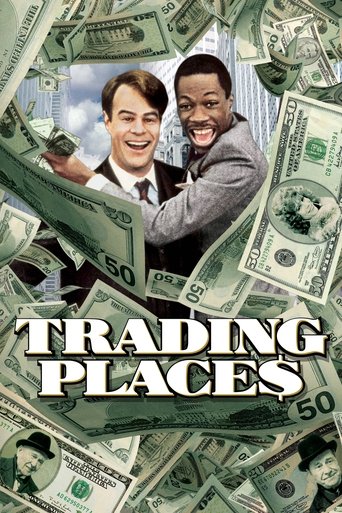
The movie Trading Places. It's a comedy and worth a watch.
Let’s be real, the overwhelming majority of those 500 are straight up terrible. Netflix alone has produced well over 100 movies, and IMO at best some of them are worth finishing not that I can think of any off the top of my head.
Now I’m sure you’ve looked forward to many movies but off the top of your head list stuff you’ve either seen more than once and or actually recommend to someone that came our in the last 10 years vs…
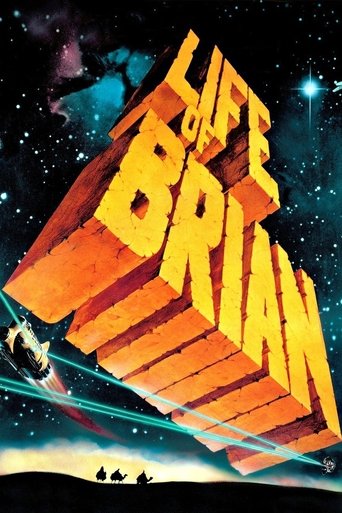
(78) The Deer Hunter, Superman, National Lampoon's Animal House, Invasion of the Body Snatchers (79) Apocalypse Now, Alien, Life of Brian, Mad Max, Escape from Alcatraz (80) The Shining, Star Wars: Episode V, Airplane!, The Blues Brothers, Caddyshack, The Elephant Man (81) Raiders of the Lost Ark, Das Boot, The Evil Dead, Mad Max 2, Escape from New York, Time Bandits (82) Blade Runner, The Thing, E.T. the Extra-Terrestrial, Poltergeist, Conan the Barbarian, Fast Times at Ridgemont High, Tron (83) Scarface, WarGames, Star Wars: Episode VI, Trading Places, The Evil Dead
Obviously not all great movies but that’s ~30 classic movies in just 6 years and I’m sure I’ve missed a few as kids movies are largely missing from that list.
(for those who did not make the connection, in the movie Coming to America Eddie Murphy gave some money to two bums - the bums are the Dukes brothers who went bankrupt at the end of the movie Trading Places)
That's a little bit of a weird take in that just such a knowledge differential was the whole pivot of the movie Trading Places, even with the two extremely wealthy (and presumably powerful) Mortemer brothers
My father was a trader on the floor of the CME in Chicago for a short bit (mid to late 90s), and Trading Places was provided as required reading before he taught me how to trade commodities. Great film. I have the VHS copy somewhere for sentimental reasons.
Why you can’t trade onions futures is also a fun read, for similar reasons (“The Great Onion Corner”).
https://www.npr.org/2015/10/22/450769853/the-great-onion-corner-and-the-futures-market
https://en.wikipedia.org/wiki/Vincent_Kosuga
https://en.wikipedia.org/wiki/Onion_Futures_Act
It doesn't matter much, but it does matter.
You can get a financial advantage if you get information early. (The comedy film Trading Places gives a remarkably accurate depiction.) If something drops early, those who notice get an advantage over those who didn't. That throws off the balance of calculations, hedges, etc. designed on the assumption that the data would come out at time T rather than T-:30.
It's not going to be a huge thing. Maybe some funds lost or gained a million dollars -- a tiny piece of their trillion-dollar capitalization. Maybe you personally could have lost a few dollars in your retirement account. Not enough to get angry about, but not going to thrill you, either.
So it's not a crisis. But they will make sure it doesn't happen again.
Quite possible. The story that I read didn't go into detail about it.
Reminds me a bit of the movie Trading Places.
The film "Trading places" comes to mind. https://www.imdb.com/title/tt0086465/
> Maybe this is a good excuse to watch the movie again sometime soon.
I feel the same way.
I'm happy I managed to provoke such a conversation. If because of this, just one person interrupted their work so they could stream Trading Places, well... perhaps we've made the world a better place. Ahem.
edit: and I for some reason feel delighted that my post turned into one of those controversial ones that gets upvoted and downvoted multiple times for no apparent reason. Dan Aykroyd's greatness should provoke controversy. Is he merely great, or the greatest?
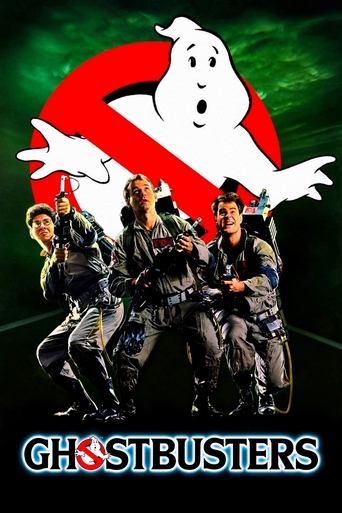
> When revisiting a beloved Eighties or Nineties film, Millennial and Gen X viewers are often startled to encounter long-forgotten sexual content content: John Connor’s conception in Terminator, Jamie Lee Curtis’s toplessness in Trading Places, the spectral blowjob in Ghostbusters. These scenes didn’t shock us when we first saw them. Of course there’s sex in a movie. Isn’t there always?
> The answer, of course, is not anymore—at least not when it comes to modern blockbusters
> We’re told that Tony Stark and Pepper Potts are an item, but no actual romantic or sexual chemistry between them is shown in the films. Wonder Woman and Steve Trevor utterly lack the sexual chemistry to convince us that either of them would be thirsty enough to commandeer a coma victim’s body (as they do in Wonder Woman 1984) so they can enjoy a posthumous hookup. In defiance of Norse mythology, Chris Hemsworth’s Thor smiles at Natalie Portman like a dumb golden retriever puppy without ever venturing to rend her asunder with his mighty hammer, so to speak
Maybe because you are comparing r-rated action movies with super hero film made by disney.
There are certainly lots of overlap in audience. Kids watch terminator and adults love super heroes. But the principle target audiences are different.
Let's take a historical analogy. Here's a cool video about how to make money trading. If you're under 40 you might only have seen this form of trading in the Eddie Murphy/Dan Aykroyd movie Trading Places:
https://www.youtube.com/watch?v=ffEPqLIBnkM
There's two kinds of advice in this video. There's the timeless advice: be informed, understand why people are trading, know the rules. There's the incidental advice: be physically dominant, stand in the right place in the pit, look around you.
Not long after this talk, trading started getting done by computers. This is still ongoing amazingly, but it started around when this video was recorded. People were already known to be bringing in machines to calculate prices, and a friend of mine was one of the first to type in old commodity prices into a computer in order to find long running trends.
Some of the guys who were successful on the floor were also successful "upstairs" sitting in front of a screen. Others went on to driving a black cab.
What happened? Two things, one is that fundamentals remain fundamentals. If you knew the rules and understood the customers, you could still make money on a computer. You also had to learn how computers worked. This often meant that new hires were of a different culture entirely to the Essex boys who'd previously ruled the market. My first boss traded options without the equivalent of a high school diploma. He (wisely!) hired an Oxford engineering graduate.
What also happened was that a new incidental skill-set became very important, namely programming. Suddenly opportunity opened up if you understood how microwave links worked, how lock-free queues worked, how exchange APIs worked. This was perhaps the equivalent of that story about the Rothschilds and the Battle of Waterloo, where the economic fundamentals were the same but the winner was someone who could organize the mechanics best.
I suppose AI will be the same. Various businesses will have their fundamentals, but AI may entirely change the face and the culture according to who can figure out how to use it. Some people will survive having retooled, others will have to leave, having discovered their position was actually only held up by incidental factors.
sigh
Let me guess: you were born in the 70s to 80s, and the 80s/90s were a formative time for you? That is because you don't remember all the shit that played in whatever golden time period you're imagining. You only remember the hits. You're not accurately remembering the broad distribution of what was on the radio and in theaters in the past, which also contained a lot of crap that you likely never would have wasted your money on. Terrible movies got dumped to TV specials or direct-to-video (today they get dumped to streaming platforms), so even if we filter to what was released in theaters, we're missing a lot of crap.
But how about we look at the top grossing films of 1983 [1], 30 years ago? Some of these hold up and are the classics you remember, like #1 Star Wars Return of the Jedi (still a franchise though), #2 Terms of Endearment, #4 Trading Places, #5 WarGames, #10 Risky Business, #11 National Lampoon's Vacation, #13 The Big Chill, #16 Scarface. Bonafide classics, no question there.
But go even a little down the list and you get middling sequels and formulaic franchise films: #6 Octopussy (formulaic Bond film, which was the Marvel of its time), #7 Sudden Impact (Dirty Harry sequel, not great), #8 Staying Alive (Saturday Night Fever sequel, not great), #12 Superman III (one of the worst Superman films of all time, but ahead of Superman IV), #14 Never Say Never Again (another Bond film, better than Octopussy, but still two in one year), #15 Jaws 3-D (one of the worst action films of all time), #20 Psycho II (another meh sequel).
And these are the top 20 movies ranked on how many people paid to see them in the theaters. There are hundreds of others that were regularly shown in theaters that I'm sure you can't recall. Some are classics now (Videodrome, Monty Python's Meaning of Life), but most are not.
[1] https://www.imdb.com/list/ls051080169/
"Trading Places" is still the best movie about class in America.
> Definitely some interesting info. Has this been produced for previous years? I'm intrigued how the sentiment in the weather highlights might have changed over time.
I would imagine so. Something like this was a key part of the plot to the 80s comedy movie Trading Places.
I know what you mean about The Social Network and Silicon Valley. Not tech specifically, but definitely motivating and inspiring for me are:
Moneyball Margin Call Limitless The Big Short Wolf of Wall Street That Fyre documentary and at Christmas - Trading Places
"And I don’t welcome a currency that’s so useful to kidnappers and extortionists and so forth"
You mean like cash?
I'm sorry, I'm sure Warren is a nice guy but that picture reminds me of the Dukes in the movie Trading Places [1] with Eddie Murphy and Dan Aykroyd.
[1] https://en.wikipedia.org/wiki/Trading_Places
The infamous “Boob scenes” of 70’s and 80’s cinema always stuck me as a peculiarly pre worldwide web artefact.
ie with ready access to actual, proper porn teenage lads no longer need to see a random set of norks added to films like Police Academy, Porkies or Trading Places solely for titillation[sic].
The world was different back then.
To hook up with someone you had to actually speak to a random stranger, get shot down, deal with it and workout whatever goofy thing you’d said or done before plucking the courage to have another go.
In the meantime there was Sgt Callahan... :P
> When revisiting a beloved Eighties or Nineties film, Millennial and Gen X viewers are often startled to encounter long-forgotten sexual content : John Connor’s conception in Terminator, Jamie Lee Curtis’s toplessness in Trading Places, the spectral blowjob in Ghostbusters. These scenes didn’t shock us when we first saw them. Of course there’s sex in a movie. Isn’t there always?
None of those were major studio action blockbusters (Terminator, one might mistake for that because of the resulting franchise, but it was an indie film that hit it big; all the rest are out-of-genre.)
So, if those are really your comparisons, the problem may be that you are comparing fundamentally different kinds of movies. The description of “even when they have sex no one is horny” seems to be pretty typical, over a long time window, of action blockbusters. Horniness is big in comedy, romance, and erotic subgenres of other genres, but it's not big in action (though non-blockbusters might include it because they tend to have more freedom to depart from genre rules.)
As a regular person, how could I check if Melvin Capital or anyone else has shorted a given stock. I assume its the same place that people went to to find out the shorts exceeded the number of shares. You know this reminds me of the end of the movie trading places.
It's not a pump and dump. It's a short squeeze. It's nothing new. It's the plot of the 80s movie "Trading Places."
A hedge fund bought short position futures contracts for 120% of the available stock on the market. That's the underlying reason the price is going up: because they're forced to somehow buy more than 100% of the available Game Stop stock because they agreed to sell it to the people on the other end of those contracts for a set strike price.
> (Like much of his industry, Mr. Redstone, who died last week at age 97, held on far longer than anyone expected.
Picture reminds me of one of the Duke brothers played by Ralph Bellamy in Trading Places (1983 film starring Eddie Murphy).
The film 'Trading Places' shows this in action (although they're trading on frozen concentrated orange juice prices and not oil).
Both entertaining and educational.
Sorry, but this story is utter bullshit. Source is unreliable and the only link in the story is to the movie "Trading Places" and the maybe the "WTF Stock Exchange" might be a clue.
What's even wackier is that in commodities trading, insider information was allowed.
The loophole was a key plot point in the movie "Trading Places" and when the 2010 financial overhaul rules were passed, this section was nicknamed "The Eddie Murphy Rule".
https://www.npr.org/sections/money/2013/07/09/200401407/episode-471-the-eddie-murphy-rule
> It's a movie more for people who are sick of the normal Christmas movies and want a break.
Wat? For me it was just the constant TV reruns at Christmas that did it, like with Trading Places and Groundhog Day. It just does not feel like Christmas until Hans Gruber falls from Nakatomi Plaza and Billie-Ray Valentine sells OJ futures.
Do we really have to slap labels on everything?
Italia 1 shows "Trading Places" each year in Italy: https://www.imdb.com/title/tt0086465/trivia?item=tr2330606
So did anybody call a lawyer like he asked? Reminds me of the movie Trading Places where Eddie Murphy asked for a lawyer and all of the aristocrats coughed and turned away
My rehearsed line is “you in the <distinctive clothes> I’ll split the settlement with you if you record this and call a lawyer!”
Gotta disrupt the bystander syndrome by calling out a particular person
And provide the financial incentive
Planet Money had an episode on this
The Eddie Murphy rule/what happens at the end of Trading Places
https://www.npr.org/templates/transcript/transcript.php?storyId=200401407
as well as on the onion King (https://www.npr.org/templates/transcript/transcript.php?storyId=448718171) which I assume is where op found out about this story.
> I do agree that socioeconomic factors are most likely the biggest contributor, the movie Trading Places convinced me of that at a young age.
This is an interesting thing to admit. What is the evidentiary value of a fictional movie?
The idea that crime runs in families indicates a biological factor in crime is nonsense.
Yes, but it does suggest it is a possibility. I thought it was a common belief that genetics play a part in addiction, and mental illness. I do agree that socioeconomic factors are most likely the biggest contributor, the movie Trading Places convinced me of that at a young age. I just think it would be foolish to dismiss genetics completely.
"pork bellies..."
This is famously the Eddie Murphy rule - it was a crime to steal the briefcase, but not to trade on the knowledge gained from the contents of said briefcase.
iirc 'Trading Places' is on netflix, and Planet Money[0] did an entertaining episode about this.
[0] https://www.npr.org/sections/money/2013/07/09/200401407/episode-471-the-eddie-murphy-rule
> Eddie was never mainstream
SNL, 48 Hours, Beverly Hills Cop series, Coming to America, Golden Child, Trading Places, Nutty Professor, PJs...
He wasn't "mainstream" with respect to G and PG audiences, and wasn't on "regular" TV shows much. He did tours and cable specials like "Delirious" and "Raw" for the 'adult' market. But he was pretty much everywhere in the 80s, in multiple hit movies and cable specials (and radio charts!) in pretty much every year of the 80s in the to 90s.
Another way to put it - he was about as 'mainstream' as a black entertainer was allowed to be in the 80s. That he dealt more in 'adult' stuff vs 'family' stuff (like Cosby) was his own choice, of course, but he no doubt broke a hell of a lot of barriers in those years.
"It reminds me of a 1990s movie..."
Maybe you mean Trading Places (1983) with Eddie Murphy.
The title has two meanings:
- 'Trading' as in stock trading
- 'Trading places' as in 'swapping places'
I didn't notice the second meaning at the time, as the phrase 'trade places' isn't common in the UK.
Ever seen the movie "Trading Places"?
In seriousness, it's frustrating that you're making such a bold assertion about causality. There are more male executives than female. Are you saying that's caused by genetics?
Two brothers trying to corner the market on a commodity only to have it blow up in their face? Sounds like it must have inspired the movie Trading Places.
2 years is a very loooong time! Several things that are working in your favour:
1. Facebook makes revenue from advertising. People are being increasingly turned off by advertising. As people close accounts, the management gets worried and pushes advertising even more. Advertisers buy eyeballs/clicks/impressions - whatever - it's all about the numbers. Less users, means less value, hence less revenue to FB.
2. The cool kids don't use what they parents and grandparents use. So as the "oldies" join, the youngsters drop off. But the oldies don't like advertising either ...
3. FB does NOT pay dividends. So why would you buy shares other than to sell at a profit? Which sooner or later ends up being a re-run of the Tulip Bulb craze. As soon as there are no buyers to be found at a particular price point, the prices collapse and increasing numbers of people try to offload which then pushes prices further down.
Caveat: I'm an engineer not a stock broker nor an accountant, the following is my back of the envelope calcs.
4. If FB responds to market pressure and decides to pay a dividend, then based on current revenues of $3b and 2.74b shares, you could expect a dividend around 50c which, looking WPP Holdings 2014 financials for comparison (eps 85, div 38, sp 1400), would have a FB share price approx $20 - compare this to currently at $105 ($38 at IPO).
Based on the above, the users and investors will bring about the demise you need to safeguard your bet.
BTW: Did you see the 1983 movie "Trading Places" with Eddie Murphy and Dan Aykroyd?
Sorry, silly question, we're pork bellies in particular chosen due to the movie Trading Places? If I were to pick a stock for a laugh I would have chosen pork bellies... It's a shame to see that they aren't traded anymore :-(
As have I, ever since watching the insightful documentary 'Trading Places'.
Those films in Italy are like Justin Bieber in the music world: almost everyone loves to hate them, I never perused neither of the two (nor I know anyone who does), and they evidently have captured a certain market segment.
Trading Places otoh is broadcasted every single year, so given how it's hard to grow up without a television at home I definitely agree how that's a staple for italian broadcast programming that's part of popculture
for some unexpicable reasons, in italy we get 80's movies (Trading Places (1983) is the top) and asterix cartoons. I used to wait eagerly for those, to be frank.
> It's because they make their money from the hundreds of billions of dollars they skim off the top of their customer funds.
The movie Trading Places nailed this, albeit in the context of commodities rather than stocks. But the principle is the same:
Mortimer Duke: Tell him the good part.
Randolph Duke: The good part, William, is that, no matter whether our clients make money or lose money, Duke & Duke get the commissions.
Mortimer Duke: Well? What do you think, Valentine?
Billy Ray: Sounds to me like you guys a couple of bookies.
Randolph Duke: [chuckling, patting Billy Ray on the back] I told you he'd understand.
Seems like the criteria use to select Thiel Fellows is the same criteria used by top schools. Probably the reason why many return to school, because they have that option available to them.
A better experiment would be something similar to the movie "Trading Places" where they pluck disadvantaged youths from the ghetto, trailer park, or whatever. Send them through a mentorship program or real internship and see if they can become productive citizens. I believe Xavier Neal is on the right track with his School 42.
I hate this story. It's pure exploitation.
Firstly, and most importantly, Leo is still homeless.
Second, who the hell is Patrick McConlogue? This whole charade is like the film Trading Places, it's like those awful Bum Fights videos, it's Patrick using a homeless person as an object of amusement.
Some aspects of the story seem implausible, e.g. how does a homeless person afford to pay the developer fees, or supply a valid home address and tax ID number for validation by Apple and Google, but I guess it doesn't really matter given the overall story.
I think people like Patrick, along with the 'everybody can code' movement, do all programmers a disservice. It makes a mockery of those who treat software development as a true profession and craft.
Finally, nobody seems to be talking about Leo's homelessness and how he's going to survive a bitterly cold winter, it's all about a stupid bloody app.
Sounds similar to the premise of the 1983 comedy film Trading Places (http://www.imdb.com/title/tt0086465).
Has there ever been a time without massive inequality in NYC? It's been a standard theme in TV and films for as long as I can remember that Manhattan is stunning wealth right next to Harlem's grinding poverty. Look at Eddie Murphy films from the 80s, Coming To America, Trading Places, etc. What's different now?
ADM's lysine fixing in the 1990s. The savings and loan debacle of the 1980s and 1990s. Hunt&Hunt's silver manipulation in the 1970s. The Towers Financial Corporation Ponzi scheme of the 1990s. Robert Emmet Brennan's First Jersey Securities pump-and-dump fraud in the mid-1990s.
Political white collar crimes from the 1970s include Watergate and Koreagate.
And as for movies: "Trading Places" was a 1980s movie ending with a foiled white collar crime attempt. "Wall Street" is a 1987 film where Gordon Gecko is convicted of multiple securities violations. "The Insider" is a 1999 film based on a 60 Minutes segment about a tobacco industry whistle blower. John Braithwaite wrote "Corporate Crime in the Pharmaceutical Industry" in 1984.
That you don't know about them doesn't mean they didn't exist or that people didn't know about it.
Sneakers (http://www.themovietracker.com/movies/8710). The film's aged a little, but it's nice to watch a fairly funny hacking film that doesn't dress up hacking into 3D flying GUIs, Hack the Planet or hacking a TLA with a gun put to your head, while getting head.
Brewster's Millions always cheers me up around Christmas, as does Trading Places (http://www.themovietracker.com/movies/9749), both of which are slightly business related (although not exactly real-world related).
Someone else posted the pursuit of happyness (http://www.themovietracker.com/movies/7605), when I stick that on it comes across as a bit schmaltzy for me but has a good message.
A beautiful mind (http://www.themovietracker.com/movies/1112) is another great film about an incredibly smart but tortured genius who makes a massive contribution to economics.
Catch me if you can (http://www.themovietracker.com/movies/1798) is based on the true story of a fraudster who ripped off banks for tons of money and did all kinds of amazing things with it. It's a great romp and I'd highly recommend a first watch.
Life is beautiful (http://www.themovietracker.com/movies/5583) is hardly an uplifting film but is incredible and if it doesn't make you thankful for what you have, then I'd question whether or not you have a soul.
So looking at this from a scientific perspective, essentially anybody can be a CEO (memories of that classic Dan Ackroyd/Eddie Murphy movie "Trading Places" comes to mind).
Scientifically any theory about Zuck doing an "extraordinary job" is non-falsifiable.
Why then should we read the innumerable puff pieces about why one person should be CEO and another person COO?
I was making an obscure movie reference.*
*Trading Places