 Hacker Cinema
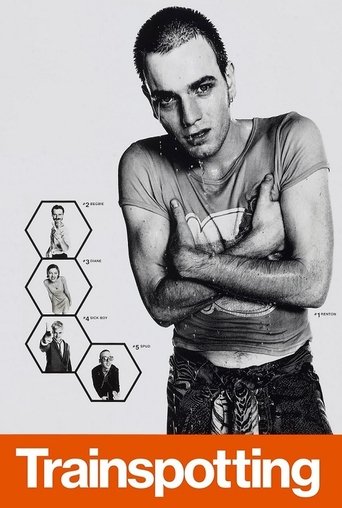
Trainspotting
1996 · Film · 94 min
Directed by Danny Boyle
Heroin addict Mark Renton stumbles through bad ideas and sobriety attempts with his unreliable friends --Sick Boy, Begbie, Spud and Tommy. He also has an underage girlfriend, Diane, along for the ride. After cleaning up and moving from Edinburgh to London, Mark finds he can't escape the life he left behind as Begbie and Sick Boy come knocking.
14 positive2 negative39 neutralfrom 55 commenters
Where to watch
No streaming data for this title.
58 comments on Hacker News
Blockbuster was a corporate, soulless chain sent into the world to destroy the wonderful experience of mom-and-pop and small chain video rental stores. They were the Walmart of entertainment. They knew small stores couldn't afford many copies of blockbuster hits so when you visited Blockbuster they would have an entire wall dedicated to one single hit movie. Their selection was garbage.
The weekly visit to the local video store was one of the highlights of my youth. I could browse for hours. I remember the first Blockbuster that opened near me. It had zero atmosphere or charisma. I guess if you just want to watch a movie, that's the way to go. and that's why Netflix killed them.
About 10 years ago I was driving through remote Texas and stopped at a gas station that had, to my utter surprise, a video rental section. VHS tapes, not DVDs. And there was a young family browsing! It made me so happy to see.
The shift to digital for movies and music stripped away something real from the experience. Better picture and sound? Sure. At the cost of atmosphere and fun. I recently watched a 4K remastered Aliens (1986). There were maybe 3 short scenes where I said 'wow, the detail is amazing'. The entire rest of the film was me thinking how they had stripped the atmosphere from the film experience. The blue hue was gone. The murky, exoplanet looked fake.
Close Encounters (1977) on 4K is a different experience. It looks great, but there are scenes that play totally different in 4K. What once was a dark shadow moving against the starry sky is now very clearly a spaceship. The shadow was better. At the end, the aliens were clearly kids in crappy costumes. But on VHS they were child-sized aliens standing in front of a bright light, leaving much to the imagination. Outside of those who saw it in the theater during it's original run, everyone since has had the same experience, pretty much. The 4K version changes that. And don't get me started on the massive changes to color grading in Eyes Wide Shut and Trainspotting. Or how they jacked up the color and brightness on Teenage Mutant Ninja Turtles (1990) so it better matched the cartoonish, and inferior, sequels.
Like heroin in the film trainspotting
Toolspotting cocaine and gambling
discover tools, earn cash, alrighty then!
desperate for some sort of new name to inspire the masses and lure them into a lifetime of gambling and cocaine addiction
more ai shite
Ya I'm shocked by it too, said as a Gen Xer born in the late 1970s, occasionally a Xennial.
I partied for 4 years of college which is something like 30 years in sober adult terms. Our ragers were reminiscent of Animal House and Revenge of the Nerds, all of those old party movies that didn't age well. Scenes from Hackers, Fight Club, The Matrix, Trainspotting, Go, Swingers, Made, 200 Cigarettes, SLC Punk, Dazed and Confused, PCU, even Undergrads (a cartoon) were so spot-on for campus life, living for the weekend. Can't Hardly Wait, American Pie, Varsity Blues, Waiting, Superbad, etc came later, and I almost consider those watered down versions of the feral partying that happened earlier just as the internet went mainstream, but still canon.
A Friday night at my city's bar scene today looks like what our Sunday or Monday was. People half tipsy on 2 drinks, even though they're Ubering home later. The faint scent of ganja now instead of basements filled with smoke and first timers trying laughing gas. Nobody puking or disappearing around a corner to relieve themselves. No sound of bottles shattering. I feel like a curator of a museum now, a derelict from a forgotten time.
In fairness, I went to college in the midwest, where there was nothing else to do. Now the West Coast has effectively legalized drugs, awakening much of the country to the full human experience, and people have done the trips and plant medicine and maybe realize at a young age that alcohol and tobacco are rough drugs that tear you up. Which is admirable, but they also prepare you for getting torn up as an adult. To miss out on learning how to make your way home on drunk logic before you black out seems like a crucial rite of passage has been lost.
And it shows. In our country's embrace of puritanical politics like we saw in the jingoist 2000s, regentrified for the antivax era. In the worship of unspoiled beauty, idolizing of influencers, pursuit of financial security over visceral experience. In the fanboyism, bootlicking and drinking the kool-aid for every new evolutionary tech that cements the status quo instead of freeing the human spirit in a revolutionary manner. I gotta be honest, most of what's happening today is laughable to my generation. Blah I sound like a Boomer. Ok cryable then. We're in mourning. We worry about the kids today. All work and no play and all that. It's killing our souls, and theirs.
I guess my final thought after writing this is that partying is one of the most powerful reality-shifting tools in our arsenal. All of this can't be it. This can't be how America ends. You know what to do.
Oh, I know that that must be the case for a lot of folks. The movie Trainspotting did a pretty good job communicating some of that.
The surprise on my end is usually that new people smoke. Anyone that had already developed the habit, I am not surprised still does it. In that regard, it is not unlike any other drug.
I also realize I should count myself incredibly lucky that smoking does not impact me at all. I literally feel nothing when I try a smoke or cigar. Can barely even taste it. Reminds me of my grandfather who used to smoke to be social. When he found out they were bad for you, he just stopped. Had no withdrawal at all. Yay genetics. :D
> turn on captions for Trainspotting
Definitely needed subtitles the first five or so times for Trainspotting. Love that one! To be fair I need subtitles for almost all modern movies these days. My hearing or sound design are to blame... maybe both. :-/
I'm particularly glad to see the "Destroying culture" segment, though brief, as it touches on my main objection to modern advertising. In the piece, he mentions how an old work was re-purposed and "ruined" for him - though the phrasing sounds extreme, I completely understand. The concept described, as I interpret it, is about sparking an internal pleasure center for the purpose of inserting a commercial prompting to engage. This is especially problematic with "wants" type purchases - luxury items, status, etc. - compared to "needs" where a specific company is trying to differentiate itself from the pack.
I remember the hullaballoo when the Rolling Stones licensed "Start Me Up" to Microsoft. Last night, during the Superbowl, Meg Ryan and Billy Crystal reunited for a mayonnaise commercial aping a scene from "When Harry Met Sally" and I chuckled to myself how it was probably missing 2/3s of the viewership on the reference. Using Iggy Pop's "Lust for Life" by Carnival Cruise lines only sparks memories for me of Danny Boyle's "Trainspotting" and obviously they don't care. Same goes for when "Lord of the Rings" trailers had the Kronos Quartet playing under them, specifically the track featured in "Requiem for a Dream."
Honestly my breaking point was for a car insurance commercial where an accident occurred and the driver pulled an entirely new car from the trunk of the damaged car to represent the ease of returning to the prior state. It felt so absolutely deceptive I never will let it go. But that's not even the low point.
Pharmaceutical companies are now portraying "mini-movies" with the full narrative arc to create the sensation that a full and happy life is possible if only you ask your Doctor about some random-ass pill for a condition likely best treated by a change of lifestyle. The one I have in mind is a football coach where he's a family man, a teacher, and then gets a commemorative portrait unveiled at a game because he's so beloved. The culture damage of these bastardizations of narrative and story are a runaway freight train - always in slow motion mind you - and every time you see a historical figure selling you something, just remember that they're dead and couldn't complain. If it wasn't for Crispin Glover's lawsuit win all those years ago, Kurt Cobain might be selling anti-depressants and Jimi Hendrix a Kia or something.
They did, they were actually the dealers, even going to war so they could keep selling it to parts of asia [1], just was a long time ago.
There's also a reason the movie Trainspotting is set where it is.
Given the massive reduction in harvesting of opium plants in Afghanistan recently, it does look like there are going to be issues [2].
[1] https://en.wikipedia.org/wiki/Opium_Wars
[2] https://www.politico.eu/article/europe-heroin-alternatives-nitazenes-worse-deaths-rise-produced-china/
Movies I rewatch like once a year: Trainspotting (1996), Donnie Darko (2001), La Haine (1995)
Movies I've watched quite a few times and wouldn't mind watching again right now: The Matrix (1999), Akira, Breakfast Club
https://en.wikipedia.org/wiki/Trainspotting_(film)
>The film follows a group of heroin addicts in an economically depressed area of Edinburgh and their passage through life
I am of course cracking a joke about the movie Trainspotting.
> I think the association is so strong due to it playing through the iconic overdose scene in Trainspotting
See now that is interesting because I've never seen that movie, but I guess it's not just me who can see the connection after all.
I agree with you though, it definitely fits into Lou's general theme, so it could just be a coincidence after all.
The article seems to have a simplistic thesis that it doesn't really develop beyond: optimization, efficiency and focus is not fun, and these things epitomize SV. But I'm not sure that even scans.
Those things (optimization, efficiency and focus) can most definitely be fun. And SV is not really about those things.
SV is more about "relentlessness" and the wild (or Wild West) allocation of capital. This makes the Bay Area a kind of crazy frontier-town, and it comes with all the vices that entails.
The homeless crisis can be seen as one symptom of the Bay Area's frontier-town vibe.
Cash App founder Bob Lee's tragic death brought to light another aspect of the "funderbelly" of SV, in "The Lifestyle"^0
Debate rages for sure, but "fun" and "fucked up" commonly overlap: Emily Chang takes a kind of spurned spinster bias in Brotopia^1. The book is her SV expose that spins a yarn similar to the party-scene-disillusionment trope that's a common thread in 90s indie films, such as Trainspotting, and Doug Liman's Go. Chang's work, however, is in line with modern discourse style, as she takes a more furious, righteous bent, leaving little to the imagination as she passes judgement against what she sees as an emblematic American abomination.
A more recent, relevant and mainstream revival of that trope is 2022's Babylon by Damien Chazelle, set in 1920s Hollywood. One could hypothesize that the debauchery of Hollywood may mirror that of the Bay Area, possibly stemming from the lavish influx of capital to those whose maturity has yet to catch up with their wealth.
In the same vein, themes of "the price of fame" and the corrupting power of celebrity hint that life in the high line of Silicon Valley might be susceptible to a similar moral decay.
Of course, it could be something else entirely, but it might be the case that the issue is not that SV fails to understand fun. It's instead that it doesn't know how to handle it, or do it in a healthy way. Eventually, a kind of puritan sterility is the natural companion of such a debauched underbelly. It may therefore be that lifelessness criticized by the author is, paradoxically, the result of SV having too much fun, yet not having the integrity or morality to make it sustainable, or healthy.
If SV learns how to make its boom town vibe sustainable and healthy, it might be able to stay aloft to enjoy the whole ride. This could enhance everything about it.
0: https://www.dailymail.co.uk/news/article-12085323/Inside-Lifestyle-Cash-App-founder-Bob-Lee.html
1: https://www.vanityfair.com/news/2018/01/brotopia-silicon-valley-secretive-orgiastic-inner-sanctum
Drawings, novels and films about Heroin may drive people to seek Heroin (which is illegal), so ban Trainspotting.
ChatGPT is such a disease. The person you replied to was making a reference to the movie Trainspotting...
"If you were a Henry VIII-style character but in the film Trainspotting, how would you describe an n-tier architecture capable of serving 50 requests per second?"
Edit: I had to. Here's a small excerpt: Scalability: Allow the architecture to grow in strength and size.
Sure, why not? Trying to get inside the head of someone you don't understand or disagree with is always a valuable exercise. There's a whole movie (Trainspotting) trying to understand why people do hard drugs. People do all sorts of stupid things, but not always for reasons you or I are incapable of understanding.
Banning doesn't fix that, the allure is still there.
Teaching what addiction is like is much better at curbing it.
The easiest way to do that is to have someone hold their breath as long as possible until their body is screaming for air each time, for about half an hour.
Because that is what drug addiction is like, and taking the drug is like taking that breath of air, instant relief, until you run out of air again and you're in hell waiting for the next fix. Over and over. Never ending.
I'd say films like Trainspotting did a much better job at stopping heroin than any outright ban ever did.
> Start hopping on rails, enjoy life and see everything going by for the circus it is
I thought this might be a quote from the movie Trainspotting (1996). Seems to have a similar spirit to some of the things from that movie.
A couple thoughts, from a (former) lawyer:
• Some are asking about whether this rule implicates off-platform speech. This is not 100% clear to me. It says "you may not use the PayPal service for activities that...involve the sending, posting, or publication of any messages, content, or materials that [are prohibited]".
This seems to be far too broad as it relates to the transaction itself, as one of the prohibited categories is "depict or promote illegal drug use". So if you sell a DVD of Trainspotting, then you are using the PayPal service for activities that involve the sending of content that depicts illegal drug use. Get ready to be fined $2,500.
You also could not use PayPal to sell a DVD of the movie 42 (about Jackie Robinson), because it "depict[s] discrimination of protected groups or of individuals or groups based on protected characteristics (e.g. race...)".
It seems absolutely bonkers to think that using PayPal for these transactions (or the many other examples imaginable) could result in a $2,500 fine.
It is unclear how broadly PayPal can sweep in off-platform language. That is, if you have a website that sells all sorts of things, can they claim that you are "using the PayPal service for activities" that break their rules? The fact that this is to be determined "in PayPal's sole discretion" does not bode well for a seller.
• This is framed as "liquidated damages", which IIRC are not allowed in some jurisdictions. Liquidated damages basically means "we're just deciding on this amount as a deterrent, not because it relates at all to the harm actually suffered by any of the parties". In general, liquidated damages are disfavored because they discourage so-called "efficient breach" of contracts. This happens when A agrees to paint B's house for $500, but then A gets an offer to paint C's house for $10,000 on the same date. A knows that B can find a replacement painter for $1,000 even at the last minute, so he decides to breach his agreement with B and is willing to pay the actual damages (the extra $500 that B would have to pay) because it is efficient for him to do so, given his ability to earn much more money painting C's house.
• This amount that PayPal can deduct under this TOS is not limited to $2,500. That is just the liquidated damages piece. They could claim other, larger damages, though I can't really imagine what that would be. Harm to their reputation? Seems hard to prove.
kids is a cool film, but not much of a cautionary tale. it's more like a 90s urban euphoria, in that the message is really more to adults: "this is what teenagers are actually doing right now".
what (imo) would make requiem for a dream really effective is that it shows the transition from the "honeymoon phase" of drug use to the "consequences phase" really well. I think this is the part that teenagers really don't understand (or at least I didn't). when you're starting out, it can seem like a lot of the anti-drug messaging is just fear mongering (and it is, to an extent). but most people that age don't yet have the perspective to distinguish between harmless fun and a slow motion crisis.
trainspotting is also great, and a bit more realistic than requiem for a dream. but if I had to pick one of the two to show to teens, I'd probably pick the former.
It's "available" on youtube in I think 3 parts if you look around.
I'd call it sortofa Korean "Trainspotting" kind of movie which might be the closest Western film I could possibly compare it to.
I'm not expressing feelings on the premise one way or another, but in regards to the empty "advantages" section, I instantly thought of a line from the movie Trainspotting (albeit about heroin):
“People think it's all about misery and desperation [...], which is not to be ignored, but what they forget is the pleasure of it. Otherwise we wouldn't do it. After all, we're not fucking stupid. At least, we're not that fucking stupid.”
I grew up near the heroin junkie city of The Netherlands (Heerlen) which also attracted a lot of junkies from the Aachen area. I got a fear of needles likely influenced by the needles on the streets. Thanks also to everyone mentioning which cities contain needles on the ground, I forgot about it being a possible thing (I would not visit such a city, and I live/work near Amsterdam, go figure). Getting my COVID-19 shots was a serious hurdle because of my fear of needles. It also likely influenced my disgust of prostitution (a lot of the female heroin junkies turned to prostitution). Most of these people were homeless, too.
They (local gov) tried a lot of things to fix the problem. Play classical music at the gathering area (the train/bus station). Free methadone. Free needles. Free heroin I don't believe was tried. Give the homeless a task like selling a newspaper called 'street journal', watching everyone pass by looking down on the seller. Cynical me would say these people passed away. I met one of them at a work reintegration company, and I recognized him right away. He had HIV. Though this was in ~2006. I let him listen to one of my favourite music at that time, and I remember he enjoyed it.
I learned of the popular drugs in first of high school (age 12), as part of education (alcohol, cannabis, XTC, heroin/cocaine). In my late young adulthood I ended up trying quite some drugs. Mostly psychedelics, never heroin (or cocaine), and amphetamine only once (from which I know how it feels to be an asshole). They are far too addicting, and destroy lives. I've been addicted to nicotine/cigarettes though, but so has 25+% (?) of society. It was tough getting rid of that habit (I am probably still 'addicted to it' just not practicing).
Lots of good movies (and books) were made about heroin addiction. Wir Kinder Von Bahnhof Zoo. Requiem For A Dream. Trainspotting. Just to name a few. The social setting a (young) person is in is going to have a huge influence. Sure, its also a matter of morals and values and parenthood, but how can I affect which friends my children are going to have in school?
Alien, The Matrix, 12 Monkeys, Terminator, Fight Club, The Fifth Element, The Sixth Sense, Back to the Future, eXistenZ, Gattaca, The Arrival, 2001 space Odissey, the Shining, Trainspotting, Ground Hog day, Dune, Dark city, Tron, Demolition man, Total Recall, Robocop, The city of lost children...
Nuanced, scify, full of smart details or mind bending films are not new.
In fact, it's really hard to innovate now, because so much as already being covered.
> Also when did “techno” become an umbrella term again?
I would guess in the '90s, when there was a lot more crossover between electronic music and other genres. Rock and hiphop oriented stuff like the Prodigy and Chemical Brothers were topping the dance charts, and other more conventional techno like Aphex Twin and Underworld were getting decent media coverage as well.
Plus movie soundtracks at the time tended to include a lot of techno. Trainspotting, Pi, Hackers, The Jackal, The Saint....discovered a lot of artists thanks to these.
The author of the original article is lamenting that "show don't tell" is making people reluctant to write about the personal traumas of their life, and instead have to write "action-packed" scenes. There are like three action-packed scenes in Trainspotting and they're all well within the lived experience of the average first worlder. It's "boring life stuff" in the sense of being about on the other extreme from a Michael Bay movie. Sometimes people don't talk in precise terms about art they consume.
I was using it as an example of a novel about life that has nothing action-y happening and where many scenes don't directly advance the plot, but remains both a page turner and not particularly preachy.
Culture, and also despair. Perhaps similar to the US opiate crisis.
There are a lot of people in the UK who drink "too much", and a general distribution of people genetically predisposed to addiction. To drink yourself to death requires something more, usually falling off the edge of society. People who feel economically and socially unwanted, growing up in a "hard" culture.
Glasgow and Dundee in particular were cities of the Empire. When that came to an end in 1950 onwards there was a huge spike in unemployment, and a lot of the traditional heavy industries gradually left. This left a huge scar across both the physical infrastructure of Scotland (run down housing) and its culture. Trainspotting isn't exactly a documentary but it's a culturally appropriate portrait of how things were.
This is gradually changing as the country acquires 21st century industries (satellites, biosciences, video games, banking), but that on its own doesn't do a lot for the old drunks.
Do you mean heroin is a fufilling hobby? 'Trainspotting' is a euphemism for taking heroin. The novel and the film don't have anything to do with literally spotting trains.
Heroin does seem to be a problematic drug.
I read that only 10% of users get addicted. But are there places where heroin is used where it doesn't become a problem?
(I am from the country where the film Trainspotting is set).
Mozilla trusts eight "government" CA roots, associated with 5 countries in this list, China (Hong Kong), Spain, Taiwan, The Netherlands, and Turkey.
The Turkish CA is constrained by Mozilla (and so in Firefox, but may not be constrained in your downstream software that wasn't written by Mozilla and just uses their trust lists wholesale) to just Turkish official sites, government, education, that sort of thing. The others are not subject to any notable constraints for a global CA.
If you don't run Firefox or a Free Unix you probably trust a lot more government CAs. For example Microsoft's list includes 35 root CAs from Australia to Uruguay. It's hard to do a cursory up-to-the-minute examination of Apple's status because they provide a summary of information from the certificate itself which will often have been written by some nerd twenty years ago, leading to descriptions like "Government Root Certification Authority" and "CA Root" (those are both real examples from Apple's actual list) which don't tell a reader anything of value.
I don't regard it as useful morally to try to count a company owned by the government as "the government". Consider the film production company Film 4. This is wholly owned by Channel 4, which is in turn wholly owned by the British government. So we could say the British government made "Four weddings and a funeral". OK, delightful English romantic comedy, sure, maybe drives tourism. "Trainspotting". Maybe it's a warning about how dangerous heroin is? "A Field In England" - Um, now we're struggling, I guess it is set in Britain at least. But wait, "The Motorcycle Diaries" is about the early life of Che Guevara, and "12 Years a Slave" is about a guy who was enslaved, in America. No, Film 4 is just a Film Prodution company, it happens to be owned by the British government, but that's even less relevant than which billionaire owns your favourite hockey team.
For political reasons the UK's TV license is collected by (a third party contractor on behalf of) the BBC, but the money doesn't actually go directly to the BBC, it goes to central government, they carve it up and send some to the BBC.
Lots of odd things are funded with this money, including for example local newspaper reporters at for-profit newspapers (!) but the name and forcing the BBC to actually collect it mean in the public consciousness it's all blamed on the BBC.
Now, Public Service Broadcasting is _distinct_ from having central government revenue funding a broadcaster as happens for the BBC. All UK terrestrial TV is "Public Service Broadcasting" and so are the old US TV networks. PSB means you're using up some finite public resource (radio bandwidth) and so you need to "give back" to the public. It's pretty common to require a daily news broadcast and to have other constraints "for the good of the public" e.g. a non-English country might require at least 10 hours per week of the local language even though viewers would really just prefer wall-to-wall imported soap operas in English or whatever.
As well as the internationally famous BBC, Britain also has "Channel 4" which owns the Film Production company Film4 that made or co-made films you've probably enjoyed (e.g. "Trainspotting", "12 Years a Slave"). Channel 4 is a PSB, but more importantly it's publicly owned. It operates more like a for-profit television company (e.g. advertising) except the money goes back into making TV and it has a publicly controlled mission to be er, challenging. So e.g. the BBC went "Hey, half the population are women, so it's crazy to have all these panel discussion shows with 6 men and no women. From now on, if your show has a panel discussion it needs either a woman or a sign-off explaining why there weren't any women" but C4 is the kind of place where they go "Hang on, there totally must be Muslim lesbians, right? Let's do a show about the Muslim lesbian dating scene, so there's this whole tolerance angle but also it has hot women kissing each other".
I'm just amazed somebody can come to this conclusion.
20 years ago you had to go to the shop, buy ONE film for $15 from a limited shelve, bring it back home, put it in a device you bought specifically for that film format and that does only that, navigate through a dubious UI, be forced to watch ads, then eventually get to the film. If you didn't like it... too bad.
Now for the same price, you have access to thousand of movies __and__ TV shows. No ads. Instant watching. Most of them were release on TV or on theater so basically same quality than other channels.
And people complain ?
I mean I do think the general level of quality of movies and TV shows is going down, but it has nothing to do with netflix. The good/sucks ratio is plummeting much the same on every medium (and I think it's because of us voting for crap with our money, like for most things in our society).
Well, I guess it's beautiful some people arrived at such a level of comfort in their life that they consider that amazing commercial offer to be not up to their standard.
> PC propaganda
While their original content do try to target specific niches including PC and SJW trends (it makes sense IMO), there are plenty of excellent content on netflix that don't follow this trend. Just opening my front page: Ajin, Rick and Morty, black mirror, battle royal, altered carbon, lastman, dirk gently, breaking bad, american beauty, pulp fiction, drive, trainspotting, house of cards, david chapelle, mad max furry road...
Yes, things like Sabrina, disenchantmenent, etc are pandering to a certain crowd. So what ? You can just click on something else. There is a lot of something else.
>No, it's a problem of target audience. If you produce films for a Dutch audience, you have two options: either appeal to a sense of Dutch pride or history, or go for something so generic that a decent swath of the population will like it; otherwise you won't have enough of an audience to make a profit. This is what they do, so Dutch films are generally about about our navy in the 16th to 18th century, about WWII, a romcom or some adaptation of a Dutch Children's book. You cannot locally produce a film about something which lies outside of the realm of interest of most Dutch people; Hollywood can, since they have a larger audience, and therefore do have the ability to target niche markets.
Well, EU has 400 million people. One can very well create a movie that appeals to EU audiences. We have lots of shared sensibility and modern problems and history (and it doesn't have to be BS like "16th century dutch navy" or "17th century french villagers").
Movies like Blow Up or Dolce Vita or For a Fistful of Dollars etc where shown successfully all over Europe at one time (and we still have films by people like Lars Von Trier, Almodovar, and so on).
Just because you make something that has a Dutch or Swedish or French etc sensibility, it doesn't mean it can't have pan-European (or even global) appeal. Trainspotting is as British as it gets, for example, but hit Europe big, as did La Haine, La vita e bella, Amelie, and others.
Besides, not all movies have to be blockbusters and multi 100 million dollar productions. Even from the US, I'd rather have the chance to watch some Hal Hartley or Jarmusch, or Cronneburg, that barely pushed 5-10 million dollars in the box office than the nth repeatitive formulaic shit from Hollywood.
It's along the lines of the opening to "Trainspotting" a famous novel and film [1]
[1] https://en.m.wikipedia.org/wiki/Trainspotting_(film)
Her intro reminds me a bit of Renton's monologue at the start of Trainspotting, minus of course the accepting heroin as a substitute for everything else. http://www.imdb.com/title/tt0117951/quotes/qt0335530?mavIsAdult=false&mavCanonicalUrl=http%3A%2F%2Fwww.imdb.com%2Ftitle%2Ftt0117951%2Fquotes
The last paragraph of the piece kinda struck me:
"And perhaps if others saw more realistic portrayals of poverty in the movies, they might be more receptive to programs that would help them instead of demeaning and punishing them."
I would love an example where 'realistic portrayals' of a given subject in movies led to changes in public policy / public perception.
If anything, I would argue that popular films, just like other art forms, are more likely to serve as a barometer of society's perception/reception of a given subject than as something that ignites the change.
Take the war in Vietnam in the 60's and 70's - I'm not sure you could make 'The Deer Hunter' in '68, or 'The Green Berets' in '78.
Or the war on drugs - movies like Trainspotting, Requiem for a Dream, or Traffic certainly showed a realistic side of drugs and addiction... and yet the war on drugs has only intensified since their popular releases.
> I don't think its any coincidence that TV and movies show the murderous and thieving side of piracy as to condition us to be appalled by them, in general.
Is this really true? There's a long history of sympathetic portrayals of drug culture, from Trainspotting (novel and movie) to A Scanner Darkly (novel and movie) to Jesus' Son (novel and movie) to Pineapple Express (mainstream movie), and a whole lot more.
You think you're sick of it? Ha! Try being me watching a Lord of the Rings trailer on TV with that epic soundtrack underneath. It actually hurt my head.
Still, nothing quite compares to Carnival Cruises thinking it was a great idea to mold a TV ad campaign around the Iggy Pop song "Lust For Life" which, for me, will forever be associated with the film Trainspotting, petty theft, and heroin addiction. I guess those are better than what I normally associate with most large cruise operators though, which is engine failure, diarrhea, and onion sandwiches.
The bulk of the parent comment is a quote from Trainspotting (http://www.imdb.com/title/tt0117951/) - just FYI.
And of these 31 remaining almost half are missing in the Swedish Netflix:
5. Back to the Future 6. Gladiator 7. Sunset Boulevard 8. Cinema Paradiso 9. Django Unchained 12. Reservoir Dogs 13. Braveheart 17. Amadeus 21. Trainspotting 24. There Will Be Blood 25. Spotlight 26. The Princess Bride 27. Zootopia 29. Jaws 31. Pirates of the Caribbean: The Curse of the Black Pearl
And yet Netflix want the same monthly cost for less of a service. Why?
You could imagine my surprise when hearing The Kronos Quartet teme for Requiem For A Dream being used in a trailer for one of the Lord of the Rings franchise pictures.
The one that cracks me up still is Carnival cruises using Iggy Pop's "Lust for Life" which coincidentally a lot of people associate with the film Trainspotting.
Your comment amused me a bit, so I wanted to write something in response. I work in metal fabrication, our workshop specialises in structural steel, so we are part of the general construction industry. We call ourselves 'boilermakers', though I've never worked on a boiler.
Anyway, in the 17 years I've been doing this on and off, I have met precisely 1 female boilermaker. And nobody cares.
What I don't follow is why is gender imbalance in other industries seen as a problem but we never see any serious attempt to get more women in to the construction industry.
Why does anyone care there are differences in numbers of men and women in various industries? Things change over time, fashions change. I think approaching these issues from the "we must correct this imbalance" is incorrect reasoning.
And, lastly, if we do manage to level the playing field, what will gender identity become?
A quote form the film Trainspotting: One thousand years from now, there will be no guys and no girls, just wankers.
I'm willing to posit that strong gender roll identity is crucial for a healthy and resilient culture.
>Can you find a meth/heroin movie like the 'Hangover' movies?
Well, there is Trainspotting, but that's a much darker form of comedy...
Your answer reminds me of the film Trainspotting.
That seems like a weird assertion on the part of whatever you read, because 1) it isn't clear what constitutes a separate, well-defined language (see https://en.wikipedia.org/wiki/Dialect_continuum) and 2) mutual intelligibility is a gradient, not a binary.
Many speakers of Standard American English have to turn on subtitles to understand what's going on in movies from the UK (like Trainspotting). So maybe we call a great many things English?
"Also: Scots is a mutually intelligible language"
That's very strongly dependent on your native dialect. I know people who have to put on the subtitles to understand the movie Trainspotting, and (I think) that's not even full-blown Scots.
Eh Trainspotting has a decent chance of encouraging heroin use. At least that was my (apparently not too uncommon) reaction to the film. Requiem seemed too nonsensical.
And all they really do is show that you should have money and the real problems aren't the drugs but finances and society.
A danger with Amazon since they are not based in California but in Seattle, there is non competition clauses enforced by contract. Amazon has sued ex engineers leaving the company. http://www.geekwire.com/2014/amazon-sues-employee-taking-google-cloud-job-new-test-non-compete-laws/
I choose not to choose Amazon. Quote from the movie Trainspotting "But why would I want to do a thing like that? I chose not to choose life. I chose somethin' else"
mainstream: American beauty, Pulp fiction, No country for old men, American History X, Saving Private Ryan, Taken, The pianist
classics: Lawrence of Arabia, The Shawshank Redemption, 2001: A Space Odyssey, Terminator I & II
hipster: Knife in the water (Polanski), Come and See (Idi i smotri - best war movie I've seen), Haute Tension (french horror movie), Requiem for a Dream, Trainspotting, City of God, Blue Is the Warmest Color, Goodbye Lenin, The cube
I'd rephrase that as "the books is almost always better than the movie". Most rules have exception and the use of "always" in a claim usually makes it too easy to falsify -- particularly in highly subjective fields such as appreciation of film / literature. Another counter-example would be Trainspotting: My 25-year old self found Danny Boyle's film to be much more coherent, interesting and enjoyable than Iriving Welsh's book. (FWIW, I've upvoted your comment as I don't think it deserves downvotes).
It seems with all the media that's been produced about heroin addiction (movies like Requiem for a Dream, Trainspotting, Traffic, etc...) that the risks of shooting up are fairly well known.
Yet, people still continue to use and get addicted to the drug. I feel a great deal of pity for the people whose lives have been destroyed by heroin, not just because of their addiction, but because of the underlying pain that must have been there for them to get to that point.
Controversies like these make me glad I work in the field of programming...while arguments over what algorithm or frameworks work best are less sexy than what the sciences cover, at least with narrow claims, it's easier to concretely argue for one or the other...and then of course, if we're talking about open-source, then the errors of ambiguity are even scarcer.
It seems like a large part of the problem, at least in these psychological experiments, is that there isn't a structured/uniform way to describe preconditions, methodology, assumptions, and measurement practices...OK, so you used 40 undergraduate students for your original experiment...how did you pick them out? How were their characteristics accounted for (e.g. age/gender/major/health/etc)? Did any of them ever see the Trainspotting scene before? Have any of them ever seen a movie of equal grossness? How many minutes did you wait after showing them the Trainspotting scene? In what order did you hand out the questionnaire? How did you seat the students? etc. etc. etc. etc.
A totally honest researcher might have trouble enumerating and enforcing all of the different controls, never mind communicating them to other researchers. From the research papers I've read, the ability to communicate these facts doesn't seem to be of uniform quality.
If I remember rightly, this also happened in some regional releases of the film Trainspotting.
For the opposite problem, try reading Iain Banks' Feersum Endjinn[1]
[1] https://en.wikipedia.org/wiki/Feersum_Endjinn
This actually supports my theory that the 90s were the greatest decade in popular culture history. It jibes so well with the (arguable) Golden Age of Rap/Hip-Hop music as well as the Seattle Grunge and Hard Rock renaissance.
Rap in the 90s had Biggie, Tupac, Wu-Tang, NWA, Nas, Outkast, De La Soul, Snoop Dogg, Jay-Z and a Tribe Called Quest.
Rock in the 90s had Nirvana, Pearl Jam, Soundgarden, Radiohead, the Smashing Pumpkins, Oasis, Weezer, Green Day, Nine Inch Nails, and Rage Against the Machine.
It also had some of the greatest movies of all time in the 90s as well: Goodfellas, Terminator 2, Trainspotting, Fight Club, the Matrix, Shawshank Redemption, Fargo, the Big Lebowski, Boogie Nights, Schindler's List, Rushmore, and Pulp Fiction.
Now, I may be looking through with rose-tinted glasses (and having my adolescence back then, how could I not?), but let's just make it official, and not only with just cartoons. It's almost empirical that the 90s were the greatest decade of American Popular Culture.
Trainspotting, the novel that 90s film about Edinburgh drug addicts was based on.
Being written in Scottish slang for the large part enhances the humour and character greatly.
It's not entirely foreign. Burroughs wrote about it in the 60s and then Iggy Pop's "Lust for Life" referenced that in 1977. Iggy's song has had resurgences in 1996 (Trainspotting) and 2007 (Guitar Hero). There's a long treatment of chicken hypnosis in the book "The Power of One" which was made into a movie sometime in the 90s.
http://en.wikipedia.org/wiki/Lust_for_Life_(song)
I think it's just a question of perspective. I think an awful lot of stuff has changed the past 20 years. Think of the effect of Internet. Hell, right now I'm sitting in a Starbucks (also unexistent in 1990) in London, UK and sharing my thoughts real time with people all around the globe! How awesome is that! There are a lot more examples.
In terms of popular culture, musical genres such as boy bands of the 90's, drum and bass, goa, nu-metal have came and gone; some truly remarkable movies have been made, think of Forrest Gump, The Matrix, Amelie or Trainspotting.
More specifically my home country (where I don't live anymore unfortunately) has seen the end of communism and people had to grow used to a capitalist environment which affected every aspect of their lives.
And yes, believe me, you would look extremely silly if you've worn 90's style clothes so please don't.
Death comes quick enough, so why help it? Terrible things tend to result in death too.
But that's why life is such a gift. As the movie Trainspotting said, choose life.
Thwarted goals are a challenge. We'd probably get bored without them.