 Hacker Cinema
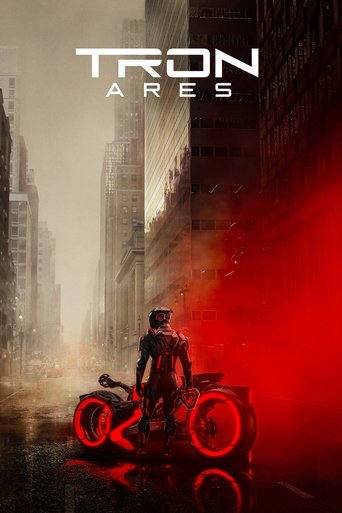
TRON: Ares
2025 · Film · 119 min
Part of TRON Collection
Directed by Joachim Rønning
Science FictionAdventureAction
A highly sophisticated Program called Ares is sent from the digital world into the real world on a dangerous mission, marking humankind's first encounter with A.I. beings.
4 negative1 mixed1 neutralfrom 6 commenters
Where to watch
No streaming data for this title.
7 comments on Hacker News
This is something that really upset me going into Tron Ares. I had a blast rewatching Legacy beforehand and picking out somewhat realistic shell commands. Ares ditches a lot of these shell commands in favor of everything being a script. `./start_ares_program`, etc. IIRC, we still see a `systemctl` or two in the movie, but definitely less fun than Legacy.
To be fair to Wright, there were a bunch of big budget movies in 2025 that flopped: Thunderbolts, Tron Ares, Snow White, etc. There’s definitely a wider phenomenon at work of cinema struggling in general. But I agree, Wright’s big-budget career is likely over.
I'm the opposite of the author here. I loved the original Tron, I was bored out of my mind by the sequel (Legacy).
As far as I could tell in Legacy, Sam Flynn just shows up and has no reason to be any good at doing anything in the Tron universe, he just is. His father could have left his swanky cave and just done whatever it is he did, at any time ... to end the film. No rhyme or reason to anything.
Interestingly enough the author kinda describes the same problem in Ares, rules aren't clear why anything happens. It just does sometimes, except when it doesn't.
Ares isn't dong well, and Legacy did, but I kinda wonder if the emptiness of Legacy meant that anything next was dead on arrival. Fans already saw that, couldn't think of why they'd see it again if there's not much too it...
Babble intended to pitch the brainwashsble the inception that AI is indistinguishable from the economy and therefore a replacement for it, an idea that suits OpenAI's reckless business tactics by making it sound like AI overriding the actual economy is both inevitable and a forgone conclusion.
The cautious will consider that the current commonly repeated observations about en14n of the internet as an output of the dotcom bubble will continue, and might follow Moore's law: Thanks to AI en14n will double every 18 months and swell out into the economy at large as it explodes. (Tron Ares will be regarded as weirdly prescient like the movie Her.) Ofc a select cult of privileged carnival barkers will become rich beyond reckoning with the societal spotlights tracking their every move, while the commonwealth will continue to fracture into ruin.
All signs point to the collective mind going insane as it is overwhelmed by a map that's more detailed than the territory.
https://en.wikipedia.org/wiki/The_City_and_the_Stars
Dan Harmon's Story Circle actually works, though.
You end up building this circle for each character, where the plot becomes the vehicle for them seeking and satisfying (or failing to) some need. You don't need purple prose, you just need characters that have motivations that are self-consistent and understood by the viewer. Such understanding does not require sympathy, either.
Much of the complaint over modern narrative is that what we're presented takes on the structure of propaganda pieces [1], not stories for entertainment. We're supposed to be entertained by the propaganda, instead. Many who grew up on good-guy wins against bad-guy don't resonate with story structure broken in service of some message.
I'll probably still see this movie eventually, and I'm not claiming Tron: Ares has these issues (no idea). I'm just not in any hurry to go see it.
[1] https://en.wikipedia.org/wiki/Propaganda
>> Propaganda can often be recognized by the rhetorical strategies used in its design. In the 1930s, the Institute for Propaganda Analysis identified a variety of propaganda techniques that were commonly used in newspapers and on the radio, which were the mass media of the time period. Propaganda techniques include "name calling" (using derogatory labels), "bandwagon" (expressing the social appeal of a message), or "glittering generalities" (using positive but imprecise language). With the rise of the internet and social media, Renee Hobbs identified four characteristic design features of many forms of contemporary propaganda: (1) it activates strong emotions; (2) it simplifies information; (3) it appeals to the hopes, fears, and dreams of a targeted audience; and (4) it attacks opponents.
The new Tron Ares is sterile and boring. It applies movie craft for everything except storytelling. If it has any cultural meaning, it's drowned by the edifice. As to pro-AI, it's like a Claude or de-fi commercial: you can't figure out what's being sold from the messaging, but if it gets a brand imprinted in your cortex, that's probably success for the seller.
It was as good as it needed to be. It's not high art, there were a few "pasted in" references about the exponential rise of AI (a "newsreel" blurb at the beginning, and a scene or two in the middle).
The original was panned as off-putting and janky to "normies", there's no reason to expect anything different here. Some of the effects were cool, but I think the original had a bit more of a plot and characters compared to Ares.
In the original, it flirts a bit with avatars, power dynamics, and sacrifice... and how humans and computers (programs) were going to be relating together as the importance of computers would continue to rise.
This new one is more like: computers and people... they can be both good and bad? (shrug?) There were lessons and morals at times, but there were also some boring facepalm moments. With some slight tweaks and nudges (eg: a "directors cut") maybe it could be 30% better or make 30% more sense, but it would still be off-putting if you weren't really into a movie about red LED's in the first place.