 Hacker Cinema
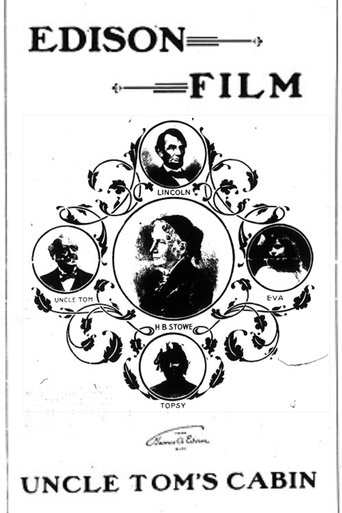
Uncle Tom's Cabin
1903 · Film · short · 19 min
Directed by Edwin S. Porter
Based on the novel by Harriet Beecher Stowe: Eliza, a slave who has a young child, pleads with Tom, another slave, to escape with her. Tom does not leave, but Eliza flees with her child. After getting some help to escape the slave traders who are looking for her, she then must try to cross the icy Ohio River if she wants to be free. Meanwhile, Tom is sold from one master to another, and his fortunes vary widely.
2 neutralfrom 2 commenters
Where to watch
No streaming data for this title.
2 comments on Hacker News
Hm... that seems strained. The film got an R because of visible blood/gore scenes and violence. There's nothing controversial about that at all, swap the script with an explicitly atheist one that rejects the divinity of Christ and crucifies a 100% mortal man in exactly the same way and you'd get an obvious R, because crucifixion is a violent act absent of any context.
And if you really want to go with the old testament having NSFW themes in its text (which it does), that seems like a frightenly slippery slope. If slavery and genocide are verboten, are you going to rule out Uncle Tom's Cabin or the Diary of Anne Frank too? History textbooks? Where does it stop?
I suspect your response is going to be that you think the bible is treating those subjects in an inappropriate way. Which is to say, you think it's a Bad Book and want to censor it for its meaning, not its content.
I mean, I happen to agree that it's a bad book. But... yikes, as it were. No, we don't do that.
I used to feel that way, but not so much anymore. The difference for me is that I think reading good literature or maybe even watching a good film can help make you a better person, depending on how you define "better". Sometimes literature can bring up ethical or philosophical issues: consider how "Antigone" makes you think about the relationship between citizen and state, "Cat's Cradle" discusses the dangers of technology, or "Less Than Zero" sheds light on the alienation and social dysfunction of the wealthy suburban middle class. It's easy to think about the tragedy of child soldiers in Africa, but it wasn't until I read "Beasts Of No Nation" by Uzodinma Iweala that I realized just how horrific things really are. Reading classics like "The Odyssey" or Dante's "Inferno" will help you understand Western culture in general. Certain novels are important from a historical point of view, e.g. "The Jungle" or "Uncle Tom's Cabin." This is one of the reasons I prefer reading to most other forms of entertainment: a movie or a video game can be fun to watch or play, but beyond that, there's usually not much else there.
I'm not suggesting that people only read fiction for self-improvement or to make you better at conversation: there's nothing wrong with reading something for it's own sake. Is reading something for its own sake better than watching a movie or playing a video game for its own sake? Probably not.