 Hacker Cinema
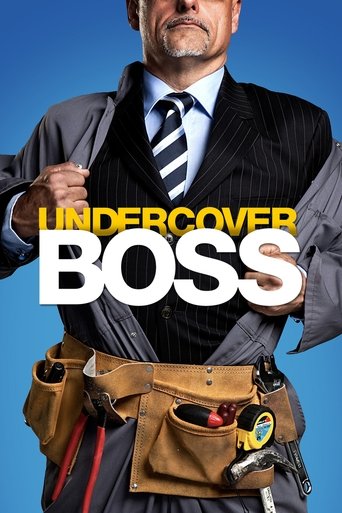
Undercover Boss
2010 · TV series · 42 min episodes · 11 seasons
Created by Stephen Lambert
Reality series that follows high-level executives as they slip anonymously into the rank-and-file of their own organizations. Each week, a different leader will sacrifice the comfort of their corner office for an undercover mission to examine the inner workings of their operation.
1 positive1 negative3 neutralfrom 5 commenters
Where to watch
No streaming data for this title.
5 comments on Hacker News
Yeah, I definitely do not think it is easy, but this is a thing that has been part of (at least) American culture for awhile but it seems we've been losing it. I personally think it is a big part of American success as we all know there are just things you can see "on the ground floor" that are hard to see from higher up. Hell, we even used to have the show Undercover Boss[0] haha. Obviously it is TV but I think anyone can reason through the truth of this.
I'm still working on how to do this right. But I think it is important that all parties recognize the pushback isn't about "us" but since we're on a team trying to make the best business possible. Part of why I struggle with this is 1) I just generally don't care about authority (maybe a bit too autistic lol) and 2) we're all wrong, so being wrong shouldn't really be seen as that bad of a thing. We're talking about pretty complex problems and we're only human with two eyes that must be in the same place at the same time, so it is pretty obvious that we're going to miss some stuff. It's about being less wrong, and if someone is giving you new information from a perspective you don't usually have access to, you sure want to check that it fits your current working model. If not, you're more wrong by not updating.
There's an information asymmetry here that makes things difficult, but a good manager will always listen to their employees BECAUSE they want to better the business. A good culture will allow "arguing" as everyone should be on the same team. As long as the "arguments" can end on good enough terms like everyone is willing to have a beer together at the end of the day. We get heated with our best friends and partners, right? Confrontation isn't destructive, it /can/ be very constructive. But the culture has to be right. Both management and employees need to be happy to share credit when success is made. This is definitely something even low level employees can do to help cultivate these good cultures. Management can do it by not just encouraging this but also watching to make sure it happens and do their best to make sure that success is properly allocated. Otherwise there's a natural incentive for "bad actors" to oversell their possible contributions. That's how you get "Loud Laborers." I think people think just because you're "a small cog in a giant machine" that this means you can have no impact. But the truth is that every cog is critical to the machine. It's just that the small cogs need to align and the problem is that a bad cog can upset the balance of everything. Success is unstable equilibrium.
[0] https://www.imdb.com/title/tt1442553/
So basically an episode of the show Undercover Boss?
https://www.cbs.com/shows/undercover_boss/
I agree absolutely. One of these people can stop whenever the experience stops being fun and the other has few other options. It's about as inspiring as poverty tourism or an episode of Undercover Boss.
> we are breeding new generations who have no concept that anything worth doing requires hard work and commitment, and whose total career aspirations are to climb the middle management ladder as fast as possible
Bull. It's a common problem for older generations to besmirch younger generations for exactly the same stunts they pulled.
There are still soldiers, Olympians, prodigies, single parents, and many more examples of young people doing things that require a ton of dedication. Every week, Undercover Boss manages to find young people working their tails off to pay for school, medical bills, and work towards their dreams. Last night's episode featured a young man who wanted to be a choreographer but knew he needed schooling to make it; thus he was hauling huge carts of pretzels all over Philly every day to pay for classes.
And yes, there are people who hope to get to middle management as soon as possible. They have tons of motivations but they're no different than the last generation's ton of people who wanted to get stable union jobs. Most of them want to make a decent living to provide a roof and food for their children. The path to doing that has changed generation over generation, but it's still the same idea.
Certainly we can do things to help lift them up and help them innovate, but we're not going to make any progress by calling the next generations lazy.
Reading the section entitled, "The Jerk," got me to wondering if OP will be ever write the obvious follow-up post, "Why We Promote So Many Jerks".
I have done work for over 100 companies ranging from SMB to large enterprises. Independently (I'll tell you why in a moment) I just made a list of the 10 biggest assholes I ever met the other day. Eight of them were the #1 person in one of those companies. Seven of them are, not surprisingly, out of business.
(The reason I made the list was because I watched "Undercover Boss" for the fourth time the other night. The first three times were great. This episode, about the CEO of Norwegian Cruise Lines, was horrible. All I kept asking myself was, "Where the hell did they get this jerk?" He had no idea how anything happened in his company and had people and functional problems in all 4 departments he worked in undercover. One employee even remarked that he had a problem dealing with women. That's when I made my list.)
What is it about our processes in business that seems to favor assholes? I realize that my experience may not be the norm, but some of the things I've seen done by the President or CEO:
- getting drunk and firing the security guard - throwing a phone book at his secretary - belittling vendors until none wanted the business - routinely yelling f words at employees - firing other executives on a whim - begging these executives to return to work - committing crimes with the books to earn a bonus - ignoring company saving advice (that would make them look bad) - sexually harassing subordinates - committing adultery (& other crimes) in full view of subordinates
I even witnessed a CEO of a Fortune 50 company break down and cry at a Tony Robbins event because he couldn't complete a routine task.
If I sound like I think that our leaders should be held to a higher standard, it's because they should be. Hell, I'd settle for any standard.
I'd love to hear OP's take on the other side of the story, when smart people decide to stop making sacrifices for the assholes they got stuck working for.