 Hacker Cinema
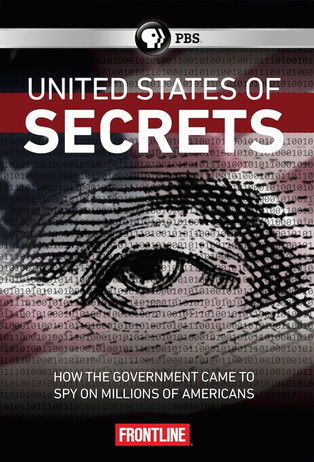
United States of Secrets
2014 · TV series · documentary · 1 season
FRONTLINE reveals the dramatic inside story of how the U.S. government came to monitor and collect the communications of millions of people around the world, and the lengths they went to as they tried to hide this massive surveillance program from the public. The series is gripping viewing for those who want to understand the context of the Snowden affair—and what it means for all Americans.
10 positivefrom 10 commenters
Where to watch
No streaming data for this title.
13 comments on Hacker News
We became a surveillance state in 2001, so in effect, Bin Laden won. [0] And don't forget, people sacrificed their lives so that the White House would not be partially demolished.
> FRONTLINE goes behind the headlines to reveal the dramatic inside story of the U.S. government’s massive and controversial secret surveillance program–and the lengths they went to trying to keep it hidden from the public. Part one goes inside Washington to piece together the secret political history of “The Program,” which began in the wake of Sept. 11 and continues today
[0] https://www.pbs.org/wgbh/frontline/documentary/united-states-of-secrets/
> He broke into computer systems he did not have the right to access, copied information, fled the United States, and illegally released the information he stole about government programs that were in no way illegal or unconstitutional.
Ugh he didn’t break in, he had access. Also if you know anything about his case or related cases, you’d also know the proper channels don’t lead anywhere. There’s a great frontline documentary called “United States of secrets”
Even the oversight committees aren’t privy to the full details and arguably they are where the proper channels should lead. There’s heads of agencies lying to Congress and the Senate about what is happening. The judiciary can’t rule on constitutionality.... which is part of its job.
The reality is, whistleblowing the way Snowden did was the only way to put evidence in the public, such that the judiciary And public can make a decision.
From PBS Frontline's "United States Of Secrets" (part 2)[1]:
LIZ FIGUEROA, (D) State Senator, CA, 1998-06: We walk into this room, and it’s myself and two of my staff— my chief of staff and one of my attorneys. And across from us was Larry, Sergey, and their attorney.
All of a sudden, Sergey started talking to me. He said, “Senator, how would you feel if a robot went into your home and read your diary and read your financial records, read your love letters, read everything, but before leaving the house, it imploded?” And he said, “That’s not violating privacy.”
I immediately said, “Of course it is. Yes, it is.” And he said, “No, it isn’t. Nothing’s kept. Nobody knows about it.” I said, “That robot has read everything. Does that robot know if I’m sad or if I’m feeling fear, or what’s happening?” And he looked at me and he said, “Oh, no. That robot knows a lot more than that.”
If the robot really imploded without any benefit to Google, why were they paying to manufacture use it?
If Google truly doesn't use the purchasing data to sell ads, why did they pay their expensive engineers to develop the tools to extract the data from email receipts?
[1] https://www.pbs.org/wgbh/frontline/film/united-states-of-secrets/transcript/
I feel like this might get lost in the shuffle, so I'm posting it independently.
I'm not shocked at any of this. The writing has been on the wall as early as 2001 that the NSA and CIA has been gearing up and building these exploits out. Here is a nice PBS documentary on the subject of FISA & NSA surveillance, and of course the CIA is no lone wolf, these agencies were given carte blanche by previous administrations to work together. While I believe they are different in aspects of what they do, from this perspective, I think its fair to say that likely if the CIA has it, the NSA has it, and if the NSA has it, the CIA most likely has it or can get it.
To illustrate a nice timely, take a look at this gem from 2001
https://ca.pbslearningmedia.org/resource/fl32-soc-ussfisa/united-states-of-secrets-warrantless-wiretapping/
Around the same time, we even had this pop up: its a run down as to why the NSA needs to have this 'legal authority' to act with impunity for 'American interests'
http://nsarchive.gwu.edu/NSAEBB/NSAEBB178/surv34.pdf
and of course, we have the NPR story that breaks it all down over the NSA wiretapping debate:
http://www.npr.org/news/specials/nsawiretap/legality.html
Take special note here: hardly any at length commentary at all so far and the news is pretty sparse. Largely, it seems people were not paying attention, yet right here its clear as day that the NSA was gearing up to expand and use its surveillance capabilities.
Of course, around all this, it is clear the NSA and the CIA would be sharing exploits like these, it is likely these were all used in joint context with each other:
https://www.cia.gov/library/readingroom/docs/DOC_0006184107.pdf
and of course, the ACLU has a relevant statement on this as well, i think its quite a good summary of the feelings at the time:
https://www.aclu.org/other/how-anti-terrorism-bill-puts-cia-back-business-spying-americans
Then, we have these here, around 2004-2006:
The first real report coming out is from the ACLU, reporting about the NSAs massive build up since 9/11 and how its creating a lot of questionable actions to be undertaken by the agency, in which they allege, at the time, among other things, that the NSA is spying on US citizens:
https://www.aclu.org/files/FilesPDFs/surveillance_report.pdf
My favorite quote:
National Security Letters. These obscure devices, which can be written by FBI officials in field offices without the approval of a judge, give the government broad power to demand records. Once upon a time this sweeping power could only be used to get information about “agents of a foreign power” from banks, credit agencies and Internet service providers. But the Patriot Act changed the law to allow their use against anyone, including persons not suspected of a crime. The bill quietly signed into law by President Bush in December 2003
but wait, there is more!
Around the same time, the GAO had noted that there was an increasing amount of trouble coming from cyber security experts about cybersecurity infrastructure in the states. How easy they were to exploit, their threat to infrastructure, and how it could affect people. How is this related? This same type of report details alot of the exploits that the NSA has used, such as stuxnet, which come to light many years later:
http://www.gao.gov/new.items/d04321.pdf
and less us not forget, the NSA tried to sway attention away from itself by releasing this tidy memo, which got leaked, in and around 2004:
https://epic.org/privacy/nsa/foia/EPIC-NSA-USSID-18-and-Domestic-Procedures.pdf
In which they promise to quote 'no longer use their spying apparatus on US citizens knowingly'(i'm paraphrasing)
and of course,
We have this report from 2006 from the Indiana Law Journal detailing all of the potential pitfalls and abuses of the FISA courts. In essence, to sum it all up, it states:
Accordingly, to extend the “special needs” doctrine to the NSA program, which authorizes unlimited warrantless wiretapping of the most private of conversations without statutory authority, judicial review, or probable cause, would be to render that doctrine unrecognizable. The DOJ’s efforts to fit the square peg of NSA surveillance into the round hole of the “special needs” doctrine only underscores the grave constitutional concerns that this program raises
oh and i didn't forget: we got concrete evidence of state sponsored Russian hacking against US systems since as early as 2008:
http://nsarchive.gwu.edu/NSAEBB/NSAEBB424/docs/Cyber-027.pdf
relevant quote:
The head of the Russian Army Centre for Military Forecast, Colonel Anatoly Tsyganok, made comments to the Russian news outlet, Gazeta, about the cyber attacks on Estonia. He believes that there was nothing wrong with the attacks because there are no international agreements established. Colonel Tsyganok also believes that NATO couldn’t do anything to stop the attacks and that they were highly successful. The most telling example of Russian government involvement in cyber warfare was with Herman Simm selling IT secrets to the Russian Foreign Intelligence Service that was discussed in Section VIII of this monograph. This case showed that the government of the Russian Federation is actively seeking information on cyber defenses and is willing to pay large sums of money (Mr.Simm is accused of selling cyber security secrets for millions of dollars) to receive information on cyber security.
I feel like the tech public that should be doing the diligence on this has been asleep at the wheel. On the recent stories from NSA surveillance, the CIA leak we are reading here, or other government programs. Its not crackpot. Its not a conspiracy. The evidence has been out there in our faces for years. I feel like we fell asleep at the wheel as a tech community to stand up to this.
Frontline covered the "hospital room showdown" in their documentary they published last year, "United States Of Secrets"[1]. Their web video player has a bookmark called "Concerns at the Justice Department" for the part about the "showdown", though the entire video (and part 2!) is worth watching.
[1] http://www.pbs.org/wgbh/pages/frontline/united-states-of-secrets/#united-states-of-secrets-%28part-one%29
Actually, there was a group of whistle blowers prior to snowden who went to congress. The congresswomen who was working with them had her door broken down and was arrested for a brief time for holding confidential documents.
It was actually all in thr PBS/NYTimes story United States of secrets.
Probably the best documentary on thid whole thing i have seen.
Many of you have probably seen this, but I highly recommend the PBS Frontline documentary, United States of Secrets: http://www.pbs.org/wgbh/pages/frontline/united-states-of-secrets/
Binney, along with the other NSA whistleblowers, are interviewed at length for the film.
That, and Citizenfour were, for me, the most intriguing documentaries about these issues.
http://www.pbs.org/wgbh/pages/frontline/united-states-of-secrets/#united-states-of-secrets-(part-one) and part two and citizenfour are all must watch... from some of the comments many have not seen all of these.
I think it's easier to try to protect the way they we communicate than trying to over throw the government. Plus, something like 60%+ in the U.S. believe Snowden is a traitor. In other words, people in the U.S. trust their government.
I do agree with you though. I recently had my family watch United Stats of Secrets a PBS Frontline episode on Netflix[1]. It was honestly the best description of the Snowden leaks I have seen, it explains everything better than I had expected.
What was most interesting/disturbing was the NSA director with a big smirk on his face explaining how he manipulated congress.
It definitely changed my families view of Snowden from "traitor" to "wow, I don't know if he is a hero, but he's no traitor." Over time, this is how public sentiment can alter to believing our government is tyrannical, but right now it's not enough.
[1] http://www.pbs.org/wgbh/pages/frontline/united-states-of-secrets/
Frontline has a great 2-part documentary on the NSA mass-surveillance program called "United States of Secrets" [1]. (It is available on Netflix)
One of the striking things I took away from that documentary was the rhetoric used to disuade would-be leakers, whistle-blowers, and media outlets that had learned about "the program". In almost every case they would be brought into the White House and briefed in an effort to convince them to keep their silence. The common refrain that was related by all the different parties was the White House (both administrations) would consistently tell the leakers: If you do this the blood will be on your hands for the next terrorist attack.
Sadly this sort of rhetoric really work(ed/s) on people.
[1] http://www.pbs.org/wgbh/pages/frontline/united-states-of-secrets/
I recommend that anyone interested in the topic watch this film: http://www.pbs.org/wgbh/pages/frontline/united-states-of-secrets/
It's incredibly detailed, though focusing primarily on executive action post 2011.
PBS Frontline is running a ~3 hour documentary, released in two parts, the second installment was released today, of the entire post 9/11 NSA surveillance episode, up to and including the Snowden leaks @ http://www.pbs.org/wgbh/pages/frontline/united-states-of-secrets/
Well worth a watch.
The whole Frontline 'United States of Secrets' episode is very good and worth a watch. Part two is this week, I think on Tuesday.