 Hacker Cinema
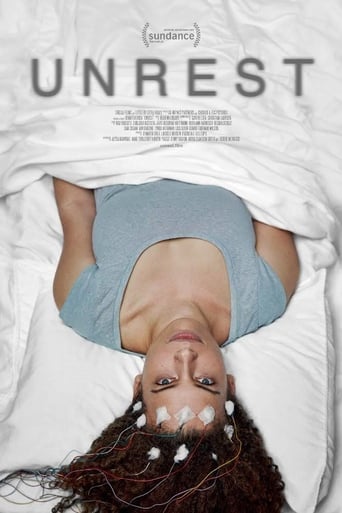
Unrest
2017 · Film · documentary · 97 min
Directed by Jennifer Brea
When Harvard PhD student Jennifer Brea is struck down at 28 by a fever that leaves her bedridden, doctors tell her it’s "all in her head." Determined to live, she sets out on a virtual journey to document her story—and four other families' stories—fighting a disease medicine forgot.
4 positive1 negativefrom 5 commenters
Where to watch
No streaming data for this title.






5 comments on Hacker News
There are a lot of low information comments in this thread. Let me try to inject some more information.
Chronic Fatigue Syndrome is not "chronic fatigue". In that sense it is a misleading name. It cannot be eased by sleep. Rest is necessary to prevent further degradation, but no amount makes a patient healthy.
The dominant, maybe key symptom, is unusual exhaustion, weakness, body pain, and/or cognitive decline after any exertion; exhaustion that is not easily recovered from. This symptom is called "Post Exertional Malaise" or just PEM. "Exertion" in the context of CFS could mean walking to the mailbox, doing the dishes, reading a book, or even watching TV. Sometimes patients call it "payback". Pushing too hard can cause a worsening of the condition for months or years.
CFS is also called Myalgic Encephalomyelitis, in the UK at least. Some people claim these are separate conditions, but it is now generally accepted that they are not. Some people call it ME/CFS. It is a condition with a name problem, for sure.
To get diagnosed with CFS is a long process. Despite attempts to improve this, it is still a diagnosis of exclusion, as there is no known biomarker. That means first, you have to get tested for all things that are even kind of testable that might present your symptoms. At a minimum: white blood cell count, vitamin levels, thyroid functionality, HIV, MS, lupus. If you're lucky, you'll get diagnosed and treated through this process.
Once you know you don't have one of these conditions, you must then meet a strict set of criteria. The best criteria these days is the [Canadian Consensus Criteria](https://me-pedia.org/wiki/Canadian_Consensus_Criteria). It is likely that you can have one of the above conditions AND CFS, but that is difficult to sort out with our current process.
This means that CFS patients as a group may have multiple underlying conditions. In the past few years, some high profile patients have been successfully treated for a neurological condition similar to Chiari Malformation I, via cervical fusion. It is an expensive treatment, with high risk, and no solid research behind it. Many other CFS patients have received it without improvement. The search continues.
The medical community has frequently found itself at odds with CFS patients, who regularly report outcomes contrary to some medical expectations. There is a famous study called the PACE trial, which encouraged CFS patients to use "GET", or Graded Exercise Therapy, and CBT. The underlying idea is that patients have become scared of exercise and must be gradually coaxed back. This study has been heavily criticized for its unscientific methodology and the damage that GET in particular causes to patients. It seems to be fading from popularity, but many medical professionals continue to stake their professional reputations on it, and insist on treating their CFS patients with only CBT and GET. The NIH in the UK recently dropped GET from their CFS guidelines, to no small amount of drama.
For a patient with CFS, the research backed options are few. With CFS research underfunded for decades, there is little of rigor to guide you. There is a lot of snake oil, and there are a lot of guinea-pig style options that risk worsening your condition. The best patients can hope for is to find a few things that make their new disability easier to bear, and to learn how to pace, meaning how to work within their new exertion limitations.
The state of CFS medical opinion and research has been slowly advancing over the past 10 years, with one bright light being the [Open Medicine Foundation's 'End ME/CFS Project'](https://www.omf.ngo/the-end-mecfs-project/), which is seeing multiple research teams from across the globe, including teams from Harvard and Stanford, working together to solve this problem that affects 100s of thousands, if not millions, globally.
If you want to know more, the OMF and MEPedia sites linked above are great resources to start. The movie [Unrest](https://www.netflix.com/title/80168300?source=35) from 2016 helped turn the public opinion tide and is still worth watching today.
Watch this to understand the problem better : https://www.unrest.film/
And this : https://www.ted.com/talks/jen_brea_what_happens_when_you_have_a_disease_doctors_can_t_diagnose
I study neurology and metabolism. If any of these patients are delusional, its an exceedingly small fraction of them. Same goes for people diagnosed with "conversion disorder", which is the idea that they are exhausted because they are dealing with some buried repressed childhood trauma.
Some psychiatrists can have a real discussion with you about the intricacies of the hypothalamus. Others ..... really not..... they will try and deal with your systemic inflammatory problems with Fruedian psychoanalysis. Worse yet is that many patients dealing with these deep fatigue and metabolism issues have been institutionalized because people think they are just faking it.
While it's a good movie, I found it very negative in that it didn't show any recovery stories. Jen herself seems to have recovered a lot, and has been travelling around the world to talk about Unrest.
For HNers with ME/CFS (or an interest in it) I can recommend last year's documentary Unrest by Jennifer Brea: https://www.unrest.film/. It's available on Netflix.
It's a confronting look at the human side of severe ME, and a call for greater recognition. If you've had people around you struggle to understand what you're dealing with, showing them Unrest could help a lot. Check it out.
Careful making any conclusions from that show. A number of the participants have said they were totally misrepresented.
You could tell they were going to slant things right from the start when they started first with introducing Bekah and her quirky “witch” and “psychic” beliefs, before even getting to the diagnostics or how they were diagnosed. The documentary makers definitely crossed some ethical lines by cutting in that doctor talking answering general prompts about psychological illness, and splicing that in with patients answering questions about their emotional state, etc.
One thing it was good for though was to see just how horribly taken advantage of desperate and sick people can be by quacks. The show featured a lot of quacks such as Suzanne Kim and the Sophia Institute and that lady on Marthas Vineyard. I really wish I had the hours of material they left out to produce a documentary on what these quacks prescribed and charged their clients.
Edit: I’ll say on the subject of Jamison for example, if you want a better documentary on ME/CFS take a look at Unrest, also on Netflix. (And Forgotten Plague I think on Prime.) But even that science has progressed a long way in the past couple of years since that came out.