 Hacker Cinema
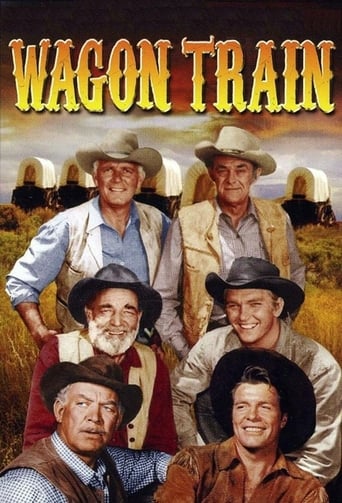
Wagon Train
1957 · TV series · 60 min episodes · 8 seasons
The series initially starred veteran movie supporting actor Ward Bond as the wagon master, later replaced upon his death by John McIntire, and Robert Horton as the scout, subsequently replaced by lookalike Robert Fuller a year after Horton had decided to leave the series. The series was inspired by the 1950 film Wagon Master directed by John Ford and starring Ben Johnson, Harry Carey Jr. and Ward Bond, and harkens back to the early widescreen wagon train epic The Big Trail starring John Wayne and featuring Bond in his first major screen appearance playing a supporting role. Horton's buckskin outfit as the scout in the first season of the television series resembles Wayne's, who also played the wagon train's scout in the earlier film.
1 neutralfrom 1 commenter
Where to watch
No streaming data for this title.


1 comment on Hacker News
Stross did not characterize it as "specific to some conservative 70s American culture".
He wrote: "The science-fiction genre that today’s billionaires grew up with—the one that existed in the 1970s—goes back to inventor and publisher Hugo Gernsback. ... His magazine’s strain of SF promoted the combination of the American dream of capitalist success, combined with uncritical technological solutionism and a side order of frontier colonialism."
The kids reading SF in the 1970s were reading SF from across multiple previous decades, not just the 70s.
One such example is Heinlein's 1947 book Rocket Ship Galileo. In it, they are trying to convince some parents to let their teen-aged children to go on an experimental atomic-powered rocket to the moon. The mother describes why she gives permission:
> “Oh, I know what I said,” she went on, “but a mother is bound to cry a little. Just the same, this country was not built by people who were afraid to go. Ross’s great-great-grandfather crossed the mountains in a Conestoga wagon and homesteaded this place. He was nineteen, his bride was seventeen. It’s a matter of family record that their parents opposed the move.” She stirred suddenly and one of her knitting needles broke. “I would hate to think that I had let the blood run thin.” She got up and went quickly from the room. - https://archive.org/details/isbn_9780441012374/page/40/mode/2up?q=conestoga
That's an explicit link between space colonization and the mythos of American westward expansionism and "strong blood".
(John Varley recontexualizes this scene in his "Red Thunder" where the protagonist is of Cuban descent, and it is his aunt, who fled Cuba by boat, who comes up with a very different reason to grant permission. Alas, I don't have a copy of that book, haven't read it for 20 years, and can't find it in the limited search available from archive.org.)
A lot of early SF was based on Westerns, but in space, with blasters, rockets, and aliens instead of guns, trains/horses, and Indians. "Star Trek" was characterized as "Wagon Train to the stars!" as it drew from the Western "Wagon Train." A old SF movie serial I watched from the 1930s had rockets to get from planet to planet, and horses to get from base to base.
And Westerns, as a genre, were full of revisionist white supremacist colonial expansionism that collapsed after the frontier myth it was based on collapsed. https://www.youtube.com/watch?v=x6zD1sjnClM
You write: "These are not arbitrary concepts that were uniquely dreamed of by some sci-fi authors because they had colonialism nostalgia."
But of course they are not, and I don't see Stross making that claim. They were embedded in a white-supremacist culture produced by violent colonial expansion. Gernsback was a racist even for his era, and used his influence to sideline and suppress alternative viewpoints.
John Carter of Mars was a captain in the Confederacy during the American Civil War, which meant he would have committed treason in the name of slavery he he been real. He was portrayed with all the honorable characteristics of Antebellum South, but without the slavery. This was part of a larger range of Lost Cause literature focusing on Southern honor, not "econ-fiction" exploring how slavery supported that culture.
The "taser" is an acronym for "Thomas A. Swift's Electric Rifle" because its inventor was inspired by the book "Tom Swift and His Electric Rifle", wherein the titular character invents an electric rifle so he can go to Africa and hunt elephants for their ivory. Africa, and where locals are described as "All about were the natives, tall, gaunt black men, hideous in their savagery, wearing only the loin cloth, and with their kinky hair stuck full of sticks, bones and other odd objects, they presented a curious sight." ("The witch-doctors ran around like so many maniacs, and it looked as much like an American Indian war dance as anything else.") - https://archive.org/details/tomswifthiselect00applrich/page/n113/mode/2up?q=+savagery
And these are some of the most popular series of the early SF era.
So you are an author and want to write SF. The readership is primarily white males reading a certain flavor of SF, who want to buy more SF in that flavor. What kind of story do you want to write, and will it make it to market?
And that's why the SF market is inherently slow to change, that is, conservative.
The existence of a market, and the need for the publishing company to make money, and the views of the editor, are why you can't simply say "that's idiosyncratic to the sci-fi author."
There's an old complaint along the lines that it was easier for an SF reader to put himself in the place of an alien named Zxtyqyz than it was to put himself in the place of a black man.
That's why Heinlein had to carefully write between the lines to figure out the protagonist in his 1950s "Tunnel in the Sky" is black, instead of saying so explicitly. (https://en.wikipedia.org/wiki/Tunnel_in_the_Sky#Rod's_ethnicity)
When you commented "it tells stories about what might go right ... or might go wrong", remember that you can't see the stories that weren't told. If you never revisit and reexamine the SF you read as a teen, you might easily forgot how you've also been enculturated with some outdated ideals.
Read "Gone With the Wind" and you get a very different account than reading "The Wind Done Gone".