You're not losing much; the film is really good, and features Oldman... among other very good acting. There is elitist cohort bent on signaling how they cannot stand films, and how live theater is superior, blah blah. Well, usually the films are vastly superior to productions, in both interpretation of the script, and complexity of execution. The film starring Oldman is an instance of that, I think. But it's all secondary to reading the text itself.
R&G is a nice play, but honestly it doesn't come off the page nicely. The same is true for late-Beckett. I'm a huge fan of these guys, but I never understood the obsession literary teachers have with only a handful of plays, like R&G, or Waiting for Godot. These are very specific, nerd-like, I would even go as far as calling superficial—pieces of art. At any rate, Stoppard is best appreciated when read off the page, or on radio.. he's just one of these guys. Indian Ink is really good.
That formula does not fit every story ever told, or even every popular story. Consider a romance story, where the protagonist doesn't "bring it back to share" at the end, because their journey is entirely personal. Or wilderness survival stories, where there isn't necessarily anything wrong with the normal world at all; the problem is that they are in the supernatural world to begin with, and it challenges them in ways they must endure. Slasher movies and other horror movies follow more of a "(1) something is wrong in the normal world, (2) people get sliced up, (3) everyone's dead" plan that may not involve any grand symbolic journey more substantial than the journey from a sharp knife to a bare throat.
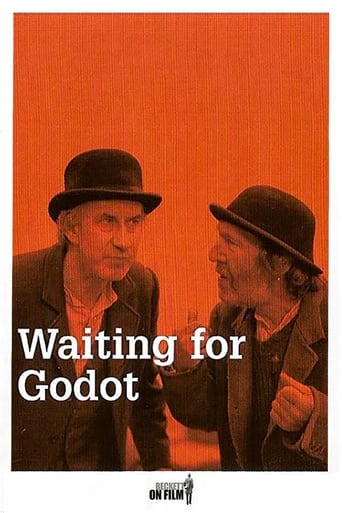
As people try to generalize the hero's journey to claim it fits all stories, they simplify it by paring away many of Campbell's more specific elements, like "the meeting with the goddess" or "atonement with the father," but even the most pared-down version still does not describe all stories. How about The Stranger by Camus? That story doesn't map onto the hero's journey at all. Waiting for Godot? That story doesn't even resolve its narrative tension in any conventional way.
The urge to generalize narrative is understandable, but I think it's a mistake. Ultimately, the purpose of art is simply to provoke interesting or entertaining emotions in its viewers, and a story doesn't need any one essential component to do this. There are recurring conventions and useful tools that repeatedly crop up in genres and in the medium as a whole, but these are not necessary—only commonplace.
 Hacker Cinema

2 comments on Hacker News
You're not losing much; the film is really good, and features Oldman... among other very good acting. There is elitist cohort bent on signaling how they cannot stand films, and how live theater is superior, blah blah. Well, usually the films are vastly superior to productions, in both interpretation of the script, and complexity of execution. The film starring Oldman is an instance of that, I think. But it's all secondary to reading the text itself.
R&G is a nice play, but honestly it doesn't come off the page nicely. The same is true for late-Beckett. I'm a huge fan of these guys, but I never understood the obsession literary teachers have with only a handful of plays, like R&G, or Waiting for Godot. These are very specific, nerd-like, I would even go as far as calling superficial—pieces of art. At any rate, Stoppard is best appreciated when read off the page, or on radio.. he's just one of these guys. Indian Ink is really good.
That formula does not fit every story ever told, or even every popular story. Consider a romance story, where the protagonist doesn't "bring it back to share" at the end, because their journey is entirely personal. Or wilderness survival stories, where there isn't necessarily anything wrong with the normal world at all; the problem is that they are in the supernatural world to begin with, and it challenges them in ways they must endure. Slasher movies and other horror movies follow more of a "(1) something is wrong in the normal world, (2) people get sliced up, (3) everyone's dead" plan that may not involve any grand symbolic journey more substantial than the journey from a sharp knife to a bare throat.
As people try to generalize the hero's journey to claim it fits all stories, they simplify it by paring away many of Campbell's more specific elements, like "the meeting with the goddess" or "atonement with the father," but even the most pared-down version still does not describe all stories. How about The Stranger by Camus? That story doesn't map onto the hero's journey at all. Waiting for Godot? That story doesn't even resolve its narrative tension in any conventional way.
The urge to generalize narrative is understandable, but I think it's a mistake. Ultimately, the purpose of art is simply to provoke interesting or entertaining emotions in its viewers, and a story doesn't need any one essential component to do this. There are recurring conventions and useful tools that repeatedly crop up in genres and in the medium as a whole, but these are not necessary—only commonplace.