 Hacker Cinema
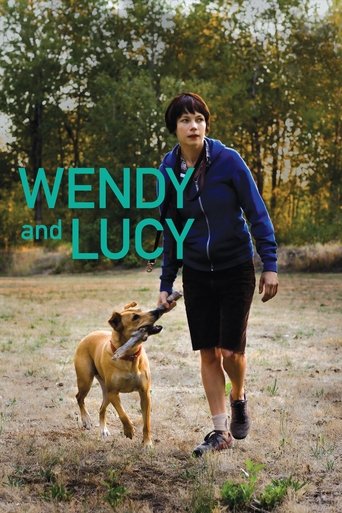
Wendy and Lucy
2008 · Film · 80 min
Directed by Kelly Reichardt
A near-penniless drifter's journey to Alaska in search of work is interrupted when she loses her dog while attempting to shoplift food for it.
1 positive2 neutralfrom 3 commenters
Where to watch
No streaming data for this title.






3 comments on Hacker News
This is something I already knew, but I realized it even more upon seeing the film Wendy and Lucy.
Yes, it's an arthouse flick. No, it won't be everyone's cup of tea. No, it's not blockbuster material. But, what it does show is how filmmakers can do a lot with very little. It's a simple story with a bittersweet ending and no VFX. I'm certain it cost relatively nothing to make. And it's unfortunate that we don't get anything like it in mainstream theaters.
Hollywood has been pricing itself out of existence but they still have the surprised Pikachu face while things decline.
I had a conversation with a bunch of Hollywood people last year. Some were writers, actors, etc. A handful of film personnel. They were all quabbling about what was going to win at the Academy Awards, who was getting good and bad attention from the Hollywood Reporter, and so on. Simultaneously, they were lamenting about how bad things were in their industry.
I then asked the group if the industry had thought about making a good movie for a change instead of giving a shit what the Hollywood Reporter has to say. They were dumbstruck, probably due to a combination of my rudeness and not having a good counterargument. If people are losing their jobs and not making money then it's hard to deny how self-congratulatory the entertainment industry is.
The purpose for social programs is not to provide freedom, but to provide security against loss of health, life and a bare minimum of dignity, the latter of which is even maintained on death row... let us remember poor people die every day without a last meal.
I hope I don’t sound disrespectful, but your ongoing insistance that governments in the abstract are inherently dysfunctional seems to underwrite most of your last comment and this is just such an ignorant roadblock. It’s not a matter of opinion. I take immense issue with many businesses, and most American business traditions, but I would never be so ignorant as to refuse acknowledgement of what they do well or to misrepresent their role in all civilized societies. Why insist such a limitation on your own understanding?
Governments are essentially for the people. They serve to facilitate a common civility. Feudalism was born of the necessity to protect the farmers and their crops with a military. It’s legacy was diminished by a long period of failing to prioritize the people. Democracy + capitalism is not a perfect match; but some of Europe has had the courage to face it’s failures and inches closer to actualizing governments which are for the people.
When you criticize America’s government, you’ll want to be careful. “Business” is probably a more accurate descriptor of what you’re actually criticizing. It’s no secret, either. So when you insist on discounting the configuration of a particular “government”, you’re devolving what could otherwise be a productive conversation. Therefore, I’m going to ignore most of these assaults on proven successes and the potential for future innovation. Without criticality, we an go ahead and just agree we are fucked.
This is not meant as a straw man but it deserves a word or two: When it comes to who should speak for the needs of poor people, how do you reason that you are qualified?
Of course, poor people are not always* their best spokes people, but they do have a type first-hand experience unlike any other.
I’ve been economically lucky compared with many people I know but there were periods in my childhood when my family would benefit and a significant one as an adult. It’s hard to imagine our different experiences are not causal to my position, but the nature of that relationship is far from obvious.
For you, capitalism has consistently meant freedom. For me, it has meant moments of awe for the wonders of capitalism soon to be fraught with sudden peril and lasting threat. I don’t think guilt on either end is necessarily useful, but the dreadfulness of the poverty experience in America is reason alone that it’s not easily shared. Some films have tried, like Kelly Reichardt’s Wendy and Lucy. The lack of natural story arc is a problem, but the real dealbreaker is invoking what it is to be robbed of one’s dignity.
Dignity is complex, but the day-to-day of poverty in America leaves no doubt of it’s fragility. The dizzying network effect of ever-more-tangling dependencies intercut with penny counting, truth-stretching, psychological escape, false hope, begging, crime, self-doubt, and the many flavors of shame have a way of defining it’s importance.
This can’t be said enough: The purpose for social programs is not to provide freedom, but to provide security against loss of health, life and dignity.
Freedom is fallacious. The limits to one’s freedom are defined by their relative power over others. It’s risky and has many exterior dependencies. It’s unnecessary but nice to have.
Security and dignity are far more meager and far more important. Loss of these defined by one’s means for survival and health. Loss of security and dignity has tremendous direct physical and mental health consequences, and is the most common gateway to violence, crime, and suicide.
Poor people know not to fuck with the latter. Poor people have cutting experience with the countless ways that money’s value is dependent on those who have more of it.
>I don’t want a new government agency deciding where poor people live, what they are given to eat, and what clothes they are given to wear.
In a life of poverty, the difference between a government deciding and nobody deciding incredibly often the difference between sickness and health, hunger and nourishment, or life and death.
Direct commodity distribution done well (by an educated, compassionate, and civically engaged population) is drastically more efficient, drastically more effective, and drastically more humane. Of course, it might require a little innovation. Hopefully you don’t hate innovation.
So many negative reactions, I'm surprised. But then I've been surprised by how narrow a band "normalcy" really is before.
I lived in a van for a summer. I have a story, but I don't think it involves mental illness or laziness or wasting my life. I was working fulltime as a sysadmin at an Ivey League school and taking classes fulltime there at the same time. Yes, that meant I slept very little and had no "free time", whatever that is. One spring I was moving out of an apt I had rented with some friends for the school year and I had another apt set up for fall, but hadn't set up anything for the summer. My parents unmarked white utility van fit my bed perfectly and I decided to just not move my bed out and live in the van for the summer. I had a place to shower at work, I decorated the inside of the van, and it became home. I wasn't a creep, I wasn't homeless, my parents lived 45 minutes away so I had a fallback if it didn't work out, I had a place to shower, I had a job.
However, what I underestimated was how much people freak out if you're doing something even slightly outside of their concept of normal. I had found a great parking spot pretty near work, in a corner under some trees, however, within a week a construction worker called Safety and Security and reported a suspicious van (he was driving a jacked up mufflerless pickup truck with a rifle in the back -- who's the suspicious one?). 6am one morning, I was jolted awake by the loudest scariest banging noise I've ever heard, it felt like someone was punching me in the heart. A security guard was knocking on the sides of the van trying to see if someone was inside. I was too groggy/freaked to just stay put behind my curtains and tinted windows, I got out. He told me I can't sleep on college property, recorded my license plate and said they would be watching me.
I can't describe the lack of feeling of safety that having a locked door and a wall, specifically something thick that muffles knocking gives. I then tried parking on the streets discretely but had a hard time sleeping because I kept waiting for the cops to come knocking. I started parking a few miles away at a Walmart -- what a weird experience that was. RV's would come in and set up in a circle in the middle of the lot (I stayed on the outskirts). Every night around 2am some locals would come by and drive in circles around the RVers and throw bottles at them while yelling and squealing tires. No peace of mind there. I started parking at the local truck stop, no locals there, but now I had to worry about a sleepy truck driver backing into me in the middle of the night. Breakfast at the 24hr diner there was delicious though.
I started reading some forums about van living and found an article about how people who are forced to live in a car or van temporarily often find themselves pushed further into the fringes. I was doing this by choice, but I couldn't imagine someone who thought they could just live out of their car for a few weeks until their first paycheck from their new job could cover first/last/security deposit in a new city, only to be constantly hassled to move and then fired when someone at work found out. The numbers were troubling, something like 80% of people who temporarily attempt to live out of their cars end up actually homeless, jobless and carless.
Eventually some people renting an apt nearby and had a free parking spot let me park there. OP mentions loneliness. I didn't necessarily feel lonely, I was busy and had stuff to do, and I still had friends. But I definitely felt something, that people thought I was troubled, or needed help, or that something was wrong. And maybe they didn't really, but I realized that I myself was starting to avoid social contact. I would wake up early and sneak into work to take a shower before other people came in so they wouldn't notice, even though my boss knew I was living in a van and didn't care -- I wasn't going to lose my job if anybody found out.
When it came time to move out of the van, it was with mixed feelings. It as getting colder at night, and I would sleep better, but I had gotten used to it and now whenever I borrow my parents van to move something I feel nostalgic for that time when it was my home.
What I learned was that society does not take kindly to seemingly slight deviations from normal. The movie "Wendy and Lucy" came out a bit later and reminded me strongly of that outward push that society initiates on people who appear as "outliers". Certainly, it makes sense for the health of the system, but I was surprised by how tight the tolerances are.