 Hacker Cinema
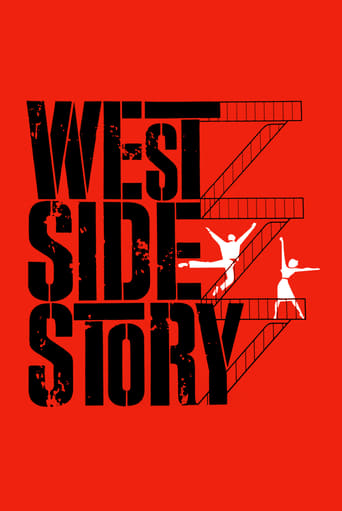
West Side Story
1961 · Film · 153 min
Directed by Jerome Robbins, Robert Wise
In Manhattan’s Upper West Side, rival gangs of Polish-Americans and newly arrived Puerto Ricans clash for control of the neighborhood, even as two young members from opposite sides fall dangerously in love.
2 positive1 negative10 neutralfrom 13 commenters
Where to watch
No streaming data for this title.

13 comments on Hacker News
> What makes Pratchett more "relevant" than Shakespeare?
The language, the content, and the characters.
We don't live in a world where someone could fail to hear from their ship for a few weeks, thinking themselves unable to pay a weird debt, and have their loan shark's daughter dress up as lawyers and waltz into the trial to save the day. And we definitely don't encounter people who speak in Shakespearean English (even Victorian English is pushing it).
We do live in one where people try to commit insurance fraud as soon as they hear about it, a world where Magrats' have excessive candles (even if the magic isn't real), and a world of Vimes' Boots.
> Let alone modern adaptations like West Side Story
Or the Lion King. The adaptations are fine, the success make the connections to the world in which they are created.
> English classes also have you read lots of other more recent and more modern works. It's not exclusively Shakespeare.
I didn't say otherwise; I'm saying focus on those other things. I think the most modern thing we had was Ethan Frome.
> Believe it or not, if you take advanced French classes, you're going to watch a lot of French films and listen to a lot of French music for school! Since most students in English-speaking schools spend a lot more time studying English than French, they read a lot more English literature than French.
Again, that's fine for those learning French (and etc. for each other second language) to a higher level — given my experience with teaching myself a second language, and my self-tests over the years, there's a huge quality gap between what's a good grade in school and what's enough to get by with in practice — but that's not most people, and as there's exactly 18 years in the first 18 years of your life, my point is: what should be mandatory in schools? You've got limited time, what is the "you must" rather than "here's something you may like"?
> And those books should be modern and relevant.
What makes Pratchett more "relevant" than Shakespeare? I would posit to you that the same order of magnitude of people (or more) read and watch Shakespeare plays by choice as read Pratchett books. Let alone modern adaptations like West Side Story. I get that you prefer the one, but not everybody does.
English classes also have you read lots of other more recent and more modern works. It's not exclusively Shakespeare. I remember, for example, Death of a Salesman, 1984, and Slaughterhouse-Five being part of my high school's English curriculum.
Lord of the Rings is apparently in several English curricula now.
Comedies of all kinds (from Aristophanes to Pratchett) usually take a backseat to tragedies, bildungsromane, and other more "serious" genres in English classes because they tend to be much less timeless and much more current in terms of their themes and references.
> That modern writers reference old works is true, but so too did Shakespeare, and we don't reference his cultural ancestors to understand his works.
Schools do generally have you read ancient writers, often including Greek comedies and tragedies, and some have you read medieval British literature and those references do, in fact, come up. It's possible that you did not fully enjoy Shakespeare if you did not get that context.
> That fine, but it's not the job of school. If it was, we'd also have mandatory watching of foreign language horror films.
Believe it or not, if you take advanced French classes, you're going to watch a lot of French films and listen to a lot of French music for school! Since most students in English-speaking schools spend a lot more time studying English than French, they read a lot more English literature than French.
Shakespeare is modern English. Linguists describe it as "Early Modern English". It's contemporaneous with the King James Bible, which is still widely read, without translation.
The difficulty with Shakespeare isn't that it's in Elizabethan English, but that it's in poetry. The Russians and French have strong poetic cultures. They enjoy reading poetry, and the challenge of writing it, including translation. That just doesn't exist in Anglophone cultures.
But Shakespeare wasn't meant to be read. It was meant to be performed, and a native speaker watching a good performance has no need of translation. The emotions and flow of the story are clear. They may not understand each and every word, but that's often true of even the latest movies. (The dialogue is often mixed in a way that makes it hard to understand -- by the director's choice.)
I regularly perform Shakespeare for audiences who have never seen it before, and I never translate a word of it. I generally edit it to make it move more briskly than Elizabethan audiences wanted, but the only time I'll change a word is to make the pronouns match the actors I cast (and not even always then).
Shakespeare's stories are rarely worth preserving for their own sake. The stories themselves are dated -- not the words, but the culture. There's no "translation" that will make Claudio not an asshole for the way he treats Hero, or make Hero not look pitiful for taking him back.
Shakespeare's plays in modern words are always flat, dull, and penitential. If you're going to modernize the language, modernize the whole thing -- go see the delightful "Ten Things I Hate About You" or the magical "West Side Story".
Compare these pictures to the "West Side Story" movies - both the original 1961 version, contemporary with these photos, and the 2021 version, where they tried hard to reconstruct this look, especially the cars and clothes but also the shops on the street.
>had to compete with spider-man
Yes, a much more popular IP-based movie.
I understand it's frustrating to accept that the viewing public prefers IP over original movies, but it's just true. Studio movies as audiences expect them (and increasingly TV) are just too big and expensive to be the medium in which we workshop new ideas. You'll often get new ideas from blank-check directors, animation, or indie films, but that's it.
Now, keep in mind, looking back at some of the greatest movies of all time, good movies were always IP-based, it was just less noticeable:
Godfather (book)
Gone With the Wind (book)
Lawrence of Arabia (book)
Wizard of OZ (book)
The Graduate (book)
West Side Story (Musical)
2001 (An expansion of an existing Arthur Clark Story)
I could go on, but you get the point.
I went in with someone who was unfamiliar with the musical, and they walked out halfway deeply offended by the excessive and casual use of slurs throughout the movie directed at a specific racial group. If that had been a different group and the slur had started with a "k", nobody would think West Side Story is incredible.
And on a substantive note, the plot is fairly nonsensical.
Yes, the movie was technically well made but that's about it.
Say what you will about the Hays Code, but I would hardly consider Gone With the Wind, The Great Dictator, Casablanca, It's a Wonderful Life, Sunset Boulevard, The Ten Commandments, The Bridge on the River Kwai, Ben-Hur, Spartacus, Psycho, West Side Story, Lawrence of Arabia, To Kill a Mockingbird, Paths of Glory, It's a Mad, Mad, Mad, Mad World, Mary Poppins, The Sound of Music, or, you know, Citizen Kane to be especially "crappy" movies.
It's a bit of an itch I've been scratching for a few years.
Most especially, given two or more instances of what you suspect to be the same or a substantively similar work, how can you assess this in a robust and format-independent manner, programmatically?
For works with well-formed metadata, this isn't an issue.
For identical duplicate copies of the same file, a hash is effective.
But for the circumstance most often encountered in reality --- different forms and formats derived from different sources but containing substantially the same work --- there is no simple solution of which I'm aware. As examples, say you have a reference document The Reference Document.
How do I determine that:
- An ACSCII-only textfile
- Markdown, HTML, DocBook, and LaTeX sources
- PDF, MS Word (which version), PS, DJVU, ePub, or .mobi files (sling any other formats you care to mention).
- Hardbound and paperback physical copies
- Scans made from the same or different physical books or instances, versions, and/or translations.
- Audiobooks based on a work. By the same or different readers.
- Dramatic performances, films, video series, comic-book adaptations, etc., of a work. (Say: Hamlet or Romeo and Juliet. What is the relationship to "West Side Story" (and which version), or Pyramus and Thisbe?)
- Re-typed or OCRed text
... all refer to the same work?
How do you define "work"?
How do you define "differences between works"?
How do you distinguish intentional, accidental, and incidental differences between instances? (Say: translations, errata, corrections, additions for the one, transcription errors for the second, and scanning or rendering artefacts for the third.)
If you're working in an environment in which instances of works come from different sources with different provenances, these questions arise. At least some of these questions are prominent in library science itself. It's the technical mapping of digitised formats I'm focusing on most closely, so the physical instantiations aren't as critical here, though the presumption is that these could be converted to some machine-readable form.
In bibliographic / library science, the term is "work, expression, manifestation"
https://www.loc.gov/marc/marbi/2011/2011-dp03.html
This is what Slavoj Zizek terms the "cynical function of ideology". People can know the ruse and enjoy it anyway. No one goes to e.g. striptease joints expecting complete sexual gratification.
(The following video analyzes a fragment of the movie "West Side Story" and it's fully SFW)
https://www.youtube.com/watch?v=QzztNjZqbOQ
This comment is off topic and is not really directed at its parent's author, per se, though the parent comment inspired the question.
"Disney's movie is basically a rip-off of the..."
This is an interesting statement that not only includes the statement that the Disney movie is based on earlier works, but also a value judgement at the same time. At what point do we declare something a "rip-off" vs. an "homage" or simply be content saying it was "based on" or "inspired by" some earlier, original work?
Take for example the musical "West Side Story": it was based on "Romeo & Juliet", but I never hear it said that it ripped off Romeo & Juliet... never mind that Romeo & Juliet, itself, was based on an earlier story. Looking at some of the old posters and album covers (etc) for West Side Story, I see it was "Based on a conception of Jerome Robbins", but there's no mention of Shakespeare. The link was never disclaimed or represented as being otherwise, but apparently not really advertised either.
So how does the judgement aspect of this enter? Is it simply a way to emphasize a viewpoint that's really not so connected to the statement directly, but perhaps at the parties involved? Is the judgement more about who acted rather than the act being described itself?
Note that if someone were trying to remake earlier material while disclaiming that the earlier material existed, then I'd get the "rip-off" statement... but I don't think Disney tries to claim that kind of credit for many of its films.
I guess I just find it curious that we take such opportunities to inject our opinions where seemingly a more neutral statement of fact would suffice and be more informative.
> So many video game movie projects are missing the simple question, "why?" So many of these games are inspired by movies in the first place, and their stories are mostly just cliches based on their source material.
I agree.
> It's fine in the context of the game, because the player is doing something, but when you put that into a non-interactive medium, the flaws become obvious.
All forms of art are inspired by other forms of art, this is no basis to write them off. Would you dismiss Michelangelo's work because he was influenced by Giovanni? Or Giovanni because he worked under Donatello? Should we just write off all fantasy novels post Tolkien? What about D&D? Or Warhammer? The Matrix was obviously inspired by the cyberpunk universes created by authors like William Gibson, do we just dismiss it?
There's nothing wrong with taking inspiration from other works and you can successfully create something new and wonderful when doing so.
> If you take Indiana Jones, turn it into a game with a sexy woman as the main character[1], and then try to make a movie out of it, then of course the critical reaction is going to be "Indiana Jones but not as good."
The Nation Treasure movies were pretty well received despite being "Indiana Jones without a whip or Nazis". Apart from Indiana Jones being an archeologist tomb raider, the similarities with the Tomb Raider franchise are minimal. The reason the first Tomb Raider movies were so poorly received is because they just bad 90s action movies skinned with Tomb Raider IP, lipstick on a pig.
Looking at the new Tomb Raider movie's trailer, I'm betting it's going to fail as well. It might actually be a decent movie but fans of the game will hate it for rebooting the story and people who don't play video games will avoid it for being a video game movie.
In my opinion, successful adaptations work when they're loyal to the source material and improve upon it.
The Island of Doctor Moreau is a great example. The book itself is a bit dated with 19th century science about vivisection that is preposterous to even the layman today. The premise though is sound and 1996 movie adaptation remains true to it while updating the science and as a result it is a wonderful adaptation.
The the Marvel Cinematic universe has been so successful despite plots that beat a dead horse, you could even argue that they repeat their own plots in subsequent movies. Despite that they're a resounding success because they're loyal to the source material and improve upon it by bringing the action to life in a way that's impossible in comics.
There are plenty of video games that have interesting characters, stories, or even premises that could be adapted into films, I think the main problem is that Hollywood is uninterested in making a good movie, they just looking to cache in on the IP.
> It's an issue that comes up in most adaptation, whether it be a book, or a comic, or even a song. There needs to be some reason to do it. Some idea that the source material does that hasn't already been done to death in film.
I agree with your sentiment but disagree with your assertion that the innovation must come from the source. The play Romeo and Juliet inspired West Side Story in 1961 and was adapted into at least 10 films since yet the 1996 movie Romeo + Juliet received critical acclaim despite retaining almost all of the dialog from the original play.
> "This game/movie/book is popular" isn't a good enough reason.
Why not? The Harry Potter series seems to have done pretty well for itself despite not really bringing anything really new to the table in terms of story telling or worlds. What makes the series so beloved?
I think there are plenty of video games that could inspire a decent movie. The universe that the Portal and Half-life games exists in has so much potential. I could see a compelling film being made about Barney, Alyx Vance and the City 17 resistance fighters prior to the events of Half-Life 2. Or maybe a story about some aspect of Aperture Science Laboratories as alluded to in Portal 2's various levels.
It isn't just about "stealing." Allowing works to enter the public domain actually encourages more works to be created. People are free to remake and remix works in the public domain.
Think:
A REAL lot of old Disney movies (Alice and Wonderland, Jungle Book, Pinocchio...)
Pride and Prejudice with Zombies
That Romeo and Juliet movie with Leonardo DiCaprio and guns.
A Christmas Carol in play form (it lends itself really well to live theater, I suggest seeing it!)
West Side Story (inspired by Romeo and Juliet)
Clueless (based on Jane Austen's 1815 novel Emma)
The anime/manga Lupin III was inspired by the French gentleman thief Arsène Lupin, created by Maurice Leblanc. Japan didn't enforce copyright at the time of its creation but the Leblanc estate got mad once Lupin started being sold in North America. Some foreign releases changed his name as a result. In 2012, Leblanc's original Arsène Lupin entered the public domain in France
See this video for a different perspective: http://www.youtube.com/watch?v=tk862BbjWx4
Also read the copyright clause in the Constitution!
http://en.wikipedia.org/wiki/Copyright_Clause
Article I, Section 8, Clause 8 of the United States Constitution, known as the Copyright Clause, empowers the United States Congress:
To promote the Progress of Science and useful Arts, by securing for limited Times to Authors and Inventors the exclusive Right to their respective Writings and Discoveries.
"To promote the Progress of Science and useful Arts" is the goal and purpose of copyright, as written by the founding fathers, not "financially benefit" especially not forever.
Well, the story is a combination of typical archetypes retold with pretty pictures. That much I cannot argue about. And I think that what you are really saying by "the plot sucked" is "it's too archetype driven". I'm basing this on:
>I personally found the warmed over "Stupid White Man penetrates exotic closed society and rises to be leader of it, seducing the native woman" plot tiresome, repetitive and tedious
Sure the characters ranged from a bit 2-d (the Col.) to well fleshed out (Neytiri (watch it again if you don't believe me)) and the acting ranged from "will probably win an award it was so good" Saldana to "thanks for showing up and picking up your paycheck" Weaver. But that's nothing different than you'll find in almost every movie -- the principles are fleshed out and the supporting cast is flat.
Why can't we have more 'smart' movies like Erin Brockovich/Schindler's List/Fight Club/District 9/Oldboy/etc. (archetypes of David vs. Goliath, Greed and Bullies) or The Incredibly True Story of Two Teenagers In Love/Léon/American Beauty/Mississippi Masala/South Pacific/Moulin Rouge/West Side Story etc. (Forbidden Love) or Lawrence of Arabia/Dune/Hunt for Red October/etc. (Lovable Turncoat)... you ask? And I'd counter that all of those are as archetype driven as any other well known flick (archetype stories provided in parens).
You see where I'm going with this. Even if you don't agree with all my movie choices as being "good" or "smart" you'll at least have to agree that most movies that are at least reasonably well known are pretty much based on a dissection or aggregation of common archetypes. How many times has Romeo and Juliet been retold almost verbatim? And by and large the audience enjoys these things and says "oh the plot was so good" when really, they are just a rehash of old story ideas. We even group movies into archetype driven categories "love story", "ghost story", "suspense", etc.
So yes, I was being "cute" with my notional art-house flick. But if you want to find something not driven by archetypes, where the artists consciously try to avoid those things, you have to go there, or to France or Italy perhaps. Here, http://www.imdb.com/chart/top this is the top 250 movies on IMDB not by dollars but by rating. How many of these are "smart" movies meaning "not a rehash of archetypes"? Very few if any.
It's pretty simple really, if you don't want your intelligence to be insulted (meaning you don't want an archetype driven story), you end up with a movie about a vapid cowgirl/model with giant thumbs or a movie director that can't focus on making movies because he's too busy with all his mistresses (which is actually just a retelling of the "guy with too many girlfriends archetype"). And given that non-archetype driven movies are typically poorly rated and attended by the open public, either you are particularly "smart" or those movies tend to suck.