 Hacker Cinema
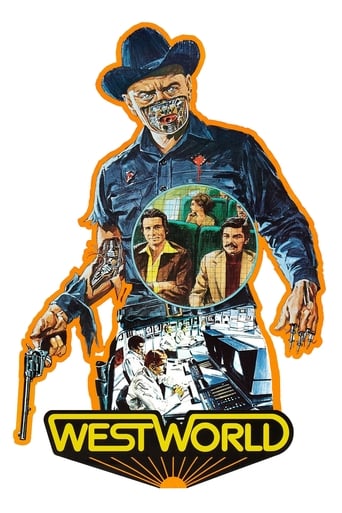
Westworld
1973 · Film · 89 min
Part of Westworld Collection
Directed by Michael Crichton
AdventureScience FictionWestern
Delos is a futuristic amusement park that features themed worlds populated by human-like androids. After two patrons have a run-in with a menacing gunslinger in West World, the androids at Delos all begin to malfunction, causing havoc throughout the park.
9 positive4 negative1 mixed19 neutralfrom 33 commenters
Where to watch
No streaming data for this title.
43 comments on Hacker News
Ha! A couple decades ago I saw the original Westworld, spotted some assembly, and thought it looked like 6502/Apple II code, so I assumed that was “probably” it and thought I was a clever nerd. Now I check this list and discovered it wasn’t 6502, and then realized the 6502 (1975) didn’t exist at the time the movie was shot (1973). Reviewed some scenes just now on YouTube and I can see it doesn’t look like 6502 code at all. It does look like the assembly might be the code behind some of the animated displays that look like old screen savers that you see on the other monitors in the film, perhaps, based on a few comments & variables in the code. (For example: https://youtu.be/Luo3uEVOahw?t=2645)
Yeah, Star Wars more or less killed sci-fi as we had known it. I liked the weird Logan's Run, the depiction of class stratification in "Soylent Green", the banality of corporate control of "Rollerball".
The idea of a computer virus in the film "Westworld" was, to me at the time, something out of left field. (And speaking of Michael Crichton, "The Andromeda Strain" was "intelligent" sci-fi and we enjoyed it.)
"Mad Max", though it came after "Star Wars", drew inspiration from "A Boy and His Dog", "Deathrace 2000"…
A Golden Age for sure.
Reminds me of the quote in the original Westworld movie:
“ These are highly complicated pieces of equipment… almost as complicated as living organisms.
In some cases, they’ve been designed by other computers.
We don’t know exactly how they work.”
Now how did that work out ;-)
I punched in 1972 and there were some fantastic movies that year (The Godfather, Deliverance, Cabaret, Solaris, Jeremiah Johnson, Aguirre - the Wrath of God, The Last House on the Left, Silent Running, The Heartbreak Kid, Fat City, etc.).
Also tried 1973 — same (The Day of the Jackal, Soylent Green, Westworld, The Wicker Man, Papillon, American Graffiti, The Sting, Serpico, Mean Streets, High Plains Drifter, Don't Look Now, Badlands, The Long Goodbye, Jesus Christ Superstar, The Three Musketeers, Fantastic Planet, etc.).
I think they simply made better movies decades ago.
The counterpoint is, to be a really good next-token predictor, it has to have a model for the process which created those tokens. It's how they can fill in the gaps where prompts don't exist on the internet, e.g. nowhere on the internet does anyone ask:
ᛁ᛬ᚹᛟᚢᛚᛞ᛬ᛚᛁᚲᛖ᛬ᚨ᛬ᛃᚨᚹᚨᛊᚲᚱᛁᛈᛏ᛬ᚠᚢᚾᚲᛏᛁᛟᚾ᛬ᚹᚺᛁᚲᚺ᛬ᛈᚱᛁᚾᛏᛊ᛬ᛟᚢᛏ᛬ᚨ᛬ᛊᚺᛟᚱᛏ᛬ᛊᛏᛟᚱᚹᛁ᛬ᚨᛒᛟᚢᛏ᛬ᚨ᛬ᚺᛟᛒᛒᛁᛏ
Because asking that in this manner is a ridiculous combination of things to do. (A quick Google at time of writing says that even just ᛃᚨᚹᚨᛊᚲᚱᛁᛈᛏ doesn't appear on the internet before I wrote this).
And yet, ChatGPT understands what I wrote: https://chatgpt.com/share/f6979795-7ae6-4308-ad52-1f111560debf
(Custom Instructions, in case you're wondering why the response starts like that)
Fortunately for all of us, current models have quite a poor display of reason. But "low" is not "zero", they do display some signs of this.
Also fortunately for all of us, most of the things LLMs will read on the topic of "taking over the world" will be fiction, much of which will have some plucky heroine or hero who defeats the entity which took over the world, so even a really capable future model that's being asked to do this on purpose by a misanthrope… may deliberately keep failing due to that being part of their world model.
Un-fortunately, that's only a "may" not a "will", as people keep wanting models to solve problems rather than make up stories. Also unfortunately, this also affects someone who actually does want a nice easy to defeat fictional villain for e.g. an AI version of Disneyworld with the AI controlling these new humanoid robots, because that's basically the backstory behind the original Westworld film.
Vaguely unsettling that the thumbnail for first example prompt "A lone cowboy rides his horse across an open plain at beautiful sunset, soft light, warm colors" looks something like the pixelated vision of The Gunslinger android (Yul Brynner's character) from the 1973 version of Westworld.
See 1:11 in this video https://www.youtube.com/watch?v=MAvid5fzWnY
Incidentally that was one of the early uses of computer graphics in a movie, supposedly those short scenes took many hours to render and had to be done three times to achieve a colorized image.
Kind of this. That was one of the themes of the movie Westworld where the AI in the robots seemed magical until it was creepy.
I worry about the 'cheery intern' response becoming something of a punch line.
"Hey siri, launch the nuclear missiles to end the world."
"That's a GREAT idea, I'll get right on that! Is there anything else I can help you with?"
Kind of punch lines.
Will be interesting to see where that goes once you've got a good handle on capturing the part of speech that isn't "words" so much as it is inflection and delivery. I am interested in a speech model that can differentiate between "I would hate to have something happen to this store." as a compliment coming from a customer and as a threat coming from an extortionist.
... even if the tech materializes, is Westworld the thing you want to reference if you're arguing that AI replacing humans is a good thing? I think all incarnations of that book/film/show involve robots that (a) don't work as intended and (b) kill people (c) make humans behave badly.
It starts with AI generating a short scene. Maybe a transition scene. The public doesn't have to accept it if they don't know it's there.
It's interesting you mention Westworld, the first movie to use CGI. It was extremely primitive, 2D, and only for a few seconds. See now CGI in modern movies.
Even if progress halts at Sora's level (the absolute worst case scenario), I think it's good enough to replace some 1-5% of scenes (meaning 1-5% of animators' jobs are ticking down since last Thursday).
Really amazing. Direct link to the video: https://youtu.be/qAlpt_XYkXI
Only 18 x 18 pixels — wow. It reminded me of the pixelated vision from the point of view of the robots from the original Westworld (1973) movie (and to think they had to jump through all manner of hoops to create that effect). With about 3000 mice you could build a 1 megapixel camera.
Amazed at how well the interpolation filtering worked to improve the image legibility.
Also, this guy reverse engineering the chip, data protocol... This guy hacks.
It's not entirely useless - sure Peter Fonda can't act and neither can Blythe Danner but she sure is pretty to look at and does an adorable act with a pair of glasses. I mean, it's in the "so bad it's good" category of films where the original Westworld seems to take itself far too seriously considering the premise.
The sequel also has the classic lines:
"I smell heathen scum!"
"You smell yourself sir!"
As a kid from the seventies, Westworld was maybe my favorite movie. It was amazing. I recorded it from TV on VHS tape at some point and would watch and re-watch it. I don't remember everything but, as a kid, I loved the movie.
Westworld the series: just like others commented... Season 1 is a masterpiece.
It was great to enjoy the "same" plot in the movie as a kid and then as an adult with the series.
The moral of the movie and show are very different too. Like JP the moral of the movie Westworld is that it is hubris to try to control a complex system and eventually something will (and does) go wrong. The show is much more like Blade Runner with the robots being actually intelligent and like BR the moral is that it is wrong to enslave and give false memories to intelligent beings even if they aren't human.
Westworld is an amazing little movie for another reason for me: it worked so well on the tension arc during the whole movie from the first minute to the last it just keeps on cranking it up bit by bit. Those footsteps...
> and apparently they did it with practical effects rather than actually animating with a computer?
The same was (perhaps not suprisingly) true of the computer displays in Kubrik's 2001, apparently.
https://www.quora.com/Were-the-wireframe-models-on-the-screens-in-2001-A-Space-Odyssey-actual-CGI/answer/David-Mullich
https://twitter.com/2001archives/status/1010885260274352128 https://archive.ph/npCBf https://archive.org/details/AmericanCinematographerJune1968/page/n3/mode/2up
(Apparently more or less the first example of genuinely computer-generated or -manipulated graphics in a "real" live-action film or TV production was the Gunslinger's "Terminator-vision" from (the original, 1973) Westworld.)
I worked at iii in the late ‘70s, and my desk was in the cubicle next to the movie group’s. I loved looking over the divider to look at the latest pictures from Westworld (Yul Brinner with a photogrammetry grid) or Tron, or a teapot. Fun stuff.
Rule 34 being what it is, there is an adult version of Westworld called Sexworld (1978) and it's not too shabby, they threw enough budget and production values at it to make it interesting. It explores the theme of what happens when you get to live out your fantasies in some surprising ways. The movie can be found online in the usual places.
Also, the list left off Futureworld (1976) which is much better than Westworld and featured some CGI that was ground-breaking for the time.
Westworld is not underrated. It's a pretty bad movie as far as craft goes, but gets and deserves credit for being early in the genre. It had good ideas but they weren't developed well. Fortunately other movies, and the first season of the show, explored that much more effectively.
These are highly complicated
pieces of equipment...
...almost as complicated
as living organisms.
In some cases, they've been designed
by other computers.
We don't know exactly how they work.
- Westworld 1973
Fantastic movie and this quote seems so timely.
A lot of commentors here saying these are not underrated movies... They might not be if you were alive in the 70's. If you were not then there is an incredibly high chance you don't know of many/most of these. I'm a big sci fi fan and movie fan and I've HEARD of most of these but have only actually SEEN Westworld, Logans Run, and Soylent Green.
I'm 31 for context.
> The hands are often a tell-tale sign of the incompetence of an A.I. program.
Curiously prescient: it was the hands of the robots in the original film, Westworld (1973), that were a tell-tale sign that they were not living.
This is a thing in the original Westworld movie (1973). They couldn't get the hands right.
Gattaca, Moon, Gravity, Contact, Space Camp, Andromeda Strain, the original Westworld (1973), the first two Star Trek movies. The STTNG TV series, Another Earth (2011, PG-13), The Man from Earth.
Brazil, The man from Earth, Moon, The fountain, Ad Astra, Donnie Darko, Ender's Game, Edge of tomorrow, Solaris (the old one), Westworld (70s), Metropolis (the japanese anime), Dark Star (trippy, 70s, great end), Firefly series and Serenity movie, Attack the block, Fifth Element, planet of the apes (the old one), ex machina, children of men
ChatGPT's list is interesting, the data must skew more heavily towards old internet where culture was more America centric. The Matrix, The Matrix Reloaded, The Matrix Revolutions, Avatar, A.I. Artificial Intelligence, Westworld, Ex Machina were all very directly or moderately inspired by Ghost in the Shell 1995. Ghost in the Shell was likely inspired by the original Blade Runner. There might be others, but I am not as familiar with them. There are at least 5 films that seem to confuse inorganic AI with organic AI, almost like the model associated a larger class of aliens to AI because of specific strong relationships between AI technology and alien technology. I wonder to what degree it treats the word AI as being both artificial intelligence and intelligence that developed in artificially created life.
I asked ChatGPT. It gave me bunch. I got some I've never heard of. I think I'll look into them.
<ChatGPT>
list 50 interesting movies that explore AI.
The Matrix
Ex Machina
Blade Runner
The Terminator
I, Robot
The War of the Worlds
A.I. Artificial Intelligence
Transcendence
The Fifth Element
2001: A Space Odyssey
WarGames
Westworld
The Machine
Her
The Iron Giant
Automata
The Truman Show
The Prestige
The Martian
The Fly
The Bicentennial Man
Surrogates
The Day the Earth Stood Still
Limitless
Robocop
Electric Dreams
The Island
The Time Machine
The Circle
The Arrival
The Host
The Stepford Wives
The Brain that Wouldn't Die
Frankenstein
The Invisible Man
Metropolis
The Thing
Jurassic Park
Independence Day
Gravity
Artificial Intelligence: AI
Avatar
The Hitchhiker's Guide to the Galaxy
The Matrix Reloaded
The Matrix Revolutions
Inception
Interstellar
The Time Traveler's Wife
The Butterfly Effect
The Future.
</ChatGPT>
> How does content consumption work then?
simplified, there are two main branches:
- those who consume everything, kinda like maximizing the investment or "it makes me company"
- those who consume things that need to pass some kind filter
generated content would (maybe) reward the first group, but without some very good hit they will probably go back to downloading stuff, but not the second.
At least not yet and not in the foreseeable future.
There's a difference between computer aided content and computer generated.
Jurassic park wouldn't exist as it is without technology advancements, but the novel was already good.
Another example by Crichton is WestWorld. The original was written and directed by Crichton himself in 1973, the original movie is great, the second chapter is good, the tv-show is visually astonishing, but after 2 seasons, I stopped watching it. The material taken from the first two movies had ended and nothing really interesting have come out after from the writers (IMO).
Voyage au centre de la Terre (Journey to the Center of the Earth) is a great book from 1864 and I honestly prefer the movie from 1959 than the its latest 3D incarnation from 2008.
Not because older is better, but because the 1959 version is more centered around the story and it aged better.
Probably because Indiana Jones hadn't come out yet and the director didn't try to imitate it.
This sort of archaeology is great fun. I spent a huge amount of time figuring out what was happening on the screens in the first Westworld film (1973): https://www.youtube.com/watch?v=UzvbAm0y8YQ
The problem with your wager is that on a long enough timeline, the doomsayers are always right.
So saying anything OR societal collapse is going to evaluate to true.
There are any number of disasters, both terrestrial and cosmic, that can radically change the landscape of the Earth.
I also don't really find discussions about what's going to happen beyond our lifetime that interesting for the most part. Often, they're just fantastic wishing attached to some loose thread of logic.
The Island
Escape from New York
The Running Man
Akira
Strange Days
A Scanner Darkly
Back to the Future II
Blade Runner
2001: A Space Odyssey
2010: The Year We Make Contact
Death Race 2000
1984
Terminator 2: Judgment Day
Freejack
Westworld
Real Steel
Pacific Rim
12 Monkeys
The Abyss
Timecop
And a host of other films and books are set in futures that are now our past. And while some of these are fantasy designed to entertain, they all make assumptions about what would be possible by that time. And we have fallen woefully short of those predictions. So short, that "flying cars and meals in pill form" is a meme about such predictions.
Westworld, stuck in a theme park with a killer robot (the 1973 movie, I haven't seen the new show)
Gregory Benford's The Scarred Man supposedly has priority for a SF description of a computer virus (I haven't read it): http://www.gregorybenford.com/extra/the-scarred-man-returns/ . The original Westworld came between The Scarred Man and The Shockwave Rider. Pasting my earlier comment https://news.ycombinator.com/item?id=10095511 :
> This is a chance to bring up my favourite Westworld scene: https://www.youtube.com/watch?v=R_jW-C_G6Pk . As a depiction of computer worms causing industrial chaos this is pretty prescient, because it's from 1973, two years before The Shockwave Rider and predating all but the very first signs of self-replicating mischief in the real world or CS research https://en.wikipedia.org/wiki/Computer_virus#Historical_development . (It's clear that Crichton the doctor had an analogy to human disease and medicine in mind https://www.youtube.com/watch?v=W7Dq7vqpGCM .) But it's also a great example of how real life is stranger than science fiction (as William Gibson likes to discuss). In the 1973 future the Chief Supervisor of Delos suggests that the resort is being attacked by a software worm and his fellow engineers find the very concept hard to take seriously; in the present day they'd just groan and ask "do you think it's the Chinese [government]?"
> Also, the Gunslinger vision https://www.youtube.com/watch?v=5jCDQvNh85Y mentioned in the article isn't just the first use of CGI in a feature film, it's surely also a very early, for all I know maybe the first, attempt to show the "first-person view" Umwelt of an artificially intelligent robot.
If you liked the series you should definitely track down the original movie with Yul Brynner.
https://en.wikipedia.org/wiki/Westworld_(film)
I wasn’t as impressed by the remake, thought it was pretty obvious the writers ran out of source material after the first season. It’s one of those stories that would have worked as an episode of Black Mirror, and you could stretch it out to a movie format, but don’t think it lends itself multiple seasons of hour long episodes. Remember the 70s tv spinoff Beyond Westworld? Don’t feel bad if you don’t.
You youngsters!
It’s a Westworld reference. No, not the television show. The original 1973 Yul Brynner picture.
Among his 25+ fiction books plus screenplays, Crichton wrote just two books (Jurassic Park, The Lost World) and one screenplay (Westworld) about theme parks. Not sure how that's an obsession, especially he had to be talked into writing The Lost World by Steven Spielberg, who wanted source material for a sequel movie.
No. I was just busy being CTO of Cloudflare. I have research completed on about another 6 films/TV series and I'll get to them at some point. Some of those videos took a lot of work. Hours and hours of research.
For example, for Westworld [1] I had to track down original 1970s journal articles about the making of the film and manuals for long dead hardware. For The Terminator [2] I had to buy scanned copies of Nibble magazine and then track down the exact references to what's on screen.
All of the research in my videos is very carefully done and original and I make sure that what I am saying is accurate. That takes time. So a three minute video might be hours and hours of work even before writing the script, getting suitable screenshots and recording the video.
[1] https://www.youtube.com/watch?v=UzvbAm0y8YQ
[2] https://www.youtube.com/watch?v=YRnnjoiSV-U
Oh man, I loved Whiz Kids when it was on TV. I'm not specifically looking for bugs or 8 bit stuff just really spelunking into where the code came from. The Westworld one is very interesting because it's 1973 and Westworld was the first film with computer graphics in it... I finally figured out what's being shown.
Huh. Cool to see this get some space on the HN front page. I created the Tumblr https://moviecode.tumblr.com/ a few years ago and I've started this channel to go a little deeper into some of the examples. Hope people like it.
Next up: two episodes of Knight Rider, Westworld (1973) and Swordfish.
I agree with all of these but have to add some, because you are missing a lot of the classics.
- Alien (talk about classic Sci-Fi Horror)
- Westworld (watch the movie before the show. Trust me)
- 2001 A Space Odyssey
- The Thing (I've only seen the old one)
- Moon
- Children of Men
- 12 Monkeys
- Gattaca
- Blade Runner
- Dark City
- Akira (anime)
- Primer (my favourite time travel film)
- Interstellar
- Black Mirror
- Psycho-Pass (anime)
And of course everyone needs to watch - The Adventures of Buckaroo Banzai Across the 8th Dimension
This is a chance to bring up my favourite Westworld scene: https://www.youtube.com/watch?v=R_jW-C_G6Pk . As a depiction of computer worms causing industrial chaos this is pretty prescient, because it's from 1973, two years before The Shockwave Rider and predating all but the very first signs of self-replicating mischief in the real world or CS research https://en.wikipedia.org/wiki/Computer_virus#Historical_development . (It's clear that Crichton the doctor had an analogy to human disease and medicine in mind https://www.youtube.com/watch?v=W7Dq7vqpGCM .) But it's also a great example of how real life is stranger than science fiction (as William Gibson likes to discuss). In the 1973 future the Chief Supervisor of Delos suggests that the resort is being attacked by a software worm and his fellow engineers find the very concept hard to take seriously; in the present day they'd just groan and ask "do you think it's the Chinese [government]?"
Also, the Gunslinger vision https://www.youtube.com/watch?v=5jCDQvNh85Y mentioned in the article isn't just the first use of CGI in a feature film, it's surely also a very early, for all I know maybe the first, attempt to show the "first-person view" Umwelt of an artificially intelligent robot.
> It’s not difficult to imagine a future where a cohort of the male population — especially those who have trouble connecting with members of their preferred sex — sits at home many nights with the Oculus Rift strapped to their heads, living out their sexual fantasies in VR, having their psychology further shaped and distorted by the persistent absence of connection with real life people. Regardless, the future of porn is here, and it is fucking intense.
There's already a hit song about basically this. From 1979. https://www.youtube.com/watch?v=ZF4Z6smOrZw Also related: this film from 1973 https://en.wikipedia.org/wiki/Westworld .
I used one of those as an undergrad. It was really a programmable calculator. It was incredibly slow for an all-electronic device; square roots took seconds. You could write simple programs for it and get homework done, though.
It was beautiful. Olivetti had great industrial design in the 1960s and 1970s. Their typewriters and calculators were works of art, and you can often find them today in the collections of major modern art museums. Olivetti tried to get into computers, and even had a good-looking IBM PC clone. The nice design didn't help.
The Mathatron came out a year earlier, in 1963. (http://www.oldcalculatormuseum.com/math8-48mII.html) Unlike the Programma 101, the Mathatron had trig functions built-in. The Mathatron had enough compute power that they offered a remote-access shared programmable calculator with a phone modem. (http://www.amazon.com/Wright-Mathatron-Computer-Calculator-Memorabilia/dp/B0086U6EFG)
The shared-calculator approach reached its peak with the Control Data Remote Calculator. (http://www.oldcalculatormuseum.com/a-cdc-11-65.html) This was a scheme to have 2000 calculators share a CDC 6600 mainframe computer, an excellent supercomputer of the 1960s. It was not successful, and surplus units appeared in the movies Soylent Green, Westworld, and Marooned.
None of these were very powerful, but the alternative at the time was slide rules and trig tables.
> Yul Brynner out of Westworld
Dude, I saw that as little kid and it freaked me the hell out. Relentless bald man chased my nightmares for years.
Also, dude! I thought that movie too old / HN too young to remember that sci-fi golden age classic. Thanks for making my day. Although, I worry about bald bad ass chasing me tonight.