 Hacker Cinema
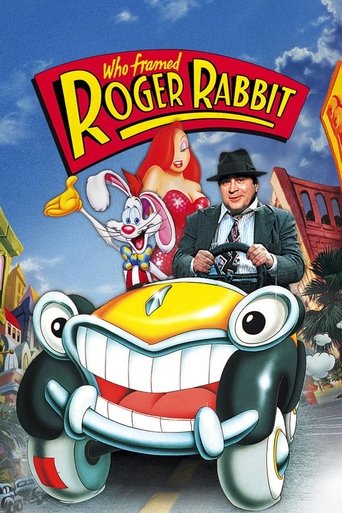
Who Framed Roger Rabbit
1988 · Film · 104 min
Directed by Robert Zemeckis
Toon star Roger is worried that his wife Jessica is playing pattycake with someone else, so the studio hires detective Eddie Valiant to snoop on her. But the stakes are quickly raised when Marvin Acme is found dead and Roger is the prime suspect.
7 positive2 negative27 neutralfrom 36 commenters
Where to watch
No streaming data for this title.
39 comments on Hacker News
> One could carefully calculate exactly how much a given document in the training set has influenced the LLM's weights involved in a particular response.
Not really.
Think of, for example, a movie like "who framed roger rabbit". It had intellectual property from all over. Had the studios not gotten the rights from each or any of those properties, they could have been sued for copyright infringement. It's not really a question of influence.
So yeah, while the LLM might have been trained on the kernel, it was also likely trained on code with commercial licenses. Conversely, because was trained on code with GPL licenses, that might mean commercial software with LLM contributions need to inherit the GPL to be legal (and a bunch of other licenses).
It's a big old quagmire and I think lawyers haven't caught up enough with how LLMs work to realize this.
> You can happily ignore Disney. You are elevating it to status it does not have to have.
I'm not eleveating Disney to anything. It already is at that level. It owns huge swaths of, well, everything spanning back decades.
For example there was a minor viral news that Winnie the Pooh finally entered public domain. Well, Disney owned it exclusively from 1953 to 2021. All of it, from print to video.
Pooh is just the most famous and advertised example. Since Disney owns most of movie and TV production in the States, through that alone they own rights to a huge number of written works. That's before we go into how many audio and visual media they own.
Disney isn't just Mickey Mouse and Marvel. There was an article on HN yesterday on how the author "Who Framed Roger Rabbit" finally got the rights back after 35 years: https://pluralistic.net/2025/11/18/im-not-bad/
Next time you watch a movie you like or even read a book you like there's a very high chance it's owned by Disney (or some other huge license holder).
Or if you can't find that movie or book you like anywhere? Same reason.
> But there is zero reason to create state monopoly around this.
I didn't say anything about this or imply anything of the kind.
Besides, copyright literally exists only due to state exercising its power.
Eddie Murphy talked about the three movies that he regretted turning down:
- Ghostbusters (he was filming Beverly Hills Cop at the same time)
- Rush Hour
- Who Framed Roger Rabbit
Does this takeback include the likeness of Roger and Jessica Rabbit from Disney's Who Framed Roger Rabbit? or just the content from the original 1981 novel? From what I can tell, the familiar cartoon movie designs are unique to the Disney movie and affiliated Disney shorts.
> AI slop acting
So if the technical challenges are solved and the AI acting is quite good, that changes your view of it?
> I just don't understand how this would work unless the entire movie was just CGI... if real actors are supposed to work with a fake thing like this.
Actors have worked alongside CGI characters for many decades, I remember watching Who Framed Roger Rabbit in the late 80s.
Who Framed Roger Rabbit is arguably a classic, so it would have to be pretty stellar to be as good as at a film level!
People interested in the live action / toon might also want to see the 1992 "Cool World."
It is an early Brad Pitt film, squeezed oddly between Thelma and Louise and A River Runs Through It.
Unrelated but fun item for those interested in Roger Rabbit:
There was a ton of crossover between WFRR and Back to the Future Part Two.
Both films from the top (Amblin Entertainment, Zemeckis, Alan Silvestri) down to some of the production crews IIUC.
So if you listen to the soundtracks of both films they have ringing similarities!
I see a lot of shade thrown at Kathleen Kennedy these days. Sure, some of the Star Wars movies under Disney haven't been great, but look at this resume. It's incredible. I'll save you the click and put some things she's been the executive producer of here: Poltergeist, E.T., IJ & Temple of Doom, Goonies, Back to the Future(I,II,III), Young Sherlock Holmes, The Money Pit, Empire of the Sun, Who Framed Roger Rabbit (jumping ahead to more recent stuff), Rogue One, Andor, Mandalorian, Ashoka, Skeleton Crew....
So yes, not everything has been a winner, but to say that having her name attached to something means it won't be good means that either A)you might not be informed about her resume or B)you have another reason you don't like her involvement with a project.
https://www.imdb.com/name/nm0005086/?ref_=nv_sr_srsg_1_tt_0_nm_8_in_0_q_kathleen%2520kenedy
That is not correct.
The railroads deliberately killed the passenger business because it has worse operating ratios and needs more capex. Investors and execs believed (and still believe) railroads are in long-term managed decline so capex and labor costs must be avoided wherever possible.
To give an example: Caltrain used to run all the way to LA. It was a profitable line the day Southern Pacific killed it. They used shills to buy up all the tickets for phantom riders then used the low passenger boarding numbers to justify to the US Railroad Commission that they should be allowed to close the route.
This strategy or variations of it were used all across the USA to deliberately kill profitable passenger service because it made the company financials look better: no need to buy or refurbish passenger cars nor pay stewards and conductors. Operating ratio looks better? Mission accomplished! Making less money doesn't make sense but profit is almost irrelevant if you think the whole business is in long-term decline. Better to kill anything that might require future capex or labor and instead optimize to get the most juice with the least squeeze of existing fruits.
Much like the shutdown of public transit across the USA. Who Framed Roger Rabbit is a semi-documentary for which the real-life villain General Motors was convicted of monopoly action in federal court! But the judge only fined them $1 because all the movers and shakers thought cars and airplanes were the future so who gives a crap about public transit, trains or the lot?
Passenger train service and public transit were systematically dismantled on purpose by elites who thought they knew better.
> his game was influenced by a video called "Give Yourself the Green Light," a pro-car propaganda film created by General Motors in 1954. You can see it here on YouTube, where it speaks in almost reverent tones about lane after lane of gleaming highways stretching as far as the eye can see
Wow. I knew that the plot of "Who Framed Roger Rabbit?" was inspired by GM's streetcar conspiracy [0], but apparently Judge Doom's passionate speech at the climax of the movie has also been inspired by something from GM?
[0] https://en.wikipedia.org/wiki/General_Motors_streetcar_conspiracy
I am really not following the point the author is trying to make. Fury Road clearly uses practical effects and real actors/sets throughout.
Yes they did a bunch of image composition and post-processing, but that doesn't change the point of practical effects. The actor was directing real people doing real stunts, and was finding ways of putting things into film. They aren't mutually exclusive.
Compare it to the average Marvel sequence now where glassy, unconvincing scenes are computer generated from scratch and it's night and day. It doesn't matter that both spent time on a computer when one actually starts with something real.
It would be like saying Who Framed Roger Rabbit didn't have practical effects because it was a cartoon.
That's the other thing to keep in mind, seeing things in perspective for the time; these movies were literally groundbreaking, like Wizard of Oz' transition to color film (compare with e.g. Avatar which popularised 3D film), Jurassic Park's use of CGI blended with models and live actors, the unfortunately one-off Who Framed Roger Rabbit, Toy Story's full CGI film that revolutionised animated filmmaking (arguably for the worst since it eventually came at the cost of "traditional" western cartoons).
It feels like it's getting harder to do something new.
> are you teaching the class or taking it?
I teach it, my background is located in my profile and my research focuses on CS education.
Scale and impact do matter, I wholeheartedly agree. However, I stand by my point that genAI is mirroring how humans learn - repetition of previously observed actions. As part of my dissertation, I argued that humans operate using 'templates', or previously established frameworks / systems. Even in higher cognitive tasks like problem solving, we rely on workflows that we were trained on previously. Soloway referred to problem solving as a mental set of "basic recurring plans" [1] and if you look at the old 1980s Usborne children's books, they required kids to retype code [2]. For creative tasks, depending on the actor's background, Method and Meisner both tell people to draw from previous experiences and observations to develop a character. This behavior is similar in many areas like music, dance, martial arts, cooking, language acquisition, etc.
I am not making an ethical argument that GenAI violating copyright is okay because that's what humans do. I'm arguing that GenAI mirrors how humans learn. We observe a behavior and attempt to recreate that behavior. The difference is that humans can extract a fraction of the behavior and utilize it as part of something larger while GenAI cannot to the degree humans do. I'm sure GenAI would struggle to recreate "Who Framed Roger Rabbit?" because of the two polar different visual elements of the film (cartoon and real life).
In regards to your "If you’re talking ethics, talk about impact" section, its a bit of a loaded question. One side of the conversation could state that GenAI is helping many people that do not have confidence in their creative ability to produce their ideas, while the other could state its making it harder for artists.
Yes, it absolutely is hurting artists and I fully support the recent writer's strike over AI concerns. But I do not believe that diminishes how the mathematical models used in GenAI mirror our own skill acquistion.
[1] https://ieeexplore.ieee.org/document/5010283
[2] https://usborne.com/us/books/computer-and-coding-books
Sexuality (not sex scenes) should not be a taboo trait for a character, or a person. It's still PG13 to be human. Looking at past films and TV shows, even those aimed at children, you can clearly see some characters being flirty, some characters falling in love or being very attracted to the obviously attractive counterpart. Who Framed Roger Rabbit is probably the most extreme example, but almost everywhere, from Looney Tunes to Terminator, it was OK to be attracted to a beautiful character.
The gist of this post is that this is mostly gone from MCU-like movies, and this makes sense because little kids want explosions and references instead of human connection. I tend to agree although there are still movies today that don't fall into this category.
Also movies such as Who Framed Roger Rabbit [1] and Space Jam [2].
[1] https://www.youtube.com/watch?v=KujzFdGu7gY
[2] https://www.youtube.com/watch?v=yS_muZsLBok
An EPIC scene from "The Congress" (2014): A short but entirely mesmerizing drug come-down, reality dissolving scene from the film "The Congress" (2014) based on the 1971 novel "The Futurological Congress" by Stanisław Lem. All rights to the makers.
https://www.youtube.com/watch?v=IMMI8HWhqEc
The comments on this youtube video are actually spot on and excellent!
https://news.ycombinator.com/item?id=8314622
DonHopkins on Sept 14, 2014 | parent | context | favorite | on: The Future According to Stanisław Lem
I just watched The Congress -- https://en.wikipedia.org/wiki/The_Congress_(2013_film) -- and WOW, it was excellent. Quite different from the book The Futurological Conference that it's based on: for example, it had cockroaches playing poker instead of sewer rats playing bridge. ;) But well worth watching for its unique take on the entertainment dictatorship. If you liked Who Framed Roger Rabbit, Looker, and Fear and Loathing in Las Vegas, you won't be disappointed! Something weird happens in the middle of the film, that's all I'll say...
>According to director Ari Folman, some elements of the film were inspired by the science fiction novel The Futurological Congress by Stanisław Lem in that similarly to Lem's Ijon Tichy, the actress is split between delusional and real mental states. Later, at the official website of the film, in an interview, Folman says that the idea to put Lem's work to film came to him during his film school. He describes how he reconsidered Lem's allegory of communist dictatorship into a more current setting, namely, the dictatorship in the entertainment business, and expresses his belief that he preserved the spirit of the book despite going far away from it.
It took longer than its length of two hours to watch, because I had to stop and rewind to replay and and freeze frames frequently. (Check out what's going on in the fish tank while she's saying "I wish you could see me animated, it's pretty sick. It's like a genius designer on a bad acid trip. Oh my god, I don't know, I look like a combination between Cinderella on heroin and an Egyptian queen on a bad hair day".)
I'm going to have to watch it many more times, because there were a lot of details to absorb -- time will tell if it's up there with Blade Runner as one of my favorite movies very loosely based on a great book.
https://culture.pl/en/article/ari-folman-on-the-genius-of-stanislaw-lem
https://news.ycombinator.com/item?id=15175516
DonHopkins on Sept 5, 2017 | parent | context | favorite | on: The sudden death and eternal life of Solaris
I really loved the movie The Congress, directed by Ari Folman, an adaptation of The Futurological Congress. Like Blade Runner's relationship to Do Androids Dream of Electric Sheep, it was a lot different than the book, but shares some deep ideas, and stands on its own as a great movie.
The scene in the USC ICT's motion capture studio was riveting, with Robin Wright playing a partly fictionalized version of herself, and Harvey Keitel playing her agent, baring their souls to the giant emotion capturing machine.
https://en.wikipedia.org/wiki/The_Congress_(2013_film)
https://www.youtube.com/watch?v=1rNSTizOsws
https://www.youtube.com/watch?v=pPAl5GwvdY8
https://news.ycombinator.com/item?id=30069100
DonHopkins 8 months ago | parent | prev | next [–]
Paul Debevec created the Light Stage to capture high dynamic range reflectance fields (including clean high resolution normal/bump/gloss/texture maps) of human faces. It uses hundreds polarized LED lights and cameras, plus lots of image processing, to separate the lighting effects of specular reflectance (glossy shine) from subsurface scattering (glowing skin), so you can reconstruct the 3D image and relight it under different conditions, environments, and viewing angles.
https://en.wikipedia.org/wiki/Paul_Debevec
https://www.pauldebevec.com/
https://en.wikipedia.org/wiki/Light_stage
"The Light Stage With Paul Debevec" - 360 Video (captured with JauntVR panoramic camera):
https://www.youtube.com/watch?v=xujwI4dimDA
Digitizing Photorealistic Humans Inside USC's Light Stage:
https://www.youtube.com/watch?v=c6QJT5CXl3o
Paul Debevec: Light Fields, Light Stages, and the Future of Virtual Production:
https://www.youtube.com/watch?v=bAe2dUJxe3w
A Light Stage was featured in the 2013 film "The Congress", which is a 2013 film adaptation of Stanislaw Lem's book, "The Futurological Congress", directed by Ari Folman:
https://en.wikipedia.org/wiki/The_Congress_(2013_film)
https://en.wikipedia.org/wiki/The_Futurological_Congress
I really love that movie and the book it was based on, which both raised some interesting issues: Like Blade Runner's relationship to Do Androids Dream of Electric Sheep, it was a lot different than the book, but shares some deep ideas, and stands on its own as a great movie.
The Congress Official Trailer (2014) Robin Wright, Jon Hamm HD:
https://www.youtube.com/watch?v=1rNSTizOsws
The scan scene in the Light Stage at USC ICT's motion capture studio was emotionally riveting and technically realistic, with Robin Wright playing a partially fictionalized version of herself, with Harvey Keitel playing her agent, baring her face and soul to the sparkling panoptic all encompassing emotion capturing machine.
The Congress (2013) Scan Scene:
https://www.youtube.com/watch?v=pPAl5GwvdY8
[...]
I've written about the film "The Congress", based on Stanislaw Lem's book "The Futurological Congress", starring Robin Wright and Harvey Keitel, and featuring Paul Debevoc's Light Stage, which explores the issues of actors selling their likeness so their twin can star in movies:
https://news.ycombinator.com/item?id=8314622
DonHopkins on Sept 14, 2014 | parent | context | favorite | on: The Future According to Stanisław Lem
I just watched The Congress -- https://en.wikipedia.org/wiki/The_Congress_(2013_film) -- and WOW, it was excellent. Quite different from the book The Futurological Conference that it's based on: for example, it had cockroaches playing poker instead of sewer rats playing bridge. ;) But well worth watching for its unique take on the entertainment dictatorship. If you liked Who Framed Roger Rabbit, Looker, and Fear and Loathing in Las Vegas, you won't be disappointed! Something weird happens in the middle of the film, that's all I'll say...
>According to director Ari Folman, some elements of the film were inspired by the science fiction novel The Futurological Congress by Stanisław Lem in that similarly to Lem's Ijon Tichy, the actress is split between delusional and real mental states. Later, at the official website of the film, in an interview, Folman says that the idea to put Lem's work to film came to him during his film school. He describes how he reconsidered Lem's allegory of communist dictatorship into a more current setting, namely, the dictatorship in the entertainment business, and expresses his belief that he preserved the spirit of the book despite going far away from it.
It took longer than its length of two hours to watch, because I had to stop and rewind to replay and and freeze frames frequently. (Check out what's going on in the fish tank while she's saying "I wish you could see me animated, it's pretty sick. It's like a genius designer on a bad acid trip. Oh my god, I don't know, I look like a combination between Cinderella on heroin and an Egyptian queen on a bad hair day".)
I'm going to have to watch it many more times, because there were a lot of details to absorb -- time will tell if it's up there with Blade Runner as one of my favorite movies very loosely based on a great book.
https://culture.pl/en/article/ari-folman-on-the-genius-of-stanislaw-lem
https://news.ycombinator.com/item?id=15175516
DonHopkins on Sept 5, 2017 | parent | context | favorite | on: The sudden death and eternal life of Solaris
I really loved the movie The Congress, directed by Ari Folman, an adaptation of The Futurological Congress. Like Blade Runner's relationship to Do Androids Dream of Electric Sheep, it was a lot different than the book, but shares some deep ideas, and stands on its own as a great movie.
The scene in the USC ICT's motion capture studio was riveting, with Robin Wright playing a partly fictionalized version of herself, and Harvey Keitel playing her agent, baring their souls to the giant emotion capturing machine.
https://en.wikipedia.org/wiki/The_Congress_(2013_film)
https://www.youtube.com/watch?v=1rNSTizOsws
https://www.youtube.com/watch?v=pPAl5GwvdY8
https://news.ycombinator.com/item?id=30069100
DonHopkins 8 months ago | parent | prev | next [–]
Paul Debevec created the Light Stage to capture high dynamic range reflectance fields (including clean high resolution normal/bump/gloss/texture maps) of human faces. It uses hundreds polarized LED lights and cameras, plus lots of image processing, to separate the lighting effects of specular reflectance (glossy shine) from subsurface scattering (glowing skin), so you can reconstruct the 3D image and relight it under different conditions, environments, and viewing angles.
https://en.wikipedia.org/wiki/Paul_Debevec
https://www.pauldebevec.com/
https://en.wikipedia.org/wiki/Light_stage
"The Light Stage With Paul Debevec" - 360 Video (captured with JauntVR panoramic camera):
https://www.youtube.com/watch?v=xujwI4dimDA
Digitizing Photorealistic Humans Inside USC's Light Stage:
https://www.youtube.com/watch?v=c6QJT5CXl3o
Paul Debevec: Light Fields, Light Stages, and the Future of Virtual Production:
https://www.youtube.com/watch?v=bAe2dUJxe3w
A Light Stage was featured in the 2013 film "The Congress", which is a 2013 film adaptation of Stanislaw Lem's book, "The Futurological Congress", directed by Ari Folman:
https://en.wikipedia.org/wiki/The_Congress_(2013_film)
https://en.wikipedia.org/wiki/The_Futurological_Congress
I really love that movie and the book it was based on, which both raised some interesting issues: Like Blade Runner's relationship to Do Androids Dream of Electric Sheep, it was a lot different than the book, but shares some deep ideas, and stands on its own as a great movie.
The Congress Official Trailer (2014) Robin Wright, Jon Hamm HD:
https://www.youtube.com/watch?v=1rNSTizOsws
The scan scene in the Light Stage at USC ICT's motion capture studio was emotionally riveting and technically realistic, with Robin Wright playing a partially fictionalized version of herself, with Harvey Keitel playing her agent, baring her face and soul to the sparkling panoptic all encompassing emotion capturing machine.
The Congress (2013) Scan Scene:
https://www.youtube.com/watch?v=pPAl5GwvdY8
"Rouen Revisited" is an earlier interactive kiosk project that Paul Debevec and Golan Levin created in 1996 at Interval Research Corporation, based on photogrammetric modeling techniques he developed at UCB:
https://www.youtube.com/watch?v=Ao3kf0YQ31c
https://acg.media.mit.edu/people/golan/rouen/
>Between 1892 and 1894, the French Impressionist Claude Monet produced nearly 30 oil paintings of the main façade of the Rouen Cathedral in Normandy. Fascinated by the play of light and atmosphere over the Gothic church, Monet systematically painted the cathedral at different times of day, from slightly different angles, and in varied weather conditions. Each painting, quickly executed, offers a glimpse into a narrow slice of time and mood. We are interested in widening these slices, extending and connecting the dots occupied by Monet's paintings in the multidimensional space of turn-of-the-century Rouen. In Rouen Revisited, we present an interactive kiosk in which users are invited to explore the façade of the Rouen Cathedral, as Monet might have painted it, from any angle, time of day, and degree of atmospheric haze. Users can contrast these re-rendered paintings with similar views synthesized from century-old archival photographs, as well as from recent photographs that reveal the scars of a century of weathering and war.
>Rouen Revisited is our homage to the hundredth anniversary of Monet's cathedral paintings. Like Monet's series, our installation is a constellation of impressions, a document of moments and percepts played out over space and time. In our homage, we extend the scope of Monet's study to where he could not go, bringing forth his object of fascination from a hundred feet in the air and across a hundred years of history.
Here's a paper about "Multifocus HDR VIS/NIR hyperspectral imaging and its application to works of art" that references his work, about how you can capture the 3D texture and hyperspectral reflectance field of artwork in a way that you could dynamically relight in different conditions and environments, interactively view in VR, use in high quality computer games and renderings, etc:
https://www.osapublishing.org/oe/fulltext.cfm?uri=oe-27-8-11323&id=408878
>Multifocus HDR VIS/NIR hyperspectral imaging and its application to works of art
>Abstract: This paper presents a complete framework for capturing and processing hyperspectral reflectance images of artworks in situ, using a hyperspectral line scanner. These capturing systems are commonly used in laboratory conditions synchronized with scanning stages specifically designed for planar surfaces. However, when the intended application domain does not allow for image capture in these controlled conditions, achieving useful spectral reflectance image data can be a very challenging task (due to uncontrolled illumination, high-dynamic range (HDR) conditions in the scene, and the influence of chromatic aberration on the image quality, among other factors). We show, for the first time, all the necessary steps in the image capturing and post-processing in order to obtain high-quality HDR-based reflectance in the visible and near infrared, directly from the data captured by using a hyperspectral line scanner coupled to a rotating tripod. Our results show that the proposed method outperforms the normal capturing process in terms of dynamic range, color and spectral accuracy. To demonstrate the potential interest of this processing strategy for on-site analysis of artworks, we applied it to the study of a vintage copy of the famous painting “Transfiguration” by Raphael, as well as a facsimile of “The Golden Haggadah” from the British Library of London. The second piece has been studied for the identification of highly reflective gold-foil covered areas.
[...]
>5. Conclusions and future work: In this study, a complete framework is introduced for the hyperspectral reflectance capture of a painting in situ, and under high dynamic range conditions. Both the high dynamic range and the focusing problem due to chromatic aberrations have been overcome by using multiple captures with different focus positions and exposure times. A final hyperspectral reflectance cube has been computed using weighting maps calculated for both sample and flat fields and the quality of this cube has been tested and compared with a spectral cube captured in the usual LDR and single focus way. Our results show that the proposed method outperforms the best low dynamic range capture acquired. The sharpness index, as well as the color and spectral metrics show that it is possible to achieve good quality spectral reflectance images using a hyperspectral scanner in non-controlled illumination conditions. Moreover, as an example application, highly reflective golden material has been segmented from a facsimile. Our results show that by applying the proposed framework for capturing and processing, those areas which saturate the sensor in the usual capturingway, can be correctly exposed and segmented using the HDR multifocus capture. In future research, a new version of this framework will be developed including piecewise cube stitching for blending different cubes captured in different regions of big paintings. This will allow us to get closer to the painting and retrieve higher spatial resolution data, whilst still maintaining the spectral resolution and performance achieved in this study. Moreover, we will use the spectral reflectance images computed in this study, together with X-ray fluorescence measurements for the non-invasive pigment identification, in order to help the dating of ancient paintings and other works of art.
https://en.wikipedia.org/wiki/Hyperspectral_imaging
> It's pure insanity that people ever drew, by hand, mountains of individual drawings each slightly changed and assembled them into compelling illusions to tell stories.
Traditional animation by itself is nothing short of insanity, convincingly blending live action and traditional animation takes it a step further, and then there's the "Bumping the Lamp"[0] scene in Who Framed Roger Rabbit.
The film as a whole refuses to keep the camera static to make things easy for the animators, which was unusual enough by itself, but then they went above and beyond — they casually bumped a pendant lamp and let it flail about. Every time it slows down, it gets bumped again. And they shaded and cast shadows for the damned rabbit for every single frame of that sequence. Madness.
0. https://www.youtube.com/watch?v=_EUPwsD64GI
The US _does_ have examples of government censorship in media, some more extreme than others. The fact you don't even think of it as censorship just shows how prevalent it is. It's not on the same level as the CCP, but it does exist!
For example, during the AIDs epidemic, Reagan used his social and political power to effectively ban the mention of that word on primetime television (remember, not only was he the president of the United States, he was also once the president of the Screen Actors Guild). Not even Will And Grace, a 1998 sitcom about a gay couple, was allowed to mention AIDs or HIV at all in its 11 season run!
He's also the reason movies in the 80s got away with so much more than they did even in the 90s, when cultural values themselves hadn't changed that much comparatively. the MPAA board was completely sized up, what was allowed to be said on TV was changed, and seemingly arbitrary rules put in place ("Fuck" can be said only once in a PG-13 movie or once-an-episode in certain network shows ONLY if it's non-sexual). This is why you have classic kids movies like Who Framed Roger Rabbit (1988, PG) that if they were re-released today would be either R or possibly not even allowed to be shown a wide release in theaters.
And you know, now we have the whole "banned books" things in (my home state of) Texas, Florida, etc, which almost exclusively censors books with deal with LGBTQ and race issues from even being available in a library to be checked out by a curious student on their own time (including, in a Dallas suburb and throughout Virginia, Anne Frank's Diary).
Also, RPO was Spielberg who hasn't worked at all with Disney since the weird conflux of things that was Who Framed Roger Rabbit? and so RPO is nothing like a Disney movie in any sense.
I guess we’re pushing the point with modern blockbusters (Marvel/Star Wars) where more of the movie is animated then not. And Avatar is inverse Who Framed Roger Rabbit at this point.
>but when he says a movie is good he has never been wrong
I have a crazy anecdote like that too. My severely (barely verbal, had his own barely intelligible language) step brother would watch like a grand total of two movies on repeat. So many times that for a decade afterward you could say a single line from either movie, and I could finish the script for you.
Those two movies? Who Framed Roger Rabbit and Willow.
After a couple of decades of a break from being forced to watch them I finally did, and they're exemplary.
WFRR is objectively incredible: https://medium.com/labjorfaap/who-framed-roger-rabbit-bumping-the-lamp-e72a5c22b354 as a production, and as work of art.
And Willow is one of the best fantasy epics ever made, IMHO.
He was maybe ~6 when WFRR came out on VHS could already spot a good movie. He's probably still mentally a poorly functioning 6 despite being 36 now, but there's a lot more to him than his obsession with Christmas. :)
I feel like in the years to come we're going to learn a lot from and benefit greatly from autistic folks. (I also might be one.)
Thing you haven't mentioned is that with no oversight, no transparency no counter, no clear your name, the tyranny which wants to ruin your life doesn't need to build a CSAM scanner to do it. A tip-off to the police, a falsified claim from an "eye witness", an "accident" putting your name on the wrong report to get the machinery rolling and it will, as you say, roll by itself. See what actually did happen to Sir Cliff Richard[1] where "a complaint to the police" got his house raided and his name dragged through the media and despite not being arrested, not being charged, case being dropped, him suing the media and winning, suing the police and winning and the media apologising, he says his reputation will never be completely cleared - and it probably never will be, and it didn't require any specific tech.
"The System" didn't need to wait patiently for a big tech company to build a complicated system with dastardly moustache-twirling weaknesses before it could affect Sir Cliff, anymore than Big Brother in 1984 needed to wait for Winston to be seen taking action on the telescreen in his house before the system crushed him. If "The System" wanted to accuse you, it could accuse your car of having been seen on a nearby road at the time, your likeness being seen on CCTV, and if you get rid of licence plate recognition scanners and CCTV then it would be "an anonymous witness" seeing you in the area at the time or "overhearing you discussing" something.
> "Most people don't understand how life destroying a false accusation is"
Citation needed? Because we were forced to read 1984 and To Kill a Mockingbird in school and I'm pretty sure a lot of other people were as well; we've seen cult TV series like The Prisoner and The Fugitive focusing on the lives of the trapped trying to escape "the system". Blockbuster films have been made about the power of "The State" chasing people such as Enemy of the State with Will Smith. Films in the pattern "wrongly accused must fight to clear his name" and "stalwart good guy fights the system gone bad" are practically genres on their own - The Fugitive as a film with Harrison Ford, Who Framed Roger Rabbit, Captain America: The Winter Soldier, The Shawshank Redemption, and specifically about someone falseley accused by a child, The Hunt with Mads Mikkelsen which is in the IMDB Top 250 films.
Are you also, for example, complaining about the system where doctors and social workers are mandatory reporters if they have any evidence or suspicion of children being abused? That's a "their word against yours" system which pervades the nation, has no oversight, has no objective criteria, no explanaiton of the workings of the brain behind it, relies on humans when we know for certain that there are doctors who make mistakes and errors of judgement and at least some who would look the other way for money.
At least with the tech company CSAM scanners we can potentially have a society wide discussion about how they work in detail, whether that's reasonable, who could and should oversee them and how, what kinds of data cloud companies are obliged to know about their customers and what is reasonable for them to not know, etc. But even in tech circles we can't actually have those discussions, most of the attempts to discuss the details of how it works are drowned out by people who haven't a clue what Apple announced, misunderstand massive parts of it, conflate two or three different systems, don't seem to understand that other tech companies already do this with much less careful design, and cry tyranny and blame China.
Hypothetically, iMessage or any chat system could be built end to end encrypted, any cloud file sync or file storage could be. One end of the spectrum is that they should be. If that's your position then "the system" will probably work around you, that's the "opt out of modern life" position of the "return to the woods" lifestyle. You can't unmake billions of cheap ubiquitous cameras, you can't unopen Pandora's box, and you probably can't stop people emotionally reacting strongly to topics of child protection. If your reaction to that is "not listening, no no no" then it doesn't seem likely to sway "the system" very much at all.
> "CSAM is a dastardly and effective way to establish a totalitarian rule by fear of life in jail, nothing more.
America has effectively incarcerated a lot of people into for-profit prisons without needing this. China has effectively added a lot of population control by rule of fear without needing this. You don't need a high-tech murder-detector to make people fear being thrown in jail for murder.
[1] https://en.wikipedia.org/wiki/Cliff_Richard#Property_search,_investigation_and_BBC_litigation
I am often pulled towards this comment for an article that asks, "Are Designers Crazy?" [0]
"""
No, designers aren't crazy. You just don't understand a very fundamental concept of design. It even applies to engineering. It's okay—many people have the same frustrations as you do.
But those who care about the details achieve truly high quality results overall. It extends to all areas of the design, not just to the parts you can't see.
In the movie "Who Framed Roger Rabbit," there's a scene in a dark room where Roger Rabbit (an animated character) flies across the room, knocks a hanging lamp around, and the lighting becomes so dynamic that all the shadows move around including the animated character's shadow. Here's the scene in question: http://www.youtube.com/watch?v=_EUPwsD64GI
This was such a small detail that it would have been forgivable if the animators had left it out entirely: if they had not moved the lamp, kept the shadow steady, no one would have really noticed the difference. It would have been 100 times easier to animate and the effect wouldn't really have been that different.
But they did it anyway. The term was later coined, and "bump the lamp" is used throughout Disney (and probably other organizations) to mean something akin to "go the extra mile"—but I see it as having a special significance to design.
You're right, most people won't notice. By that logic, you could cut corners a lot of other places too. You could be lax about button colors matching exactly, or per-pixel sharpness on the map and buttons. No one would probably notice.
But if you go for every detail like it was the most important detail, you have the possibility of reaching a level of design quality that is superlative, and some people will notice. Others will not notice directly, but will see that the piece exudes style and quality subconsciously, due to the attention to small details. If you carry this into other areas of your work—programming, customer service, market strategy, marketing, and more—then you have a chance to create something of true quality.
If you don't pay attention to detail at that level, well, you might have the chance to actually get something done. Yes, it's a balance, like everything else. But you have to know that it won't be quite as good, and understand that yes, you are sacrificing something, even if you can't see it.
"""
In the same way, Stripe creates a superlative product and branding site, and in the mere act of doing so, it attracts those who also wish to create such products. It may seem high effort for those who may not seem to care, but for those who do, they immediately understand the value.
[0] https://news.ycombinator.com/item?id=5002262
Wreck-it-Ralph kind of cheated, but... how many different styles of 3D animation did you see in that film alone? (Wreck-it-Ralph is sort of the "Who Framed Roger Rabbit" of this generation, so it makes sense. No one will say that Betty Boop has a similar drawing style to Woody Woodpecker, even if both are characters in "Who Framed Roger Rabbit")
------
Thanos (Avengers: Endgame), Shrek, Davy Jones (Pirates of the Caribbean), the Na'vi (Avatar), Spiderman (Into the Spiderverse), and the recreation of Princess Leia (Rogue One) are all 3d animation. Would you argue that they're the same style?
This one about whether designers are crazy because the OP didn't understand why designers would care about minute details in their work. It is because attention to detail creates superlative work. It is similar to why premature optimization isn't necessarily bad for engineers.
https://news.ycombinator.com/item?id=5002262
"""
No, designers aren't crazy. You just don't understand a very fundamental concept of design. It even applies to engineering. It's okay—many people have the same frustrations as you do.
But those who care about the details achieve truly high quality results overall. It extends to all areas of the design, not just to the parts you can't see.
In the movie "Who Framed Roger Rabbit," there's a scene in a dark room where Roger Rabbit (an animated character) flies across the room, knocks a hanging lamp around, and the lighting becomes so dynamic that all the shadows move around including the animated character's shadow. Here's the scene in question: http://www.youtube.com/watch?v=_EUPwsD64GI
This was such a small detail that it would have been forgivable if the animators had left it out entirely: if they had not moved the lamp, kept the shadow steady, no one would have really noticed the difference. It would have been 100 times easier to animate and the effect wouldn't really have been that different.
But they did it anyway. The term was later coined, and "bump the lamp" is used throughout Disney (and probably other organizations) to mean something akin to "go the extra mile"—but I see it as having a special significance to design.
You're right, most people won't notice. By that logic, you could cut corners a lot of other places too. You could be lax about button colors matching exactly, or per-pixel sharpness on the map and buttons. No one would probably notice.
But if you go for every detail like it was the most important detail, you have the possibility of reaching a level of design quality that is superlative, and some people will notice. Others will not notice directly, but will see that the piece exudes style and quality subconsciously, due to the attention to small details. If you carry this into other areas of your work—programming, customer service, market strategy, marketing, and more—then you have a chance to create something of true quality.
If you don't pay attention to detail at that level, well, you might have the chance to actually get something done. Yes, it's a balance, like everything else. But you have to know that it won't be quite as good, and understand that yes, you are sacrificing something, even if you can't see it.
"""
Your story about feeling obliged to watch a bad cartoon over and over again resonates with me.
I was a film projectionist at a single-screen theater in Harvard Square in 1988, the summer "Who Framed Roger Rabbit" was showing. I saw the opening scene (the baby cartoon with Roger subjected to various painful acts) several hundred times.
The first time I thought it was funny. After 10 times it was boring. After 30 it made me very uncomfortable. I probably saw it about 250 times in all.
A few months ago I started to watch it with my son (it was on Netflix or Amazon), but I had to stop a few minutes in. The feeling of mild revulsion was just too much.
ETA: Makes me appreciate the patience of editors and other film professionals who are probably sick of seeing certain scenes by the time it hits theaters or the small screen.
I mean this is covered in the movie "Who Framed Roger Rabbit". GM also tried to destroy Toon Town.
Seeing some guy get folded in half in Disney's movie The Rocketeer was traumatic enough for me, and I was ~13. Not to mention melting the shoe in Who Framed Roger Rabbit.
It's hard to tell what will or won't deeply affect a child and even harder to gauge the specific ages where things might become appropriate. It's really per-child, and no matter how well a parent does gauging that, mistakes will be made.
There's no way this can be automated, as it's never going to be one-size-fits-all. The combination of generally sanitized media channel + parental supervision will (and should) endure, IMO.
The tram in LA didn't die, it was murdered.
Who Framed Roger Rabbit: Judge Doom's Plot to Destroy Public Transit [1]
My favorite thing about this movie is that the villain's evil plot is to bring about car culture in America. Watch and giggle/shiver. Read about Pacific City Lines, National City Lines, and the Great American Streetcar Scandal if you'd like to know more about its historical parallels.
General Motors streetcar conspiracy [2]
The 1988 film Who Framed Roger Rabbit, vectors the folktale about the decline of the Pacific Electric. Scriptwriters Jeffrey Price and Peter S. Seaman explained: "the Red Car plot, suburb expansion, urban and political corruption really did happen. In Los Angeles, during the 1940s, car and tire companies teamed up against the Pacific Electric Railway system and bought them out of business. Where the freeway runs in Los Angeles is where the Red Car used to be." The story was told again in 1996 in Taken for a Ride and then in 2004 in the film The End of Suburbia.
[1] https://www.youtube.com/watch?v=OquSczOMkO4
[2] https://en.wikipedia.org/wiki/General_Motors_streetcar_conspiracy
Plinkett is saying that my brain noticed that the animation correctly accounted for the movement of the lamp. That is not an argument against not bumping the lamp in the first place.
I'll bet dollars to donuts that Howard the Duck, Waterworld, and every other big budget bomb you can think of has a lamp bumping in it. They were wastes of money in those movies, and if those movies had been successful like Who Framed Roger Rabbit, they still would have been wastes of money.
A great video on Who Framed Roger Rabbit and bumping the lamp is kaptainkristian's: https://www.youtube.com/watch?v=RWtt3Tmnij4 . Seeing this just the other day inspired me to re-watch the film last night, and I wasn't disappointed: it holds up well.
I've just (re)watched with my sons the movie "Who Framed Roger Rabbit?".
SPOILER ALERT!!!!!!!!!!!!!!!
In the end, the detective said the villain must be a cartoon, because just a cartoon would have the stupid idea of replacing the efficient and cheap L.A. public transport system, and to build highways.
Happens all the time, for lots of different reasons. The first time I noticed it was in "Who Framed Roger Rabbit?" The trailer had a show where Bob Hoskins was wearing a cartoon pig mask, but it wasn't in the movie. The sequence was cut to improve the pacing: https://www.youtube.com/watch?v=OJfateiaasY
I just watched The Congress -- https://en.wikipedia.org/wiki/The_Congress_(2013_film) -- and WOW, it was excellent. Quite different from the book The Futurological Conference that it's based on: for example, it had cockroaches playing poker instead of sewer rats playing bridge. ;) But well worth watching for its unique take on the entertainment dictatorship. If you liked Who Framed Roger Rabbit, Looker, and Fear and Loathing in Las Vegas, you won't be disappointed! Something weird happens in the middle of the film, that's all I'll say...
>According to director Ari Folman, some elements of the film were inspired by the science fiction novel The Futurological Congress by Stanisław Lem in that similarly to Lem's Ijon Tichy, the actress is split between delusional and real mental states. Later, at the official website of the film, in an interview, Folman says that the idea to put Lem's work to film came to him during his film school. He describes how he reconsidered Lem's allegory of communist dictatorship into a more current setting, namely, the dictatorship in the entertainment business, and expresses his belief that he preserved the spirit of the book despite going far away from it.
It took longer than its length of two hours to watch, because I had to stop and rewind to replay and and freeze frames frequently. (Check out what's going on in the fish tank while she's saying "I wish you could see me animated, it's pretty sick. It's like a genius designer on a bad acid trip. Oh my god, I don't know, I look like a combination between Cinderella on heroin and an Egyptian queen on a bad hair day".)
I'm going to have to watch it many more times, because there were a lot of details to absorb -- time will tell if it's up there with Blade Runner as one of my favorite movies very loosely based on a great book.
http://culture.pl/en/article/ari-folman-on-the-genius-of-stanislaw-lem
> It was also one of the first movies to combine significant CGI with real-world interaction.
The was no CGI in Who Framed Roger Rabbit. It was all traditional animation, hand-drawn on celluloid sheets.
It wouldn't be until Terminator 2 and Jurassic Park that CGI really broke through as a technique that could be used in conjunction with live-action.
There is a delightful movie called Who Framed Roger Rabbit in which the villain is attempting just this: buying trolley lines to build "highways, as far as the eye can see".
http://www.imdb.com/title/tt0096438/
No, designers aren't crazy. You just don't understand a very fundamental concept of design. It even applies to engineering. It's okay—many people have the same frustrations as you do.
But those who care about the details achieve truly high quality results overall. It extends to all areas of the design, not just to the parts you can't see.
In the movie "Who Framed Roger Rabbit," there's a scene in a dark room where Roger Rabbit (an animated character) flies across the room, knocks a hanging lamp around, and the lighting becomes so dynamic that all the shadows move around including the animated character's shadow. Here's the scene in question: http://www.youtube.com/watch?v=_EUPwsD64GI
This was such a small detail that it would have been forgivable if the animators had left it out entirely: if they had not moved the lamp, kept the shadow steady, no one would have really noticed the difference. It would have been 100 times easier to animate and the effect wouldn't really have been that different.
But they did it anyway. The term was later coined, and "bump the lamp" is used throughout Disney (and probably other organizations) to mean something akin to "go the extra mile"—but I see it as having a special significance to design.
You're right, most people won't notice. By that logic, you could cut corners a lot of other places too. You could be lax about button colors matching exactly, or per-pixel sharpness on the map and buttons. No one would probably notice.
But if you go for every detail like it was the most important detail, you have the possibility of reaching a level of design quality that is superlative, and some people will notice. Others will not notice directly, but will see that the piece exudes style and quality subconsciously, due to the attention to small details. If you carry this into other areas of your work—programming, customer service, market strategy, marketing, and more—then you have a chance to create something of true quality.
If you don't pay attention to detail at that level, well, you might have the chance to actually get something done. Yes, it's a balance, like everything else. But you have to know that it won't be quite as good, and understand that yes, you are sacrificing something, even if you can't see it.
It still amazes me that analysts fail to see Pixar films for what they really are: Aimed at everyone, not just children. This is why the franchise aspect of the films is a little harder.
Here is the basic recipe for a Pixar film. The main character has to "grow" throughout the film while facing what are essentially adult problems - using animation as the vehicle for story telling.
Compare that to Dreamworks - who's style is heavily influenced by Jeffrey Katzenberg who is responsible for Disney's great run of films in the late 80's and early 90's (Who Framed Roger Rabbit, The Little Mermaid, The Lion King, Beauty and the Beast & Aladdin) before leaving in 94 and founding Dreamworks with Spielberg.
Dreamworks animations are aimed directly at children because of this influence, the stories are often not as complex and the jokes are simpler. They're geared for pumping out 2 films a year instead of just the 1 and are heavily backed up by merchandising. Their marketing teams absolutely blitz the public and this is probably why Shrek 2 is still the highest grossing animated film of all time, even though several films from both studios are better.
Now if the NY Times really wants to make an article about Pixar's future success, they should perhaps write about how the next few films after UP won't be directed by Pixar's main stable of directors (Stanton, Lasseter, Bird and Docter) instead seeing a generational change with new directors handling old franchises.
As Brad Bird of Pixar said during their documentary The Pixar Story
"This is an anomaly, this place is really freakishly alone in this hit after hit aspect"
It's not really a case of if they will make a film that fails, it's when - I personally hope that it never happens, but I'm not that naive.
Don't forget:
The plot of the 1988 movie Who Framed Roger Rabbit is loosely modeled on the conspiracy to dismantle the streetcar lines in Los Angeles.