 Hacker Cinema
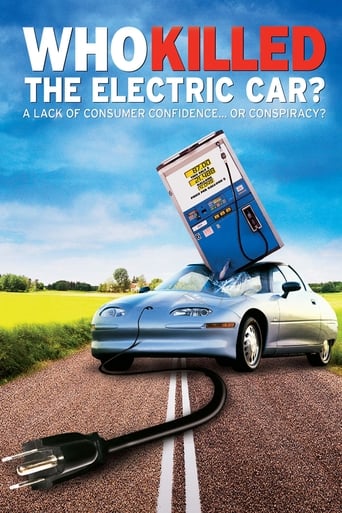
Who Killed the Electric Car?
2006 · Film · documentary · 92 min
Part of Electric Car Collection
Directed by Chris Paine
In 1996, electric cars began to appear on roads all over California. They were quiet and fast, produced no exhaust, and ran without gasoline... Ten years later, these cars were destroyed.
19 positive1 negative16 neutralfrom 36 commenters
Where to watch
No streaming data for this title.
38 comments on Hacker News
> That decision, and the fury it sparked among EV1 lessees who fought to keep their cars, is the subject of Chris Paine’s 2006 documentary “Who Killed the Electric Car?” It is essential viewing for anyone interested in how the auto industry, oil companies, regulators, and consumer culture shaped the trajectory of electric transportation. Paine does not let anyone off the hook easily, and the film holds up as both a piece of investigative storytelling and a snapshot of an industry at a crossroads.
The conspiracy about GM killing the EV1 is very hyperbolic and the documentary is mostly a fantasy.
Carmakers releasing test cars to markets and then destroying them was a common practice - GM did the same with their hydrogen cars, the famous turbine engine cars, and even large scale prototypes like the Aerovette. In many cases they were only able to circumvent safety/testing regulation because these were not registerable cars.
Even if the market tests were successful, the only placed they planned to sell them was California as a compliance car for CARB. No matter how you try to spin it, a lead-acid battery powered car was not ever going to be the car of the future.
https://en.wikipedia.org/wiki/Who_Killed_the_Electric_Car%3F
https://www.youtube.com/watch?v=uep5zOrsAEA
Incredible documentary about the politics around EV's made before Tesla's became mainstream.
People were demanding and protesting asking GM to let time buy their EV'1 after the lease, but they destroyed all the cars. So did Toyota for the EV RAV4's.
https://en.wikipedia.org/wiki/Who_Killed_the_Electric_Car%3F
> Mobil and other oil companies are also shown to be advertising directly against electric cars in national publications, [...] Chevron bought patents and a controlling interest in Ovonics, the advanced battery company featured in the film, ostensibly to prevent modern NiMH batteries from being used in non-hybrid electric cars.
> car makers engaged in both positive and negative marketing of the electric car [...] In later days it ran "award-winning" doomsday-style advertising featuring the EV1 and ran customer surveys which emphasized drawbacks to electronic vehicle technology
> the federal government of the United States under the Presidency of George W. Bush joined the auto-industry suit against California in 2002. This pushed California to abandon its ZEV mandate regulation.
> A portion of the film details GM's efforts to demonstrate to California that there was no consumer demand for their product, and then to take back every EV1 and destroy them. A few were disabled and given to museums and universities, but almost all were found to have been crushed. GM never responded to the EV drivers' offer to pay the residual lease value; $1.9 million was offered for the remaining 78 cars in Burbank, California before they were crushed.
Before Tesla came along there were a small number of EVs but they were all pretty bad because their only purpose was to serve as “compliance cars” in states like California so automakers could sell more gas cars. (See the documentary Who Killed the Electric Car? for more on this.)
So Tesla deserves credit for building the first electric cars that people actually wanted to buy. They also deserve credit for building the largest and most reliable charging network - a key factor in making electric car ownership more feasible.
But they’ve made a lot of poor decisions recently and all the money and power went to Elon’s head. I think it was beneficial to the world for Tesla to exist and do that important work early on, and now it’s beneficial to the world for the company to die.
See perhaps the 2006 movie:
> Who Killed the Electric Car? is a 2006 American documentary film directed by Chris Paine that explores the creation, limited commercialization and subsequent destruction of the battery electric vehicle in the United States, specifically the General Motors EV1 of the mid-1990s. The film explores the roles of automobile manufacturers, the oil industry, the federal government of the United States, the California government, batteries, hydrogen vehicles and consumers in limiting the development and adoption of this technology.
* https://en.wikipedia.org/wiki/Who_Killed_the_Electric_Car%3F
And from the same director in 2011:
* https://en.wikipedia.org/wiki/Revenge_of_the_Electric_Car
See perhaps 2006 movie:
> Who Killed the Electric Car? is a 2006 American documentary film directed by Chris Paine that explores the creation, limited commercialization and subsequent destruction of the battery electric vehicle in the United States, specifically the General Motors EV1 of the mid-1990s. The film explores the roles of automobile manufacturers, the oil industry, the federal government of the United States, the California government, batteries, hydrogen vehicles and consumers in limiting the development and adoption of this technology.
* https://en.wikipedia.org/wiki/Who_Killed_the_Electric_Car%3F
And from the same director in 2011:
* https://en.wikipedia.org/wiki/Revenge_of_the_Electric_Car
Well, I think the general counter for a "cure-for-cancer" is the same as electric cars.
The Big4 never wanted EVs with there being a documentary [1] on how much they hated them. However, a company that isn't the big-4 has no issue with creating one.
Same with a cure-for-cancer. Sure, maybe Pfizer doesn't want to cannabalize their market but anybody that isn't Pfizer would love to.
I don't think IT-security fits into the same model though. There's a lot of money in theft so you need a lot of money into anti-theft to counter-act it.
Poverty imo fits the IT-security model more-so than cure-for-cancer. Each dollar you don't pay somebody in Madagascar to farm vanilla is a dollar you get to keep.
[1]: https://en.wikipedia.org/wiki/Who_Killed_the_Electric_Car%3F
> I'm more interested in whether Altman, and Musk, and Zuckerberg, and Bezos, and Ellison, and all the other amoral wealth-hoarders, are finally becoming obvious enough now that people might finally begin to see them as the yucky byproducts of a yucky system.
One of them doesn't belong on the list. Fossil fuel and legacy automobile companies killed EVs[1][2], bought all the battery patents and made sure there were no EVs made. Until Tesla made them possible, by building gigafactories so battery is not a constraint and supercharger network.
Why is the list restricted to only a few tech billionaires? Where are the fossil fuel billionaires who actively do harm? 10 million people die every year from air pollution, and fossil fuels are only possible because of $7 trillion subsidies/year.
Why isn't Gates on the list?[3] Koch brothers? Hundreds of middle-eastern fossil fuel princes? Warren Buffett who owns Coke (39 grams of sugar/can) fast food chains, cookies, candy, ice cream companies, fossil fuel companies, utilities that actively lobby against solar/wind.
Dan and Farris Wilks, Oil billionaires who are making policy changes on many issues? [4][5][6]
Where are the financial billionaires, real estate, healthcare, insurance, fast fashion, chemicals?
[1] A portion of the film details GM's efforts to demonstrate to California that there was no consumer demand for their product, and then to take back every EV1 and destroy them.: https://en.wikipedia.org/wiki/Who_Killed_the_Electric_Car%3F
[2] https://en.wikipedia.org/wiki/Patent_encumbrance_of_large_automotive_NiMH_batteries
[3] That's why Gates personally intervened to scuttle the Oxford team's plan to make its publicly funded vaccine research free to all, coercing them into doing an exclusive license deal with Astrazeneca: https://pluralistic.net/2021/05/21/wait-your-turn/
[4] https://www.facingsouth.org/2019/04/institute-index-texas-fracking-tycoon-funding-anti-abortion-extremism
[5] https://www.cnn.com/2022/07/24/politics/texas-far-right-politics-invs/index.html
[6] https://www.tpr.org/news/2024-02-25/three-west-texas-billionaires-are-pushing-texas-to-the-far-right
There is an interesting documentary about the stalled evolution of electric vehicles: Who Killed the Electric Car? [1] AFAIK, there is nowhere to stream it (at least in Europe), but you can rent or buy it online.
It's tempting to blame the industry, and endeavor into conspiracy theories, but even without doing so, it is baffling how modern charging infrastructure and policies (again, at least in Europe) are not progressing very well. Apart from the Tesla supercharger network, all other charger networks still require you to have a dozen accounts, different payment methods, sometimes mandatory "balance" accounts, RFID tags, etc.
1. https://www.imdb.com/title/tt0489037/
They could’ve started by not killing the EV1 back in the ‘00s. Would be light years ahead by now had they not given up on it.
https://en.m.wikipedia.org/wiki/Who_Killed_the_Electric_Car%3F
When I saw this documentary about 15 years ago it was pretty depressing. Now electric cars are everywhere and we can laugh at GM’s mismanagement.
The economic anarchy of capitalist society as it exists today is, in my opinion, the real source of the evil. We see before us a huge community of producers the members of which are unceasingly striving to deprive each other of the fruits of their collective labor—not by force, but on the whole in faithful compliance with legally established rules. In this respect, it is important to realize that the means of production—that is to say, the entire productive capacity that is needed for producing consumer goods as well as additional capital goods—may legally be, and for the most part are, the private property of individuals.
This resonates for me in middle age, after rarely having more than $2000 free and clear despite a lifetime of hard work. I've lived movies like Pursuit of Happyness and In Time, but without the financial epifany. All I do is work.
If capitalism worked, then prices would get lower over time with increased per capita productivity. We got a brief taste of that for the last time in the late 1990s, but most people stopped getting raises after that, and now duopolies provide nearly all name-brand goods and services. As it stands now, it's pretty much over. I don't think anyone seriously thinks that homes, vehicles, food etc will ever decrease in price now.
We can generally agree on the causes being stuff like regulatory capture and not enforcing antitrust laws. But those aren't root causes. The real problem is power imbalance from wealth inequality. To address that directly, we could either provide more wealth to the working class via UBI or redistribute wealth from the owner class via taxation. Note that neither of those have been tried at a national level in anyone under 50's lifetime.
Which means that the national debt was planned. It represents the share of wealth transferred to the owner class, skimmed from the working class as a result of trickle-down economics.
The next 2-3 US elections are going to be really important though. Young people have a chance to democratically vote to substantially raise taxes on corporations and billionaires. This won't be so much anti-capitalist as trans-capitalist.
I say that because socialism and communism require a roughly 6 hour workday to provide enough labor for the system. But the median value of labor will never rise again, because of AI and automation. Meaning that work hours will increase as pay decreases. Which is self-evidently unsustainable. Which means that the traditional alternatives to capitalism will most likely not be viable, but will still be used as straw men against the political left by politicians to lure in low-information voters.
I believe that we passed the tipping point around the time of Bush v. Gore in 2000, when we were set to widely roll out renewable energy and electric cars, but chose not to (see Who Killed the Electric Car). Instead we invaded the Middle East at the behest of the owner class to protect established industries around fossil fuels. We're only achieving some semblance of self-sufficiency 20 years later despite capitalism, not because of it.
Admittedly, I don't have much faith in the political system to correct itself. So I sympathize with the political right's sentiment that government bad. But the government is We the People in the US, so that's like saying people bad. Which is othering and division. As we grapple with the actual truth of our struggle and stop blaming victims for our collective plight, I have faith that we'll solve these problems, perhaps summarily. Until then, I'm manifesting a more independent/off-grid lifestyle in an attempt to provide resources that capitalism has so far failed to provide me beyond a subsistence level.
The proof of everything I'm saying is in the failure of any billionaire to challenge the status quo in a material way. They claim that their money is tied up in stock and they pay themselves a trifle. Yet we watched as Musk made $44 billion liquid to buy Twitter. Their FUD should be a rudder for the rest of us towards real answers and strategy.
Now I go back to my toil, hoping to win the internet lottery but knowing deep down that real work is in service to others. My separation from the real contributions to society that I would have made by following my heart is like being poor twice.
I’m quite fond of the EV1 - in some ways, it was the predecessor to the Chevy Volt (which also was unfortunately discontinued). The Volt powertrain wouldn’t have been possible without GM’s innovation, which also inspired many other manufacturers to invest in R&D on EV and hybrid technologies.
There’s a documentary called “Who Killed the Electric Car” (2006) which is fantastic. EV1, you have a special place in our hearts!
https://en.wikipedia.org/wiki/Who_Killed_the_Electric_Car%3F
I think it is quite similar to EVs. No established player in the auto industry had any interest in developing them because it was seen as a risk to established business and partnerships. The EV1 was a great early start from 1996 that was literally crushed (see the documentary, Who Killed The Electric Car). Dealerships fight against EVs to this day. Wyoming just called for EV sales to be banned by 2035. Without Tesla sending the whole industry into a panic I just don’t think there would be any practical cars on the market today.
Early history of artificial intelligence research, maybe MIT CSAIL specifically? https://projects.csail.mit.edu/films/aifilms/AIFilms.html
There were a few decades of research into symbolic AI and expert systems - "Good Old-Fashioned Artificial Intelligence" before the modern deep-learning revolution. Lots of promise, interesting research, and very cool (and esoteric) hardware came out of it, which never found wide application outside the lab. You could pitch it as a sort of analogue to Who Killed the Electric Car? (2006).
>Either way it's just surprising they didn't help design the standard and work to make it better.
Oh so you have a good deal to learn. You should start with
- Who Killed the Electric Car? (2006 film)
- Revenge of the Electric Car (2011 follow up)
Let me tell you that when Tesla entered the market as a serious player, the rest of the industry did not intend to let Tesla have their say nor to collaborate with them. Tesla had to make their own (better) design and find their way through. They could not wait for standardization when the rest of the industry was fighting tooth and nails against the transition to EV.
They did do it 20 years ago. Actually, 25 years ago. GM's EV1 was a car well ahead of its time, even with a decent range, but then it mysteriously disappeared.
This is covered in the documentary "Who Killed the Electric Car" (on Amazon).
So it's not like Elon Musk paved the way for electric cars - he just faced fewer headwinds. And let us not forget, he did not actually found Tesla, he acquired it. The company also barely made it if not for government help at the time of dire need.
Elon Musk, being the storyteller that he is, said once that he was drinking alone at a table in a club (who does that?) all sad due to the state of affairs at Tesla. It did not look like the company was going to make it. Then he was approached by his model future 2nd ex-wife, and the rest was history.
If only all men were living in an episode of Red Shoe Diaries.
Not OP but I remember watching a movie "Who killed the electric car?" in highschool. It's about the EV1, an electric car by GM in the 90s. It had a range of 70-100 miles. If I remember correctly the movie kind of insinuates that the oil lobby ultimately prevented the model from releasing/selling well. So just based on that, the knowledge that electric cars are a viable substitute for a lot (in Europe I'd say most) of use cases has been quite readily available.
But that's the problem in OP's reasoning. Simply knowing that electric cars will dominate in the future is pretty worthless as investment advice. Especially when we are talking about tesla, which's stock price is entirely decoupled from any fundamental values. Today, I actually think that becoming one of many car makers is the best-case scenario tesla can hope for. It was always the question whether they can get enough of a head start in self-driving and battery tech BEFORE traditional car makers start making EVs. Those have decades of a head-start in every other aspect of car making. And to me it seems that most of them fully committed to EVs in the last 1-2 years. So will Tesla's advantage in battery tech buy them enough time to make cars that are as safe and reliable as traditional cars?
Also: I really don't know much about cars, so I might be wrong about pretty much everything I just said :) But it shows nicely that you can find logically sound arguments about future developments which are worth absolutely nothing on the stock market. Just look at the stock market since the beginning of Covid.
I sympathize 1000%.
The last 20 years have been very hard on me as a software developer and environmentally/politically conscious person. I've watched just about everything not work out the way I had hoped for. I believe that we've hit an inflection point where enough people have realized that the emperor has no clothes that we have a real chance to start over and correct our course.
I don't know how to help with your specific situation, but I can share mine. I went to college from 1995-1999 and it was similar to movies like PCU, Hackers, Dazed and Confused. I got to watch the internet go mainstream, which I wouldn't trade for anything. Anyone could make money then doing web development, and I was working on a shareware game business. It was just such an alive time, vivid in my memory. The future was so bright we had to wear shades.
Then the DMCA. The Dot Bomb. Bush v. Gore. 9/11. The PATRIOT Act. Middle East wars. Who Killed the Electric Car. The death of research. Outsourcing. Privatization. 100,000 US factories closed. The student loan crisis/bankruptcy exception. The housing bubble. Underemployment. Wealth inequality. Clinton-Trump. COVID-19. Billionaires..
In the hangover of the early 2000s, I felt guilty for partying it up in the 90s and ended up moving furniture for 3 years to support my floundering shareware business. Which shook my faith in humanity and almost broke me. Then a good friend passed which gave me PTSD. I was in financial ruin by the 2010s. Worked a bunch of dead end jobs under continuous burnout and depression to survive. Almost found myself homeless a few times. I continued self-flagellating all the way until the 2020 pandemic, when finally the whole world seemed to break too.
Now a lot of people landed on either side of these issues and hundreds more. Half the people reading this won't share my context or conclusions. But as a whole, I feel that the last 20 years have been a textbook example of what not to do. They're the dying gasp of 20th century thinking. For a long time, I felt that they ruined my life.
But all trauma all the time is no way to live one's life.
I've been going through a healing and growth process due to some health issues, a spiritual awakening and a dark night of the soul.
Now I see:
Faith, hope and love. Service to others. The divinity of all living things. Communication. Boundaries. Mindfulness. Meditation. A forgiving and supportive inner monologue. Showing up for yourself so that you can show up for others.
I have my sights set on solarpunk, decommodification, basically lengthening my runway outside of the status quo because I no longer believe that tech as we conceive it now serves the human condition. Somewhat ironically, we've become slaves to idiology and dogma under this secular system.
My current approach looks like listening for anxiety when I'm troubled by a choice, and leaning into the choice that expands possibility. So many of our choices each day are in conflict with what we feel is our life's purpose. But I've found that when I make the choice aligned with my heart, reality reforms around me to support it. Now I look back and see that much of my suffering was due to my own attachments, that I held on too tightly and dwelled on the negative, and didn't see the miracle of life unfolding. I didn't know that we had the power to manifest our dreams.
When in doubt, it's good to turn attention from doing to listening for a calling. That's where I found my faith again.
It's been a hard two decades, I still get overwhelmed and exhausted sometimes, but I truly feel optimism for the future in spite of everything looming over us and the planet. Hope something in this helps you give yourself the permission we all deserve, to start over again and be here now in this moment together.
> if everyone is reluctant to try the Framework laptop because they're not sure about long-term support, it will never receive said support. I'm willing to take the risk here, for the greater good!
I dunno, this whole idea of 'trickle down innovation' that ends up coming at the expense of the working class is a very bad deal when you consider the amount of advanced technologies available today yet which have been enclosed/commoditized as 'intellectual property'.
Another example is Musk's scammy 'secret master plan' hustle that tells a feel good (yet misleading) story to the propertied class that they should 'buy a $170,000 Tesla to help make mass produced Tesla's possible for poor people'. Which is a rich story when you see that big oil companies, together with governments, suppressed viable electric car technologies for years ('Who Killed The Electric Car?' documentary). My point is that these are deep systemic issues that should be remedied at their root, instead of them being presented as something the non-propertied -class should plan and pay for, especially when you consider that we have actually already paid for it (remember we gave them those big juicy low-interest government loans).
At this point in time, buying a modular laptop like a Framework computer should have no risks involved with it.
We need to just grow many more open source standards. All that proprietary hardware and software does is remove valuable feedback loops and lessons from the commons. It criminalizes cooperation, interoperability, repairing and repurposing. Only the propertied class wins here.
All the above arguments only compound and multiply when you consider that most of the technology that exists today was developed with taxpayer backed government loans (Mazzucato: The Entrepreneurial State), meaning that, as she puts it, "we have ended up creating an ‘innovation system’ whereby the public sector socializes risks, while rewards are privatized".
i like the permaculture idea, they say it can fill up aquifers in desserts, the hottest place on earth is in death valley and permaculturist were able to grow food and have animals like bunny's return back to the area. we definitely have better solutions to the farming problem it's just that there is so much noise drowning out a better way, kinda like the electric car before that documentary "who killed the electric car".
> (e.g. electric cars were invented in the 19th century and are only now becoming popular)
I hate this example, and it's like one of the most common ones on HN.
As said by thousands of people and many documentaries before me , the electric car had numerous real conspiracies working against it, some of which were the most powerful financial groups in the world.[0]
The 'electric car' wasn't made popular and possible by recent technological strides -- although it was made better.
The success and popularity of the electric vehicle was made possible by financial shifts away from petroleum exploration, facilitated by dwindling profits and increased scarcity of oil, and encouraged by a movement towards sustainability both from the social culture of the world and the various actions of government from country to country.
Yes, range has improved. Yes, the cars are more intelligent and better to drive -- but these improvements have been seen across the automotive industry since its' inception with ICE based vehicles included.
The real motivating factor behind the electric car is the environment that now exists that allows such endeavors to be profitable -- an environment that not only includes technological improvements like you hint towards, but more importantly it's an environment that fosters development of such things due to the existence of a profit incentive and increased governmental-body cooperation.
All that said, unless Cisco is even more evil than I realized (woah..), I have a hard time presuming that video conferencing has been held back by the same sort of conspiratorial under-handed back-office dealings that slowed the progress of EV adoption.
[0]: https://en.wikipedia.org/wiki/Who_Killed_the_Electric_Car%3F
Quote from the trailer of Who Killed the Electric Car? (2006) [0], featuring the EV1: "The electric vehicle is not for everybody - it can only meet the needs of 90% of the population"
[0] https://www.imdb.com/video/vi2147287321?playlistId=tt0489037
Your comment reminds me of the documentary Who Killed the Electric Car? Most automakers were capable of making electric vehicles decades ago.
I recall a documentary where they had a bunch of Electric vehicles out on lease. The company wanted to take all the vehicles back off the market so they went to all the owners to take the cars away.
The owners liked the vehicles so much they offered to buy them outright from the company so they could at least keep the cars they liked.
They raised the few million needed to pay off everyone's lease.
Company refused and took all the cars away anyway.
https://en.wikipedia.org/wiki/Who_Killed_the_Electric_Car%3F
The Venus Project: Future by Design
The Corporation
Inside Job
HBO's documentary on Warren Buffet
Who Killed The Electric Car?
Now would be a good time to re-visit "Who Killed the Electric Car?" https://www.imdb.com/title/tt0489037/
"Who Killed The Electric Car" was a really interesting documentary.
He's got a point though [1]. The price of solar has gone down massively as well. We can use it to charge batteries. Farmers here are renting solar cells on their territory, getting free energy and selling the overabundant for money. If we invest in green companies who use solar energy, we end up stimulating that industry instead of giving the grey energy providers our dime.
Tesla's at the upper end of the market, but just today I saw on HN an article that GM is selling an EV in China for ~5k USD. In the mid-90s it was GM who, after an experiment, neglected the idea of an EV. See e.g. the documentary Who Killed The Electric Car? [2]
[1] https://en.wikipedia.org/wiki/Solar_energy#Potential
[2] https://en.wikipedia.org/wiki/Who_Killed_the_Electric_Car%3F
I recommend watching "Who Killed the Electric Car?" - it explains most of the history of EV cars in California. I disagree with its conclusion that battery technology was not to blame - I feel that range-anxiety is a real concern and the GM EV1's range of under 100 miles using bulk lead-acid or 140 miles using NiMH batteries was, and remains, inadequate. Compare to today's Telsa's S and X 250-300+ mile range.
That - and the program was open to easy sabotage.
Everyone should watch the documentary: who killed the electric car
People loved the EV1. It had its limitation due to the battery tech at the time. If they had kept up the program up we would probably have a $35000/200Mile electric car by now.
Obligatory plug for https://en.wikipedia.org/wiki/Who_Killed_the_Electric_Car%3F -- a really fantastic documentary that dives into many of the factors that led GM to kill the EV1 program. Warning: may cause diminished faith in humanity.
The problem isn't necessarily that they are in the same league, for the same reasons.
Oil companies don't like electric cars for obvious reasons.
Car companies on the other hand have a different reasons: electric cars hardly require maintenance, and a large part of the money car companies make is by selling replacement parts. Car makers were perfectly happy with the current situation, and the new-one threatens part of their business model, and nobody likes to switch from a working proven business model to a new-one.
However, the difference between car companies and the oil industry is that the latter cannot adapt to this new situation. Car makers could just postpone introducing pure electric cars, or introduce even more complex 'hybrid' solutions under the pretense of being environmentally-friendly, while selling even more replacement parts and maintenance - which in my opinion was always silly.
They could hold the boat off as long as nobody else tried to make a real production-ready electric car. So it's no surprise that it was a new-comer to the market that made it first. Suddenly, a lot of car manufacturers jumped the electric train: Renault, Nissan, BMW, Mercedes, ... You really think none of them thought of making an electric car before? GM did, just check out the "who killed the electric car" documentary. I don't believe for a second not every single car maker saw what was inevitably coming, but why kill the goose that lays golden eggs? It would be really hard to explain that to shareholders at a time when the industry is going through a very harsh period.
There's a lot of good information on this particular phenomenon in the documentary "Who Killed the Electric Car". It's a bit dated by now, but still relevant in my opinion.
Car companies make a lot of their profits off of spare part sales for maintenance and repairs. Electric cars have far fewer moving parts, and are generally more reliable, so the traditional profit model breaks down somewhat.
Some have also speculated that the auto companies have historically resisted electric cars because they're in bed with the oil industry, but it's hard to really verify how true that is.
Finally, any corporation with a long established history will generally be resistant to big changes. See, for example, Kodak: it was obvious that the world was going digital, but we had this big established business that was good at making conventional film, and they didn't want to shift away from their strength. They dabbled in digital technologies, but never truly accepted the shift in technology. Of course, years later they went bankrupt, but it took a long time to reach that point, and meanwhile all the executives left with golden parachutes.
See Chris Paine's 2006 documentary 'Who Killed the Electric Car?' for background on the politics of transportation in California. Hopefully Google will be up to task.
> GM didn't do that.
Interesting documentary - http://en.wikipedia.org/wiki/Who_Killed_the_Electric_Car%3F
A week ago, I watched the movie 'Who killed the electric car?'. At one point the narrator said something like:
>> US customers feared that by getting accustomed to small electric cars, they wouldn't be able to have large SUVs, and would eventually be forced to live like Europeans!
At that point I laughed out loud and rewinded the video just to hear it one more time. Maybe for people in the US, Europe reminds them of the concept of compromising; which is not great, as far as marketing goes.
I agree, that iPhones and Androids are superior now, but how come Nokia wasn't really successful in the US, before the iPhone? I think they had (and still have) great non-smart phones.
It seems to me that we have the resources and technology to solve a lot of problems for good, but a permanent (or even just "better") solution would get in the way of profit. (I saw the documentary "who killed the electric car" recently, which describes one instance of this.)
There was a discussion here on HN a few weeks back about automating and simplifying taxes http://news.ycombinator.com/item?id=1072955
Automating and simplifying certainly seems like the right thing to do - but lots of people would lose jobs. On the other hand, they would be free to do something more productive (in the larger sense, producing value instead of papering over the cracks) and certainly more interesting!
Why can't we just automate away the boring stuff, and just work less? I'd be interested to see if it were possible to open source more than software. (Open source organic farming, anyone?) I know, I know, this is utopian and unrealistic and probably plain silly.
I'm not trying to suggest that we should all go create a hippie commune and get rid of money, but not solving a problem right because of some legalese or pure profit just seems wrong to me!
Another thing that I find perplexing is that the depression doesn't only put people with automatable jobs out of work. My father is an extremely talented craftsman. He builds traditional log cabins, wooden boats, furniture, beautiful houses... Right now he is living in a van, and not-quite eeking out a living picking fruit. He sells a couple hundred lbs of fruit a few days a week. He also shoots deer every once in a while which provides protein.
He's this great resource, but hasn't had a job for well over 2 years. If he didn't have to worry about food, he'd work for the sheer pleasure of creating something useful and beautiful. The thing that confuses and frustrates me is that my father would be delighted to work for free provided that his needs were met (seriously! Food, a beautiful view, a sauna, and some poetry. Seems simple enough, right?)
He loves to build beautiful things, and certainly there are people who need houses (even small log cabins would be an upgrade for many). I don't know what the solution is (obviously). It just seems strange that legal tender or lack thereof could get in the way of creating real value.
If you haven't seen it "Who killed the electric car?" is an interesting film/documentary highlighting some of the shortsightedness of car manufacturers..
http://en.wikipedia.org/wiki/Who_Killed_the_Electric_Car%3F
It was aired in the UK last night on More4 so may appear on their on catch up service at some point. Otherwise parts at least are on youtube.