 Hacker Cinema
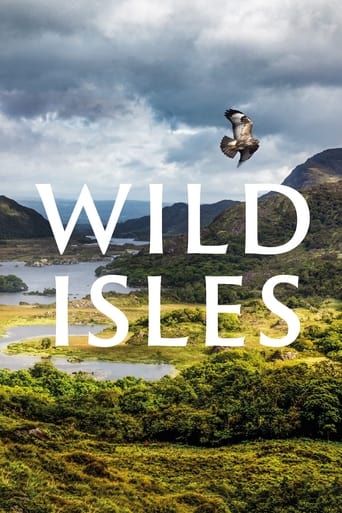
Wild Isles
2023 · TV series · documentary · 1 season
This nature documentary introduces viewers to the fauna and flora of Britain and Ireland across four main areas: woodlands, grasslands, freshwater and marine.
4 neutralfrom 4 commenters
Where to watch
No streaming data for this title.


6 comments on Hacker News
I mean if you want my cynical take, it goes like this. Some BBC producer wanted to make the Wild Isles series about conservation and climate change, they couldn’t get sign-off to spend BBC money on it, but they did get charities to pay for it. BBC upper management was okay with this because it was pitched as a “separate companion” film on the same topic. Once it was made the producer pushed for it to be screened as the sixth episode and was told no, so they called up their friends at The Guardian and said “I’ll be your unnamed source if you say this is about kowtowing to the radical right”. The plan was to generate pressure from the left on the BBC to air the film as if it were the sixth episode. That is why the unnamed BBC source and the BBC spokesperson are making contradictory statements.
Yes, it’s been moved to further up in the piece (less buried) and the BBC spokesperson quote has been updated to a more strident one:
“In a statement provided after the story was first published, the BBC said: “This is totally inaccurate, there is no ‘sixth episode’. Wild Isles is – and always was – a five part series and does not shy away from environmental content. We have acquired a separate film for iPlayer from the RSPB and WWF and Silverback Films about people working to preserve and restore the biodiversity of the British Isles.””
The WWF have confirmed that it is a complementary documentary. (https://twitter.com/wwf_uk/status/1634230395037204482?s=61&t=ZgE1VbL7HoKxgex12KflNA). Google shows that Wild Isles has always been referred to as being in five parts.
“A BBC spokesperson said: “Wild Isles consists of five episodes: Our Precious Isles, Woodland, Grassland, Freshwater and Ocean. Saving Our Wild Isles is a separate film inspired by the series that was commissioned by the RSPB and WWF. We’ve acquired it for iPlayer.” “
Talk about burying the lede! This is the last line of the article!
The BBC has a tricky needle to thread. Agnostic to any claim made the episode, it seems a very normal scepticism would come from a documentary funded in part by organizations that then promote themselves based on the gravitas of said documentary. I'd think that the BBC wouldn't even start a documentary about rural electrification funded by a coal company, or poverty mitigation by payday lenders.
A sixth episode has also been filmed, which is understood to be a stark look at the losses of nature in the UK and what has caused the declines. It is also understood to include some examples of rewilding, a concept that has been controversial in some rightwing circles.
The documentary, which was part-funded by nature charities the WWF and RSPB, will not be broadcast along with the others and will instead be available only on the BBC’s iPlayer service. . . .
. . . This week the Telegraph newspaper attacked the BBC for creating the series and for taking funding from “two charities previously criticised for their political lobbying” – the WWF and RSPB.
[...]
The charities involved in the programme are already using it to launch a campaign – unaffiliated with the BBC – called Save Our Wild Isles. They have also gained the support of the National Trust, the Guardian understands.
The Guardian article is misleading to the point of dishonesty. The episode that isn't being broadcast was not intended to be broadcast because it isn't part of the Wild Isles series. It's a companion documentary commissioned by the RSPB and the WWF.
And for all the good both these charities do, the BBC should not be broadcasting programs made by what are, in effect, political lobbying organizations (and I say that as someone who agrees with their aims).
Look at the last paragraph in the article, where they've put the real reason it isn't being broadcast.
Lineker compared the Home Secretary to the Nazis. He's entitled to his personal opinions, but he's a very prominent and massively over-paid BBC employee, so he should know better than to air his views on Twitter.