 Hacker Cinema
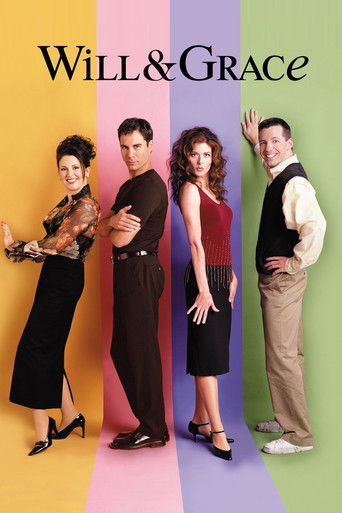
Will & Grace
1998 · TV series · 22 min episodes · 8 seasons
Created by Max Mutchnick, David Kohan
Will Truman and Grace Adler are best friends living in New York, and when Grace's engagement falls apart, she moves in with Will. Together, along with their friends, they go through the trials of dating, sex, relationships and their careers, butting heads at times but ultimately supporting one another while exchanging plenty of witty banter along the way.
1 positive3 neutralfrom 4 commenters
Where to watch
No streaming data for this title.




4 comments on Hacker News
> What I’ve come to appreciate in the years since is that the stories portrayed were not exactly value neutral. Television, like all forms of fiction, contains implicit messages about how to be a good person and what sort of aims are worth pursuing.
This is very, very, very true. A screenwriting teacher of mine once explained to me that the vast majority of us no longer get our "sermons" from church. We get them from sitcoms.
Sitcoms aren't just joke-delivery vehicles or advertising conduits (though they're those, too). They're actually the primary place the majority of Americans learn about how to be a good person.
It may sound like a bizarre claim at first, but pretty much every sitcom follows a plot something along the lines of: character has bad idea, character debates whether to do it, character does bad idea, idea seems to succeed at first, idea ultimately fails miserably, character is in trouble, character gets bailed out by someone who loves them, character learns their lesson. Virtually every sitcom episode demonstrates a moral lesson in their A-plot. (B plots and C plots are more often just gags though.)
Given the amount of TV most Americans watch, we learn far more "lessons" in any given week or month than we have the opportunity to do so in real life or through friends.
Sitcom writers actually hold a tremendous place of responsibility in American society that they can use (and have used) for good. As the article notes, Will & Grace was a big factor in changing Americans' attitudes towards gay people. Just like the Cosby show was for attitudes towards Black families. So you might think sitcoms are dumb... but they're a huge part of people's moral education, most of all when watching them as kids and teenagers.
What "unregulated media" do you feel was responsible for "acceptance's first step"? I'm not an expert on this by any stretch, but I've studied both media history and LGBT issues, and the shows that get cites most often for doing a shocking amount of work in shifting American attitudes toward LGBT folk were, well, regulated media. Specifically, the network sitcoms "Ellen" and "Will & Grace," with earlier tentative steps in "L.A. Law" and, in the late 1970s, "Soap."
While "unregulated media" may have become leading edge in LGBT presentation in the years since, it's also become leading edge in reactionary backlash, from Fox to internet media to the right-wing propaganda pushed by Sinclair Broadcasting to their local TV stations -- which in many markets they wouldn't have been able to own if local TV markets were still more tightly regulated.
I'm not suggesting regulation is a failsafe panacea by any stretch -- I'm just suggesting that deregulation isn't, either. There is probably a balance to be struck, and it is not at all clear to me that the balance we have now is correct.
TBBT is not a "parody". It is your standard-issue broadcast network sitcom about 3 males, 3 females and their friendships as they date and break up with each other, marry each other and have kids. This is a successful premise that has stood for decades in American TV. Friends and How I Met Your Mother followed the same principles almost to a tee. That's how you get a show that runs for 10 seasons in this day and age.
Pointing out that TBBT's parody is poor is like saying Will & Grace did not portray a representative picture of gay urbanites.
> Unfortunately, interlacing only works with ancient CRT TVs - modern LCD screens
You'll find expensive high end digital projectors such as the ones from Doremi also do interlacing. It's one of the banes of my life as we project lots of user generated content for our film festivals. Lots and lots of people never look at their films with interlacing, even fewer understand it.
I have shown someone their own film with the fields reversed and consequent shimmering and they couldn't identify the problem, some have even not noticed!
Also, NTSC isn't 30fps it is 29.97
I see lots of temporal artifacts on UK TV from NTSC -> PAL conversion. I use the opening credits of Will & Grace as my canonical example, interestingly that have changed (for the better) as the show got more series.
Final Cut's conversion introduces temporal artifacts.
I have been working on an FFT fps transcoder for a while but nothing to show as of yet.
I've spent quite a bit of time in India and if you watch Star TV satellite broadcasts on a CRT you will see lots of footage with reversed fields.
Get LCD panels out of the edit suites!!!
http://en.wikipedia.org/wiki/STAR_TV_%28Asia%29