 Hacker Cinema
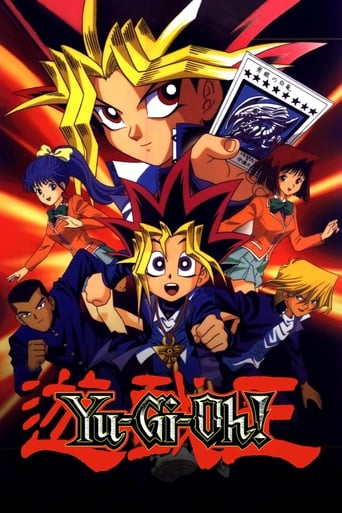
Yu-Gi-Oh!
遊☆戯☆王
1998 · TV series · 24 min episodes · 1 season
AnimationFamilyScience FictionFantasyActionAdventureKidsComedy
Yugi Muto, a shy boy who loves all kinds of games, one day solves an ancient puzzle known as the Millennium Puzzle, causing his body to host the spirit of an ancient pharaoh.
1 negative7 neutralfrom 8 commenters
Where to watch
No streaming data for this title.
8 comments on Hacker News
It has little to do with authority and more to do with the effort/return ratio. Visual edits are expensive and dialogue changes are cheap, so it doesn't make sense to redraw frames just for an irrelevant onigiri.
4Kids was very well known to visually change the japanese shows they imported if they thought it was worth it, mostly in the context of censorship. For example, all guns and cigarettes where removed from One Piece, turned into toy guns and lollipops instead.
The most infamous example, however, has got to be Yu-Gi-Oh!. Yu-Gi-Oh started as a horror-ish manga about a trickster god forcing people to play assorted games and cursing their souls when they inevitably failed to defeat him. The game-of-the-week format eventually solidified into the characters playing one single game, Duel Monsters (the Yu-Gi-Oh! TCG itself in the real world), and the horror-ish aspects faded away, although they still remained part of the show's aesthetic, based around Egyptian human sacrifices and oddly-card-game-obsessed ancient cults.
When the manga was adapted to the screen, it started directly with a softer tone[1], especially because the show was to be a vehicle for selling cards in the real world, not dissimilarly to Pokemon and MANY other anime from the era.
Nothing that happens in the show is particularly crude or shocking, it had that kind of soft edginess that fit well with its intended target audience (early teens). I imagine watching Bambi had to be much more traumatizing than anything in the show.
But that was still not enough for 4Kids, which had a pretty aggressive policy of no violence or death. Kind of problematic when the show's main shtick was "Comically evil villain puts our heroes in a contraption that will kill them if they don't win." (You can imagine the frequency these traps actually triggered neared zero).
To solve this, 4Kids invented the Shadow Realm. The show, thanks to its occultist theming, already had examples of people being cursed, or their souls being banished or captured. 4Kids solidified these vague elements into the shadow realm as a censorship scape-goat. Any reference to death was replaced with the shadow realm. Now, one might wonder why the censors thought that "hell-like dimension where your soul wanders aimlessly and/or gets tortured for eternity" was in any way less traumatizing than "you'll die", but I imagine it's because there was always the implication that people could be 'saved' from the shadow realm[2] by undoing the curse.
The Shadow Realm was a massive part of the western Yu-Gi-Oh mythos and even today it's a fairly common meme to say that somebody got "sent to the shadow realm", which makes it all funnier that it is not part of the original show.
A couple funny examples off the top of my head: - Yugi must win a match while his legs are shackled. Two circular saws, one for him and one for the enemy, are present in the arena. They near the two competitors as they lose Life Points, with the loser destined to have their legs cut off.
In the 4Kids adaptation, the saws are visually edited to be glowing blue, and it's stated they're made out of dark energy that will send anybody that touches it to the shadow realm.
- A group of our heroes fight a group of villains atop of a skyscraper with a glass roof. In the original version, the villains state that the roof has been boobytrapped so that the losing side will explode, plunging the losers to their death by splattening.
In the 4Kids version, the boobytrap remained, but the visuals were edited to add a dark mist under the glass, with the villains stating that there's a portal under the roof that will send anybody that touches it to the shadow realm. This is made funnier when the villains lose and they're shown to have had parachutes with them all along, and they are NOT edited out.
[1] Technically speaking, there was a previous adaptation that followed the manga more closely and got only one season, generally referred to as Season 0.
[2] It does eventually happen in the anime that the heroes go in an alternate dimension to save somebody's cursed soul. Obviously, this dimension was directly identified as the Shadow Realm in the localization.
Just because a show could hypothetically end and the assets would go up, may not be a convincing argument. Hypotheticals could go either way.
One company owns the IP, the rights to the characters, to produce shows, they have the expertise, and it is exactly the show and the brand that drives the demand for merchandise sales. This is well established. They advertise the merchandise.
Now, without the advertisement, there could remain a niche group of people who would pay a lot for collectibles, but nowhere near the amount of people or capital under their management than during the heyday of the show actually airing and constantly making the memes (pokemon, yu gi oh, whatever) relevant and driving demand.
By your argument, LBRY the company could fold and people would continue to use LBRY tokens. Which is exactly what happened. So does that mean it wasn’t securities sales after all?
As for the other issues you mentioned, the court explicitly stated that just because some people buy the cards for consumptive use doesn’t mean they all do. You could buy 100 tickets to a ball game, but intend to only take your family, and scalp the rest. One of the criteria for a securities sale is did you buy more than you could ever conceivably use? And if you keep the cards in mint condition unopened that’s pretty much textbook definition of investing into collectables. Then the only question us how much are you relying on the expertise of the company producing Yu Gi Oh content to… continue to produce Yu Gi Oh and keep it relevant.
Now, if Yu Gi Oh was in the public domain and lots of entities could keep the memes going, sure. It would be super decentralized (although a strict reading by the SEC could nevertheless see a “common enterprise” horizontally across all of them, much as they are considering now for Ethereum!)
But since all these initiatives (Teenage Mutant Ninja Turtles, the music and movie industries etc.) work off massively relying on copyright protections, so they are the ONLY ones authorized to use / license the characters, then yeah you’re kind of relying on the efforts of a third party promoter to make sure a lot of people give a crap about your mint condition charazard collectibles!
Do the following thought experiment … if some group were selling the same exact type of trading cards in the form of NFTs, and creating Telegram channels to promote them, creating all kinds of episodes featuring those characters, are they a “common enterprise”?
Oh oh, gotcha. I only ever watched a few episodes when it was on TV in the US. And then a few more episodes of Yu-Gi-Oh Abridged ;)
This is the plot of the first episode of Yu-Gi-Oh, not a thing that actually happens in real life.
> - Public television shows (PBS) stuff is so lovingly created and charming. You can really tell they had experts and creatives work side by side to craft positive stories. Even if it's not particularly exciting.
> - Colorful garbage. It's a lights and noise show, with huge focus on licensing. Cartoons of my era are particularly susceptible to this (Dragonball Z, Yu Gi Oh, Transformers, etc).
What PBS shows are you imagining? Clifford? Sesame Street? I never thought they were targeting the same demographics as the 'colorful garbage' like Yu-Gi-Oh (early elementary vs. late elementary/middle school). Also a lot of other popular shows (like Spongebob) seemed more like colorful garbage to me than things like Yu-Gi-Oh that you lumped in there.
And what about classics like Tom & Jerry, Roadrunner, etc.? There wasn't much particularly educational or colorful or really anything about them but man now I'm tempted to go watch them again.
In a related note, I have come to realize the different levels of quality in children's television:
- Public television shows (PBS) stuff is so lovingly created and charming. You can really tell they had experts and creatives work side by side to craft positive stories. Even if it's not particularly exciting.
- Super-smart and creative shows (like the first couple seasons of Spongebob, or Gravity Falls). Great shows on their own merit, super funny and creative. But they are an art first and not necessarily focused on development. Good at clueing kids in on structuring jokes or references, not much else.
- Bland and harmless. Shows that drive a story or characters, but not necessarily lovingly made or particularly funny. I have found most of the Netflix/Amazon/Hulu stuff falls in here.
- Colorful garbage. It's a lights and noise show, with huge focus on licensing. Cartoons of my era are particularly susceptible to this (Dragonball Z, Yu Gi Oh, Transformers, etc).
I don't know much about how this works. Am I right in saying this is like the episode in Yu-Gi-Oh where Seto takes 51% of his fathers company so that he then owns the company? That's the only example I can think of to illustrate what I interpret this as.
Iunno, I'm pretty sure most people know what Pokémon is and a large portion of those know it had a TV show. Sailor Moon, Dragon Ball Z, Digimon, Yu-Gi-Oh and Cardcaptor Sakura all seem to be pretty well known among the younger generations and by extension the older generations who raise and take care of them.
And anime/manga is becoming more and more mainstream. Sure it's not like you'll walk in on your boss catching up on the latest episode of Attack on Titan but it's getting there.