 Hacker Cinema
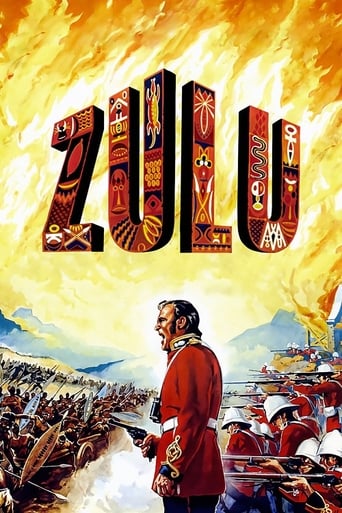
Zulu
1964 · Film · 138 min
Part of Zulu Collection
Directed by Cy Endfield
In 1879, during the Anglo-Zulu War, man-of-the-people Lt. Chard and snooty Lt. Bromhead are in charge of defending the isolated and vastly outnumbered Natal outpost of Rorke's Drift from tribal hordes.
2 positive4 neutralfrom 6 commenters
Where to watch
No streaming data for this title.
6 comments on Hacker News
I don’t believe it is that mysterious or revolutionary. What PG is describing is the “optimization of local maximum” problem.
Founders focus on the strategic goal. Managers focus on tactical goals. Rules and processes are put in place to efficiently achieve these tactical goals. The problem is, in certain situations, these local process are at odds with the broader goal. Only the Founder has the authority to break the bureaucratic rules.
My favorite example is from the film Zulu when the British quartermaster adamantly dispenses ammo per the rule book and a long queue of desperate soldiers form up. Nevermind the British were out numbered 10 or 20 to 1 and should be firing their rifles as quickly as possible and using up all their ammo as quickly as possible.
https://youtu.be/8xjCX_TXkyU
I left the western world several years ago, partly because of this. I could not live in an idiocracy where some people hire based on skin colors or genitals.
Thankfully, I have faith in capitalism.
I never thought I would say such an obvious thing, but we are entering an era where « hiring the most competent » is going to give an unfair advantage to smaller companies.
I am already seeing this with cinema. Sure the US is still producing a lot of interesting stuff, you still have very talented filmmakers. But you are literally losing market share to Korea (which should have never happened) just because you made your mission to transform every possible well known character into black characters for the sake of it.
I haven’t seen any interesting Netflix original show about Zulu, or how people competed for power in Egypt.
But I sure have seen plenty of black washing (even on non white historical figures)
That was quite a famous defeat for the British, so it kind of undermines your point.
Are you making reference to Roukes Drift? https://en.m.wikipedia.org/wiki/Battle_of_Rorke%27s_Drift
That's what the film Zulu is based on. They followed on from one another, and on the same day, they're generally considered to be 2 separate actions though.
Also on the subject of British defeats, there's Gate Pah in New Zealand https://en.m.wikipedia.org/wiki/Tauranga_campaign
And the 1st Afghan War. https://en.m.wikipedia.org/wiki/First_Anglo-Afghan_War
Anyway I wasn't even thinking about what they did in battle, I was think about how they treated the civilians, how they treated them after the war, how they treated prisoners. The Boers got off lightly, they got some (all?) of their land back after a relatively short period, the Zulus didn't.
great question I asked myself every day
This is how I dealt with this question : The racism question is at heart of the building of Afrostream.
You need some contexts here. As I say (a lot) : We are French. French Television and movies are basically, how could I say that in a politically correct way, : white.
(disclaimer : my father is a black man with indian origin, from the Island of the Reunion, in the Indian Ocean, my mother is white from Brittany in France, I was born in Brittany)
We have not a lot of black heroes in our French movies. Correction : we have zero (except Omar Sy). We don't deal well with race in France, in a sense that we can't say we have an established racism, but a lot of small discriminations.
Tonjé and I are media guys. Tonjé wrote scenario, produce shows, directed a theater. The problem we see is that we don't have positive heroes. Basically : why could we not have a black James Bond ?
Our answer is Afrostream : to represent African descents in a positive way, in all their diversities (because, yes, black culture does not exist).
South African movies are definitely in our radar. I loved "Zulu" movie (I am sort of movie geek too), We will look at Egyptian movies too, because, why not.
We intend to have all of the diversities of the culture from African descents. African American movies are popular and will be on Afrostream. Nollywood, the movies from Nigeria, will be there too. We did and will do a big work of curation to unite the best of the African Diaspora. Because our goals are not just to show some movies on your smartphone, but to make learn about some culturees which are sometimes just ignored today. We just started with what we know more : West indies diaspora, West African Diaspora (Tonjé has some origins from Cameroon), African American movies (because, hey, who doesn't watch a good american movie in the world. that's our pop culture everywhere)
Impressive work! I have questions/ideas:
Is there any way to extract movie ratings vs time from your data-set? I've subjectively noticed a few patterns in movie ratings, and would love to see quantitative confirmation.
1. Rating quality tends to spike at or shortly after a film's release, but then drops off gradually as the glow of the PR campaign wears off, or perhaps because people who go to see movies in their opening week are more predisposed to like them (e.g. fanboys, etc.). I usually expect a film that has just been released to be similar in quality to a film that's been on home video for a while with a rating half a point or more lower. (I am ashamed to admit that I watch enough movies that I can usually peg it's IMDB rating to within a quarter of a point independently from how much I personally enjoyed the film. )
2. Rating quality for older films tends to be held back by poor quality home video releases and often improves significantly, but gradually, after quality transfers are released. e.g. I distinctly remember seeing Zulu several years ago and thinking, "Gee, that film was way better than the IMDb rating!". Back then, it was in the high 6 range. Now it's up to 7.8!
I suspect IMDB does not keep track of times associated with votes, or at least does not provide that data publicly, so the best you could do would be to crawl IMDb periodically. It shouldn't take more than a year's worth of data to see if point #1 holds up. #2 is a lot more difficult because the effect is more gradual, and you'd need to start bringing in other data sources, like audio/video quality ratings from home video review sites that do tend to be somewhat unreliable. I find #2 to be a question of interest though. If you found any other form of correlations with titles whose ratings improve substantially after quality home video releases, you would have potentially found a way to identify under-appreciated films. If you pulled that off, in addition to discovering some good flicks to watch, companies like Kino and Criterion would probably start knocking at your door!
> I recently won a competition, which is great and all, but I always wonder in the back of my mind if I won it because I was the only woman in the competition.
And you suffer this now, in your generation, so maybe the next generation will have so many women succeeding that this idea will no longer make sense. Having examples to strive towards is always cited as an important part of deciding who you become in life.
You didn't ask to do this. Your post makes that much clear. Very rarely to we really ask for the roles society casts us into. It is simply how it happens.
Reminds me of an old quote, from the film Zulu about the defense of Rorke's Drift during the Anglo-Zulu War of 1879:
Private Cole: [After Mr. Witt's carriage rides off, Mr. Witt screaming the British soldiers are all doomed] He's right. Why does it have to be us? Why us?
Colour Sgt. Bourne: Because we're here, lad. Nobody else. Just us.
https://en.wikiquote.org/wiki/Zulu_(film)