 Hacker Cinema
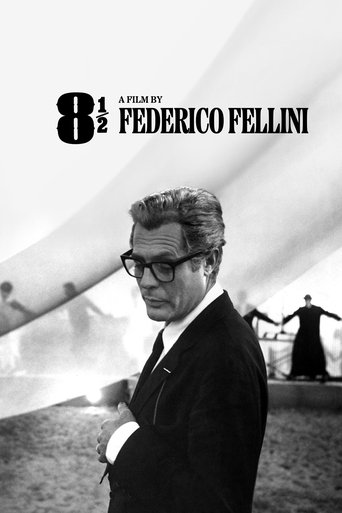
8½
1963 · Film · 139 min
Directed by Federico Fellini
Guido Anselmi, a film director, finds himself creatively barren at the peak of his career. Urged by his doctors to rest, Anselmi heads for a luxurious resort, but a sorry group gathers—his producer, staff, actors, wife, mistress, and relatives—each one begging him to get on with the show. In retreat from their dependency, he fantasizes about past women and dreams of his childhood.
1 positive4 neutralfrom 5 commenters
Where to watch
No streaming data for this title.


5 comments on Hacker News
Thanks! Here's the full list: 2001: A Space Odyssey, 8½, Aguirre the Wrath of God, Ali: Fear Eats the Soul, All That Heaven Allows, Apocalypse Now, Ashes and Diamonds, A Woman Under the Influence, Barry Lyndon, Bicycle Thieves, Breathless, Casablanca, Céline and Julie Go Boating, Chinatown, Chinese Roulette, Citizen Kane, City Lights, City of Pirates, Contempt, Daisies, Damnation, Dishonored, Earth, Electra My Love, El Topo, Eraserhead, Eyes Wide Shut, Film Socialisme, Fitzcarraldo, Fuego en Castilla, Hiroshima Mon Amour, Holy Motors, Inauguration of the Pleasure Dome, In a Year with 13 Moons, India Song, Inland Empire, Irma Vep, Koyaanisqatsi, La Dolce Vita, La Jetée, Late Spring, L'Eau de la Seine, Le Voyage dans la Lune, Lolita, Los Olvidados, Lost Highway, Lucifer Rising, Man with a Movie Camera, Metropolis, Mirror, Mulholland Drive, Night Music, Ordet, Orpheus, Persona, Pickpocket, Playtime, Psycho, Rebecca, Rosemary's Baby, Rumble Fish, Scarface, Seven Samurai, Sherlock Jr., Singin' in the Rain, Stalker, Sunset Boulevard, Taste of Cherry, Taxi Driver, Testament of Orpheus, The 400 Blows, The Blood of a Poet, The Cabinet of Dr. Caligari, The Color of Pomegranates, The Green Ray, The Holy Mountain, The Isle, The Lady from Shanghai, The Night of the Hunter, The Passion of Joan of Arc, The Seventh Seal, The Spirit of the Beehive, The Tales of Hoffmann, The Tree of Life, The Turin Horse, Time of the Gypsies, Tokyo Story, Touch of Evil, Trans-Europ-Express, Ugetsu, Un Chien Andalou, Uncle Boonmee Who Can Recall His Past Lives, Vampyr, Videodrome, Wavelength, Werckmeister Harmonies, Wild Strawberries, Moonlight Sonata, Stellar, The Haunted House Biased toward European art cinema, experimental work, and directors who broke conventional narrative rules.
Where do we draw the line?
Does an anthology approach like Playtime (1967, dir. Jacques Tati) count? It's got kind of an arc to it, but doesn't really have anything like a recognizable struggle with an antagonist. Unless you view brutalism as the antagonist, I guess.
8½ (1963, dir. Federico Fellini) could, likewise, be shoehorned into a discussion of the arc of the film--which it, itself deconstructs in the third scene or so. It's primarily a film about making the film. There's _kind of_ a journey the protagonist goes on, but does it really count as being this same plot?
Federico Fellini's 8½?... Criterion Collection mentions that "8½ is a film about making a film, and the film that is being made is 8½".
No, you're right. Early on, the producers were considered the most important people of the film. In the early-mid 50s, French critics and filmmakers came up with the idea of ‘auterism’, saying that directors can do their own material however they see fit, instead of only adapting screenplays. Specifically André Bazin and François Truffaut were the first in this, afaict. Fellini's ‘8½’ was important in that the director decided that since the last word is his, he might as well himself be the subject of the film.
Hollywood was clued in on this in the 70s with the ‘New Hollywood’, and people like Coppola, Spielberg, Scorcese, etc. Notably though, ‘New Hollywood’ still was way more mainstream than French New Wave, IMO.
Pretty.
I searched for the film 8 1/2 (http://www.imdb.com/title/tt0056801/)
Two things:
1. The director's first name is wrong.
2. No results (maybe due to the ½ symbol.)
EDIT: here http://movies.io/m/fI