 Hacker Cinema
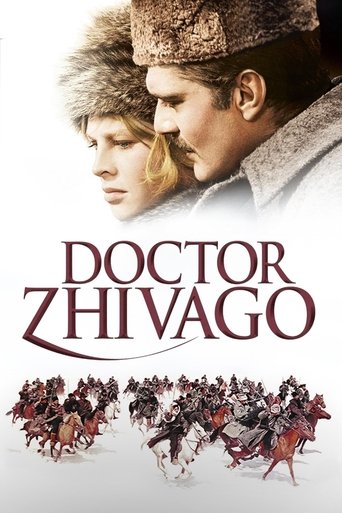
Doctor Zhivago
1965 · Film · 200 min
Directed by David Lean
The life of a Russian physician and poet who, although married to another, falls in love with a political activist's wife and experiences hardship during World War I and then the October Revolution.
1 positive8 neutralfrom 9 commenters
Where to watch
No streaming data for this title.



9 comments on Hacker News
> The fact that nobody would make a Doctor Zhivago or even a Back to the Future today is not something I can fix with all my searching.
What do you mean by that?
I'm not familiar with Doctor Zhivago so I had to look it up, the 1965 film is based on a 1957 novel, which seems to match just fine with the pattern of The Martian, The Three Body Problem, Game of Thrones, Fifty Shades of Grey, etc.
Back to the Future is a fun trilogy, but the first film was mostly set in 1955 (so if it had been done today the past would have been 1994, compare to Captain Marvel being mostly set in 1995), the second film was 1985's idea of 2015 (and we still get plenty of what-if fiction in the near-ish future, e.g. Blade Runner 2049, Cyberpunk 2077), the third was yet another wild-west Cowboys-and-Indians gunslinger (1885) — but if you mean to focus on the more playful and fun aspects of how it was put together, or the positive vibes of good people working to solve problems and where it's clear who the goodies and baddies are, BttF reminds me more of The Orville or Lower Decks. (And The Martian if you want to consider the environment/time travel itself, rather than Biff, to be the problem).
>Would a three hour film like Doctor Zhivago ever sell 248 million tickets today?
No, partly because the media landscape is much more fragmented with much more choice and partly because streaming services are now the natural destination for serious long-form drama. If you were a screenwriter pitching Doctor Zhivago today, you'd pitch it to Netflix. Nobody goes to the movies to watch a historical epic today, but nobody in the 1960s was binge-watching subtitled foreign drama on TV.
> Would a three hour film like Doctor Zhivago ever sell 248 million tickets today?
Avatar, Way Of The Water, a 3 hour movie, broke all sorts of sales records (though # of tickets sold data apparently isn't out yet).
Heck Avengers End Game was 3 hours long and it sold 351 million tickets.
I do think you get less of the repeat sales now days vs even in the 90s, just because there are so many more movies coming out, both in Cinema and on streaming platforms, but that doesn't say anything about people's willingness to attend long movies.
What's your time frame on "long form articles are more popular than ever"?
And are you using relative or absolute popularity? E.g. "medium form" articles in pop magazines were probably always more popular than longform ones in literary mags, but were they more relatively popular than "tweets" or "tiktok videos"?
Would a three hour film like Doctor Zhivago ever sell 248 million tickets today? And that number has a lower total population size to pull from! For a focused experience without your phone, or work, or anything else (compared to listening to a podcast in the background while working or driving)?
There are groups that still enjoy, or are learning to enjoy, longer stuff still. But that's not the dominant trend.
Some Russian books are heavy going because of the often use of several 'different' names for their characters: you get the surname alone, the first name and patronym (parent's name), the first name alone, and the colloquial use of the first name all referring to the same person. As an example, using an English name: you might get "Smith", "James, son of Michael", "James", and "Jimmy", all of which can equally apply to a person called "James Smith".
But the classic Russian writers are famous because of their writing, same as French, English and American authors are.
Some of the most famous Russian books include 'Anna Karenina', 'War and Peace' and 'Doctor Zhivago', and these three have been made into Russian and/or Western films. Like all films, the film versions often cut out whole swathes of the original story, but can give an outline of what the books contain.
This probably dates to 1966, given when the film "Doctor Zhivago" was in theaters.
That's reasonable, but again this is the #2 grossing film for the year in the US. #1, #4, #5, #7 where PG kids movies. #3, #8, #9, and #10 where comic book movies in a long string of comic book movies.
So, yes revenue was down, but the movies where also very derivative. The top grossing films adjusted for inflation are Gone with the Wind, Avatar, the first Star Wars, Titanic, The Sound of Music, E.T. the Extra-Terrestrial, The Ten Commandments, Doctor Zhivago, Jaws, Snow White and the Seven Dwarfs.
The Force Awakens might make #10 on that list while being the only franchise movie to do so. But, no movie from 2016 is even close.
I would not bet too much on the ability of collective struggles to solve individual problems. I still think that this is at the heart of Boris Pasternak's "Doctor Zhivago". both the movie and the book. And it has taken on the patina of timelessness and universality in my experience
I think this is a fascinating story. Doctor Zhivago is a hauntingly beautiful work --- one of my favorite books and films, certainly, and I am surprised by its importance as a political tool --- really, as a tool of propaganda! I found this story deeply interesting, and it notably answers questions and rumours that had been standing for fifty years. It's an important piece of journalism.
I now only wonder if the CIA had any similar involvement with the 1965 film...