 Hacker Cinema
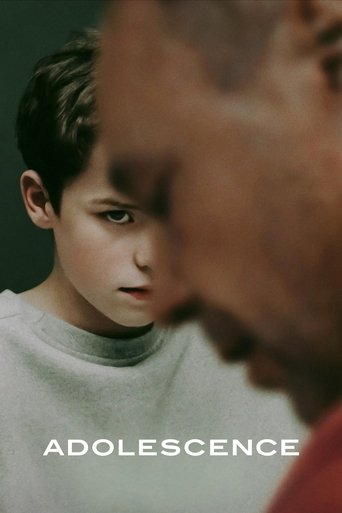
Adolescence
2025 · TV series · 1 season
Created by Stephen Graham, Jack Thorne
When a 13-year-old is accused of the murder of a classmate, his family, the psychological expert and the detective in charge are all left asking: what really happened?
7 positive1 negative4 neutralfrom 12 commenters
Where to watch
No streaming data for this title.


13 comments on Hacker News
And we’ve literally born witness to yet another step in the trend of diluting our corpus of pronouns. The trend is very clearly from more articulate to less.
“They” and “their” for my whole lifetime were plurals. Now we’ve pretty much lost the mere clarity of knowing if the pronoun means 1 person or more than 1 person. Was watching “Adolescence” and the police mentioned “they” in regards to the victim of a crime. I was mistakenly under the impression that there weee multiple victims for much of the episode.
I’m very clearly slow to adapt to the new definitions.
The HN headline misses the point that Netflix told Matt Damon this.
I'd guess more people will watch Matt Damon's new movie on Netflix than watched Adolescence before it won the awards
People want to see (are more likely to watch) super and action hero movies with big stars in - but there's been so many of these with fairly similar plotlines that outside the attention grabbing action and fight scenes the quiet/story development scenes become like ad breaks and people start looking at their phones.
If Matt Damon made different movies for Netflix (like adolescence!), he'd get less views but be given more freedom.
> shows like “Adolescence” are “the exception,” Affleck said he felt the show “demonstrates you don’t have to do” the Netflix tricks to please audiences.
Maybe it depends where you are in life, but for me the last episode of Adolescence was the most impactful, perhaps due to being a parent myself (although my children are only 3 and 5).
My big takeaway of Adolescence is that it was an extraordinarily senseless thing that was done, yet had such a profoundly negative impact on so many people. It's scary that younger people who simply haven't yet matured enough to understand the impact of their decisions can do things like this which can never be undone (and I'm not just talking about the life they took).
Trash ? The Diplomat has as good a production value as any.
So does Bridgerton. Adolescence is basically a single shot marvel.
Others - Stranger Things, Money Heist, Black Doves.
Not to mention their true crime documentaries.
Warner Brothers makes quality content. I think this is an almost perfect fit.
>Finally, one winter morning on the school bus, he turned on his tormentors. Curling his fingers in the shape of a pistol, he said, “I hope you all die.”
> Mike Carinci, the school resource officer — a member of the sheriff’s office who worked in the school — viewed and listened to hours of video from the bus, seeing the level of abuse directed daily at the student. “Just horrible things, like nonstop,” he said. Mr. Carinci summoned the students and told them that the bullying had to end. The superintendent told them that they could be suspended or expelled.
> The school traced the “hit list” rumor to a girl who admitted making it up. This quieted the community.
This article makes it sound like the only one who was punished was the victim of the bullying for his emotional outburst and everyone who picked on him got away unscathed. This seems similar to the recent Netflix miniseries Adolescence. Both the series and the discussion around it focused on the main character rather than the bullying that caused him to kill.
British TV is doing _great_ in the streaming era: black mirror, adolescence, peaky blinders, the crown, call the midwife, derry girls, downtown abbey; and so many great police procedurals: line of duty, endeavour, the bay, Sherlock, grace; even those Harlan coben miniserieses - the ones with at least one absurd plot twist per episode - are great fun!
While I’ll be among the first to moan that we’ll never see another red dwarf, python, tinker tailor/smiley’s people, yes minister, father ted [0] .. British tv is still producing great stuff.
It’s the “bureaucrats” in the bbc who are under threat from streaming. I’m not losing sleep!
[0] made in Britain; simply could not have been made in Ireland as was.
>Wolf Hall ...
you're nitpicking. it's a high class, well-produced, well-acted, British-made TV show, by the BBC, of a very high quality that would be well-regarded in any era (if you ignore the weird racial thing they did in S2)
>Line of Duty
your opinion is absolutely in the minority, which isn't to say it's wrong, but it's a very well regarded, high class show that's widely seen as well above "decent procedural"
>Adolescence
whether it's liberal or paid for by Netflix is irrelevant to whether it's a high quality British-made tv show
>you haven't watched the others
then you're going to struggle to give a useful opinion on this matter, aren't you?
>Hardly in the class of historical Beeb
every historical BBC show you can name will have myriad minor subjective criticisms of the like you've just produced
>let alone contemporary US brilliance.
if you think US TV is even remotely comparable with UK TV, you're not paying attention. the US is long since out of its golden era, which pretty much died with Game of Thrones. US media has an order of magnitude more financial means than that of the UK, and yet what have they created of any real quality in the last few years besides White Lotus? they repeatedly fail to even remotely approach the class and quality of our TV. on the rare occasions they do get close, it's on the back of British actors or British production
this kind of take is usually the preserve of nostalgic old men who've just discovered YouTube comments, so I'm surprised to see it rephrased so many times here. if you aren't finding high quality modern British-made TV shows it's because you're not looking or you're unwilling to try new things. Wolf Hall, Line of Duty, Slow Horses, Rivals, Fleabag, Adolescence, Inside no 9, Veep, etc etc etc etc. I could name 10 more. TV is more stratified and yes there are a lot of worthless filler game shows and talk shows, but just as it was in the 70s and 80s, there are plenty of stand-out shows that will last the test of time
Reminds me of Adolescence on Netflix - 4 episodes, each nearly an hour, with no cuts.
> Early porn exposure goes hand in hand with the problems we see typified in the recent Netflix movie Adolescence
There's really no evidence of this. I find it much more plausible that the boom in misogynistic radicalism is caused by the flourishing of radically far-right niche content online. Our society has become more politically extreme in a number of ways over the past couple decades, and there's no porn equivalent for anti-immigrant or anti-trans sentiment. Andrew Tate, however, is very much of a kind with figures like Nick Fuentes and Alex Jones.
That's not to say porn viewership doesn't have an effect on kids, but I expect it would be much more modest. Unrealistic ideas about sex, anxieties about penis size. I'm in my mid-20s; internet porn was highly accessible to me & my peers when we were young, and while it did have an effect on youth culture, it was quite modest—nothing like the hard pivot to misogyny which I've heard teachers describe when their students become interested in (again) Andrew Tate.
> Jesus, how does your society still function when underage people can see videos of people having sex?!
It kind of isn't anymore. But not just because of porn, obviously.
Early porn exposure goes hand in hand with the problems we see typified in the recent Netflix movie Adolescence. Seen women constantly railed and treated like meat when that young probably does do something.
"Videos of people having sex" is deliberately misleading, modern porn is not dry educational science videos. It's clear you'd rather be snide than correct.
Collateral was not the first fully digitally shot feature film. In fact, Collateral was not even fully digital. (The first major, all-digital, HD feature film was Attack of the Clones, but there were other fully-digital feature films before that, just not as major, and/or not always HD. Robert Rodriguez' Once Upon a Time in Mexico (2001) was fully digital.)
But you are right that Collateral did do something very new/unusual at the time, and that was shooting scenes in higher frame-rates than 24, and mixing multiple frame rates in a film. (This might not sound like much, but until this time, pretty much every film was 24fps for the previous eighty years and it had a very specific look that everyone's eyes/brains were conditioned for, unbeknownst to them.)
And the other thing that was very interesting thing about it (though not something very visible to a viewer) was that it was shot on the Thomson Viper FilmStream camera[1], which was the first major attempt at shooting not just digital, but very close to "raw". It was also a huge pain in the ass. The camera itself was massive, but due to the bandwidth, it recorded to an external storage array that had to be pushed alongside it at all times, and that was itself about the size of a shopping cart. (This device was hilariously referred to as the "Director's Friend.")
In 2002, my friend and I, both cinema nerds in high school, drove an hour away to the nearest theater showing a film called Russian Ark[2]. Why were journeying to to see a strange little Russian film where a never-named character walks the viewer through Russian history? Because just like each episode of the recently-released Netflix show Adolescence, this entire film was a single, very long, very complicated, unbroken shot. One shot. No trickery, no cuts that were just hidden to the audience, one shot, through streets, buildings, snow, ballrooms with a couple hundred choreographed actors, it was crazy. This is easy now compared to how it was back then.
As we've now established with Collateral (and this film predates it by 2 years), digital cinematography existed, but the storage was a real problem, the power was a real problem. Since this film was one shot, it needed almost 100 minutes of both, unbroken. And since it was a very complex moving shot, it had to be operated handheld. So essentially they had an incredibly ripped director of photography who operated the camera on a steadicam the whole time while a giant array of daisychained batteries and hard drives were lugged behind him. And they did it something like 100 times until they had a few takes where there were no mistakes.
None of this really means anything to anyone anymore, but at the time, to cinematography nerds at least, this stuff was all absolutely insane!
[1] https://web.archive.org/web/20040103133953/http://www.thomsongrassvalley.com/products/cameras/viper/pdf/viper_ds.pdf
[2]: https://en.wikipedia.org/wiki/Russian_Ark
> "reporters" take their “emerging and growing problem” list from Netflix?
Your point was actually the authors point too. Quite a truculent critique from Guardian's Martha Gill:
"It probably shouldn’t work like this. Policy decisions would ideally not hinge on the quality of an actor’s performance (Adolescence had some spectacular ones, which explains its success), and whether politicians manage to catch the latest Netflix series. It makes us look a little emotionally incontinent, as a country, when the decisions of TV drama commissioners weigh quite so heavily in our politics. But the fickle spotlight of political attention has landed here, for now."
However, it's always worked like this since Plato feared the Poets and Shakespeare shaped Elizabethan England. I think politics by artists is much preferable to politics by "engineers", though the latter get the ears of the engine the former speak directly to the hearts of the people. Both are needed.
Smartphones and social media have destroyed society and TV series "Adolescence" is only a tepid glimpse of the mental-health and cultural epidemic that we've been avoiding talking about for decades now. Whether you trust the "data" or people's "emotions", the picture looks the same now.