 Hacker Cinema
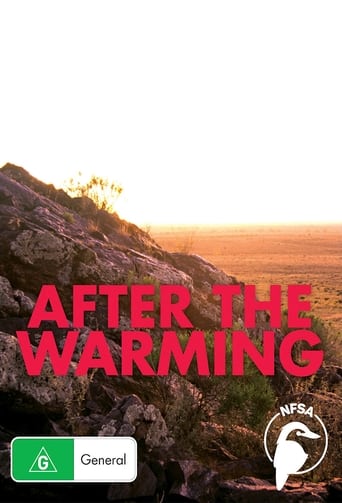
After the Warming
1989 · TV series · documentary · 1 season
Set in 2050, social journalist James Burke looks back at events of the world from the dawn of civilization and shows how climate change has affected human history. At the point of the Industrial Revolution, humans began to do things to the climate, rather than the other way round. When he brings us up to date (1989), that is when the predictions begin. From Kyoto to the two Gulf Wars, Burke accurately predicts many of the events that have taken place so far. His predictions have been sound, even to the tune of carbon credits and climate change agreements. Using virtual reality computer simulations, Burke traces the Earth's history of ice ages and warming trends and presents several possible scenarios caused by the greenhouse effect during the 1990s to 2050.
2 positive1 neutralfrom 3 commenters
Where to watch
No streaming data for this title.



3 comments on Hacker News
For those that remember the James Burke show "Connections", he also did a program called "After the Warming" that's staged like a documentary that takes place in the future after humanity has solved the global warming crisis.
In that show, policy makers use a computer simulation of the world to quantify the limits that they set on emissions, and all of the nations in the world come together to make it happen and look back on this age as an important lesson.
I believe there's a low-res VHS rip of it available somewhere if you search, which gives the whole thing an eerie feeling of discovering an alternate-reality documentary.
John Baez's blog has a series on how civilizations collapse, first looking at the Anasazi, and then how one might model it using agent-based modeling and also looking at general collapse through differential equations:
https://johncarlosbaez.wordpress.com/2013/01/20/anasazi-america-part-1/
https://johncarlosbaez.wordpress.com/2013/01/24/anasazi-america-part-2/
https://johncarlosbaez.wordpress.com/2014/03/25/civilizational-collapse-part-3/
https://johncarlosbaez.wordpress.com/2019/08/26/civilizational-collapse-part-4/
James Burke is a science historian and BBC documentarian, and in his first episode of "Connections" a series on the nature of innovation, he talks about how fragile our complex infrastructure can be, and, much like this article, how hopeless individualist survival skills would be once we "leave our technological womb".
https://www.youtube.com/watch?v=XetplHcM7aQ
In his later series, After the Warming, a 1988 documentary which imagines what it would look like in 2050 if we failed to act on climate change (in which it predicted refugee crises, wars, hurricanes, mass flooding), and looks back on thousands of years of climate shaping civilizational rise and collapse, from the Ice Age to the Nabataeans to today and beyond. It gets most things scarily right, with the notable exception of failing to see Japanese economic bubble popping in 1991.
https://www.youtube.com/watch?v=Qa4aWFDCMqQ
https://www.youtube.com/watch?v=YxJLyPSRusc
The app is intended to encourage lateral thinking and make connections.
James Burke was a hugely popular scientist in the late 70s and 80s. He predicted the Internet in the 80s and made a series "After the Warming" also in the 80s that seems to have been off by about 10-15 years on runaway climate change (Really well worth, and quite chilling, watching again today with our current awareness of climate change. It's on YT).
He made a fascinating, award winning, set of TV series - Connections. That showed how much progress is a series of interconnected events. Often stemming from apparently unconnected accidental events. Got me fascinated in science and technology as a child and set my course for the next 40 years!
Here's an article he produced in a book "Impact of Science on Society" for NASA in 1985 along with articles from Jules Bergman and Isaac Asimov: http://history.nasa.gov/sp482.pdf
Some of his TV series are on the web - Youtube and TPB. Not sure how well they've aged! :)