 Hacker Cinema
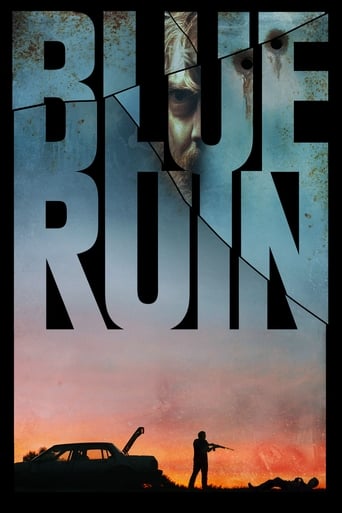
Blue Ruin
2014 · Film · 90 min
Directed by Jeremy Saulnier
When the quiet life of a beach bum is upended by dreadful news, he sets off for his childhood home to carry out an act of vengeance. However, he proves an inept assassin and finds himself in a brutal fight to protect his estranged family.
2 positivefrom 2 commenters
Where to watch
No streaming data for this title.





2 comments on Hacker News
The last good American indie film I've watched was Hereditary (2018) [1] and before that 'Blue Ruin' (2013) [2].
They weren't exceptional but when you're awash in 'swords & sandals', 'comic book' crap and Adam Sandler formula-thons, even middling fare seem great.
On the TV front, True Detective Season 2 [3] is sorely underrated. Though fictional, it gives you a glimpse into the many possible dimensions of California graft and corruption that are all too close to real life developments surrounding the recent California High-Speed Rail mismanagement junket [4].
I agree with the sentiment expressed in this thread that well-financed, movies for adults with good casting and talented filmmakers have become very scarce.
[1] Hereditary https://en.wikipedia.org/wiki/Hereditary_(film)
[2] Blue Ruin https://en.wikipedia.org/wiki/Blue_Ruin
[3] True Detective (season 2) https://en.wikipedia.org/wiki/True_Detective_(season_2)
[4] California High-Speed Rail https://en.wikipedia.org/wiki/California_High-Speed_Rail
There are currently two competing narratives about what is racist: On one side, it's considered racist to make decisions based on race. On the other side, it's considered racist to make decisions without considering race, and the history of power and oppression that comes with it.
One side sees a productive way to move forward by not repeating the mistakes of the past. The other side sees a way to make the future better by correcting the mistakes of the past. It's one of the most difficult we face as both as a society and as individuals: often in literature a character will be driven to avenge a past injustice and at the height of narrative arc, will be forced to consider his motivations and the consequences of his goal. The YA novel A Long Way Down and the movie Blue Ruin both explore this concept poignantly, without ever giving us easy or generalizable answers.
Because racial politics can be so mentally poisoning, a far more neutral thought experiment is to consider a fund reserved exclusively for funding military veterans. That's a kind of situation where almost everyone can see both sides to the issue: how can you deny their contribution and sacrifices? And yet how can you fail to see the unintended but inevitable consequences that creates?